
A van in the driveway for a day tells nobody on the street what you found.
Water treatment play · Neighbor marketing
Water treatment neighbor marketing: your next customers share the same water.
Homes on the same street often share the same well aquifer or the same municipal supply, and the same hard-water scale. Spur finds the owners around every finished install, writes a card about what you found nearby, and mails it with a QR code.
Free forever plan · No card · 20 property searches a month
USPSFirst-Class
Denise Foley124 Hebron AveGlastonbury, CT 06033Scan to compare your water
Denise F. booked a water comparison · 5 min ago
AI-written for this owner · Mailed in 2 days
0.25 miradius around each finished install
Same waterneighbors often share the same supply
1 weekafter the job is the right mail date
The problem
A finished install is the best proof you have, and most dealers waste it.
Hard water, iron, and sulfur tend to affect whole neighborhoods, but each home buys alone.
After an install, crews move on, and nobody mails the street.
How it works
From list to mailbox in one workflow.
Five steps from one installed system to a street of tests.
app.usespur.com
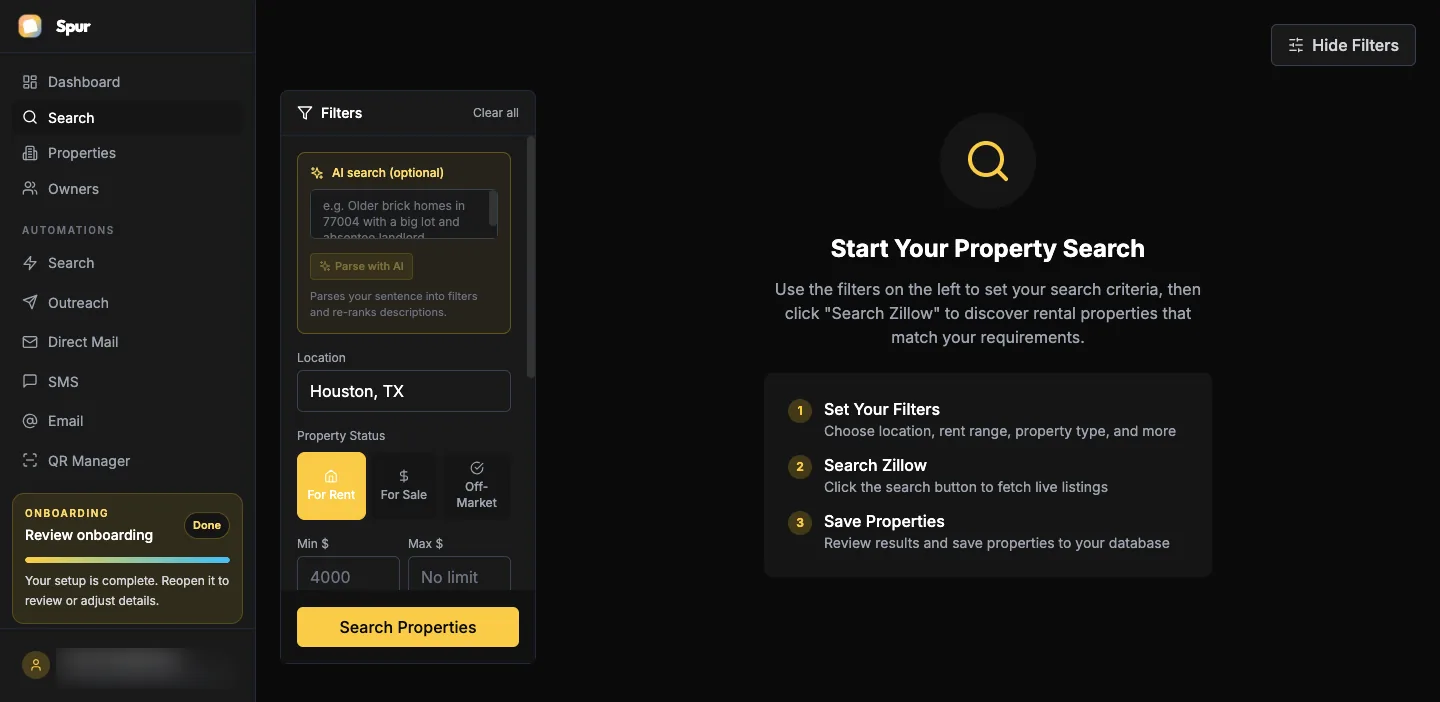
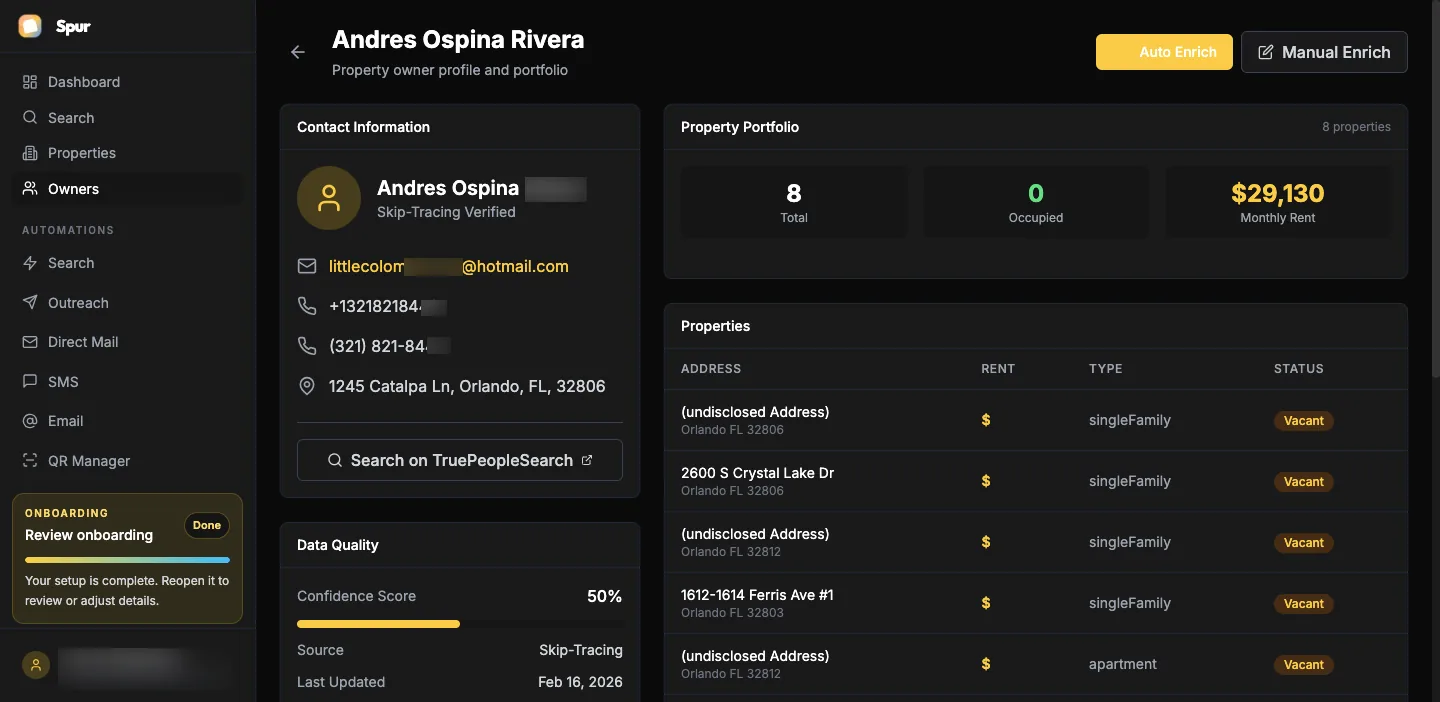
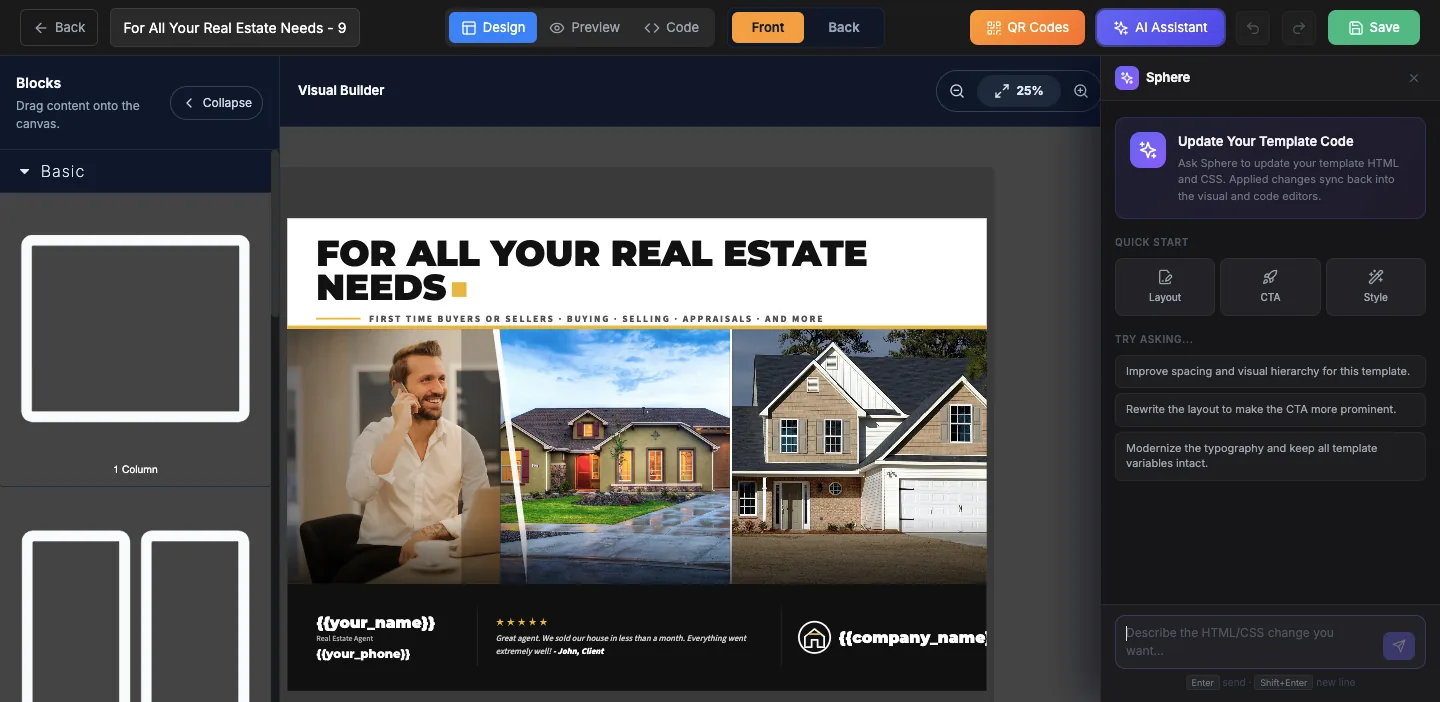
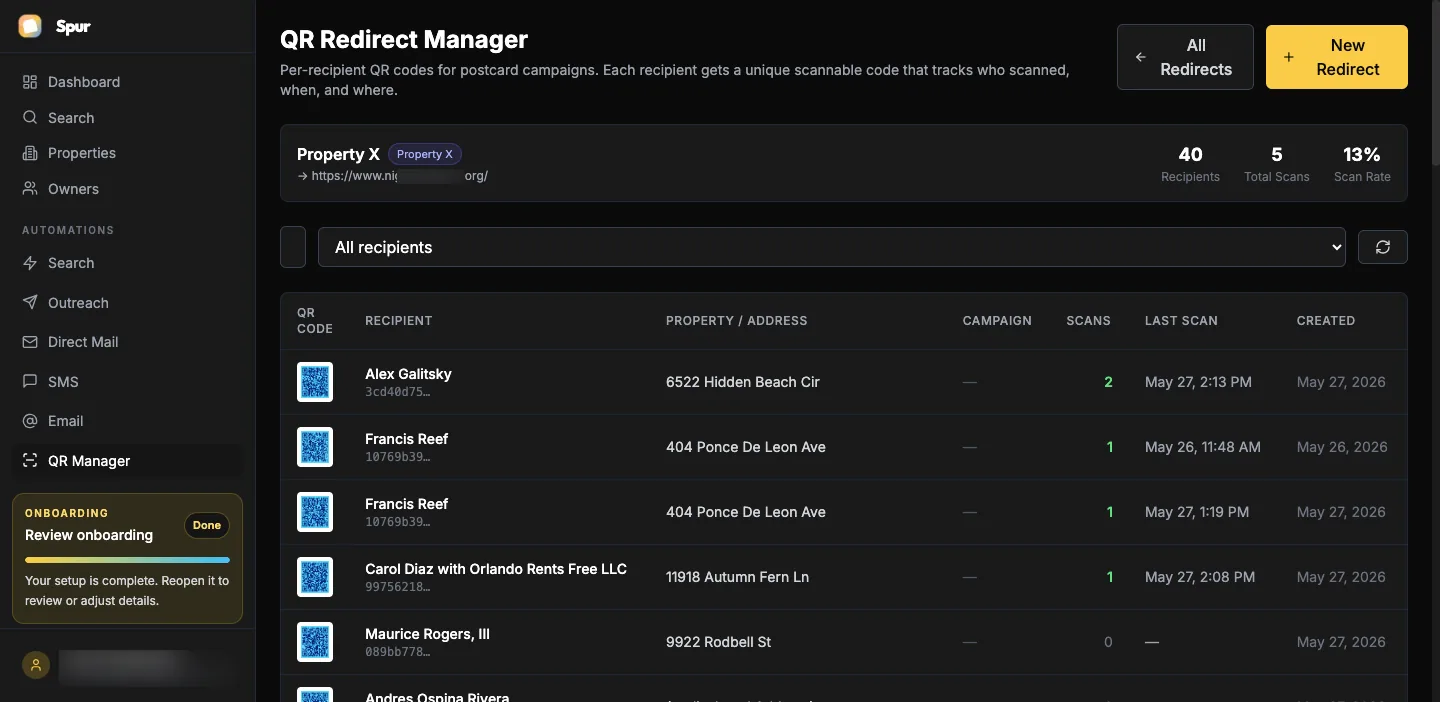
See it in Spur
Neighbors around one install
Sample list around 56 Maple Ridge, Glastonbury, CT: homes within a quarter mile. Names are partly masked.
0.25 mi of 56 Maple RidgeOwner-occupiedBuilt 1985–2005Owned 2+ yrsSame water zone
- Denise F.124 Hebron AveBuilt 2004 · 0.1 miOwned 12 yrsHard water
- Pete & Anna L.60 Maple RidgeBuilt 1996 · 0.0 miOwned 9 yrsNext door
- Ken R.72 Maple RidgeBuilt 1998 · 0.1 miOwned 16 yrsScale on fixtures
- Joyce T.11 Birch Hill CtBuilt 2001 · 0.2 miOwned 7 yrs
- Ali & Dan M.5 Oak TerraceBuilt 1993 · 0.2 miOwned 21 yrsLarge family
AI draft for Denise F. · 124 Hebron Ave
Hi Denise,
We recently tested and treated the water at a home on Maple Ridge, a few minutes from yours. Homes in the same area often share the same water, including the same hardness and scale.
We'd like to test yours and show you how it compares. It's a quick visit, a certified lab, and a plain-language result. If you don't need treatment, we'll say so.
Scan the code to book your test.
Naomi Ellison · ClearSpring Water Systems · (860) 555-0172
Sample data for illustration. Your results depend on your market and filters.
Playbook
Why neighbors are the best water treatment leads
Water quality is local. Municipal water comes from a shared supply, and private wells in the same area often draw from the same aquifer. That means a finished install on one street is real evidence for the homes around it: hard water, iron, or sulfur on one lot is likely on the next.
Mail while the job is fresh. A card that lands within a week or two of an install, while the crew's truck is still a memory, reads as local news. It also lets you refer to a specific street, which a generic mailer can't do.
Keep the radius tight. A quarter mile is enough for most suburban streets, and a half mile or more on rural roads where houses are far apart. Look for similar build years and lot sizes, because those homes usually have similar plumbing and equipment.
Protect your customer's privacy. Never name the customer or give the exact address on the card. 'A home on Maple Ridge' is enough. Ask permission to use a photo or a quote if you want to feature one.
Offer a comparison. 'We'll test your water and show you how it compares' is a more interesting offer than 'free test'. It gives the owner a reason to care about the result, and it shows you know the neighborhood.
Treat each neighbor as a long-term customer. Even if a test shows nothing is needed, add the owner to a reminder list for the next year, and keep sending useful, low-pressure information. Neighbors who decline today become customers when their old system fails.
Build a simple map of your installs and the mail you sent. After a few months you will see which streets responded and which did not, which tells you where water problems cluster and where to send crews. That map is worth more than any single campaign, and it grows more useful with every job.
6×+return on a year of Spur Team from neighbor mailings after 10 installs
One install can bring the next two.
- Spur Team: $49/mo billed annually = $588/yr
- 10 installs × 60 cards at $0.94 each = $564
- 2 neighbor installs (~$3,000 each) ≈ $6,000
Example math. Actual conversion varies by neighborhood. Run your own numbers →
One tool, not four
Spur vs. the usual post-install follow-up
What you needThe usual waySpur
Owners within a quarter mile of each installHope neighbors notice the van✓ Built in
Card referencing the nearby streetGeneric flyer✓ Built in
Mailed within a week of the jobDoor hanger, if remembered✓ Built in
QR books a test and comparisonPhone number only✓ Built in
Scan alerts for follow-upNo signal✓ Built in
Neighbor Marketing by the numbers
Why neighbors share water problems
Shared supply
homes on the same municipal system or aquifer often have similar water
~85%
of US homes have hard water
6×+
return on a year of Spur Team from neighbor mailings after 10 installs
FAQ
Water treatment neighbor marketing questions
How do I use past installs to find new customers?
Mail every owner within a quarter mile of a recent install within a week or two, with an offer to test and compare their water.
What radius should I use?
A quarter mile for most suburban streets, and up to a half mile on rural roads.
Can I mention my customer?
No. Refer to the street or area, never the customer's name or address, unless they have given written permission.
How many cards per job?
Typically 40 to 80, depending on how many homes fall within the radius.
What does Spur cost for a water treatment dealer?
Solo is free forever. You pay per postcard when you mail. Team is $49/mo billed annually with more searches, enrichments, and QR codes.
Keep exploring
Related plays and guides
Start in minutes. No card required.
Turn every install into a street of tests.
Mail the neighbors around your last job. Free to start.
Mail the street around my last install — freeFree forever plan · No card · 20 property searches a month
Prefer a walkthrough? Book a demo