
A truck that drives 20 minutes for one pumping loses money against a road of three.
Septic play · Neighbor marketing
Septic neighbor marketing that fills the road your truck is already on.
A pumper who is already on a road can do the next job for almost no extra drive time. Spur finds the owners within a mile of every scheduled service, writes a 'we're on your road' card, and mails it before the truck arrives.
Free forever plan · No card · 20 property searches a month
USPSFirst-Class
Carla Nystrom9515 Lake RdWaconia, MN 55387Scan to add your tank Thursday
Carla N. added her tank to Thursday's route · 5 min ago
AI-written for this owner · Mailed in 2 days
1 mileradius around each scheduled service
No trip feethe offer that route density makes possible
3–4 daysbefore the truck arrives is the right mail date
The problem
A single stop on a long road is the most expensive job you do.
A truck in the driveway tells nobody that the neighbors can book the same day.
Without a prompt, the other homes on the road wait for a problem.
How it works
From list to mailbox in one workflow.
Five steps from one service call to a full route day.
app.usespur.com
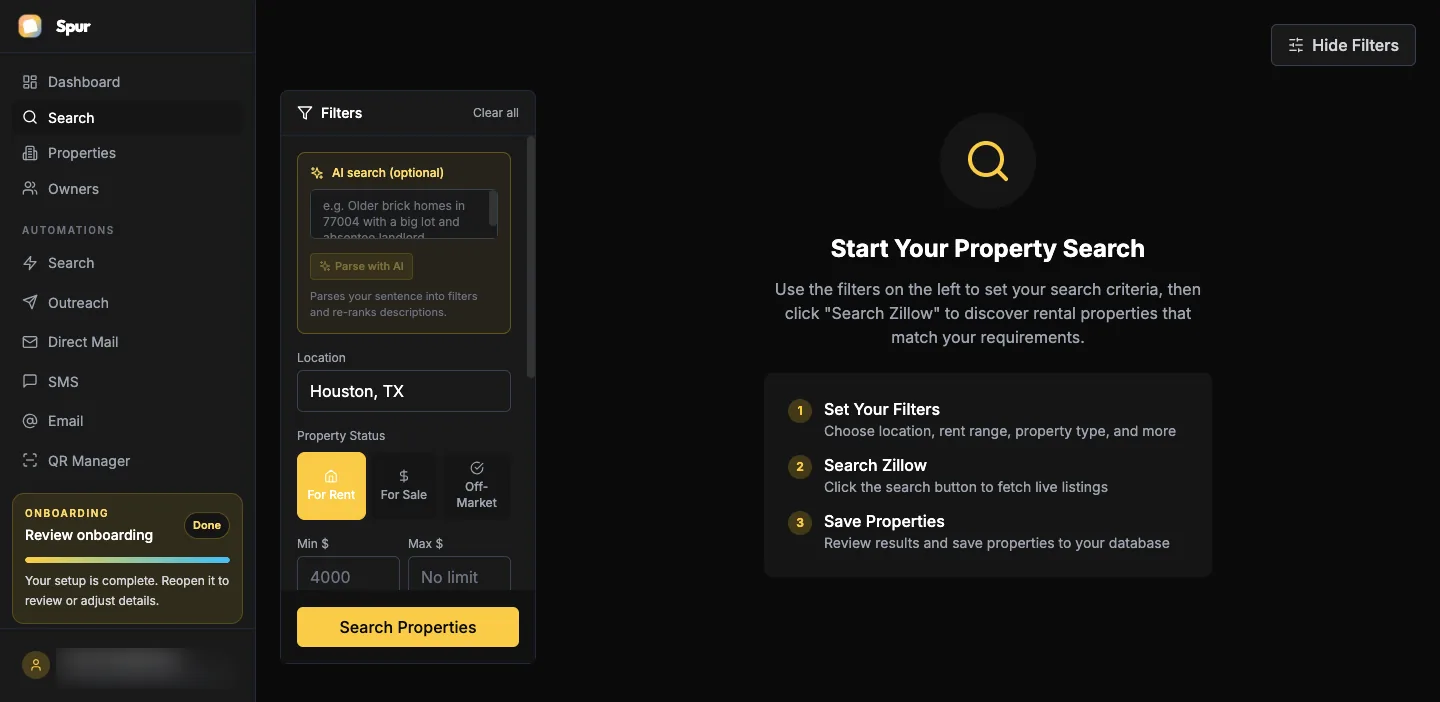
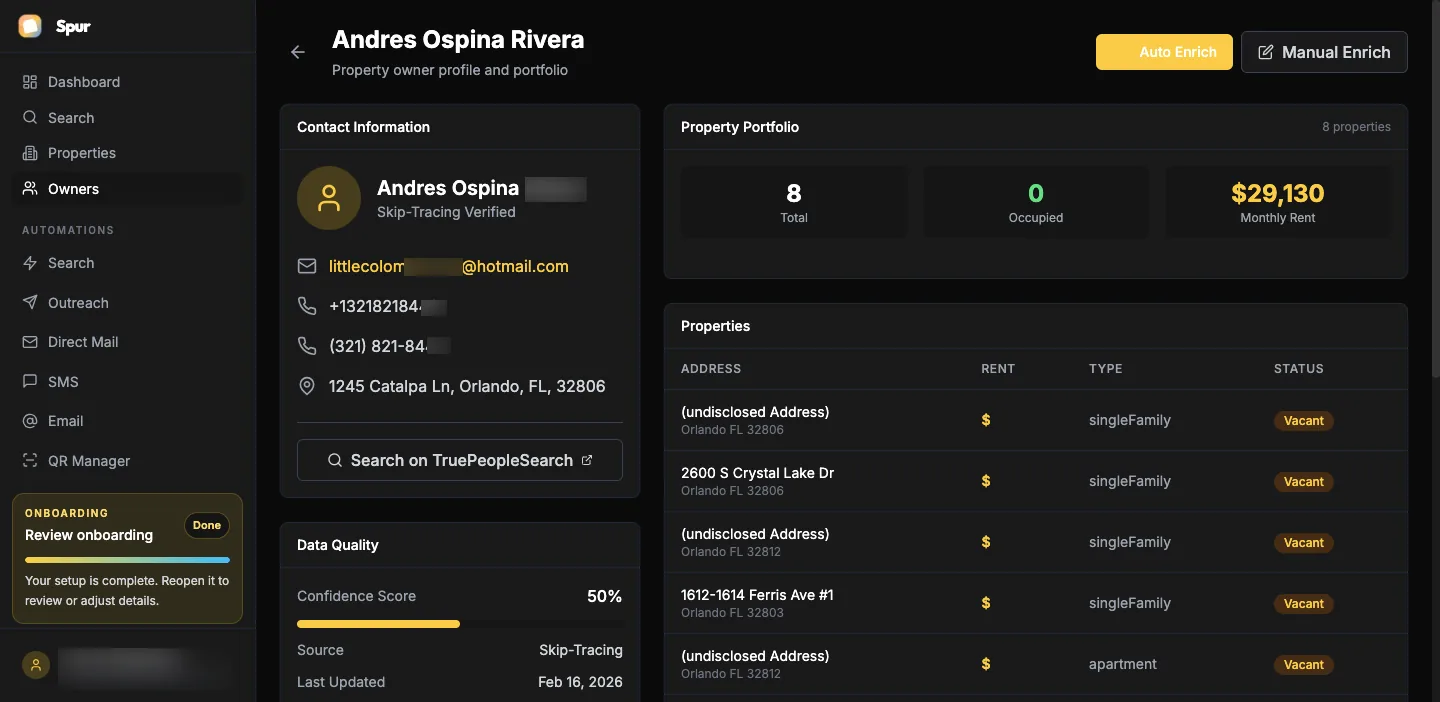
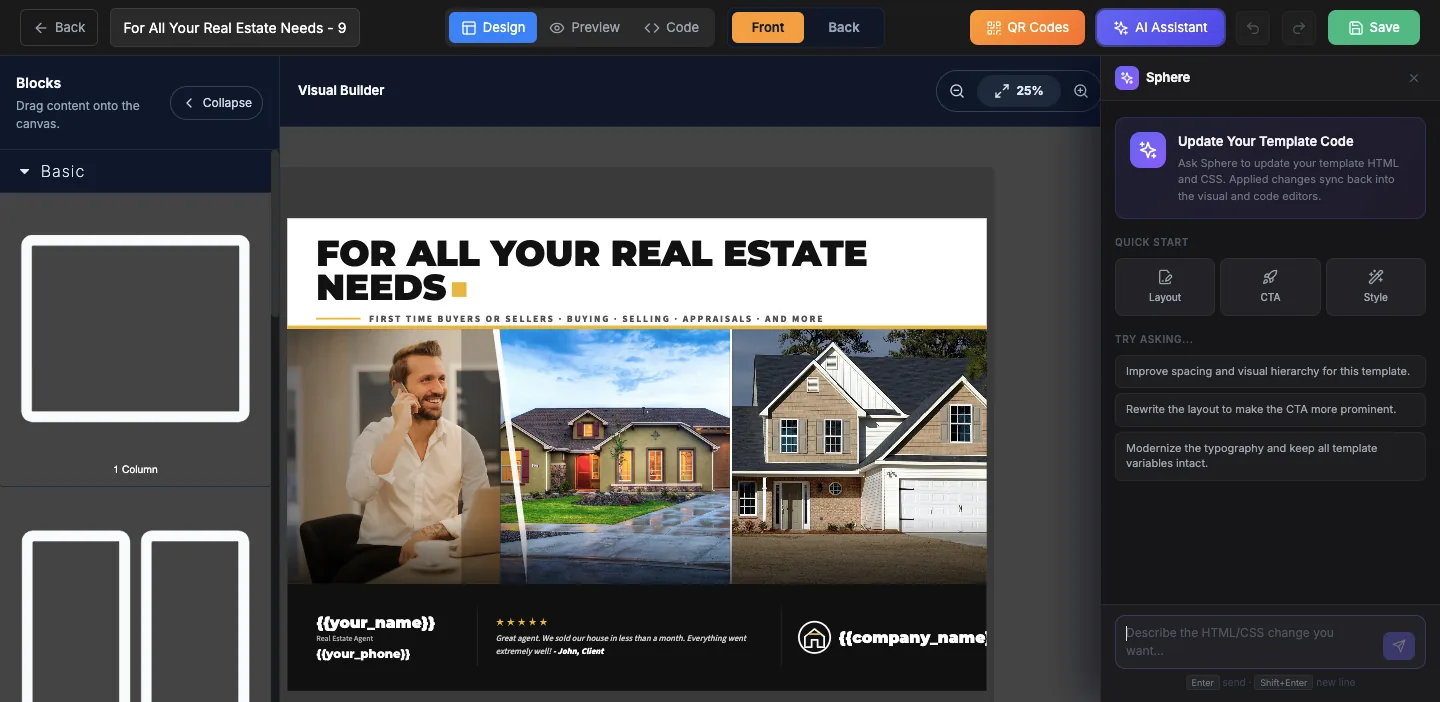
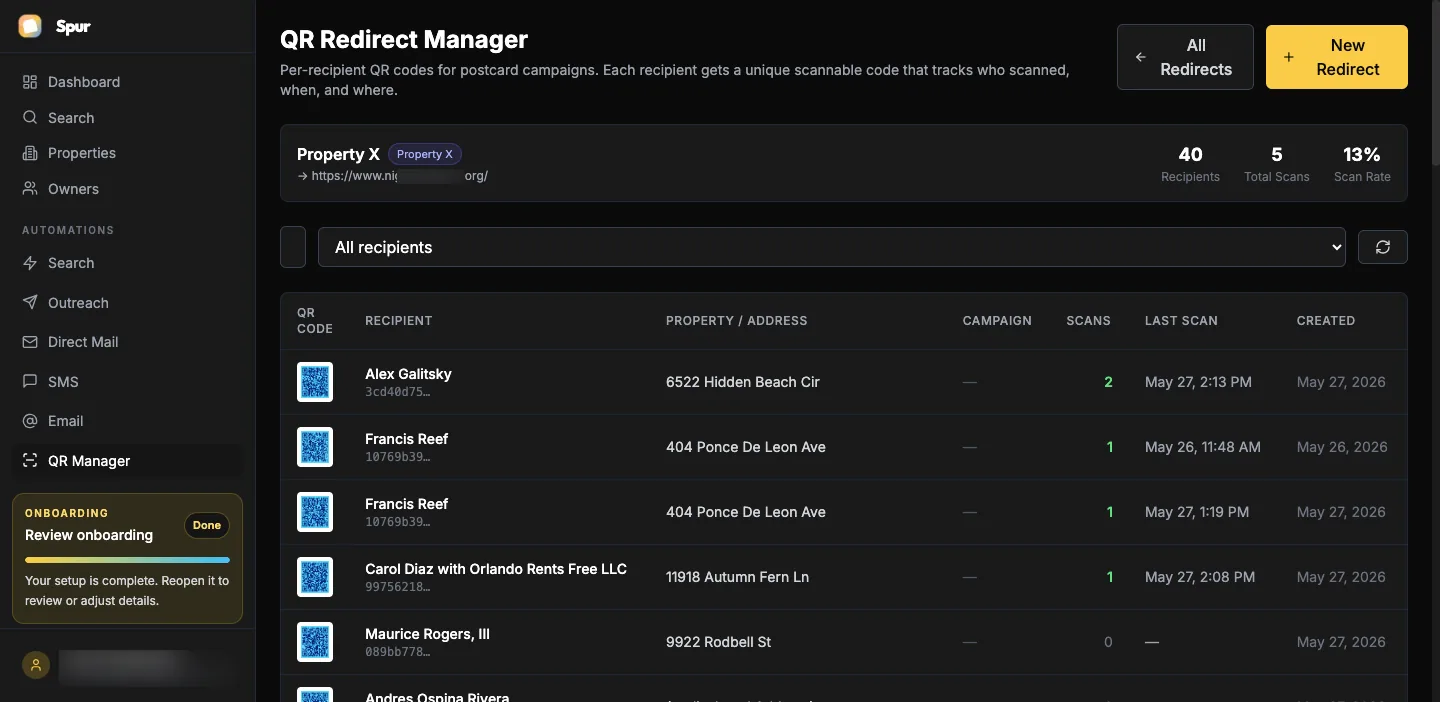
See it in Spur
Neighbors around one pumping stop
Sample list around 9810 Lake Rd, Waconia, MN: rural homes within a mile. Names are partly masked.
1 mile of 9810 Lake RdOwner-occupiedOutside city limitsOwned 4+ yrsLot 1+ acre
- Carla N.9515 Lake RdBuilt 1992 · 1.6 acres0.3 miOwned 12 yrs
- Ben K.9922 Lake RdBuilt 2003 · 1.8 acres0.2 miNew owner
- Ellen & Rob M.10040 Lake RdBuilt 1988 · 2.2 acres0.4 miOwned 20 yrs
- Hal T.10188 Lake RdBuilt 1975 · 1.5 acres0.6 miOwned 30 yrs
- Joyce P.9310 Oak Shore LnBuilt 1996 · 1.9 acres0.8 miOwned 9 yrs
AI draft for Carla N. · 9515 Lake Rd
Hi Carla,
Our truck will be on Lake Road on Thursday, pumping a tank a few houses from yours. If your tank is due, we can add you to the route with no trip fee.
We'll pump it, check the baffles, and give you a short written report. If you'd rather wait, keep this card and call when you're ready.
Scan the code to add your tank to Thursday's route.
Greg Lindahl · Valley Septic Service · (952) 555-0144
Sample data for illustration. Your results depend on your market and filters.
Playbook
Why neighbor marketing fits septic better than any trade
In most trades a neighbor card says 'we did good work nearby.' In septic it says something more useful: 'we're already coming.' Route density is the biggest driver of profit per truck day, and a card that fills the road you are already on turns an expensive stop into a profitable day.
Mail before the truck, not after. The strongest timing is three to four days before a scheduled service, when the owner can still add a pumping. A card after the job says 'we were here.' A card before says 'we're coming, and we'll add you.'
Use a radius that fits rural roads. In country areas, a mile is a few dozen houses, not hundreds. Use a one-mile radius for most stops, and extend to two on long roads where a single route covers many miles.
Make the offer concrete. 'No trip fee when we're already on your road' is a real reason to book the same day, and it protects your price for customers who book normally. Keep the offer to owners whose tanks are likely due, using ownership length as a guide.
Respect privacy. Don't name the neighbor in the card. Say that the truck is on the road, not who the customer is. It builds trust, and avoids awkward conversations between neighbors.
Keep the dispatcher in the loop. When a scan arrives, the dispatcher should confirm by phone or text and add the stop. The closer the confirmation to the card, the more likely the stop stays on the schedule.
Check your route software before you mail. Pick jobs that are already confirmed, count the likely add-ons, and keep one or two slots open on the day. Overbooking a route day to honor a no-trip-fee promise wastes the goodwill the card created, so cap the number of owners you invite.
15×+return on a year of Spur Team from route-filling mailings
Three stops on one road outearn three single trips.
- Spur Team: $49/mo billed annually = $588/yr
- 40 jobs a year × 40 cards at $0.94 each = $1,504
- 2 added stops per job (~$450 each) ≈ $36,000 in added pumpings
Example math. Actual add-on rates vary by road density. Run your own numbers →
One tool, not four
Spur vs. the usual route filling
What you needThe usual waySpur
Owners within a mile of each stopHope neighbors notice the truck✓ Built in
'We're on your road' card per jobNo follow-up✓ Built in
Mailed 3–4 days aheadDoor hanger on the day✓ Built in
QR adds a stop to the routePhone tag✓ Built in
Scan alerts for same-day confirmNo signal✓ Built in
Neighbor Marketing by the numbers
Why route density wins in septic
Windshield time
is the main hidden cost of rural pumping routes
3–5 yrs
is the typical pumping cycle, so many neighbors are due at any time
15×+
return on a year of Spur Team from route-filling mailings
FAQ
Septic neighbor marketing questions
How do I get more jobs on the same road?
Mail every owner within a mile of a scheduled stop a few days before the truck arrives, with a no-trip-fee offer.
What radius should I use in rural areas?
One mile for most stops, and up to two miles on long roads with few houses.
Should I mention the neighbor?
No. Say the truck is on the road, but never name the customer.
How many cards per job?
Typically 30 to 50, depending on how many homes fall within the radius.
What does Spur cost for a septic company?
Solo is free forever. You pay per postcard when you mail. Team is $49/mo billed annually with more searches, enrichments, and QR codes.
Keep exploring
Related plays and guides
Start in minutes. No card required.
Make every stop a route day.
Mail the road around your next pumping before the truck gets there. Free to start.
Mail the road around my next job — freeFree forever plan · No card · 20 property searches a month
Prefer a walkthrough? Book a demo