
Most owners don't know when their tank was last pumped. Without a reminder, they wait until something goes wrong.
For septic pumping, inspection, and repair companies
Septic pumping leads from rural homeowners who haven't pumped in years.
Spur finds homes outside sewer service in your area (rural lots, acreage, and new buyers), writes a friendly reminder postcard for each owner, and mails it with a QR code to your scheduling page. Then it reminds every customer when their next pumping is due.
Free forever plan · No card · 20 property searches a month
USPSFirst-Class
Dale Hutchins4180 County Road 12Waconia, MN 55387Scan to schedule pumping
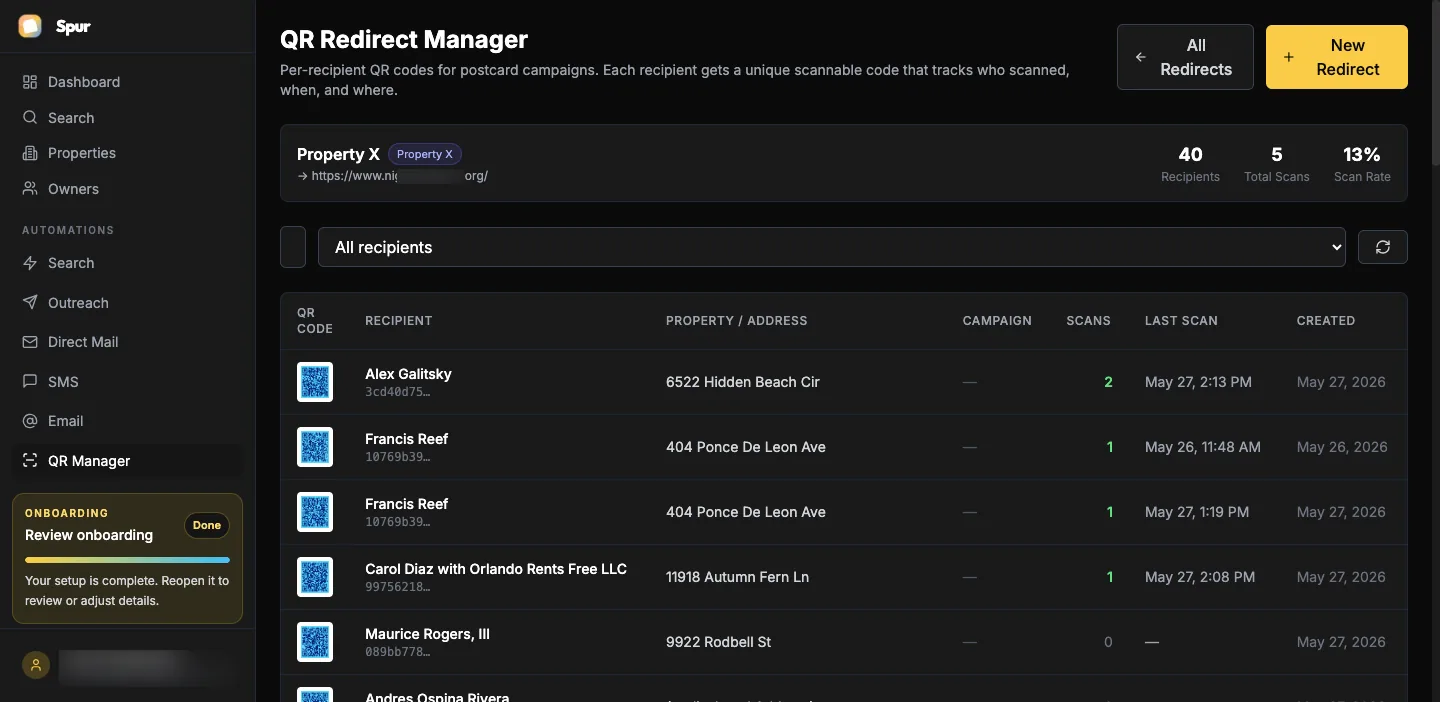
Dale H. scheduled a pumping from your postcard · 6 min ago
AI-written for this owner · Mailed in 2 days
3–5 yrstypical pumping interval for a household tank
1 in 5US homes rely on a septic or onsite system
2 daysfrom approval to USPS first-class
The problem
Septic is out of sight and out of mind, until it backs up.
A backup is urgent. If your name isn't on the fridge, the homeowner calls the first number they find.
Spread-out rural customers don't respond to the same ads as city homeowners, and door hangers aren't practical.
How it works
From list to mailbox in one workflow.
The same five steps every time, set up for septic service companies.
app.usespur.com
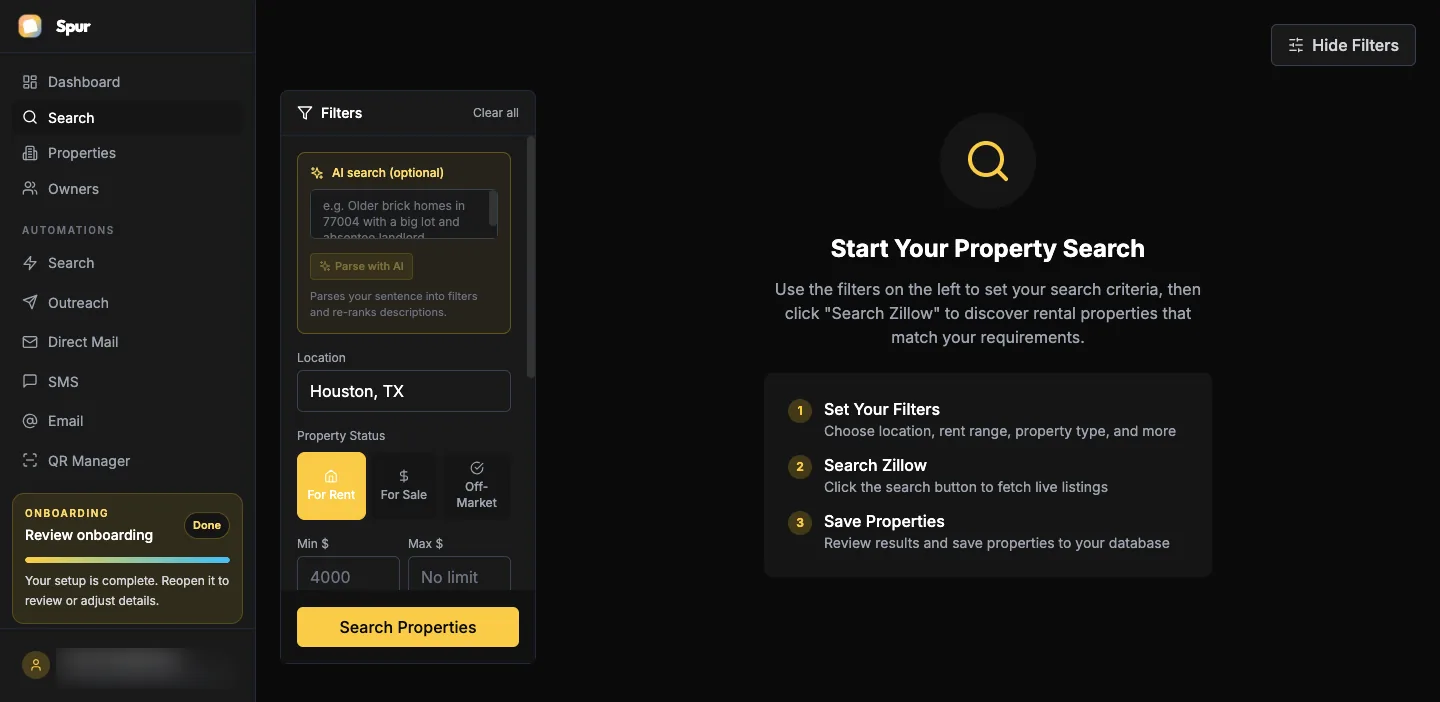
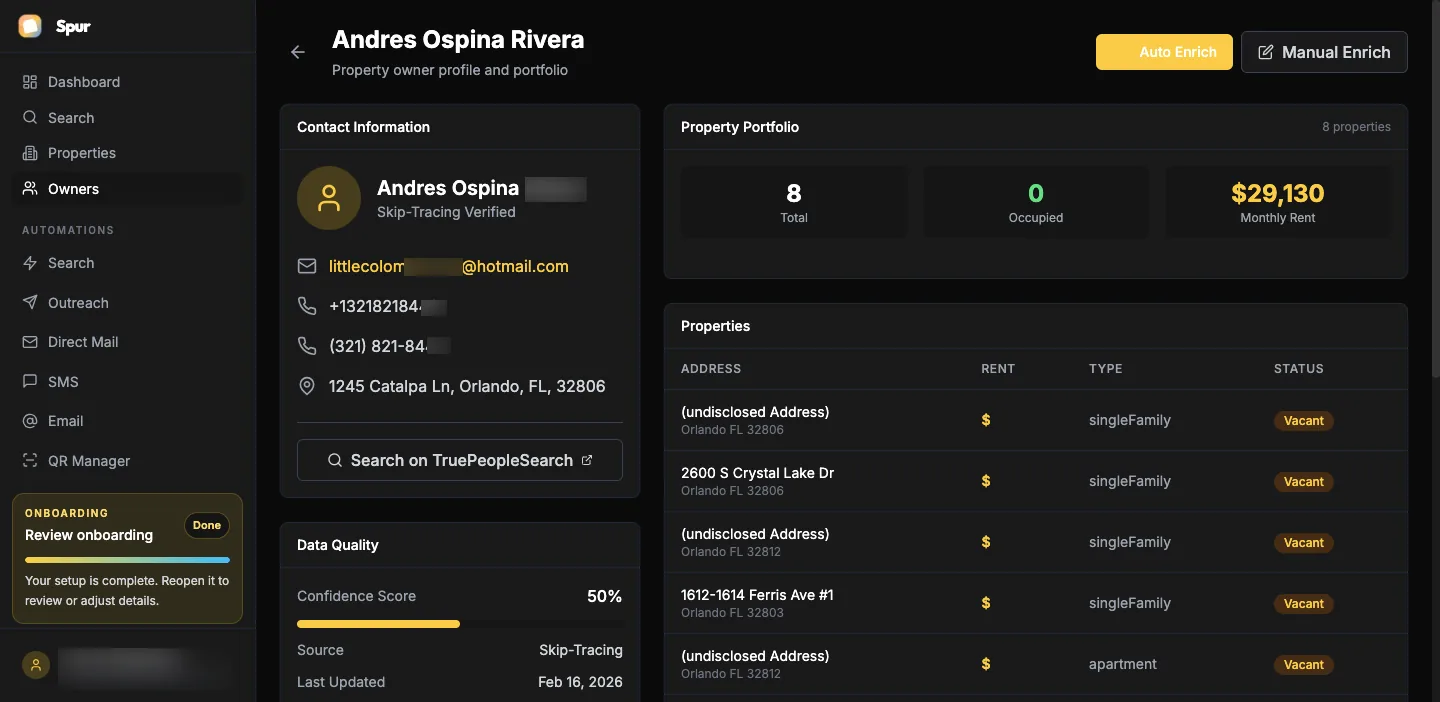
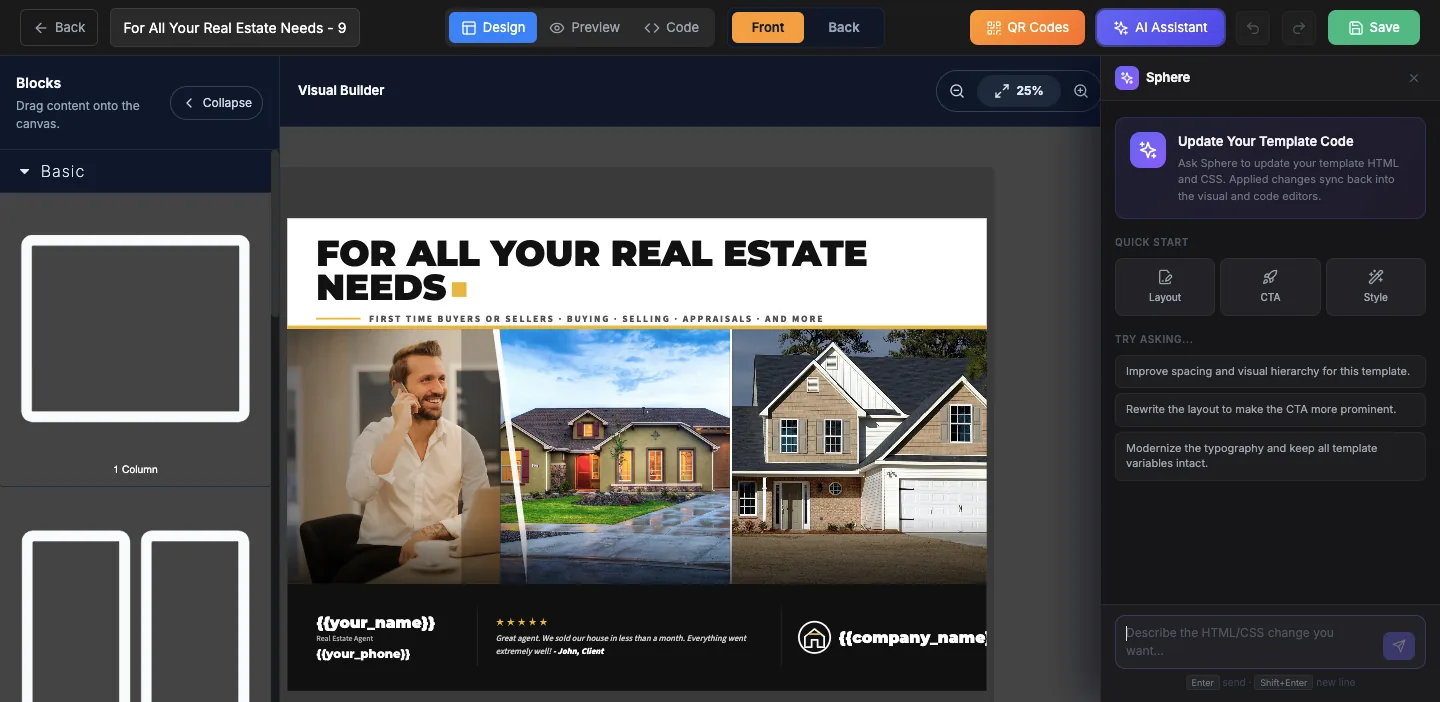
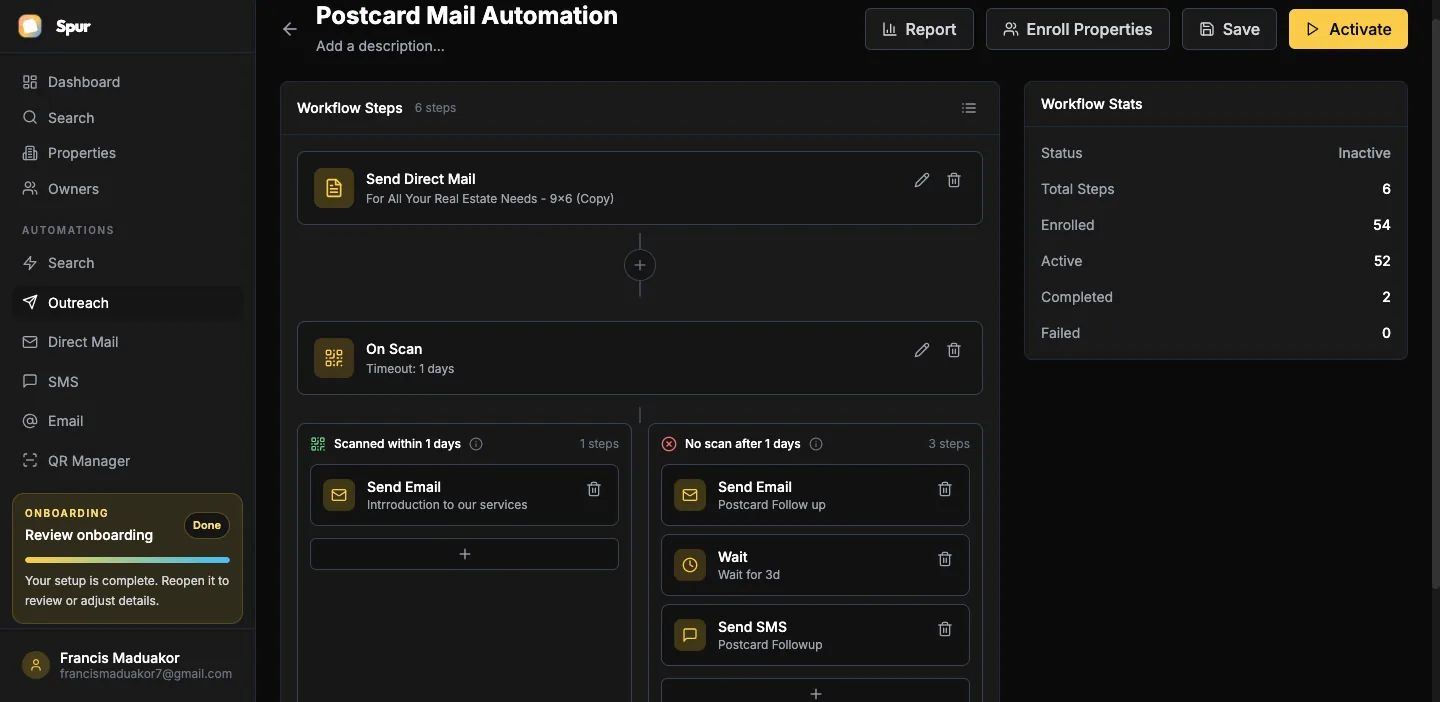
Plays for Septic
Septic plays you can run in Spur today
Owners overdue for pumping.
Rural zipsOwned 4+ yrs
Buyers who don't know their tank's history.
Sold last 90 daysLot 1+ acre
Sellers in areas that require inspection at sale.
Owned 10+ yrsRural zips
Older systems near the end of their life.
Built pre-1985Rural zips
Seasonal properties with irregular use.
Absentee ownerLake zips
Make the next pumping easier.
Your listNo risers
Mail the road around each service call.
Radius 1 miRural
Rebook every customer on schedule.
Your listPumped 3+ yrs ago
Pumping cards with a QR to book.
Per-owner copyQR tracked
See the full play →Direct mail programStanding route lists, mailed monthly.
Auto-scheduleCost per pumping
See the full play →New buyer welcomeTank inspection offers for new owners.
Sold last 90 daysAuto-send
See the full play →Pumping reminder programAutomatic cards 3–5 years after service.
Your listAuto-schedule
See the full play →Drain field repair leadsEvaluation offers for older systems.
Built pre-1985Owned 10+ yrs
See the full play →Seasonal campaignsThaw, cabin, and pre-winter waves.
Auto-scheduleYearly
See the full play →Route neighbor marketingMail the road before the truck arrives.
Radius 1 miRural
See the full play →Leads without AngiExclusive calls from roads you chose.
ExclusiveInbound first
See the full play →Past customer reactivationWin back overdue pumping customers.
Your listPumped 5+ yrs ago
See the full play →Landlord programsScheduled pumping for rural rentals.
Absentee owner2+ properties
See the full play →See it in Spur
What a septic list looks like in Spur
A sample list for one rural Minnesota zip: owner-occupied homes on 1+ acre lots outside city sewer service. Names are partly masked.
Zip 55387Owner-occupiedLot 1+ acreOutside city limitsSingle-family
- Dale H.4180 County Road 12Built 1978 · 3.2 acresOwned 22 yrsOlder system
- Jen & Mark O.4265 County Road 12Built 1996 · 2.1 acresOwned 9 yrs4 bed
- Ruth S.9810 Lake RdBuilt 1984 · 1.4 acresOwner 74Owned 33 yrs
- Ben K.9922 Lake RdBuilt 2003 · 1.8 acresBought 6 wks agoNew owner
- Owner in Minneapolis10120 Lake RdBuilt 1971 · cabinSeasonalAbsentee
AI draft for Dale H. · 4180 County Road 12
Hi Dale,
Most septic tanks for a household your size need pumping every three to five years. If you can't remember when yours was last done, it's probably due, and pumping on schedule is the single best way to protect your drain field, which is far more expensive to replace than the tank.
We'll pump the tank, check the baffles and inlet, and give you a short written report. Then we'll mail you a reminder when the next pumping is due, so you never have to keep track.
Scan the code on this card to pick a date. If you ever have a backup, our number is on the front.
Greg Lindahl · Valley Septic Service · (952) 555-0144
Sample data for illustration. Your results depend on your market and filters.
Playbook
How septic companies build a reliable pumping schedule
Septic service is one of the most predictable businesses in home services. According to the EPA, roughly one in five U.S. households relies on a septic or other onsite system, and most household tanks need pumping every three to five years depending on tank size and household size. The challenge isn't demand. It's that homeowners forget, and they usually call only when something backs up.
Find the homes on septic. Spur can't see underground, but you know which rural zips, townships, and subdivisions sit outside sewer service. Target owner-occupied homes on larger lots in those areas, and include cabins and second homes whose owners live elsewhere and need a reliable service they can schedule remotely.
New buyers are a key moment. People buying their first home on septic often know nothing about it: where the tank is, when it was last pumped, or what not to flush. A welcome card that explains the basics and offers a pumping and inspection gives them peace of mind and makes you their septic company from day one. Some states and counties also require septic inspections when a home sells, which creates steady inspection work.
Make reminders automatic. The most valuable asset in a septic business is a list of customers and when each was last pumped. A reminder card at the right interval, sent automatically, keeps your trucks busy and your customers' systems healthy. Add a risers-and-lids offer to make future pumpings faster.
Educate rather than alarm. Plain-language tips about pumping intervals, what not to flush, and keeping vehicles off the drain field build trust. Older systems, especially those from before the 1980s, may need drain field evaluation, and owners appreciate an honest assessment of what's urgent and what isn't.
Partner with the people who see septic systems first. Home inspectors, real estate agents who sell rural property, and plumbers who serve rural areas all encounter septic questions. A quarterly mailing to those partners, alongside your homeowner campaigns, keeps your company the obvious referral for pumping, inspections, and repairs.
2 pumpsplus one repair cover a full year of Spur Team
A handful of pumpings covers your year of Spur.
- Spur Team: $49/mo billed annually = $588/yr
- 300 postcards on Team at $0.94 each = $282
- Each pumping ≈ $300–$600, plus inspections and repairs
Example math. Your pricing and job mix will vary. Run your own numbers →
One tool, not four
Spur vs. the usual septic marketing
What you needThe usual waySpur
Find homes in rural septic areasPhone book and word of mouth✓ Built in
Owner name and mailing addressList broker✓ Built in
Plain-language reminder copyGeneric magnet✓ Built in
Automatic pumping remindersPaper records✓ Built in
Know who's interestedNot available✓ Built in
New buyer outreachNot available✓ Built in
Septic by the numbers
Why septic service is predictable
1 in 5
U.S. households rely on a septic or other onsite wastewater system
3–5 yrs
typical pumping interval for a household septic tank
2 pumps
plus one repair cover a full year of Spur Team
FAQ
Questions from septic service companies
How do septic companies get more customers?
Target homes in the rural areas you know are on septic, welcome every new buyer, and send every customer an automatic reminder when their next pumping is due.
Can Spur tell which homes have septic systems?
Not directly. Most septic companies know which zips, townships, and subdivisions are outside sewer service. Spur lets you target those areas precisely by zip, radius, lot size, and ownership.
How often should homeowners pump their septic tank?
Most household tanks need pumping every three to five years, depending on tank size and how many people live in the home.
Can I reach cabin and second-home owners?
Yes. Filter for absentee owners in lake and recreation areas, and Spur mails them at their primary address.
What does Spur cost for a septic company?
Solo is free forever with no card. You pay per postcard when you mail. Team is $49/mo billed annually with more searches, enrichments, QR codes, automations, and lower postcard pricing.
Keep exploring
Related trades and guides
Start in minutes. No card required.
Every tank in your county is on a schedule. Make sure it's yours.
Build a septic-area list and set up your first automated pumping reminder today.
Find homeowners on septic — freeFree forever plan · No card · 20 property searches a month
Prefer a walkthrough? Book a demo