
After a wet spring everyone calls at once, and by August the trucks have gaps.
Septic play · Seasonal campaigns
Seasonal septic campaigns that keep trucks pumping from thaw to freeze.
Septic work follows the weather. Spur schedules the spring thaw, the summer cabin opening, and the pre-winter pump-out as repeating campaigns, so your calendar stays full in every season, not only after a wet week.
Free forever plan · No card · 20 property searches a month
USPSFirst-Class
Dale Hutchins4180 County Road 12Waconia, MN 55387Scan to book a spring pumping
Dale H. booked a spring pumping · 4 min ago
AI-written for this owner · Mailed in 2 days
4 wavesthaw, summer cabins, fall, and pre-winter
Autoscheduled once, mailed every year
2–3 wksahead of the season is the right mail date
The problem
Septic demand rises and falls with the weather.
Seasonal owners need pumping before opening or closing, but they don't think about it until they arrive.
In cold states, pumping stops until spring, and owners who wait are put on a list.
How it works
From list to mailbox in one workflow.
Five steps from a lumpy calendar to four steady seasons.
app.usespur.com
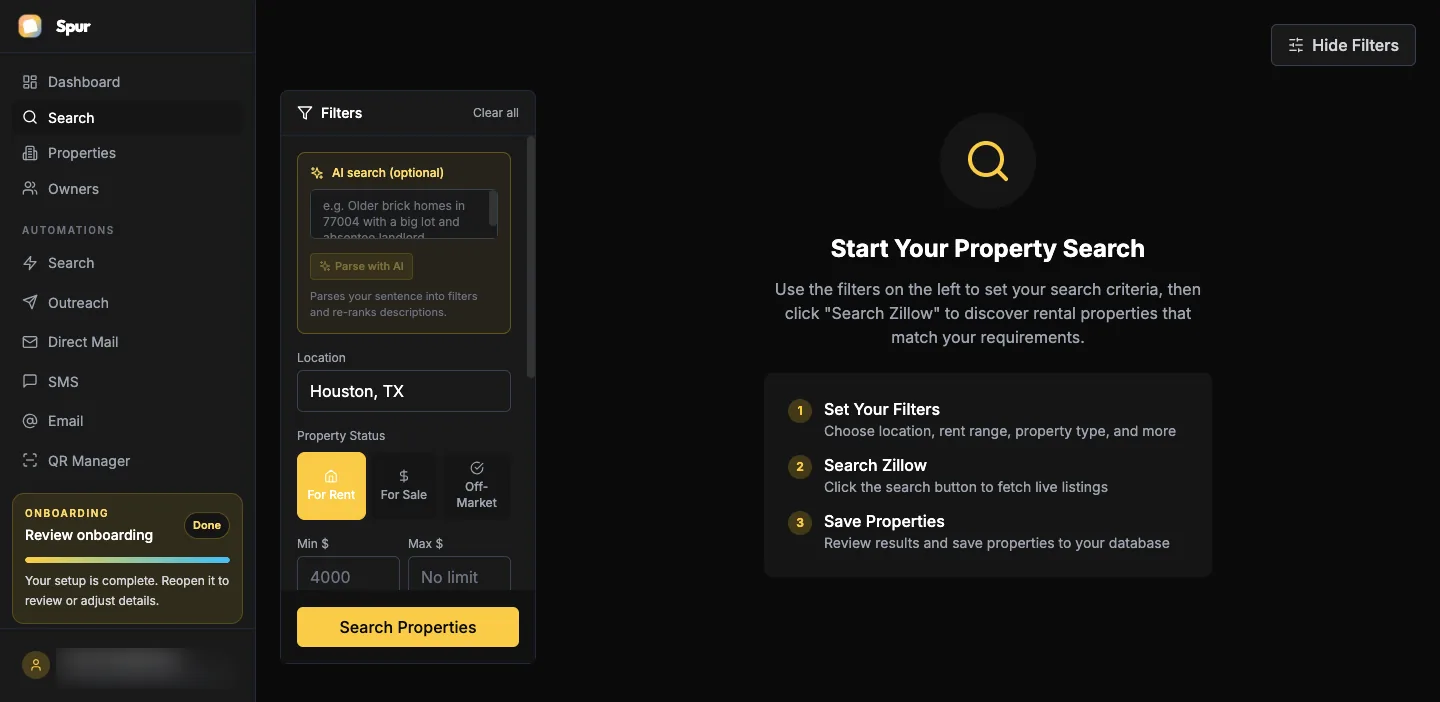
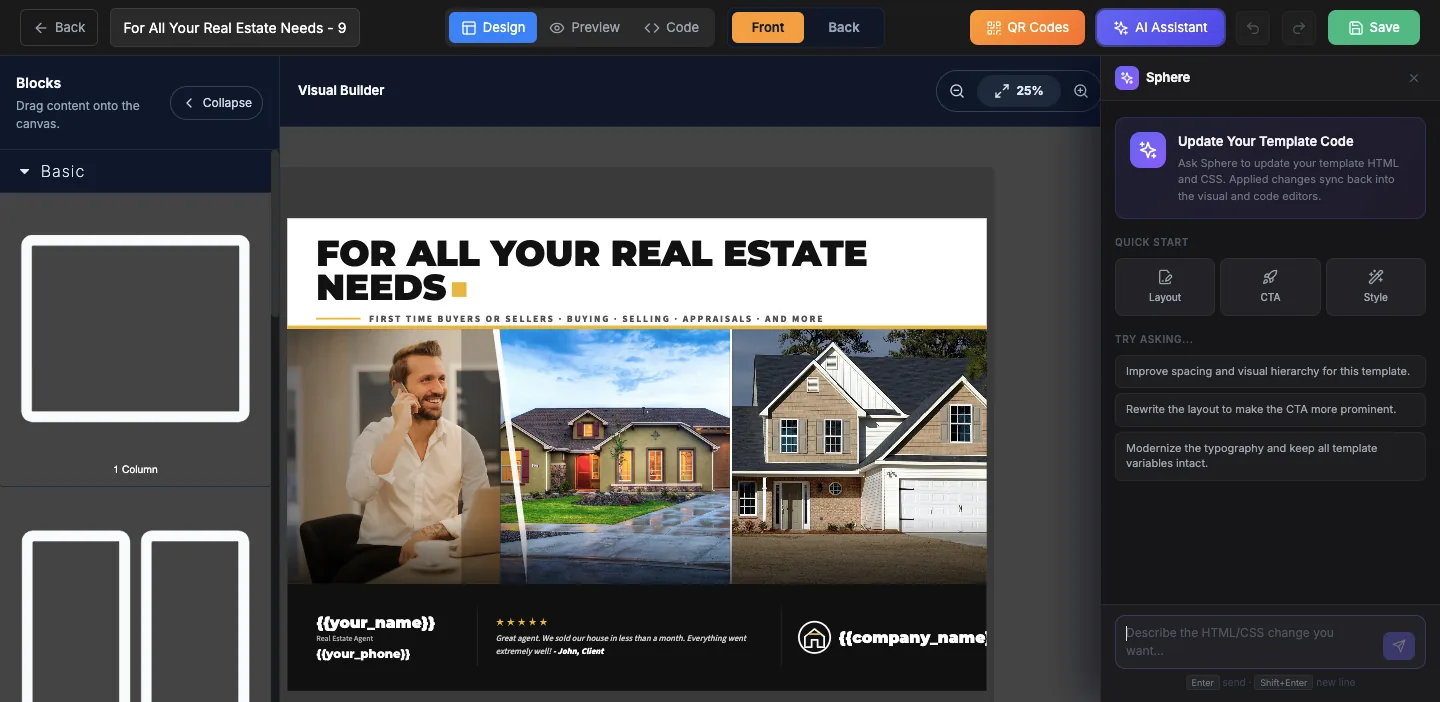
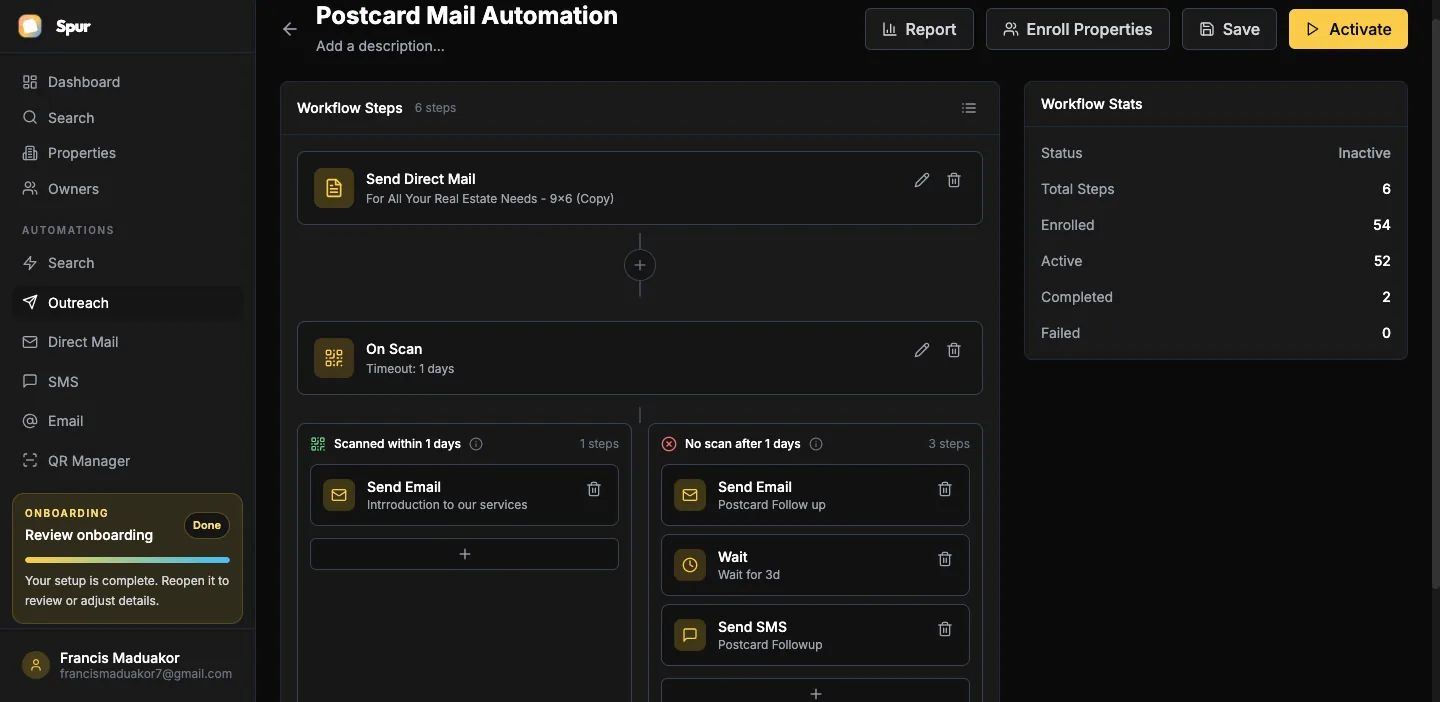
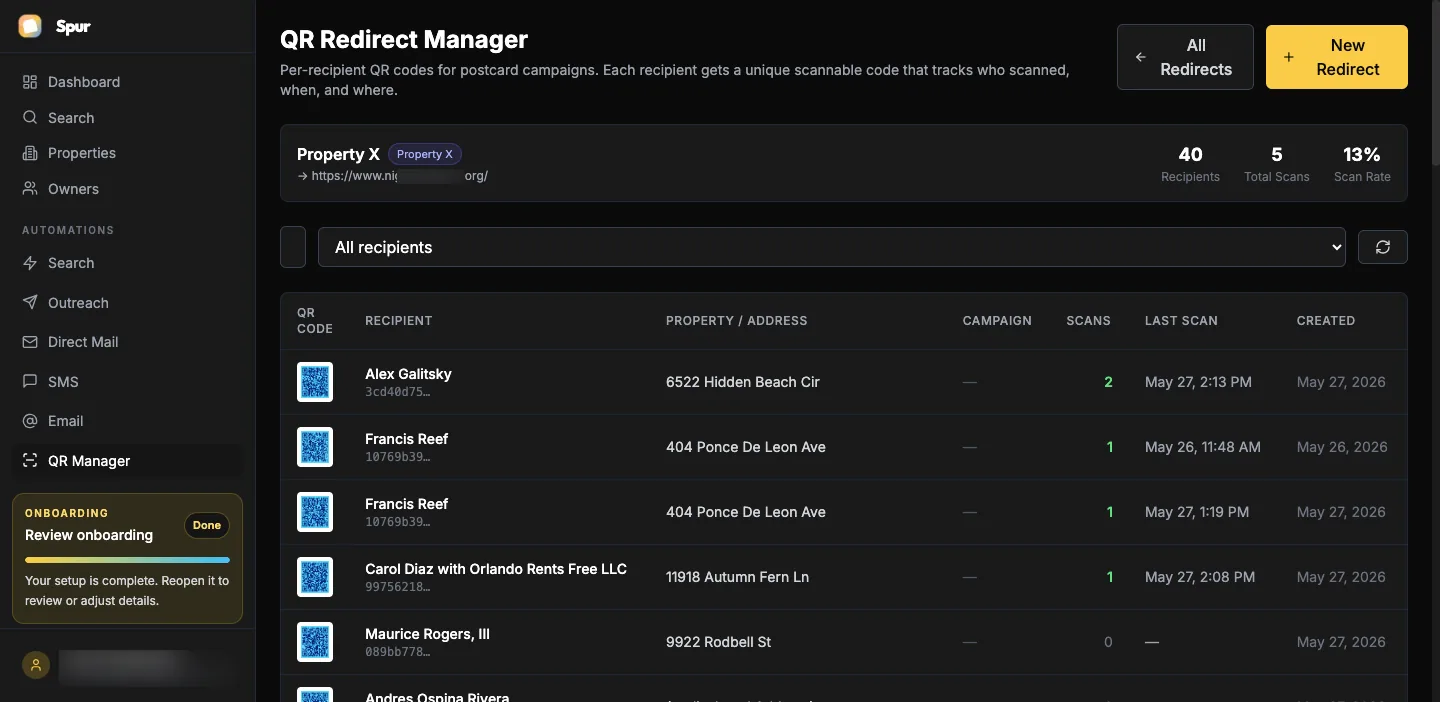
See it in Spur
A seasonal septic calendar
Sample Waconia, MN campaigns across the year. Counts are illustrative.
4 seasonal wavesRural ownersLake and cabin zipsOwned 4+ yrsPlus past customers
- Spring thaw420 homesMail March 15Book by April 15
- Cabin opening160 cabinsMail April 20Absentee owners
- Summer fill-in260 homesMail July 10Slow-season rate
- Pre-winter pump-out380 homesMail September 20Book by Oct 31
- Past customers140 homesMail at 3.5 yrsYour list
AI draft for Dale H. · 4180 County Road 12
Hi Dale,
A full tank and wet spring ground aren't a good combination. If your tank is near the end of its pumping interval, now is the best time to get it done, before the thaw puts extra water into the system.
We're booking spring pumpings now, with a baffle and field check included. Once the ground thaws we fill up fast, and we'd rather you were done before then.
Scan the code to book a date.
Greg Lindahl · Valley Septic Service · (952) 555-0144
Sample data for illustration. Your results depend on your market and filters.
Playbook
How seasonal timing works for septic companies
Septic is a steady business over a three-to-five-year cycle, but on any given month demand is lumpy. Weather, cabin schedules, and frozen ground move it around. Seasonal campaigns let you pull demand into the gaps and protect your best weeks.
Spring is the first wave. Snowmelt and spring rain put extra water into drain fields, and a tank that is due is the first thing to cause a backup. Mail in March with a booking deadline in mid-April, and explain in a sentence why the timing matters.
Cabin owners are the second wave. Lake and recreation homes are used in bursts, and owners often want the tank pumped before opening for the season or before closing for the winter. Target absentee owners in lake zips, and mail to their home address a few weeks before opening.
Summer is the fill-in wave. Fewer emergencies mean open route days. A slow-season rate, offered by card to owners who are due, moves jobs from the spring rush into July and August, and relieves pressure on the calendar the next year.
Fall is the pre-winter wave. In cold climates, frozen ground and snow cover make pumping hard or impossible for months. A September mailing to owners who are due, with an end-of-October deadline, prevents the January emergency and fills the fall calendar.
Plan capacity before mailing. Cap each wave to what your trucks can handle, and tell owners honestly how far out you are booking. Review the results after each season, and move the mail date by a week if responses arrive too late or too early.
Keep a weather rule for exceptions. After a very wet spring or an early freeze, move the next wave forward by a week or two and say why on the card. Owners respond to timing that matches what they see outside, and a short note about the season makes the offer feel like local advice, not a promotion.
15×+return on a year of Spur Team from four seasonal mailings
Four steady waves beat one frantic month.
- Spur Team: $49/mo billed annually = $588/yr
- 4 mailings of 300 cards at $0.94 each = $1,128
- 30 extra pumpings a year (~$450 each) ≈ $13,500
Example math. Response varies by climate and list. Run your own numbers →
One tool, not four
Spur vs. the usual seasonal approach
What you needThe usual waySpur
Four waves scheduled onceA single promo when slow✓ Built in
Cabin owners by absentee filterNot reached✓ Built in
Copy matched to the weatherThe same flyer all year✓ Built in
Scans and bookings by seasonNo comparison✓ Built in
Repeats every year automaticallyRebuilt each year✓ Built in
Seasonal Campaigns by the numbers
Why timing matters for septic
Wet ground
adds water to drain fields, which makes overdue tanks the first to back up
Frozen ground
ends pumping for months in cold climates
15×+
return on a year of Spur Team from four seasonal mailings
FAQ
Seasonal septic questions
When should I mail spring septic campaigns?
In March, with a booking deadline in mid-April, before the ground thaws and calendars fill.
How do I reach cabin and lake owners?
Filter for absentee owners in lake zips. Spur mails to their primary address a few weeks before opening.
How do I fill summer gaps?
Offer a slow-season rate to owners whose tanks are due, and mail in early July.
Can I reuse the same campaign every year?
Yes. Spur repeats the schedule and refreshes the list each year.
Keep exploring
Related plays and guides
Start in minutes. No card required.
Keep every truck full, every season.
Schedule thaw, cabins, summer, and fall once, and let Spur mail them every year. Free to start.
Schedule my septic seasons — freeFree forever plan · No card · 20 property searches a month
Prefer a walkthrough? Book a demo