
It is buried, silent, and out of mind, so owners call only after a slow drain or a backup.
Septic play · Postcards
Septic pumping postcards that put your number on the fridge before the backup.
A septic postcard works because it arrives while the tank is still quiet. Spur writes a plain-language card for each rural owner, prints it, mails it first-class, and adds a QR code that books a pumping and tells your dispatcher who scanned.
Free forever plan · No card · 20 property searches a month
USPSFirst-Class
Dale Hutchins4180 County Road 12Waconia, MN 55387Scan to pick a pumping date
Dale H. picked a pumping date from your postcard · 5 min ago
AI-written for this owner · Mailed in 2 days
3–5 yrstypical pumping interval for a household tank
~20%of US homes use a septic or onsite system
2 daysfrom approval to USPS first-class
The problem
A septic business lives or dies on whose number is on the fridge.
A backup is urgent, and the owner calls whichever pumper they find first.
Roads are long, houses are far apart, and door hangers cost a morning of windshield time.
How it works
From list to mailbox in one workflow.
Five steps from a rural road list to a pumping on the schedule.
app.usespur.com
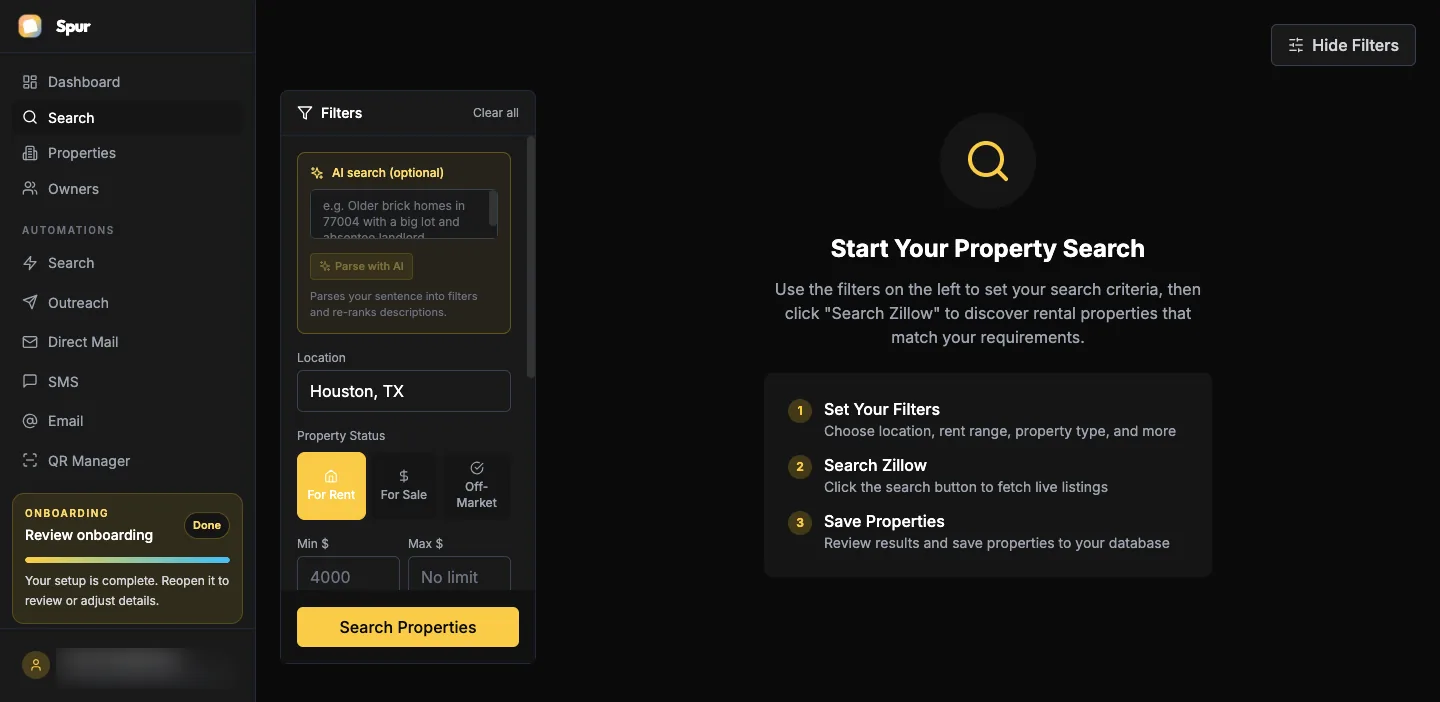
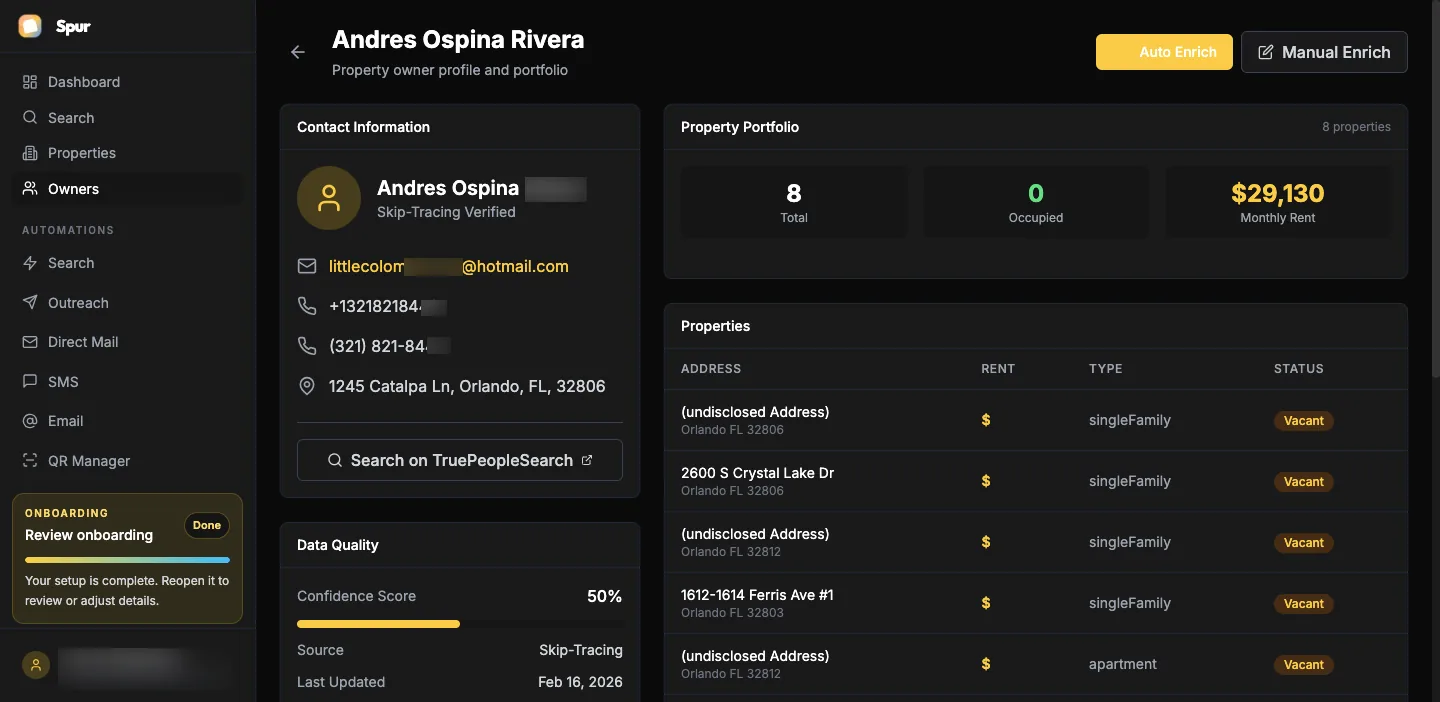
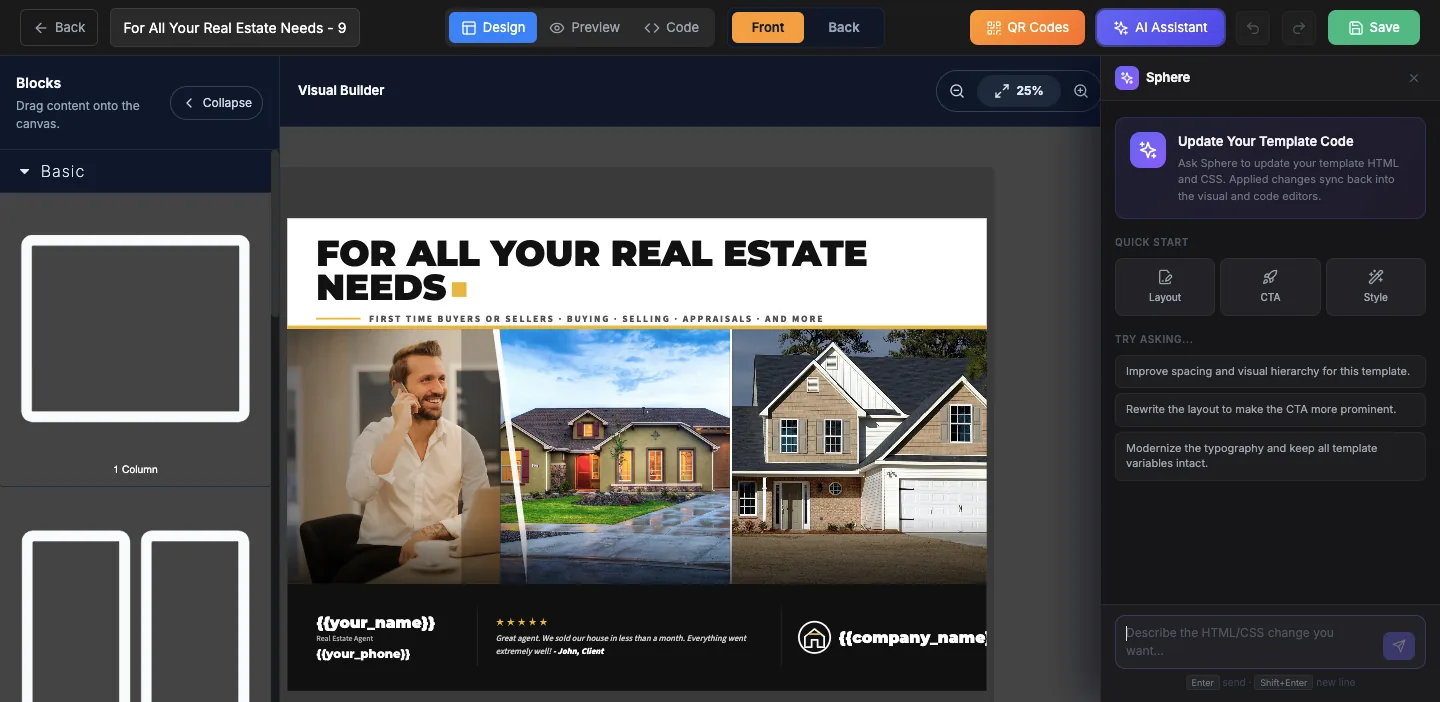
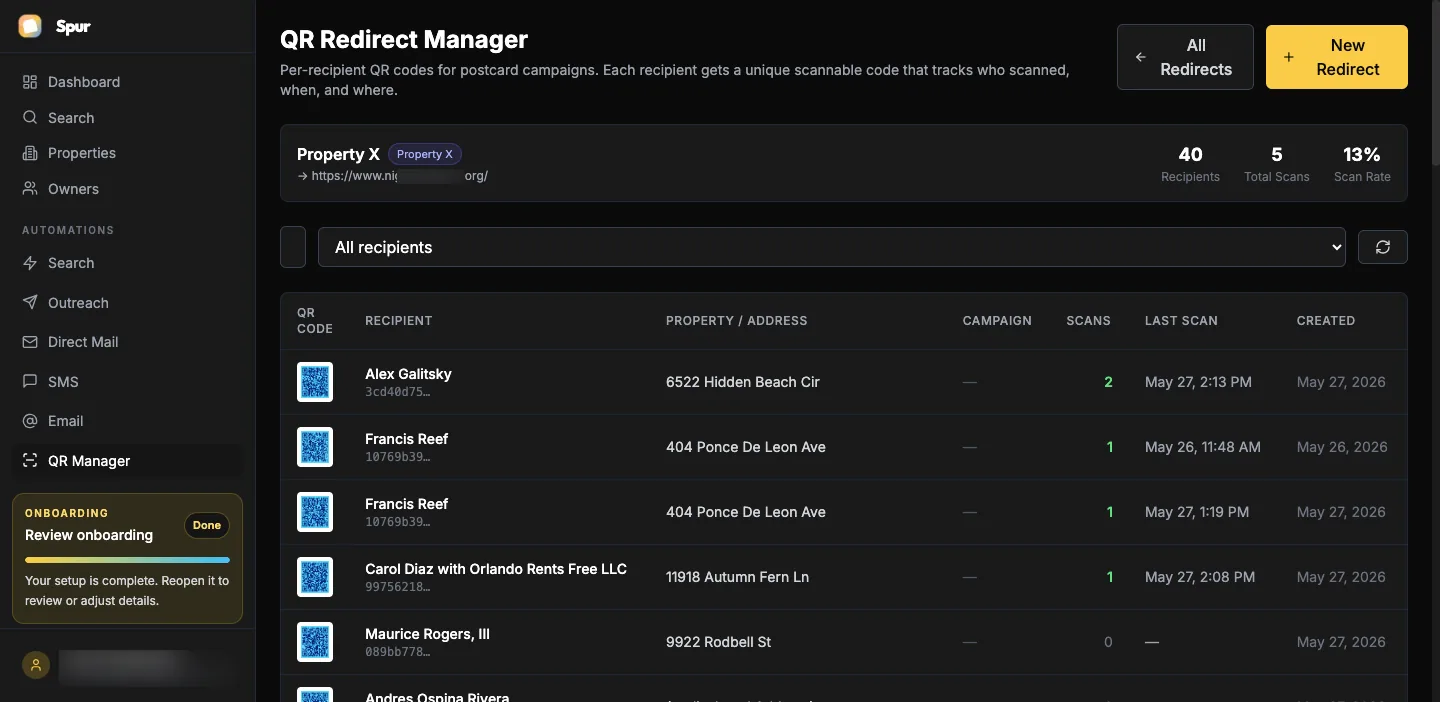
See it in Spur
A septic postcard list for one rural zip
Sample Waconia, MN list: owner-occupied homes on larger lots outside the city sewer district. Names are partly masked.
Zip 55387Owner-occupiedLot 1+ acreOutside city limitsOwned 4+ yrs
- Dale H.4180 County Road 12Built 1978 · 3.2 acresOwned 22 yrsOlder system
- Jen & Mark O.4265 County Road 12Built 1996 · 2.1 acresOwned 9 yrs4 bed
- Ruth S.9810 Lake RdBuilt 1984 · 1.4 acresOwned 33 yrsOwner 74
- Ben K.9922 Lake RdBuilt 2003 · 1.8 acresOwned 6 yrs5 bed
- Alicia T.10240 Hickory LnBuilt 1989 · 2.6 acresOwned 14 yrsWell + septic
AI draft for Dale H. · 4180 County Road 12
Hi Dale,
If you can't remember when your septic tank was last pumped, you're in good company. Most household tanks need it every three to five years, and pumping on schedule is the cheapest way to protect a drain field that costs many times more to replace.
We'll pump the tank, check the baffles and inlet, and leave you a short written report. Then we'll mail you a reminder when the next one is due, so you never have to keep track.
Scan the code to pick a date. If you ever have a backup, our number is on the front of this card.
Greg Lindahl · Valley Septic Service · (952) 555-0144
Sample data for illustration. Your results depend on your market and filters.
Playbook
How to write septic postcards that get booked
A septic postcard has one job: be the card in the drawer when the owner needs a pumper. Because most owners never think about the tank until something goes wrong, the best cards are calm and useful, not alarming. They explain how often a tank needs pumping, offer a clear first-visit price, and put your number where it can be found at 9 p.m. on a Sunday.
Lead with the interval. Most household tanks need pumping every three to five years, depending on tank size and how many people live in the home. Saying so on the card gives the owner a concrete reason to act, and a reason to trust you because it is not a pitch.
Choose the right homes. Septic is not visible in public data, but you know which townships, lake roads, and subdivisions sit outside sewer service. Target owner-occupied homes on larger lots there, and use ownership length to separate recent buyers from long-time owners who may be overdue.
Keep the offer simple. A flat first-visit price that includes pumping and a baffle check is easier to book than a coupon with conditions. Mention that you will send a written report and a reminder for the next pumping, because that is what makes you the pumper they keep.
Include the emergency line. Put your 24-hour number on the front of the card in large type. Many owners will not book a routine pumping, but they will keep the card and call in an emergency, and that call is usually your most profitable job of the year.
Mail more than once. Owners rarely act on the first card, so plan two or three mailings a year to the same rural list. A QR code that opens your scheduling page lets you see who scanned, and a quick follow-up call to scanners who did not book turns interest into a truck on the road.
Test the card before scaling it. Mail 300 to one rural road group, note how many scan and book, then change one thing at a time: the headline, the price, or the offer. Two or three small tests in a season will teach you more about your own roads than any general advice, and the winning version becomes next year's default card.
2 pumpsplus one repair cover a full year of Spur Team
A few pumpings pay for a year of postcards.
- Spur Team: $49/mo billed annually = $588/yr
- 300 postcards at $0.94 each = $282
- Each pumping ≈ $300–$600, plus inspections and repairs
Example math. Your pricing and job mix will vary. Run your own numbers →
One tool, not four
Spur vs. the usual septic marketing
What you needThe usual waySpur
Rural owner names and mailing addressesPhone book and word of mouth✓ Built in
Plain-language card per ownerGeneric magnet✓ Built in
Printed and mailed in about 2 daysLocal print shop and a stamp run✓ Built in
QR scans alert the dispatcherNo signal✓ Built in
Automatic reminders for the next pumpingPaper records✓ Built in
Postcards by the numbers
What the septic numbers say
~1 in 5
US households rely on a septic or other onsite system
3–5 yrs
is the typical pumping interval for a household tank
2 pumps
plus one repair cover a full year of Spur Team
FAQ
Septic postcard questions
How do septic companies get more customers?
Mail rural owners a plain-language reminder on pumping intervals, welcome every new buyer, and remind every customer automatically when their next pumping is due.
Can Spur tell which homes have septic?
Not directly. You know which townships and roads are outside sewer service, and Spur lets you target them by zip, radius, lot size, and ownership.
What should a septic postcard say?
How often tanks need pumping, a flat first-visit price, your 24-hour emergency number, and a QR code to schedule.
How many postcards should I send?
Start with 300 to a tight rural area, then mail the same list two or three times a year.
What does Spur cost for a septic company?
Solo is free forever. You pay per postcard when you mail. Team is $49/mo billed annually with more searches, enrichments, and QR codes.
Keep exploring
Related plays and guides
Start in minutes. No card required.
Be the number on the fridge before the backup.
Pick your rural zips and mail your first septic postcards today. Free to start.
Mail my septic postcards — freeFree forever plan · No card · 20 property searches a month
Prefer a walkthrough? Book a demo