
Public records don't list an owner's birth date. Good lists rely on ownership length, home size, and exemptions instead.
Free list · Senior and retiree homeowners
Senior homeowner list, built with care for long-time owners.
Spur finds owner-occupied homes held 20, 25, or 30+ years, usually with high equity and more space than the household needs today. Pair it with your county's senior exemption list where available, and reach owners with patient, useful outreach about downsizing and planning.
Free forever plan · No card · 20 property searches a month
See what’s in the list ↓Zip 60540 · Naperville, IL1,146 owners of 25+ years
Live searchOwned 25+ yrsOwner-occupied4+ bedrooms
- Richard & Joan P.1224 Westglen DrSince 1989
- Dolores W.806 S Columbia StSince 1984
- Frank & Nancy G.2017 Pebblewood LnSince 1993
Phone + email found for 3 of 3Export CSV
Dolores W. requested your downsizing guide · 15 min ago
Free to pull · Owner contact in 1 click
Owned 25+ yrsthe strongest public signal of life stage
High equitymost long-time owners own outright
Home sizefind homes bigger than today's household
The problem
Reaching older homeowners well takes care.
Older owners are frequent targets of predatory offers. Anything that reads as pressure gets ignored, or reported.
Adult children, advisors, and attorneys are often part of the move. One letter rarely decides it.
What's in the list
What's on a senior homeowner list in Spur.
Spur builds this list from ownership and property signals that correlate with later life stages, never from assumptions written into the letter.
1,146owners of 25+ years in one zip
512with 4+ bedrooms
41825+ years, 4+ bedrooms, 80%+ equity
Fields on every record
- Owned since
- Purchase year from the last recorded sale.
- Owner-occupancy
- Confirms they live in the home.
- Estimated equity
- Most long-time owners have little or no mortgage.
- Home size
- Bedrooms, bathrooms, square footage, and stories.
- Year built
- Older homes may need updates before a sale.
- Owner type
- Individual, joint, or living trust.
- Senior exemption
- Upload your county's senior exemption list where it's public.
- Owner contact
- Phone and email through enrichment.
Example counts from one suburban Chicago zip. Long-tenure owners concentrate in established neighborhoods.
Sample list
A sample senior homeowner list
Owner-occupied homes with 4+ bedrooms owned 25 years or more, longest-held first.
Zip 60540Owned 25+ yrsOwner-occupied4+ bedrooms
| Owner | Property | Owned since | Beds / stories | Equity |
|---|---|---|---|---|
| Dolores W. | 806 S Columbia St | 1984 | 4 / 2 | 100% |
| Richard & Joan P. | 1224 Westglen Dr | 1989 | 5 / 2 | 100% |
| Walter & Ann S. | 441 Fairway Dr | 1990 | 4 / 2 | 94% |
| Frank & Nancy G. | 2017 Pebblewood Ln | 1993 | 4 / 2 | 91% |
| Kowalski Living Trust | 1530 Bainbridge Dr | 1995 | 5 / 2 | 100% |
| Marjorie L. | 918 Sequoia Rd | 1997 | 4 / 1 | 88% |
Sample data for illustration. Names are partly masked; your results depend on your market and filters.
How it works
From zip code to mailbox in one workflow.
Five patient steps from a long-tenure filter to a trusted conversation.
app.usespur.com
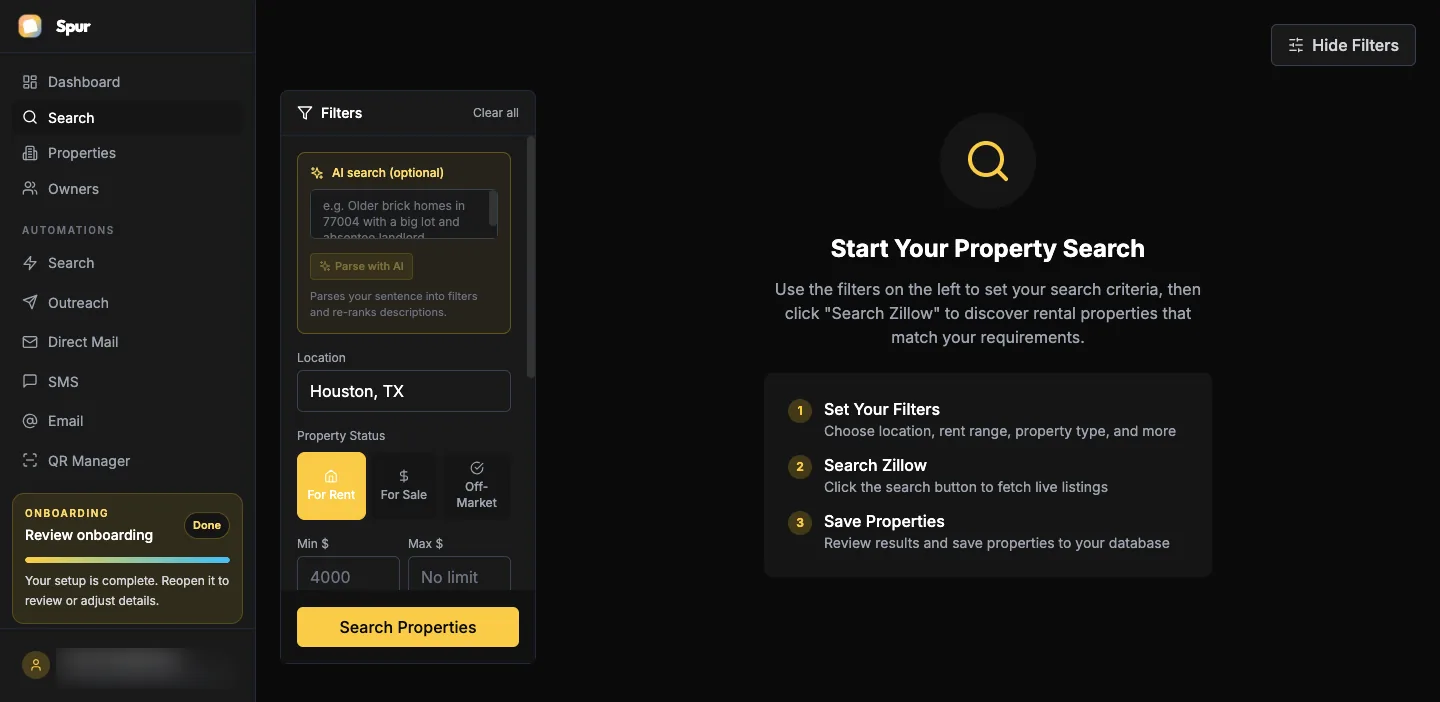
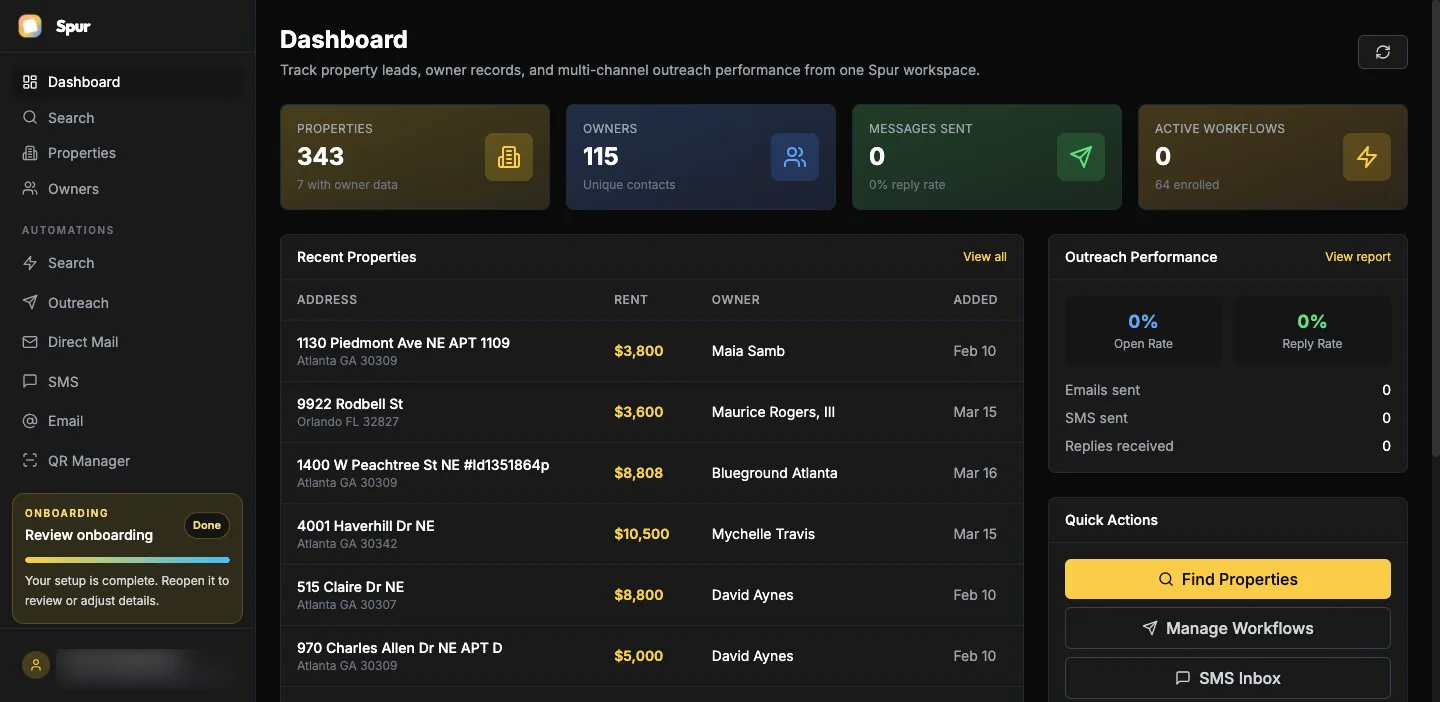
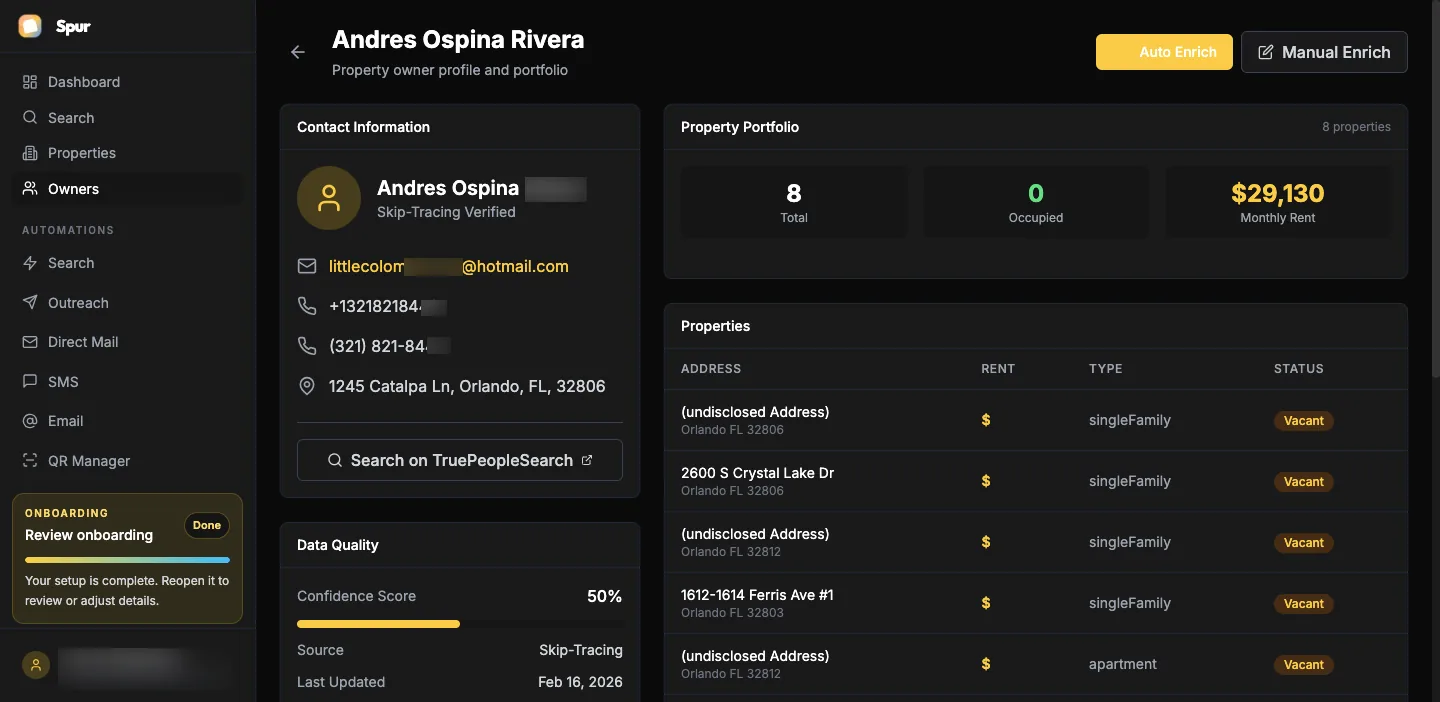
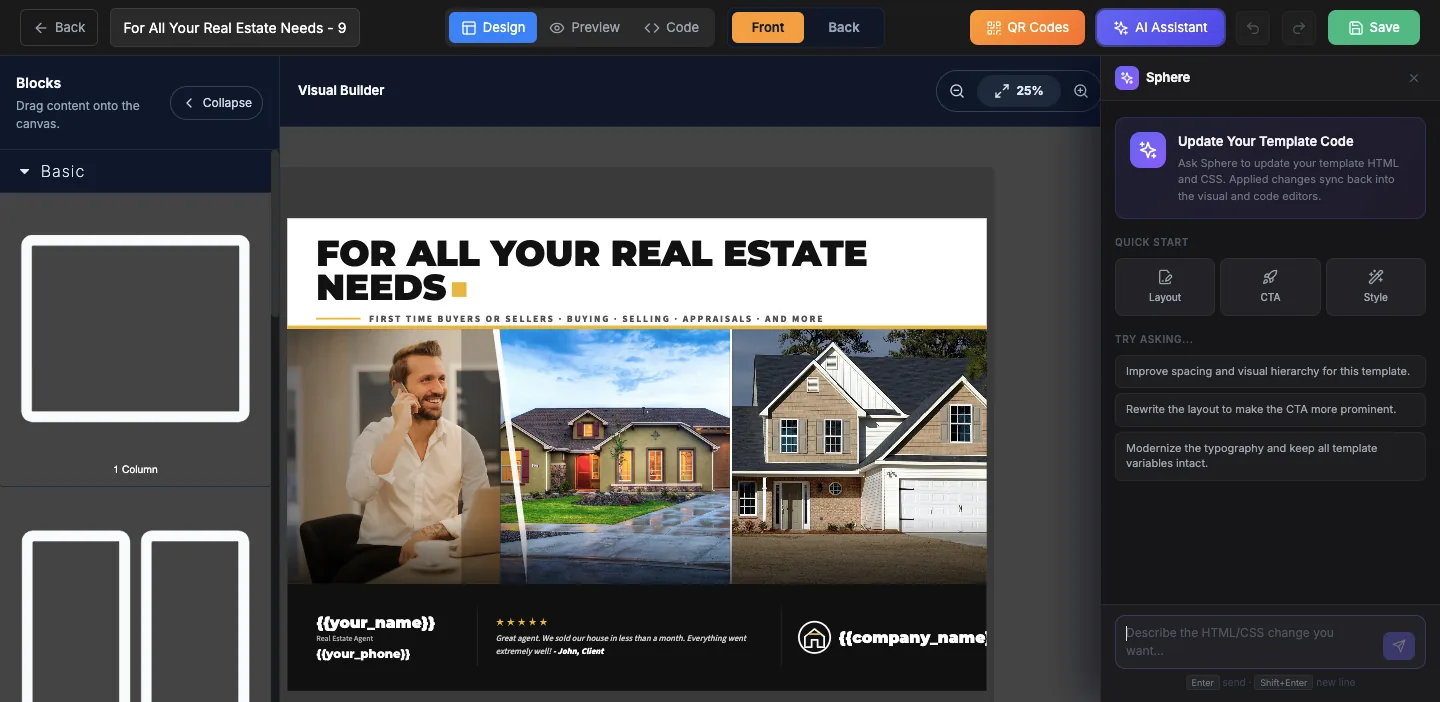
How to work this list
How to work a senior homeowner list.
Long-time owners choose people they trust. These plays focus on being helpful and patient.
- 1Help them rightsize
Offer a downsizing guide and a home value. Let them decide when to talk.
Empty nester downsizing play → - 2Explain reverse mortgage options
Lenders can offer clear, compliant information about HECMs and alternatives.
Reverse mortgage marketing play → - 3Partner with senior move managers
Move managers handle the sorting and moving that keep many owners from selling.
Spur for senior move managers →
Guide
How to build a senior homeowner list, and reach long-time owners respectfully
A senior homeowner list is a set of owners who are likely in or near retirement. Property records don't include an owner's age, so the list is built from signals that strongly correlate with later life stages: owning and living in the same home for 20 to 30 years or more, very high equity, larger homes with more bedrooms than a typical older household needs, and, in many counties, a senior or over-65 property tax exemption that's part of the public record.
These owners are an important audience for several real estate businesses. Many will eventually downsize, move closer to family, or move to a community with less upkeep. Some want to stay and need accessibility updates. Others want to understand reverse mortgages or estate planning. Each of those is a different conversation, and the same list supports all of them.
It's also a group that deserves extra care. Older homeowners are frequent targets of predatory offers, high-pressure investors, and scams. Your outreach should look and feel nothing like those. Never mention age, health, or assumptions about the household in your letter. Lead with something useful, a guide to rightsizing, a no-obligation home value, or an invitation to a seminar, and make it easy to opt out. Expect adult children and advisors to be part of the decision, and welcome them.
Patience is the strategy. Long-time owners often take a year or more to decide on a move. A few well-spaced, helpful touches build trust better than frequent mail. Track who scans or requests your guide, and follow up with those owners personally.
Agents who work this market often earn the Seniors Real Estate Specialist® (SRES®) designation and build relationships with senior move managers, estate attorneys, and elder-law professionals. Those partners can make the difference between a stressful move and a smooth one, and they refer clients to agents they trust.
Compliance note. Never reference age, health, or family status in your marketing, and keep fair housing and fair lending rules in mind. Reverse mortgage marketing must follow HUD and CFPB advertising rules. Some states have additional elder-protection laws for real estate transactions, so check yours. Read the compliance checklist →
40×return on a year of Spur Team from one sale plus one purchase
One downsizing client often means two transactions.
- Spur Team: $588/yr billed annually
- Mail 300 long-time owners quarterly = 1,200 letters a year at $1.09 = $1,308
- One $500,000 sale + one $300,000 purchase at 3% = $24,000 commission
Example math. Commission rates and timing vary by market. Run your own numbers →
List + outreach in one
Spur vs. buying an age-based mailing list
What you needBuying a listSpur
Owners by tenure, size, and equityModeled age data of unknown accuracy✓ Built in
Owner-occupancy confirmedMixed with renters✓ Built in
Senior exemption matchingNot available✓ Built in
Respectful, reviewed lettersGeneric "we buy houses" mail✓ Built in
Who requested your guideNo response signal✓ Built in
FAQ
Senior Homeowner List questions
How do I find senior homeowners in my area?
Search owner-occupied homes owned 20+ or 25+ years, then add home size and equity. Where your county publishes senior exemptions, upload that list and match it to property records.
Does Spur include homeowner age?
Property records don't include birth dates. Spur uses ownership length, occupancy, home size, equity, and public exemption data, which are strong and more respectful signals.
How should I write to older homeowners?
Lead with something useful, such as a downsizing guide or home value, never mention age or health, and make it easy to opt out. Expect family members to be involved.
Who uses a senior homeowner list?
Agents who help with downsizing, senior move managers, reverse mortgage lenders, estate attorneys, and aging-in-place remodelers.
Are there rules for marketing to seniors?
Yes. Fair housing and fair lending rules apply, reverse mortgage advertising must follow HUD and CFPB rules, and some states have elder-protection laws. Avoid any high-pressure language.
Keep exploring
Related lists, plays, and guides
Start in minutes. No card required.
Be the patient, trusted name when they're ready to move.
Pull the long-time owners in your area and offer a helpful guide today. Free to start.
Free forever plan · No card · 20 property searches a month
Prefer a walkthrough? Book a demo