
HVAC techs and roofers send a few jobs, but you can't plan a season around them.
Insulation play · Attic leads
Attic insulation leads from the homes most likely to be far below R-49.
Older homes were built to a much lower standard, and whatever was installed has been settling for decades. Spur finds those homes by year built and tenure, then mails each owner a free attic measurement offer. You call the ones who scan.
Free forever plan · No card · 20 property searches a month
USPSFirst-Class
Rob Lindgren2240 Dellwood AveRoseville, MN 55113Scan to book a free measurement
Rob L. booked a free measurement · 5 min ago
AI-written for this owner · Mailed in 2 days
R-49 to R-60DOE-recommended attic range for the coldest U.S. climate zones
Under the joistsis the quick sign that an attic needs more
2 daysfrom approval to USPS first-class
The problem
Attic leads usually come from someone else's job.
Marketplace leads get three calls, and the attic becomes a price-per-square-foot contest.
Nothing in public records states how much insulation a home has, so most marketing is broad.
How it works
From list to mailbox in one workflow.
Five steps from a zip code to a booked attic measurement.
app.usespur.com
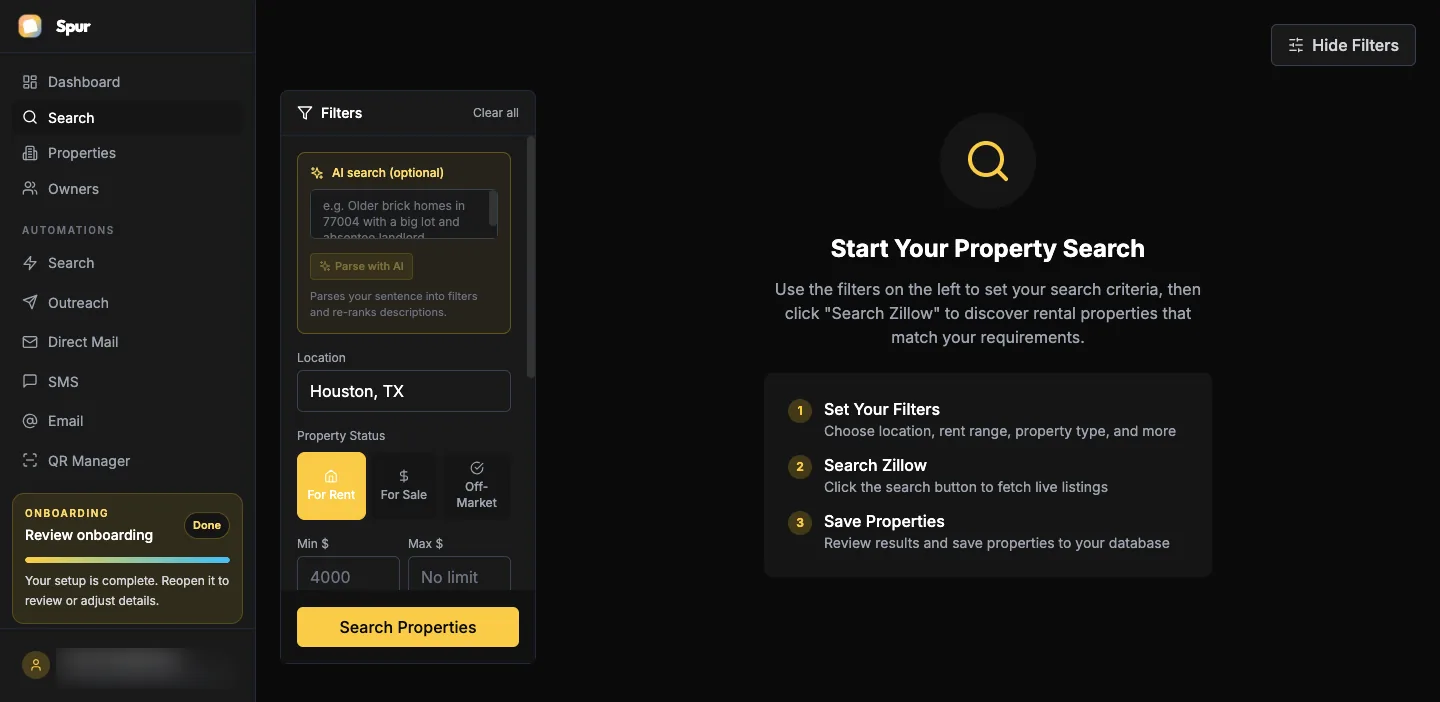
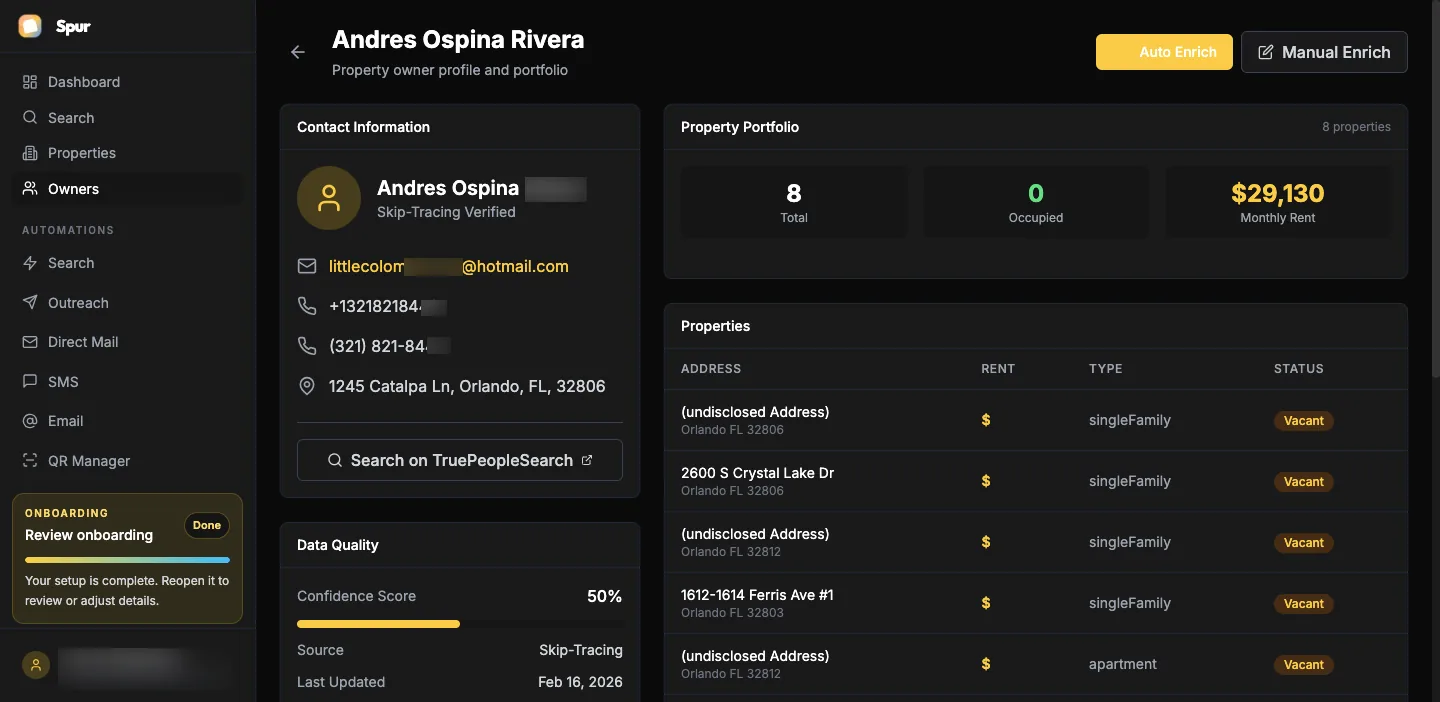
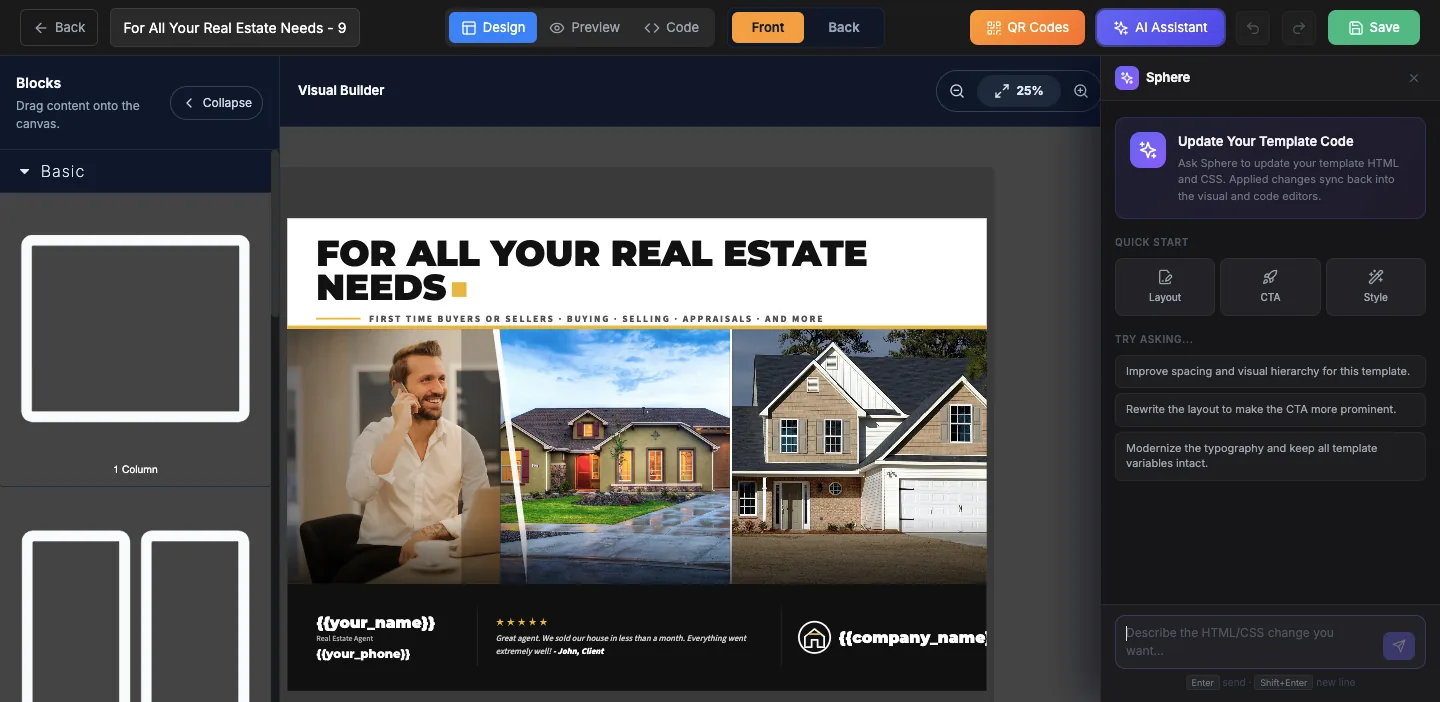
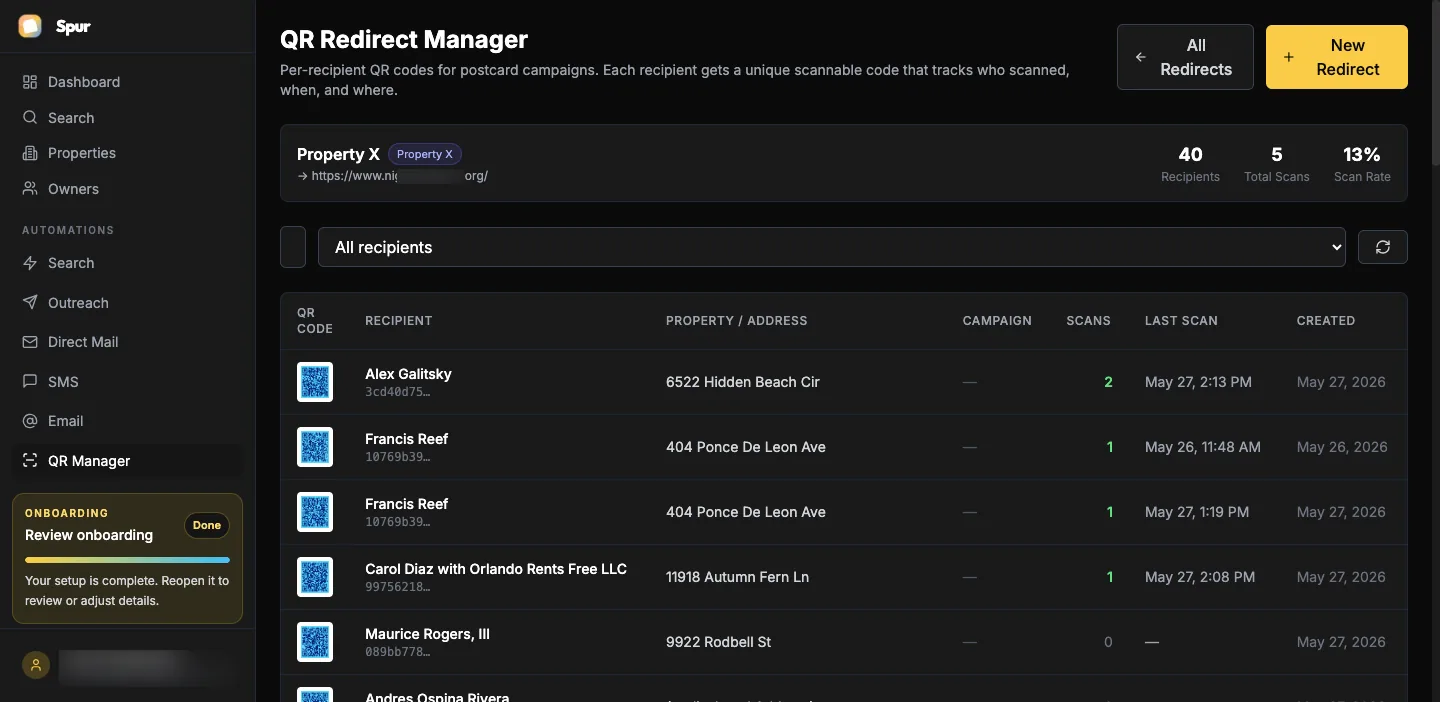
See it in Spur
An attic insulation lead list
A sample Twin Cities list of long-term owners in 1970s homes, likely well below recommended levels. Names are partly masked.
Zip 55113Owner-occupiedBuilt 1965–1985Owned 10+ yrsSingle-family
- Rob L.2240 Dellwood AveBuilt 1974 · split-levelOwned 21 yrsLikely under R-30
- Mei & Paul H.2255 Dellwood AveBuilt 1972 · 2-storyOwned 17 yrsLikely under R-30
- Sharon D.1680 Sandhurst DrBuilt 1968 · ramblerOwner 73Owned 34 yrs
- Eric N.1692 Sandhurst DrBuilt 1969 · ramblerOwned 12 yrsRecessed lights
- Lori & Ben K.2901 Fernwood StBuilt 1979 · 2-storyOwned 15 yrsCheck hatch
AI draft for Rob L. · 2240 Dellwood Ave
Hi Rob,
The Department of Energy recommends R-49 to R-60 in a Minnesota attic, which works out to around 16 inches or more of blown-in insulation. Many 1970s homes around Roseville started with a fraction of that, and it has been settling ever since.
A quick check: if you can see the tops of your attic floor joists, you very likely need more. We'd be glad to measure it for you for free and send you a photo with a ruler in it, plus one written price that includes sealing air leaks first.
Scan the code on this card to pick a time.
Kayla Sorensen · North Star Attic Co. · (651) 555-0173
Sample data for illustration. Your results depend on your market and filters.
Playbook
How to find homes with under-insulated attics
Public records don't tell you how much insulation is in an attic, but they do offer strong proxies. Year built is the most useful. Energy codes were far looser before the 1980s, and many homes built before then started with little. Tenure is the next filter, since owners who have lived in a home for 10 or 20 years are less likely to have topped up, and more likely to have the budget and interest to do it now.
Use the climate zone. The Department of Energy recommends roughly R-30 to R-49 in an uninsulated attic in the warmest parts of the country and R-49 to R-60 in the coldest. Stating the target for your own region makes the card specific and credible. Converting R-value to inches helps too, because 'about 16 inches' is something an owner can picture and check, while 'R-49' isn't. Depth per R-value varies by material, so match the figure to what you install.
Give owners a self-test. ENERGY STAR's simple guidance is that if attic insulation is level with or below the floor joists, you probably need more. Putting that test on a card is honest, useful, and memorable, and it turns a passive reader into someone who might climb up with a flashlight. If they do, they will want a professional to confirm what they saw.
Sell air sealing as part of the job. ENERGY STAR advises sealing air leaks before adding insulation, because insulation works best when air isn't moving through it. Common leaks include the attic hatch, plumbing stacks, top plates, and recessed lights. Older recessed fixtures that aren't rated for insulation contact need special care, and you should check them during the measurement. A quote that includes sealing is more valuable, and harder to compare directly with a cheaper blow-only bid.
Screen for hazards at the visit. Knob-and-tube wiring and vermiculite are two reasons to stop and talk to the owner before doing anything else. EPA advises against disturbing vermiculite, which may contain asbestos, until it has been tested. Bathroom fans that vent into the attic are another common finding and should be routed outside before you insulate over them. These details show expertise and protect you on the job.
Comply with the rules on paperwork. The FTC's R-Value Rule requires installers to give customers a contract or receipt showing the coverage, thickness, and R-value of what was installed. Treat that as a selling point: a written before-and-after with photos is exactly what a buyer's inspector would want to see someday, and it is what your neighbors' cards can point to.
13×+return on a season's mail and a year of Spur Team from four attic jobs
A few attics a season, and the mail is paid for.
- Spur Team: $49/mo billed annually = $588/yr
- 400 postcards on Team at $0.94 each = $376
- Four attic jobs at ~$3,200 each = $12,800
Example math. Your job size and close rate will vary. Run your own numbers →
One tool, not four
Spur vs. the usual ways to find attic work
What you needThe usual waySpur
Older homes filtered by era and tenureWaiting on partner referrals✓ Built in
Exclusive, inbound scansShared leads with three bidders✓ Built in
A free measurement offer in the copyPrice per square foot over the phone✓ Built in
Climate-specific targets in the copyGeneric energy language✓ Built in
Repeat cards before each seasonOne shot, then nothing✓ Built in
Attic Insulation by the numbers
What the attic guidance says
R-49 to R-60
recommended for uninsulated attics in the coldest U.S. climate zones
Seal first
air leaks should be sealed before insulation is added
13×+
return on a season's mail and a year of Spur Team from four attic jobs
FAQ
Attic insulation lead questions
How do I find homes with thin attic insulation?
Public records don't list insulation, so use proxies: homes built before about 1985 and owners with 10+ years of tenure. Then confirm with a free measurement.
How much attic insulation should a home have?
The Department of Energy recommends roughly R-30 to R-60 depending on climate zone. In the coldest zones, that means R-49 to R-60.
What's the simplest way for owners to check?
ENERGY STAR says that if insulation is level with or below the attic floor joists, the home probably needs more. That test works well on a postcard.
Should I include air sealing in the offer?
Yes. ENERGY STAR advises sealing air leaks before adding insulation, and a sealed-and-insulated quote is harder to compare with a cheaper blow-only bid.
What paperwork do I need to give the customer?
The FTC's R-Value Rule requires installers to provide a contract or receipt showing the coverage, thickness, and R-value installed.
Keep exploring
Related plays and guides
Start in minutes. No card required.
Stop waiting for someone else to find your next attic.
Build a list of older homes and mail a free measurement offer today. Free to start, no card.
Find attic insulation leads — freeFree forever plan · No card · 20 property searches a month
Prefer a walkthrough? Book a demo