
Owners have seen too many 'cut your bill in half' flyers to believe another one.
Insulation play · Postcards
Insulation postcards that make an invisible problem easy to picture.
No one sees their insulation, so a generic energy flyer gives them nothing to act on. Spur writes a card for each older home about the rooms that run cold and the attic above them, mails it, and alerts you when the owner scans to book a free attic check.
Free forever plan · No card · 20 property searches a month
USPSFirst-Class
Helen Marsh2814 Cedar Crest RdOmaha, NE 68124Scan to book a free attic check
Helen M. scanned your attic postcard · 3 min ago
AI-written for this owner · Mailed in 2 days
Pre-1980homes are the core list for attic insulation mail
1 QRper owner, so every scan has a name on it
2 daysfrom approval to USPS first-class
The problem
Most insulation mail sounds like every other energy pitch.
A generic card can't name the street, the era, or the rooms that run cold.
You print a thousand cards and find out nothing about who read them.
How it works
From list to mailbox in one workflow.
Five steps from a street of older homes to booked attic checks.
app.usespur.com
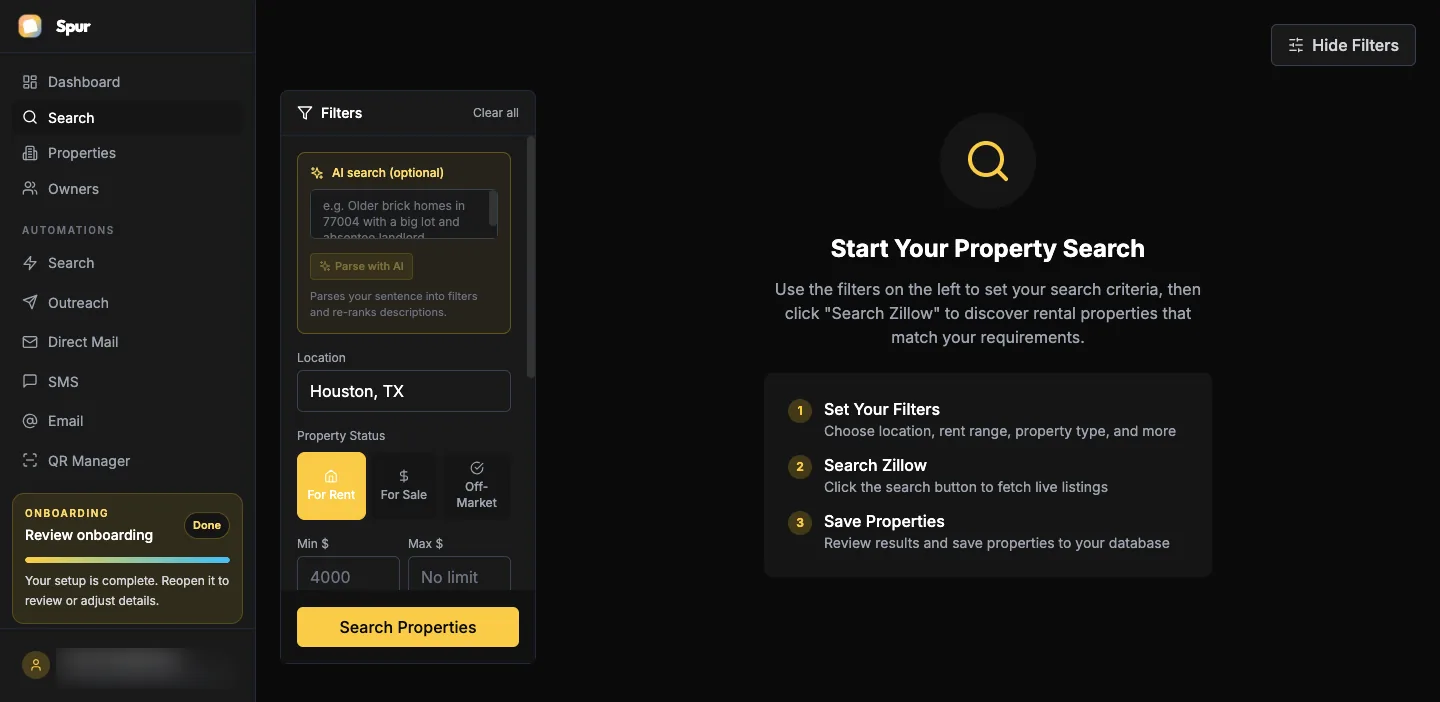
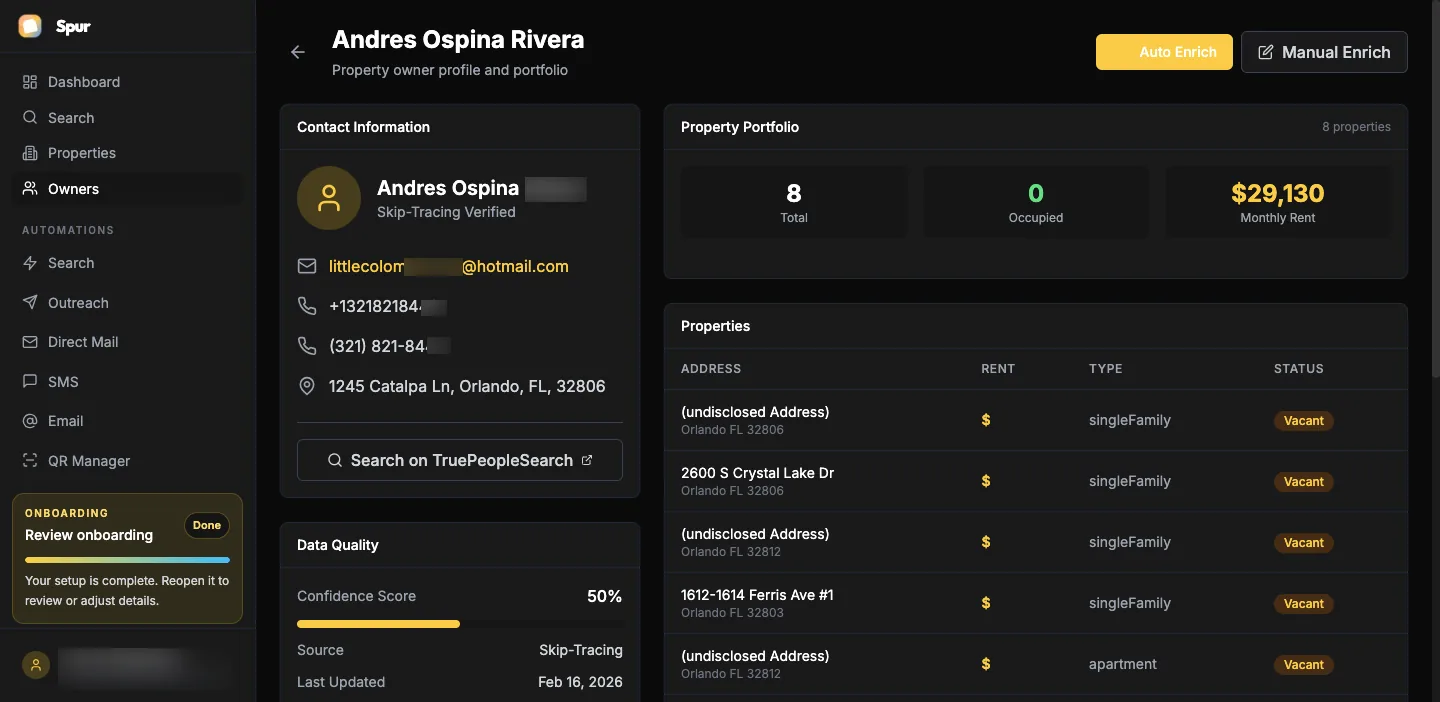
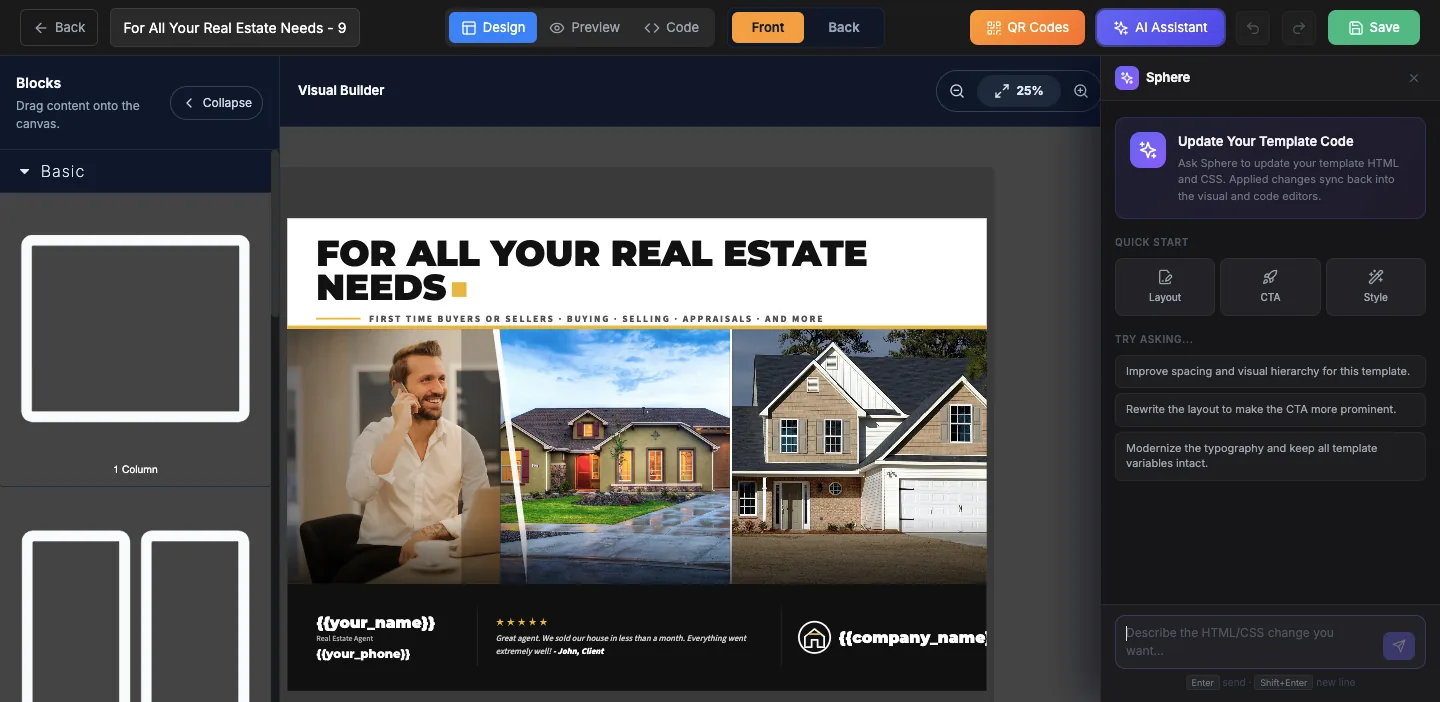
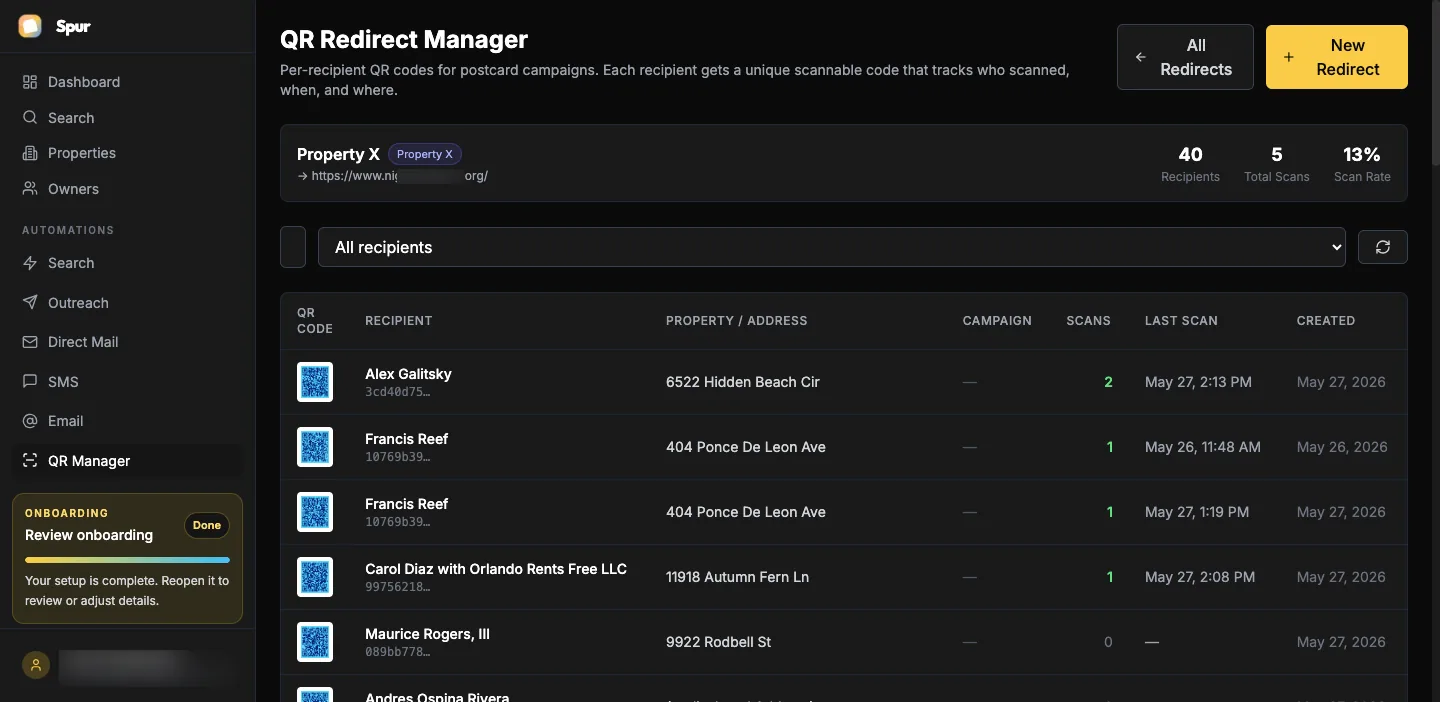
See it in Spur
An insulation postcard list
A sample Omaha list of owner-occupied homes from the 1960s, before heating season. Names are partly masked.
Zip 68124Owner-occupiedBuilt 1955–1975Owned 10+ yrsSingle-family
- Helen M.2814 Cedar Crest RdBuilt 1965 · 2-storyOwned 24 yrsLikely original attic
- Doug & Pat R.2830 Cedar Crest RdBuilt 1963 · 1.5-storyOwned 31 yrsKnee walls
- Nadia K.8912 Burt CtBuilt 1968 · ranchOwned 11 yrsLikely thin attic
- Tom V.8927 Burt CtBuilt 1959 · ranchOwned 19 yrsOwner 68
- Carla & Ian B.3105 Pacific Hills DrBuilt 1971 · 2-storyOwned 14 yrsBonus room
AI draft for Helen M. · 2814 Cedar Crest Rd
Hi Helen,
Homes on Cedar Crest were built around 1965, when a few inches of attic insulation was typical. Sixty years of settling usually leaves less than that, which is often why upstairs rooms feel colder in January and warmer in July.
We'll come out for free, measure what's in your attic, look for air leaks around the hatch and light fixtures, and send you photos with a written price. There's no obligation.
Scan the code to pick a time before the first cold snap.
Grace Lindholm · Prairie Line Insulation · (402) 555-0148
Sample data for illustration. Your results depend on your market and filters.
Playbook
What makes an insulation postcard work
Insulation has a marketing problem that other trades don't. A homeowner can see a worn roof or a fogged window, but almost nobody has looked at their attic in years. The job of the postcard isn't to explain R-values. It's to connect something the owner already feels, like a cold bedroom or a furnace that never seems to stop, to a place in the house they haven't checked.
Lead with the symptom and name the house. 'Is the upstairs always colder?' beats any line about energy efficiency, because the reader can answer it. Adding the street and the era makes it clear the card was written for that home and isn't a mass mailing. Homes built in the same year by the same builder usually have the same insulation, so this kind of specificity is honest as well as effective.
Offer something free and concrete. A no-charge attic measurement with photos is the strongest offer in this trade, because it makes the invisible visible. Photos do the selling later. Keep the rest of the card simple: one offer, one QR code, one phone number, and the company name large enough to read from a kitchen counter.
Be careful with savings language. The FTC's R-Value Rule covers how home insulation is labeled and advertised, and savings claims need a reasonable basis behind them. ENERGY STAR's estimate, an average of about 15% on heating and cooling costs from air sealing and adding insulation, is a safe figure when you attribute it and don't present it as a promise. Savings vary widely by climate and by the home.
Mail at the right moment. Cards that land four to six weeks before heating season catch owners who remember last winter, and in hot climates a spring card about upstairs rooms works the same way. Older long-term owners are the best first list, since they are the most likely to still have whatever went in when the home was built.
Use the scan data. Each card carries its own QR code, so you know which owners looked. Call those homes first, ask about the rooms that bother them most, and book the visit. Owners who don't scan can get a second card a few weeks later with a different headline, which often does better than a bigger first mailing.
5×+return on a year of Spur Team from one $3,000 attic job
One attic job pays for the year.
- Spur Team: $49/mo billed annually = $588/yr
- 500 postcards on Team at $0.94 each = $470
- One $3,000 attic insulation and air sealing job covers both
Example math. Your pricing and response will vary. Run your own numbers →
One tool, not four
Spur vs. the usual insulation flyer
What you needThe usual waySpur
Older homes picked by year builtEvery address on the route✓ Built in
Owner's name and street in the copy'Dear homeowner'✓ Built in
A free attic check offer on every cardA percent-off coupon✓ Built in
Copy with careful, attributed savings figuresBig savings claims✓ Built in
A QR code that shows who scannedNo signal at all✓ Built in
Postcards by the numbers
Numbers worth putting behind an insulation card
~15%
average heating and cooling savings from air sealing and adding insulation
R-30 to R-60
recommended attic insulation for most U.S. climate zones
5×+
return on a year of Spur Team from one $3,000 attic job
FAQ
Insulation postcard questions
What should an insulation postcard say?
Name a symptom the owner can feel, like a cold upstairs or a furnace that never stops. Mention the era of the home and offer a free attic measurement with photos.
Which homes should I mail first?
Owner-occupied homes built before about 1980 and owned for 10+ years. They are the most likely to still have thin or settled original insulation.
Can I promise energy savings on the card?
Avoid promises. The FTC's R-Value Rule covers insulation advertising, and savings claims need a reasonable basis. Attribute any figure you use, such as ENERGY STAR's average of about 15%, and note that savings vary.
When is the best time to mail?
Four to six weeks before heating season in cold climates, and in spring for hot climates where upstairs rooms overheat.
How do I know who's interested?
Each card has its own QR code. When an owner scans, Spur alerts you with the name and address so you can follow up first.
Keep exploring
Related plays and guides
Start in minutes. No card required.
Give owners a reason to finally look in the attic.
Build a list of older homes and mail your first insulation postcard today. Free to start.
Create my insulation postcard — freeFree forever plan · No card · 20 property searches a month
Prefer a walkthrough? Book a demo