
By the time the calendar is empty, the mail is already six weeks late.
Insulation play · Direct mail program
Insulation direct mail marketing that runs all year, not just in October.
One fall mailing can't carry an insulation business. Spur runs a standing program, with older-home lists, new buyers, past customers, and partner referrals on their own schedules, and shows you what each list costs per signed job.
Free forever plan · No card · 20 property searches a month
USPSFirst-Class
Alan Becker7420 N Beach DrMilwaukee, WI 53217Scan to book your comfort check
Alan B. booked a comfort check · 6 min ago
AI-written for this owner · Mailed in 2 days
4 listsolder homes, new buyers, past customers, partners
2 seasonspre-heating and pre-cooling, repeated every year
Per jobcost tracked by list, not just by mailing
The problem
Insulation mail usually runs in bursts, and the results disappear with it.
A new buyer and a 30-year owner need very different cards, but they get the same one.
With no cost per job by list, next year's budget is a guess.
How it works
From list to mailbox in one workflow.
Five steps from one-off mailers to a measured insulation program.
app.usespur.com
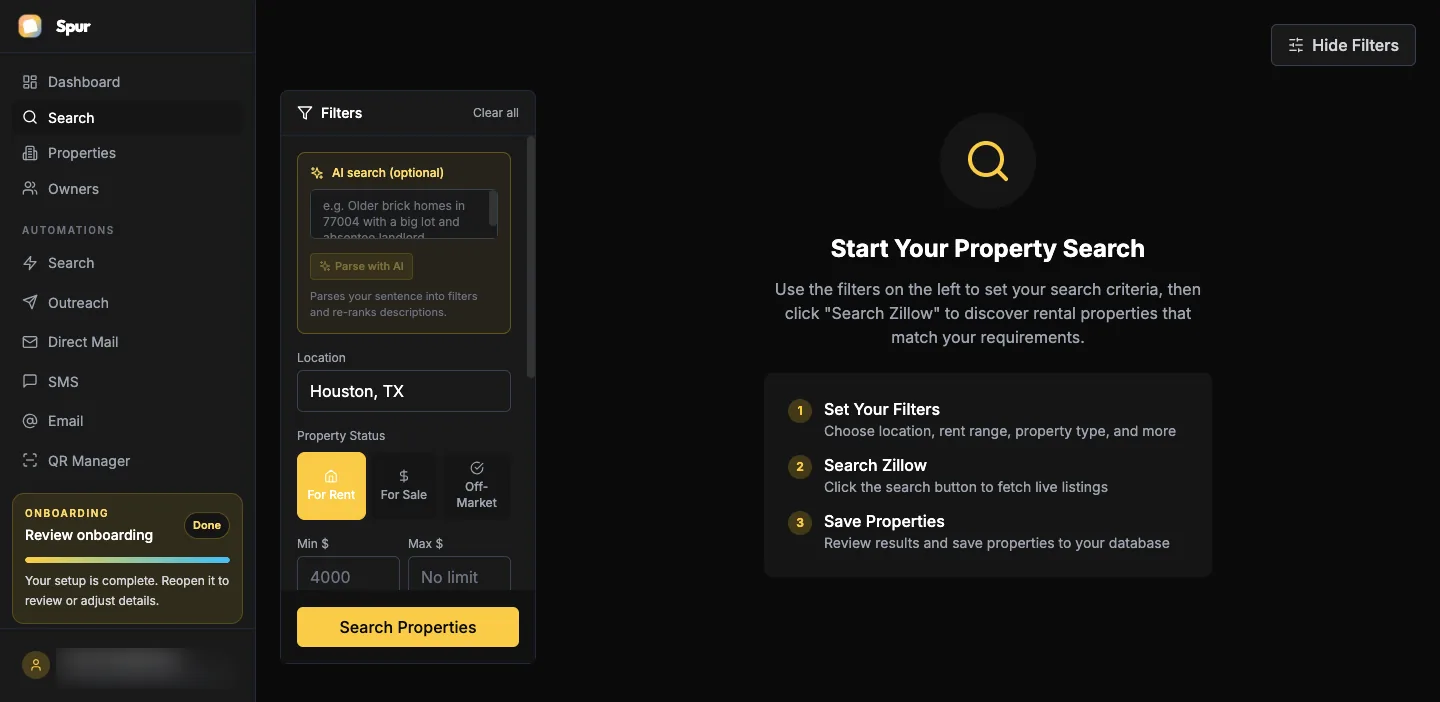
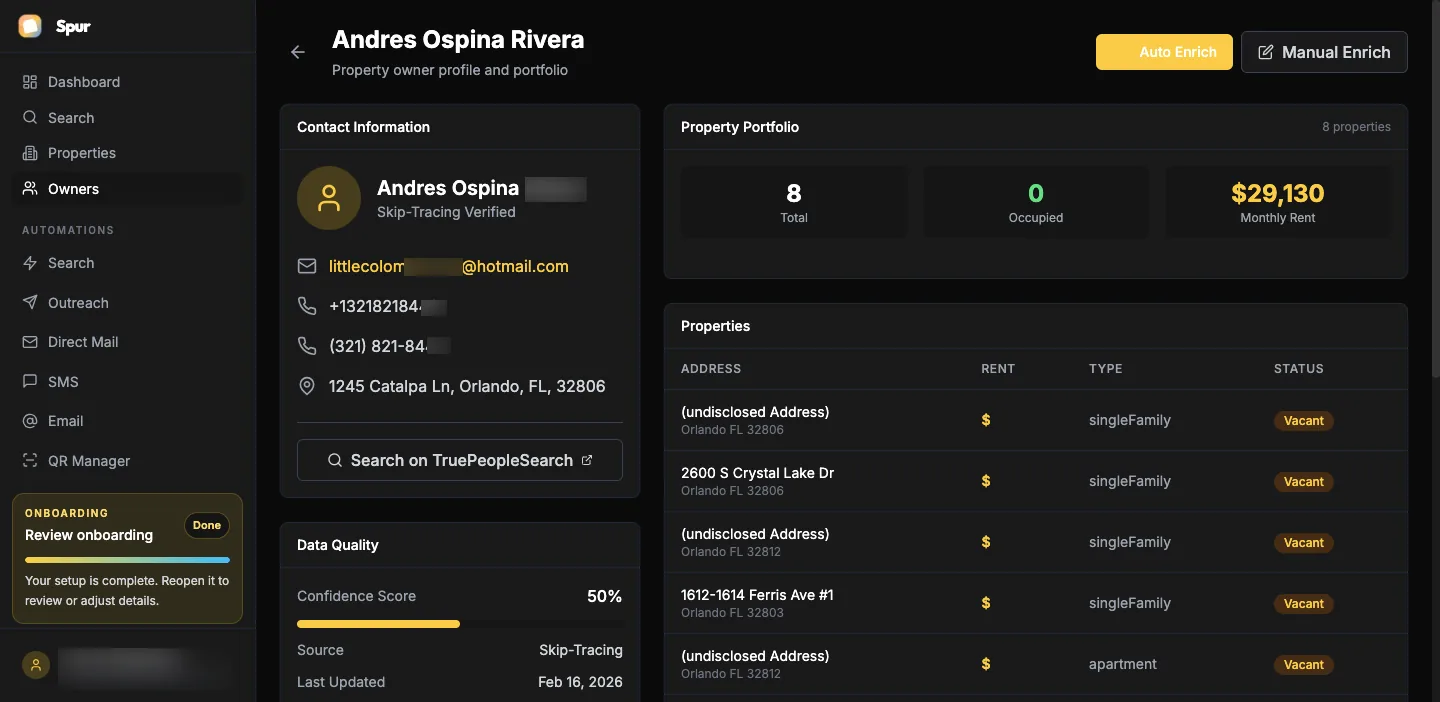
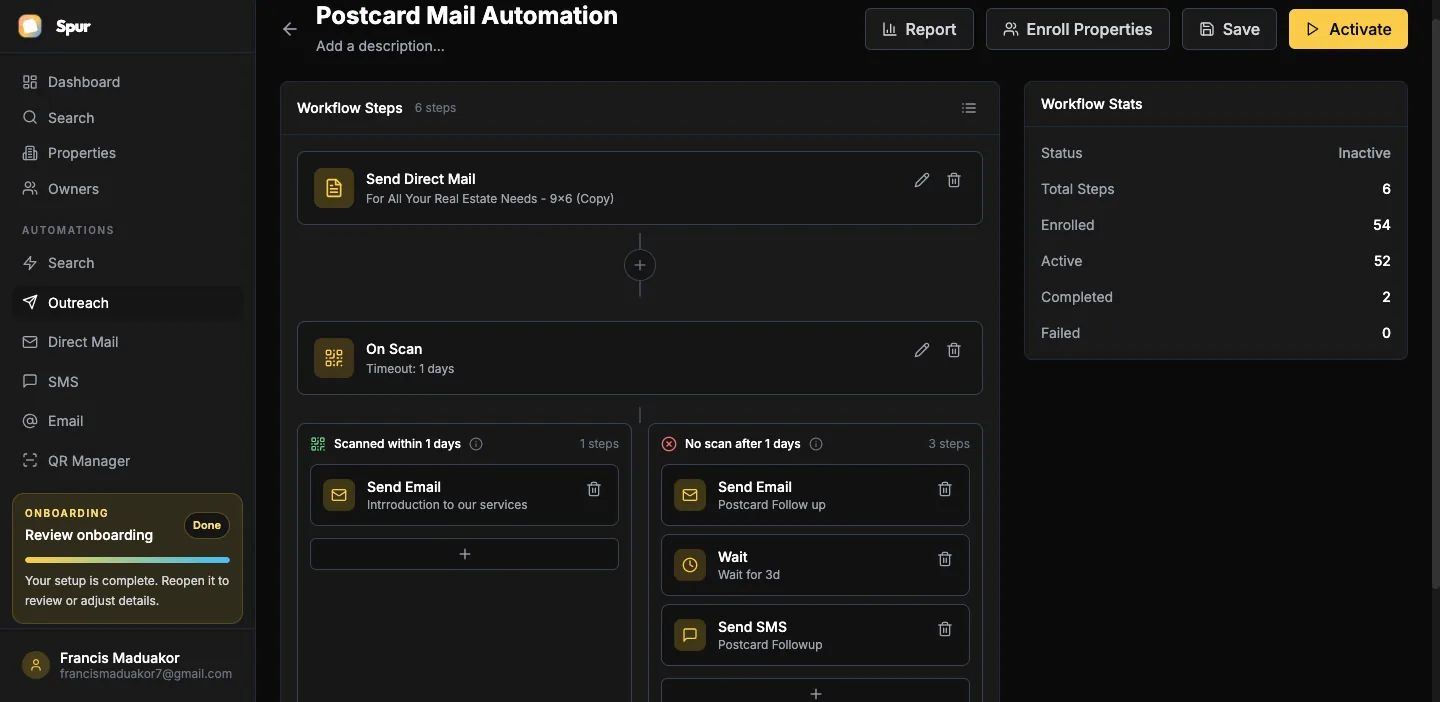
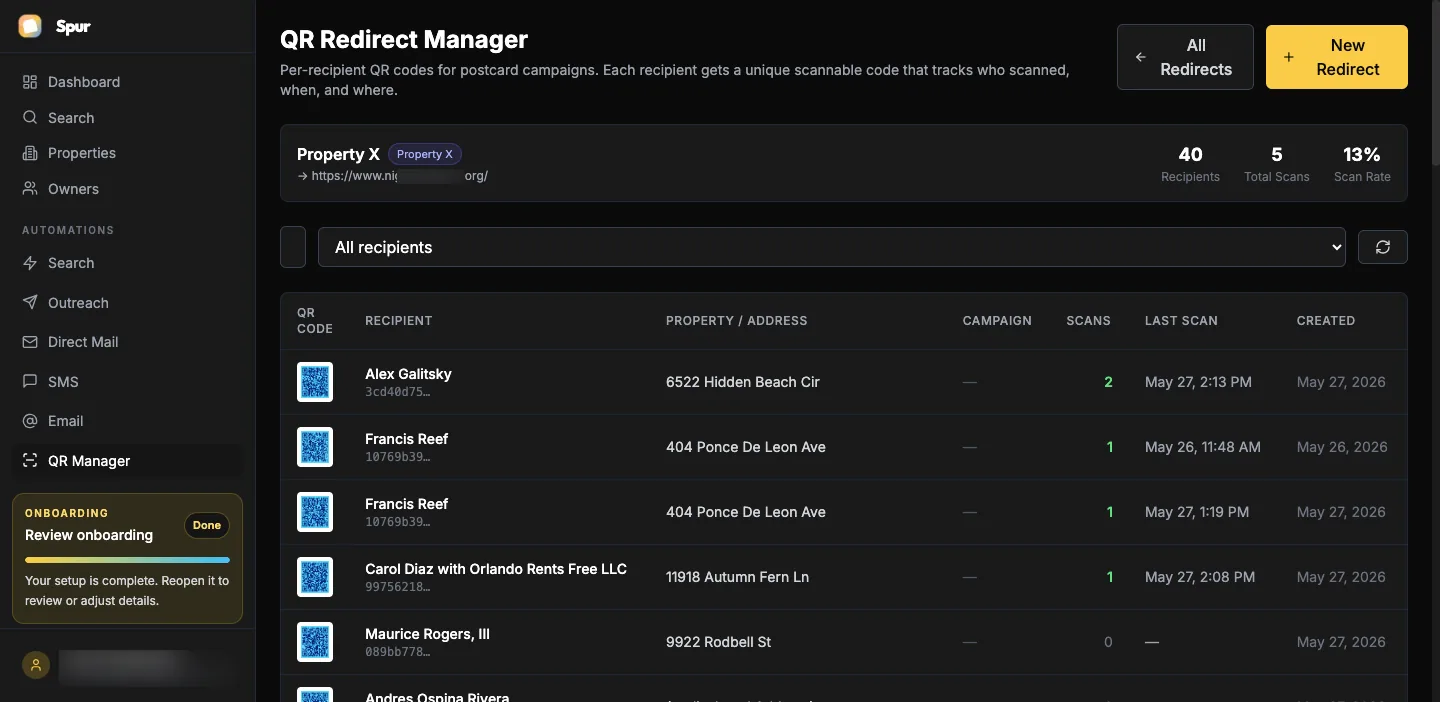
See it in Spur
An insulation mail calendar
A sample Milwaukee-area program across one year. Counts are illustrative.
4 standing listsOwner-occupiedBuilt pre-1985Monthly new-buyer refreshPartner list upload
- Older homes1,200 homesMail Sept 1 and Apr 1Built pre-1980
- New buyers90 homes a monthMail monthlySold last 60 days
- Past customers340 homesMail each MarchYour list
- HVAC partners45 companiesMail quarterlyReferral offer
- Job neighbors40 homes per jobMail weeklyRadius 0.25 mi
AI draft for Alan B. · 7420 N Beach Dr
Hi Alan,
We've been working on ranch homes in Fox Point this season, and most of them share the same issue: about half the attic insulation you'd want for a Wisconsin winter, with air leaking in around the hatch and the old recessed lights.
This month we're offering free comfort checks. We'll measure the attic, test for leaks, take photos, and give you one written price. If your home is already in good shape, we'll tell you that too.
Scan the code on this card to book a time before the first hard freeze.
Marcus Olsen · Lakeshore Home Performance · (414) 555-0122
Sample data for illustration. Your results depend on your market and filters.
Playbook
How to build an insulation direct mail program
An insulation business depends on two windows: the weeks before heating season and the weeks before cooling season. A program is built around those windows, with mail going out well before each one starts. Owners think about comfort when the weather turns, so the card has to be in their hand by the time they start noticing the problem.
Run four separate lists. The first is older homes by zip, the core of the program, with long-term owners of homes built before about 1980. The second is new buyers, whose inspection report may have mentioned the attic. The third is your own past customers, who may have only insulated the attic and still have rim joists or crawl spaces to do. The fourth is partner companies, because HVAC installers and roofers are in attics every day and see the need first.
Vary the message by list. A long-term owner hears about comfort and the home's age. A new buyer hears about the inspection report and what to do first. A past customer hears about the next area of the house. A partner hears about how quickly you'll respond and how you'll protect their customer relationship.
Measure the right number. Scan rates tell you whether a card was read, but cost per signed job tells you whether a list is worth keeping. Attic work with air sealing is often in the low thousands of dollars, so even a modest close rate can support steady mail. Look at results per list over a full year, because a single mailing rarely tells the whole story.
Stay honest about incentives. The federal energy efficient home improvement credit ended for improvements made after 2025, so any card still mentioning it is out of date. Many utilities and some states offer rebates, and those programs change often. Confirm what's available before you mention one, and update the copy each season.
Plan around your crews. Attics in summer can be dangerously hot, so many crews start early or slow their pace, which limits capacity. Don't schedule a big mail drop for a stretch you can't staff. Stagger drops by zip, watch your booking lead time, and pause or slow a list when you're booked out, since a long wait costs you more than a skipped mailing.
Finally, keep your list clean over time. Remove owners who have signed, and suppress anyone who asks not to receive mail. Add recent buyers each month. Small housekeeping like this keeps your cost per job falling as the program matures.
6×+return on the full program from 12 extra jobs a year
A year of mail for less than a few attic jobs.
- Spur Team: $49/mo billed annually = $588/yr
- 4,500 postcards on Team at $0.94 each = $4,230
- 12 extra jobs a year at ~$2,500 each = $30,000
Example math. Response varies by climate, list, and offer. Run your own numbers →
One tool, not four
Spur vs. mailing in bursts
What you needThe usual waySpur
Four lists on standing schedulesOne big list once a year✓ Built in
Mail lands before the seasonMail goes out when it gets slow✓ Built in
New buyers added every monthA stale list from last year✓ Built in
Cost per job by listA gut feeling about what worked✓ Built in
Drops paced to crew capacityAll at once, then a backlog✓ Built in
Direct Mail by the numbers
Why a year-round insulation program pays
7–20%
estimated heating and cooling savings from sealing and insulating, depending on climate zone
Ended 2025
the federal home improvement credit no longer covers new insulation work
6×+
return on the full program from 12 extra jobs a year
FAQ
Insulation direct mail questions
How often should an insulation company mail?
Plan around two main drops a year, before heating and before cooling season, with monthly new-buyer mail and weekly neighbor mail around jobs.
What lists work best?
Long-term owners of homes built before about 1980, new buyers of older homes, your past customers, and HVAC and roofing partners.
How much should I budget?
Many small contractors start with a few hundred cards a month and scale up what works. At $0.94 a card on Team, 4,500 cards a year is about $4,230.
How do I measure the program?
Track cost per signed job by list. Each QR code ties scans and bookings to the list and card that produced them.
Should I still mention the federal tax credit?
No. The federal energy efficient home improvement credit ended for improvements made after 2025. Check local utility and state programs instead, and only cite ones that apply.
Keep exploring
Related plays and guides
Start in minutes. No card required.
Turn one fall mailing into a year of booked attics.
Set your lists and dates once, and let Spur run the insulation mail program from there. Free to start.
Build my insulation mail program — freeFree forever plan · No card · 20 property searches a month
Prefer a walkthrough? Book a demo