
Homeowners notice drafts and high bills but rarely connect them to an attic they haven't seen in years.
For insulation and air sealing contractors
Insulation leads from older homes that lose heat through the attic.
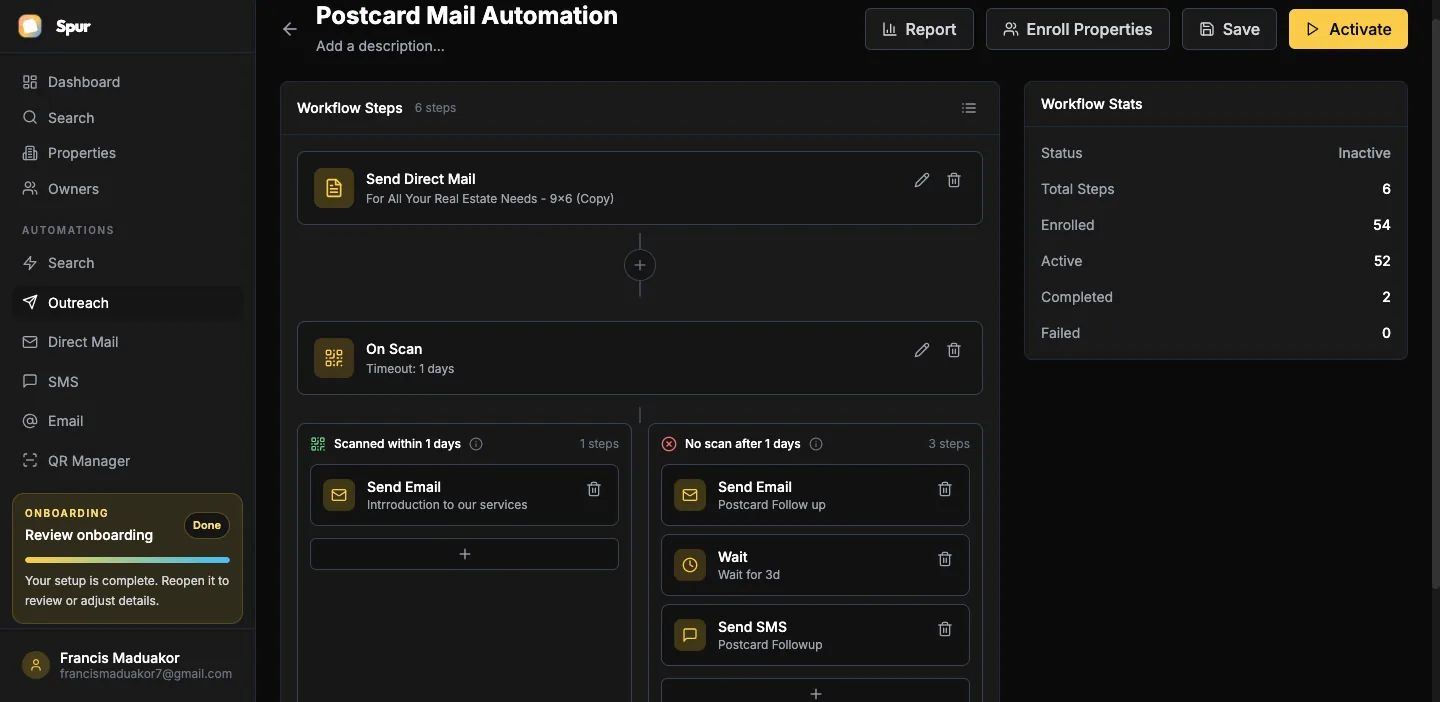
Spur finds older homes in your service area likely to be under-insulated by today's standards, writes a postcard for each owner about comfort and energy bills, and mails it before heating and cooling season. Then it tells you who scanned.
Free forever plan · No card · 20 property searches a month
USPSFirst-Class
Mike Novak3217 Elmwood AveKansas City, MO 64111Scan to book an assessment
Mike N. scanned your attic assessment postcard · 4 min ago
AI-written for this owner · Mailed in 2 days
R-30 to R-60DOE-recommended attic range for most US homes
~15%average heating and cooling savings ENERGY STAR cites for sealing and insulating
2 daysfrom approval to USPS first-class
The problem
Insulation is invisible, so homeowners don't know they need it.
"Save 50% on energy" mailers get tossed. Homeowners want specifics about their own home.
Most jobs come from HVAC or roofing referrals. Direct homeowner demand is untapped.
How it works
From list to mailbox in one workflow.
The same five steps every time, set up for insulation contractors.
app.usespur.com
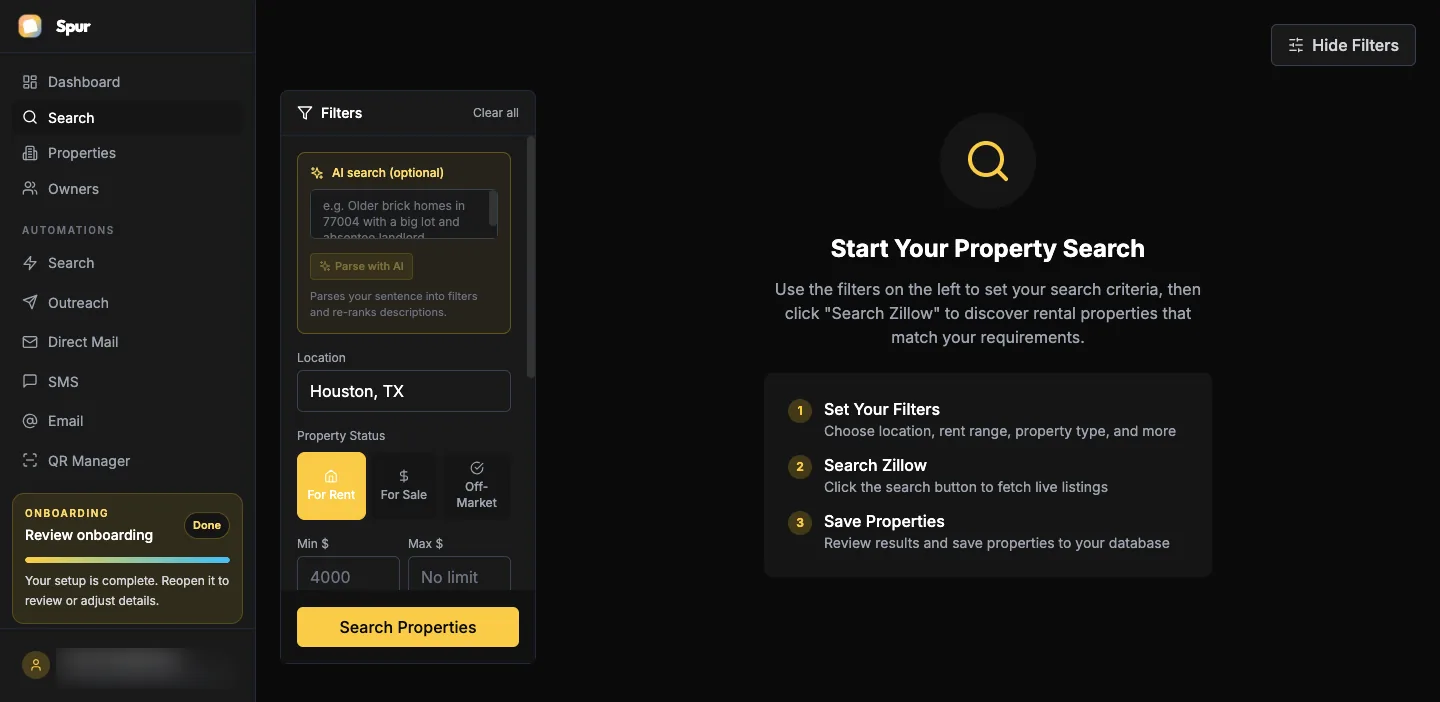
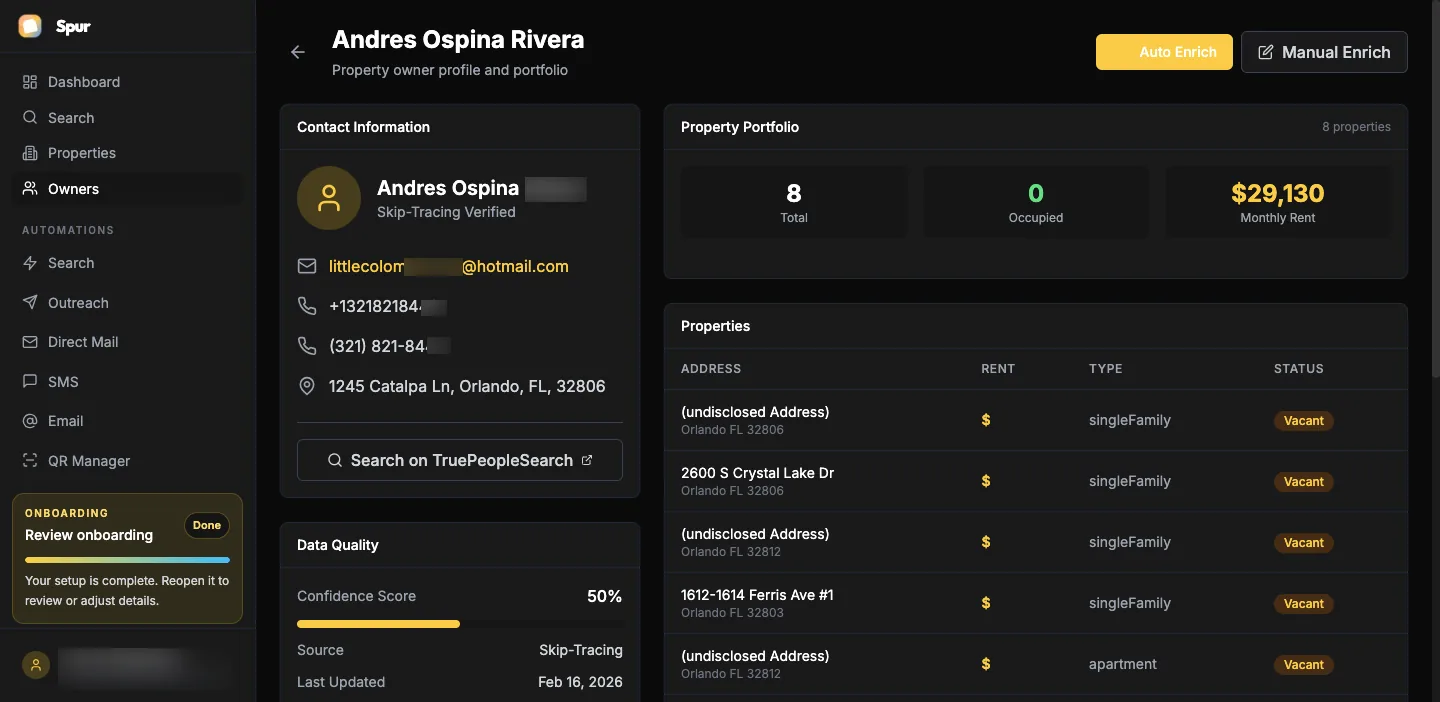
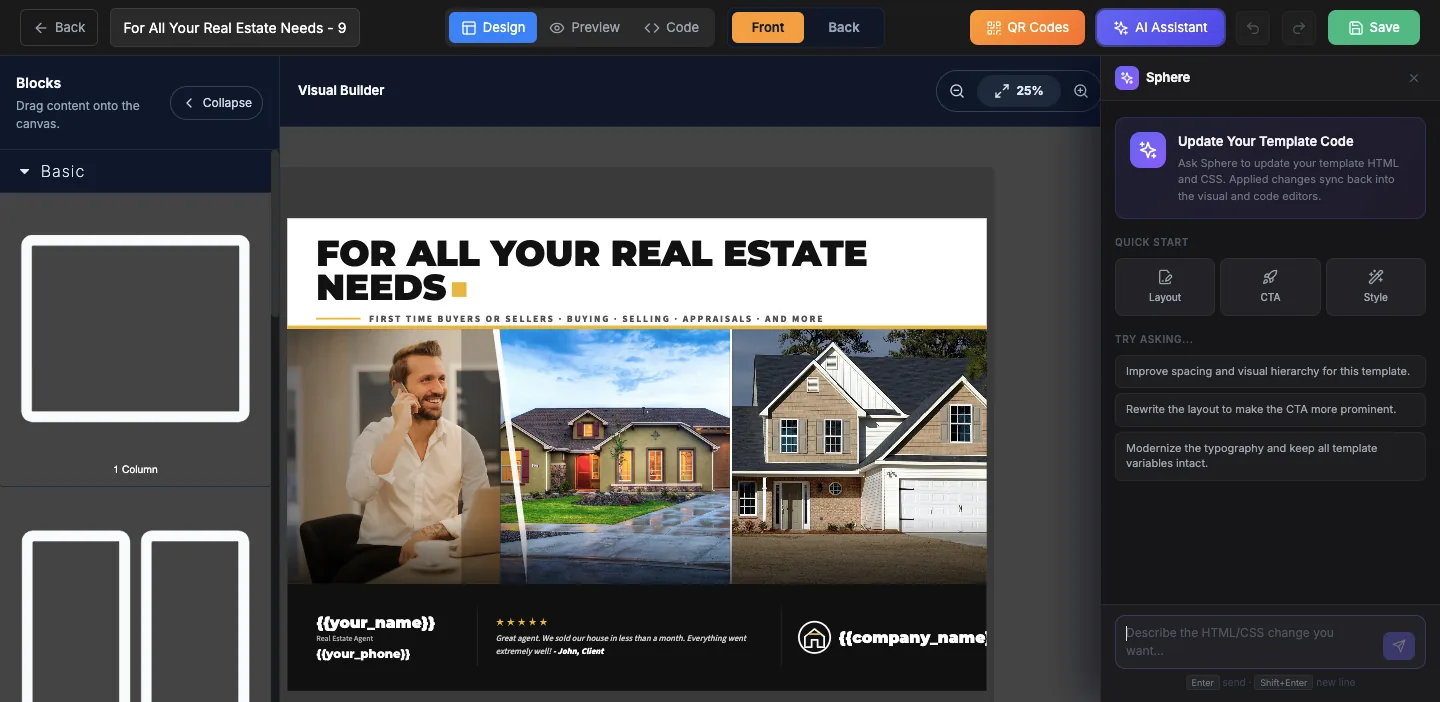
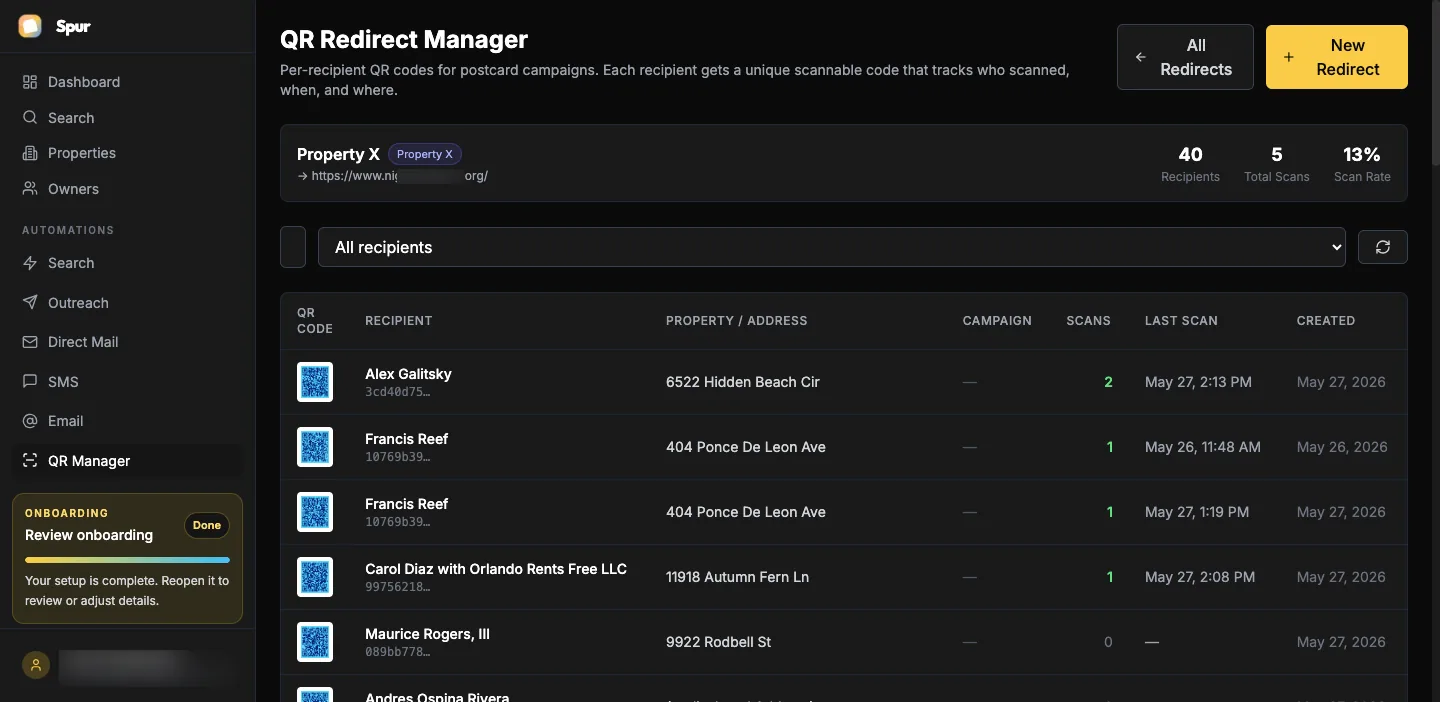
Plays for Insulation
Insulation plays you can run in Spur today
Attic top-upsAir sealing Pre-winter campaignsPre-summer campaigns New homeownersOld insulation removal HVAC partner campaigns Neighbor marketing
Older homes with thin attic insulation.
Built pre-1980Owned 10+ yrs
See the full play →Drafty homes where sealing pays first.
Built pre-1990Owner-occupied
Comfort before heating season.
Cold-climate zipsAuto-schedule
See the full play →Hot upstairs rooms in cooling climates.
Hot-climate zips2-story
Buyers whose inspection flagged insulation.
Sold last 90 daysBuilt pre-1980
See the full play →Damaged or contaminated attic insulation.
Built pre-1970Owner-occupied
Pair with new system installs.
Your partner listQuarterly
Mail the street around each job.
Radius 0.25 miSame era
See the full play →Insulation postcardsSymptom-first cards with a QR to book.
Per-owner copyQR tracked
See the full play →Direct mail programFour lists on a yearly calendar.
Auto-scheduleCost per job
See the full play →Spray foam leadsHomes where foam solves a real problem.
Value $600K+2-story
See the full play →Leads without AngiExclusive owners and one written price.
ExclusiveInbound first
See the full play →Past customer reactivationThe next area of the house.
Your listJob 2+ yrs ago
See the full play →Landlord programsPortfolio checks for rental owners.
Absentee owner2+ properties
See the full play →See it in Spur
What an insulation list looks like in Spur
A sample list for one Kansas City zip: owner-occupied single-family homes built 1950–1975 and owned 10+ years. Names are partly masked.
Zip 64111Owner-occupiedBuilt 1950–1975Owned 10+ yrsSingle-family
- Mike N.3217 Elmwood AveBuilt 1962 · 2-storyOwned 15 yrsLikely thin attic
- Rita & Joe F.3230 Elmwood AveBuilt 1960 · 1.5-storyOwned 22 yrsFinished attic
- Owen S.4108 Holly StBuilt 1955 · ranchOwner 70Owned 31 yrs
- Tasha B.4122 Holly StBuilt 1958 · ranchBought 2 mo agoNew owner
- Greg & Lin W.3305 Fairmount AveBuilt 1967 · 2-storyOwned 12 yrsLikely thin attic
AI draft for Mike N. · 3217 Elmwood Ave
Hi Mike,
Homes on Elmwood Avenue were built in the early 1960s, when a few inches of attic insulation was standard. Today, the Department of Energy recommends far more for Kansas City's climate, and decades of settling usually leave less than was originally installed.
If your upstairs rooms are cold in January and hot in July, or your furnace seems to run constantly, the attic is the first place to look. We'll measure your current insulation, check for air leaks around lights, vents, and the attic hatch, and show you photos and a written estimate.
Scan the code on this card to book a free assessment before heating season.
Laura Kim · Comfort Shield Insulation · (816) 555-0161
Sample data for illustration. Your results depend on your market and filters.
Playbook
How to market insulation to homeowners who never look in the attic
Insulation is one of the most effective upgrades a homeowner can make and one of the hardest to sell, because no one sees it. Homeowners notice the symptoms (drafts, cold rooms, high bills, an HVAC system that never stops) without connecting them to the attic. Marketing works when it names those symptoms for a home of their age and offers to show them what's really up there.
Target older homes. Homes built before about 1980 were insulated to much lower standards than today, and insulation settles and degrades over decades. The Department of Energy recommends attic insulation in roughly the R-30 to R-60 range for most of the country, depending on climate zone, and many older homes have a fraction of that. Long-time owners are the most likely to still have the original amount.
Air sealing belongs in the same conversation. Gaps around attic hatches, recessed lights, plumbing stacks, and top plates let conditioned air escape. ENERGY STAR estimates that homeowners can save an average of about 15% on heating and cooling costs by air sealing and adding insulation. Use figures like that carefully and attribute them, rather than promising a specific percentage.
Incentives have changed. The federal energy efficient home improvement credit ended for improvements made after 2025, but many utilities and some states still offer rebates for insulation and air sealing. Check what's available in your market before you mention any incentive.
Know the safety issues. Vermiculite attic insulation, common in some older homes, may contain asbestos and shouldn't be disturbed without testing. Mentioning that you check for it signals expertise. Finally, partner with HVAC companies and roofers, since a new system or roof is a natural moment to insulate.
Show, don't tell. Attic photos, infrared images, and before-and-after measurements make an invisible upgrade visible. Share them after each assessment, and use them in neighbor campaigns, since homes built by the same builder in the same year almost always share the same insulation levels.
3×+return on a year of Spur Team from one $2,000 attic job
One attic job pays for years of Spur.
- Spur Team: $49/mo billed annually = $588/yr
- 300 postcards on Team at $0.94 each = $282
- One $2,000–$6,000 attic insulation and air sealing job
Example math. Your pricing and job mix will vary. Run your own numbers →
One tool, not four
Spur vs. the usual insulation marketing
What you needThe usual waySpur
Find older, under-insulated homesBroad ads✓ Built in
Owner name and mailing addressList broker✓ Built in
Symptom-specific copy per homeGeneric energy-savings flyer✓ Built in
Seasonal schedulingManual reprints✓ Built in
Know who's interestedNot available✓ Built in
Partner campaignsManual referrals✓ Built in
Insulation by the numbers
Why insulation is one of the best upgrades
~15%
average heating and cooling savings from air sealing and adding insulation
R-30 to R-60
recommended attic insulation range for most U.S. climate zones
3×+
return on a year of Spur Team from one $2,000 attic job
FAQ
Questions from insulation contractors
How do insulation contractors get leads?
Target owner-occupied homes built before about 1980 and owned 10+ years, name the symptoms homeowners notice, and offer a free attic assessment before heating or cooling season.
How much attic insulation do homes need?
The Department of Energy recommends roughly R-30 to R-60 in attics for most of the US, depending on climate zone. Many older homes have far less.
Are there still tax credits for insulation?
The federal energy efficient home improvement credit ended for improvements made after 2025. Many utilities and some states still offer rebates, so check your market before mentioning incentives.
Should I market air sealing too?
Yes. Air sealing and insulation work together, and ENERGY STAR attributes average heating and cooling savings to the combination.
What does Spur cost for an insulation contractor?
Solo is free forever with no card. You pay per postcard when you mail. Team is $49/mo billed annually with more searches, enrichments, QR codes, and lower postcard pricing.
Keep exploring
Related trades and guides
Start in minutes. No card required.
The attics that need you are above the homes you drive past every day.
Build an older-home list for your service area and mail your first attic assessment offer today.
Find homeowners who need insulation — freeFree forever plan · No card · 20 property searches a month
Prefer a walkthrough? Book a demo