
Owners call in December wanting January dates, and the crew is already booked.
Insulation play · Seasonal campaigns
Seasonal insulation campaigns that land before the first cold snap and the first heat wave.
Owners think about insulation the day the house gets uncomfortable, and by then your calendar is full. Spur schedules your pre-winter, pre-summer, and shoulder-season mail once, then sends it every year with the lists refreshed.
Free forever plan · No card · 20 property searches a month
USPSFirst-Class
Nora Whitman1218 Granger AveAnn Arbor, MI 48104Scan to book before Oct 15
Nora W. booked a fall attic check · 7 min ago
AI-written for this owner · Mailed in 2 days
3 wavespre-winter, pre-summer, and a mild-weather push
4–6 wksahead of the season is the right mail date
Autoscheduled once, mailed every year
The problem
Insulation demand arrives all at once, and it usually arrives late.
Peak-heat attic work is slow and hard on crews, right when cooling complaints arrive.
Mild spring and fall weeks are ideal for attic work, but few owners are thinking about it.
How it works
From list to mailbox in one workflow.
Five steps from one rushed season to a planned year.
app.usespur.com
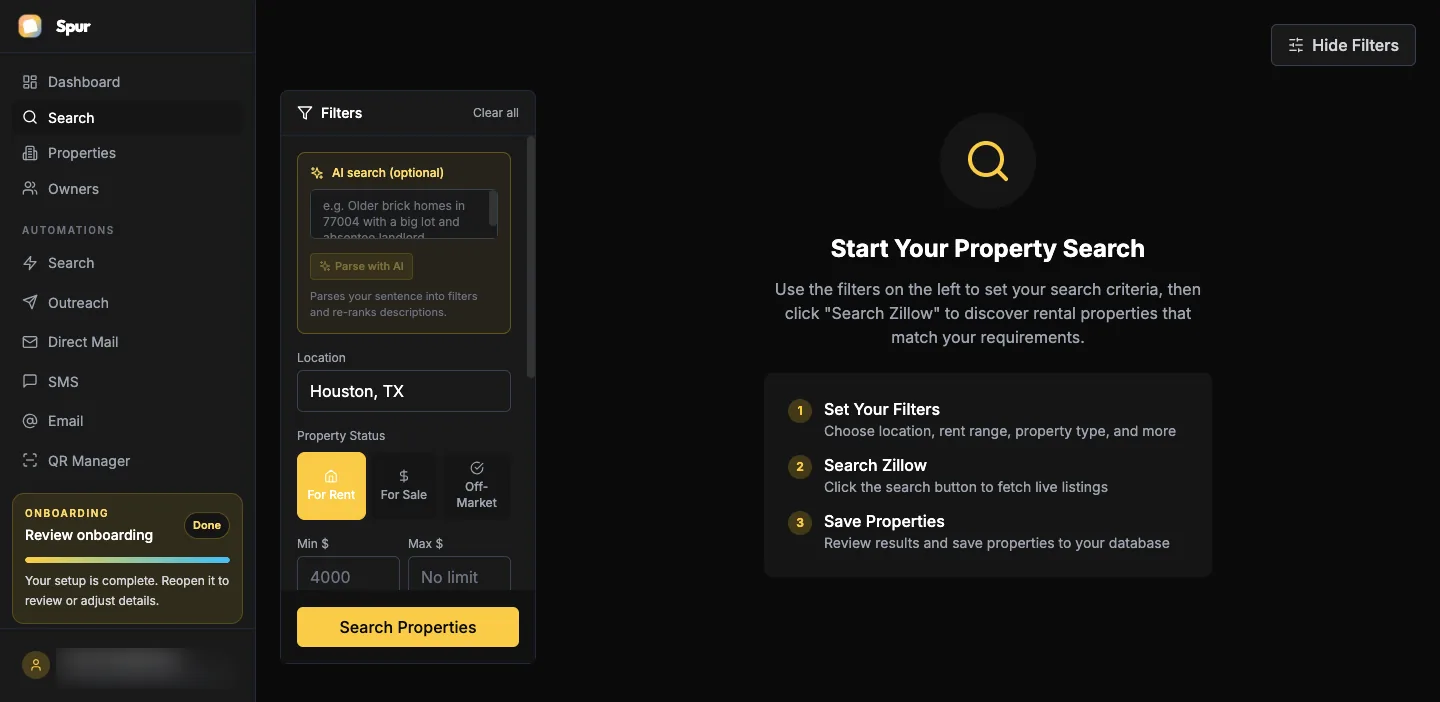
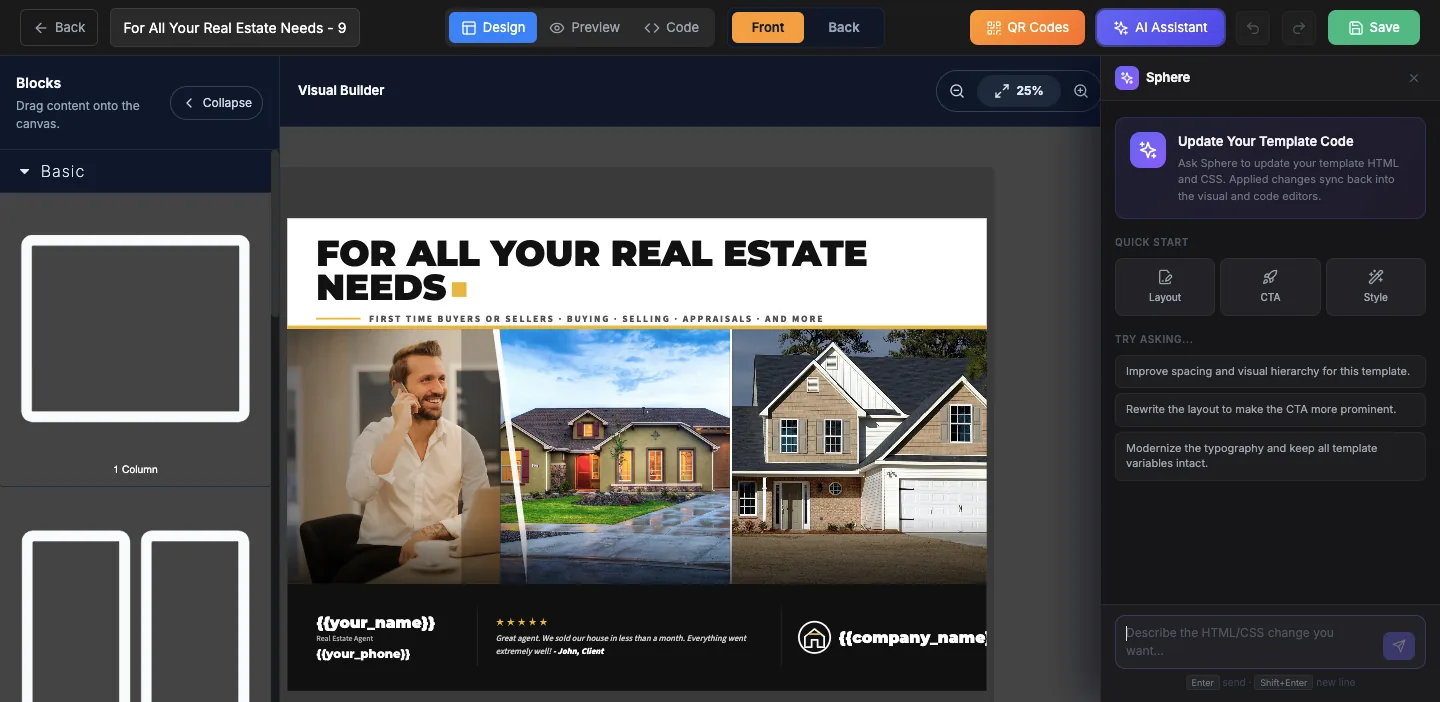
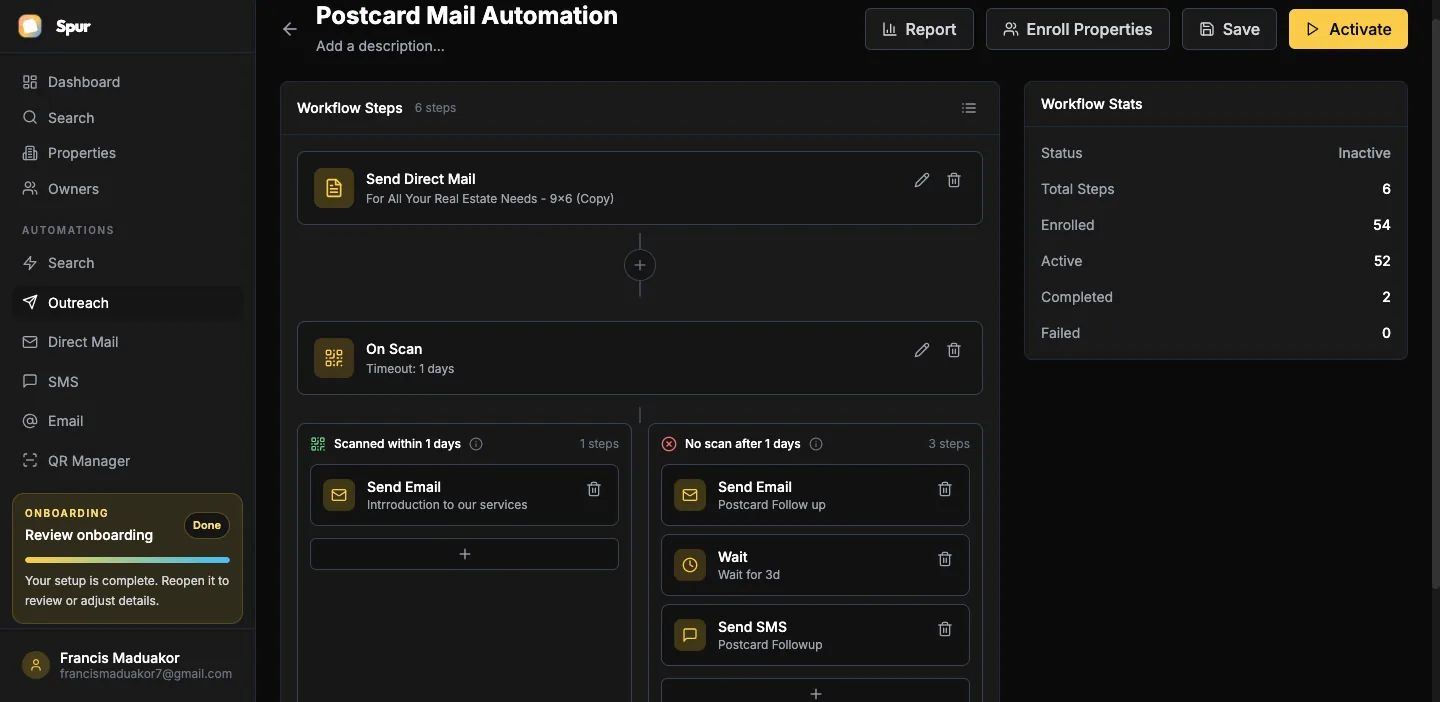
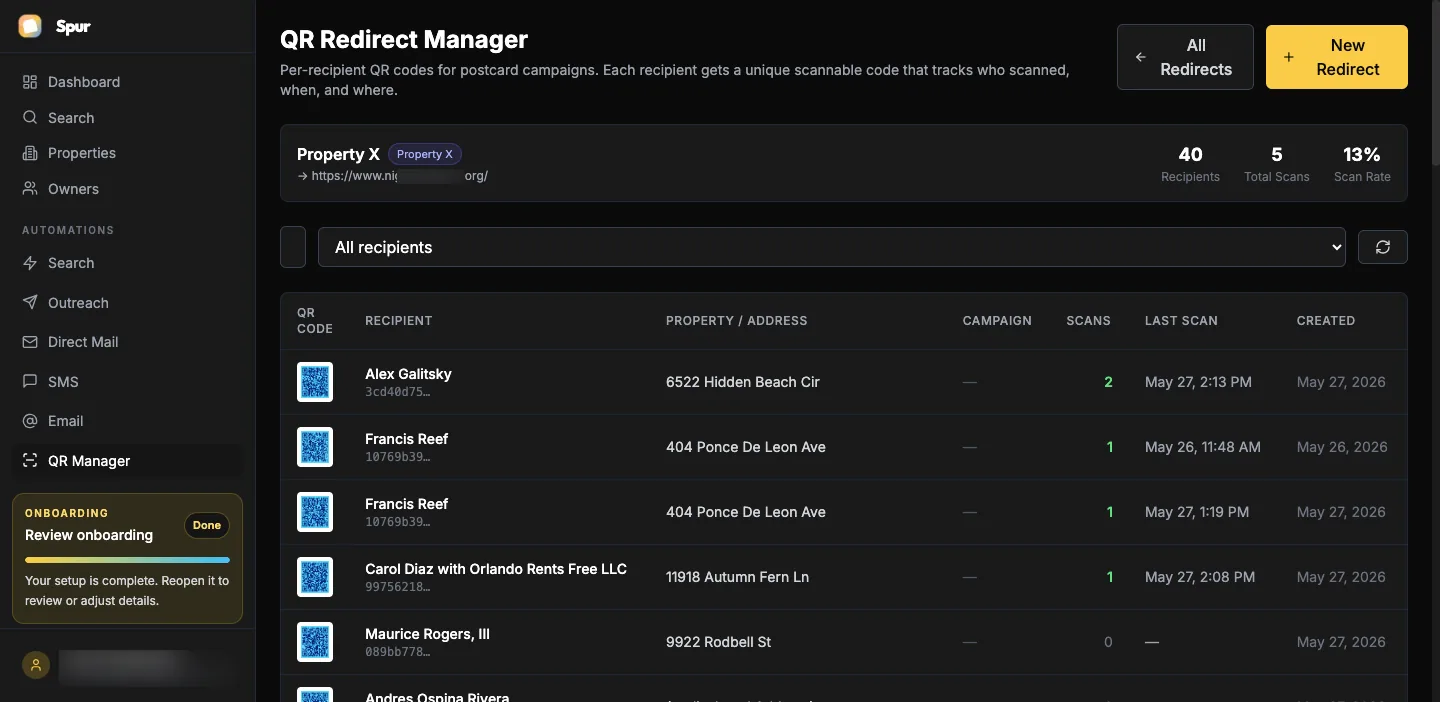
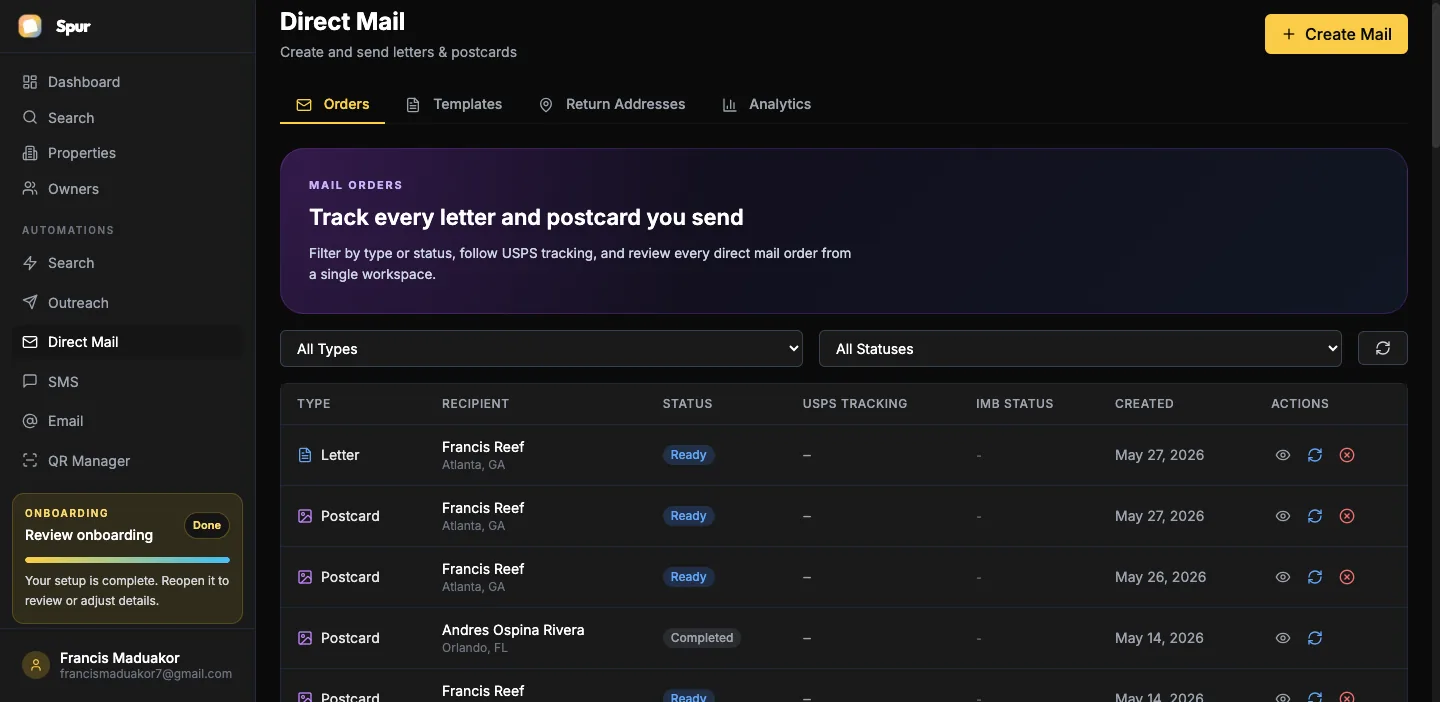
See it in Spur
A seasonal insulation calendar
Sample Ann Arbor campaigns across one year. Counts are illustrative.
3 seasonal wavesOwner-occupiedBuilt pre-1985Owned 5+ yrsPlus past customers
- Pre-winter comfort900 homesMail Sept 1Book by Oct 15
- Shoulder-season window300 homesMail Mar 10Spring crew dates
- Pre-summer upstairs heat500 homesMail Apr 152-story homes
- Late-fall reminder250 homesMail Oct 20Non-scanners
- Past customers180 homesMail each AugustYour list
AI draft for Nora W. · 1218 Granger Ave
Hi Nora,
The first really cold week in Ann Arbor is usually when we start getting calls, and by then we're scheduling several weeks out. Homes from the 1940s around Burns Park often have very little attic insulation left, and that tends to show up on the first furnace bill.
If you book before October 15, we can measure your attic, seal the leaks, and finish the top-up before the cold arrives. The assessment is free either way, and you'll get photos of what we find.
Scan the code on this card to pick a date.
Evan Rusk · Great Lakes Comfort Insulation · (734) 555-0151
Sample data for illustration. Your results depend on your market and filters.
Playbook
How seasonal timing works for insulation contractors
Insulation demand follows the thermostat. Owners feel the first cold week or the first heat wave, then start looking for help, and every company in town hears from them at the same time. Seasonal mail moves your offer ahead of that moment. It reaches the owner when they can still choose a date, and it reaches your calendar while there is still room for the work.
The pre-winter wave is the anchor in most of the country. Aim for delivery in early September, four to six weeks before the first heating bills, with a clear book-by date in mid-October. Talk about cold rooms, drafts, and furnace run time. Long-term owners of older homes are the best list, and a second card to non-scanners in late October catches those who only start paying attention when the weather turns.
The pre-summer wave works differently. Upstairs bedrooms that won't cool down are the complaint, especially in two-story homes, and air conditioning that can't keep up is what prompts the call. Mail in mid-April in most climates, and earlier in the South. In hot climates, this is the main wave, and in the warmest zones the heating card may not be worth sending at all.
Use the shoulder season to fill your schedule. Mild weather in spring and fall is the best time to work in an attic. Attics during a summer heat wave can be well above 120 degrees, which slows crews and creates real safety risk, so a modest early-booking incentive in March or late September helps shift work into safer, more productive weeks. Be honest in the copy about why you're offering it.
Match the budget to capacity. Don't mail 2,000 homes for a week when you have two crews. Stagger by zip and track your booking lead time. If you're already booked three weeks out, slow the next drop, since a wait that long tends to send owners to your competitor. A short note saying how far out you're booking can actually help, because it signals demand.
Keep the incentive copy current. Federal credits for insulation ended after 2025, but utility and state programs change on their own calendars, often at the start of the year. Confirm what is available before each wave. Finally, refresh the creative every year, because the owners on your older-home list will see this card more than once. Keep the structure and change the photo and headline.
9×+return on a year of Spur Team and three seasonal mailings
Three planned waves beat one frantic month.
- Spur Team: $49/mo billed annually = $588/yr
- 1,700 postcards on Team at $0.94 each = $1,598
- 8 extra attic jobs across the year at ~$2,500 each = $20,000
Example math. Response varies by climate and list. Run your own numbers →
One tool, not four
Spur vs. the usual seasonal approach
What you needThe usual waySpur
Three waves scheduled onceA rush mailing when it gets cold✓ Built in
Winter and summer messagesThe same flyer all year✓ Built in
Delivered 4–6 weeks earlyDelivered during the rush✓ Built in
Shoulder-season offers on the scheduleQuiet weeks in spring and fall✓ Built in
Results compared by waveNo comparison✓ Built in
Seasonal Campaigns by the numbers
Why timing matters for insulation
7–20%
estimated heating and cooling savings from sealing and insulating, varying by climate zone
Ended 2025
the federal home improvement credit no longer covers new work, so check local rebates each season
9×+
return on a year of Spur Team and three seasonal mailings
FAQ
Seasonal insulation questions
When should insulation contractors mail fall campaigns?
Aim for early September, four to six weeks before heating season, with a book-by date in mid-October. Follow up with non-scanners in late October.
Does summer mail work for insulation?
Yes, especially for two-story homes and hot climates. Send it by mid-April, and talk about upstairs rooms that won't cool down.
Should I offer a shoulder-season discount?
A modest early-booking incentive helps fill mild weeks when attic work is safer and faster. Be open about why you offer it.
Can I reuse the same campaigns each year?
Yes. Spur repeats the schedule and refreshes the list. Change the photo and headline so repeat recipients see something new.
What if we're already booked out?
Slow or pause the next drop. Tell owners how far out you're booking rather than promising dates you can't meet.
Keep exploring
Related plays and guides
Start in minutes. No card required.
Get on the calendar before the weather turns.
Schedule winter, summer, and shoulder-season mail once. Spur sends it every year. Free to start.
Schedule my insulation seasons — freeFree forever plan · No card · 20 property searches a month
Prefer a walkthrough? Book a demo