
Angi and HomeAdvisor sell the same no-cool call to three or four companies. You pay for the lead and still race on price.
For HVAC companies
HVAC leads from homes with aging systems, mailed before the season turns.
Spur finds homes in your service area old enough to be running on original or end-of-life equipment, writes a tune-up or replacement postcard for each owner, and mails it 6–8 weeks before peak season. When a homeowner scans, your dispatcher knows within seconds.
Free forever plan · No card · 20 property searches a month
USPSFirst-Class
Gloria Mendez7742 W Sandpiper WayPeoria, AZ 85383Scan to book your check
Gloria M. scanned your spring AC postcard · 2 min ago
AI-written for this owner · Mailed in 2 days
15–20 yrstypical life of a central AC or furnace
6–8 wksbefore peak season is the best time to mail
2 daysfrom approval to USPS first-class
The problem
Most HVAC marketing reaches homeowners after they've already called someone.
Saturation mail reaches renters, new builds with 2-year-old systems, and homes you serviced last month. Most of the spend has nowhere to go.
Phones ring nonstop in July and January, then go quiet. Without outreach before each season, the slow months stay slow.
How it works
From list to mailbox in one workflow.
The same five steps every time, set up for HVAC companies.
app.usespur.com
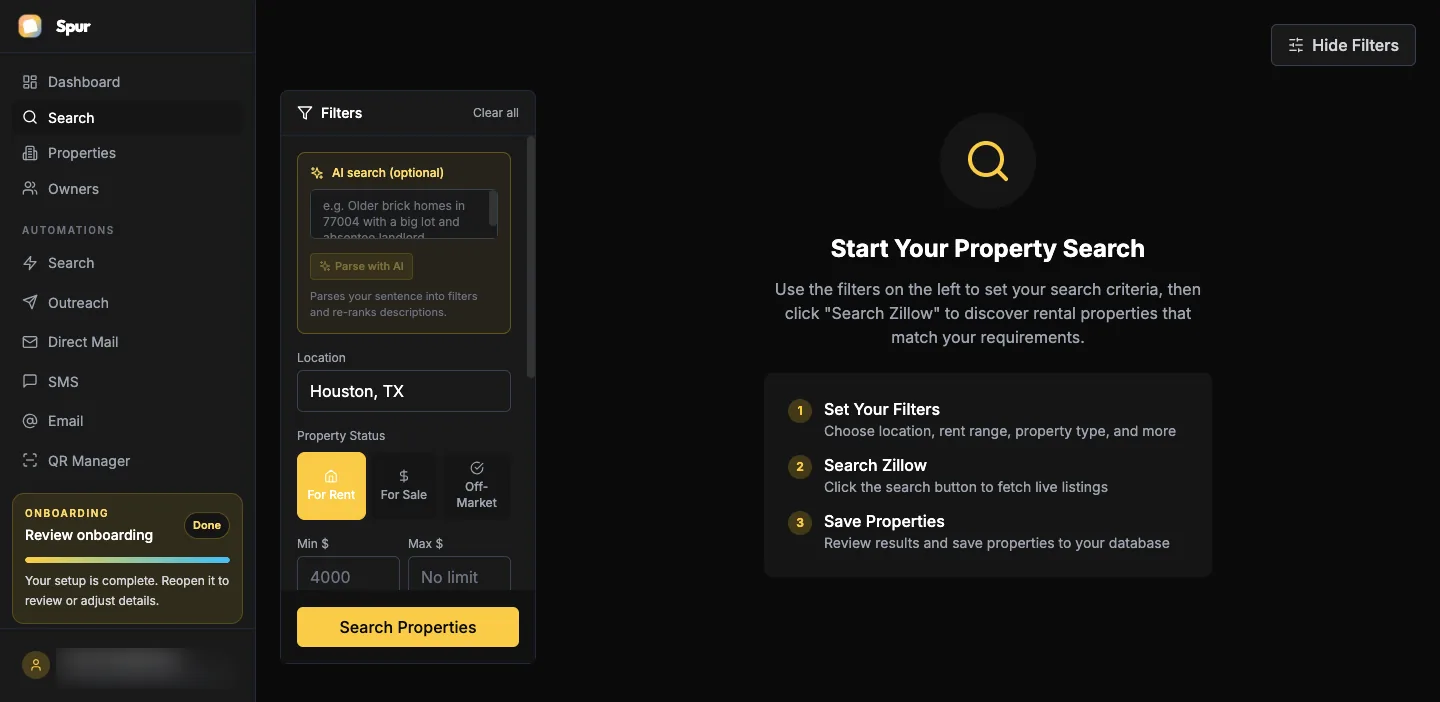
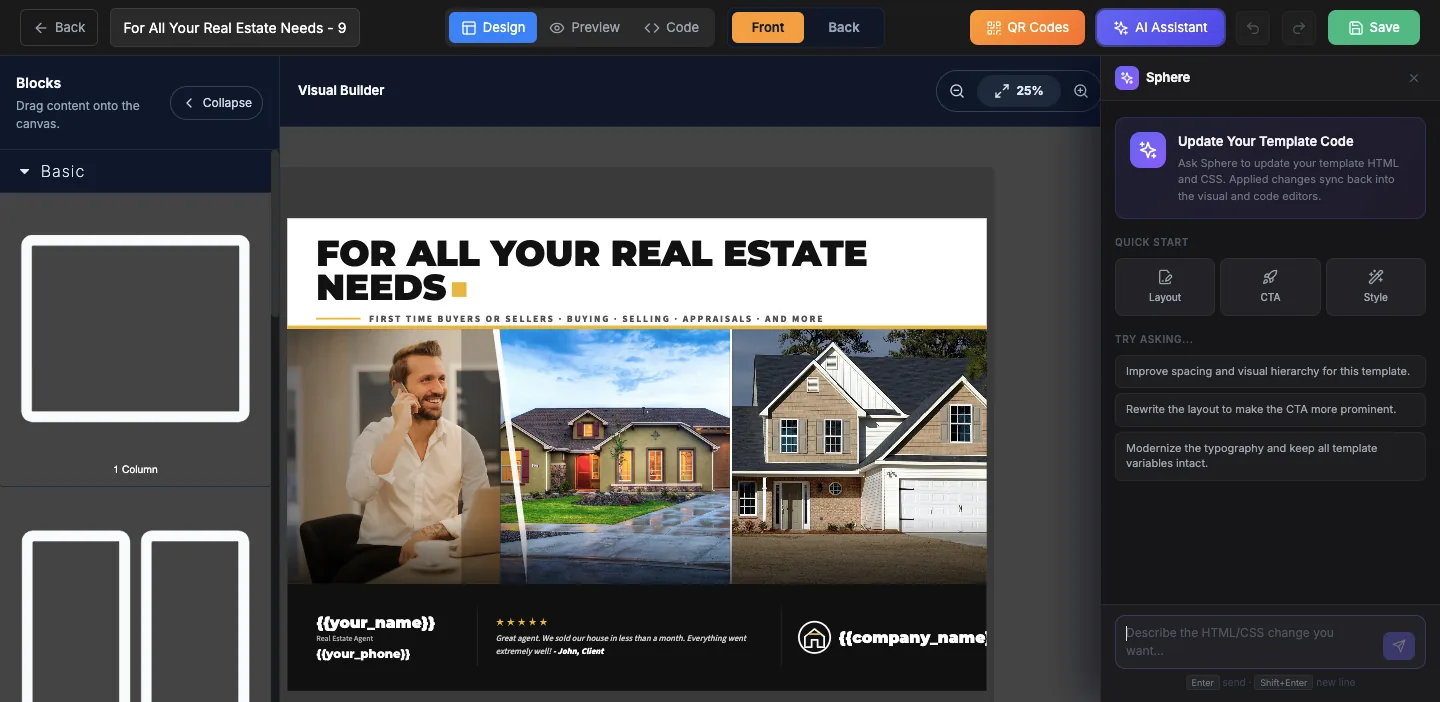
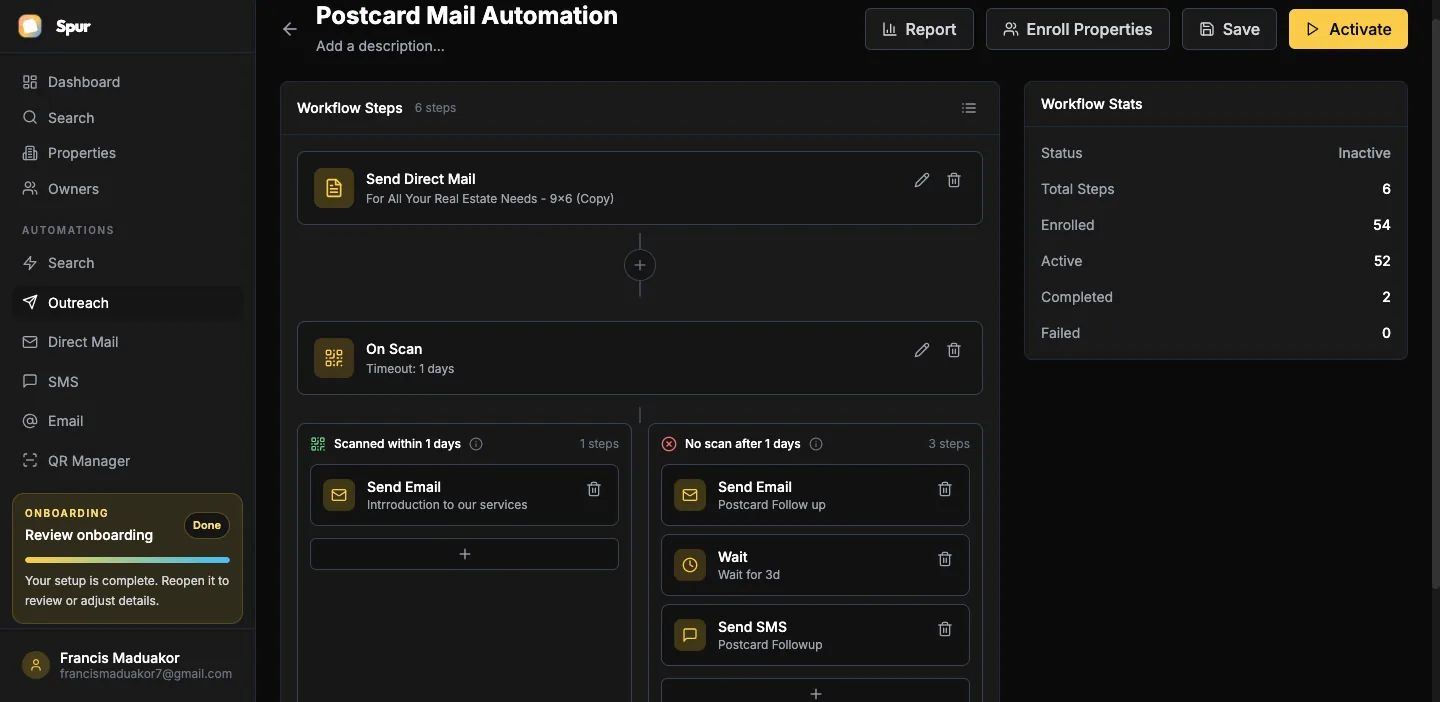
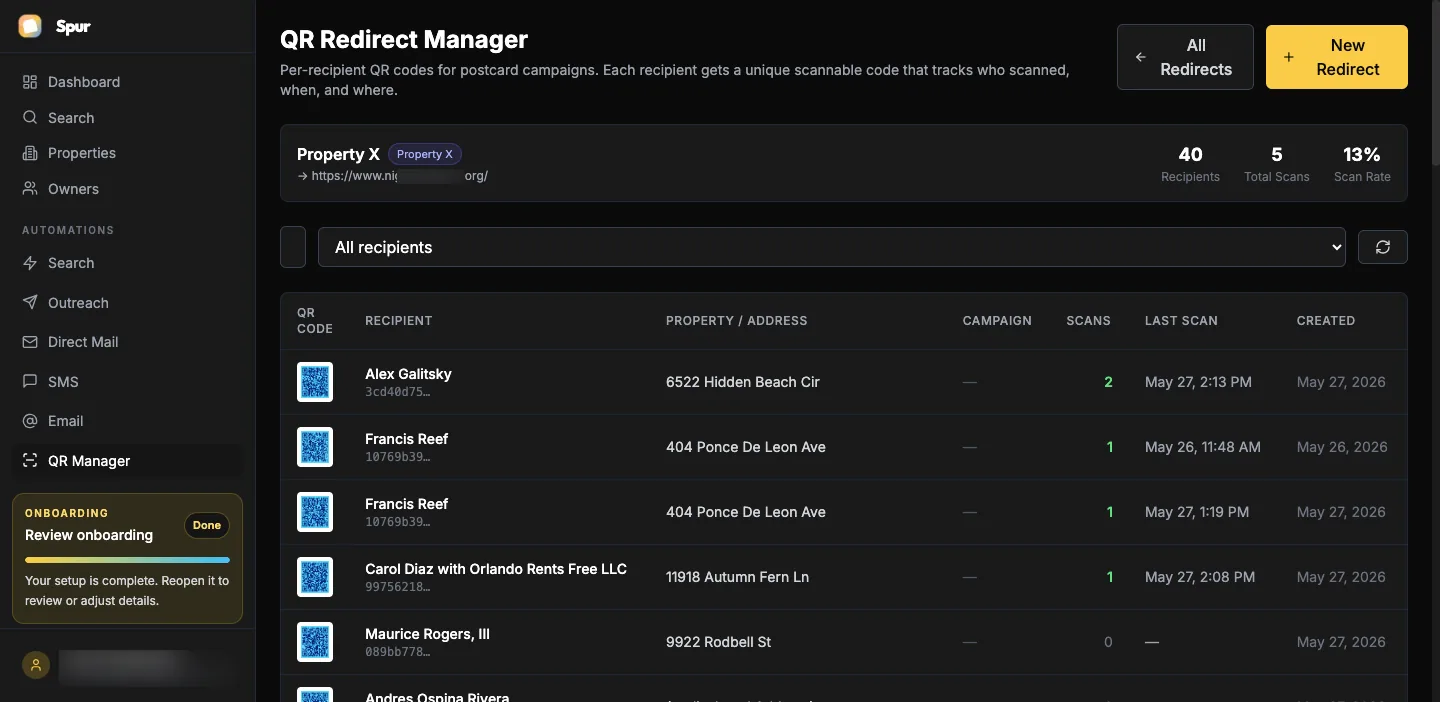
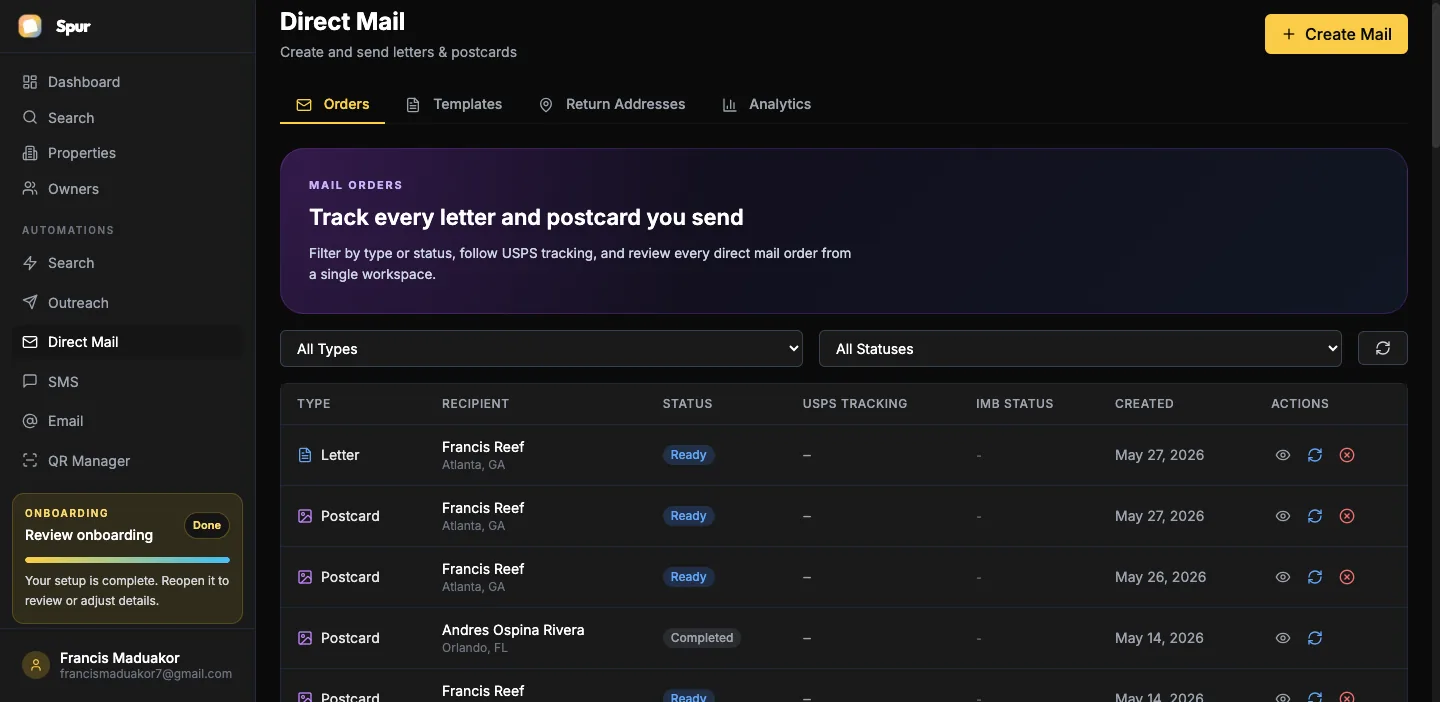
Plays for HVAC
HVAC plays you can run in Spur today
Replacement leads
Owner-occupied homes old enough for original equipment to be failing.
Built 2005–2011Owned 8+ yrs
See the full play →Maintenance agreementsTurn one-time tune-ups into recurring plan members.
Owner-occupiedPast customers
See the full play →Seasonal campaignsSpring AC and fall furnace checks, mailed before the rush.
Auto-scheduleService area
See the full play →New homeownersBuyers inherit a system they know nothing about. Be the first HVAC name they see.
Sold last 90 daysBuilt pre-2012
See the full play →Neighbor marketingMail the street around every install you finish this week.
Radius 0.25 miSame build year
See the full play →Past customer reactivationWin back customers you haven't seen in 18+ months.
Your listLast visit 18+ mo
See the full play →Landlord marketingAbsentee owners with several rentals want one reliable HVAC vendor.
Absentee owner2+ properties
See the full play →Leads without AngiGenerate your own exclusive replacement leads instead of buying shared ones.
ExclusiveQR tracked
See the full play →HVAC postcardsA card for each home that names its age and season, with a QR code per household.
Per-home copyQR tracked
See the full play →Direct mail programA year of targeted HVAC mail, measured by cost per booked job.
Postcards + lettersBy campaign
See the full play →See it in Spur
What an HVAC replacement list looks like in Spur
A sample list for one zip: owner-occupied single-family homes built 2005–2011 and held 8+ years. Names are partly masked.
Zip 85383Single-familyOwner-occupiedBuilt 2005–2011Owned 8+ yrs
- Gloria M.7742 W Sandpiper Way2,140 sq ft · built 2009Owned 13 yrsLikely original AC
- Daniel & Kim R.8015 W Avenida del Sol2,620 sq ft · built 2007Owned 17 yrsTwo-story
- Hector A.26314 N 79th Dr1,880 sq ft · built 2010Owned 9 yrsLikely original AC
- Patricia L.7608 W Quail Track Dr3,050 sq ft · built 2006Owned 18 yrsLikely 2 systems
- Owen T.25919 N 81st Ln2,310 sq ft · built 2008Owned 11 yrsPool home
AI draft for Gloria M. · 7742 W Sandpiper Way
Hi Gloria,
Most homes on Sandpiper Way were built around 2009, and in Peoria's heat an AC unit that age is doing a lot of hard work. If yours is the original system, it's past 15 summers.
Before the first 105° week, we're offering a $79 spring check: refrigerant levels, capacitor and contactor test, coil cleaning, and an honest read on how many summers your system has left. No upsell pressure. If it's healthy, we'll tell you.
Scan the code on this card to pick a time, or call us directly. We're booking April now.
Ray Ortega · Desert Air Comfort · (623) 555-0187
Sample data for illustration. Your results depend on your market and filters.
Playbook
How to find HVAC replacement leads before the system fails
Most HVAC replacement jobs come from a failure call: the system stops on a hot afternoon and the homeowner calls the first company they recognize. That makes HVAC marketing a timing problem. You want your name in the house before the failure, not on page one of Google after it.
Build year is the best proxy you have for system age. A central air conditioner or heat pump typically lasts 12–20 years and a gas furnace 15–20, depending on climate and maintenance. In hot-climate markets like Phoenix, Las Vegas, or Houston, AC lifespans run toward the short end. Homes built 2005–2011 that have kept the same owner for 8+ years are the core replacement list: there's a good chance the original equipment is still running. Owner-occupied matters too, because landlords and new buyers make replacement decisions differently.
The refrigerant transition adds urgency. R-22 production ended in 2020, so homes still running older R-22 systems face expensive recharges on any leak. New equipment has also moved to lower-GWP refrigerants since 2025. A homeowner with a 15-year-old system and a failing compressor is choosing between an expensive repair on an aging unit and a replacement. You want to be the company that already explained those options.
Season timing is the second lever. Mail 6–8 weeks before your market's first heat wave or cold snap. Spring AC checks and fall furnace safety inspections are low-cost offers that put a technician in front of aging equipment, and a fair share of those visits turn into replacement quotes. Comfort-club or maintenance-agreement offers belong on the same card, because members renew, refer neighbors, and call you first.
Finally, follow the install. Every replacement you finish is proof for the street around it. Neighbors usually share build year and builder-grade equipment, so a "we just replaced the system at 412 Elm" card to the surrounding 50 homes is one of the most efficient campaigns in the trade.
12×return on a year of Spur Team from one $7,000 replacement
One system replacement pays for years of Spur.
- Spur Team: $49/mo billed annually = $588/yr
- 500 postcards on Team at $0.94 each = $470
- One $7,000–$12,000 replacement = 12–20× your annual subscription
Example math. Your ticket size and close rate will vary. Run your own numbers →
One tool, not four
Spur vs. the usual HVAC marketing stack
What you needThe usual waySpur
Find homes by build year and ownershipPurchased lists or EDDM routes✓ Built in
Homeowner name and mailing addressList broker, priced per record✓ Built in
Seasonal postcard copyAgency or a ChatGPT tab✓ Built in
Design, print, and mailPrint shop plus a post office run✓ Built in
Know who's interestedWait for the phone to ring✓ Built in
Follow-up on warm leadsSeparate email or SMS tool✓ Built in
From HVAC companies using Spur
Results from the mailbox.
“I targeted homes over 12 years old in my service area and mailed 80 AI postcards with a QR to my seasonal tune-up page. Got 22 scan alerts in two weeks and booked 14 maintenance visits. Three of those converted to full system replacements.”
“Our HVAC company books 3–4 more jobs per week since we started mailing AI postcards to homeowners. It's the only marketing channel where we know exactly who's interested before we call them.”
FAQ
Questions from HVAC companies
How do I find homes with old HVAC systems?
Spur doesn't see inside the house, so it uses the best public proxies: build year, ownership length, owner occupancy, and square footage. Homes built 2005–2011 and owned 8+ years by the same person are likely still on original equipment. Exclude homes you've already serviced and you have a strong replacement list.
Is direct mail better than Angi or HomeAdvisor for HVAC leads?
They do different jobs. Shared lead sites capture people already shopping, usually with three or four competitors. Direct mail reaches homeowners before they shop, and the lead is yours alone. Many HVAC companies use Spur to cut their reliance on shared leads rather than replace them overnight.
When should HVAC companies send postcards?
6–8 weeks before your market's peak season: late winter for AC checks and late summer for furnace checks. Spur can schedule both campaigns to repeat every year.
Can I mail the neighbors of a job I just finished?
Yes. Search a radius around the address, filter to the same build-year range, and send a neighbor postcard that references the nearby install without naming the customer.
What does Spur cost for an HVAC company?
Solo is free forever with no card: 20 property searches, 3 owner enrichments, 25 AI credits, 500 emails, and 50 SMS a month. Postcards are paid per piece when you mail. Team is $49/mo billed annually and lowers postcards to $0.94 each.
Does Spur replace ServiceTitan or Housecall Pro?
No. Those are field service platforms for dispatch, invoicing, and scheduling. Spur is the marketing side: it finds homeowners, writes and mails the outreach, and tells you who responded. Most HVAC shops run both.
Keep exploring
Related trades and guides
Start in minutes. No card required.
The system that fails this summer is already in your service area. Get there first.
Build an aging-system list for your zips and mail your first seasonal postcard today.
Find homeowners who need HVAC service — freeFree forever plan · No card · 20 property searches a month
Prefer a walkthrough? Book a demo