
Most homeowners have never looked at their panel. Upgrades only come up after a failure, a home inspection, or an insurance letter.
For electrical contractors
Electrician leads for panel upgrades, EV chargers, and generators.
Spur finds homes in your service area old enough for undersized or recalled-era panels, plus high-value homes ready for EV chargers and backup power. It writes a postcard for each owner and mails it with a QR code that tells you who's interested.
Free forever plan · No card · 20 property searches a month
USPSFirst-Class
Sharon Whitfield3127 Calumet StColumbus, OH 43202Scan to book a panel check
Sharon W. scanned your panel check postcard · 3 min ago
AI-written for this owner · Mailed in 2 days
1950–1990era of Federal Pacific and Zinsco panel installs
100Aservice in many older homes, short of modern loads
2 daysfrom approval to USPS first-class
The problem
Homeowners don't know their panel is a problem until a breaker won't reset.
Without outreach, EV charger and generator jobs go to dealer referrals and national installers instead of local electricians.
Outlet swaps and fixture installs keep trucks busy but don't build the business. The $3,000+ jobs need a proactive pitch.
How it works
From list to mailbox in one workflow.
The same five steps every time, set up for electrical contractors.
app.usespur.com
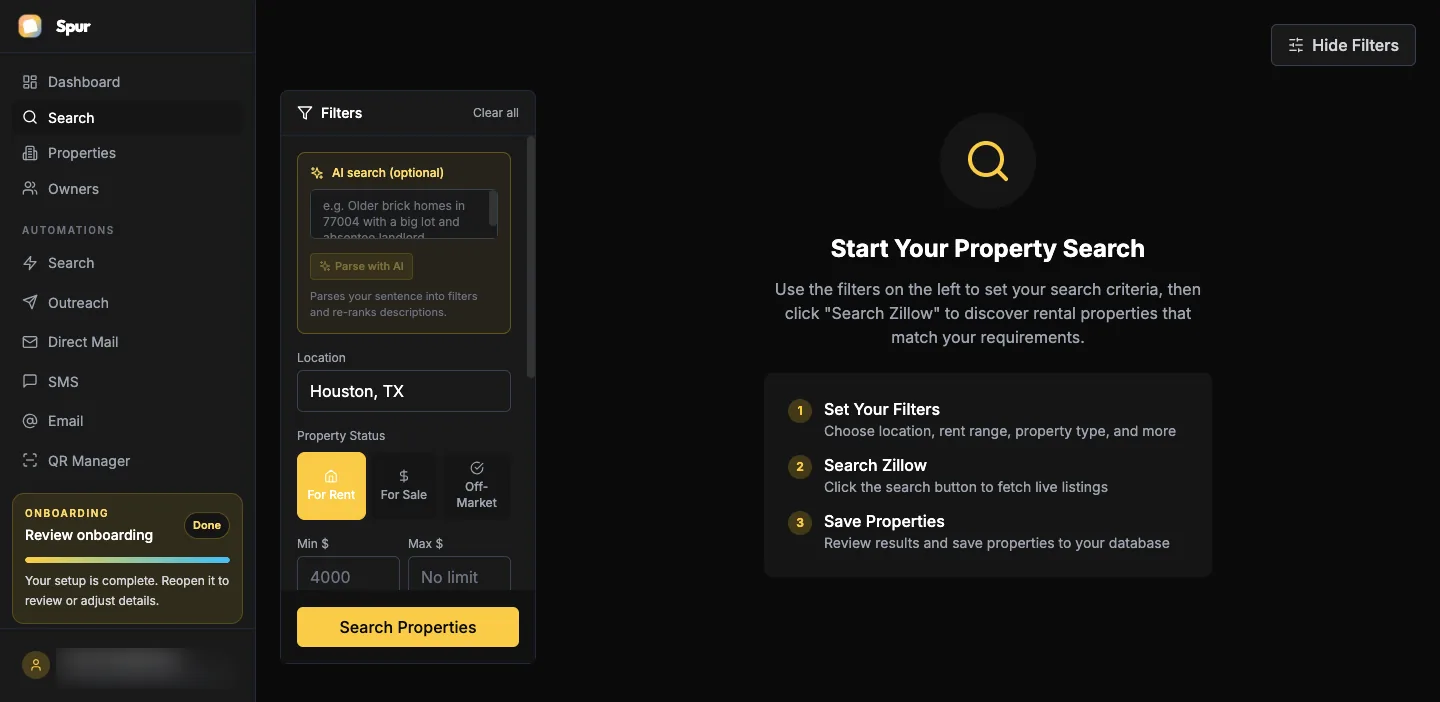
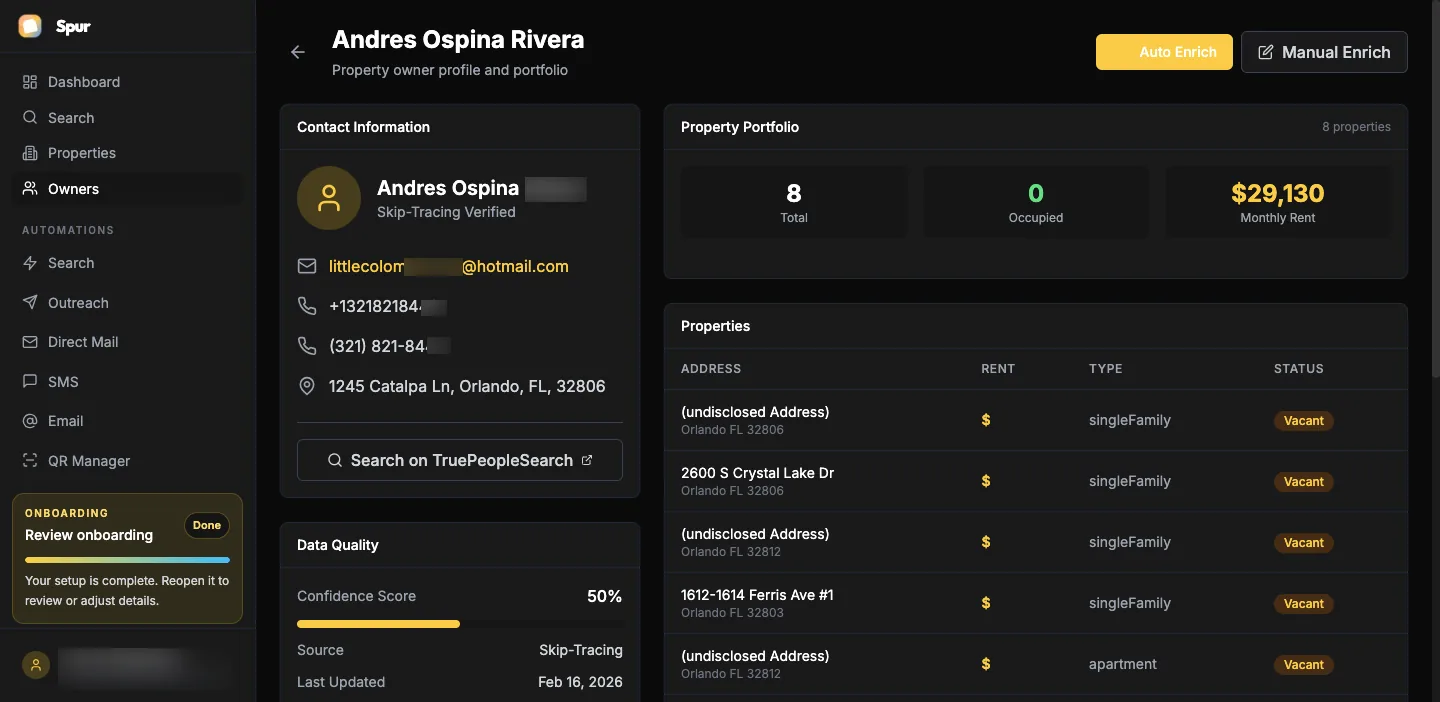
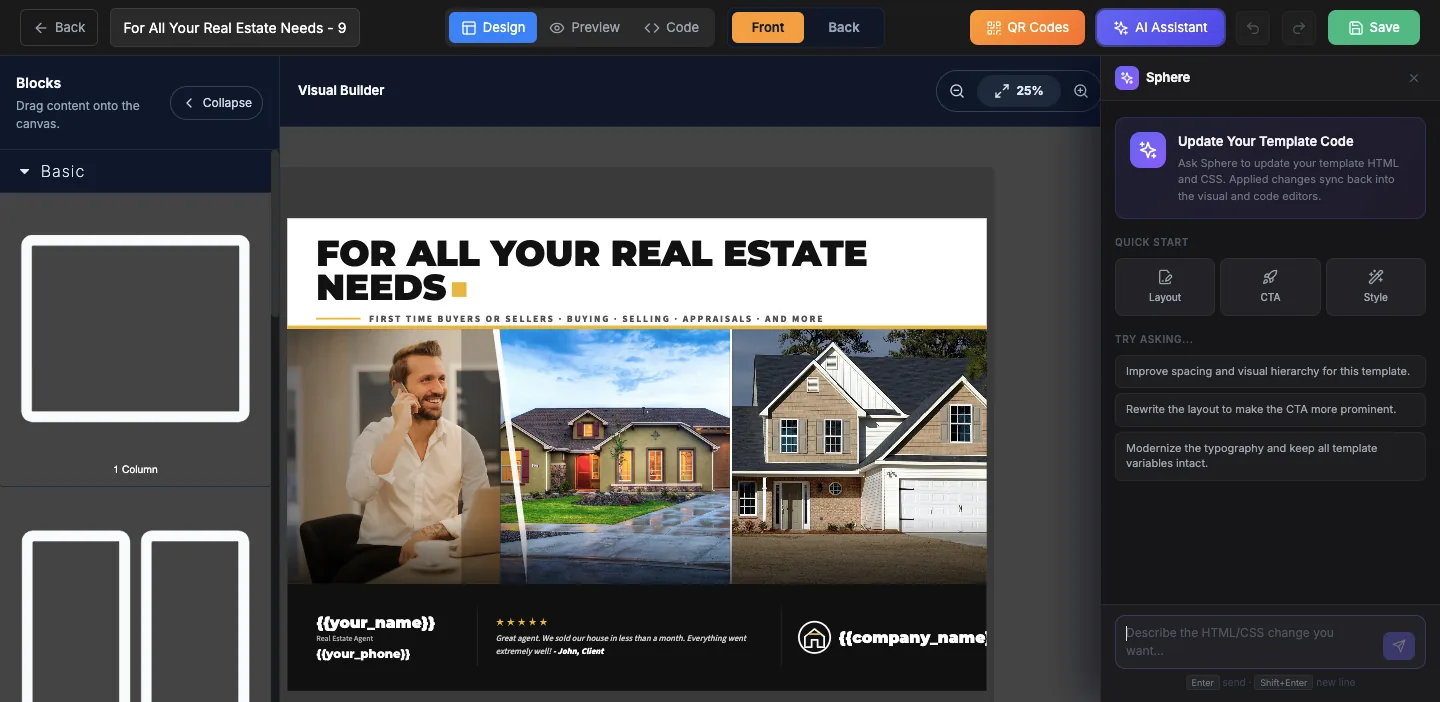
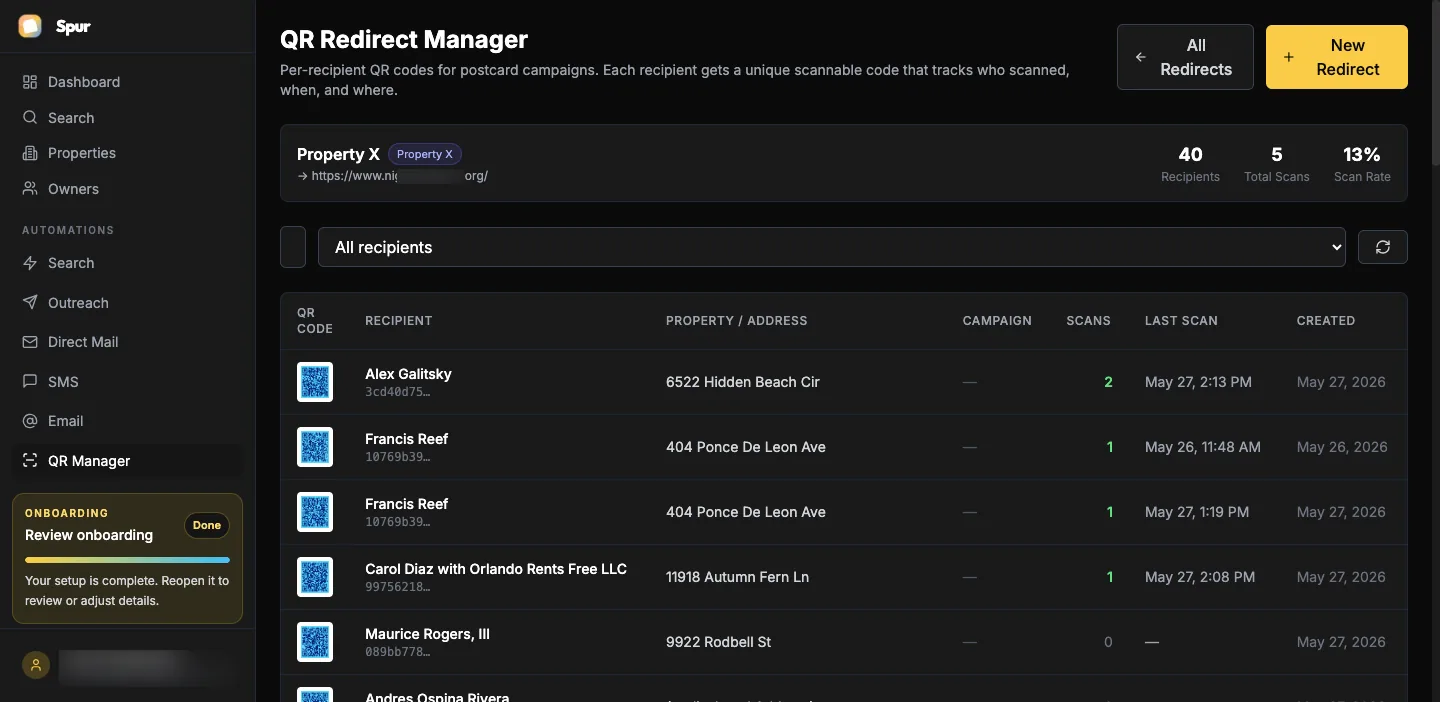
Plays for Electrical
Electrical plays you can run in Spur today
Panel upgrade leads
Homes from the Federal Pacific and Zinsco era, and 100-amp services.
Built 1950–1990Owner-occupied
See the full play →EV charger leadsHigher-value homes with garages, where EV ownership runs highest.
Value $450K+Built 1990+
See the full play →Older home rewiringKnob-and-tube and aluminum branch-circuit era homes.
Built pre-1950 or 1965–73Owned 10+ yrs
See the full play →Generator installationStorm-exposed zips before hurricane or ice season.
Storm zipsValue $350K+
See the full play →New homeownersInspection reports flag electrical issues. Reach buyers in the first 90 days.
Sold last 90 daysBuilt pre-1990
See the full play →Neighbor marketingMail the street around every panel you replace.
Radius 0.25 miSame era
See the full play →Landlord marketingRental owners need safety upgrades done on a schedule.
Absentee owner2+ properties
See the full play →Past customer reactivationBring back customers for surge protection and smart upgrades.
Your listLast job 18+ mo
See the full play →Maintenance plansYearly safety memberships for one-time repair customers.
Past customersLook-alike homes
See the full play →Seasonal campaignsSurge before storms, generators before outages, safety checks before winter.
Auto-scheduleService area
See the full play →Electrical postcardsA card for each home that names its wiring era, with a QR code per household.
Per-home copyQR tracked
See the full play →Direct mail programPanel, rewiring, EV, and generator mail, measured by cost per job.
Postcards + lettersBy campaign
See the full play →Leads without AngiExclusive electrical leads under your own name instead of shared ones.
ExclusiveQR tracked
See the full play →See it in Spur
What a panel upgrade list looks like in Spur
A sample list for one Columbus zip: owner-occupied single-family homes built 1955–1985 and held 10+ years. Names are partly masked.
Zip 43202Single-familyBuilt 1955–1985Owner-occupiedOwned 10+ yrs
- Sharon W.3127 Calumet St1,420 sq ft · built 1974Owned 21 yrsLikely 100A
- Greg & Lin H.184 E Tulane Rd1,860 sq ft · built 1958Owned 16 yrsPanel-era
- Alicia N.2981 N High St1,210 sq ft · built 1966Owned 12 yrsAluminum-era
- Frank D.355 Arden Rd2,040 sq ft · built 1962Owned 27 yrsPanel-era
- Monica B.77 W Como Ave1,560 sq ft · built 1971Owned 10 yrsAluminum-era
AI draft for Sharon W. · 3127 Calumet St
Hi Sharon,
Your home on Calumet was built in 1974. Electrical panels from that era were sized for a very different house: no central air, no EV, far fewer appliances. Some were made by brands like Federal Pacific and Zinsco that have since been linked to breakers that don't trip when they should.
We don't know what's in your basement, so we're offering a free 20-minute panel check in Clintonville this month. We'll tell you the panel's age, brand, and capacity, and whether it needs anything at all.
Scan the code on this card to book. No pressure and no obligation.
Dana Price · Buckeye Electric · (614) 555-0193
Sample data for illustration. Your results depend on your market and filters.
Playbook
How to market panel upgrades and EV charger installs
Residential electrical demand is being pushed from two directions. Older housing stock has panels and wiring that weren't designed for modern loads, and new demands like EV chargers, heat pumps, induction ranges, and backup generators are pushing many homes past what a 100-amp service can handle. Both create high-ticket jobs, but homeowners rarely know they need either until something forces the issue.
For panel campaigns, build year is the filter. Federal Pacific Stab-Lok panels were installed widely from the 1950s into the 1980s, and Zinsco panels were common in the 1970s. Both have well-documented reliability concerns, and some insurers ask about them. Homes built between about 1965 and 1973 may have aluminum branch-circuit wiring. Many pre-1990 homes have 60- or 100-amp service, which leaves little headroom for a Level 2 EV charger on a 40–50 amp circuit.
Tone matters. Safety copy that sounds like scare tactics gets thrown away, and homeowners don't trust it. The better approach is informative: name the home's age, explain what was standard then, and offer a free check that tells them whether anything needs attention. An electrician who says "it may be fine" earns the trust that wins the job when it isn't.
EV charger and generator campaigns work differently. Target higher-value homes with garages for EV installs, and storm-exposed zip codes for generators. Time generator campaigns before hurricane season or the first ice storm, not after, when every installer has a waiting list.
Permits and licensing are part of the pitch. Put your license number on every card and mention that your work is permitted and inspected. In a trade where homeowners can't judge the work themselves, that's a reason to choose you over a handyman.
Finally, mail the street after every panel or service upgrade. Homes on the same block were usually wired by the same builder in the same year, so if one needed a new panel, its neighbors likely have the same equipment. A card that mentions a nearby upgrade, without naming the customer, gives homeowners a concrete reason to book a check.
5×return on a year of Spur Team from one $3,000 panel upgrade
One panel upgrade pays for years of Spur.
- Spur Team: $49/mo billed annually = $588/yr
- 400 postcards on Team at $0.94 each = $376
- One $3,000–$5,000 panel upgrade = 5–8× your annual subscription
Example math. Your job mix and close rate will vary. Run your own numbers →
One tool, not four
Spur vs. the usual electrical marketing stack
What you needThe usual waySpur
Find homes by build year and valuePurchased lists or EDDM✓ Built in
Homeowner contact detailsList broker or skip-tracing service✓ Built in
Safety-first copy per homeGeneric printer template✓ Built in
Design, print, and mailPrint shop and post office✓ Built in
Know who's interestedNot available✓ Built in
Follow-up sequencesSeparate email and SMS tools✓ Built in
From electricians using Spur
Results from the mailbox.
“I ran a panel upgrade campaign targeting pre-1990 homes in my service area. Mailed 100 AI postcards with a QR to my free assessment page. Booked 18 assessments. Converted 11 into full panel replacements at an average of $3,800 each. That campaign made me $41,800.”
FAQ
Questions from electrical contractors
How do I find homes that need a panel upgrade?
Filter by build year. Homes built roughly 1950–1990 are the most likely to have Federal Pacific or Zinsco panels or 60–100 amp service. Add owner-occupied and long ownership to find homes that probably haven't been upgraded.
Is it okay to mention Federal Pacific or Zinsco on a postcard?
Yes, as long as it's factual. Say the home was built in an era when those panels were common and offer a check. Don't claim the homeowner has one, since you don't know yet.
How do I find EV charger installation leads?
Target higher-value owner-occupied homes with attached garages in zips where EV adoption is high. Pair it with a panel capacity check, since many older homes need a service upgrade to support a Level 2 charger.
When should I run generator campaigns?
Before storm season: late spring for hurricane markets, early fall for ice and snow. Spur can schedule the campaign every year and target storm-exposed zips.
What does Spur cost for an electrical contractor?
Solo is free forever with no card. You pay per postcard when you mail. Team is $49/mo billed annually with more searches, enrichments, QR codes, and lower postcard pricing.
Keep exploring
Related trades and guides
Start in minutes. No card required.
Every older panel in your service area is a job waiting to be found.
Build a panel-upgrade list for your zips and mail your first postcard today.
Find homeowners who need an electrician — freeFree forever plan · No card · 20 property searches a month
Prefer a walkthrough? Book a demo