
A batch of cards goes out in a quiet month, the phone rings a little, and nothing gets mailed again until the next slow month.
Electrical play · Direct mail program
Direct mail marketing for electricians, measured by cost per booked job.
A single mailer is a test. A direct mail program is a pipeline. Spur helps electricians plan a year of campaigns, from panel upgrades and rewiring to EV chargers and generators, each sent to the homes most likely to need it, with QR tracking that shows which campaigns pay for themselves.
Free forever plan · No card · 20 property searches a month
USPSFirst-Class
Brent Lowry8126 Bluff Ridge DrIndianapolis, IN 46256Scan for a free assessment
Brent L. scanned your panel assessment card · 22 min ago
AI-written for this owner · Mailed in 2 days
4–6campaigns a year, each with its own list and offer
Letters + cardsletters for big decisions, cards for repeat touches
Cost per jobtracked by campaign, not guessed
The problem
Most electrical mail is one-off, untargeted, and never measured.
A new build with a 200-amp panel and a 1960s ranch on 100 amps get the same "call us for all your electrical needs" card.
Without tracking, mail is a line item you either keep out of habit or cut. Neither is based on what it actually booked.
How it works
From list to mailbox in one workflow.
Five steps from one-off mailers to a measured program.
app.usespur.com
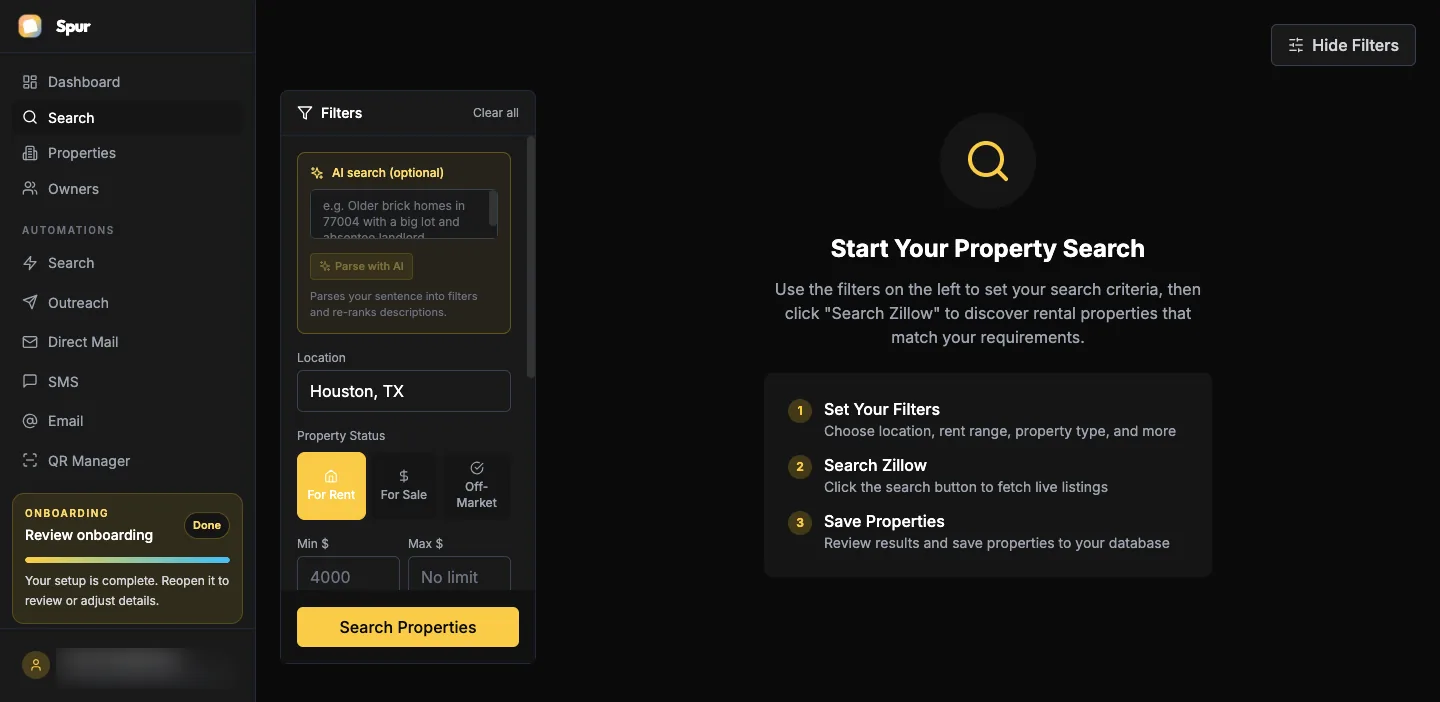
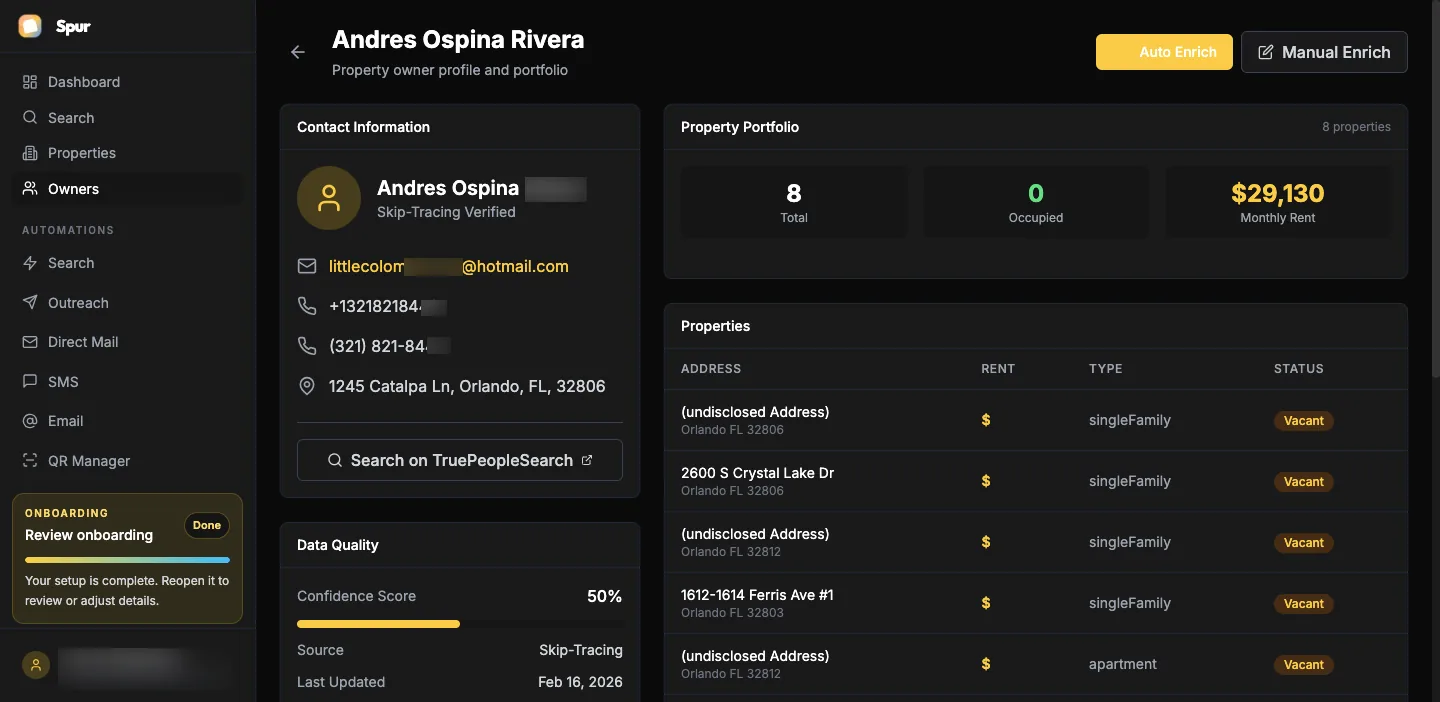
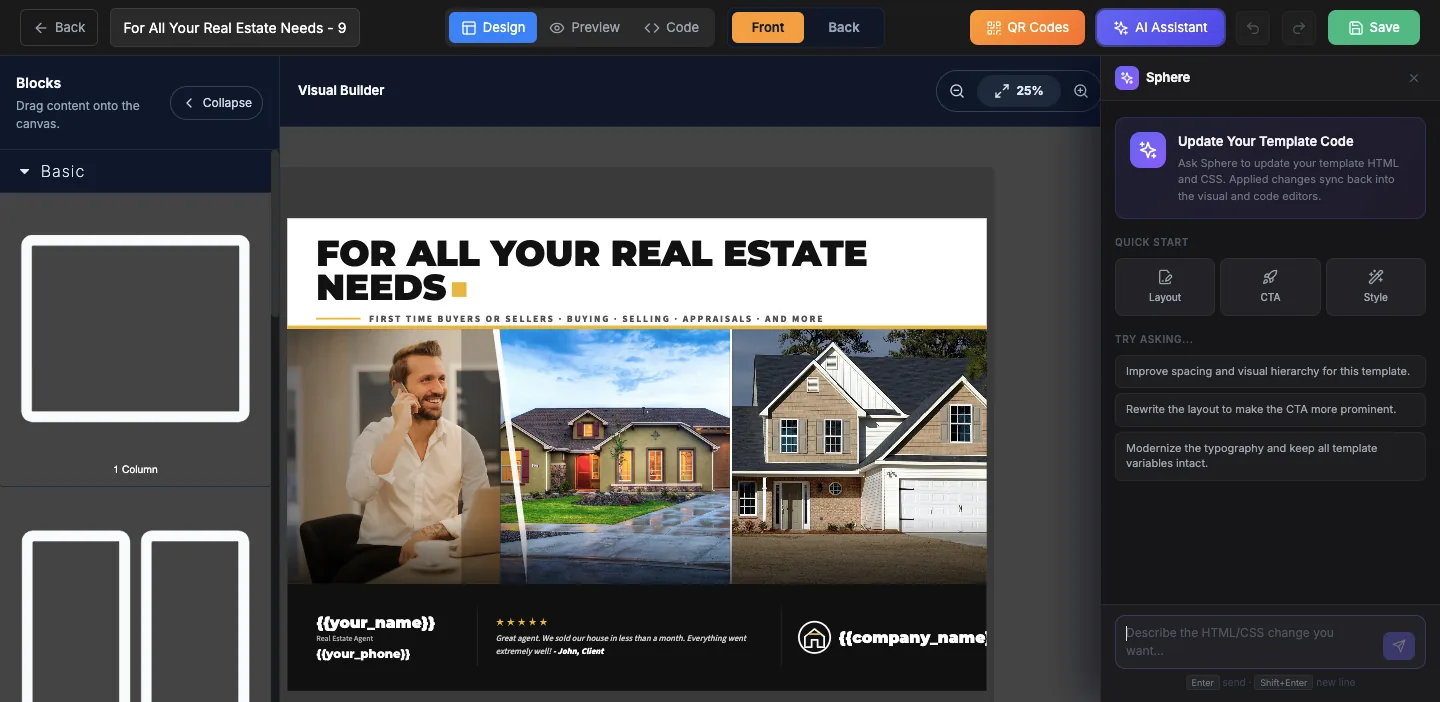
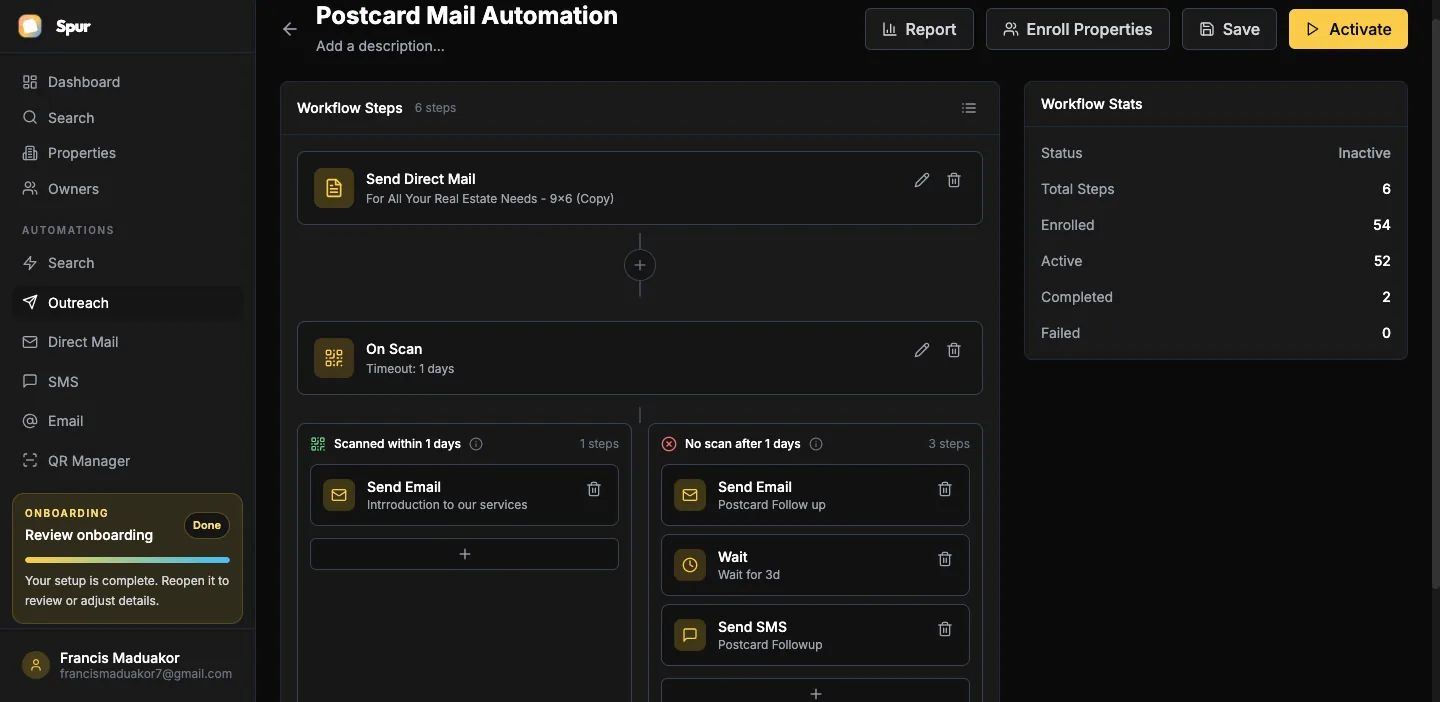
See it in Spur
One electrical mail program, four lists
Sample homes from an Indianapolis program, each tagged with the campaign it belongs to. Names are partly masked.
Zips 46256 + 46250Single-familyOwner-occupiedOwned 7+ yrsExclude current customers
- Brent L.8126 Bluff Ridge Dr2,240 sq ft · built 1979Panel letterLikely 100A
- Joan & Phil T.6015 Hythe Rd1,780 sq ft · built 1968Rewiring letterAluminum era
- Arjun M.8840 Admirals Woods Dr3,420 sq ft · built 2003EV charger card3-car garage
- Lisa R.7709 Allisonville Rd2,060 sq ft · built 1984Generator cardOwned 18 yrs
- Darnell C.6231 Sunnyside Rd1,940 sq ft · built 1976Panel letterOwned 22 yrs
AI draft for Brent L. · 8126 Bluff Ridge Dr
Dear Brent,
Homes on Bluff Ridge Drive were built around 1979. Many in the neighborhood still have their original panel and 100-amp service, which was plenty for a 1979 house but often isn't enough for a heat pump, an EV charger, or an induction range.
If you're planning any of those, the panel is the first thing to check. Our free assessment takes about 30 minutes: we'll look at the panel's brand and condition, calculate your current load, and tell you whether you can add what you're planning, need load management, or need a service upgrade.
If an upgrade makes sense, we handle the permit, the utility coordination, and the inspection. Scan the code to book a time, or call our office directly.
Rachel Kim · Circle City Electric · IN Lic. #EC21600418 · (317) 555-0158
Sample data for illustration. Your results depend on your market and filters.
Playbook
How to build a direct mail program for an electrical company
Most electricians who try direct mail try it once. They send a batch of postcards in a slow month, get a few calls, and can't tell whether it was worth it. A program works differently. It treats mail as a set of campaigns, each built around one job type, one list, and one offer, running on a calendar and measured by what it books.
Start with the jobs you want more of, then work backward to the homes that need them. Electrical work maps unusually well to public records. Panel and service upgrades concentrate in homes built from about 1950 to 1990, when Federal Pacific and Zinsco panels were common and 100-amp service was standard. Rewiring prospects are homes built before about 1950, when knob-and-tube was common, and homes built from 1965 to 1973, when some builders used aluminum branch wiring. EV charger installs concentrate in higher-value homes with attached garages. Generator installs follow storm exposure and outage history.
Match the format to the decision. A $4,000 panel upgrade or a rewiring project deserves a letter that explains why the home's era matters and what the assessment includes. A safety check or an EV charger quote works on a postcard. Many programs open with a letter and follow with one or two cards.
Put the program on a calendar. Panel and rewiring letters do well in late winter, when homeowners plan spring projects. EV charger mail can run year-round, with a push in spring. Generator mail should land well before storm season or the first ice storm, not after, when every installer has a waiting list. A fall safety check card fills slower weeks heading into the holidays.
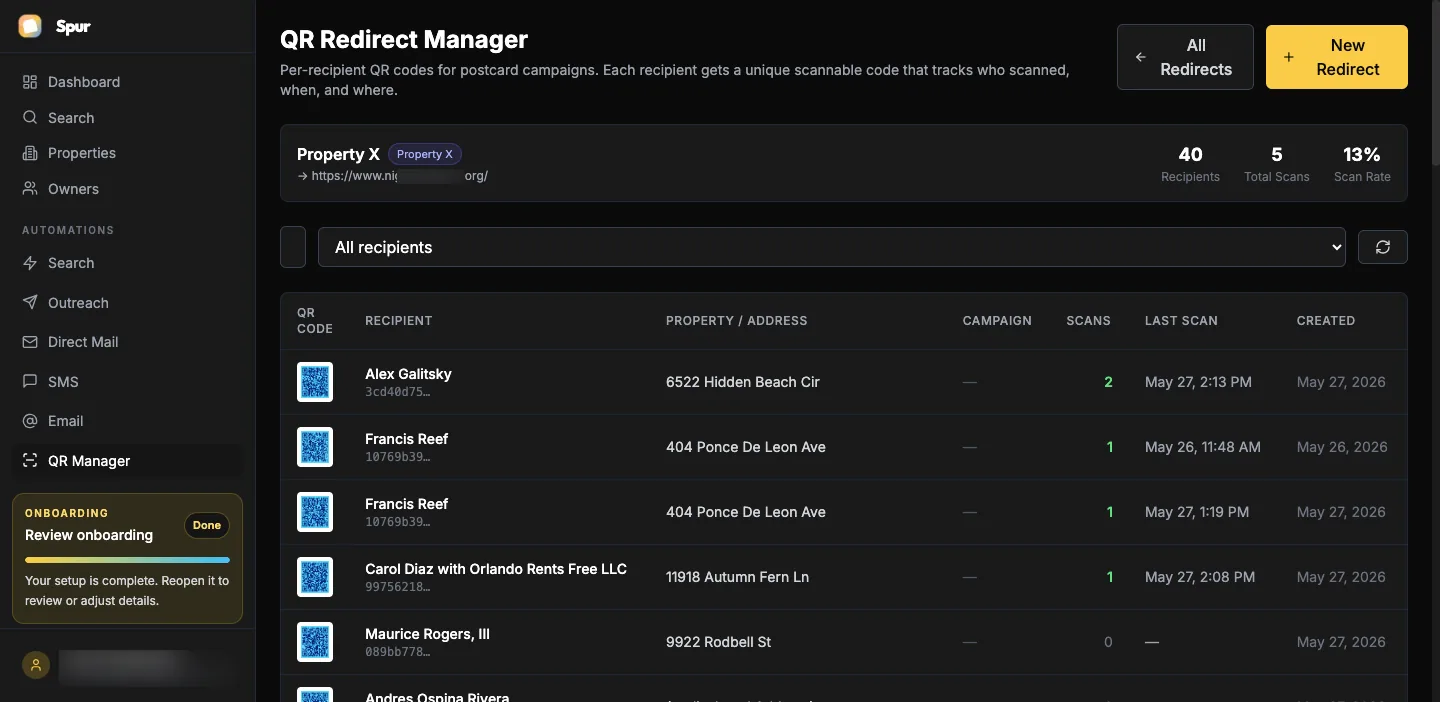
Measure each campaign separately. With a QR code per household, you can see scans by campaign, list, and street. Divide each campaign's mail and software cost by the jobs it booked to get cost per job, and compare that with what you pay for shared leads or ads. Cut the campaigns that don't pay and add volume to the ones that do.
Keep a suppression list. Exclude current customers from prospect campaigns, stop mailing anyone who booked, and respect anyone who asks to be removed. A program that runs all year needs clean lists to stay efficient and welcome.
11×example return on a year of mail and Spur Team from four campaigns
A year of electrical mail, measured by the jobs it books.
- Spur Team: $49/mo billed annually = $588/yr
- 1,200 panel and rewiring letters at $1.29 + 2,400 postcards at $0.94 = $3,804
- Five $3,800 panel upgrades, two $9,500 rewires, and eight $1,400 EV charger installs = $49,200, about 11× the mail and software combined
Example math. Job values and response rates vary by market, home age, and offer. Run your own numbers →
One tool, not four
Spur vs. the usual electrical marketing mix
What you needThe usual waySpur
Lists by job type and home eraOne mailing list for everything✓ Built in
Letters and cards written per homeGeneric print-shop mailers✓ Built in
Campaign calendar on autopilotMail when it gets slow✓ Built in
Cost per booked job by campaignTotal spend only✓ Built in
Exclusive leads you generateShared leads you buy✓ Built in
Direct Mail by the numbers
Why electrical work is predictable enough to plan mail around
1965–1973
the period when some U.S. homes were built with aluminum branch-circuit wiring
1950–1990
the era when Federal Pacific and Zinsco panels were commonly installed in homes
11×
example return on a year of mail and Spur Team from four campaigns
FAQ
Electrician direct mail questions
Does direct mail work for electricians?
It works when it's targeted and measured. Electrical jobs like panel upgrades and rewiring track closely with home age, so mail sent to the right build years with a specific offer and a QR code can be tracked to booked jobs.
How much should an electrician spend on direct mail?
Start with one campaign of 1,000 to 2,000 pieces, around $1,000 to $2,500 with software, and measure cost per booked job. Scale the campaigns that beat your other channels.
Should electricians send letters or postcards?
Both. Letters suit high-ticket decisions like panel upgrades and rewiring, where homeowners want an explanation. Postcards suit safety checks, EV charger quotes, and follow-up touches.
What campaigns should an electrical company run each year?
A common calendar is panel and rewiring letters in late winter, EV charger cards in spring, generator mail before storm season, and a home safety check card in the fall.
How do I track electrical direct mail results?
Give each household its own QR code, so every scan has a name, address, and campaign. Then record which scans became booked jobs to get cost per job by campaign.
Keep exploring
Related plays and guides
Start in minutes. No card required.
Turn one-off mailers into a pipeline.
Build your first campaign list by home era and schedule the year in Spur. Free to start.
Plan my electrical mail program — freeFree forever plan · No card · 20 property searches a month
Prefer a walkthrough? Book a demo