
Electrical work is invisible until something trips, sparks, or fails inspection. A card that says "Need an electrician?" gets kept only by people who already do.
Electrical play · Postcards
Electrical postcards that name the home's wiring era, not just your phone number.
Most electrician postcards are a lightning bolt, a coupon, and a phone number. Spur writes a card for each home that names its build year and the electrical standards it was built to, prints it, mails it USPS first-class, and alerts your office when the homeowner scans.
Free forever plan · No card · 20 property searches a month
USPSFirst-Class
Denise Harmon7310 S Joplin AveTulsa, OK 74136Scan to pick a time
Denise H. scanned your safety check postcard · 7 min ago
AI-written for this owner · Mailed in 2 days
1 cardper home, written for its build year and wiring era
QR per houseso every scan comes with a name and address
2 daysfrom approval to USPS first-class
The problem
Electrical postcards all look alike, and homeowners don't see why they'd call.
A 2019 build and a 1962 ranch get the same coupon, even though one has AFCIs throughout and the other may have a 100-amp panel and two-prong outlets.
When a call comes in, you can't tell which card, street, or offer did it. Next quarter's card is another guess.
How it works
From list to mailbox in one workflow.
Five steps from a blank card to a booked safety check.
app.usespur.com
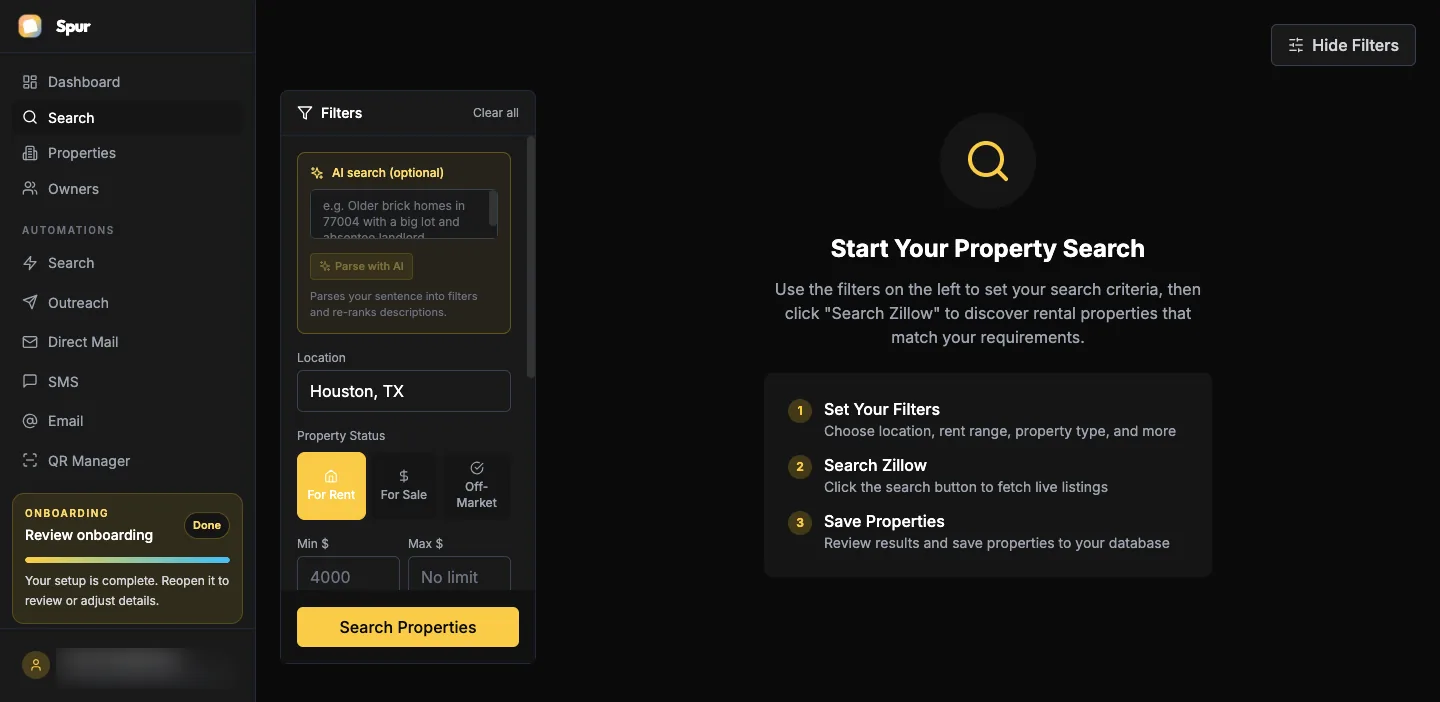
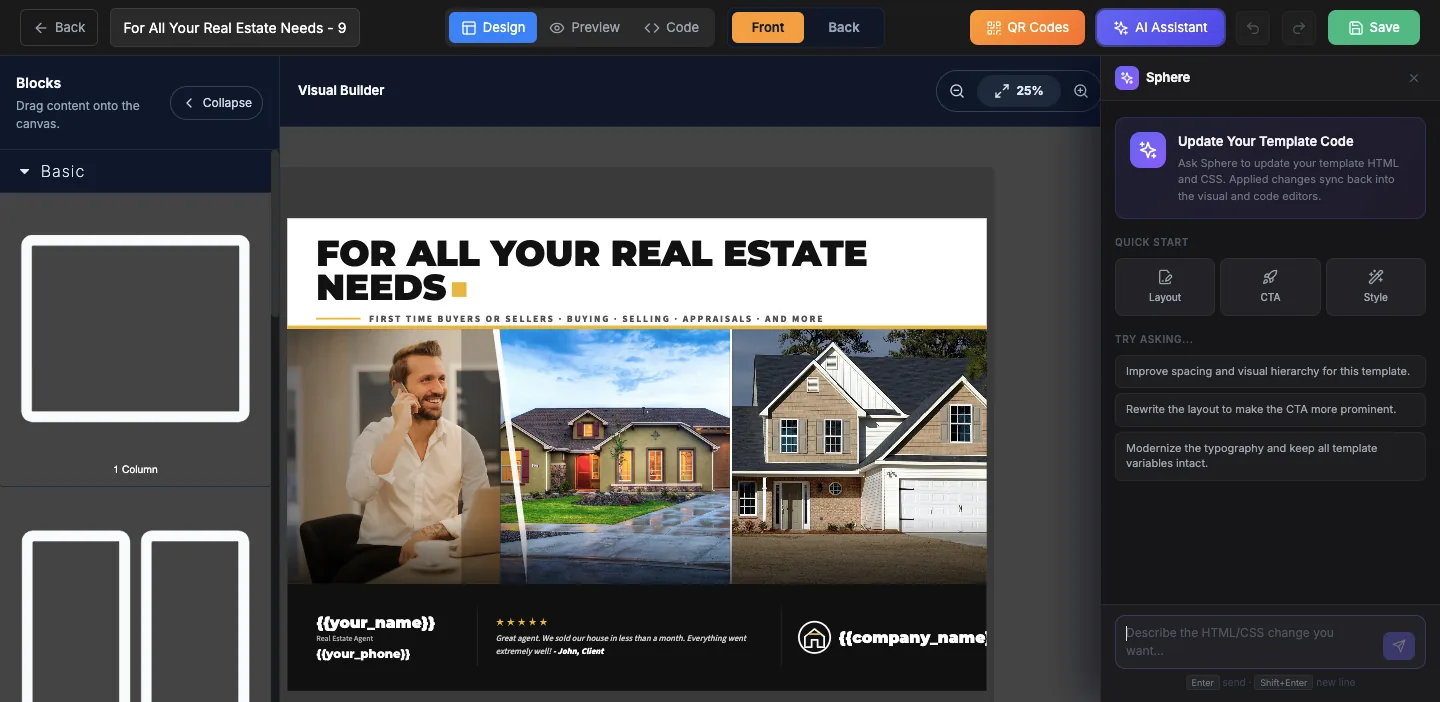
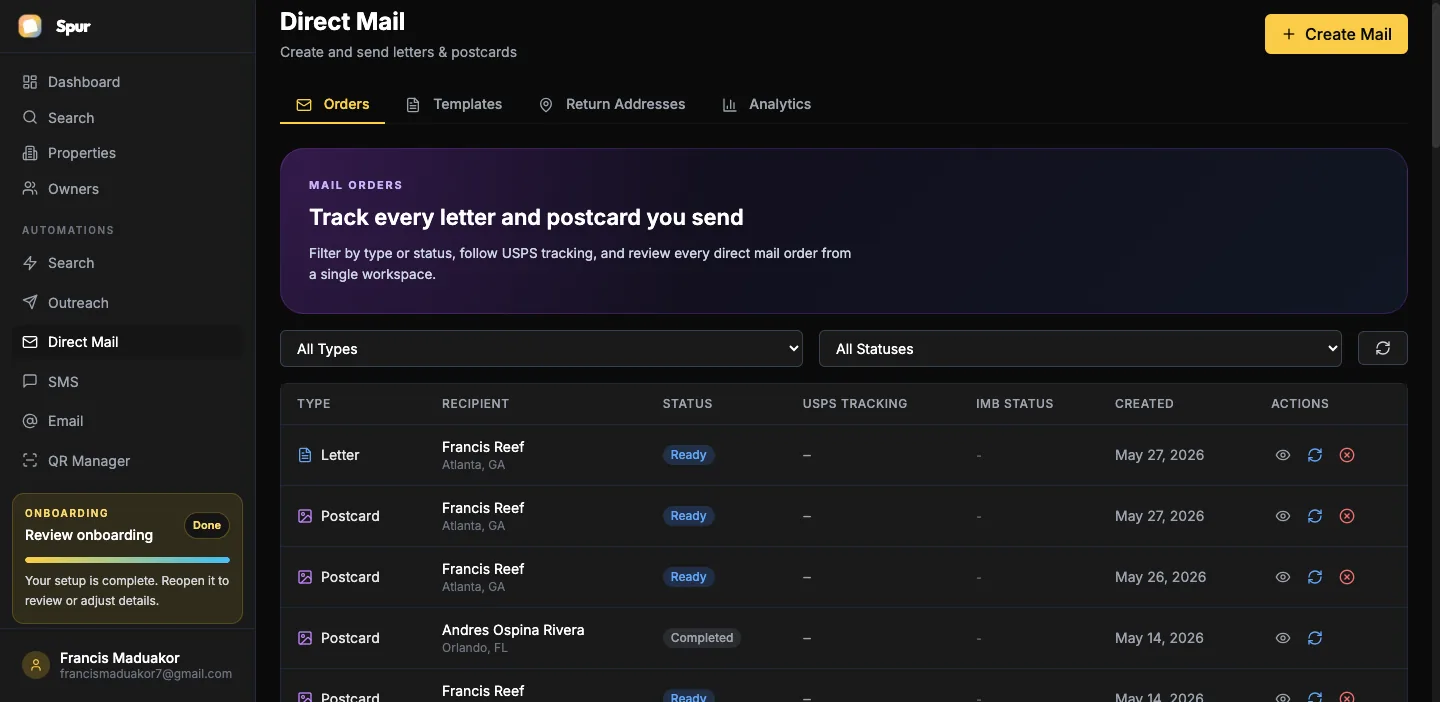
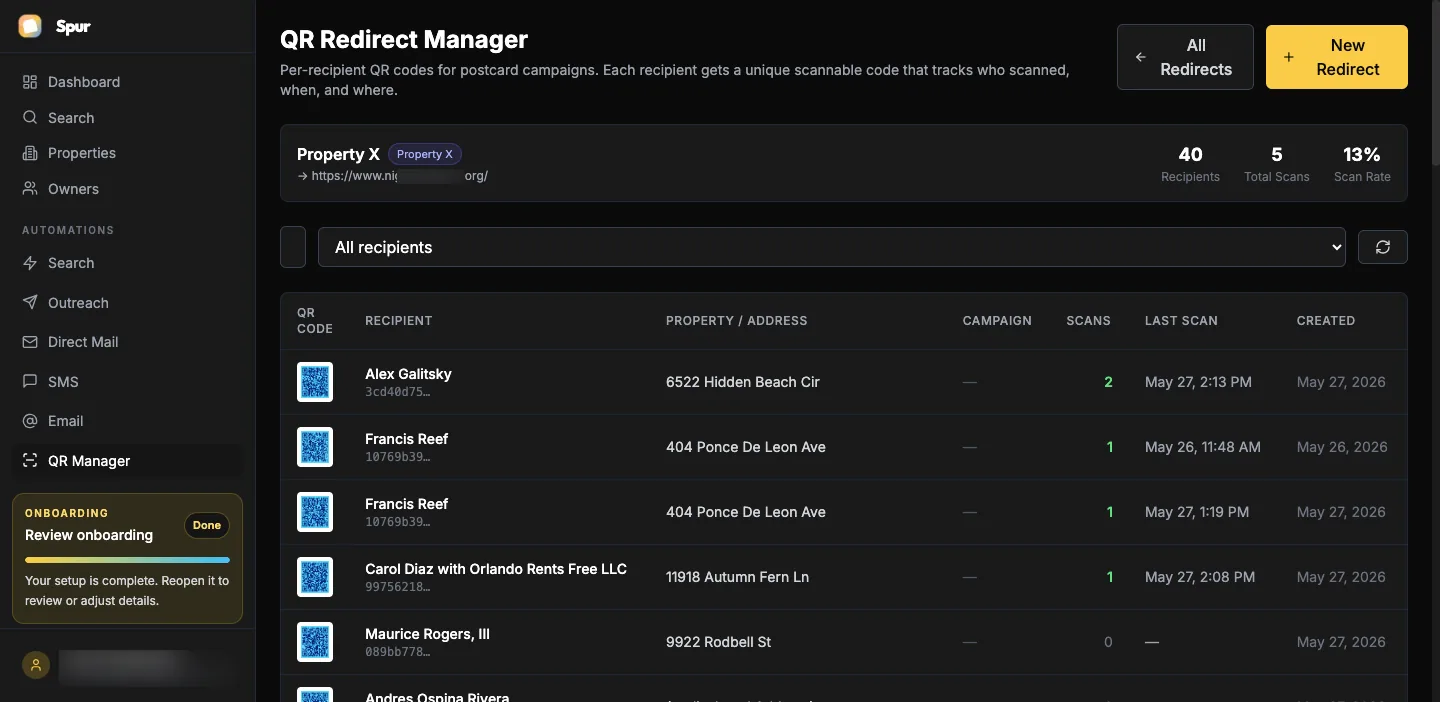
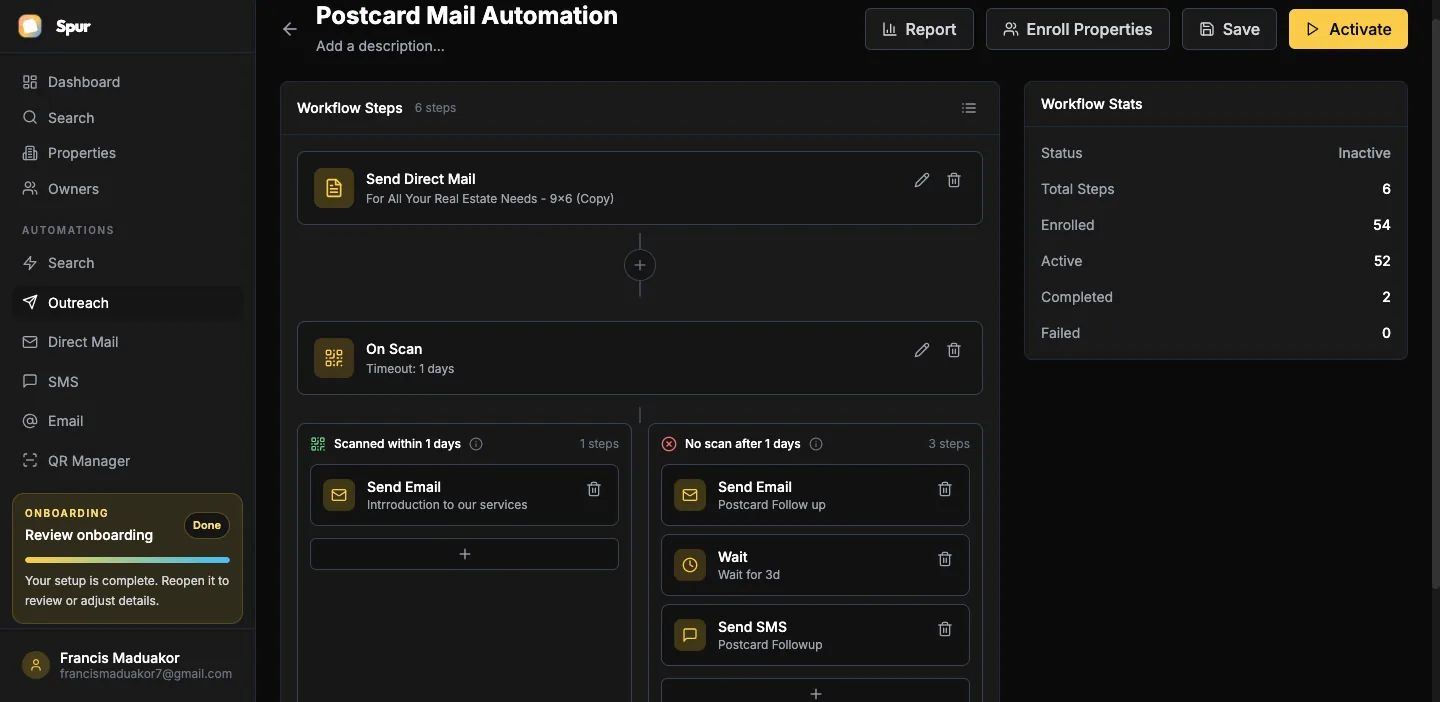
See it in Spur
Who gets which electrical postcard
A sample Tulsa list split by build year, so each home gets the offer that fits its wiring era. Names are partly masked.
Zip 74136Single-familyOwner-occupiedBuilt 1965–1998Owned 8+ yrs
- Denise H.7310 S Joplin Ave2,180 sq ft · built 1987Safety check cardOwned 14 yrs
- Ray & Colleen B.6824 E 71st Pl2,640 sq ft · built 1972Panel cardOwned 26 yrs
- Tomás G.7522 S Irvington Ave1,890 sq ft · built 1984Safety check cardOwned 9 yrs
- Phyllis W.6905 S Hudson Ave2,010 sq ft · built 1968Panel cardOwned 33 yrs
- Kevin L.7417 S Granite Ave2,350 sq ft · built 1991Safety check cardOwned 11 yrs
AI draft for Denise H. · 7310 S Joplin Ave
YOUR 1987 HOME WAS WIRED BEFORE BEDROOM AFCIS.
Hi Denise, most homes on S Joplin Ave were built around 1987. The electrical code didn't call for arc-fault protection on bedroom circuits until 1999, and outlets near sinks and outdoors have had stricter GFCI rules added since then too.
None of that means anything is wrong. Our $79 home safety check tests every GFCI, looks inside the panel, checks for loose or warm connections, and tests your smoke alarms. You'll get a written report with anything worth fixing, ranked by priority.
Scan the code to pick a time. We're booking the next three weeks now.
Green Country Electric · OK Lic. #106482 · (918) 555-0127
Sample data for illustration. Your results depend on your market and filters.
Playbook
What makes an electrical postcard work
Electrical work has a marketing problem other trades don't. A furnace makes noise and a leak leaves a stain, but wiring is behind the walls and the panel is in the garage. Most homeowners have no idea whether their electrical system is fine, out of date, or a problem. A postcard that just says "Licensed electrician, call today" gives them no reason to think about it.
The cards that get kept give the homeowner a fact about their own house. Build year is the best source of those facts, because electrical standards change on a known schedule. GFCI protection in bathrooms entered the National Electrical Code in the mid-1970s and spread to kitchens in the late 1980s. Arc-fault protection for bedroom circuits arrived in the 1999 code. Homes built from the 1950s to the 1980s are the era of Federal Pacific and Zinsco panels, and many older homes still run on 100-amp service. A headline like "Your 1987 home was wired before bedroom AFCIs" is accurate, specific, and hard to ignore.
Keep the tone factual. An electrician who writes "your home may be a fire hazard" sounds like a salesman. One who writes "here's what the code required when your home was built, and here's a one-hour check that tells you where you stand" sounds like an expert. The safety check or panel assessment is the right first offer for most homes: low price, clear scope, and a natural path to the bigger job when something needs fixing.
Lead with one offer per card. Split your list by era so pre-1975 homes get a panel and wiring card and 1975–2000 homes get a safety check card. Put your license number, a sentence of local proof (years in business, review count, or a nearby job), and a QR code on the back. A 6×9 card gives the headline room; a 4×6 is fine for repeat touches.
The QR code is what makes a postcard measurable. When each household has its own code, a scan tells you who's interested, which card they got, and when. Call scanners the same day. Then mail a second card four weeks later to the homes that didn't scan, with a new headline, and stop mailing anyone who booked.
6×return on a year of Spur Team from one $3,600 panel upgrade
One panel job from a postcard covers years of Spur.
- Spur Team: $49/mo billed annually = $588/yr
- 1,000 homes × 2 cards = 2,000 postcards at $0.94 = $1,880
- Twenty $79 safety checks that turn into four $3,600 panel upgrades = $16,000, about 6× the software and postage combined
Example math. Response and close rates vary by market, offer, and home age. Run your own numbers →
One tool, not four
Spur vs. the usual electrician postcard
What you needThe usual waySpur
Card written for each home's eraOne coupon for every door✓ Built in
Homes picked by build yearEvery address on the route✓ Built in
QR code per householdPhone number only✓ Built in
Second card to non-scannersStart over next quarter✓ Built in
Results by card and streetGuessing what worked✓ Built in
Postcards by the numbers
Why build year tells you what to put on the card
1999
the National Electrical Code first required arc-fault protection for bedroom circuits in new homes
46,700
U.S. home fires a year involved electrical failure or malfunction (2015–2019 average)
6×
return on a year of Spur Team from one $3,600 panel upgrade
FAQ
Electrical postcard questions
What should an electrician put on a postcard?
A headline about the homeowner's own house, one offer, your license number, a line of local proof, and a QR code. The build year is the best hook: it tells you which code changes and equipment the home likely predates.
What's the best offer for an electrical postcard?
A fixed-price home safety check or a free panel assessment. Both are low commitment, have a clear scope, and lead naturally to panel, GFCI, AFCI, or rewiring work when something needs attention.
Should electricians use EDDM or targeted postcards?
EDDM mails every door on a route for a low postage rate, but you can't personalize it or pick homes by age. Targeted cards cost more per piece but reach only the homes whose wiring era fits your offer, and each has a trackable QR code.
How many electrical postcards should I send?
Start with 500 to 1,000 homes in one or two zips you want to grow in, and plan two cards per home four weeks apart. Measure scans and booked jobs, then expand the streets that respond.
Can I mention fire risk on an electrical postcard?
Factually and briefly. Cite what was standard when the home was built and offer a check. Avoid scare language. Homeowners trust an electrician who says "it may be fine, here's how to find out."
Keep exploring
Related plays and guides
Start in minutes. No card required.
Mail the card that names their wiring era.
Pull the homes in your service area by build year and send your first electrical postcard today. Free to start.
Find homeowners who need an electrician — freeFree forever plan · No card · 20 property searches a month
Prefer a walkthrough? Book a demo