
Bought solar leads go to several installers at once. The homeowner gets five calls in an hour and picks whoever was loudest.
For residential solar installers
Solar leads from homeowners whose roof and bills fit, not from shared lead lists.
Spur finds owner-occupied homes in your territory with the value, roof size, and ownership length that make solar pencil, writes a postcard that talks about their utility and their roof, and mails it with a QR code to your savings estimate. You get the lead alone, and you know the moment they look.
Free forever plan · No card · 20 property searches a month
USPSFirst-Class
Laura Brennan1847 Calle SerenaSan Marcos, CA 92078Scan for your savings estimate
Laura B. opened your solar savings estimate · 3 min ago
AI-written for this owner · Mailed in 2 days
Owner-occupiedis the first filter: renters can't sign
10+ yrsof roof life left before panels go up
2 daysfrom approval to USPS first-class
The problem
Solar leads are expensive, shared, and often the wrong homeowner.
Canvassing works, but it's slow, expensive per appointment, and banned or restricted in a growing number of neighborhoods.
Generic mail reaches renters, shaded lots, and roofs that need replacing first. Your designers waste time on homes that can't proceed.
How it works
From list to mailbox in one workflow.
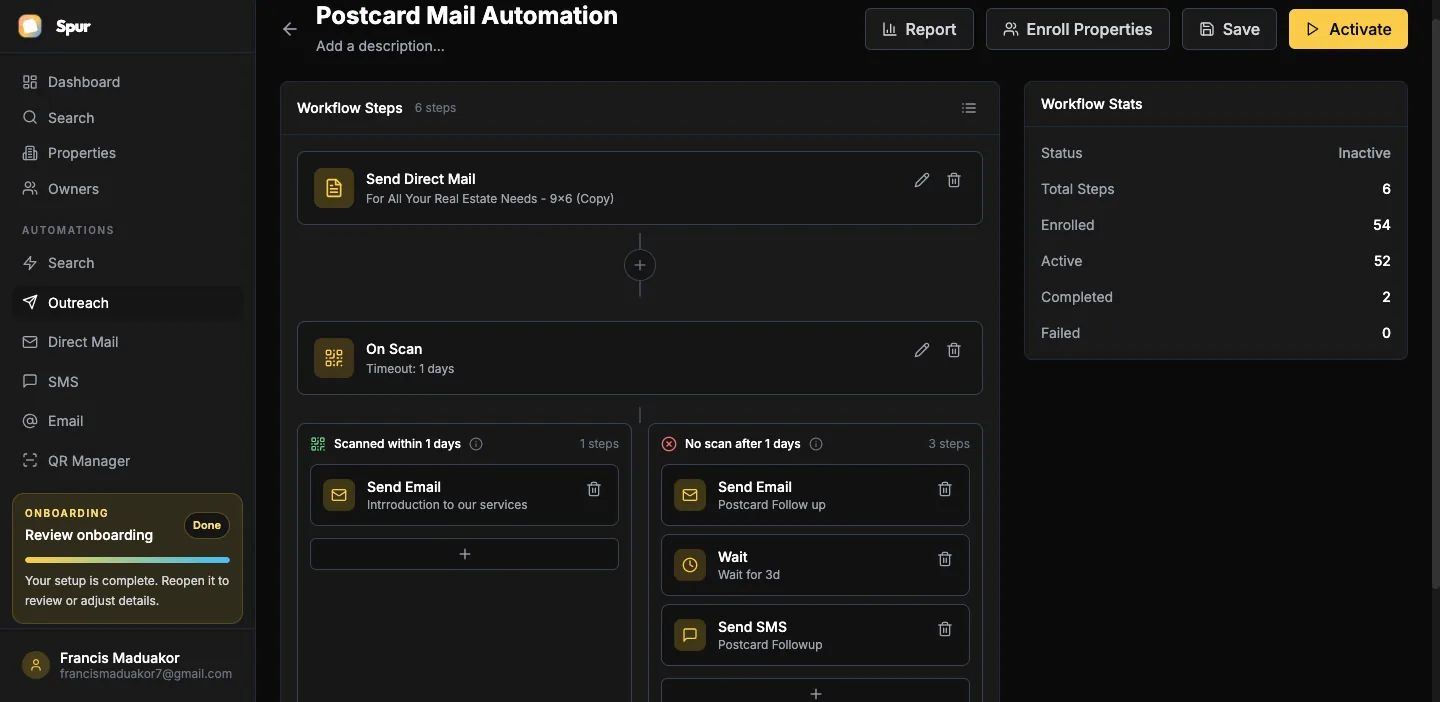
The same five steps every time, set up for solar installers.
app.usespur.com
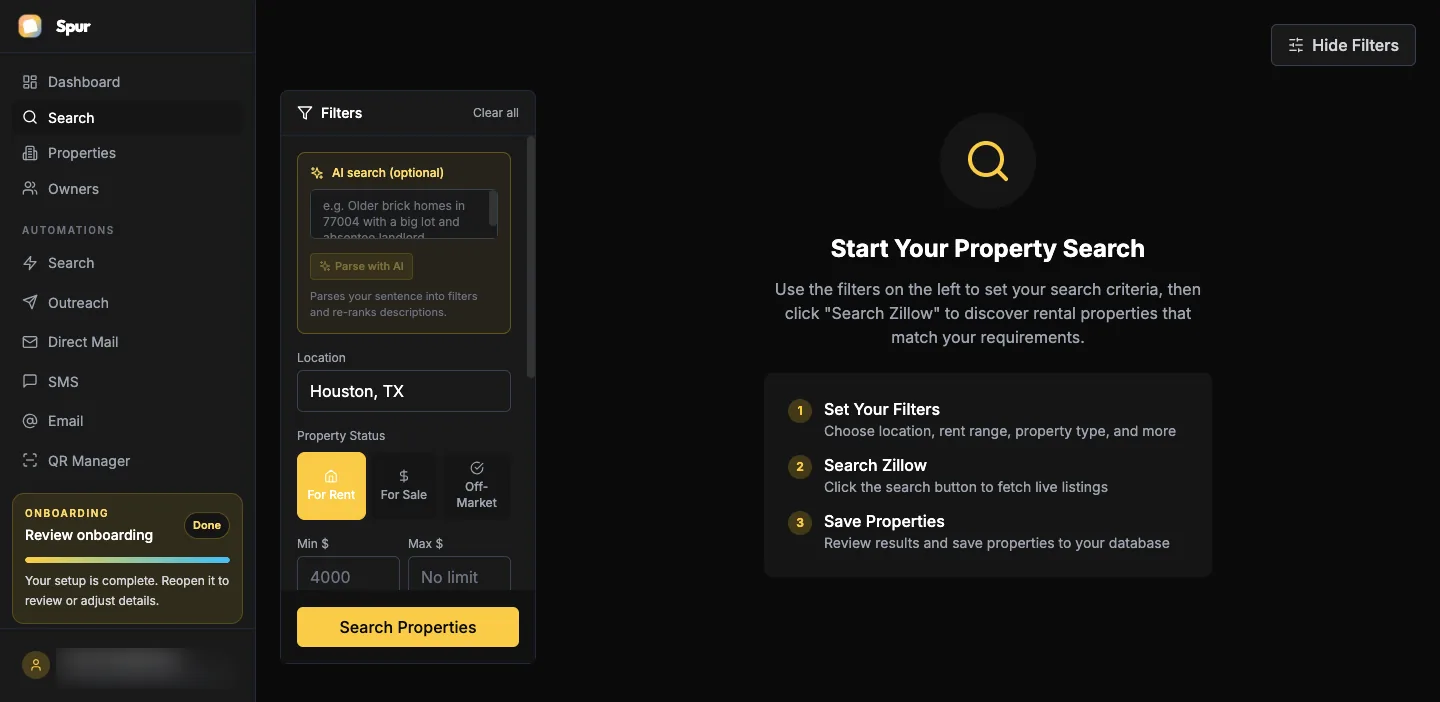
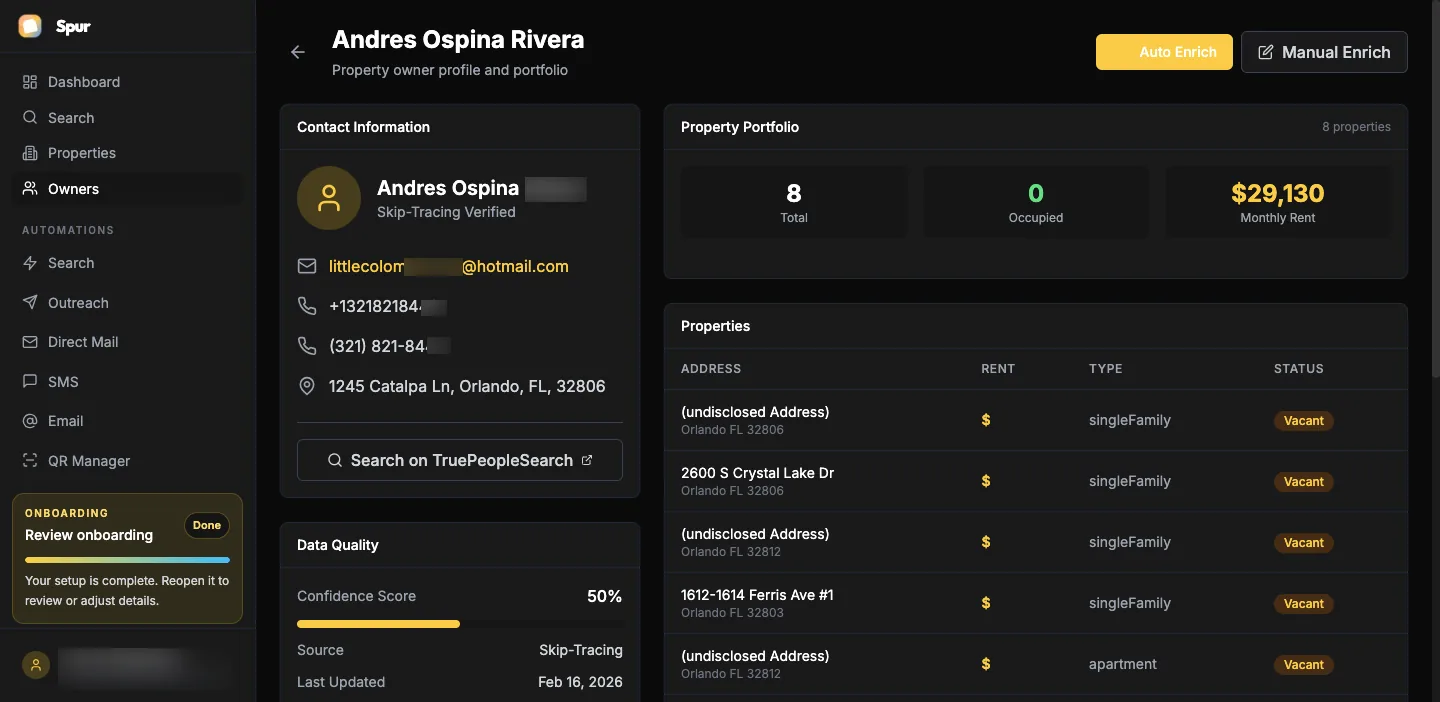
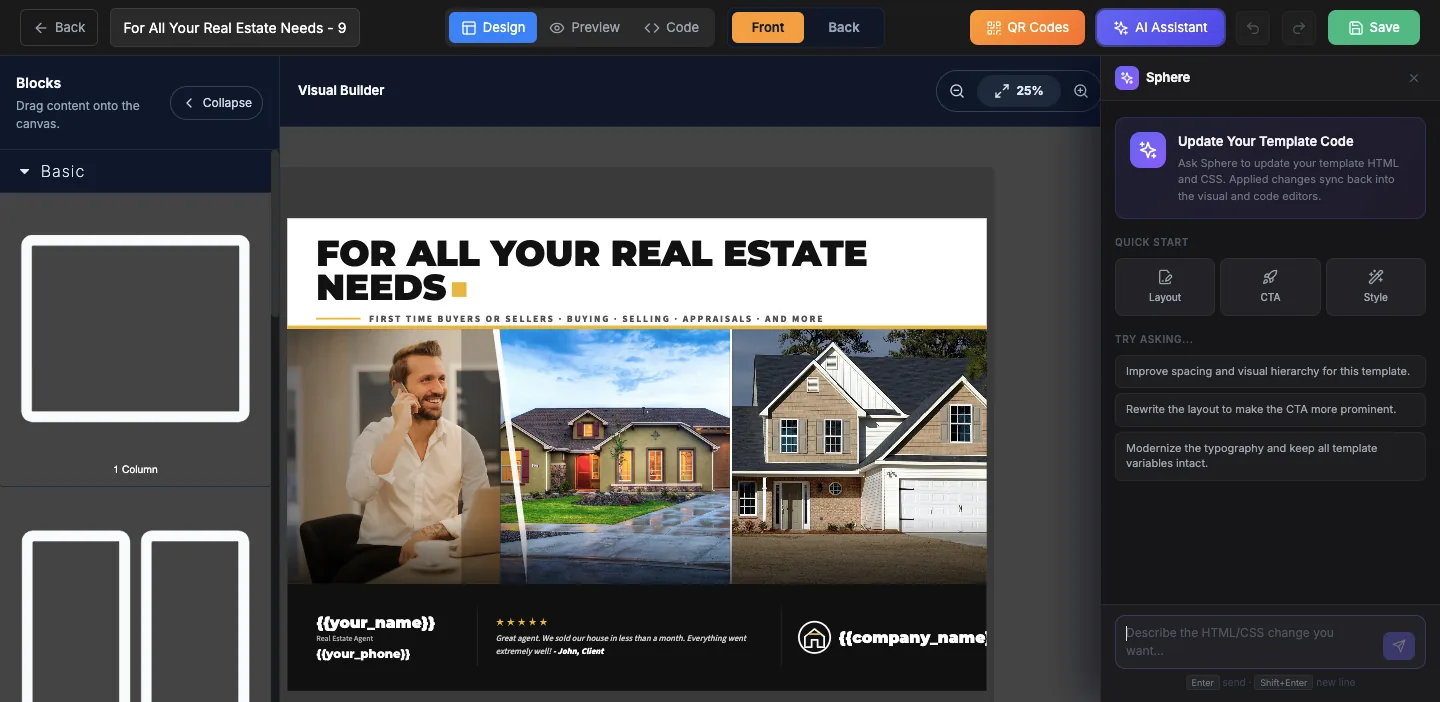
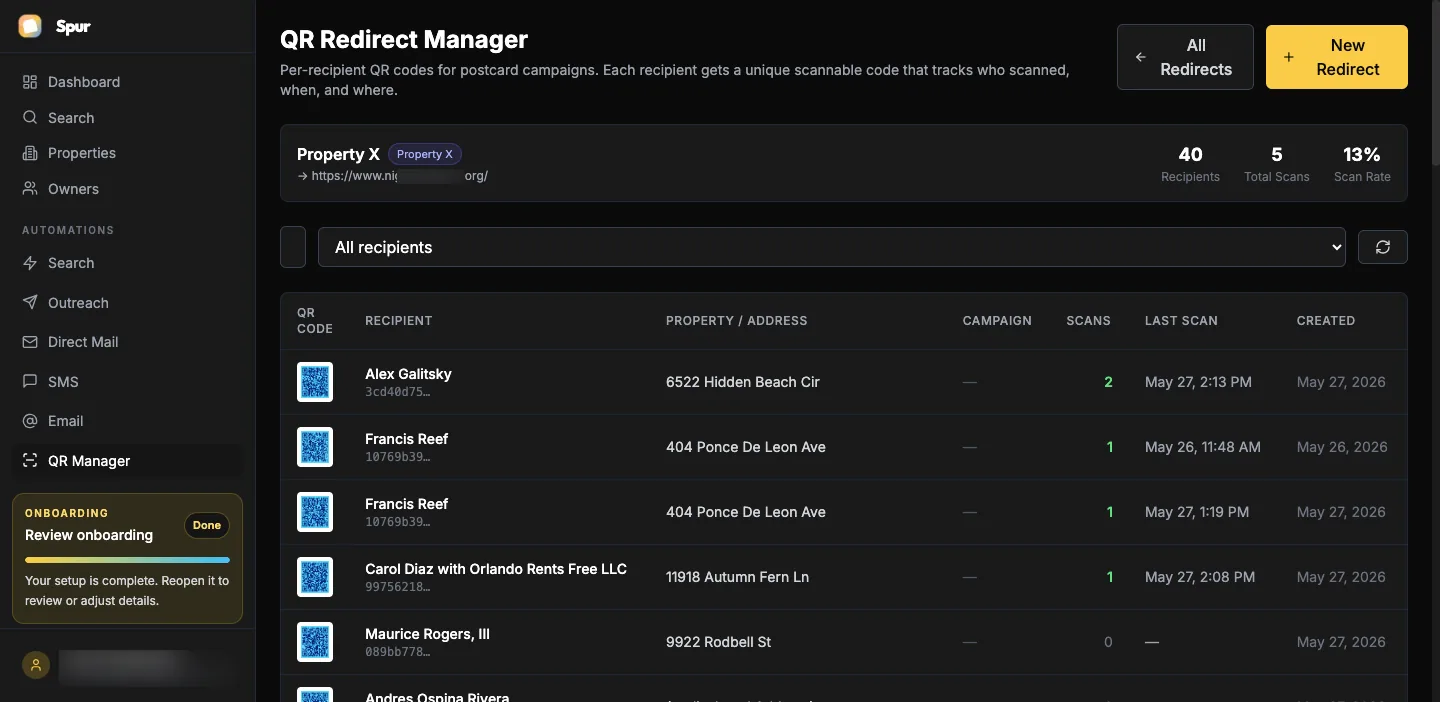
Plays for Solar
Solar plays you can run in Spur today
Leads by home value
Larger homes usually mean larger bills and bigger systems.
Value $500K+2,200+ sq ft
See the full play →Roof orientation targetingStreets whose roofs face south or west.
Your street listSingle-family
See the full play →Battery and backup storageOutage-prone areas and existing solar owners.
Storm zipsOwner-occupied
See the full play →New homeownersBuyers setting up utilities for the first time.
Sold last 90 daysBuilt 2000+
See the full play →Neighbor marketingMail the street around every install.
Radius 0.25 miOwner-occupied
See the full play →Roof-and-solar bundlesHomes that need a roof first. Partner or do both.
Built 1995–2005Owned 10+ yrs
See the full play →EV owner bundlesHigher-value homes likely to add an EV charger.
Value $600K+Attached garage
See the full play →Past lead reactivationRe-mail the estimates that stalled last year.
Your listQuoted 6+ mo ago
See the full play →Solar postcardsHonest cards that name the roof and the utility.
Per-home copyQR tracked
See the full play →Direct mail programFour standing lists that book surveys every month.
Auto-scheduleCost per survey
See the full play →Leads without lead listsExclusive solar leads from homes you chose.
ExclusiveInbound first
See the full play →See it in Spur
What a solar prospect list looks like in Spur
A sample list for one San Diego County zip: owner-occupied single-family homes valued $650K+, 2,000+ sq ft, owned 3+ years. Names are partly masked.
Zip 92078Owner-occupiedSingle-familyValue $650K+2,000+ sq ft
- Laura B.1847 Calle Serena2,640 sq ft · built 2004Owned 9 yrsSouth roof
- Victor & Ana M.1902 Calle Serena3,120 sq ft · built 2005Owned 14 yrsPool
- Greg T.512 Via Ventana2,280 sq ft · built 2001Owned 6 yrsWest roof
- Hannah & Joe P.538 Via Ventana2,910 sq ft · built 2002Owned 11 yrs3-car garage
- Ramon S.1766 Paseo Brisa2,450 sq ft · built 2006Owned 4 yrsSouth roof
AI draft for Laura B. · 1847 Calle Serena
Hi Laura,
We've designed systems for several homes in your part of San Marcos, and Calle Serena is a good street for solar: wide roofs, few tall trees, and lots of southern exposure.
Rather than a sales pitch, we'd like to send you an actual estimate. Share a recent SDG&E bill and we'll model what a system and an optional battery would produce on your roof, what it would cost, and how long the payback would be under current rate plans.
Scan the code on this card to request it. If the numbers don't work for your home, we'll tell you.
Nina Alvarez · Sunline Solar · (760) 555-0182
Sample data for illustration. Your results depend on your market and filters.
Playbook
How to find residential solar leads that actually close
Residential solar has always been an expensive customer-acquisition business. Shared leads get resold to several installers, door-to-door teams have high turnover, and a large share of appointments fall apart in design because of shade, roof condition, or ownership. The cheapest lead is the one you never have to disqualify.
Start with ownership. Only an owner can sign, finance, or lease, so owner-occupied single-family homes are the base list. Ownership length matters too. Owners who've been in the home a few years and plan to stay can wait out a payback period, while owners who just bought or are about to sell usually can't.
Then look at the house. Larger homes and higher values usually mean higher electricity use and a larger system. Roof condition is critical. Panels typically stay up 25 years, so a roof with only a few years of life left should be replaced first. Homes built in the late 1990s and early 2000s with long-time owners are often on original roofs, which makes them a natural roof-and-solar bundle if you or a partner do both.
The economics changed at the end of 2025, when the federal residential clean energy credit ended for homeowner-owned systems placed in service after that year. That makes honest, home-specific numbers more important than ever. Lead with utility rates, time-of-use plans, battery backup, financing, and any state or utility incentives that apply in your market, and avoid copy that implies "free" solar or government programs that don't exist.
Finally, use your installs as proof. Panels on a roof are visible to the whole street. A card to the surrounding blocks, with a QR to a short case study of the nearby system, gives neighbors a real reference point, and it's the kind of lead that tends to close.
Follow up quickly and plainly. A homeowner who scans a solar card is usually comparing options, so a same-day reply with a real estimate, a clear payback range, and honest caveats about shading or roof age will stand out against high-pressure sales calls.
25×+return on a year of Spur Team from one $15,000 install
One install pays for many years of Spur.
- Spur Team: $49/mo billed annually = $588/yr
- 500 postcards on Team at $0.94 each = $470
- One $15,000–$30,000 residential system = 25–50× your annual subscription
Example math. Your system size, pricing, and close rate will vary. Run your own numbers →
One tool, not four
Spur vs. the usual solar lead stack
What you needThe usual waySpur
Find homes by ownership, value, and sizeShared lead vendor✓ Built in
Owner name and contact infoSkip-tracing service✓ Built in
Home-specific copyGeneric mailer or script✓ Built in
Print and mailMail house with minimums✓ Built in
Know who's interestedNot available✓ Built in
Follow-upSeparate CRM sequences✓ Built in
Solar by the numbers
Why solar still sells, with honest numbers
~0.5%/yr
median output loss for solar panels, so a system keeps producing for decades
End of 2025
the federal residential clean energy credit ended for homeowner-owned systems placed in service after 2025
25×+
return on a year of Spur Team from one $15,000 install
FAQ
Questions from solar installers
How do I get solar leads without buying shared leads?
Build your own list. Filter owner-occupied single-family homes by value, size, and ownership length in the utility territories you serve, then mail a home-specific estimate offer. Every scan is an exclusive lead.
Can Spur tell me which roofs face south?
Spur doesn't analyze roof orientation. Many installers check orientation in their design tools and upload a street or address list, or target neighborhoods they already know have good exposure. Spur then enriches and mails that list.
Is the federal solar tax credit still available for homeowners?
The federal residential clean energy credit ended for homeowner-owned systems placed in service after 2025. Check current rules with a tax professional, and focus your copy on utility savings, batteries, financing, and any state or utility incentives in your market.
Is direct mail better than door knocking for solar?
They work well together. Mail reaches every qualifying owner, including those who aren't home or live in neighborhoods that restrict solicitation, and tells your reps which homes are already interested.
What does Spur cost for a solar installer?
Solo is free forever with no card. You pay per postcard when you mail. Team is $49/mo billed annually with more searches, enrichments, QR codes, and lower postcard pricing.
Keep exploring
Related trades and guides
Start in minutes. No card required.
Your next install is a homeowner who hasn't been called by five other companies.
Build an owner-occupied solar list in your territory and mail your first estimate offer today.
Find homeowners ready for solar — freeFree forever plan · No card · 20 property searches a month
Prefer a walkthrough? Book a demo