
"Eliminate your electric bill" and "free solar" cards have trained homeowners to toss solar mail without reading it.
Solar play · Postcards
Solar postcards that tell you which homeowners want an estimate.
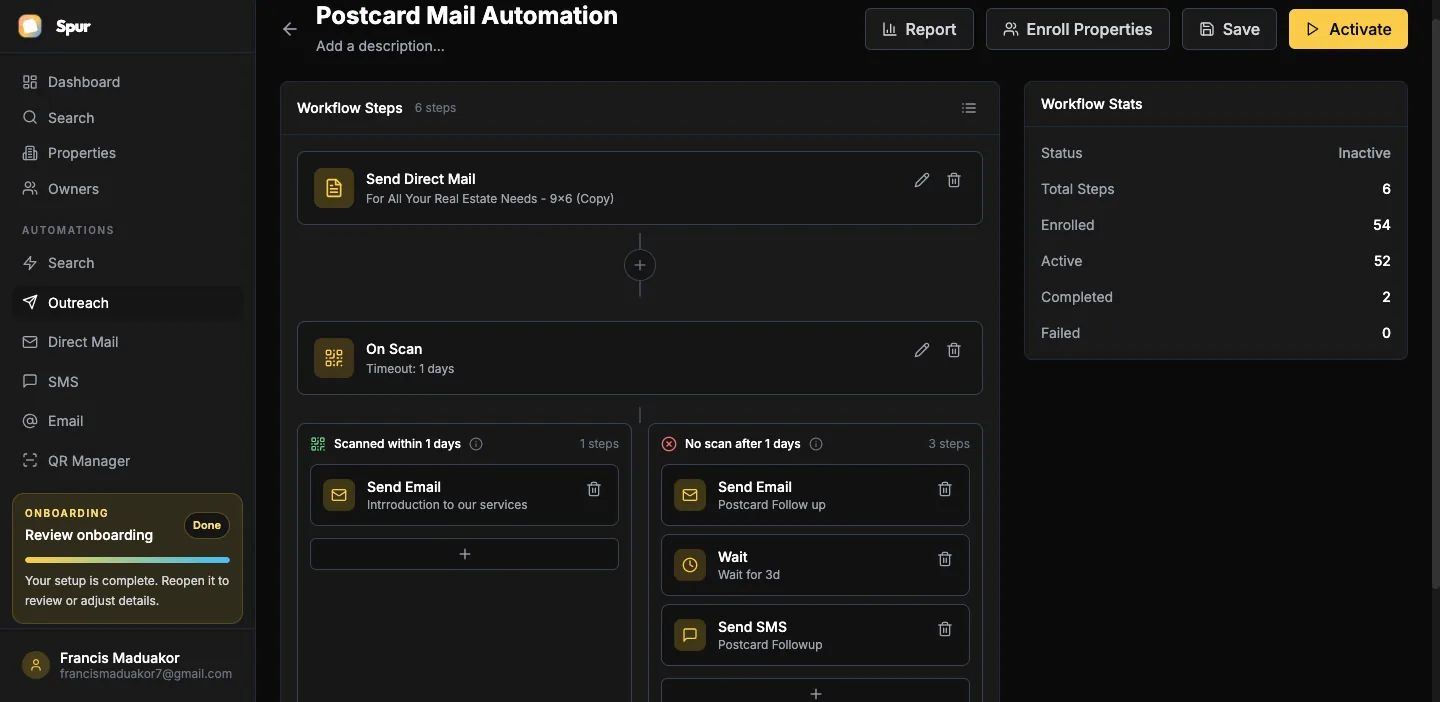
Most solar postcards promise huge savings and a tax credit to every house on the route. Spur writes an honest card for each home that names its roof and its utility, prints it, mails it USPS first-class, and alerts your sales team the moment an owner scans to request a savings estimate.
Free forever plan · No card · 20 property searches a month
USPSFirst-Class
Marcus Hill408 Brightleaf DrCary, NC 27519Scan for your savings estimate
Marcus H. scanned your solar card · 8 min ago
AI-written for this owner · Mailed in 2 days
Per homecopy that names the roof and the utility
No minimumsmail 200 homes or 20,000
Scan alertstell your reps who wants an estimate
The problem
Homeowners have learned to ignore solar mail.
Cards that still lead with a federal tax credit for homeowner-owned systems are out of date, and homeowners who check lose trust.
A call-in number gets a few calls. Nobody knows who read the card and almost called.
How it works
From list to mailbox in one workflow.
Five steps from a blank card to a booked site survey.
app.usespur.com
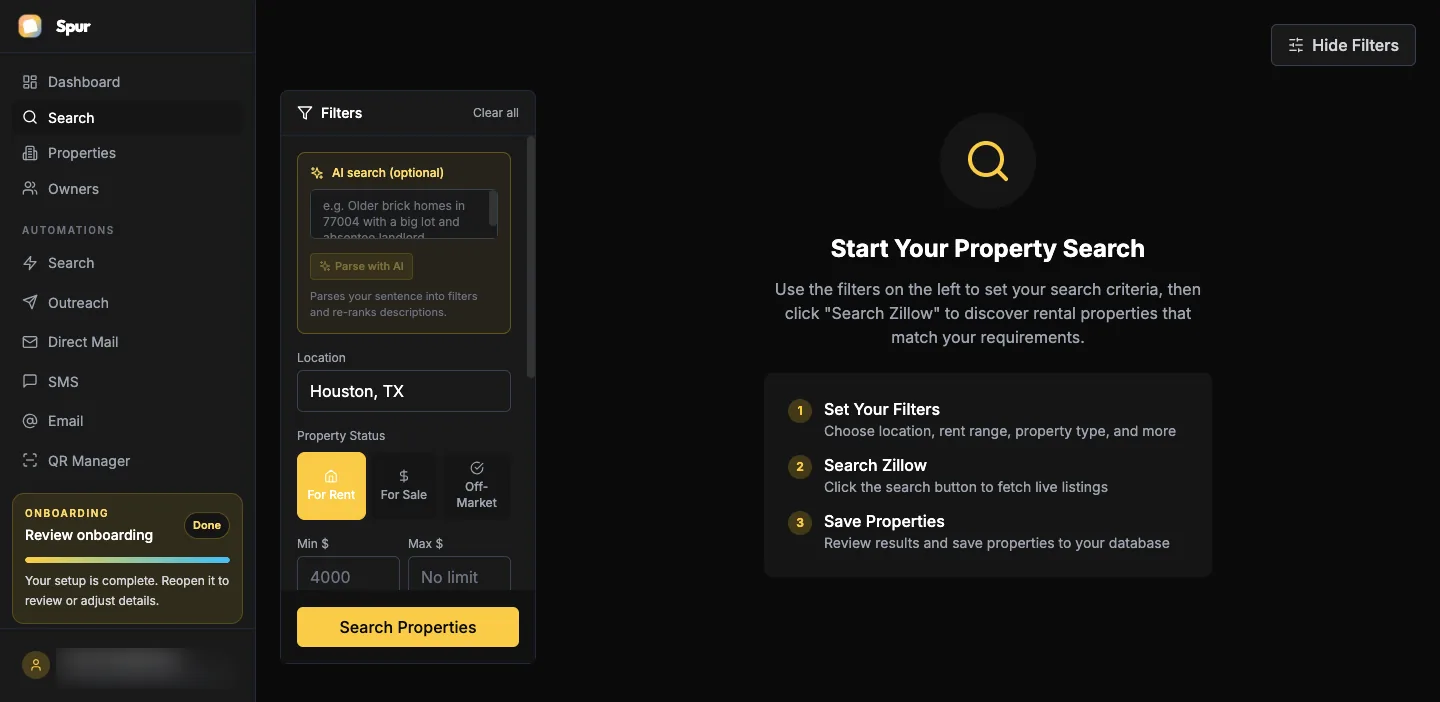
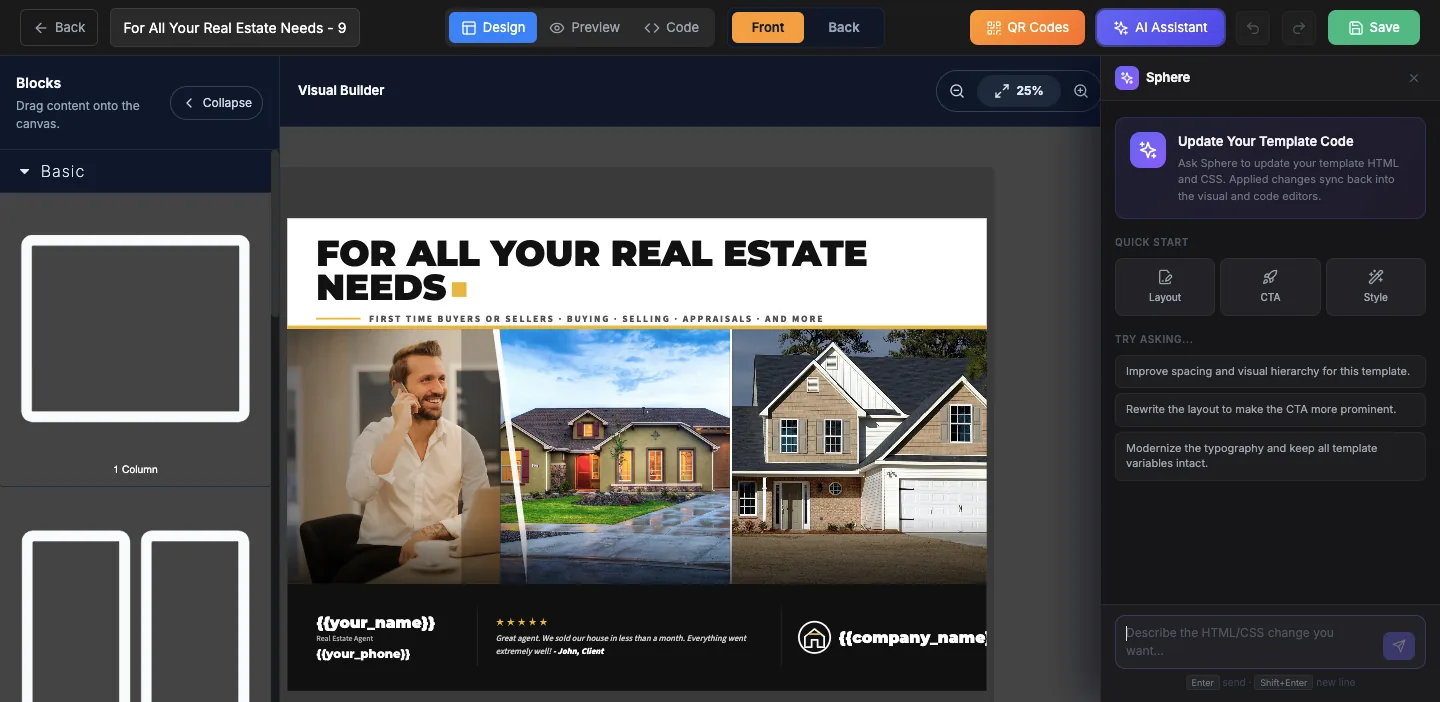
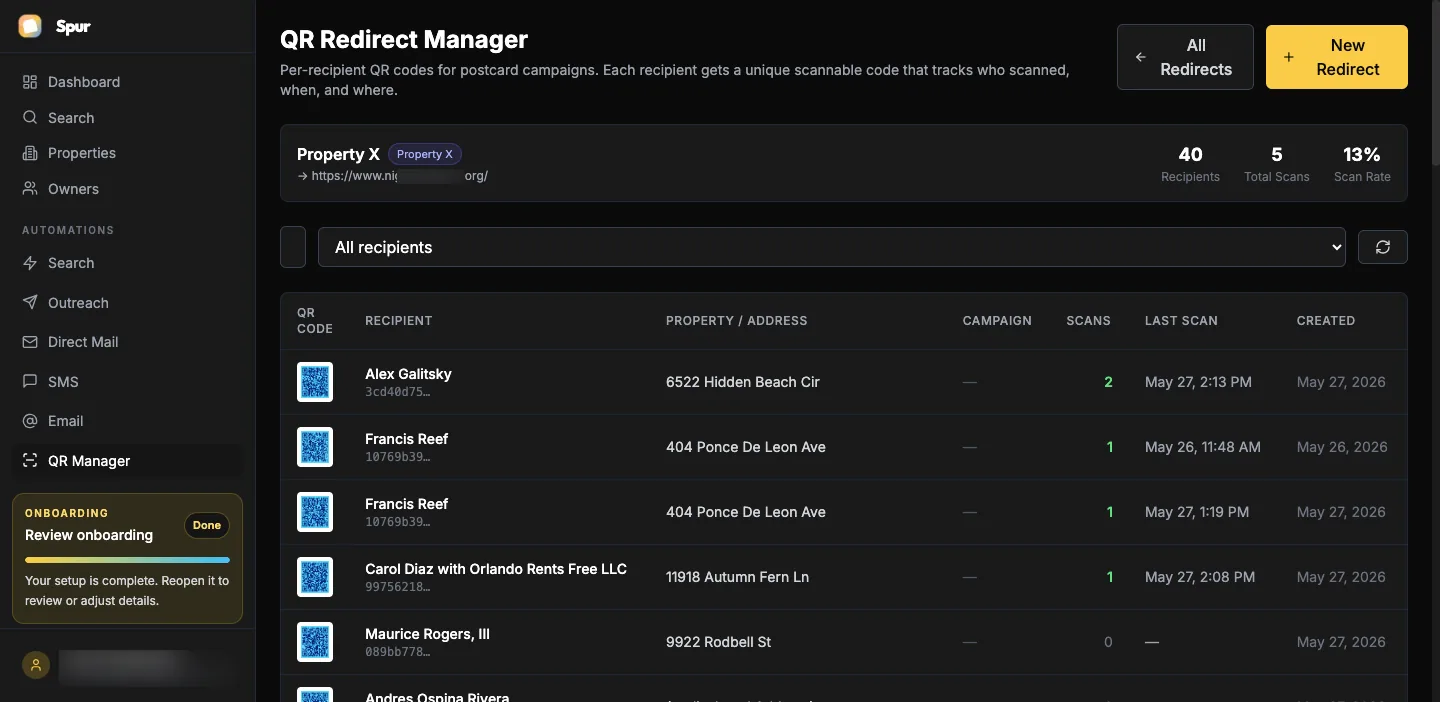
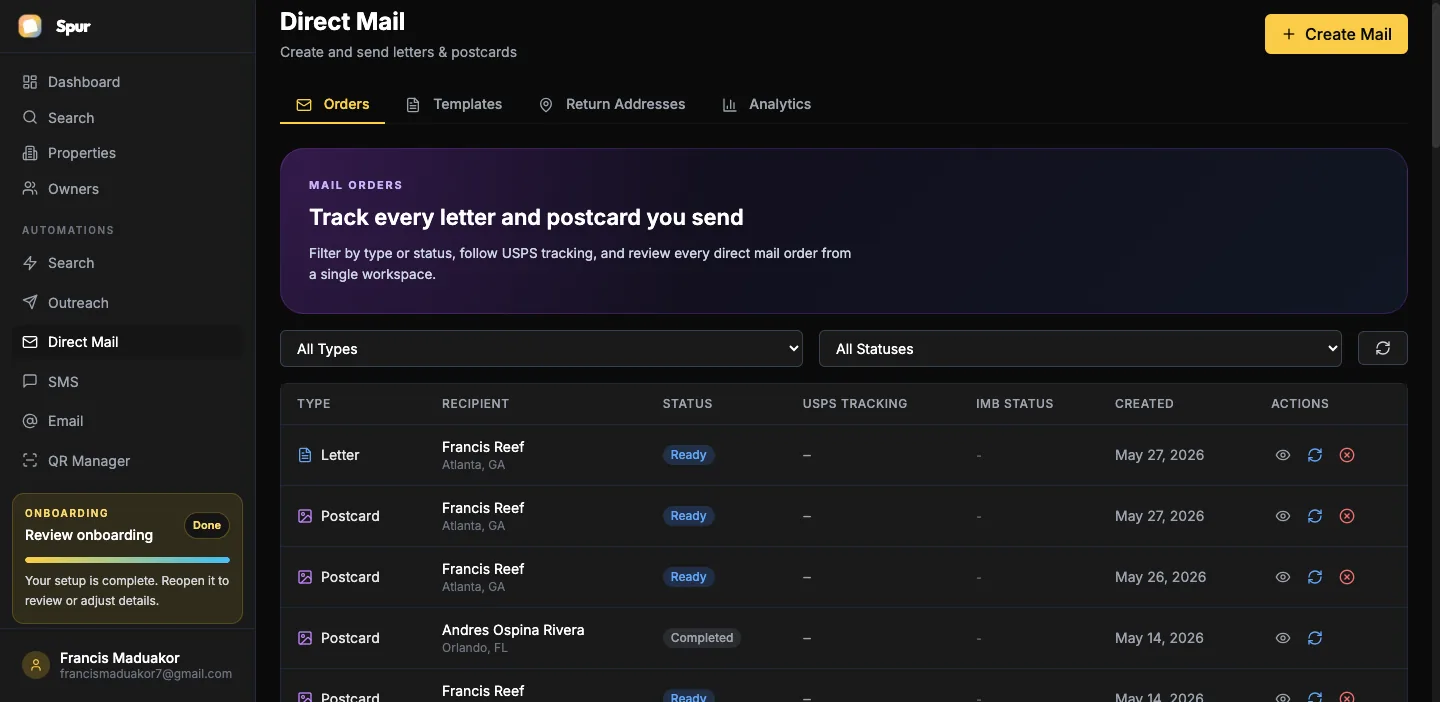
See it in Spur
A solar postcard list in Spur
Sample Cary, NC homes that fit a full residential system. Names are partly masked.
Zips 27519 + 27513Single-familyOwner-occupiedValue $550K+Owned 3+ yrsNo solar on record
- Marcus H.408 Brightleaf Dr2,900 sq ft · rear roof southSavings cardOwned 6 yrs
- Priya & Sam D.416 Brightleaf Dr3,100 sq ft · rear roof southSavings cardEV owner
- Gail F.1204 Kildaire Farm Rd2,600 sq ft · west roofSavings cardOwned 15 yrs
- Tony R.305 Sears Farm Rd3,400 sq ft · south roofSavings + storage cardLarge home
- Nina & Joe L.112 Ashbury Ct2,800 sq ft · south roofSavings cardOwned 9 yrs
AI draft for Marcus H. · 408 Brightleaf Dr
DUKE ENERGY RATES HAVE CLIMBED. YOUR ROOF ON BRIGHTLEAF CAN HELP.
Hi Marcus, homes on Brightleaf Drive have something useful in common: a large rear roof plane facing south with very little shade.
We won't promise to eliminate your bill or quote a tax credit you can't claim. Send us a recent Duke Energy bill, and we'll show you what a system sized to your actual usage would produce and save, along with what it costs. If the numbers don't work, we'll tell you.
Scan the code to upload a bill and get your estimate.
Carolina Bright Solar · (919) 555-0157
Sample data for illustration. Your results depend on your market and filters.
Playbook
What makes a solar postcard work
Solar mail has a trust problem. Years of "free solar" and "eliminate your bill" mailers have taught homeowners to throw away anything with a panel on it. The postcards that work now are specific, honest, and useful: they tell the homeowner something true about their home and offer a real estimate, not a slogan.
Start with the right homes. Owner-occupied single-family homes with enough roof, enough usage, and owners who plan to stay are the ones that close. Filtering by value, size, years owned, and roof orientation, and excluding homes with existing solar, cuts the list to homes where a site survey is worth the rep's time.
Lead with the bill, not the incentive. Electricity prices have risen. The U.S. Energy Information Administration reports the average residential price rose about 25% from 2020 to 2024. Naming the homeowner's utility and offering an estimate based on their real usage is more believable than a national savings claim.
Get incentives right. The federal residential clean energy credit ended for homeowner-owned systems placed in service after 2025, so a card that leads with a 30% federal credit is out of date. If state or utility incentives apply in your territory, name them specifically. Otherwise, sell on the bill and on long-term production.
Make the next step small. A QR code that opens a form to upload a recent bill is easier than booking an in-home appointment, and it gives your designer what they need to model a system. Homeowners who upload a bill are already qualified.
Plan two or three touches. The first card offers the savings estimate. The second, three weeks later, can lead with battery backup or roof-and-solar timing. Track scans by street and message, and send reps to scanners first, since they're the homeowners already looking at the numbers. A homeowner who uploads a bill has already qualified themselves, so those calls should come before any cold follow-up.
41×return on a year of Spur Team from one $24,000 residential system
One system pays for years of postcards.
- Spur Team: $49/mo billed annually = $588/yr
- 1,200 homes × 2 cards = 2,400 postcards at $0.94 = $2,256
- Three $24,000 systems = $72,000, about 25× the software and postage combined
Example math. System size, pricing, and close rates vary by market, utility, and financing. Run your own numbers →
One tool, not four
Spur vs. typical solar postcards
What you needThe usual waySpur
Card written for each homeSame design for every door✓ Built in
Names the roof and utility"Eliminate your electric bill"✓ Built in
Current, honest incentive languageOutdated tax credit claims✓ Built in
QR to upload a billCall-in number only✓ Built in
Scan alerts and a second cardNo follow-up✓ Built in
Postcards by the numbers
What solar mail has to account for now
~25%
rise in the average U.S. residential electricity price from 2020 to 2024
End of 2025
the federal residential clean energy credit ended for homeowner-owned systems placed in service after 2025
41×
return on a year of Spur Team from one $24,000 residential system
FAQ
Solar postcard questions
What should a solar postcard say?
Something specific and true about the home, such as its roof or its utility, plus an offer of a savings estimate based on the homeowner's real bills, and a QR code to request it.
Do solar postcards still work?
Yes, when they're targeted and honest. Postcards to homes that fit, with specific copy and a usage-based estimate, do far better than mass mailers with big savings claims.
Should solar postcards mention the federal tax credit?
Not for homeowner-owned systems placed in service after 2025, because the federal residential credit ended. Mention state or utility incentives only where they apply.
What's a good offer for a solar postcard?
A free savings estimate based on a recent bill. It's low-commitment for the homeowner and gives your designer what they need to size a system.
How many touches should a solar postcard campaign have?
Two or three, about three weeks apart, each with a different angle, such as savings, then battery backup, then roof timing.
Keep exploring
Related plays and guides
Start in minutes. No card required.
Send solar mail homeowners actually read.
Pick the homes that fit, let Spur write an honest card for each one, and call the owners who scan. Free to start.
Send solar postcards — freeFree forever plan · No card · 20 property searches a month
Prefer a walkthrough? Book a demo