
Reps drive to homes where the only usable roof plane faces north or is shaded, and the appointment ends at the curb.
Solar play · Roof orientation
Solar leads from the streets whose roofs face the sun.
A south-facing roof produces the most power, and on many streets, every house faces the same way. Spur lets you upload the streets you've picked from satellite and solar-potential maps, pulls the owner-occupied homes on them, and mails each owner a card about their roof's sun exposure, with a QR code to their production estimate.
Free forever plan · No card · 20 property searches a month
USPSFirst-Class
Teresa Nguyen2748 Larkspur LnFort Collins, CO 80525Scan for your roof's estimate
Teresa N. scanned your roof estimate card · 22 min ago
AI-written for this owner · Mailed in 2 days
South-facingroofs produce the most energy over a year
Street listsyou build from satellite and solar maps
Roof-specificcards that name the roof's direction
The problem
Most solar marketing ignores the one thing every installer checks first.
Zip code mail goes to good and bad roofs alike, so most of the budget lands on homes that can't support a good system.
"Go solar and save" doesn't give the homeowner a reason to believe their house is a good fit.
How it works
From list to mailbox in one workflow.
Five steps from a satellite map to a mailing list of sunny roofs.
app.usespur.com
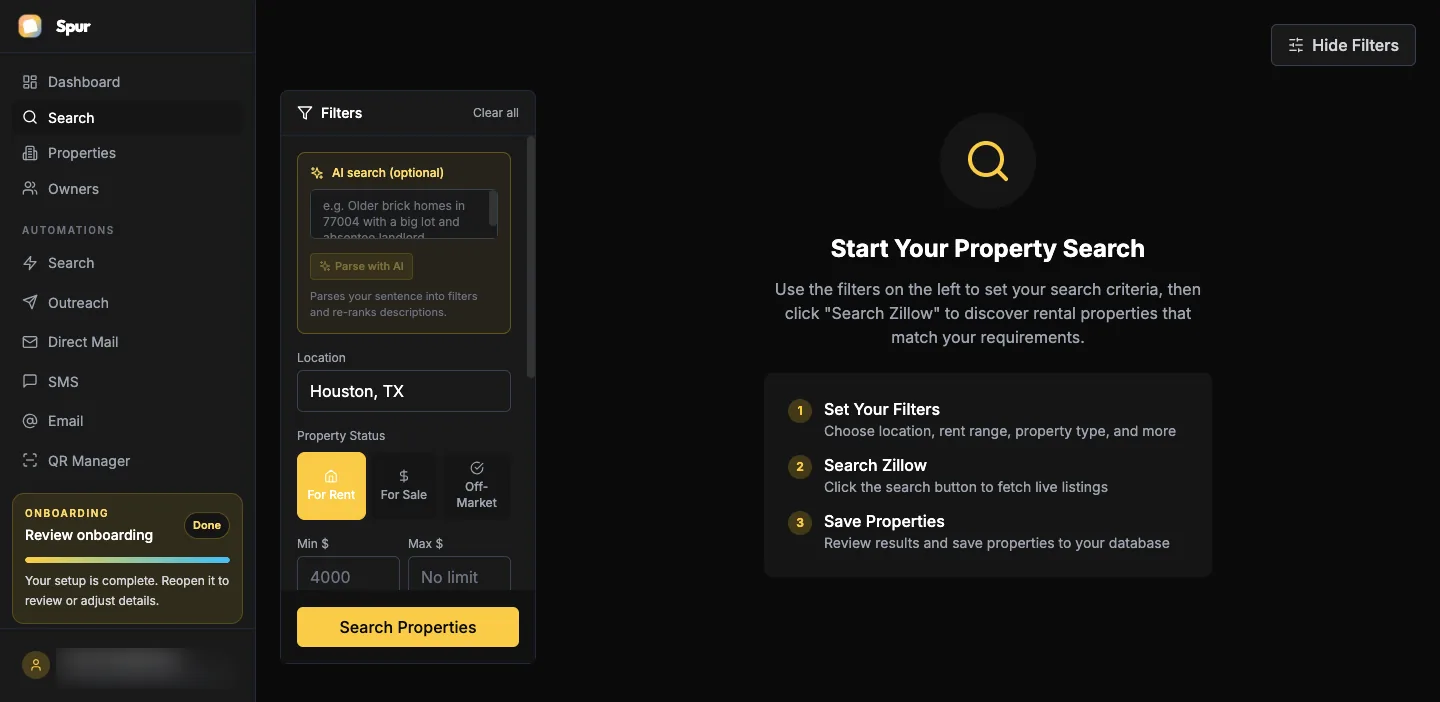
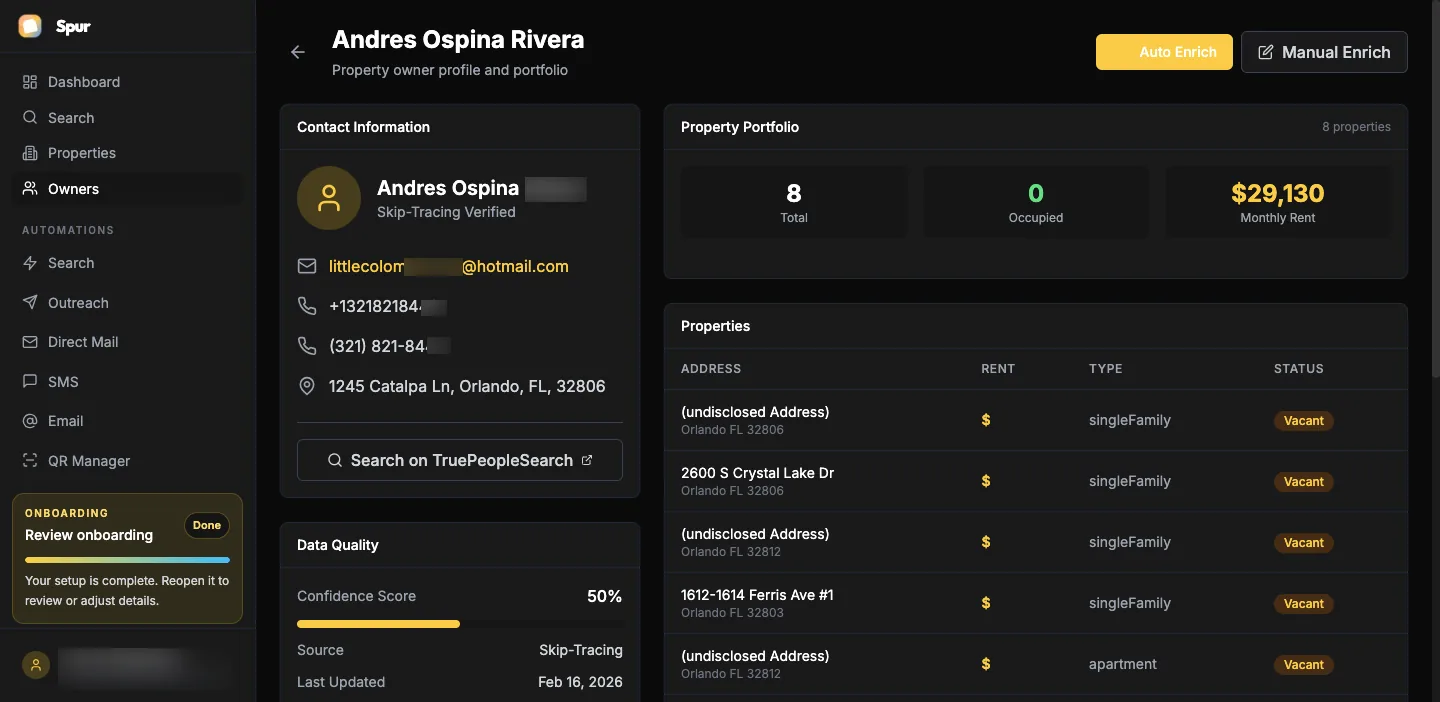
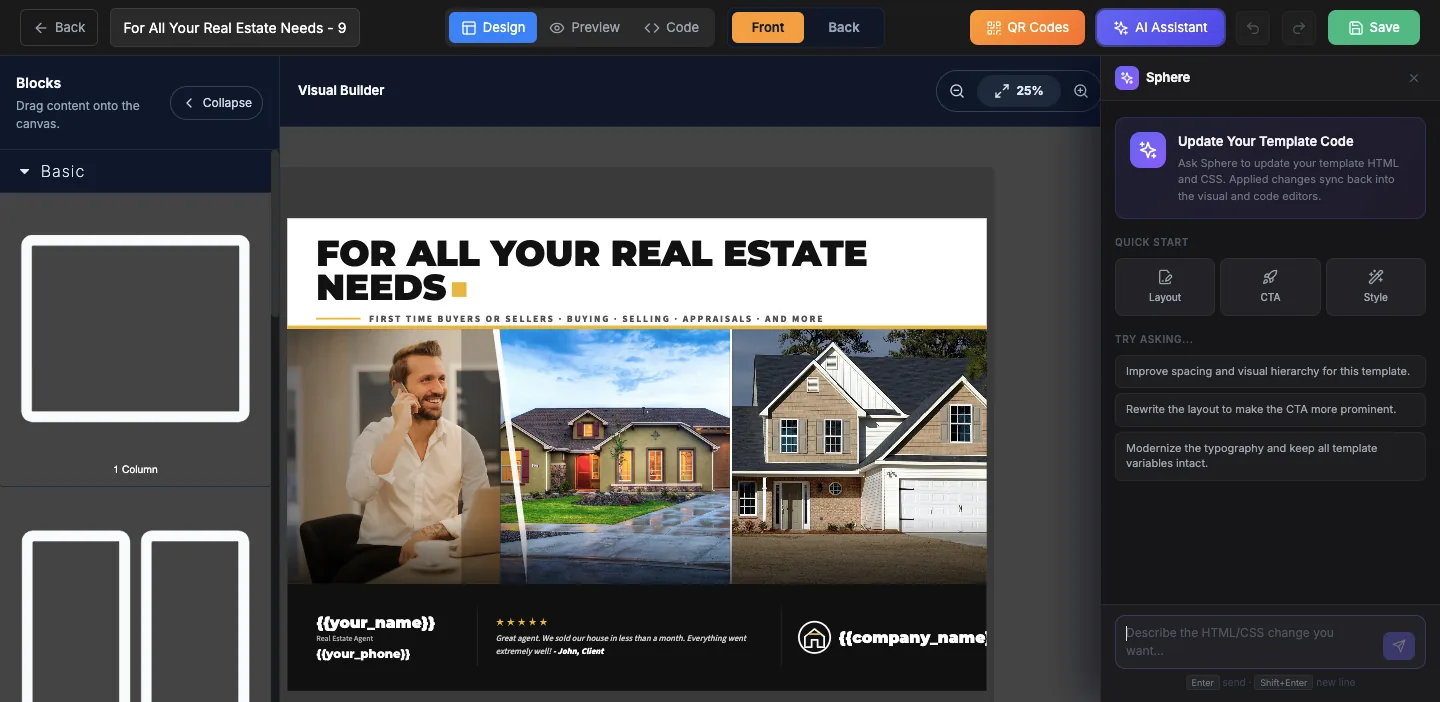
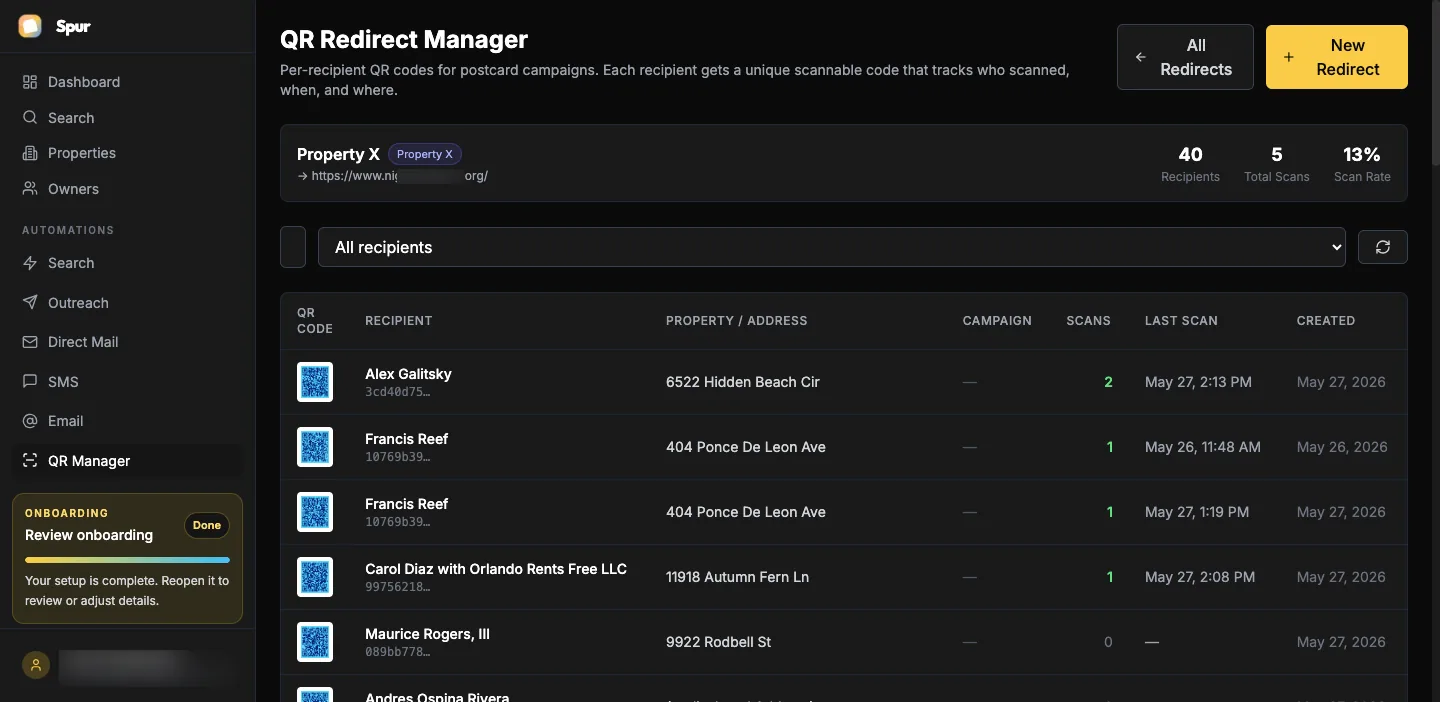
See it in Spur
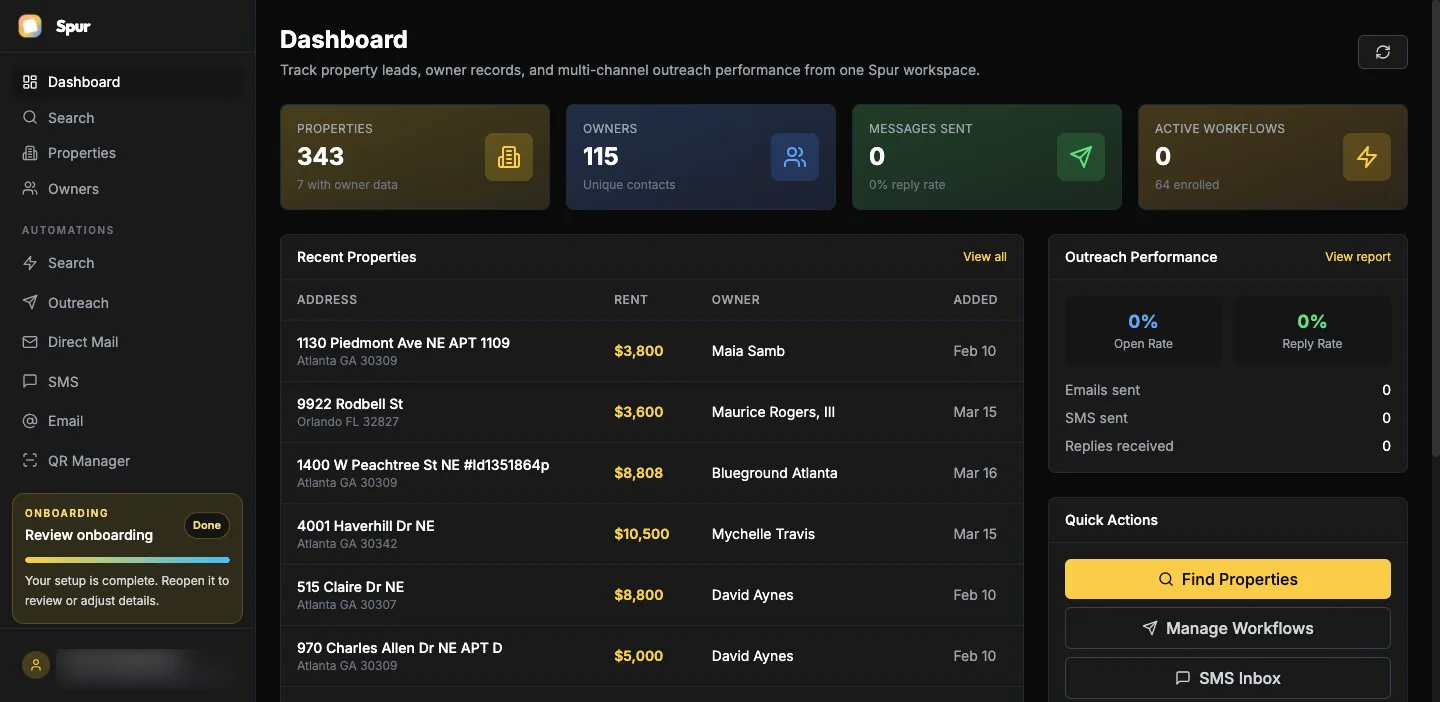
A sunny-roof street list in Spur
Sample Fort Collins, CO homes on streets with south-facing roof planes. Names are partly masked.
Custom street listSingle-familyOwner-occupiedBuilt 1995–2015Owned 3+ yrsNo solar on record
- Teresa N.2748 Larkspur LnRear roof faces southSouth planeLow shade
- Kyle & Dana R.2760 Larkspur LnRear roof faces southSouth planeOwned 9 yrs
- Hector M.1503 Ponderosa CtFront roof faces westWest planeAfternoon peak
- Laura B.2772 Larkspur LnRear roof faces southSouth planeOwned 14 yrs
- Pete & Ann S.1511 Ponderosa CtFront roof faces westWest planeEV owner
AI draft for Teresa N. · 2748 Larkspur Ln
YOUR ROOF ON LARKSPUR LANE FACES ALMOST DUE SOUTH.
Hi Teresa, we've been looking at roofs in your neighborhood, and the homes on the north side of Larkspur Lane have something in common: a long rear roof plane that faces nearly due south, with very little shade.
That's the best orientation for solar panels in Colorado. We'd like to model what your roof would actually produce in a year, using your roof's size and angle and your real electric usage, so you can decide with real numbers.
Scan the code and upload a recent bill. We'll send your roof's production estimate.
Front Range Solar · (970) 555-0131
Sample data for illustration. Your results depend on your market and filters.
Playbook
How roof orientation affects solar marketing
In the U.S., a south-facing roof produces the most energy over a year. East- and west-facing roofs still work but typically produce less. Production modeling from the National Renewable Energy Laboratory's PVWatts tool often shows them 10% to 20% lower, depending on tilt and location. North-facing roof planes are rarely worth it. That's why installers check orientation first, and why marketing should too.
Orientation is predictable by street. In most subdivisions, houses on the same side of a street share a layout, with the ridge line running parallel to the street. On streets that run east to west, that means one roof plane on each house faces roughly south: the rear plane on the north side of the street, and the front plane on the south side. That pattern lets you build a list street by street.
Use public tools to pick the streets. Satellite imagery shows roof shapes and tree cover, and free solar-potential tools estimate sunlight on individual roofs in many areas. Spur doesn't measure roof direction itself. You choose the streets, upload them, and Spur pulls the owners and handles the mail.
West-facing roofs deserve their own message. They produce more in the late afternoon, when time-of-use rates in many utility territories are highest. In those markets, a west-facing roof can be worth more per kilowatt-hour than its total production suggests, and that's a specific, honest thing to tell the homeowner.
Be specific on the card. Telling a homeowner that their roof faces almost due south, with little shade, gives them a reason to believe solar might work for their home. Then make the next step a production estimate based on their roof and their usage, not a generic savings claim.
Combine orientation with the other filters: owner-occupied, owned for a few years, roof young enough not to need replacing soon, and no existing solar. Then measure results by street. Over time you'll learn which layouts close best in your market, and which streets are worth mailing again.
41×return on a year of Spur Team from one $24,000 residential system
Better roofs, fewer wasted appointments.
- Spur Team: $49/mo billed annually = $588/yr
- 800 sunny-roof homes × 2 cards = 1,600 postcards at $0.94 = $1,504
- Three $24,000 systems = $72,000, about 34× the software and postage combined
Example math. Production, pricing, and close rates vary by market, utility, and financing. Run your own numbers →
One tool, not four
Spur vs. the usual solar prospecting
What you needThe usual waySpur
Streets chosen for roof directionEvery door in a zip code✓ Built in
Card names the roof's directionGeneric "go solar" mailer✓ Built in
Production estimate for their roofSavings claims for any home✓ Built in
Bill and address before the callCold appointment✓ Built in
Results tracked by streetNo idea which layouts close✓ Built in
Roof Orientation by the numbers
Why roof direction belongs in your targeting
10–20%
less annual production is typical for east- or west-facing panels than for south-facing ones, depending on tilt and location
~0.5%/yr
median output loss for solar panels, so a well-placed system keeps producing for decades
41×
return on a year of Spur Team from one $24,000 residential system
FAQ
Solar roof orientation questions
What roof direction is best for solar panels?
In the U.S., south-facing roofs produce the most energy over a year. East- and west-facing roofs typically produce less but can still work, and west-facing roofs produce more in the late afternoon.
How can I find homes with south-facing roofs?
Use satellite imagery and solar-potential maps to pick streets where houses share a south-facing roof plane, then upload those streets to Spur to pull the owners.
Does Spur detect roof orientation automatically?
No. You choose the streets from imagery or solar maps and upload them. Spur pulls the owner-occupied homes on those streets, adds owner details, and mails them.
Are west-facing roofs good for solar?
Often, especially with time-of-use rates. West-facing panels produce more in the late afternoon, when electricity is often most expensive.
Should solar postcards mention the roof?
Yes. Telling a homeowner which way their roof faces is specific and believable, and it makes a production estimate the natural next step.
Keep exploring
Related plays and guides
Start in minutes. No card required.
Mail the roofs that face the sun.
Pick the streets, upload them, and let Spur mail each owner a card about their roof. Free to start.
Mail homes with sunny roofs — freeFree forever plan · No card · 20 property searches a month
Prefer a walkthrough? Book a demo