
A solar card on closing day lands in a pile of boxes, before the owner has seen a single bill from the new house.
Solar play · New homeowners
Solar marketing that reaches new homeowners after their first big bill.
New homeowners are planning to stay, setting up their utilities, and seeing their first electric bills in a house they don't know yet. Spur pulls every home that sold in your territory each week, waits until the first few bills have landed, and mails a card about their home and their utility, with a QR code to a usage-based savings estimate.
Free forever plan · No card · 20 property searches a month
USPSFirst-Class
Jason Pruitt2455 E Ocotillo RdGilbert, AZ 85298Scan to compare your bill
Jason P. scanned your new-home solar card · 19 min ago
AI-written for this owner · Mailed in 2 days
Weeklynew sales pulled and queued automatically
60–120 daysafter closing, once real bills have arrived
Long horizonnew owners plan to stay for years
The problem
New homeowners are ideal solar prospects, but most installers mail them at the wrong time.
"Welcome! Go solar!" doesn't connect to anything the new owner is experiencing yet.
Investor purchases and small condos get the same card as owner-occupied houses that could support a full system.
How it works
From list to mailbox in one workflow.
Five steps from a weekly sold list to a site survey.
app.usespur.com
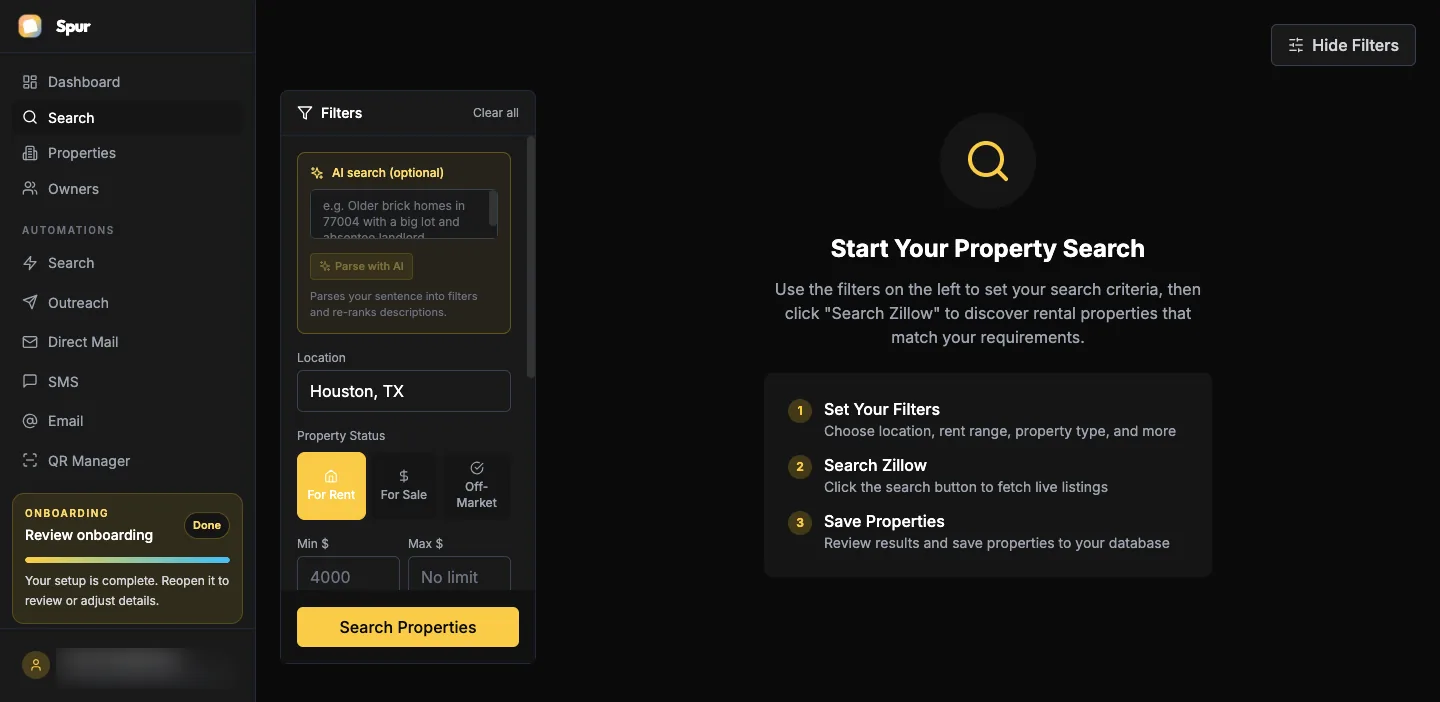
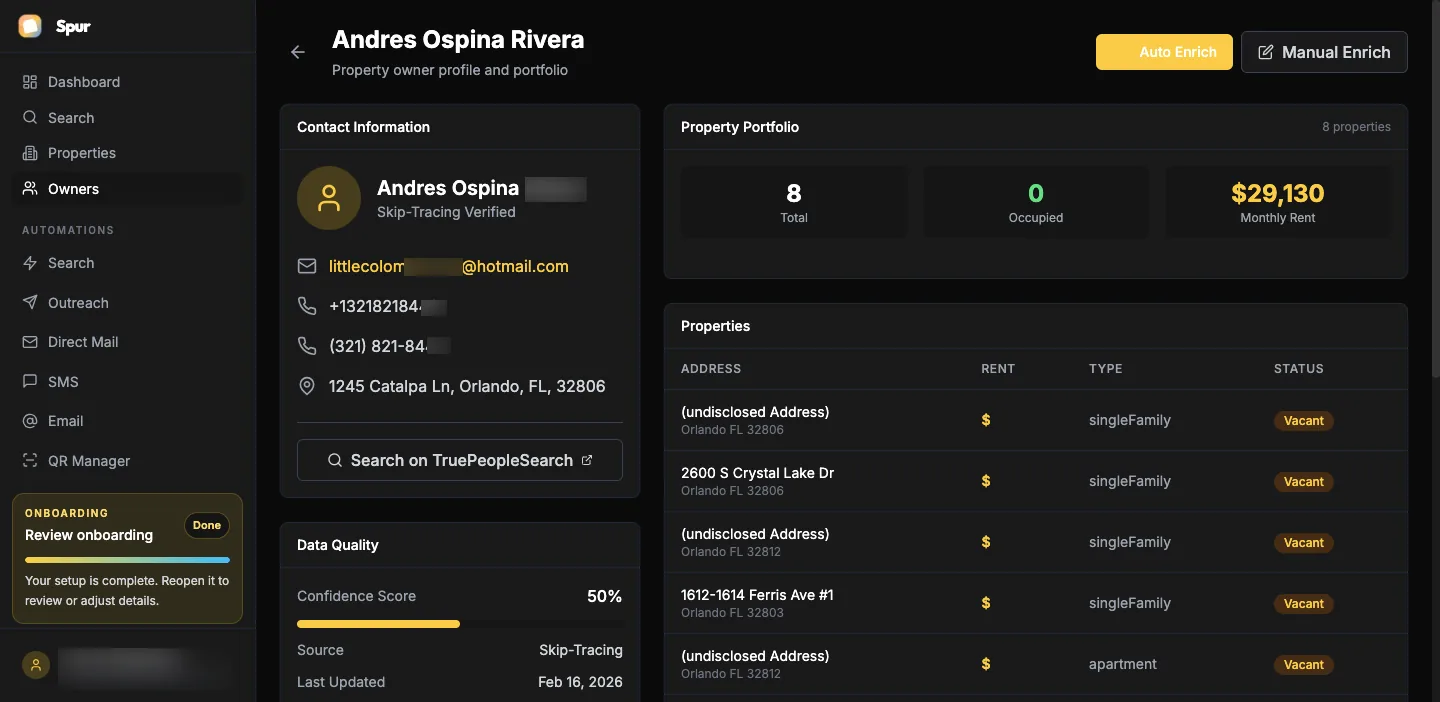
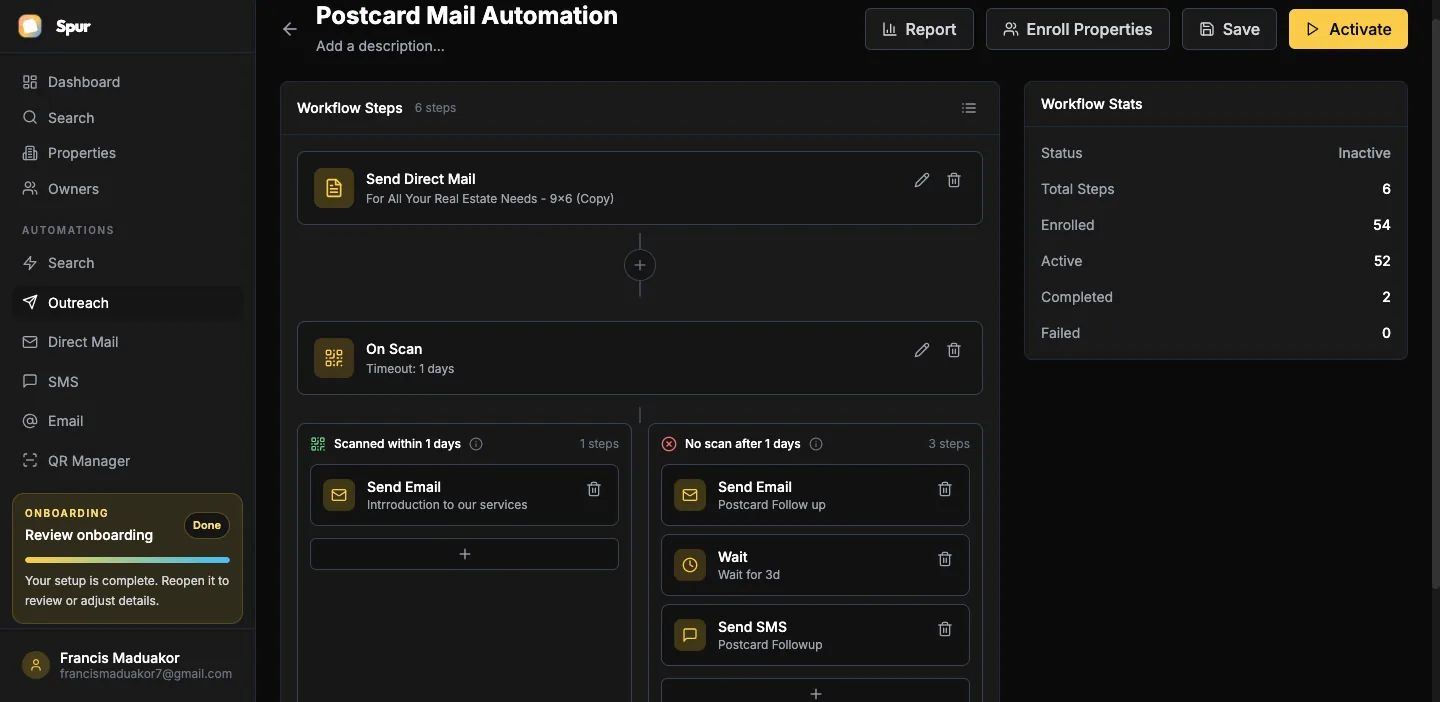
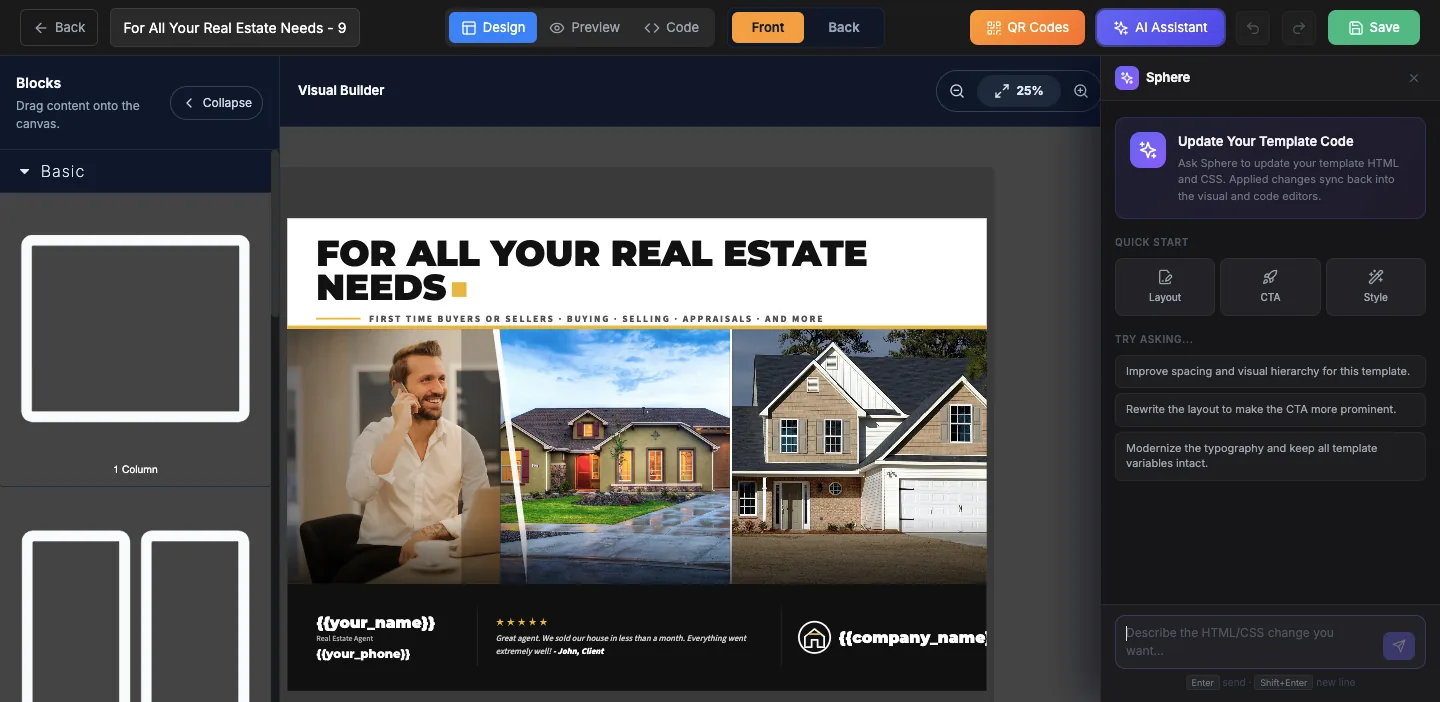
See it in Spur
A new homeowner solar queue in Spur
Sample Gilbert, AZ homes sold 60–120 days ago. Names are partly masked.
Zips 85297 + 85298Sold 60–120 days agoOwner-occupiedSingle-family2,200+ sq ftNo solar on record
- Jason P.2455 E Ocotillo RdSold 74 days ago · 2,900 sq ftNew-home cardPool
- Mia & Chris A.3812 E Bellerive DrSold 91 days ago · 3,300 sq ftNew-home cardMoved from CA
- Darnell W.4127 S Seton AveSold 66 days ago · 2,400 sq ftNew-home cardSouth roof
- Holly R.2980 E Wyatt WaySold 103 days ago · 3,100 sq ftNew-home cardEV owner
- Tim & Jo B.3305 E Bartlett PlSold 85 days ago · 2,750 sq ftNew-home cardOwned < 1 yr
AI draft for Jason P. · 2455 E Ocotillo Rd
HOW DID YOUR FIRST SRP SUMMER BILL ON OCOTILLO LOOK?
Hi Jason, congratulations on your new home. A few months in, you've probably seen your first summer electric bills, and in a new house with a pool and a bigger footprint, they can be a surprise.
Send us one of those bills, and we'll show you what a solar system sized to this house would produce and save at current SRP rates. We won't assume any tax credit, and if the numbers don't make sense for your home, we'll tell you.
Scan the code to upload a bill and compare.
Valley Solar Works · (480) 555-0174
Sample data for illustration. Your results depend on your market and filters.
Playbook
Why new homeowners are strong solar prospects
Solar is a long-term purchase, and new homeowners have a long horizon. Most buyers plan to stay for years, and U.S. sellers typically lived in their homes about ten years before selling, according to the National Association of Realtors. That gives a new owner plenty of time to benefit from a system that keeps producing for decades.
New owners are also paying attention to their bills. In the first months, they're setting up utilities and learning what a house costs to run. A larger home, a pool, or a move from a milder climate can mean bills much higher than they expected, and that's when an estimate based on their actual usage is most useful.
Timing is the difference between a toss and a scan. A solar card on closing day competes with movers, utilities, and boxes, and there's no bill to compare yet. Mailing 60 to 120 days after closing, once the owner has seen a couple of real bills, lets the card ask a specific question: how did your first summer bill look?
Filter for homes that can support a system. Skip investor purchases, condos, and homes that already have solar. Recorded sales tell you which homes changed hands, and owner-occupancy, square footage, and roof layout tell you which are worth a site survey.
Be honest about incentives. The federal residential clean energy credit ended for homeowner-owned systems placed in service after 2025, so lead with the bill, the home, and long-term production. New homeowners are making many financial decisions at once and respond to straightforward numbers.
Run it every week. Home sales close all year, so a weekly queue mailed at the right delay means every new owner hears from you at the right time. Track surveys and installs by month of sale to learn how long after closing your buyers are most ready.
41×return on a year of Spur Team from one $24,000 residential system
A steady stream of long-horizon buyers.
- Spur Team: $49/mo billed annually = $588/yr
- 80 new sales a month × 2 touches × 12 months = 1,920 postcards at $0.94 = $1,805
- Three $24,000 systems = $72,000, about 30× the software and postage combined
Example math. System size, pricing, and close rates vary by market, utility, and financing. Run your own numbers →
One tool, not four
Spur vs. the usual new mover marketing
What you needThe usual waySpur
Mailed after the first real billsMailed on closing day✓ Built in
Owner-occupied homes sized for solarEvery sale, including investors✓ Built in
Card asks about their bill"Welcome! Go solar!"✓ Built in
Bill-upload QRCall-in number✓ Built in
Weekly queue on autopilotLists pulled by hand✓ Built in
New Homeowners by the numbers
Why new homeowners fit solar's timeline
10 years
is the typical time U.S. sellers lived in their homes before selling, a long horizon for a solar system
4.06 million
existing homes sold in the U.S. in 2024, each one a new owner setting up utilities
41×
return on a year of Spur Team from one $24,000 residential system
FAQ
New homeowner solar marketing questions
When should solar installers mail new homeowners?
About 60 to 120 days after closing, once the owner has received a couple of real utility bills from the new home.
Why are new homeowners good solar prospects?
They plan to stay for years, they're paying close attention to what the house costs to run, and they haven't committed to an energy setup yet.
What should a new homeowner solar card say?
Congratulate them, name their utility, ask how their first bills looked, and offer an estimate based on those bills.
Should I mail every home that sold?
No. Skip investor purchases, condos, and homes that already have solar, and focus on owner-occupied homes sized for a full system.
Where do new homeowner lists for solar come from?
From recorded home sales. Spur pulls new sales in your territory every week, filters them, and queues each one to mail at the delay you choose.
Keep exploring
Related plays and guides
Start in minutes. No card required.
Reach new homeowners when the bills arrive.
Pull new sales every week and let Spur mail a solar estimate offer at the right moment. Free to start.
Mail new homeowners in my territory — freeFree forever plan · No card · 20 property searches a month
Prefer a walkthrough? Book a demo