
Delinquent tax lists come as spreadsheets or PDFs with outdated owner addresses and no contact information.
Investor play · Tax-delinquent owners
Tax-delinquent property leads, turned into real conversations.
Owners who fall behind on property taxes are often dealing with an inherited, vacant, or out-of-state property they've stopped paying attention to. Spur takes your county's delinquent tax list, finds where each owner lives, and sends a personal letter before the tax sale.
Free forever plan · No card · 20 property searches a month
USPSFirst-Class
Janet Moss88 Pine Hill RdMacon, GA 31210Scan for a no-obligation offer
Janet M. requested an offer · 20 min ago
AI-written for this owner · Mailed in 2 days
County listuploaded and matched to property records
Ownersenriched to their current address
Vacantand absentee stacked for the best leads
The problem
The delinquent list is raw data, not leads.
Tax bills go to an old address, which is often why the taxes went unpaid in the first place.
Some owners pay late every year. You need equity and other signals to find real opportunities.
How it works
From list to mailbox in one workflow.
Five steps from the county's delinquent list to a signed deal.
app.usespur.com
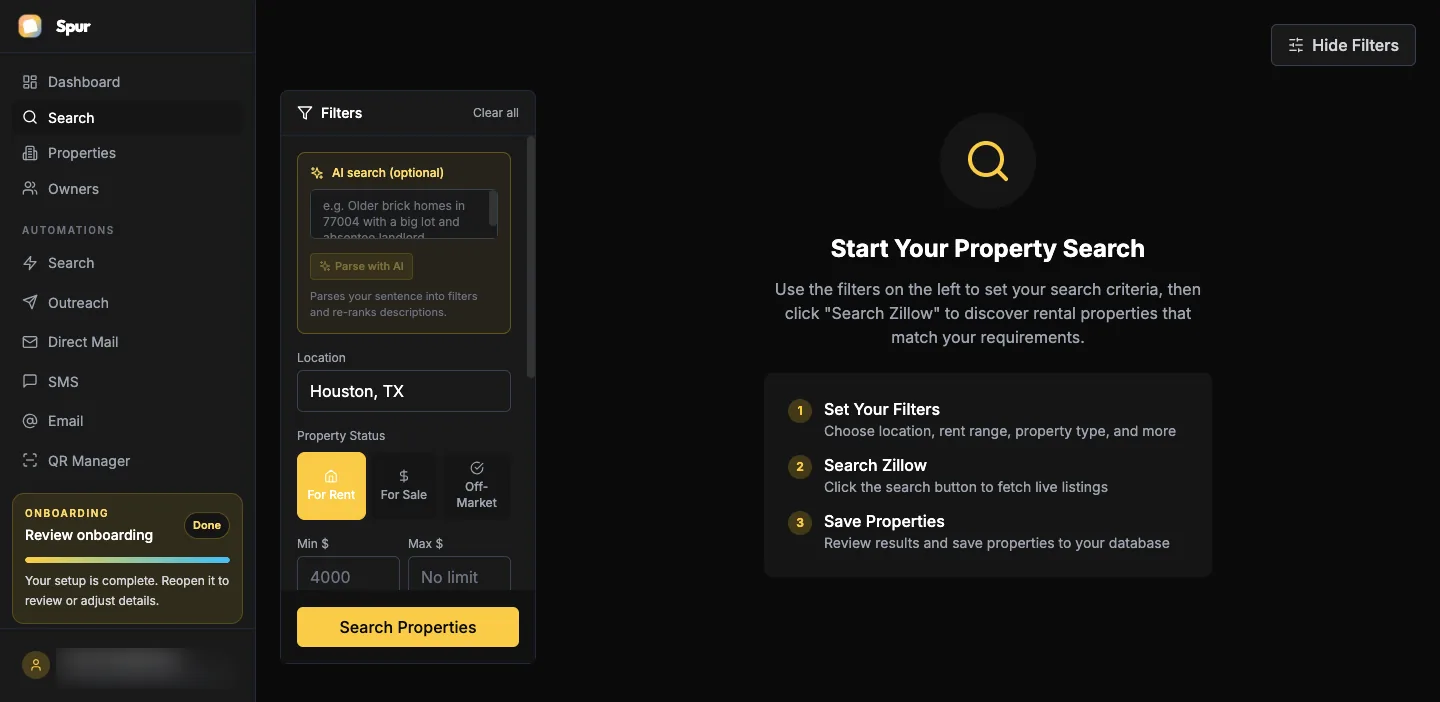
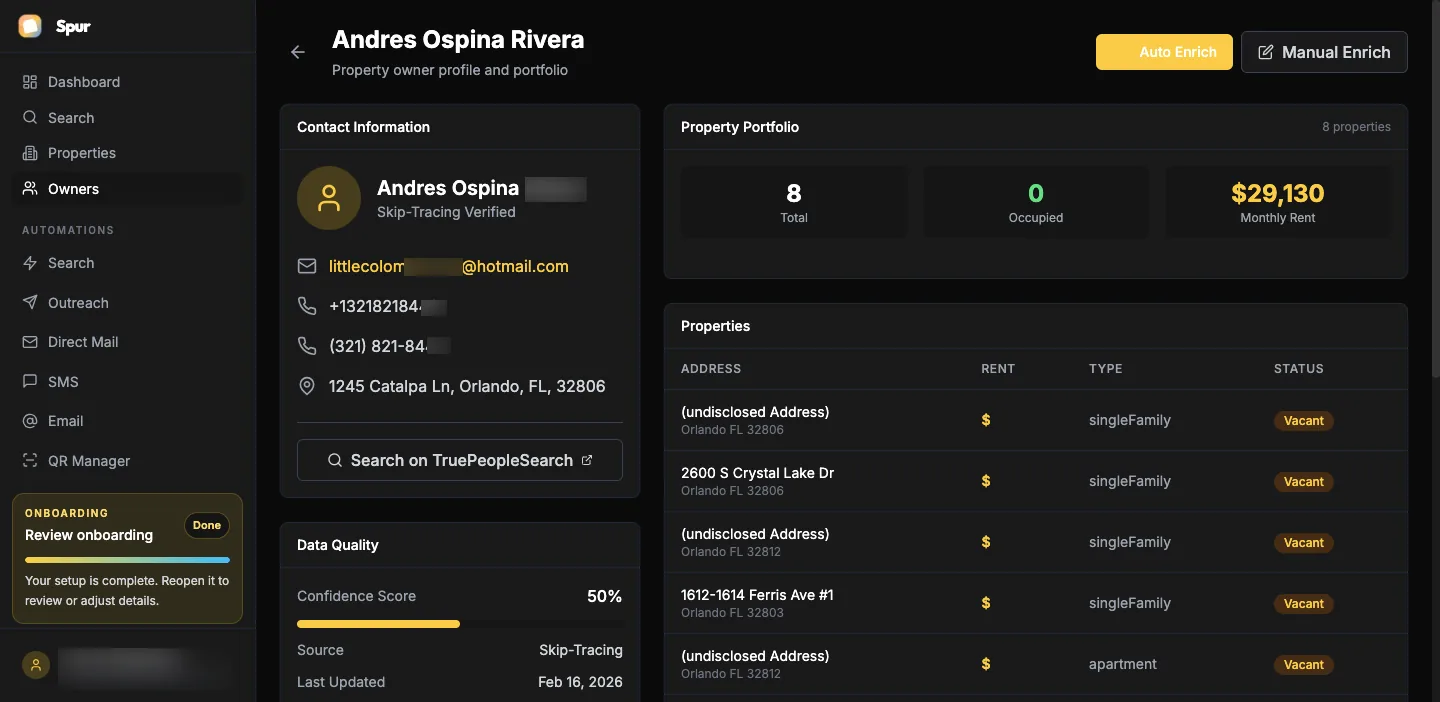

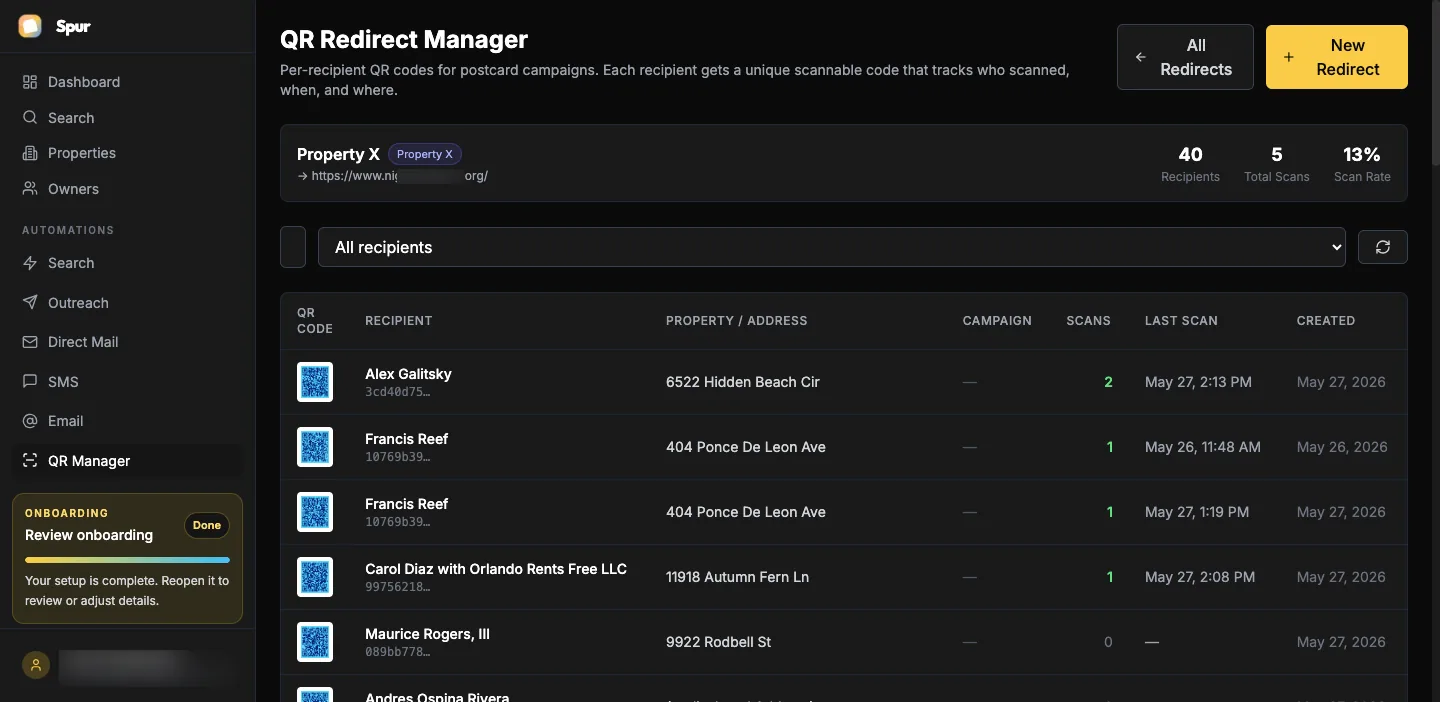
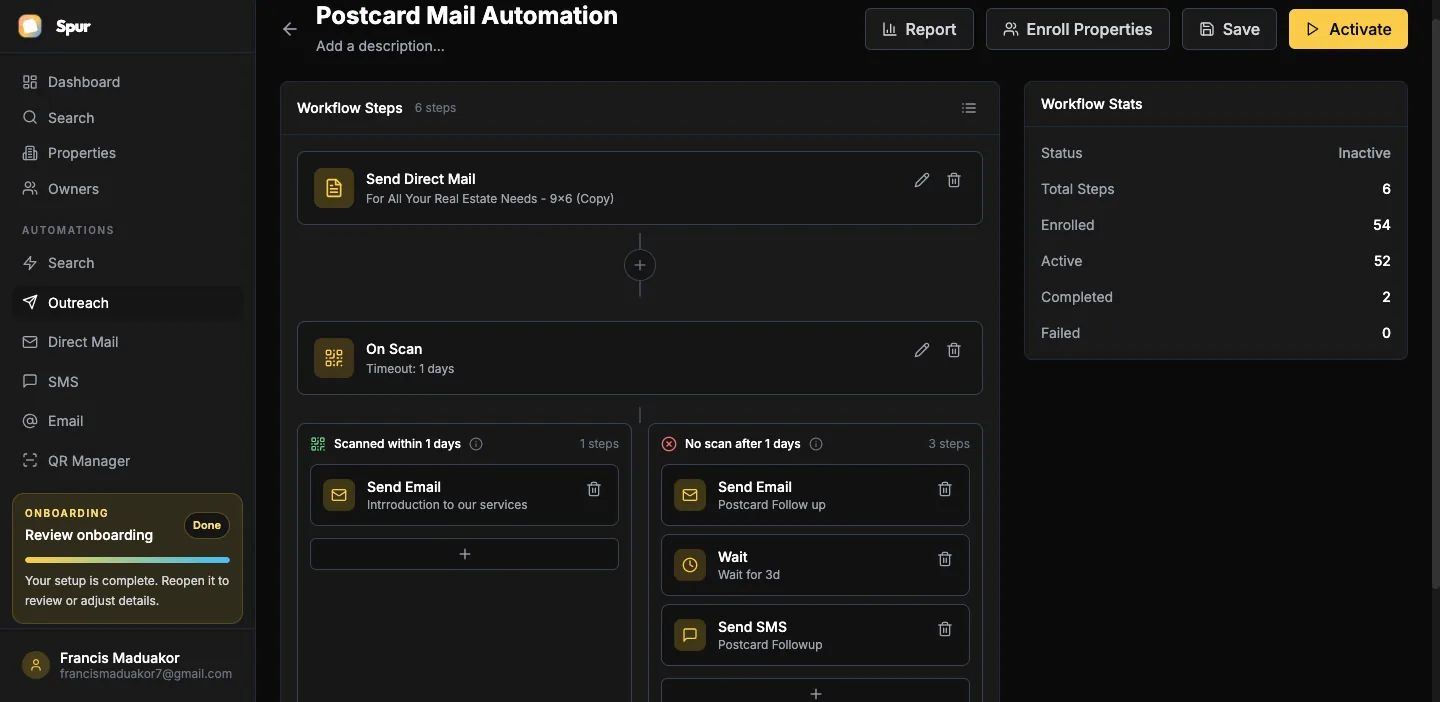
See it in Spur
A tax-delinquent list in Spur
Sample delinquent properties stacked with vacancy and absentee ownership. Names are partly masked.
County delinquent listAbsentee or vacantEquity 50%+Single-family
- Janet M.2702 Caldwell RdOwner in Macon, GA3 yrs delinquentVacant
- Roger B.7745 Paseo BlvdOwner in Denver, CO2 yrs delinquent
- Estate of L. Berg908 Oakwood AveHeir in Des MoinesEstateVacant
- Phil T.Lot · Hampton RdOwner in Tampa, FLVacant land
- Doris M.1902 Kilborne DrOwner-occupied1 yr delinquent67% equity
AI draft for Janet M. · 2702 Caldwell Rd
Hi Janet,
I'm a local investor, and I'm writing about the house at 2702 Caldwell Road. County records show property taxes owed on it, and I know that can happen easily when you live far away from a property.
If the house has become more trouble than it's worth, I can buy it as-is. The back taxes would be paid from the sale at closing, and I can close before the county's tax sale date. You wouldn't need to make repairs or clear anything out.
If you'd like an offer, scan the code or call me. If you're planning to keep it, I hope this is a helpful reminder of the deadline.
Ana Reyes · (404) 555-0119
Sample data for illustration. Your results depend on your market and filters.
Playbook
How to work a tax-delinquent list
When property taxes go unpaid, the county eventually sells the property or a lien on it at a tax sale. The process and timeline vary widely by state: some sell tax liens, some sell the property itself (tax deeds), and redemption periods differ. Before the sale, the owner can still sell the property and pay the taxes from the proceeds.
Most counties publish delinquent tax lists, either online or on request. The list alone isn't enough: owner addresses are often outdated, and some owners simply pay late every year. Match the list to property records, enrich owners to find current addresses, and stack signals like vacancy, absentee ownership, estate ownership, and equity to focus on owners with a real reason to sell.
Many tax-delinquent owners didn't stop paying on purpose. They inherited a property, moved, or lost track of a vacant lot. A plain, helpful letter that names the property and mentions the deadline is often welcome. Avoid scare tactics and anything that looks like an official county notice.
Time your campaign around the county's sale schedule. Letters in the months leading up to the sale, followed by a final reminder, give owners time to act.
34×return on a year of Spur Team from one $20,000 deal
One tax-delinquent deal funds the campaign many times.
- Spur Team: $588/yr billed annually
- 250 owners × 3 letters = 750 letters at $1.39 = $1,043
- One $20,000 deal = 34× your subscription
Example math. Tax sale rules and timelines vary by state and county. Run your own numbers →
One tool, not four
Spur vs. the usual tax-delinquent workflow
What you needThe usual waySpur
Delinquent tax listCounty PDF or spreadsheet✓ Built in
Current owner addressSeparate skip tracing✓ Built in
Stacking with vacancy and equityManual cross-referencing✓ Built in
Personal letterGeneric template✓ Built in
Follow-up before the saleCalendar reminders✓ Built in
FAQ
Tax-delinquent lead questions
How do I get a tax-delinquent property list?
Most counties publish delinquent tax lists through the treasurer or tax collector, online or on request. Upload the list to Spur to match it to property records and enrich owners.
Are tax-delinquent owners motivated sellers?
Often, especially when the property is vacant, inherited, or owned by someone out of state. Stack those signals to find the best leads.
What's the difference between a tax lien and a tax deed sale?
In tax lien states, investors buy a lien and earn interest; the owner can redeem. In tax deed states, the property itself is sold. Rules and redemption periods vary by state.
Can the owner sell before the tax sale?
Generally yes. The back taxes are typically paid from the sale proceeds at closing. Check your state's rules and confirm with a title company.
Should my letter mention the taxes?
Yes, plainly and without scare tactics. Never make the letter look like an official county notice.
Keep exploring
Related plays and guides
Start in minutes. No card required.
Turn the county's list into your next deal.
Upload your delinquent tax list, enrich the owners, and send your first letter today.
Work my tax-delinquent list — freeFree forever plan · No card · 20 property searches a month
Prefer a walkthrough? Book a demo