
County lists often come as PDFs or files of parcel IDs, with no equity, owner contact, or property details.
Free list · Tax delinquent properties
Tax delinquent property list, with equity and owner contact.
Upload your county's delinquent tax list and Spur matches every parcel to its owner, shows how many years and how much they owe next to their equity, and adds phone and email so you can offer a way out before the tax sale.
Free forever plan · No card · 20 property searches a month
See what’s in the list ↓Shelby County, TN1,038 tax-delinquent parcels
Live search2+ years behindEquity 50%+Absentee
- Leon W.1542 Willett St$6,420 owed
- Patricia H.3871 Overton Crossing$4,115 owed
- Marcus D.906 N Avalon St$8,930 owed
Phone + email found for 3 of 3Export CSV
Leon W. scanned your postcard · 12 min ago
Free to pull · Owner contact in 1 click
County listuploaded and matched to property records
Equityso you skip owners with nothing left
Absentee flagtired owners who stopped paying
The problem
County delinquency lists are messy and hard to act on.
Many owners pay late every year. Without a years-behind filter you mail people who aren't in trouble.
Some counties sell liens, others sell deeds, and redemption periods vary. It's hard to know how much time is left.
What's in the list
What's on a tax delinquent list in Spur.
Each record combines the delinquency with property, equity, and owner data so you can tell an owner who's a month late from one about to lose the property.
1,038tax-delinquent parcels in one county
296two or more years behind
1412+ years behind with 50%+ equity
Fields on every record
- Years delinquent
- How many tax years are unpaid.
- Amount owed
- Delinquent taxes, where the county publishes it.
- Estimated equity
- Value minus loans, to see if a sale makes sense.
- Owner mailing address
- Often different from the property for neglected rentals.
- Absentee and vacancy
- Common partners of tax delinquency.
- Property type and lot
- Houses, small multifamily, and vacant land.
- Years owned
- Long-held properties often carry the most equity.
- Owner contact
- Phone and email through enrichment.
Example counts from one county. Delinquency data availability and timing vary by county.
Sample list
A sample tax delinquent list
Absentee owners two or more years behind with 50%+ equity.
Shelby Co.2+ yrs delinquentEquity 50%+Absentee
| Owner | Property | Years behind | Owed | Equity |
|---|---|---|---|---|
| Marcus D. | 906 N Avalon St | 4 | $8,930 | 81% |
| Leon W. | 1542 Willett St | 3 | $6,420 | 100% |
| Gloria F. | 2216 Park Ave | 3 | $5,780 | 74% |
| Patricia H. | 3871 Overton Crossing | 2 | $4,115 | 68% |
| Edwards Holdings LLC | 4480 Kerwin Dr | 2 | $3,960 | 57% |
| Samuel K. | 1123 Jackson Ave | 2 | $3,212 | 92% |
Sample data for illustration. Names are partly masked; your results depend on your market and filters.
How it works
From zip code to mailbox in one workflow.
Five steps from county tax roll to an owner who wants a way out.
app.usespur.com
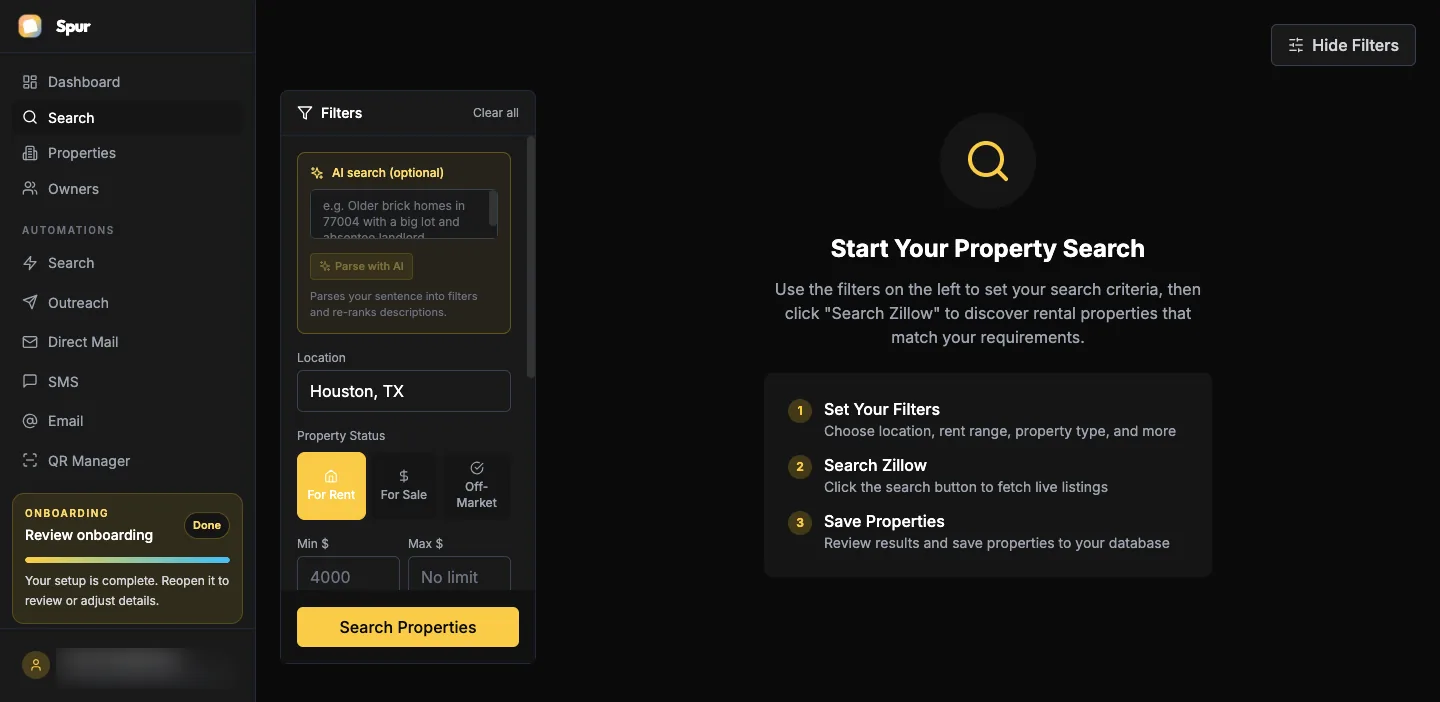
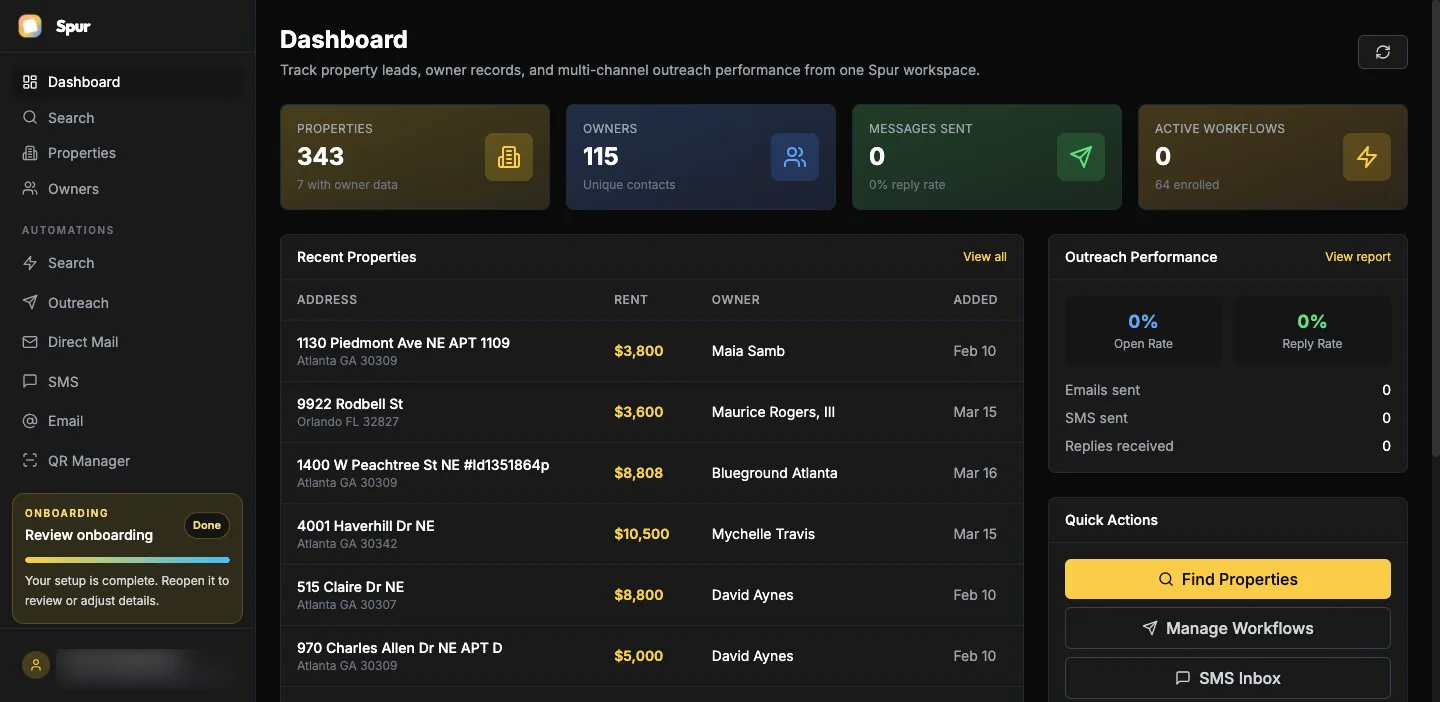
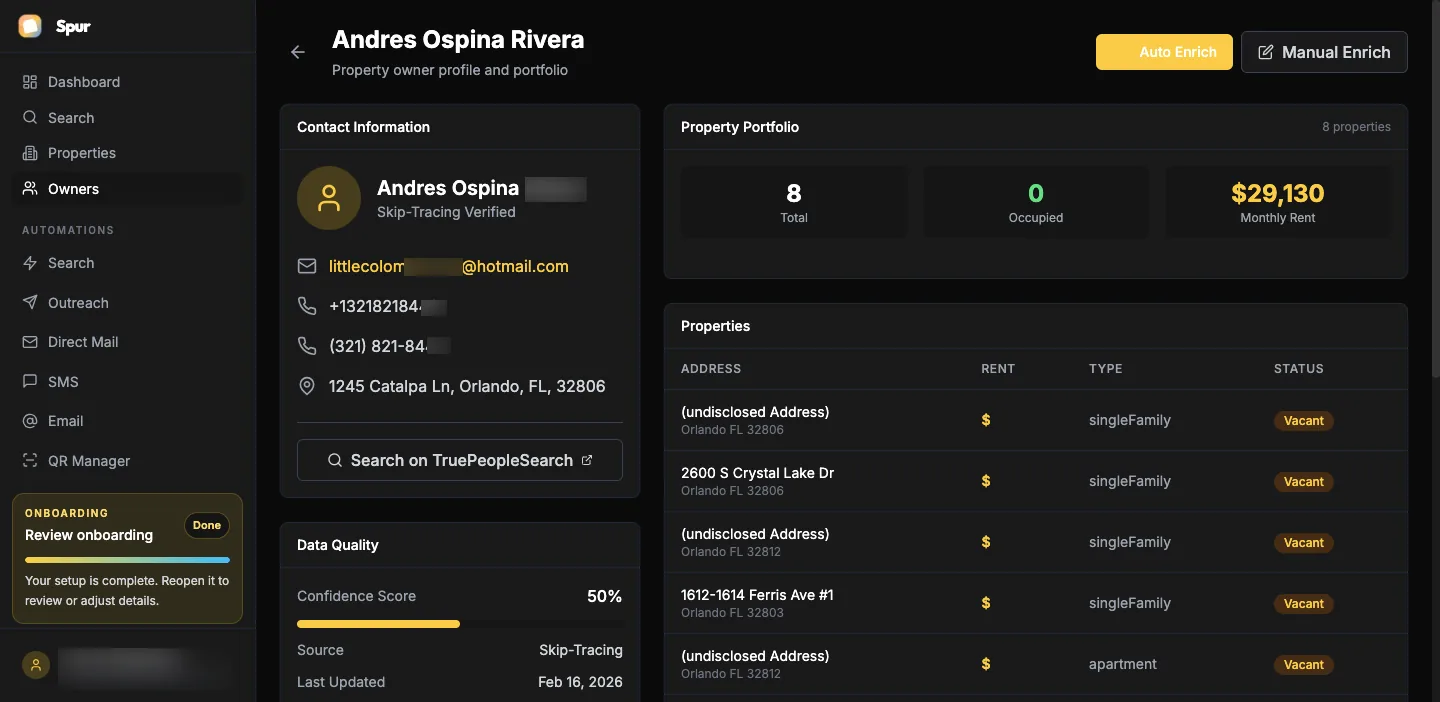
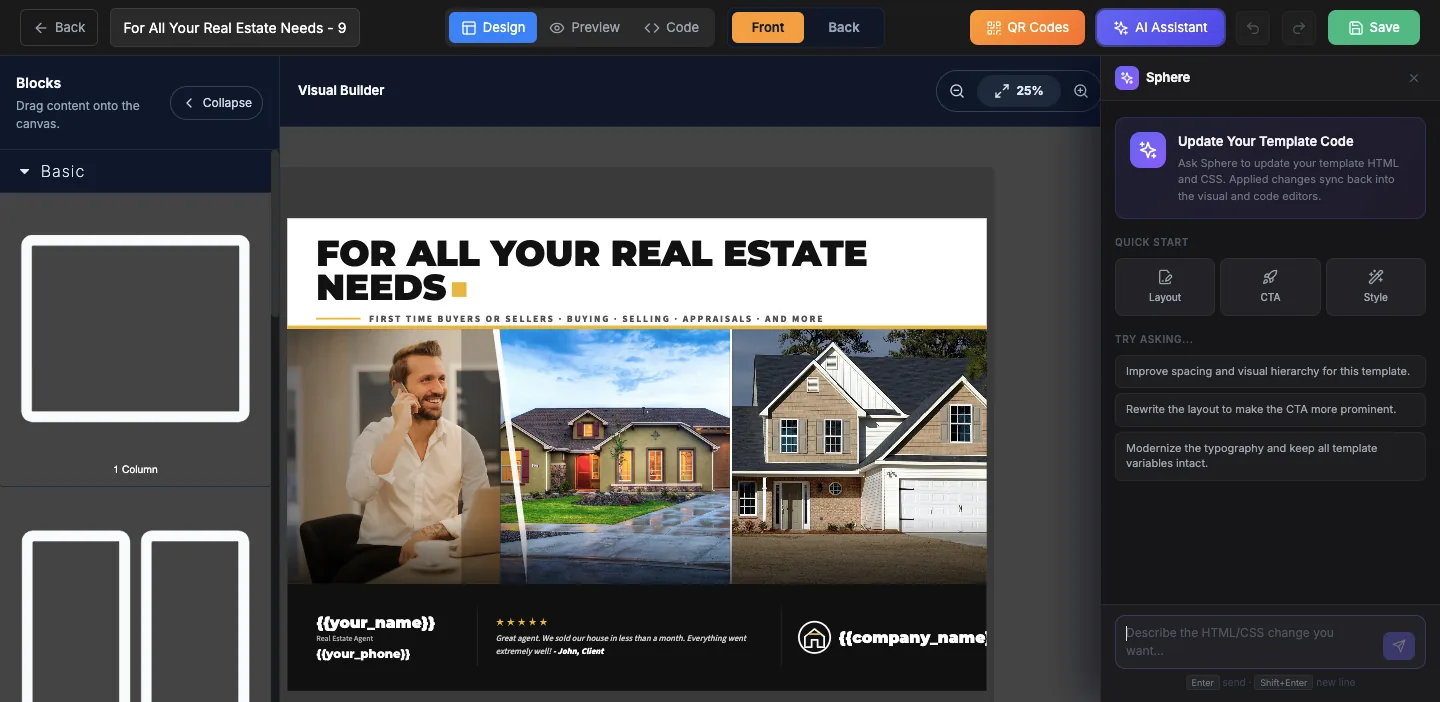
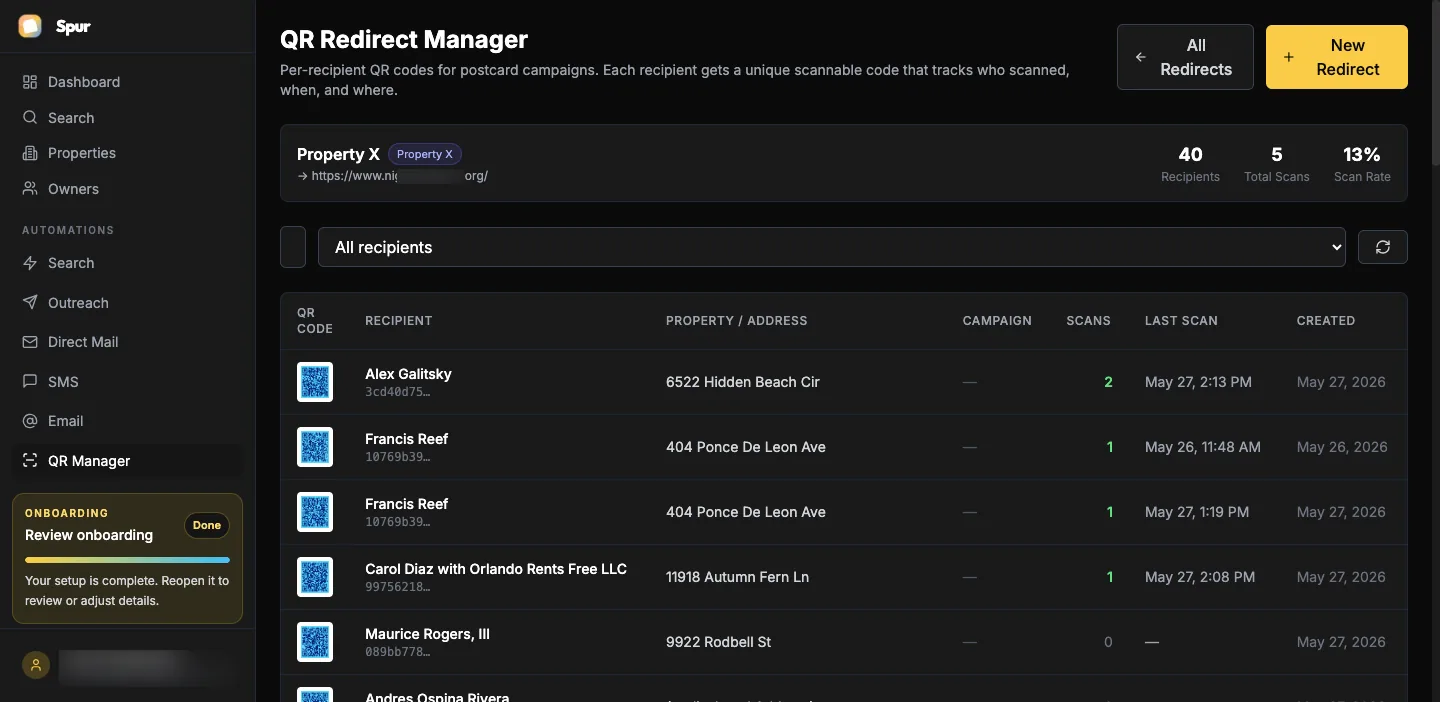
How to work this list
How to work a tax delinquent list.
Tax-delinquent owners need time and a clear way out. These plays show how to offer both.
- 1Mail owners before the tax sale
Explain how a sale pays off the taxes and leaves them with their equity.
Tax delinquent leads play → - 2Target neglected vacant land
Unpaid taxes on a lot the owner never visits is a classic land deal.
Vacant land owner play → - 3Offer a tax appeal
Some owners are behind because their assessment is too high.
Property tax appeal play →
Guide
What a tax delinquent list is, and how the tax sale clock works
A property becomes tax delinquent when the owner misses a property tax payment. Counties publish delinquency records because unpaid taxes become a lien on the property, and if they stay unpaid long enough, the county can sell the lien or the property itself to collect.
How that works depends on the state. Tax lien states sell a certificate for the debt, and the owner has a redemption period, often one to three years, to pay it back with interest before the lienholder can take the property. Tax deed states sell the property itself at auction, sometimes with a short redemption window afterward. Knowing your county's process tells you how much time an owner has.
Most delinquencies are minor. Plenty of owners pay a few months late every year. The owners worth contacting are two or more years behind, which usually signals a deeper problem: a property they've stopped caring about, an inherited house, a rental that stopped paying for itself, or financial strain. Stack that with high equity and you have an owner who can sell, pay the taxes, and keep the rest.
Absentee and vacant properties show up on delinquent lists far more often than owner-occupied homes. An out-of-state heir who forgot about a rural lot, or a landlord whose tenant left, is a different conversation from a family behind on the home they live in. Write each letter for the situation.
County data is updated on different schedules, sometimes only once or twice a year. Check when your county last published delinquencies, request the newest file, and upload it to Spur so each parcel is matched to current owner records.
It also helps to look at the amount owed relative to the property's value. A $3,000 balance on a $250,000 home is a cash-flow problem the owner can probably solve; a $9,000 balance on a $60,000 house in poor condition suggests an owner who has stopped investing in the property altogether. Those owners are often the most open to a quick, simple sale.
Compliance note. Keep your letters factual and avoid implying you're from the county or tax office. Some states regulate buying property from owners facing a tax sale, so check local rules before you make offers. Read the compliance checklist →
30×return on a year of Spur Team from one $18,000 deal
One tax delinquent deal pays for years of Spur.
- Spur Team: $588/yr billed annually
- Mail 250 owners × 3 touches = 750 postcards at $1.09 = $818
- One $18,000 deal = 30× your subscription
Example math. Deal size and response rates vary by market. Run your own numbers →
List + outreach in one
Spur vs. working the county delinquency file
What you needBuying a listSpur
Delinquent parcels matched to ownersCounty PDF or records request✓ Built in
Years behind and amount owedParse the file by hand✓ Built in
Equity and property detailsLook up each parcel✓ Built in
Owner phone and emailSeparate skip trace✓ Built in
Letters and mailingMail merge and a print vendor✓ Built in
FAQ
Tax Delinquent List questions
How do I get a tax delinquent property list?
Request it from your county treasurer or tax collector, or download it where the county publishes it online. Upload the file to Spur and each parcel is matched to its owner, equity, and property details.
Is a tax delinquent list public record?
Yes. Property tax records, including delinquencies, are public in every state, though how and when counties publish them varies.
Which tax delinquent owners are most likely to sell?
Owners two or more years behind with high equity, especially absentee owners and owners of vacant homes or land.
What's the difference between a tax lien and tax deed state?
Lien states sell the debt and give the owner time to redeem it. Deed states sell the property itself. The difference changes how much time an owner has to act.
How often is tax delinquent data updated?
It depends on the county; some publish monthly, others once or twice a year. Upload each new file to Spur and it's matched to current owner records.
Keep exploring
Related lists, plays, and guides
Start in minutes. No card required.
Offer a way out before the tax sale.
Pull the delinquent parcels in your county, filter for equity, and mail a helpful first letter today. Free to start.
Free forever plan · No card · 20 property searches a month
Prefer a walkthrough? Book a demo