
By the time a notice is recorded, the owner may have weeks or a few months before the sale. Old lists waste that time.
Free list · Pre-foreclosures
Pre-foreclosure list with equity and auction dates.
Spur pulls homes with a recorded notice of default or lis pendens in your area, shows the filing and auction dates and the owner's estimated equity, and adds the owner's phone and email so you can reach them while there's still time.
Free forever plan · No card · 20 property searches a month
See what’s in the list ↓Maricopa County, AZ412 active pre-foreclosures
Live searchNotice of defaultOwner-occupiedEquity 25%+
- Daniel R.7815 W Cholla StSale in 64 days
- Erica & Sam T.3426 E Pinchot AveSale in 81 days
- Martin O.1918 N 37th PlSale in 97 days
Phone + email found for 3 of 3Export CSV
9 new notices recorded this week
Free to pull · Owner contact in 1 click
Filing + sale dateso you know how much time is left
Equity firstskip owners with nothing to sell
Weeklynew notices from saved searches
The problem
Pre-foreclosure leads go cold fast.
A raw notice list includes owners who owe more than the house is worth. Without equity data you mail all of them.
Owners who caught up or refinanced are still on last month's list. Mailing them is wasted money and an awkward letter.
What's in the list
What's on a pre-foreclosure list in Spur.
Each record combines the recorded foreclosure notice with property, equity, and owner data, so you can see who has options and how long they have.
412active pre-foreclosures in one county
187with 25%+ estimated equity
73with a sale date in the next 90 days
Fields on every record
- Notice type
- Notice of default, notice of trustee sale, or lis pendens.
- Recording date
- When the notice was filed with the county.
- Auction or sale date
- When scheduled, so you can see how much time is left.
- Default amount
- Where the notice includes it.
- Lender or trustee
- Who is foreclosing.
- Estimated equity
- Value minus estimated loan balances.
- Owner occupancy
- Owner-occupied or absentee.
- Owner contact
- Phone, email, and mailing address through enrichment.
Example counts from one county. Foreclosure volume moves with the local market and state process.
Sample list
A sample pre-foreclosure list
Owner-occupied homes with a notice of default and 25%+ equity, soonest sale first.
Maricopa Co.Notice of defaultOwner-occupiedEquity 25%+
| Owner | Property | Recorded | Sale date | Equity |
|---|---|---|---|---|
| Daniel R. | 7815 W Cholla St | Aug 19 | Jan 4 | 38% |
| Erica & Sam T. | 3426 E Pinchot Ave | Sep 2 | Jan 21 | 44% |
| Martin O. | 1918 N 37th Pl | Sep 16 | Feb 6 | 29% |
| Yolanda P. | 6602 S 18th Way | Sep 23 | Feb 13 | 51% |
| Chris H. | 10944 N 58th Dr | Oct 7 | Feb 27 | 33% |
| Anita & Ray G. | 4105 E Earll Dr | Oct 14 | Mar 6 | 47% |
Sample data for illustration. Names are partly masked; your results depend on your market and filters.
How it works
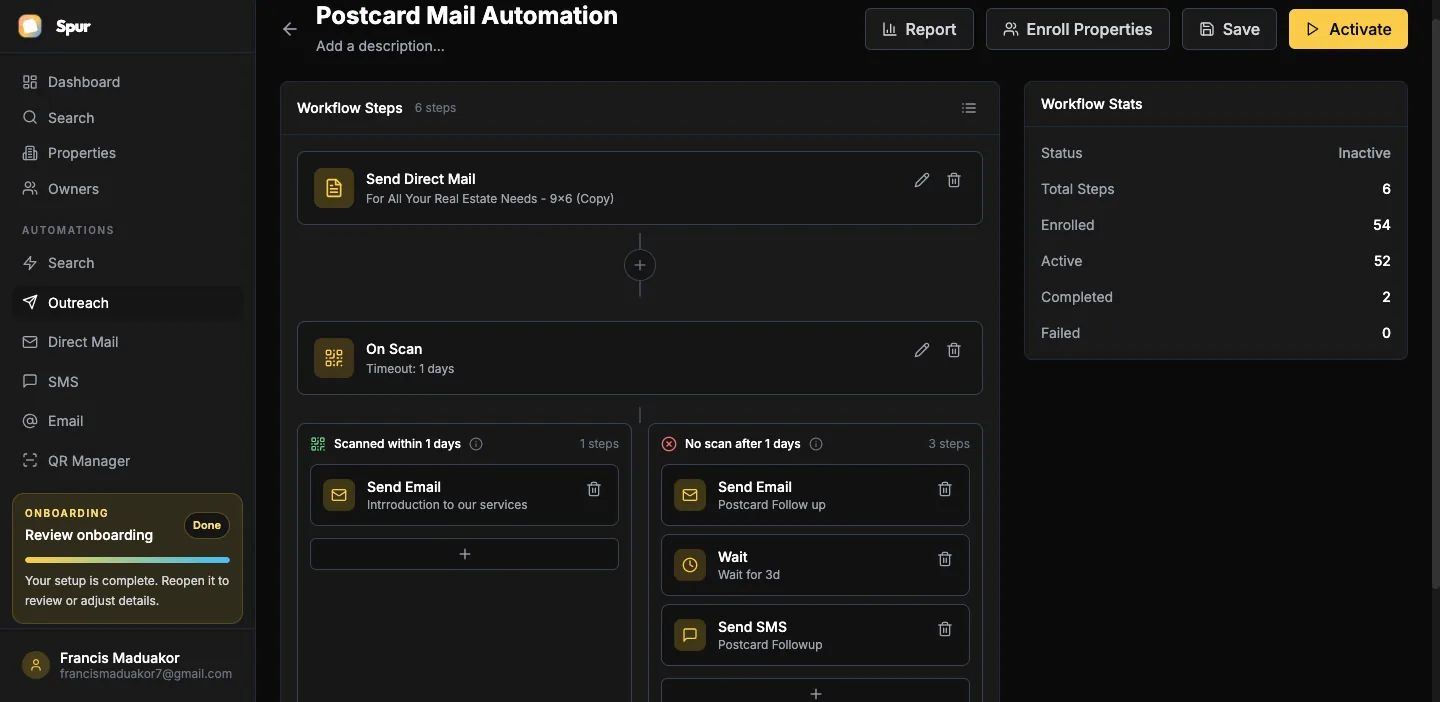
From zip code to mailbox in one workflow.
Five steps from recorded notice to a conversation with the owner, fast.
app.usespur.com
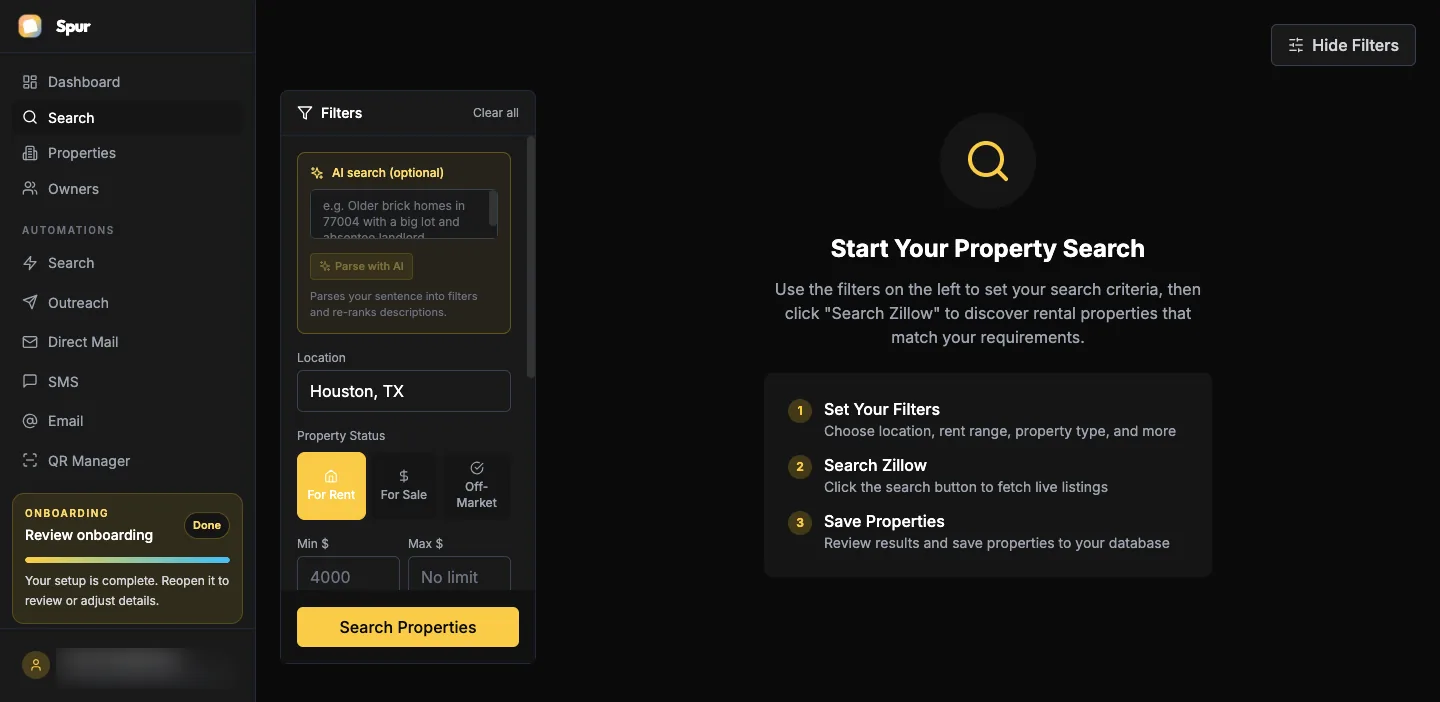
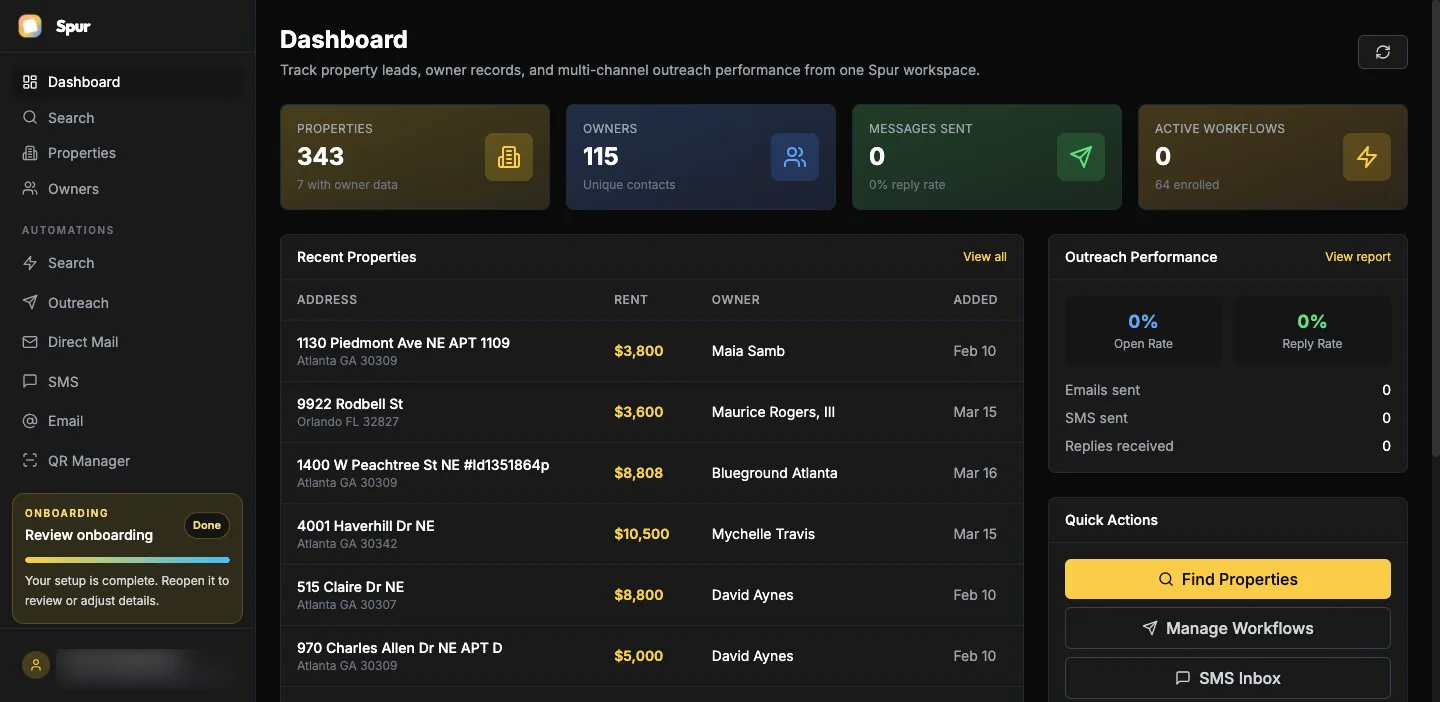
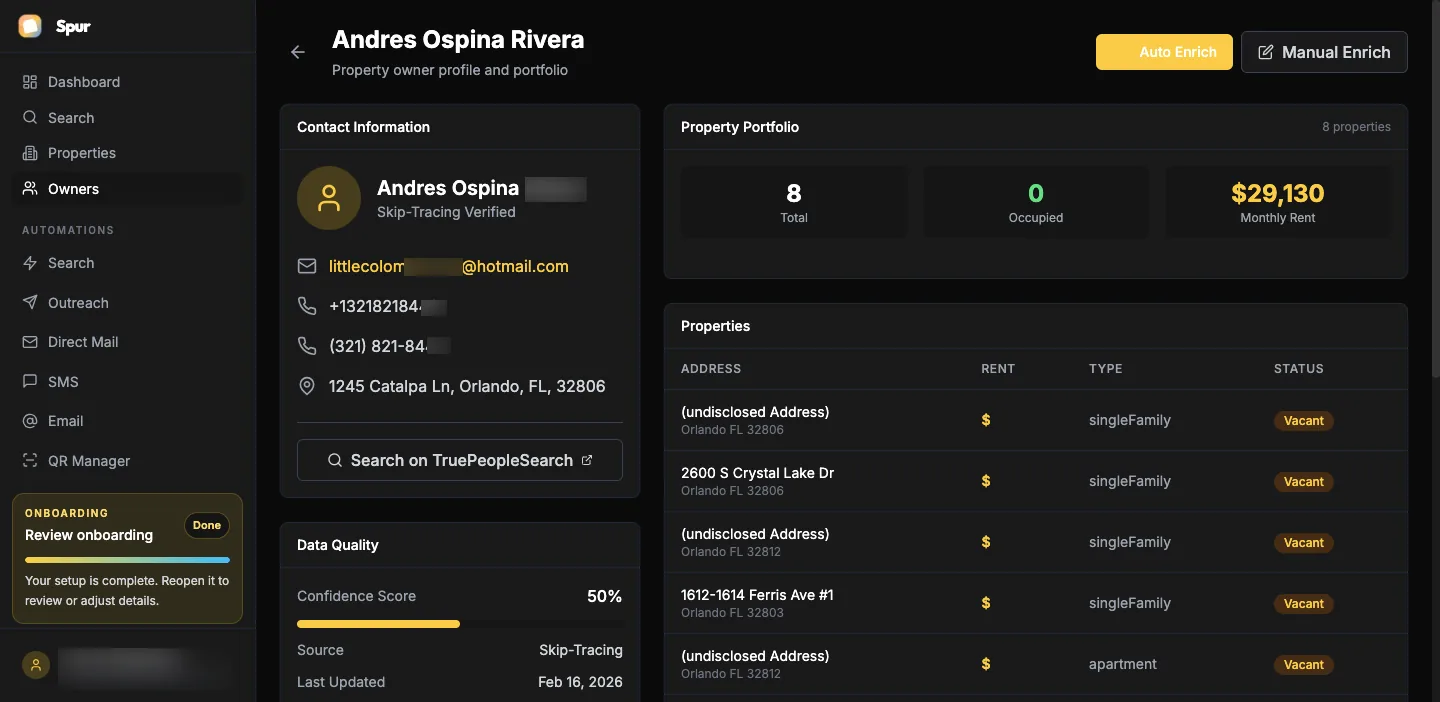
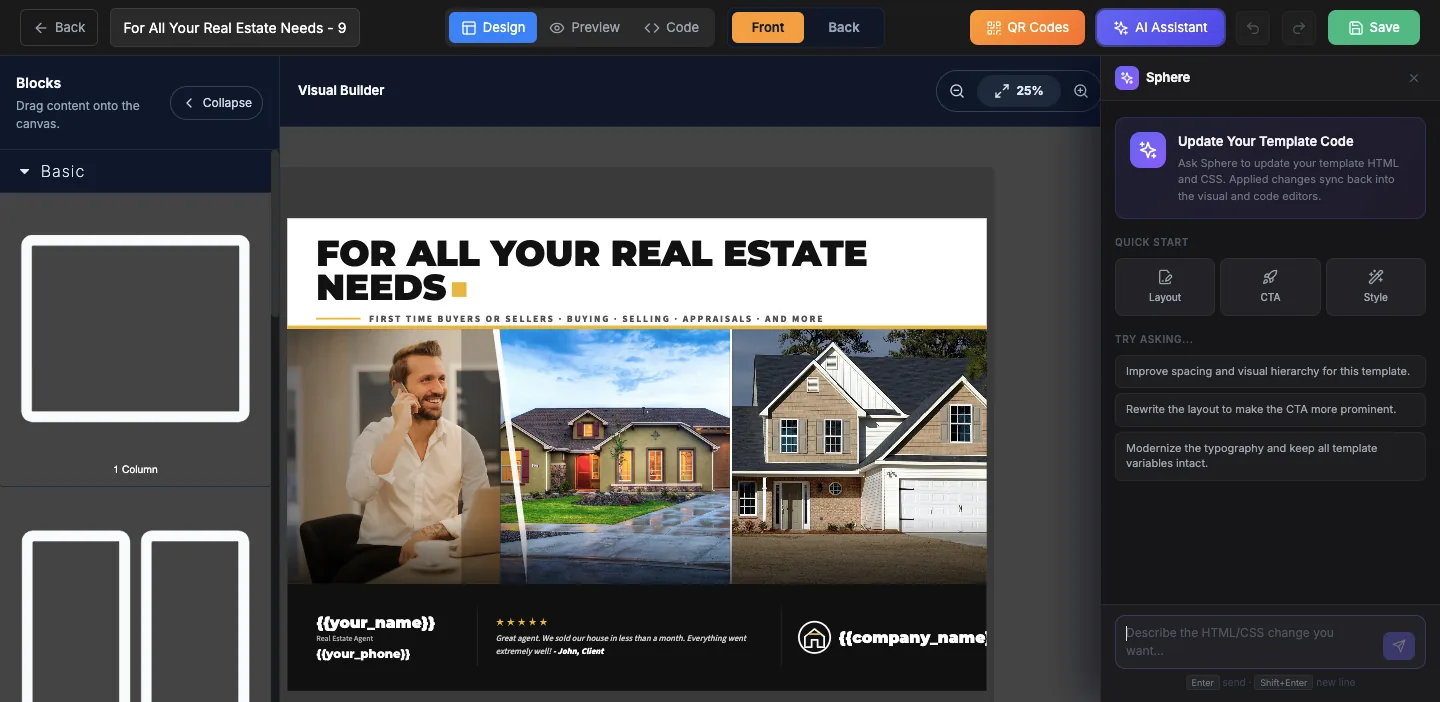
How to work this list
How to work a pre-foreclosure list.
Speed matters, but so does tone. These plays show how to help owners in default.
- 1Mail early and often
Reach owners in the first weeks after the notice, then follow up every 10–14 days.
Pre-foreclosure direct mail play → - 2Offer a subject-to option
Owners with little equity but a low rate may prefer you take over payments.
Subject-to seller play → - 3Help them refinance instead
Lenders can reach owners with equity who just need a better loan.
Cash-out refi play for lenders →
Guide
What a pre-foreclosure list is, and why timing is everything
Pre-foreclosure is the window between a homeowner falling behind on their mortgage and the property being sold at a foreclosure auction. It begins when the lender records a public notice. In non-judicial states, that's usually a notice of default followed by a notice of trustee sale. In judicial states, it's a lawsuit and a lis pendens. Under federal servicing rules, lenders generally can't start foreclosure until a borrower is more than 120 days behind.
A pre-foreclosure list is built from those recorded notices. The useful version adds what the notice doesn't tell you: the property's estimated value, the owner's equity, whether they live there, and how to reach them. The time from notice to sale varies from a few months in fast non-judicial states to more than a year in some judicial states.
Equity is the filter that matters most. An owner with 30% equity can sell, pay off the loan, and walk away with cash and their credit intact. An owner who owes more than the home is worth needs a short sale, a loan modification, or a different kind of help. Filtering by equity first keeps your mail relevant and your costs down.
Lists also go stale quickly. Some owners catch up, refinance, or sell, and their case is cancelled. Pull fresh records rather than mailing an old file, and stop mailing anyone whose notice has been rescinded.
Finally, give owners real options in your letter, including talking to their lender or a HUD-approved housing counselor. Owners trust the person who explains choices more than the one who only makes an offer.
Organize your list by stage, not just by date. Owners who just received a notice of default are still absorbing the news and respond to calm information. Owners with a sale date a few weeks away need a fast, concrete option. Writing a different letter for each stage, and adjusting your follow-up cadence as the sale date approaches, is what separates a helpful buyer from one more piece of junk mail.
Compliance note. Several states regulate equity purchasers and foreclosure consultants, including required contract language and cancellation rights (California's Home Equity Sales Contract Act is one example). Check your state's rules before you make offers, and never promise to stop a foreclosure. Read the compliance checklist →
42×return on a year of Spur Team from one $25,000 deal
One pre-foreclosure purchase covers years of lists.
- Spur Team: $588/yr billed annually
- Mail 200 owners with equity × 4 touches = 800 postcards at $1.09 = $872
- One $25,000 deal = 42× your subscription
Example math. Deal size and response rates vary by market. Run your own numbers →
List + outreach in one
Spur vs. buying a pre-foreclosure list
What you needBuying a listSpur
Recorded foreclosure noticesMonthly list subscription✓ Built in
Equity on every recordLook up each property yourself✓ Built in
Cancelled cases removedMail them anyway✓ Built in
Owner phone and emailSeparate skip trace✓ Built in
Follow-up before the saleCalendar reminders and manual mail✓ Built in
FAQ
Pre-Foreclosure List questions
What is a pre-foreclosure list?
A list of properties where the lender has recorded a notice of default, notice of sale, or lis pendens, but the home hasn't been sold at auction yet.
How do I find pre-foreclosures in my area?
Recorded notices are public at the county recorder's office. Spur pulls them for you and adds equity, sale dates, and owner contact info, so you don't have to search record by record.
How long does pre-foreclosure last?
It depends on the state. Non-judicial foreclosures can move from notice to sale in about three to four months; judicial foreclosures can take a year or more.
Why filter pre-foreclosures by equity?
Owners with equity can sell and keep the difference. Owners who are underwater can't sell without the lender's approval, so they need a different approach.
Are there rules for contacting owners in foreclosure?
Yes. Some states regulate foreclosure consultants and equity purchasers, and calling requires Do Not Call compliance. Check your state's rules and keep your language factual.
Keep exploring
Related lists, plays, and guides
Start in minutes. No card required.
Reach owners in default while they still have options.
Pull the recorded notices in your county, filter for equity, and send a clear first letter today. Free to start.
Free forever plan · No card · 20 property searches a month
Prefer a walkthrough? Book a demo