
City case lists show the address and violation. Finding who owns it and how to reach them is on you.
Free list · Code violations
Code violation list, matched to owners who can act.
Upload open code enforcement cases from your city and Spur matches each address to its owner, adds their mailing address, phone, and email, and shows equity and occupancy, so you can reach owners facing fines before the deadlines pile up.
Free forever plan · No card · 20 property searches a month
See what’s in the list ↓Kansas City, MO312 open code cases matched
Live searchOpen caseAbsentee or vacantEquity 50%+
- Leonard B.3104 Gillham RdUnsafe structure
- Sharon & Al R.5521 Wabash AveOvergrowth
- Midtown Homes LLC4019 Olive StRoof / exterior
Phone + email found for 3 of 3Export CSV
Leonard B. scanned your letter · 7 min ago
Free to pull · Owner contact in 1 click
City recordsuploaded and matched to owners
Violation typekept with every record from your file
Absentee flagfind owners managing from far away
The problem
Code enforcement records list addresses, not owners.
Most owners fix a tall-grass notice in a week. Without filters you mail people who already solved it.
Out-of-town owners and heirs often don't see the notices at all. Mail to the property never reaches them.
What's in the list
What's on a code violation list in Spur.
You bring the city's open cases. Spur turns each one into a full owner record so you can tell a quick fix from a property the owner can't handle.
312open code cases matched to owners
141with an absentee or vacant owner
88absentee or vacant with 50%+ equity
Fields on every record
- Violation and case date
- Kept from your uploaded city file.
- Owner name
- Matched from property records.
- Owner mailing address
- Where the owner actually lives.
- Absentee and vacancy
- Owners far away and homes sitting empty.
- Estimated equity
- Whether an as-is sale works for them.
- Years owned
- Long-held homes are often inherited or tired rentals.
- Property details
- Year built, size, and lot.
- Owner contact
- Phone and email through enrichment.
Example counts from one city upload. Case volume and what's published vary by city.
Sample list
A sample code violation list
Open cases on absentee or vacant homes with 50%+ equity.
Kansas City, MOOpen code cases (uploaded)Absentee or vacantEquity 50%+
| Owner | Property | Violation | Owner lives in | Equity |
|---|---|---|---|---|
| Leonard B. | 3104 Gillham Rd | Unsafe structure | Omaha, NE | 92% |
| Midtown Homes LLC | 4019 Olive St | Roof / exterior | Overland Park, KS | 61% |
| Sharon & Al R. | 5521 Wabash Ave | Overgrowth | Phoenix, AZ | 100% |
| Estate of Ruby H. | 2810 Benton Blvd | Vacant, open to entry | Lee's Summit, MO | 100% |
| Carl J. | 6218 Agnes Ave | Trash and debris | Dallas, TX | 74% |
| Yvette M. | 3725 Garfield Ave | Exterior paint / siding | Independence, MO | 57% |
Sample data for illustration. Names are partly masked; your results depend on your market and filters.
How it works
From zip code to mailbox in one workflow.
Five steps from city case file to an owner who'd rather sell than repair.
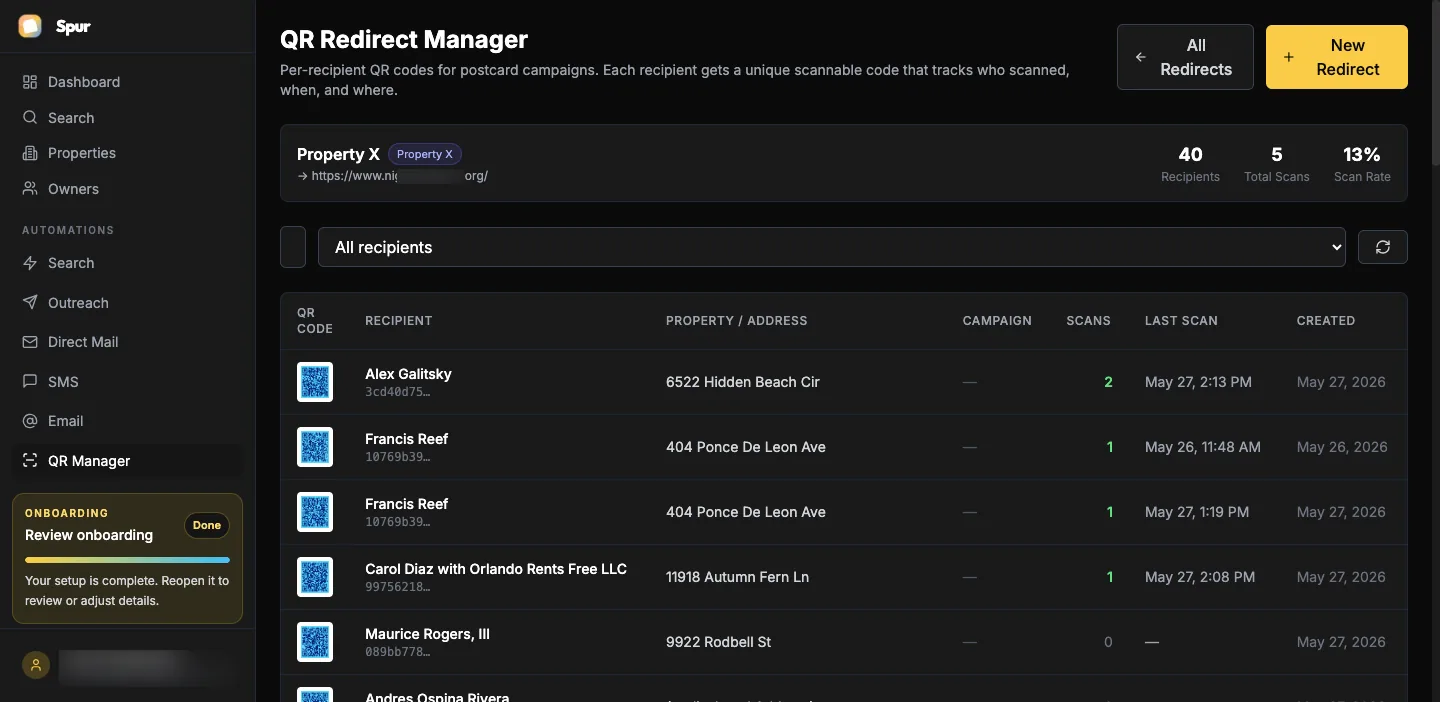
app.usespur.com
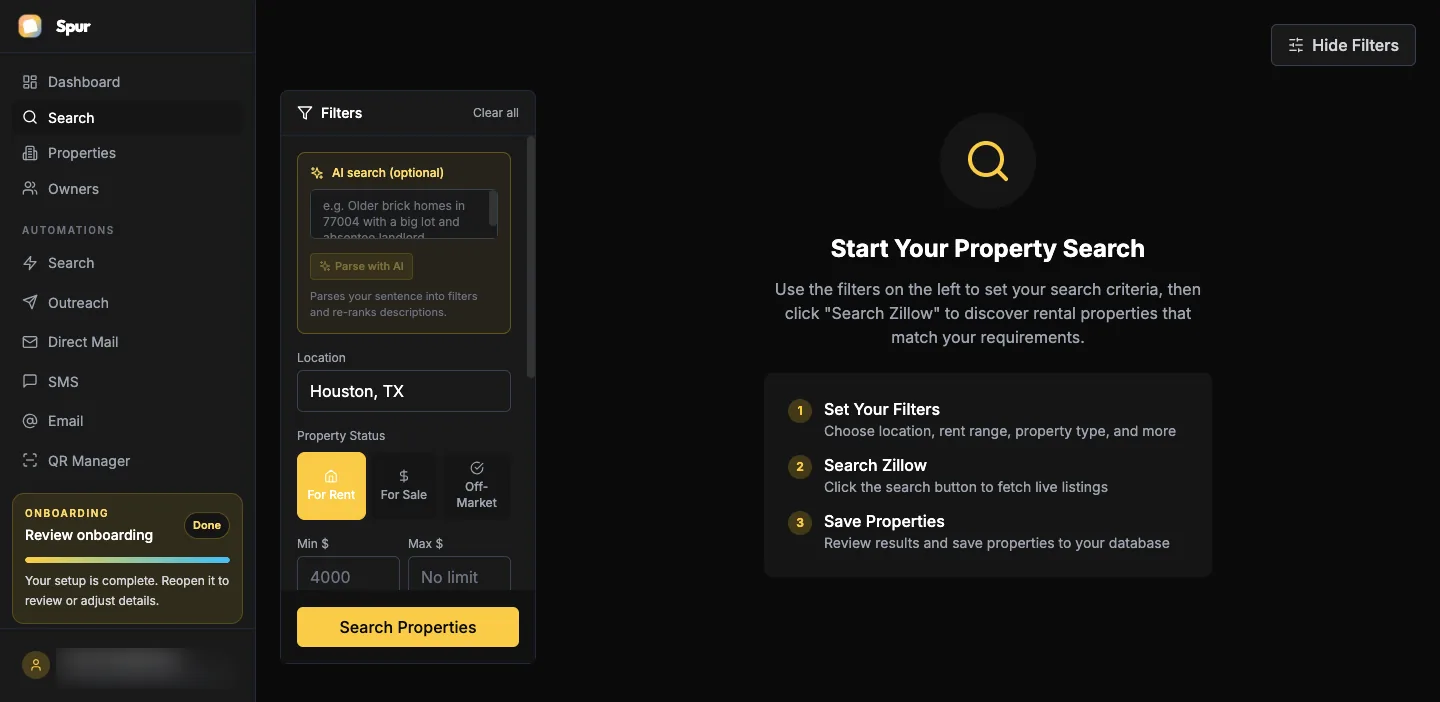
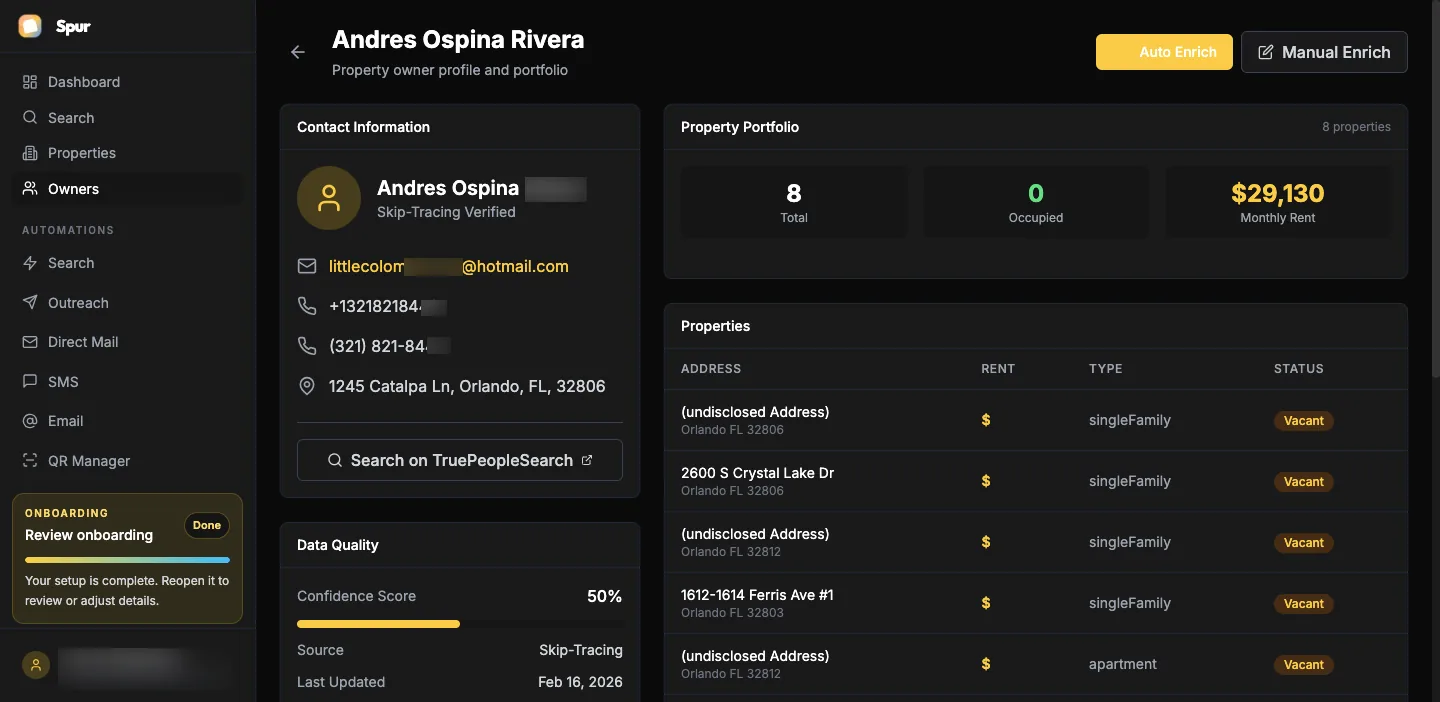
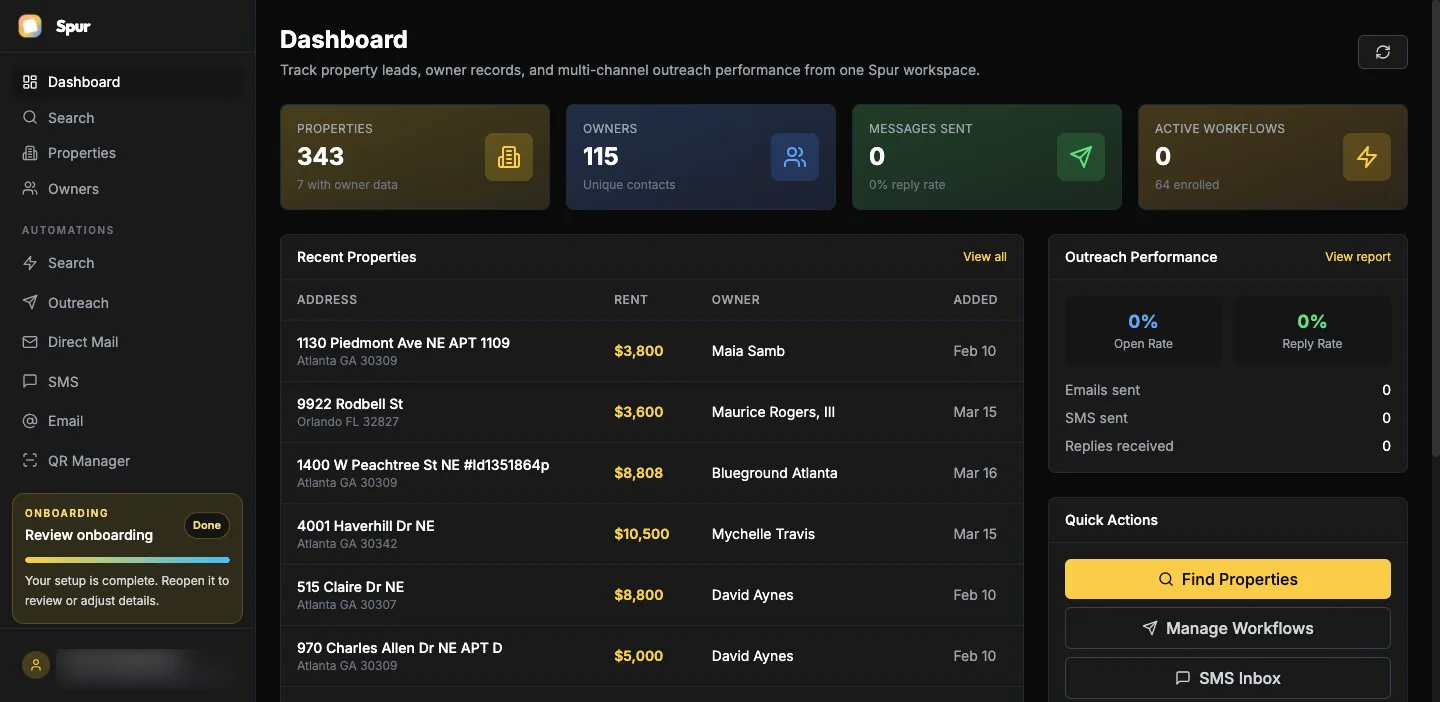
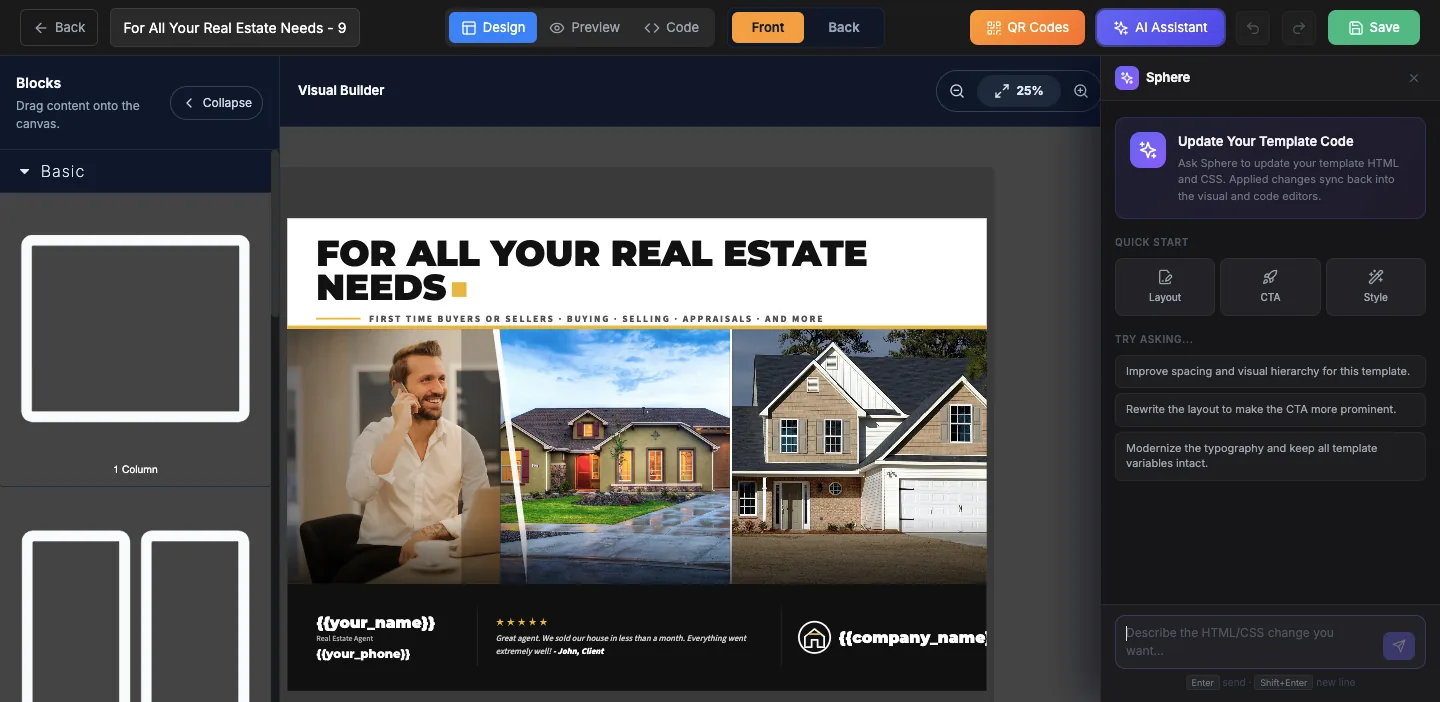
How to work this list
How to work a code violation list.
Owners facing city deadlines need a practical option. These plays show how to offer one.
- 1Offer an as-is sale
Explain how a sale handles the repairs and the city deadlines in one step.
Code violation leads play → - 2Follow up on what you see
Add distressed homes you drive past and mail the owner the same week.
Driving for dollars play → - 3Offer the repairs
Contractors can reach owners who want to keep the property but need the work done.
Spur for contractors →
Guide
What a code violation list is, and which cases to pursue
A code violation list is a set of properties with open code enforcement cases: notices from the city for problems like overgrown yards, trash and debris, unsafe structures, unpermitted work, or a vacant building open to entry. Owners get a deadline to fix the problem, and unresolved cases can lead to fines, liens, and in serious cases city-ordered repairs or demolition.
Code enforcement records are public in most cities. Many publish open cases online; others provide them through a public records request. What those records usually lack is the owner's information. They list the address and the violation, not who owns it or how to reach them. That's where the work is, and where Spur helps: upload the case file and each address is matched to its owner with a mailing address, phone, email, equity, and occupancy.
Most violations are minor and quickly fixed. A tall-grass notice on an owner-occupied home usually means a busy weekend, not a motivated seller. The strongest leads combine a serious or repeat violation with another signal: an owner who lives out of state, a vacant home, an estate or heir owner, unpaid taxes, or a long-held rental. Those owners may be facing repairs they can't afford or manage from afar.
Mail the owner's address, not the property. Many of the best leads are owners who never received the city's notices because they live elsewhere. A calm, practical letter that names the property, acknowledges the notice, and offers to buy as-is or handle the repairs can arrive as genuine relief.
Keep your list current. Cases close as owners make repairs, and new ones open every week. Request updated files on a regular schedule, drop resolved cases, and focus your follow-up on the open ones before their deadlines.
It also pays to read the violation itself. A notice for peeling paint on a well-kept home calls for nothing more than a contractor's flyer. A notice for a collapsed porch or a roof open to the weather on a home owned by an out-of-town heir calls for a calm offer to buy it as-is, before a small problem becomes a city-ordered repair the owner can't manage.
Compliance note. Keep your letters factual and never imply you're from the city or code enforcement office. Don't overstate penalties, and follow any state rules on buying from owners facing city action. Read the compliance checklist →
25×return on a year of Spur Team from one $15,000 deal
One code violation deal pays for years of Spur.
- Spur Team: $588/yr billed annually
- Mail 200 owners × 3 touches = 600 letters at $1.09 = $654
- One $15,000 deal = 25× your subscription
Example math. Deal size and response rates vary by market. Run your own numbers →
List + outreach in one
Spur vs. working the city case file by hand
What you needBuying a listSpur
Open cases matched to ownersLook up each address in county records✓ Built in
Owner mailing address and contactSeparate skip trace✓ Built in
Equity, vacancy, and absentee flagsCross-reference several sources✓ Built in
As-is offer letters and mailingMail merge and a print vendor✓ Built in
Follow-up before deadlinesSpreadsheet reminders✓ Built in
FAQ
Code Violation List questions
Where do I get a code violation list?
From your city's code enforcement office. Many cities publish open cases online; others provide them by public records request. Upload the file to Spur to match each address to its owner.
Are code violations public record?
In most cities, yes. Access varies, so check your city's website or submit a records request.
Which code violations make good leads?
Serious or repeat violations, like unsafe structures or vacant buildings, especially on absentee, vacant, or estate-owned properties with high equity.
Why mail the owner instead of the property?
Many of the best leads are owners who live elsewhere and may not have seen the city's notices at all.
How often should I update the list?
Every few weeks. Cases close as owners make repairs and new ones open constantly.
Keep exploring
Related lists, plays, and guides
Start in minutes. No card required.
Reach owners before the fines pile up.
Upload your city's open code cases, enrich the owners, and send a practical as-is offer today. Free to start.
Free forever plan · No card · 20 property searches a month
Prefer a walkthrough? Book a demo