
Tenants may want charging, but they can't approve a project on a parking lot.
EV charger play · Landlords and property managers
EV charger marketing to landlords, condo boards, and property managers who keep getting asked.
Tenants and condo owners are asking for charging, and many building owners don't know where to begin. Spur finds owners of small apartment buildings and multifamily property managers, skips the tenant, and mails a practical offer: a site review with a phased plan and a clear budget.
Free forever plan · No card · 20 property searches a month
USPSFirst-Class
Howard Levin1 N LaSalle St, Ste 2100Chicago, IL 60602Scan for a free site review
Howard L. requested a site review · 13 min ago
AI-written for this owner · Mailed in 2 days
Skip the tenantmail goes to the owner's or manager's address
5+ unitswith parking is a strong starting filter
Phasedplans start small and grow with demand
The problem
Building owners want to say yes, but they can't see the plan.
Owners picture trenching and a new transformer, and put it off.
Who pays for the power, and how, is the first question, and most installers don't answer it.
How it works
From list to mailbox in one workflow.
Five steps from an owner list to a multi-charger project.
app.usespur.com
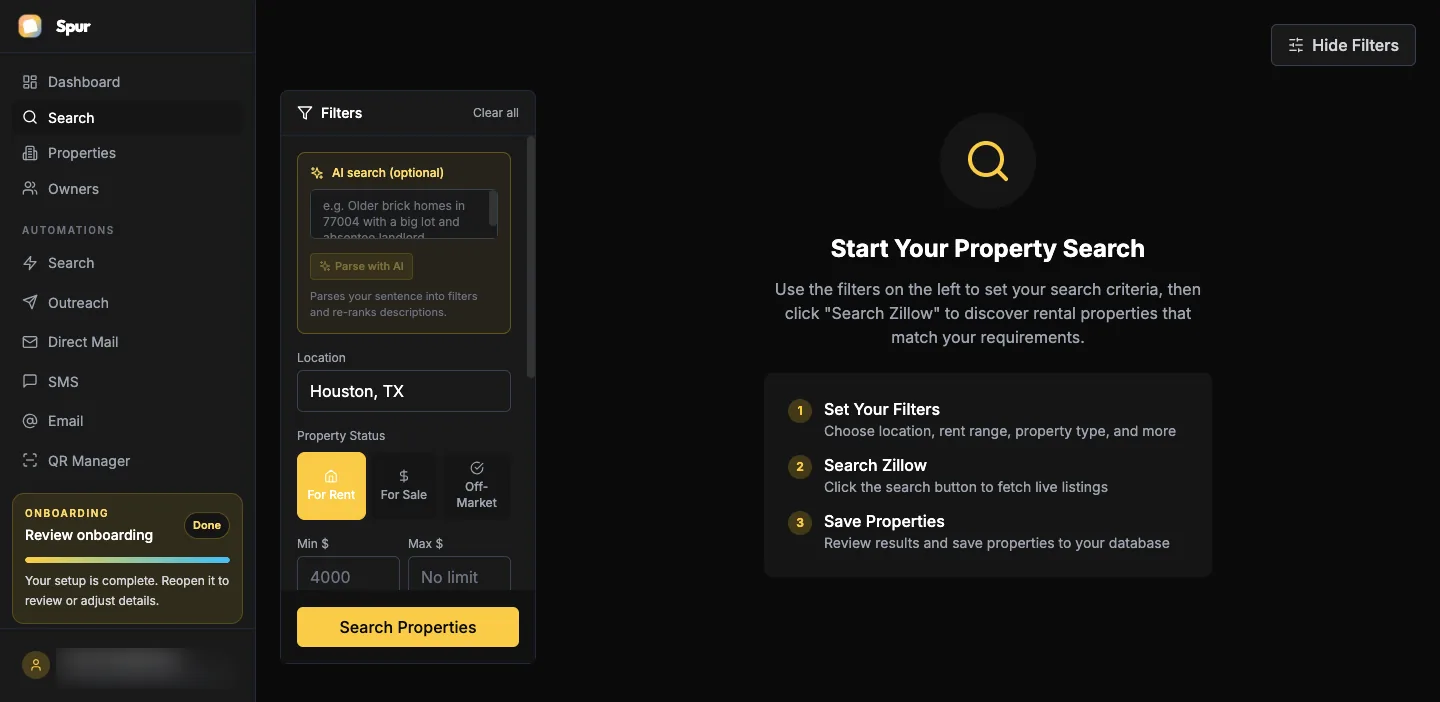
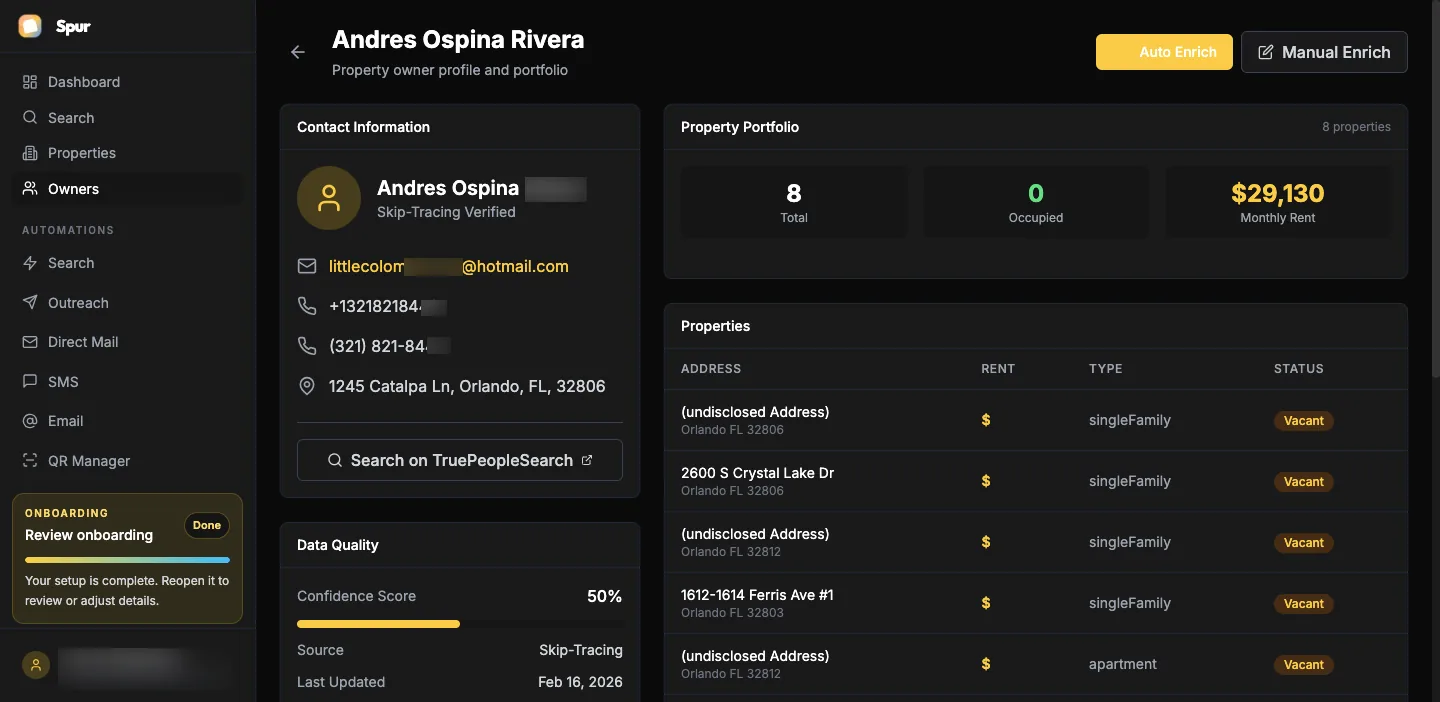
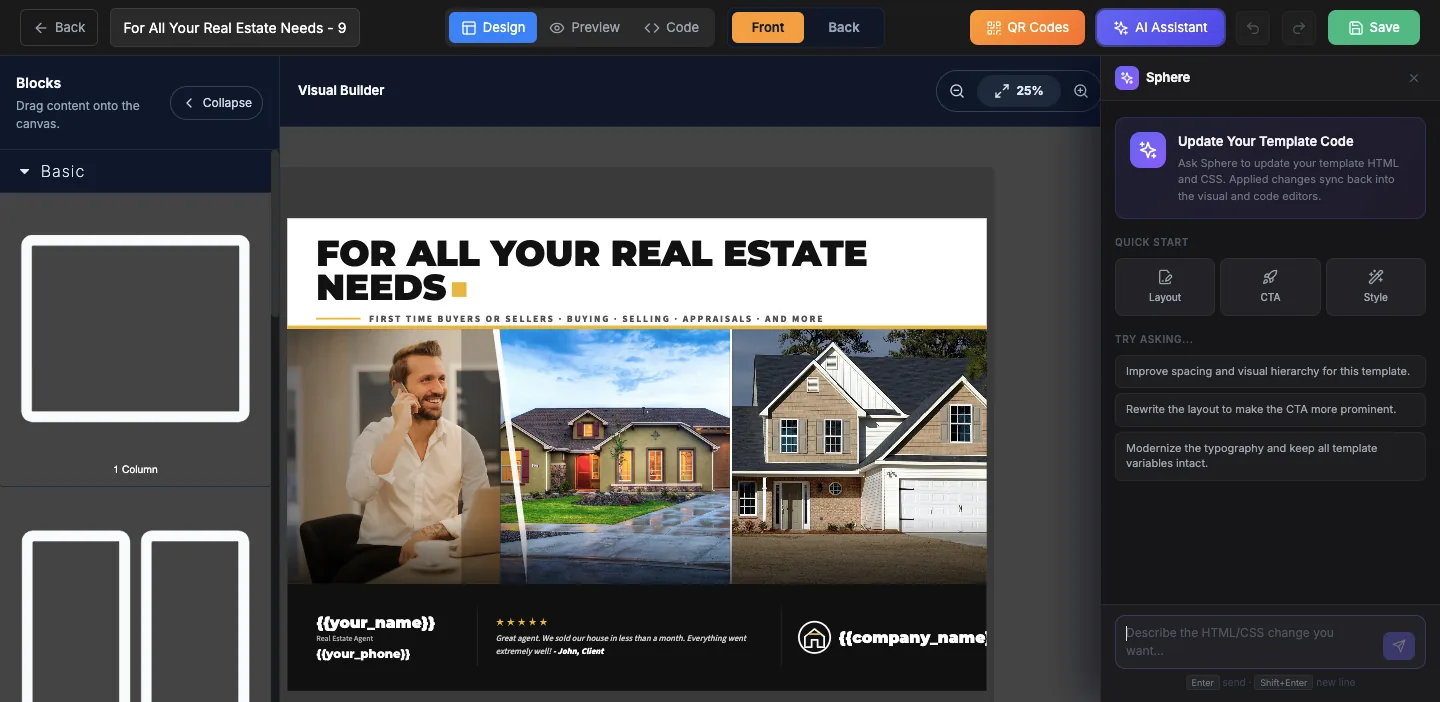
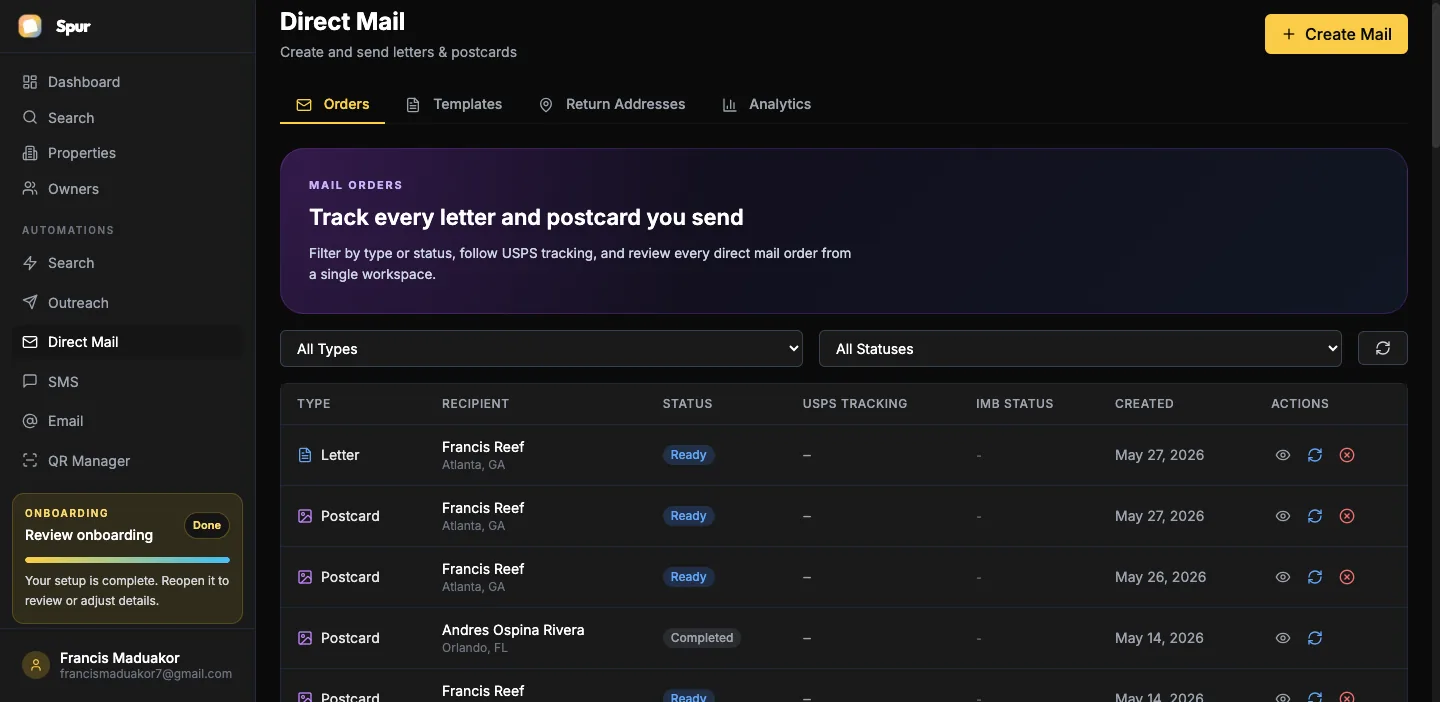
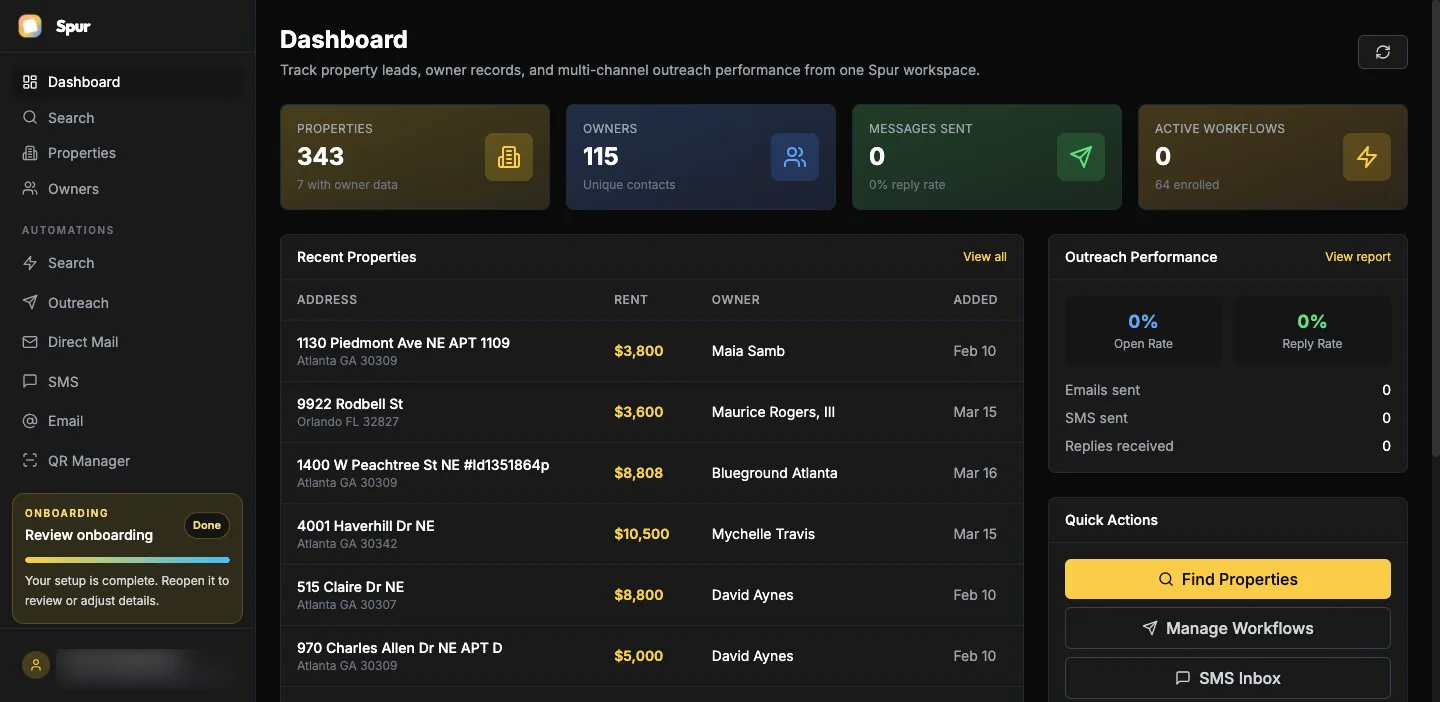
See it in Spur
A multifamily EV charging list
A sample Chicago list of apartment owners with on-site parking. Names are partly masked.
Multifamily 5+ unitsParking on recordAbsentee or LLC ownerBuilt 1960+Owner within 100 mi
- Howard L.4120 N Sheridan Rd24 units · surface lotLLCOwned 12 yrs
- Lakeview Holdings LLC920 W Belmont Ave (+2)3 buildings · 58 unitsManager on fileGarage
- Sunnyside Condo Assn2600 N Halsted St36 units · garageHOA boardMgmt company
- Elena R.5310 N Clark St12 units · surface lotOwned 21 yrsNear transit
- Grant Park Rentals1500 S Michigan Ave80 units · garageManager on fileAmenity focus
AI draft for Howard L. · 4120 N Sheridan Rd
Hi Howard,
More apartment owners are hearing the same question from tenants: 'Is there anywhere I can plug in?' For a 24-unit building with a surface lot, you don't need to wire every space to answer it.
We'd like to review your building for free. We'll check your electrical capacity and give you a written plan: how many spaces to start with, what it would cost, how power would be billed to the drivers, and how it could grow later. If the utility offers a make-ready program in your area, we'll also check whether you qualify.
Scan the code on this card and we'll work directly with you or your property manager.
Erin Kowalczyk · Metro Multifamily EV · (312) 555-0187
Sample data for illustration. Your results depend on your market and filters.
Playbook
How to sell EV charging to building owners
Multifamily charging is a very different sale from a garage install. The decision-maker doesn't drive the car, the budget is larger, and the questions are about cost recovery, tenant demand, and liability. The sale may take months, but one building can be worth many home installs, and an owner or manager with a portfolio can hand you work for years. That's why the list and the message need to be separate from your homeowner mail.
Find the people who can sign. Multifamily properties with five or more units and on-site parking are a strong starting point, and owners of several smaller rentals may also be interested in a simple plan. Mail the owner's address and not the property, since the tenants can't approve this. LLCs and trusts usually have a contact or management company on file. Condo associations need the board and the management company, often with a vote involved.
Lead with a phased plan. Owners picture trenching up a parking lot and a utility upgrade, and that fear ends the conversation. A plan that starts with two to four spaces, shows actual costs, and allows for growth is far easier to approve. Load management can stretch the existing capacity, and low-power Level 2 charging may be plenty for cars parked overnight. Work with your local utility early, since capacity and timing are often the main limiters.
Answer the billing question directly. Who pays for the electricity, and how? Networked chargers can bill drivers directly, while some owners may prefer a flat parking fee or simply an amenity. Rules on reselling electricity vary by state, so check them with the utility commission or your state's rules before recommending an approach. Include the network and maintenance costs in your plan, so that the owner sees the total picture.
Know the rules and the money. California and several other states have right-to-charge laws affecting condos and some rentals, and some new building codes require EV-ready spaces. These are moving targets, so check your state and city. The federal 30C credit ended for equipment placed in service after June 30, 2026, so don't include it in your numbers. Many utilities and some states have make-ready or multifamily programs. Confirm what's currently available and only cite those.
Plan for maintenance and follow-through. Tenants notice when a charger's broken, and an owner will notice complaints. Offer a service plan, and spell out response times. After each project, send a short report to the owner with usage numbers if they're available, along with photos. Happy property managers talk to each other, and a clear record helps you win the next building, and the phases to come on this one.
30×+return on a year of Spur Team from one $18,000 four-space project
One building can equal many home installs.
- Spur Team: $49/mo billed annually = $588/yr
- 300 postcards to building owners at $0.94 each = $282
- One four-space starter project at ~$18,000, with later phases to follow
Example math in sales, not profit. Project size varies widely by site. Run your own numbers →
One tool, not four
Spur vs. the usual multifamily outreach
What you needThe usual waySpur
Mail goes to owners and managersCold calls to a leasing office✓ Built in
Buildings filtered by units and parkingRandom lists of apartments✓ Built in
Copy about phased cost and billingA home charger flyer✓ Built in
LLCs and managers flaggedMail lost in the wrong inbox✓ Built in
Scans tied to the owner's portfolioNo idea who is interested✓ Built in
Landlords by the numbers
What building owners need to know
June 30, 2026
was the last day equipment could be placed in service for the federal 30C credit
Right to charge
laws in California and several other states affect condos and some rentals, so check locally
30×+
return on a year of Spur Team from one $18,000 four-space project
FAQ
Landlord EV charging questions
How do I reach apartment owners instead of tenants?
Filter multifamily properties and absentee owners, and mail the owner's address on record. Spur also flags LLCs and managers so that you can address them properly.
How many chargers should a building start with?
Often two to four spaces, with load management and a plan to grow. Start with actual tenant demand and the capacity on site.
Who pays for the electricity?
Networked chargers can bill drivers directly, or owners can use a parking fee or treat it as an amenity. Resale rules vary by state, so check them first.
Do landlords have to allow EV charging?
It depends on the state. California and several others have right-to-charge laws that can apply to condos and some rentals. Check your state's rules.
Are there still incentives for multifamily charging?
The federal 30C credit ended for equipment placed in service after June 30, 2026. Many utilities and some states offer programs, so confirm what's available before you cite one.
Keep exploring
Related plays and guides
Start in minutes. No card required.
Give building owners a plan they can say yes to.
Build a list of apartment owners and managers, and mail your site review offer today. Free to start.
Reach building owners — freeFree forever plan · No card · 20 property searches a month
Prefer a walkthrough? Book a demo