
Owners hear 'panel upgrade' and assume the worst, then stop asking.
EV charger play · Charger and panel bundles
EV charger panel upgrade leads from older homes that can't just plug in.
A 1970s home on 100-amp service often needs more thought than a simple circuit, and that scares owners into doing nothing. Spur targets those homes and mails an honest offer: a load calculation, then either load management or a panel upgrade, whichever the home really needs.
Free forever plan · No card · 20 property searches a month
USPSFirst-Class
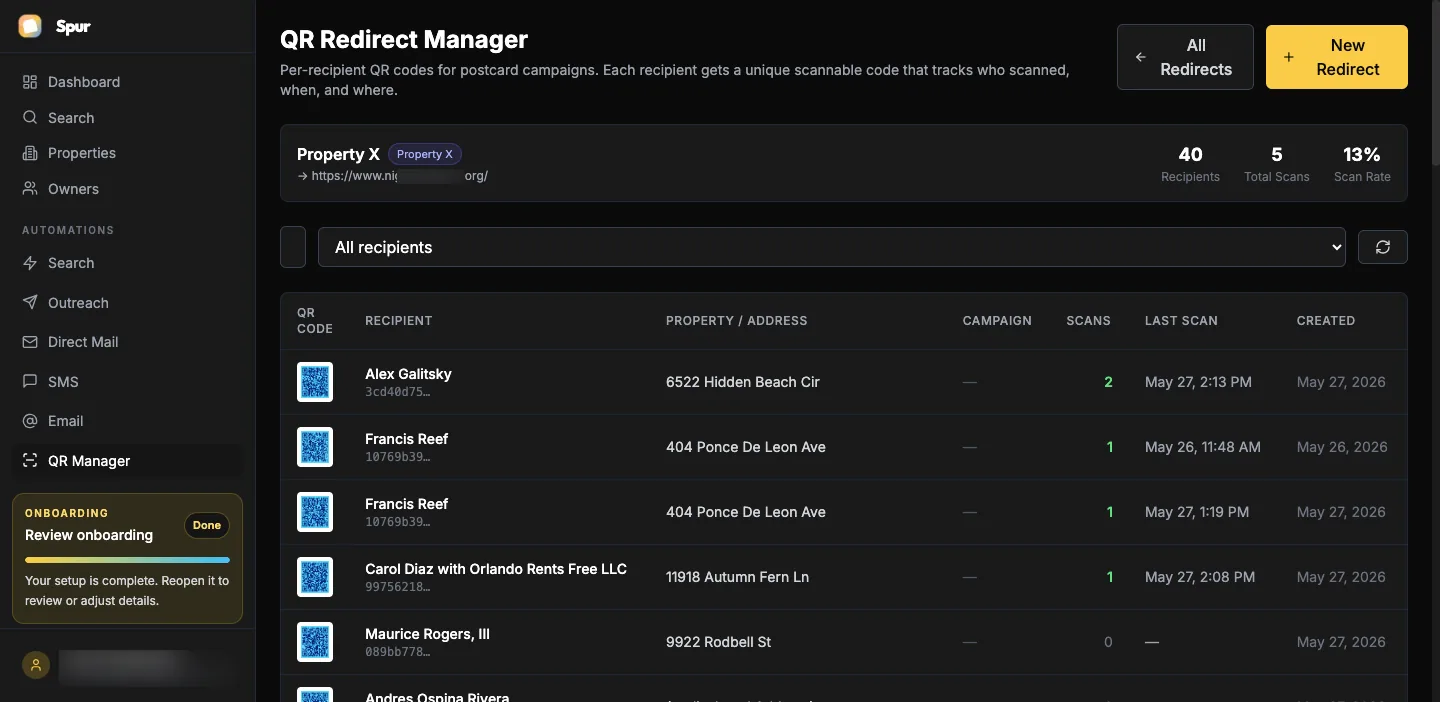
Diane Sorenson8824 Fauntleroy Way SWSeattle, WA 98136Scan for a free load check
Diane S. sent a panel photo for a load check · 6 min ago
AI-written for this owner · Mailed in 2 days
40A = 50Aa 40-amp charger needs a 50-amp circuit under the code's 125% rule
100 ampsis common service on older homes, and often the sticking point
2 pathsload management or panel upgrade, based on the load calculation
The problem
Older homes stall EV charger jobs, and vague quotes make it worse.
One contractor says replace the panel and another says it's fine, and the owner can't judge.
Service upgrades may depend on the utility's schedule, which can surprise everyone.
How it works
From list to mailbox in one workflow.
Five steps from older panels to clear, bundled quotes.
app.usespur.com
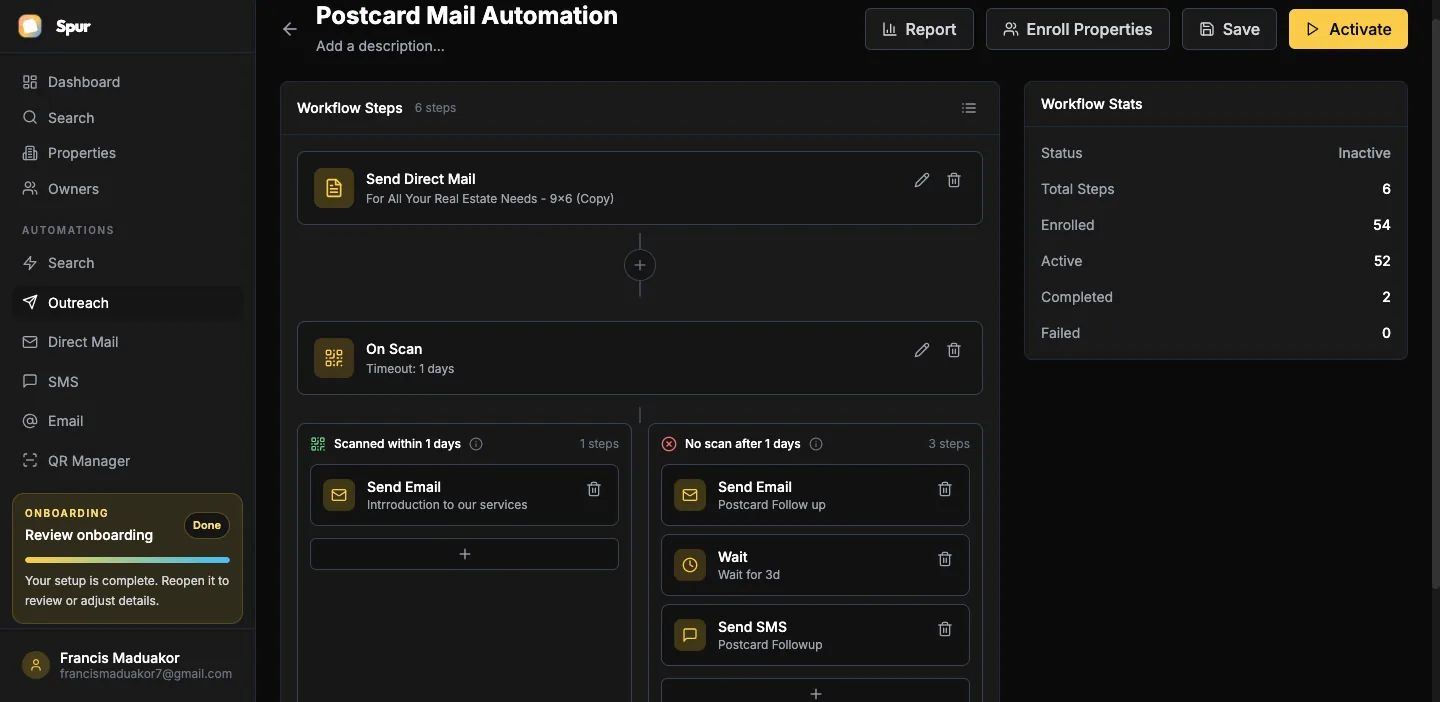
See it in Spur
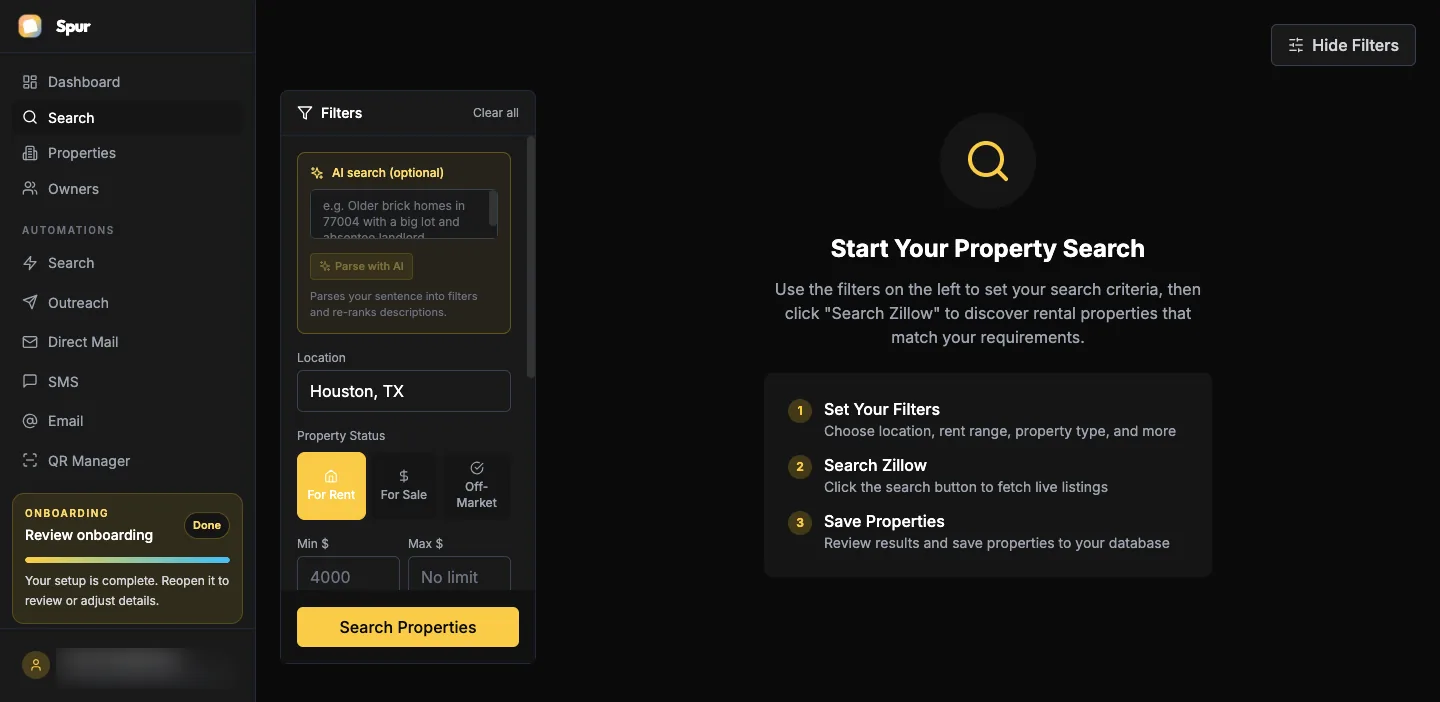
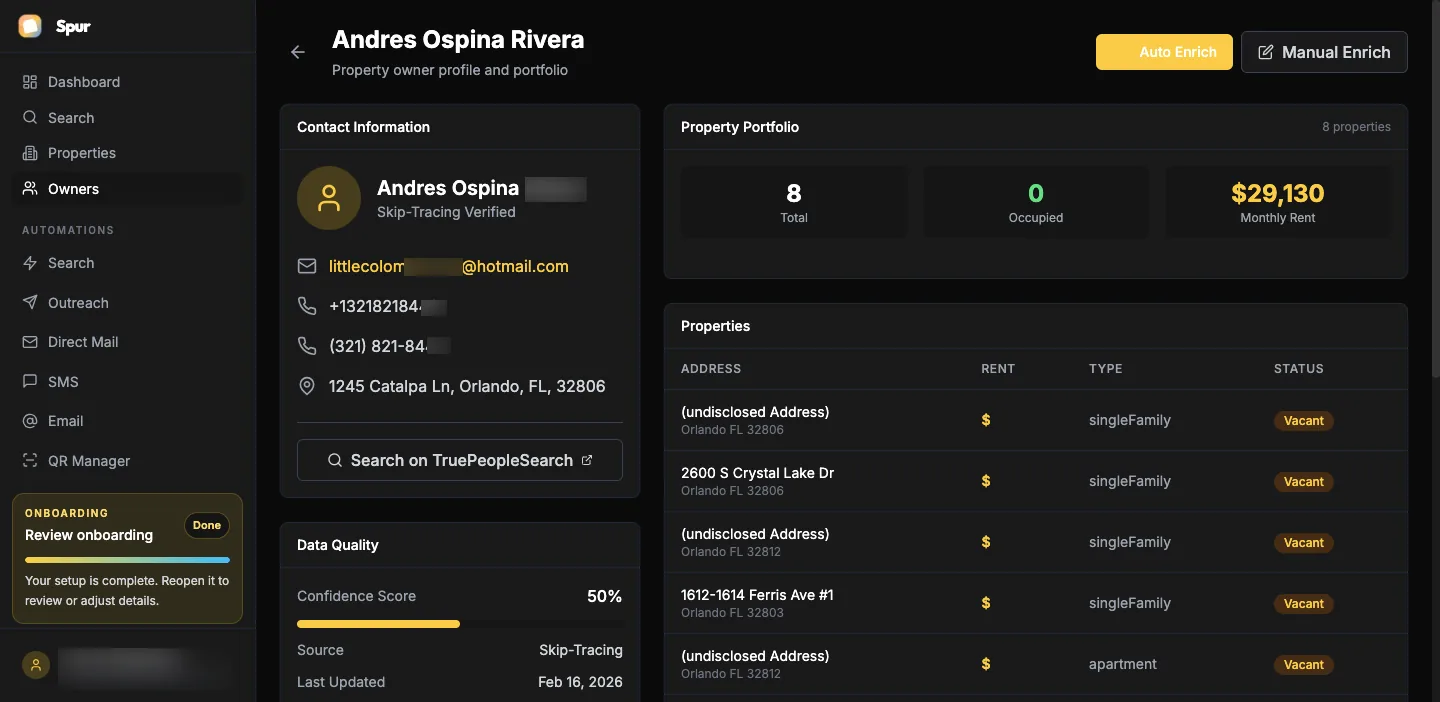
A charger and panel list
A sample Seattle list of older homes with garages, likely on smaller service. Names are partly masked.
Zip 98136Owner-occupiedBuilt pre-1985Value $400K+Garage on record
- Diane S.8824 Fauntleroy Way SWBuilt 1972 · 1-car garageLikely 100AOwned 19 yrs
- Hugo & Ann L.8838 Fauntleroy Way SWBuilt 1968 · 2-car garageLikely 100AGas heat
- Corinne W.4512 SW Director StBuilt 1958 · 1-car garageOlder panelOwned 25 yrs
- Reggie M.4526 SW Director StBuilt 1961 · detached garageLong runOwned 11 yrs
- Vera & Stan T.9103 45th Ave SWBuilt 1979 · 2-car garageLikely 125AOwned 16 yrs
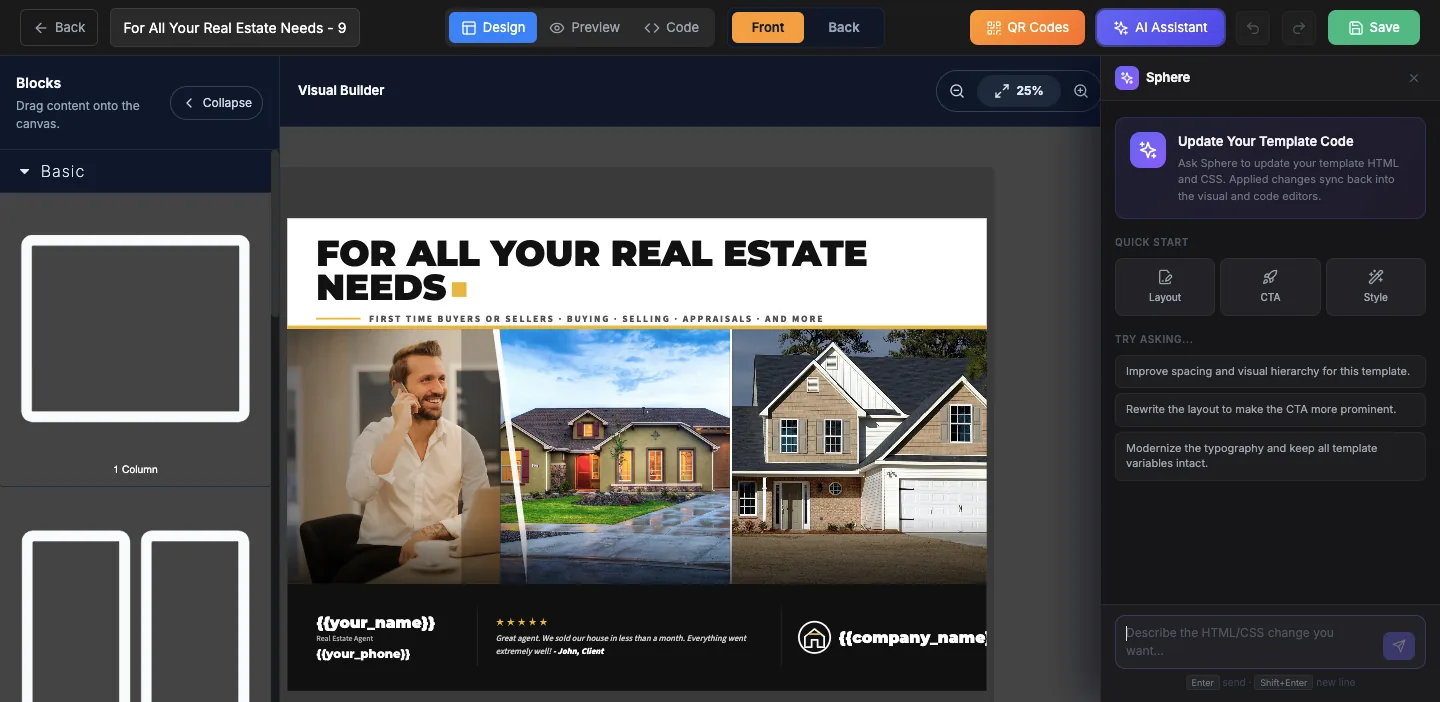
AI draft for Diane S. · 8824 Fauntleroy Way SW
Hi Diane,
Homes from the early 1970s around Fauntleroy often have smaller electrical service, and that's usually the first question when someone thinks about an EV charger. The good news is that a full panel upgrade isn't always needed.
Send us a photo of your panel, and we'll run a free load check. In many homes, a load management device lets a charger share capacity safely. If an upgrade really does make more sense, we'll explain why and give you one written price that covers the panel, the charger circuit, the permit, and the coordination with the utility.
Scan the code on this card to send your photo.
Jonah Weiss · Evergreen Electric & EV · (206) 555-0138
Sample data for illustration. Your results depend on your market and filters.
Playbook
How to sell charger and panel work honestly
The panel is where most EV charger jobs in older homes get complicated. A Level 2 charger is a large continuous load, and the National Electrical Code treats it that way, sizing the circuit at 125% of the charger's rating. That means a 40-amp charger needs a 50-amp circuit and a 48-amp charger needs a 60-amp circuit. On a home with 100-amp service and an electric range or a large AC unit, the numbers can get tight quickly.
Start with a load calculation, not a sales pitch. The code provides methods for calculating existing load, and in some cases allows you to use a year of actual demand data from the utility. Doing the math in writing, and showing it to the owner, immediately sets you apart. Many owners have been told flatly that they need a new panel, without seeing why, and that leaves them suspicious.
Explain the middle options. Automatic load management, sometimes called an energy management system, can reduce or pause charging when the rest of the house is drawing heavily. The NEC permits such systems to be used in sizing the load, subject to the applicable code edition and your local authority. A lower-amperage charger may also be plenty for an owner who drives moderately and charges overnight, since charging all night at even 24 amps adds a lot of range.
Know when to recommend an upgrade. Some panels really should be replaced. Federal Pacific and Zinsco panels have well-known safety concerns, and damaged or double-tapped panels shouldn't get more load. A home that also plans a heat pump, an induction range, or solar may benefit from going to 200-amp service now. Present that as a choice with costs and reasons, not as a requirement unless it really is.
Set expectations on time. Service upgrades usually involve a permit, an inspection, and coordination with the utility, which may have its own schedule. Tell owners about the time involved up front. Quote the charger and panel parts separately, so they can see what each costs, and consider offering a phased plan where it's safe. A simple chart of options can do much of the selling for you.
Target with care. Year built is a good proxy for service size, but homes get upgraded, and a 1960s home might already have 200 amps. Say 'may' in your copy, and let the panel photo confirm it. Mention that electrical work is performed by licensed electricians where required, and check your state's licensing rules. Separately, if the federal 30C credit comes up, tell owners that it ended for equipment placed in service after June 30, 2026.
7×+return on a year of Spur Team and mail from two bundled jobs
Panel work lifts the ticket well above a basic install.
- Spur Team: $49/mo billed annually = $588/yr
- 400 postcards on Team at $0.94 each = $376
- Two charger and panel jobs at ~$3,500 each = $7,000
Example math. Your scope and pricing will vary by home. Run your own numbers →
One tool, not four
Spur vs. the usual panel pitch
What you needThe usual waySpur
Older homes filtered by era and garageA broad electrician ad✓ Built in
Copy that covers more than one path'You need a new panel'✓ Built in
A QR code to your photo and load check formA site visit for every question✓ Built in
A second card for non-scannersOne shot, then nothing✓ Built in
Quoted owners tracked separatelyOld quotes in a folder✓ Built in
Panel Upgrades by the numbers
What the code and the numbers say
125%
EV charging is a continuous load, so a 40A charger needs a 50A circuit
Permitted
automatic load management may be used in load sizing, depending on code edition and local adoption
7×+
return on a year of Spur Team and mail from two bundled jobs
FAQ
EV charger panel questions
Do older homes always need a panel upgrade for an EV charger?
No. A load calculation may show enough capacity, and load management or a lower-amperage charger can often avoid an upgrade. Some panels should be replaced for other reasons.
What size circuit does a charger need?
The NEC treats EV charging as a continuous load at 125%. A 40-amp charger needs a 50-amp circuit, and a 48-amp charger needs a 60-amp circuit.
How do I find homes on smaller service?
Use year built as a proxy, then let the panel photo confirm it. Say 'may' in your copy, because many older homes have already been upgraded.
How long does a panel upgrade take?
The work itself is often quick, but permits, inspection, and utility coordination can add weeks. Set expectations up front.
How is this different from electrical panel upgrade leads?
The electrical panel page focuses on safety and aging panels. This page is about owners whose EV charger plans raise the panel question.
Keep exploring
Related plays and guides
Start in minutes. No card required.
Give owners a clear answer about their panel.
Build a list of older homes and mail a free load check offer today. Free to start, no card.
Find charger and panel leads — freeFree forever plan · No card · 20 property searches a month
Prefer a walkthrough? Book a demo