
They imagine an expensive service upgrade and start trading charging nights instead.
EV charger play · Two-EV households
Two-EV household charging leads, from garages ready for a second car.
A second EV changes the math: two cars, one panel, and an argument over who charges first. Spur finds your past charger customers and owners with large garages, then mails a clear offer on power sharing, load management, and what a second charger really takes.
Free forever plan · No card · 20 property searches a month
USPSFirst-Class
Sara Nakamura1845 Webster StPalo Alto, CA 94301Scan for a two-EV quote
Sara N. requested a two-EV quote · 4 min ago
AI-written for this owner · Mailed in 2 days
1 circuitcan feed two power-sharing chargers on many setups
3-cargarages make a strong starting filter
Your listsingle-charger customers are the warmest audience
The problem
Two-EV garages raise a question most installers don't answer.
Your name was on the first install, but the second charger goes to a new contractor.
Property data can't show a second EV, so the list takes some thought.
How it works
From list to mailbox in one workflow.
Five steps from one charger to a garage that handles two cars.
app.usespur.com
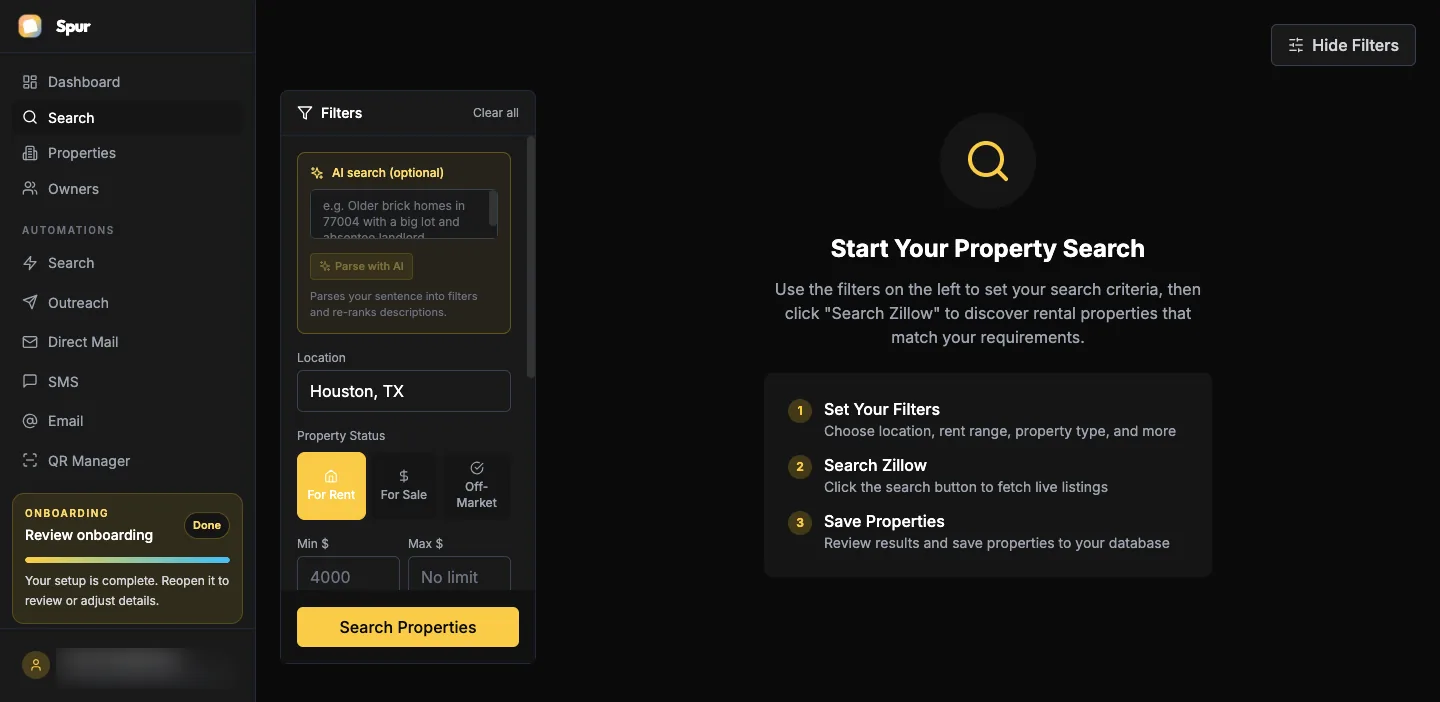
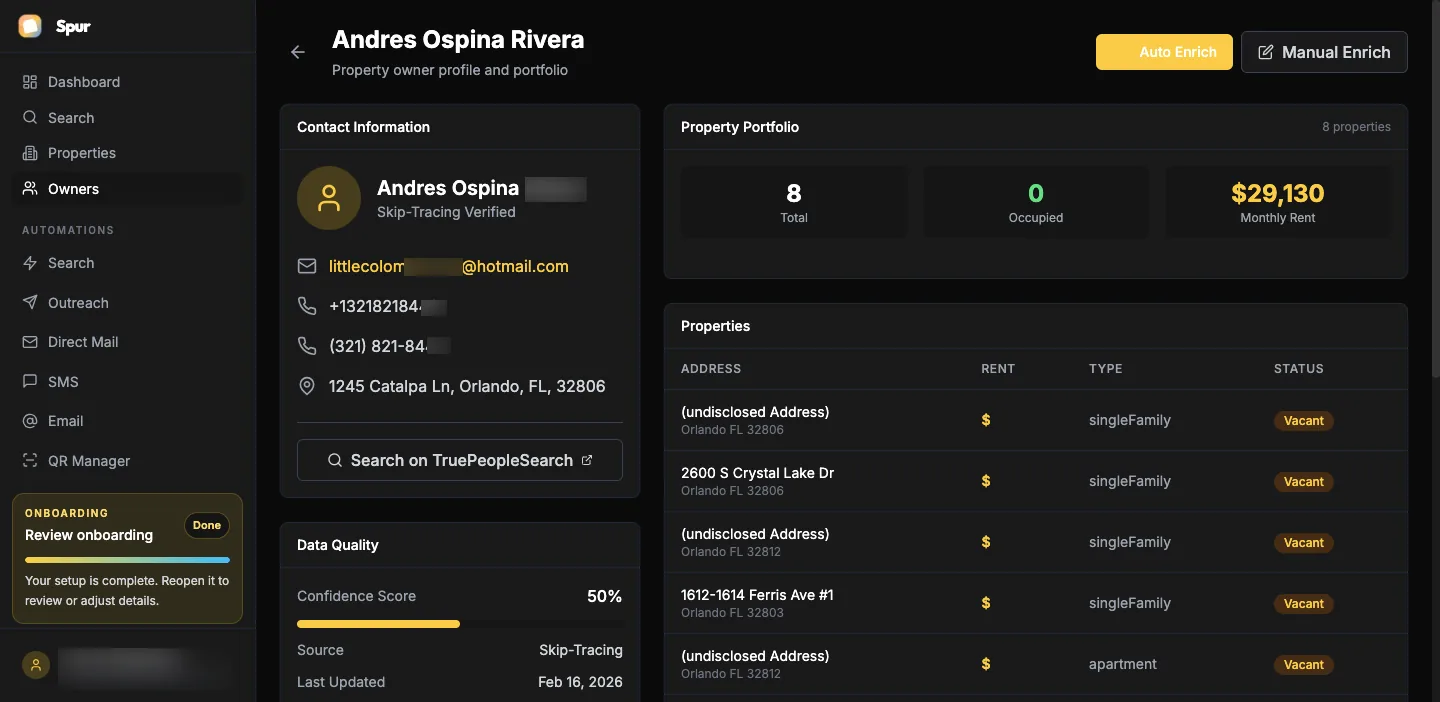
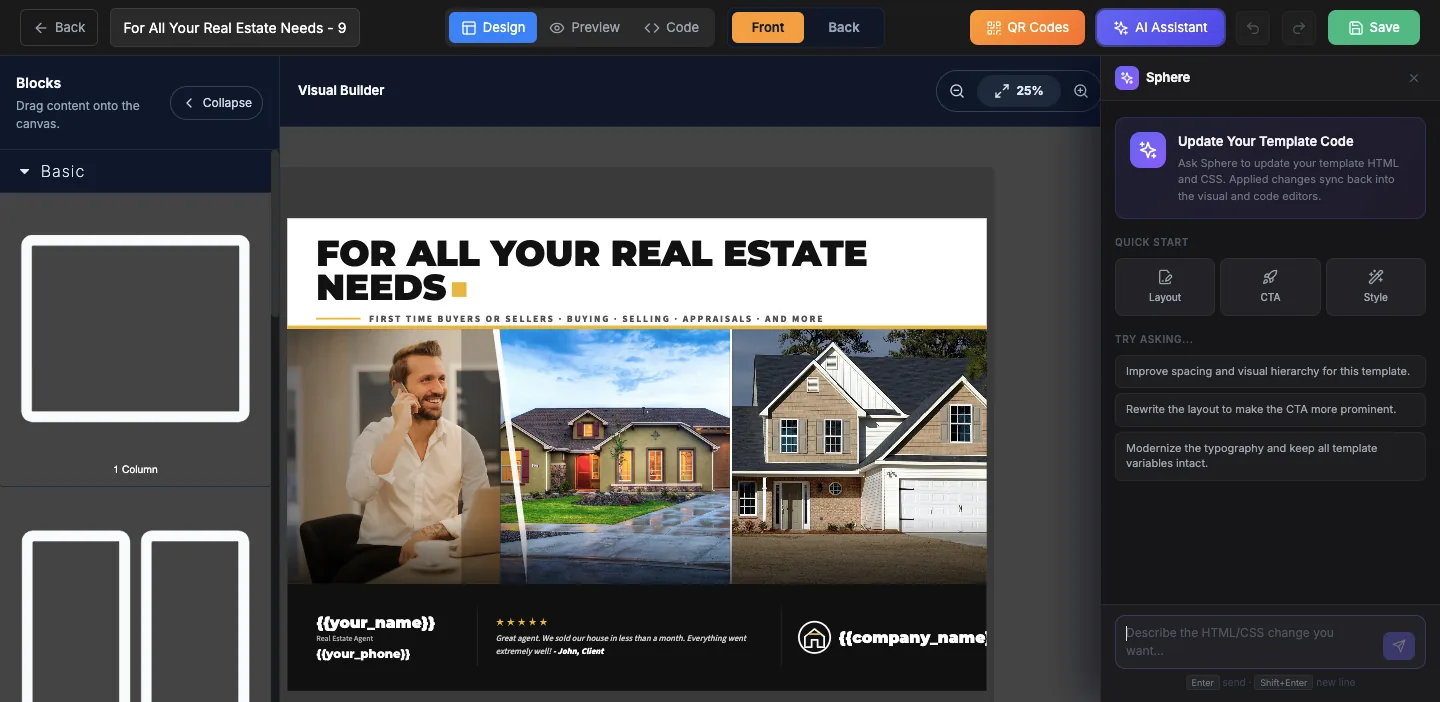
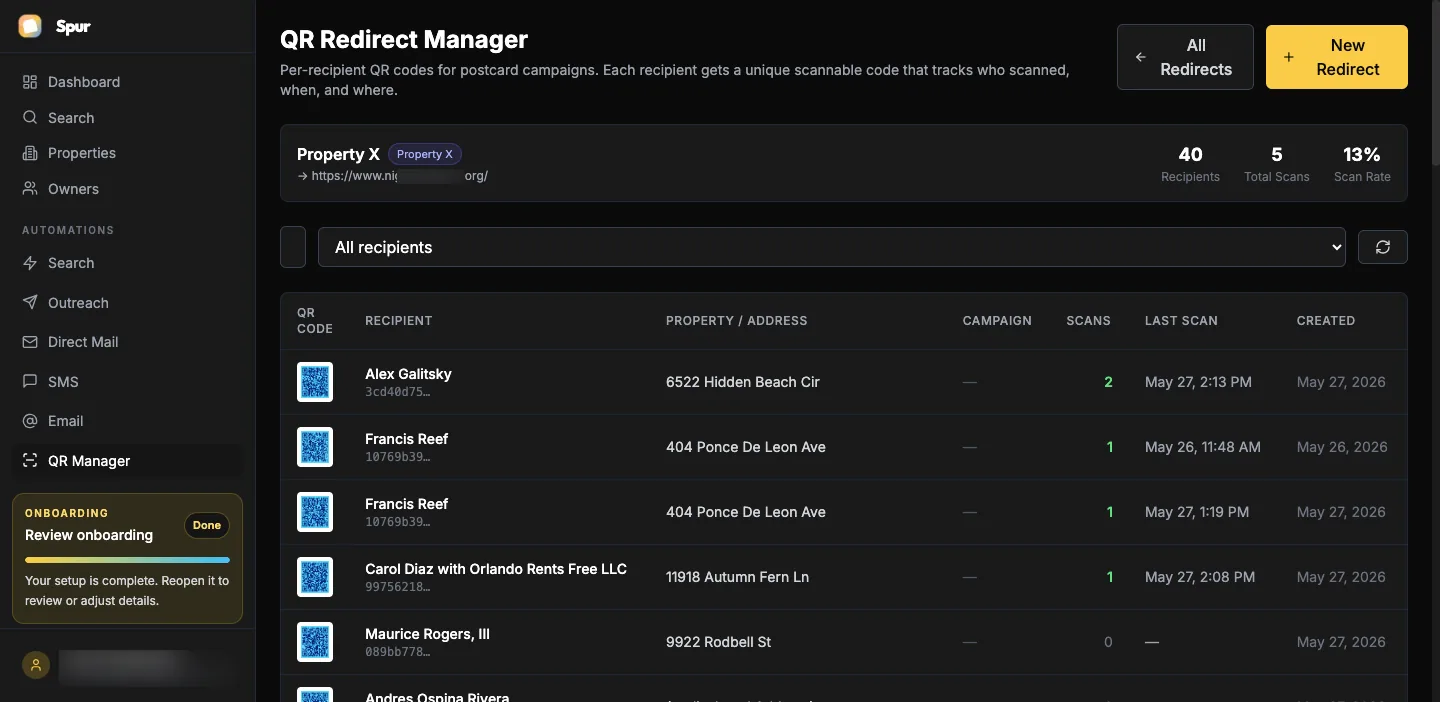
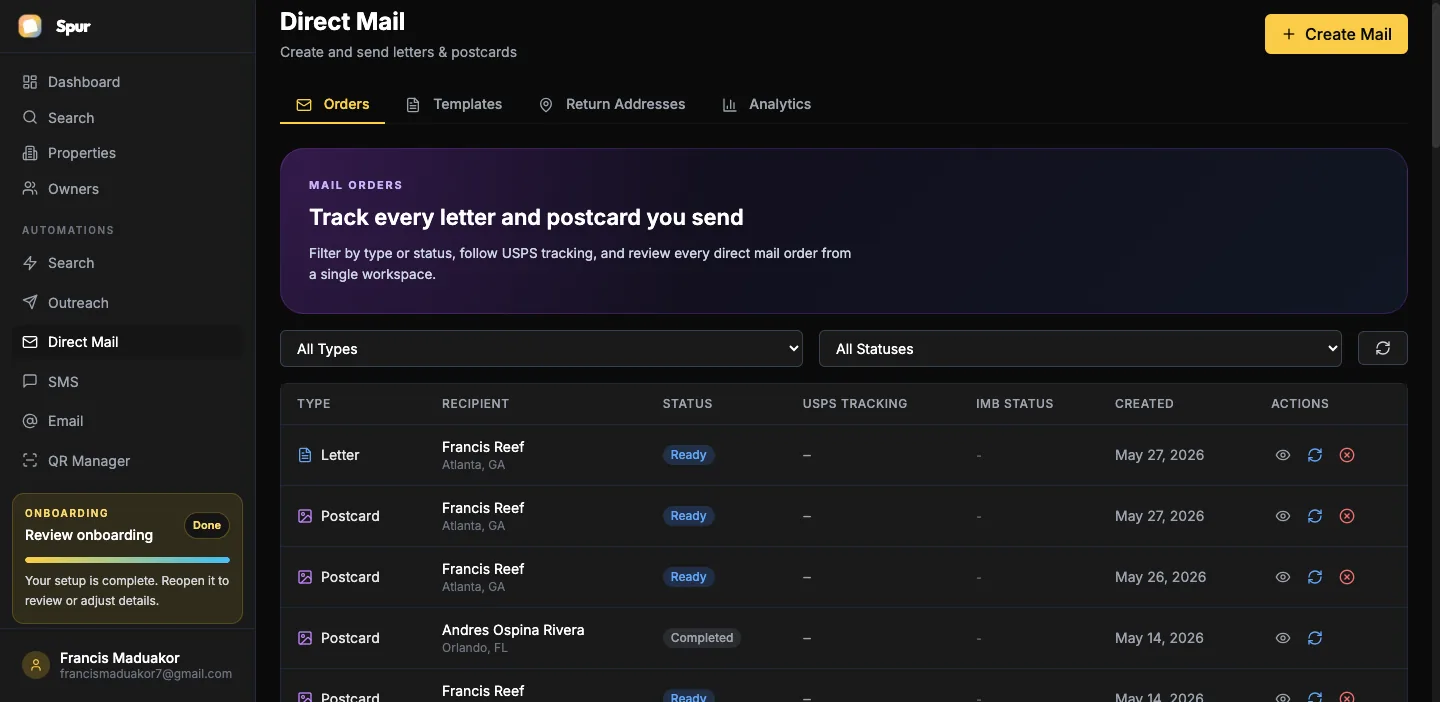
See it in Spur
A two-EV household list
A sample Palo Alto list combining past customers with homes that have large garages. Names are partly masked.
Your customer list3-car garagesOwner-occupiedValue $1M+Installed 2+ yrs ago
- Sara N.1845 Webster StCharger installed 2022Your list200A panel
- Chris & Maya F.1860 Webster StCharger installed 2023Your listSolar
- Avi R.735 Lincoln AveBuilt 2005 · 3-car garageValue $2M+Owned 8 yrs
- Helen & Jay W.750 Lincoln AveBuilt 2009 · 3-car garageValue $2M+Owned 11 yrs
- Ian C.2201 Cowper StCharger installed 2021Your listOlder panel
AI draft for Sara N. · 1845 Webster St
Hi Sara,
We installed your charger back in 2022. A lot of households we worked with around that time now have a second EV, and they all ask the same question: do we need a bigger panel?
Often you don't. Two power-sharing chargers can split a single circuit, and most households only need to replace what they drove that day. Since both cars sit overnight, they usually both end up ready by morning. If your driving really needs more, we'll show you the load calculation and the options.
Scan the code on this card and send us a photo of your panel and your current charger.
Alex Moreno · Peninsula EV Electric · (650) 555-0183
Sample data for illustration. Your results depend on your market and filters.
Playbook
How to help owners charge two EVs at home
Households that have one EV often go on to get another, and the second car raises real questions. Two fast chargers could call for up to 100 amps or more of circuit capacity, which is beyond what many homes can spare. Owners tend to assume that means a large service upgrade. Often, it doesn't, and explaining why is exactly the kind of expertise that wins this work.
Start with driving, not hardware. Typical daily driving is modest, and two cars parked overnight have many hours to recover what they used. A Level 2 charger at 32 or 40 amps can replace a typical day's miles in a fraction of a night. When you present the actual number of hours each car needs, sharing a circuit stops sounding like a compromise. Base your estimate on the owner's real mileage.
Explain the hardware options. Many smart chargers support power sharing, where two units on one circuit divide the available current between them. A single dual-port unit is another route. Automatic load management can also manage chargers against the whole house. Choices depend on the charger brands, the vehicles' connectors, and the local code, so check compatibility before you recommend a specific setup, as not every pair of units can share power.
Watch out for connector changes. Many newer EVs use the NACS (J3400) connector, while many homes have J1772 chargers, and a household may end up with one of each. Adapters exist, and the vehicle maker's guidance applies. A new charger with the right connector or a cable swap may be the best answer. Raising this before the owner runs into it shows you're paying attention to what's happening in the market.
Find the right audience. Your own single-charger customers are the best list, because you know their panel and their install, and they trust you. Past customers from at least a couple of years ago are a good starting point. Outside your list, 3-car garages in higher-value, EV-heavy zips are a reasonable proxy, but property data can't show vehicles. Word your copy with care, and say 'if you've got a second EV coming.'
Consider what else is coming. Owners adding a second EV may also be adding a heat pump, solar, or a battery. Time-of-use rates in many utility areas can also change when charging makes sense, and smart chargers can schedule around them. A short planning conversation, instead of a quick quote for a second wall box, tends to create a better system and a much better job for you.
3×+return on a year of Spur Team and mail from two second-charger jobs
Second chargers come from customers who already trust you.
- Spur Team: $49/mo billed annually = $588/yr
- 200 postcards on Team at $0.94 each = $188
- Two jobs at ~$1,400 each = $2,800, with little marketing cost
Example math. Your pricing and list size will vary. Run your own numbers →
One tool, not four
Spur vs. the usual second-charger approach
What you needThe usual waySpur
Past customers and large garages on one listWaiting for them to call✓ Built in
Copy about power sharing and overnight hours'Upgrade your panel'✓ Built in
A QR code to your photo formA visit just to start talking✓ Built in
Yearly mail to single-charger homesNo follow-up after the first job✓ Built in
Results tracked by list and home typeNo idea who responded✓ Built in
Two-EV Households by the numbers
What matters when two EVs share a garage
~25 mi/hr
of range from Level 2 charging, so overnight hours usually cover a day's driving
125%
EV charging is a continuous load, so circuits are sized at 125% of the charger's rating
3×+
return on a year of Spur Team and mail from two second-charger jobs
FAQ
Two-EV household questions
Does a two-EV home need a bigger panel?
Not always. Power-sharing chargers or load management let two cars share capacity, and overnight hours usually cover typical driving. A load calculation confirms it.
How do I find two-EV households?
Start with your past single-charger customers. Property data can't show vehicles, so 3-car garages in EV-heavy zips are only a proxy.
Can any two chargers share power?
No. Power sharing depends on the charger models. Check compatibility, and consider a dual-port unit or a whole-home load management device.
What about different connectors?
Many newer EVs use NACS (J3400), and many home chargers are J1772. Adapters or a cable change can solve this, so check the vehicle maker's guidance.
When should I mail past customers?
Once they're a couple of years past the first install, and yearly after that.
Keep exploring
Related plays and guides
Start in minutes. No card required.
Two EVs, one panel, and a clear plan from you.
Upload your past charger customers and mail a two-EV offer today. Free to start, no card.
Find two-EV households — freeFree forever plan · No card · 20 property searches a month
Prefer a walkthrough? Book a demo