
Demand piles up after a storm, then fades before you can get through the backlog.
Generator play · Direct mail program
Generator direct mail marketing that keeps selling between storms.
Generator sales spike after outages, then go quiet, and your crews feel both extremes. Spur runs a standing program, with pre-season lists, new buyers, and service customers each on their own schedule, and shows you the cost per install for each.
Free forever plan · No card · 20 property searches a month
USPSFirst-Class
Beth Sanderson480 Peachtree Battle Ave NWAtlanta, GA 30305Scan to book a free sizing
Beth S. scanned your pre-season card · 6 min ago
AI-written for this owner · Mailed in 2 days
4 listspre-season, new buyers, service customers, install neighbors
2 peaksspring and fall mailings land before outage seasons
Per installcost tracked by list and by season
The problem
Selling only after outages makes for a feast-or-famine business.
When demand is at its peak, you're one of several dealers, and buyers will wait for whoever answers.
Without tracking per list, it's hard to know what pays for itself.
How it works
From list to mailbox in one workflow.
Five steps from storm-chasing to a steady install schedule.
app.usespur.com
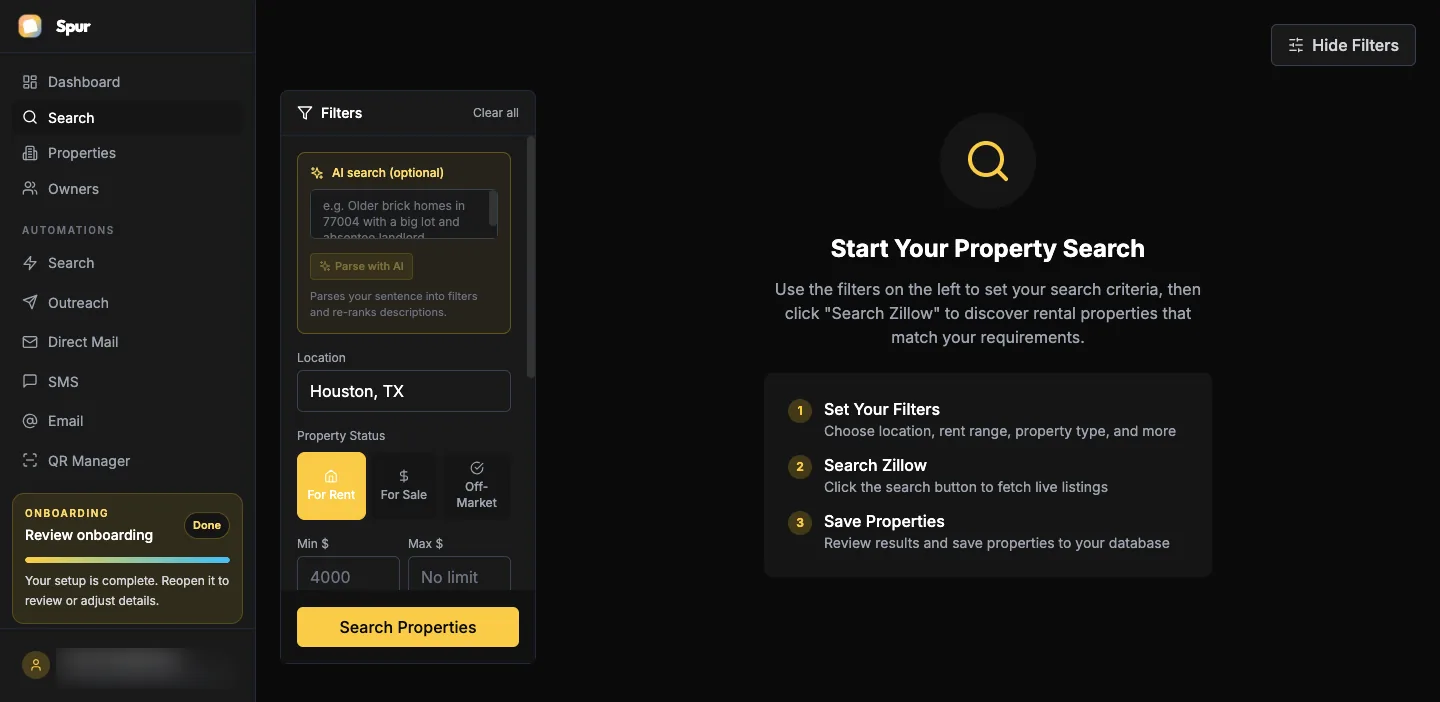
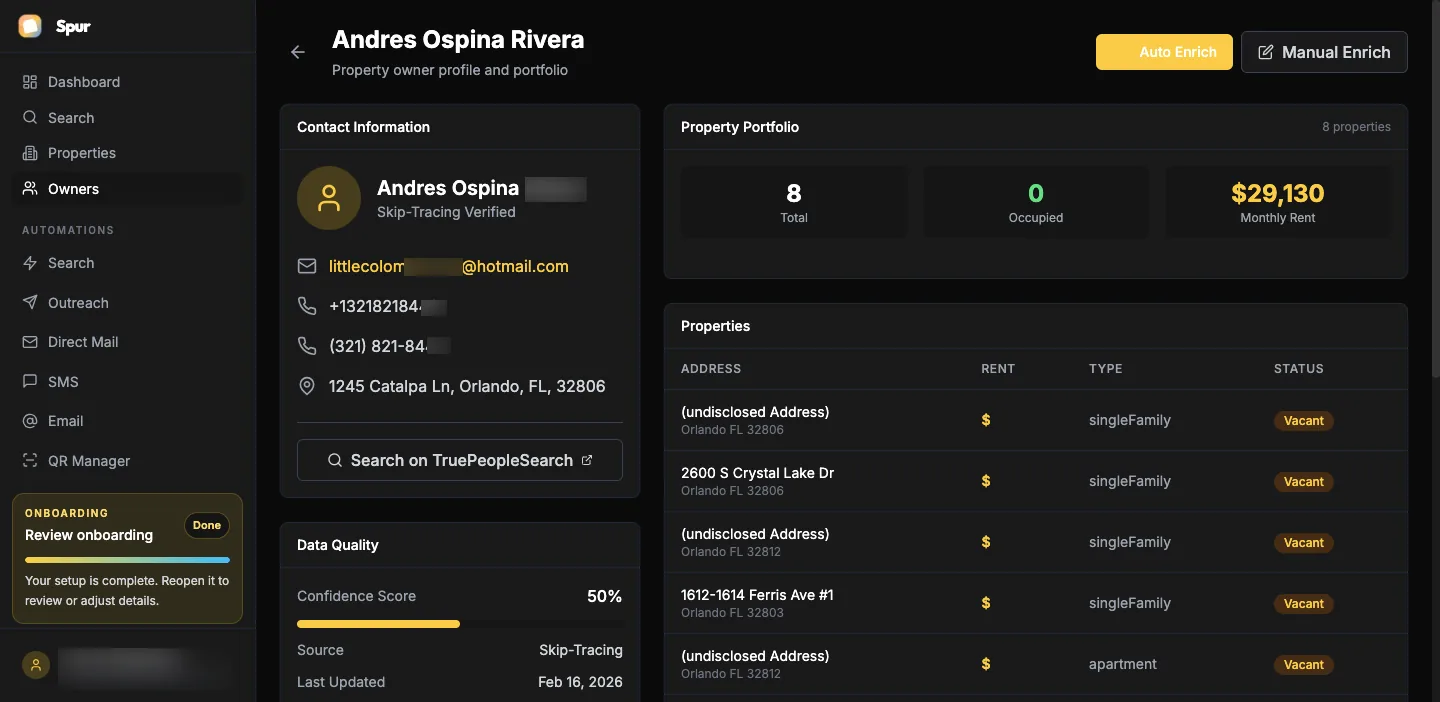
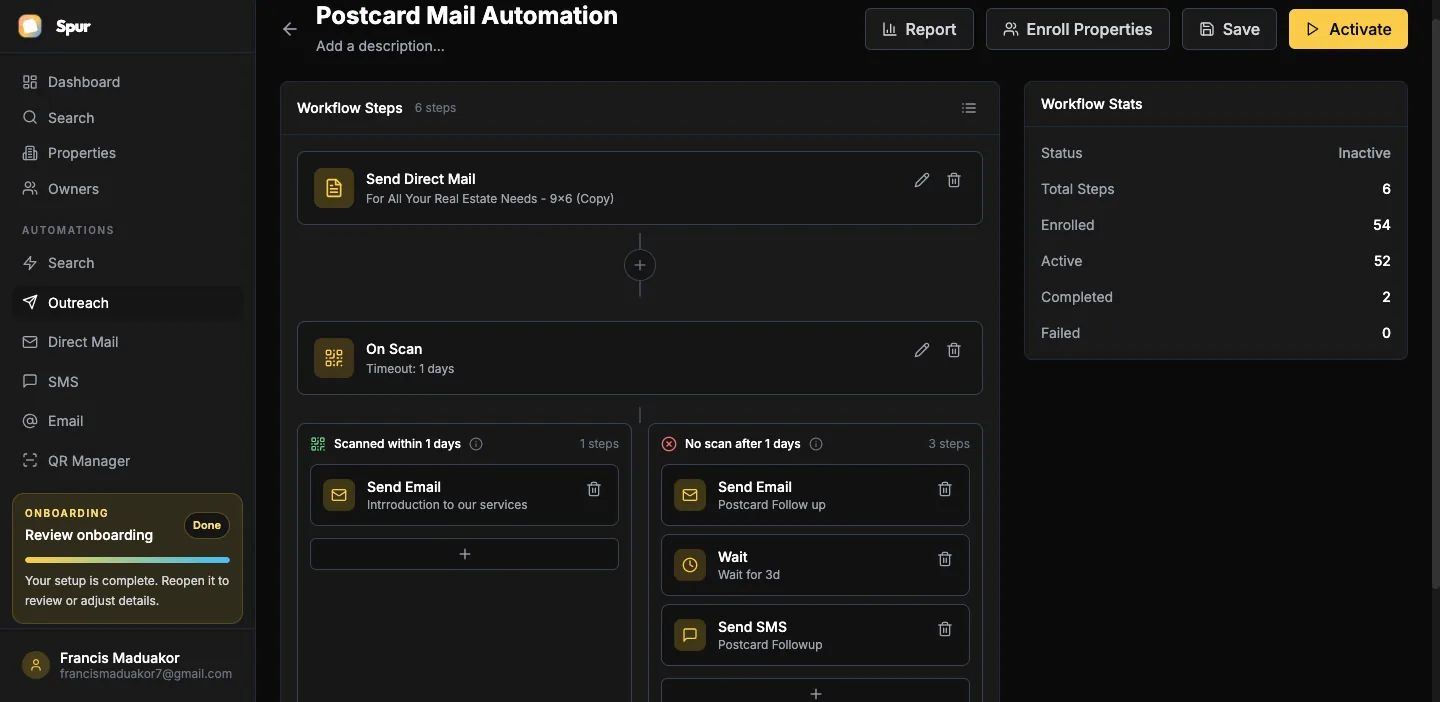
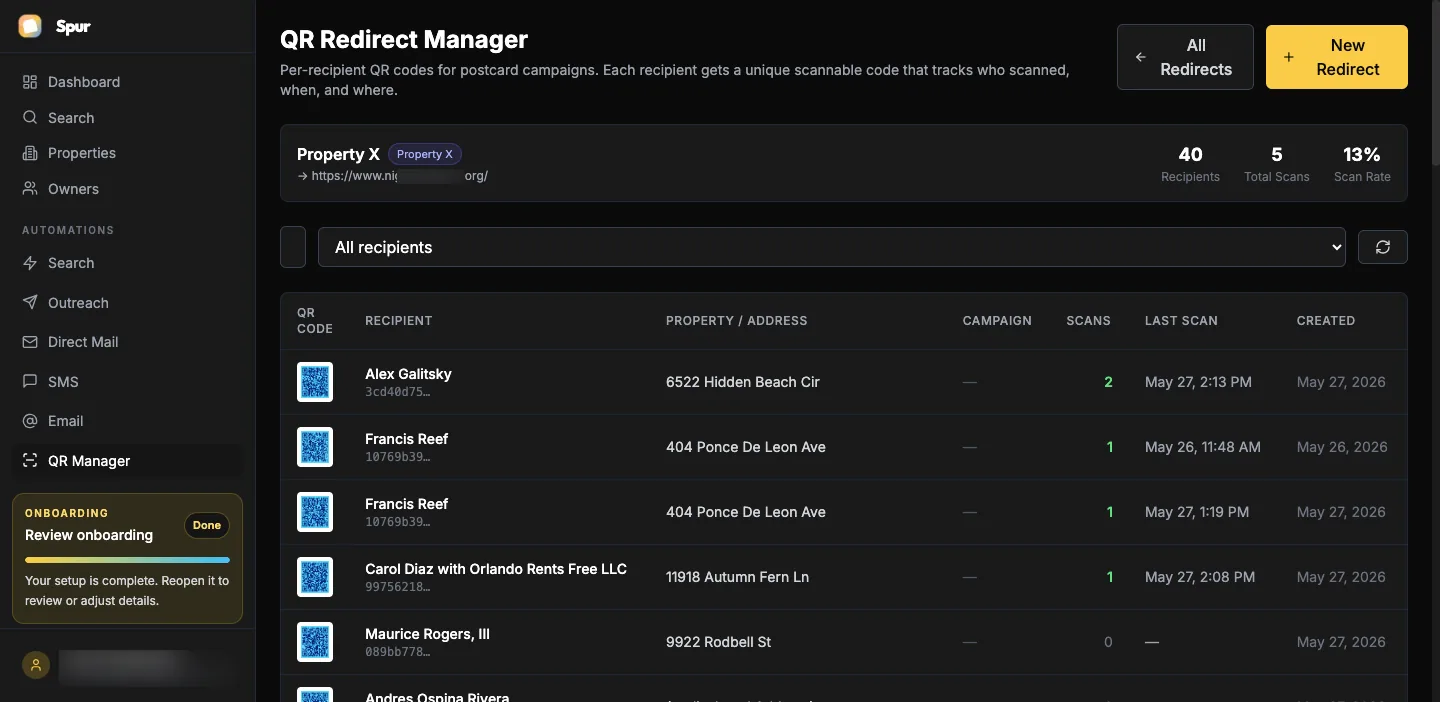
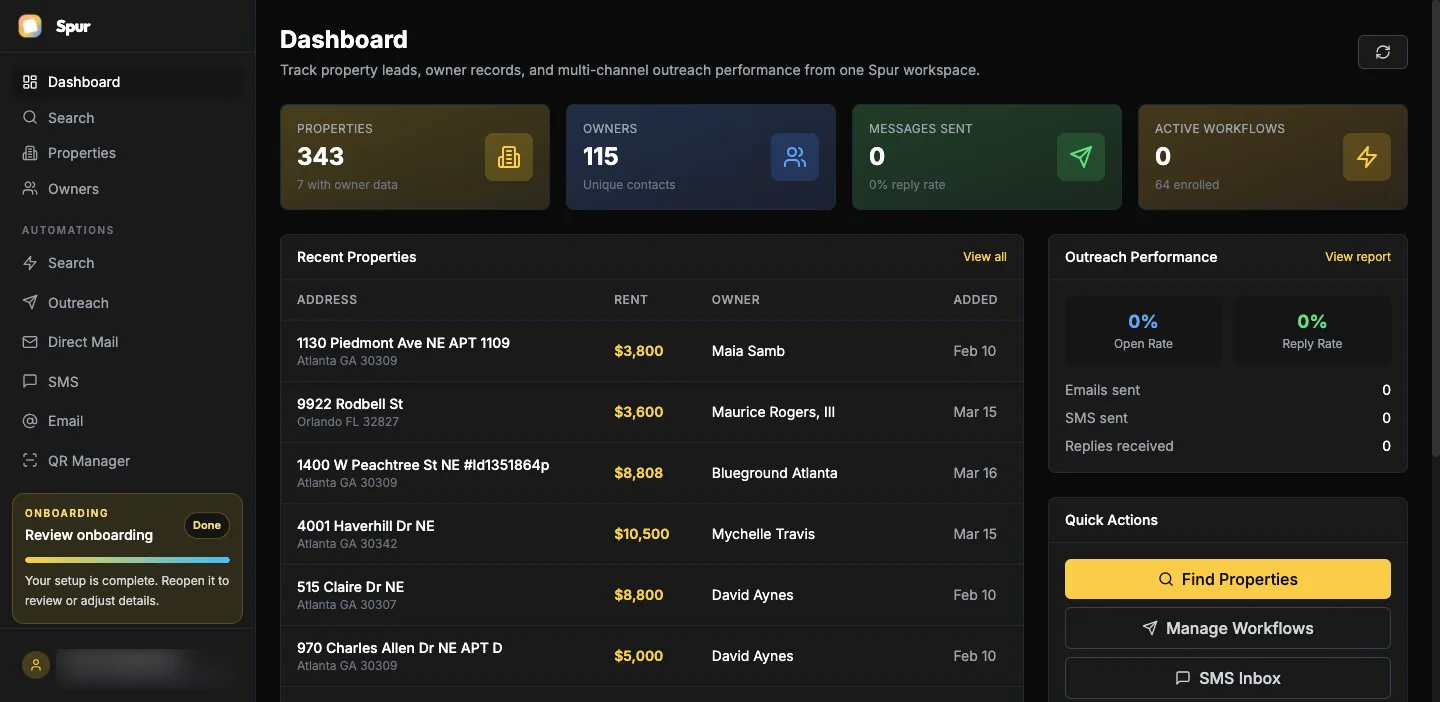
See it in Spur
A generator mail calendar
A sample Atlanta-area program across one year. Counts are illustrative.
4 standing listsOwner-occupiedValue $400K+Monthly new-buyer refreshService list upload
- Spring storm prep1,000 homesMail Mar 15Tree-lined zips
- Fall ice prep1,200 homesMail Sept 1Overhead lines
- New buyers60 homes a monthMail monthlySold last 60 days
- Service customers420 unitsMail each anniversaryYour list
- Install neighbors40 homes per installMail weeklyRadius 0.25 mi
AI draft for Beth S. · 480 Peachtree Battle Ave NW
Hi Beth,
When ice comes through Atlanta, the tree-lined streets are usually the last to get their power back. A home on Peachtree Battle can wait days for a repair crew, and nothing about that gets easier with time.
We have install dates open this fall, well before the first ice storm. We'll come out at no charge, size a system for your home, and give you one written price that includes the permit, the gas line, and the transfer switch.
Scan the code on this card to pick a time.
Daniel Hooper · Piedmont Home Power · (404) 555-0171
Sample data for illustration. Your results depend on your market and filters.
Playbook
How to build a generator mail program
Generator demand follows the weather, but your business doesn't have to. Spikes after a big event are real, and they're also the most competitive and least profitable moments to sell. Backlogs stretch, crews work overtime, and owners who can't get a date wander off. A standing mail program puts sizings on your calendar in the months leading up to each season, when you have time to do the work properly.
Run separate lists. Pre-season homes are your core list: owner-occupied, higher-value homes in areas with repeated outages. New buyers of those homes are another, since they often don't yet know the neighborhood's history and are making decisions about the house. Service customers are the third and usually the most profitable. Homes around each install are the fourth, as neighbors share the same outages and can see the unit.
Time it to your region. In hurricane regions, spring mail makes sense, with installation ahead of the June 1 start of the Atlantic season. In ice and winter storm regions, mail in late summer. In wildfire and shutoff regions, such as parts of California, plan around your local fire season. If your market has two risk periods, run two waves, and tailor the copy to each one.
Use outage data as context, not a scare tactic. The Energy Information Administration reported that U.S. customers averaged about 11 hours of interruptions in 2024, with nearly nine of those from major events. Yet averages hide large differences: customers in some states went through far more. Use local examples and be factual. Owners respond to something they lived through much more than to a national statistic.
Measure by the install, not the scan. A sizing appointment is an important milestone, but the number that determines whether a list stays is cost per signed install. With a sale in the five figures, even a low response rate can be very profitable. Don't cut a list because of a slow first mailing. Generator decisions take time, and many owners respond to the second or third card, or after the next outage.
Plan capacity honestly. Permits, gas meter upgrades, and utility coordination can add weeks to each install. Stagger your mail so your sizing appointments match your install schedule, and give realistic dates. Owners accept a wait they know about far more easily than a surprise. Keep your existing service customers in view during the rush, as they're the ones who will refer you.
7×return on the full program from two extra installs at $12,000 each
Two extra installs a year more than cover the program.
- Spur Team: $49/mo billed annually = $588/yr
- 3,200 postcards on Team at $0.94 each = $3,008
- Two extra installs at ~$12,000 each = $24,000
Example math. Response varies by region and season. Run your own numbers →
One tool, not four
Spur vs. selling only after storms
What you needThe usual waySpur
Mail lands before the seasonAds run after the storm✓ Built in
Four lists on standing schedulesOne big push a year✓ Built in
Mail paced to your install datesMonths-long waitlists✓ Built in
Cost per install by listA guess about what worked✓ Built in
Service customers stay in touchWarranty cards in a drawer✓ Built in
Direct Mail by the numbers
What the outage record shows
~9 hrs
of 2024's interruptions came from major events, up from a typical ~4 hours a year
~2 hrs
a year is the typical level of interruptions outside of major events
7×
return on the full program from two extra installs at $12,000 each
FAQ
Generator direct mail questions
How often should generator dealers mail?
Plan one or two pre-season waves, a monthly new-buyer drop, weekly neighbor mail around installs, and an annual service reminder.
What's the best time of year to mail?
Spring in hurricane areas, late summer in ice and winter storm areas, and ahead of fire season in shutoff areas.
Should I also mail right after a big storm?
It can work, but be respectful and honest about your wait times. See the post-outage play for how to do it well.
How do I measure it?
Track cost per signed install by list. Each QR code ties scans and sizings to the card and list that produced them.
How much does a program cost?
At $0.94 a card on Team, 3,200 cards a year is about $3,008, plus $588 for Spur Team.
Keep exploring
Related plays and guides
Start in minutes. No card required.
Sell generators in the calm, and install them before the storm.
Set your lists and dates once, and let Spur run the mail program from there. Free to start.
Build my generator mail program — freeFree forever plan · No card · 20 property searches a month
Prefer a walkthrough? Book a demo