
Search costs the most in peak weeks, when every competitor bids on the same worried searches.
Mold remediation play · Seasonal campaigns
Mold campaigns timed to the humid season, the spring thaw, and the fall switch.
Moisture problems follow the calendar. Spur lets you set a card for each season, a humidity warning in early summer, a thaw check in spring, and a closed-up house reminder in fall, mails each ahead of the weather, and alerts you as owners scan.
Free forever plan · No card · 20 property searches a month
USPSFirst-Class
Gwen Tillman415 Ashley AveCharleston, SC 29403Scan to book a pre-summer moisture check
Gwen T. scanned your pre-summer card · 3 min ago
AI-written for this owner · Mailed in 2 days
3 seasonshumid summer, spring thaw, and the fall closed-up house
2–3 weeksbefore the season turns is when cards should land
Auto-scheduledset once and Spur mails every year
The problem
Mold demand rides the weather, and most marketing shows up after the smell.
A single piece can't cover humid summers, spring thaws, and winter condensation, the three seasons moisture builds.
An owner who saved your number in spring has forgotten it by summer without a gentle reminder.
How it works
From list to mailbox in one workflow.
Five steps from reactive ads to a calendar that runs itself.
app.usespur.com
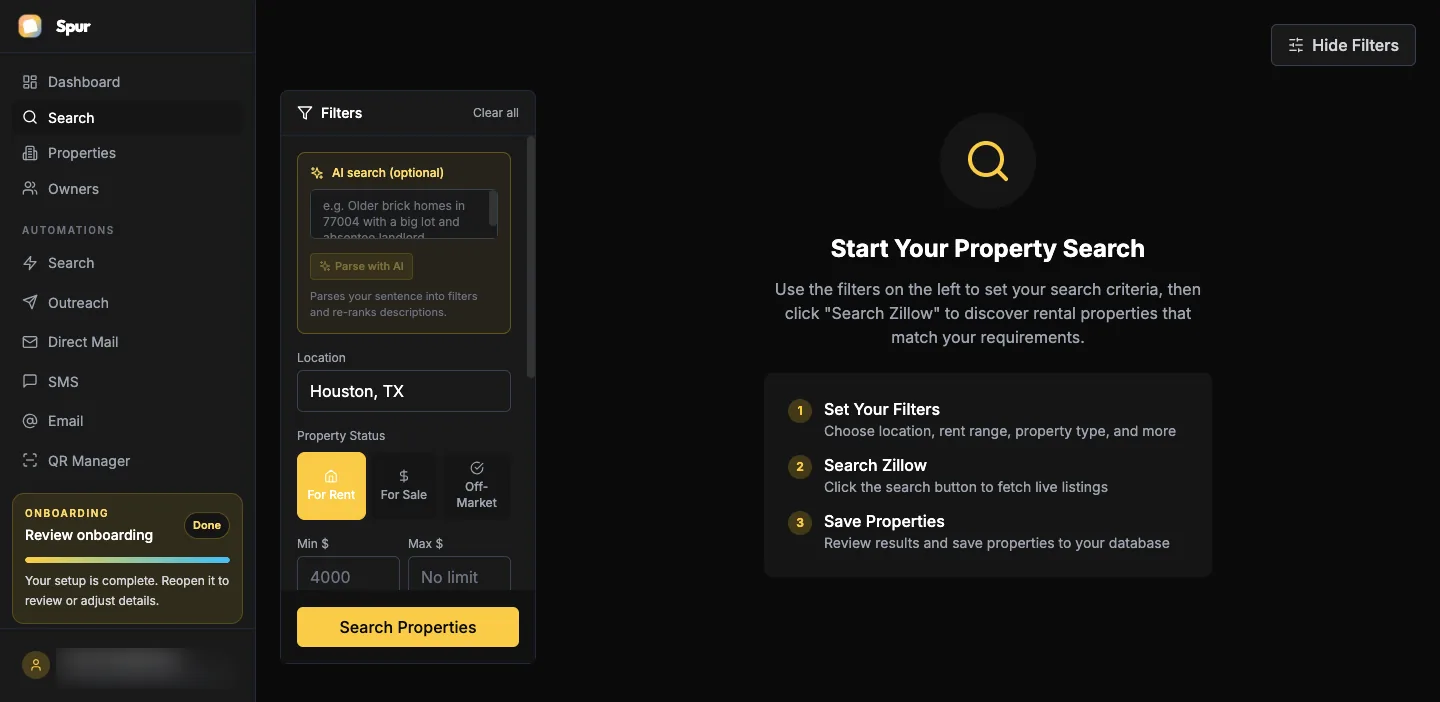
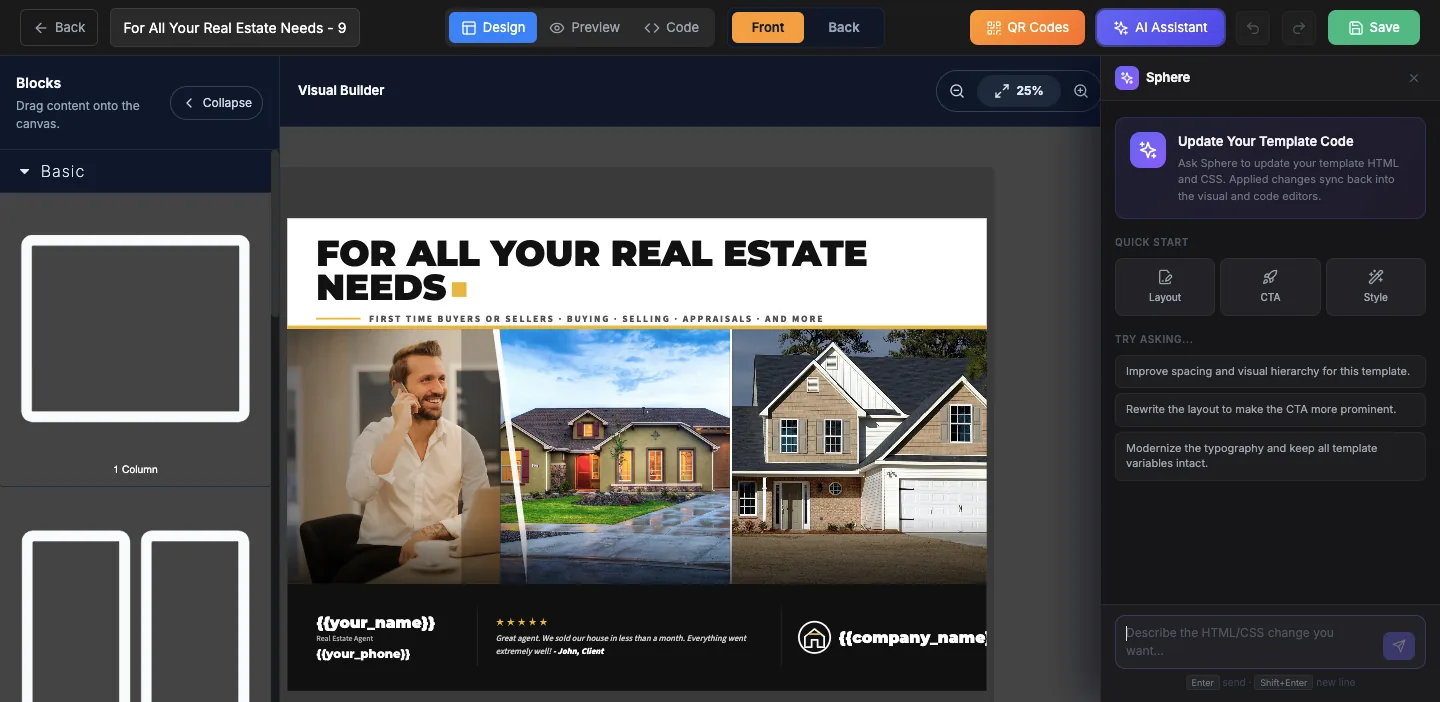
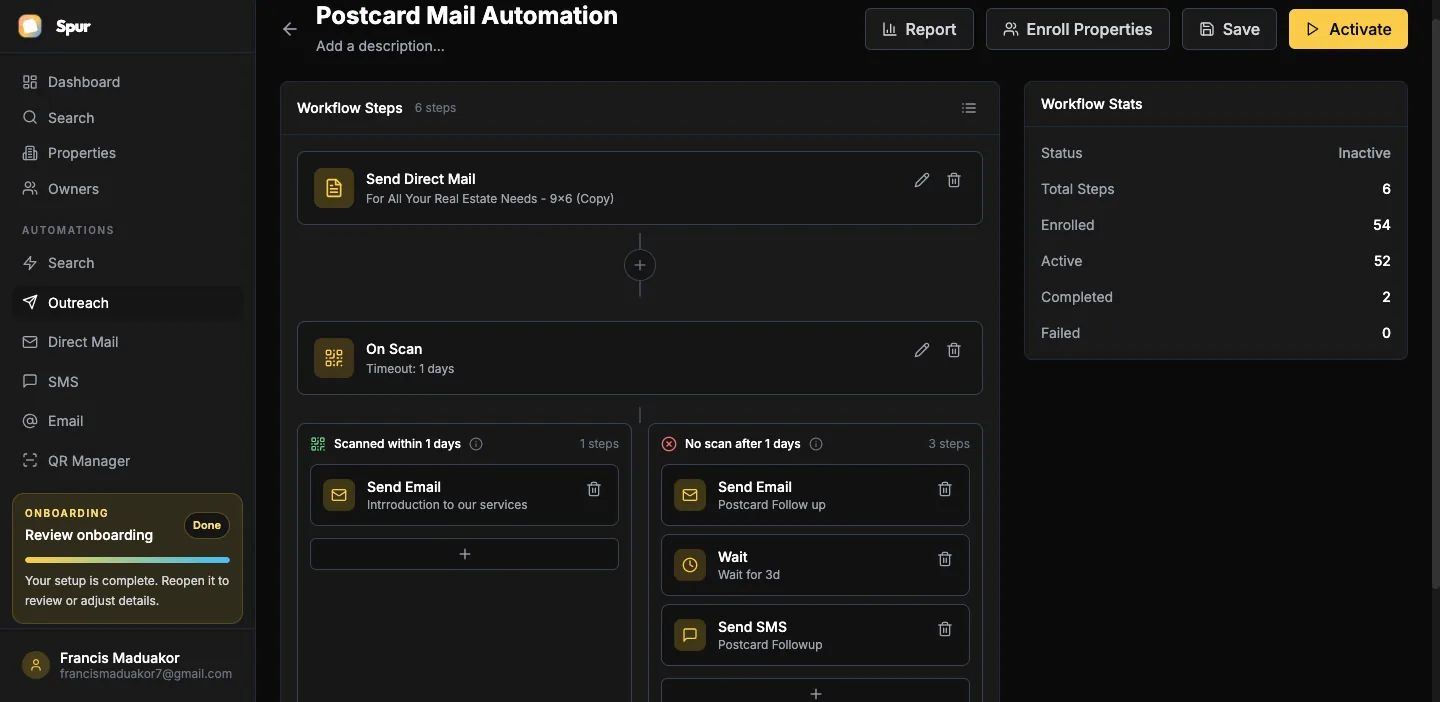
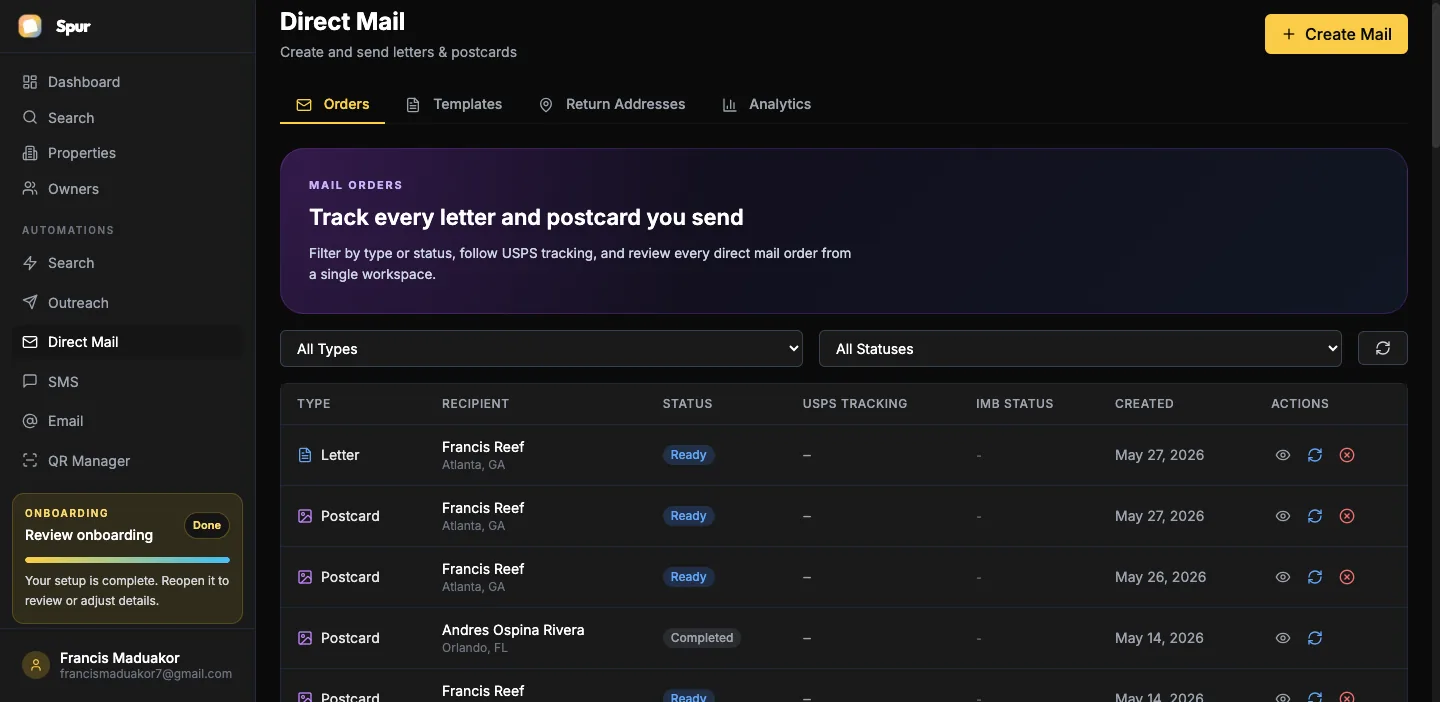
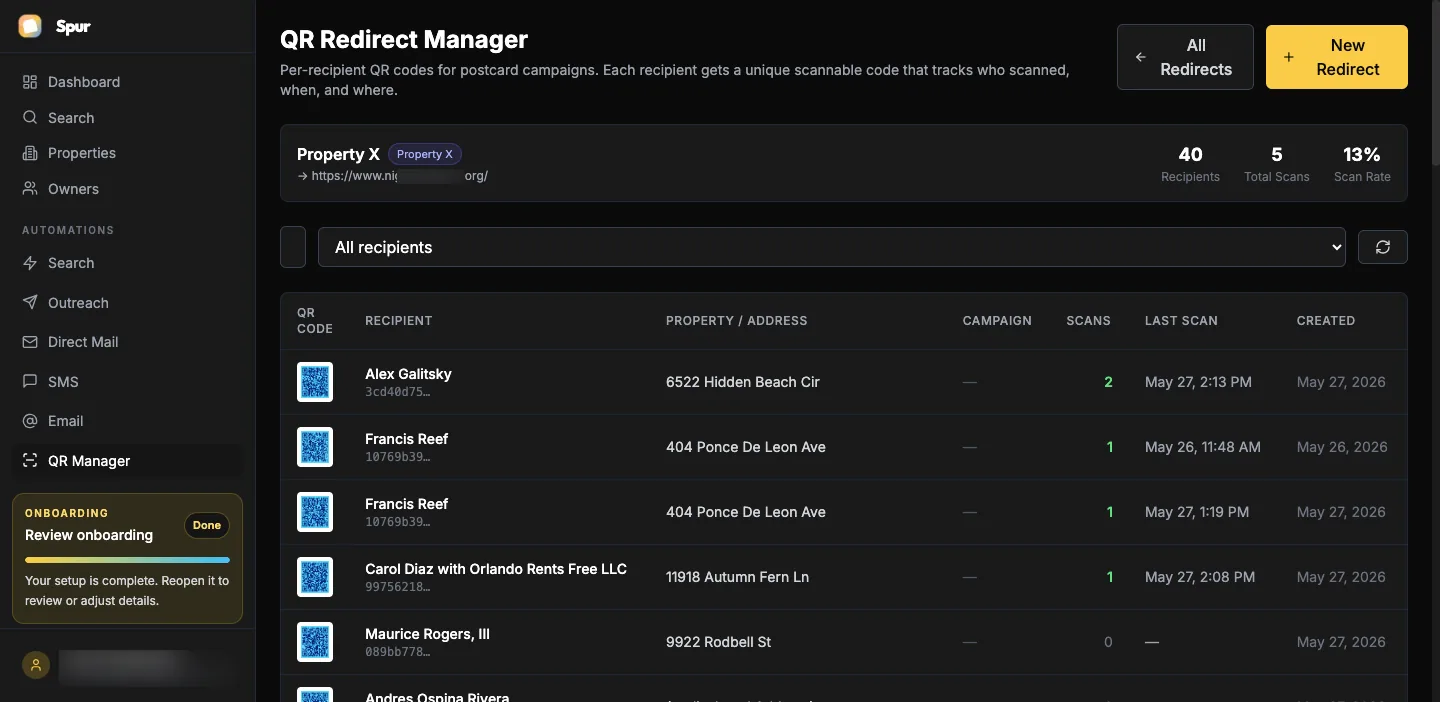
See it in Spur
A pre-summer list in Spur
Sample Charleston homes with crawlspaces or basements, built 1950–1995, pulled for the humid-season wave. Names are partly masked.
Zip 29403Built 1950–1995Owner-occupiedCrawlspace or basementMail date: May 1
- Gwen T.415 Ashley AveBuilt 1962 · crawlspaceScanned last fall
- Marcus & Dee L.88 Rutledge AveBuilt 1958 · crawlspaceOwned 22 yrs
- Ida F.301 Gordon StBuilt 1971 · crawlspaceOwner 72
- Sam & Lyn K.29 Moultrie StBuilt 1985 · crawlspaceOwned 8 yrs
- Clay R.520 Hagood AveBuilt 1952 · crawlspaceOwned 30 yrs
AI draft for Gwen T. · 415 Ashley Ave
Hi Gwen,
You saved our number last fall, so I wanted to check in as the humid months begin. Crawlspaces in Charleston take on moisture quickly once summer starts.
A few simple things help: make sure downspouts drain away from the house, keep crawlspace vents clear, and run a dehumidifier in closed-up rooms.
If you'd like a reading before July, scan the code and I'll send someone.
Tessa Boyd · Lowcountry Mold Experts · (843) 555-0124
Sample data for illustration. Your results depend on your market and filters.
Playbook
How to time mold marketing to the weather
Mold needs moisture, and moisture follows the season. In the humid South and along the coasts, early summer pushes damp air into crawlspaces and closets. In colder markets, the spring thaw sends meltwater into basements, and winter's closed windows trap condensation. Every market has two or three windows when moisture problems appear.
The pre-season card works best. Two to three weeks before the humid period, owners are receptive to practical advice, such as drainage, venting, and a dehumidifier. A card that arrives in the middle of the problem competes with every other company, while one that arrives ahead feels like helpful service.
Each season needs its own message. A summer card talks about humidity and crawlspace vents. A spring card talks about thaw, grading, and sump pumps. A fall card talks about closing up the house and heating season condensation. Reusing one card all year misses the worry on the owner's mind.
Keep the call to action steady. A QR to book a moisture reading, repeated each season, builds recall. After three or four mailings, an owner knows your name, and the next time they smell something musty, you are the first call without any extra spend.
Plan capacity before you mail. If a pre-summer card will draw a wave of bookings, make sure your techs, equipment, and scheduling are ready. Marketing that fills a calendar you cannot staff damages your reputation faster than silence.
9×+return on a year of Spur Team from three seasonal campaigns
Three seasonal waves turn spikes into a steady pipeline.
- Spur Team: $49/mo billed annually = $588/yr
- 1,500 cards across three seasons at $0.94 each = $1,410
- 5 remediation jobs (~$3,500 each) ≈ $17,500
Example math. Job size and close rate vary by market. Run your own numbers →
One tool, not four
Spur vs. the usual reactive calendar
What you needThe usual waySpur
Cards timed ahead of each seasonAds that spike after the smell✓ Built in
A different card for each seasonOne message all year✓ Built in
Scanners re-mailed next seasonLost when the season ends✓ Built in
Mailed automatically every yearRemember to reorder✓ Built in
Results tracked by seasonNo view of what worked✓ Built in
Seasonal Campaigns by the numbers
Why seasonal timing works for moisture
30–50%
is the indoor relative humidity range the EPA recommends to limit mold growth
60%
relative humidity is the level above which the EPA says mold becomes more likely
9×+
return on a year of Spur Team from three seasonal campaigns
FAQ
Seasonal mold marketing questions
When is the best time to market mold remediation?
Two to three weeks before each season's moisture peak: late spring in humid climates, early spring for thaw, and early fall before homes close up.
Should I send the same card every season?
No. Each season has its own worry. Change the message and keep the same QR booking link so recall builds.
Can Spur schedule the whole year?
Yes. Set the dates once and Spur mails each wave automatically every year.
What if my market has no clear seasons?
Use quarterly waves tied to local rain or humidity patterns, and track which quarter books the most assessments.
Keep exploring
Related plays and guides
Start in minutes. No card required.
Be saved in their phone before the season turns.
Set your humid-season, thaw, and fall campaigns once, and Spur mails each on time, every year. Free to start.
Schedule my mold campaigns — freeFree forever plan · No card · 20 property searches a month
Prefer a walkthrough? Book a demo