
Paid search costs the most on the worst days, and every competitor bids on the same panicked searches.
Water damage restoration play · Seasonal campaigns
Restoration campaigns timed to the freeze, the spring storm, and the hurricane season.
Water damage follows the calendar. Spur lets you set a card for each season, a fall freeze warning, a spring storm note, and a summer preparedness reminder, mails each ahead of the weather, and alerts you as owners scan, so your number is saved before the emergency.
Free forever plan · No card · 20 property searches a month
USPSFirst-Class
Lena Whitfield1130 Stoneybrook DrDayton, OH 45459Scan to save our number and get the storm checklist
Lena W. scanned your storm-season card · 2 min ago
AI-written for this owner · Mailed in 2 days
3 seasonsfreeze, spring storms, and summer heat or hurricane season
1–2 weeksbefore the weather event is when cards should land
Auto-scheduledset it once and Spur mails every year
The problem
Restoration demand spikes with the weather, and most marketing arrives after it.
A single annual piece can't cover freezes, spring storms, and summer events, the three seasons water shows up.
An owner who saved your number in the fall is forgotten by spring without a gentle follow-up.
How it works
From list to mailbox in one workflow.
Five steps from chasing disasters to being ready for them.
app.usespur.com
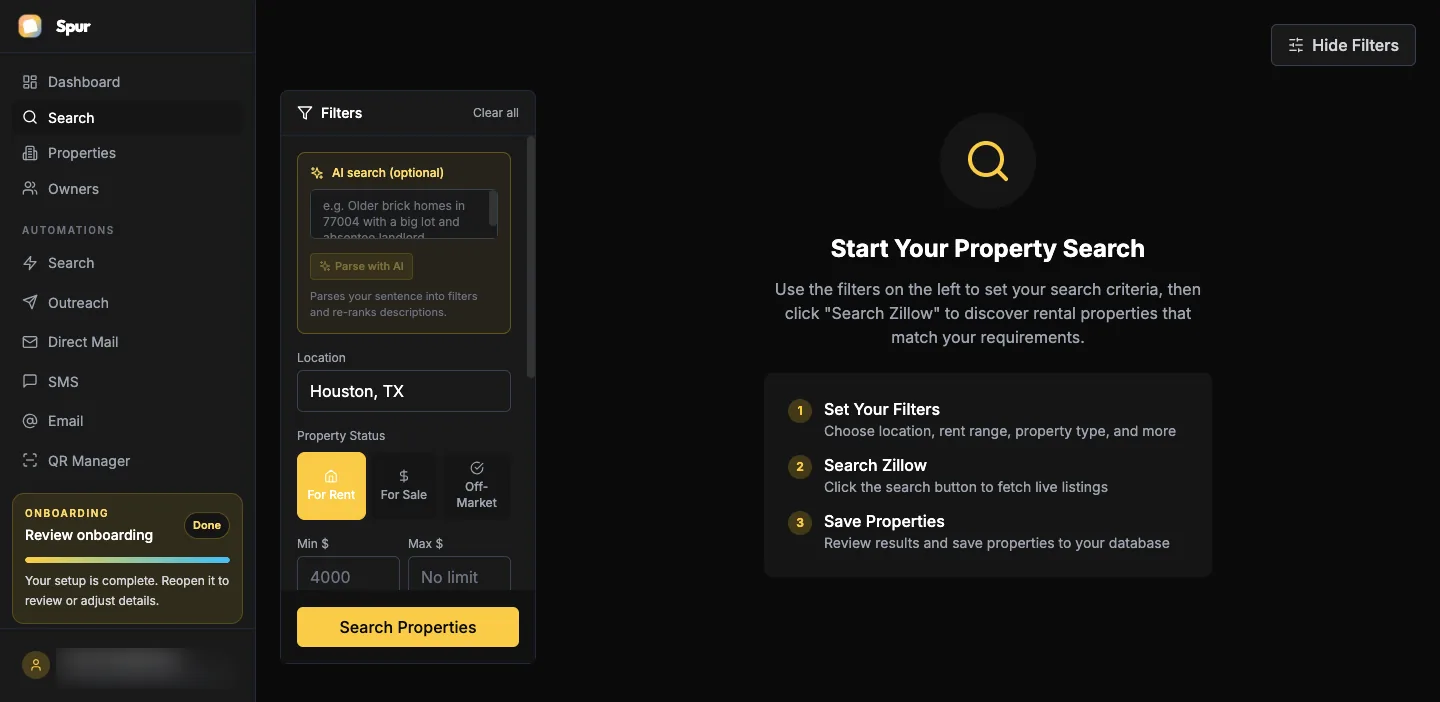
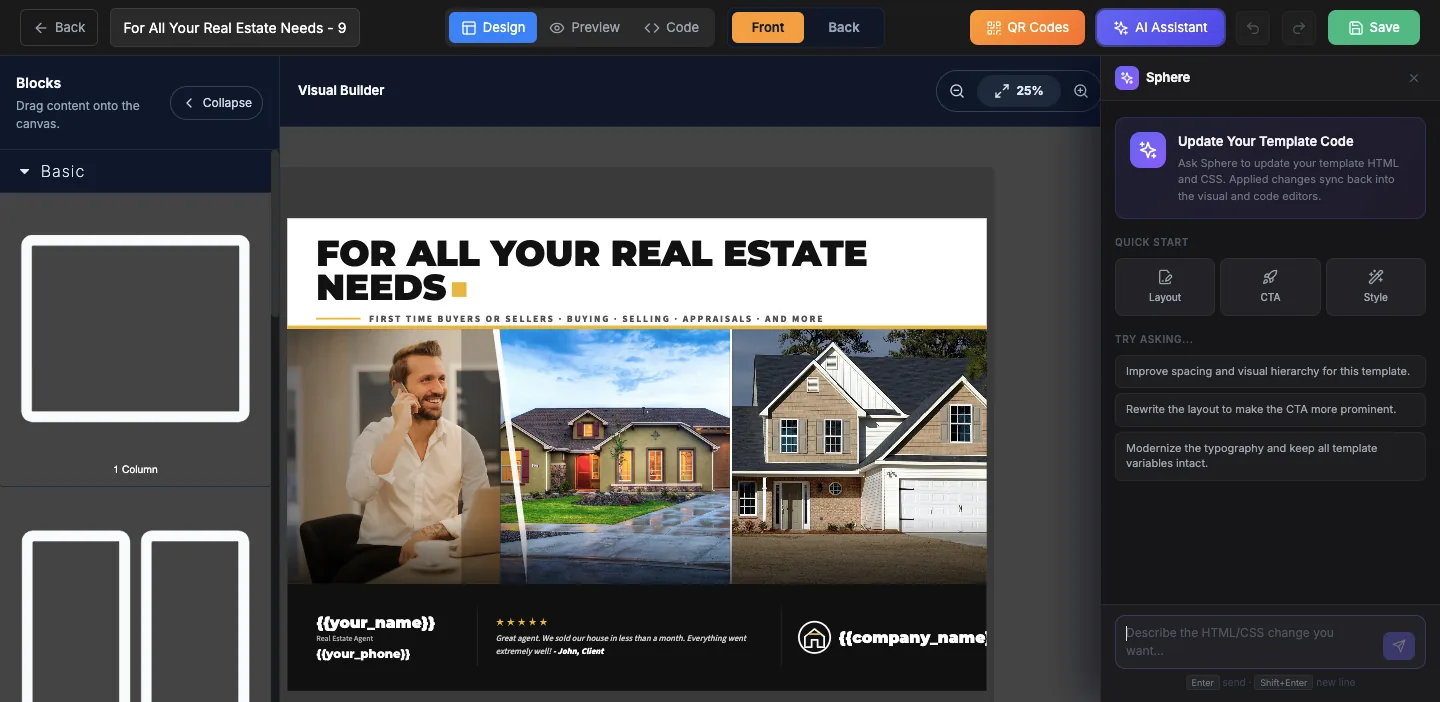
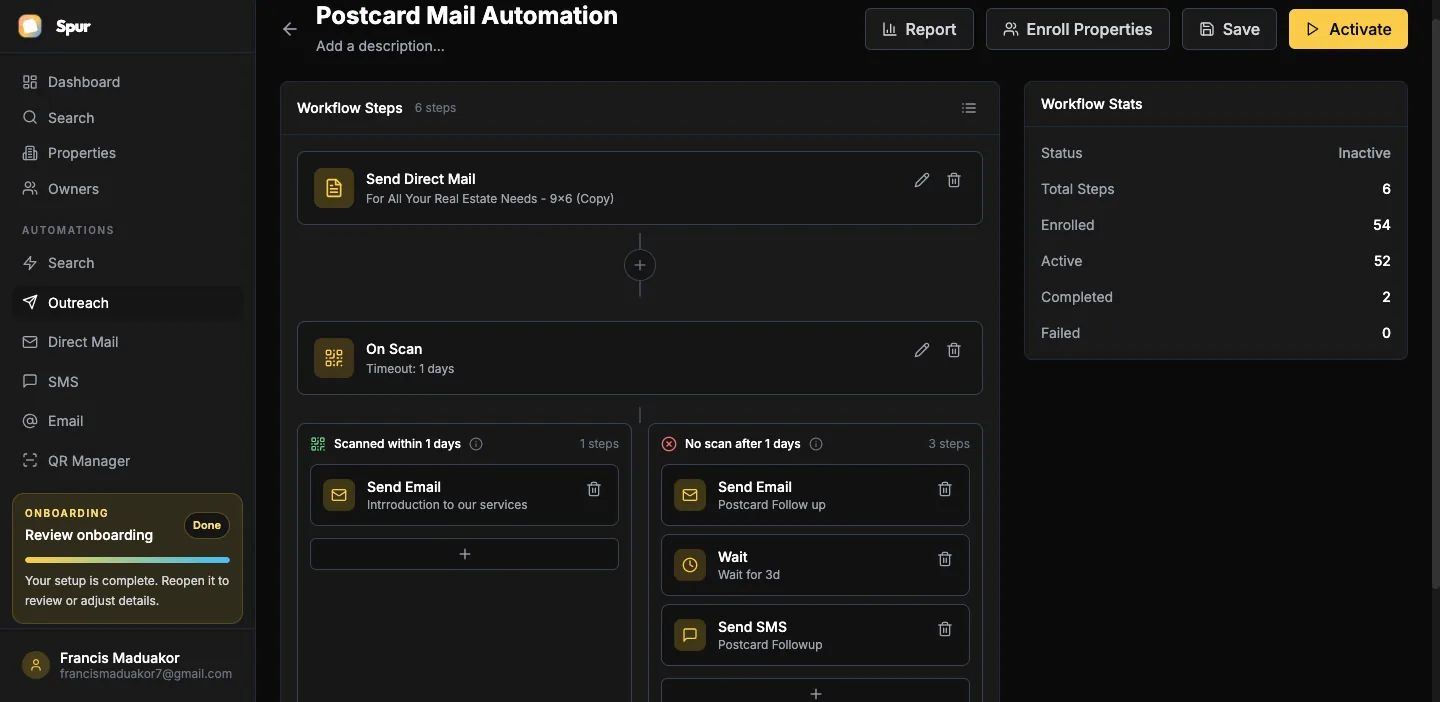
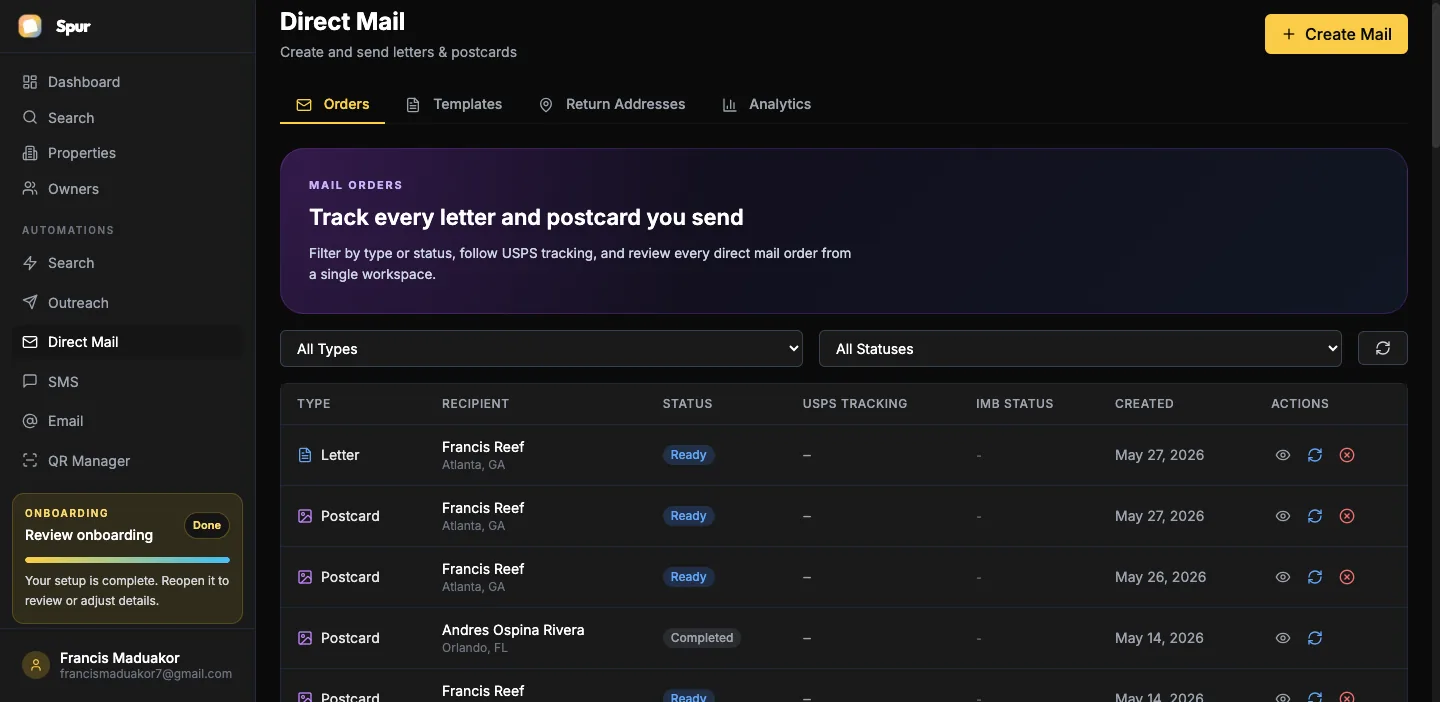
See it in Spur
A storm-season list in Spur
Sample Dayton-area homes built 1950–1990 with basements, pulled for the spring wave. Names are partly masked.
Zips 45459 + 45429Built 1950–1990Owner-occupiedBasementMail date: Mar 10
- Lena W.1130 Stoneybrook DrBuilt 1978 · basementScanned last fall
- Phil & Nora G.822 Far Hills AveBuilt 1955 · basementOwned 29 yrs
- Ed S.4410 Wilmington PikeBuilt 1965 · basementOwner 71
- Tia & Jared M.706 Oak Hollow LnBuilt 1985 · basementOwned 10 yrs
- Barb K.2315 Patterson RdBuilt 1972 · basementOwned 24 yrs
AI draft for Lena W. · 1130 Stoneybrook Dr
Hi Lena,
You saved our number last fall, so I wanted to check in as spring storm season begins. Heavy rain in March and April is the most common reason basements flood in the Miami Valley.
A few simple things help: test your sump pump by pouring a bucket of water into the pit, clear your gutters and downspouts, and move anything valuable off the basement floor.
If water does get in, call us any hour. Scan the code to see the full storm checklist.
Alyssa Brandt · Miami Valley Restoration · 24/7 (937) 555-0121
Sample data for illustration. Your results depend on your market and filters.
Playbook
How to time restoration marketing to the weather
Water damage is seasonal even where the weather is mild. In the north, freezes produce burst pipes and ice dams, spring brings snowmelt and heavy rain, and summer storms can drop inches in an hour. In the South and along the coasts, hurricane and tropical-storm season is the main driver. Every market has two or three windows when water losses spike, and the best marketing arrives just before them.
The pre-season card is the most useful. One to two weeks before the typical event, owners are receptive to practical advice: how to prepare, what to do first, and who to call. A card that arrives in the middle of the event competes with everyone else; a card that arrives ahead feels like service and is far more likely to be saved.
Each season needs its own message. A freeze card talks about shutoffs and dripping faucets. A spring card talks about sump pumps, gutters, and grading. A summer or hurricane card talks about supplies, documentation, and flood coverage. Reusing the same card all year looks lazy and misses the specific worry that is on the owner's mind.
Keep the same call-to-action across seasons: your 24/7 number and a QR code that saves it. Repetition builds recall. After three or four mailings, an owner knows your name, and when a loss happens, you are the first call without any additional spend.
Respect the sensitivity of the moment. Do not mail owners who have just suffered a loss in a way that feels opportunistic, and follow your state's rules on solicitation after a disaster. Honest, preparedness-first marketing builds the trust that turns into jobs when it is needed.
Pair the calendar with capacity. If a spring storm card is likely to bring a surge of calls, make sure the crew, the equipment, and the answering service are ready before it lands. Marketing that fills a schedule you cannot staff damages your reputation, while marketing timed to your real capacity builds the kind of fast, reliable service that earns referrals.
9×+return on a year of Spur Team from three seasonal campaigns
Three seasonal waves turn spikes into a steady pipeline.
- Spur Team: $49/mo billed annually = $588/yr
- 1,500 cards on Team at $0.94 each = $1,410 across three seasons
- 4 mitigation jobs (~$5,000 each, often insurance-paid) ≈ $20,000
Example math. Job size, insurance payment, and close rate vary. Run your own numbers →
One tool, not four
Spur vs. the usual reactive calendar
What you needThe usual waySpur
Cards timed ahead of each seasonAds that spike after a storm✓ Built in
Different card for each seasonSame message all year✓ Built in
Scanners re-mailed in the next seasonLost when the season ends✓ Built in
Mailed automatically every yearRemember to reorder✓ Built in
Results tracked by seasonNo view of what worked✓ Built in
Seasonal Campaigns by the numbers
Why timing matters in water damage
1 inch
of floodwater in a home can cause up to $25,000 in damage
20%+
of flood insurance claims come from outside mapped high-risk flood areas
9×+
return on a year of Spur Team from three seasonal campaigns
FAQ
Seasonal restoration marketing questions
When is the best time to market water damage restoration?
One to two weeks before each season's typical event: early fall for freezes, early spring for storms, and early summer for heat or hurricane season.
Should I mail after a storm?
Be careful. Many states restrict solicitation right after a disaster. Prefer preparedness cards sent before an event, and check your local rules.
Should I mail the same owners every season?
Not every card. Mail new prospects in each wave, and re-mail scanners with a gentler reminder in the next one.
Can Spur schedule the whole year?
Yes. Set the dates for each wave once and Spur mails automatically every year.
Keep exploring
Related plays and guides
Start in minutes. No card required.
Be saved in their phone before the season turns.
Set your freeze, storm, and summer campaigns once, and Spur mails each on time, every year. Free to start.
Schedule my restoration campaigns — freeFree forever plan · No card · 20 property searches a month
Prefer a walkthrough? Book a demo