
A flyer that lands in July meets an owner with a dry basement and no reason to read it.
Basement waterproofing play · Seasonal campaigns
Waterproofing campaigns timed to snowmelt, spring rain, and the fall storm.
Basements leak on a schedule. Spur lets you set three waves, a pre-spring check, a post-storm follow-up, and a fall pump test, mails each as the weather turns, and alerts you as owners scan, so your name is in the mailbox when the water table rises.
Free forever plan · No card · 20 property searches a month
USPSFirst-Class
Greg Tillman20560 Lake RdBuffalo, NY 14221Scan for a pre-thaw check
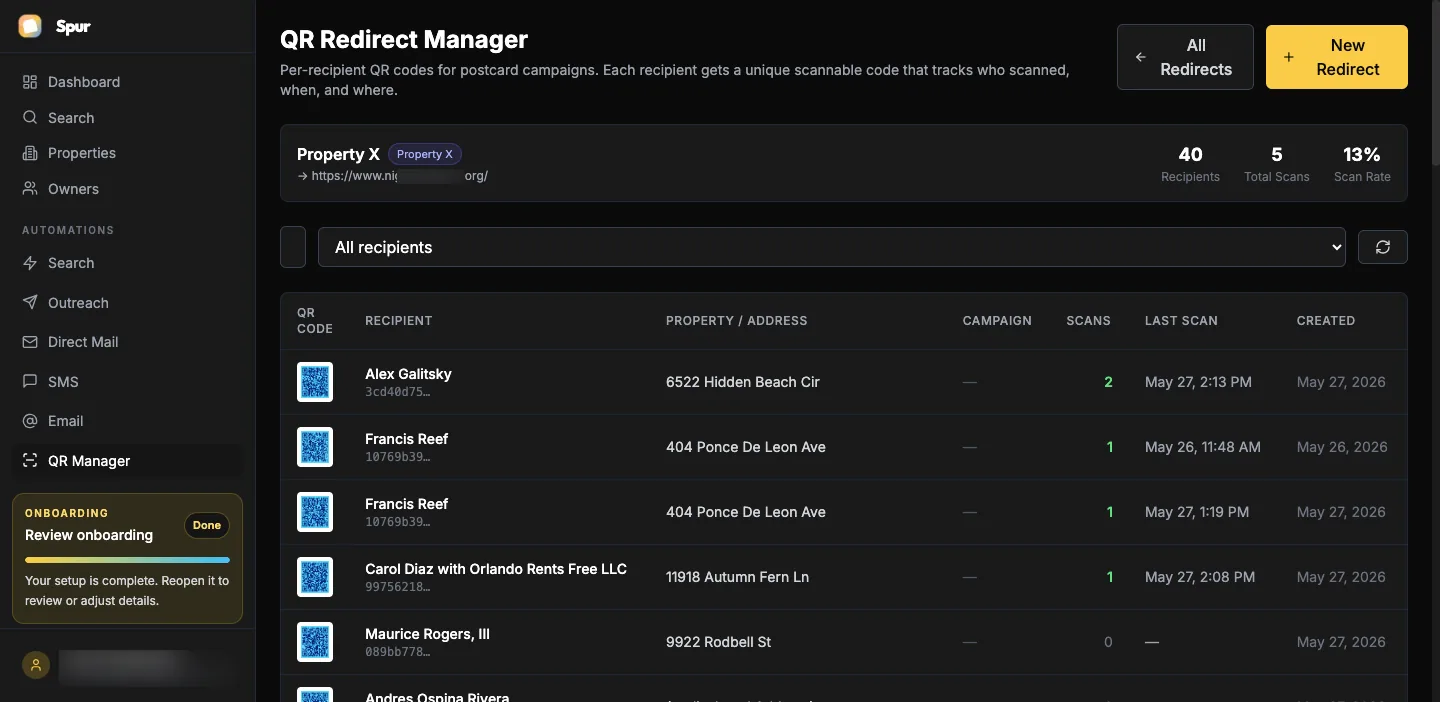
Greg T. scanned your pre-thaw card · 5 min ago
AI-written for this owner · Mailed in 2 days
3 wavespre-spring, post-storm, and fall pump test
6 weeksbefore snowmelt is when the first wave should land
Auto-scheduledset it once and Spur mails every year
The problem
Basements fail in the same weeks every year, and most marketing misses them.
A single piece can't follow snowmelt, spring rain, and fall storms, the three moments water shows up.
An owner who scanned in March and didn't book is forgotten by the next storm without an automatic follow-up.
How it works
From list to mailbox in one workflow.
Five steps from reacting to the storm to mailing ahead of it.
app.usespur.com
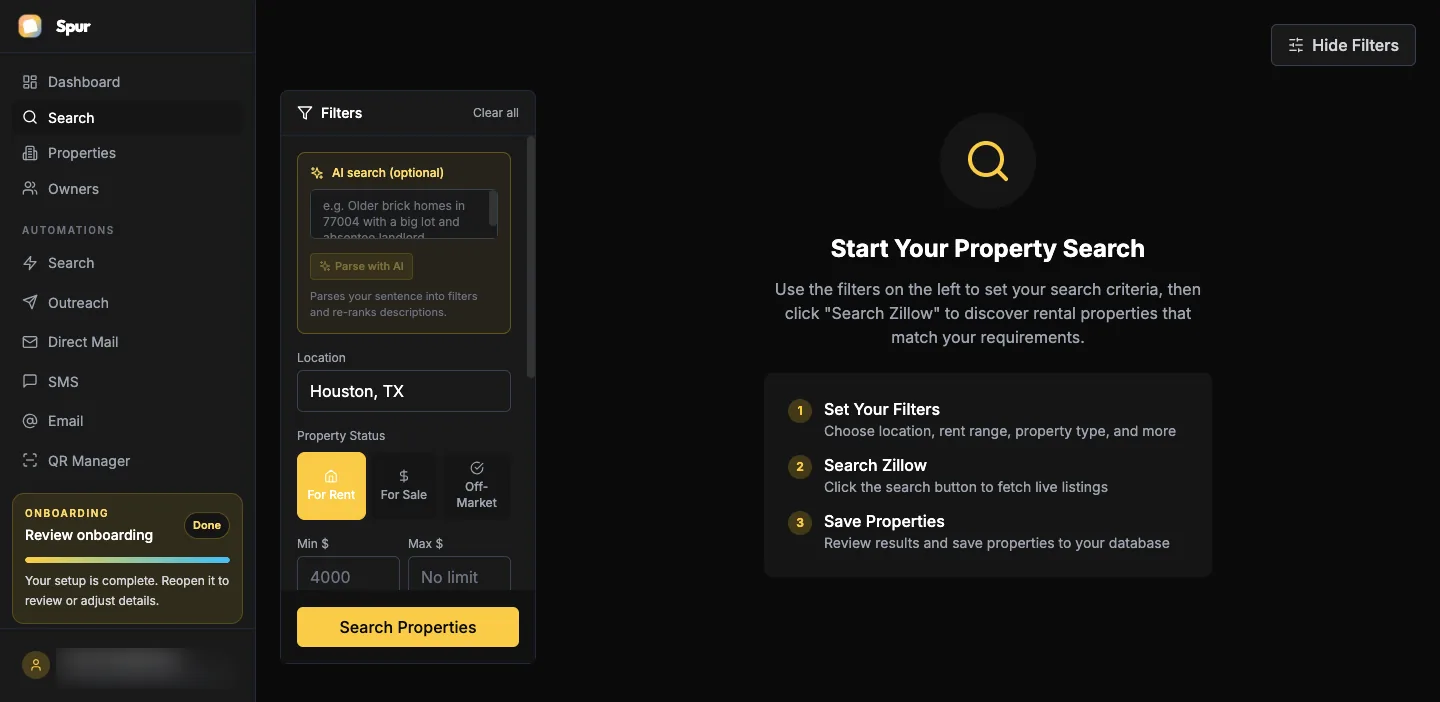
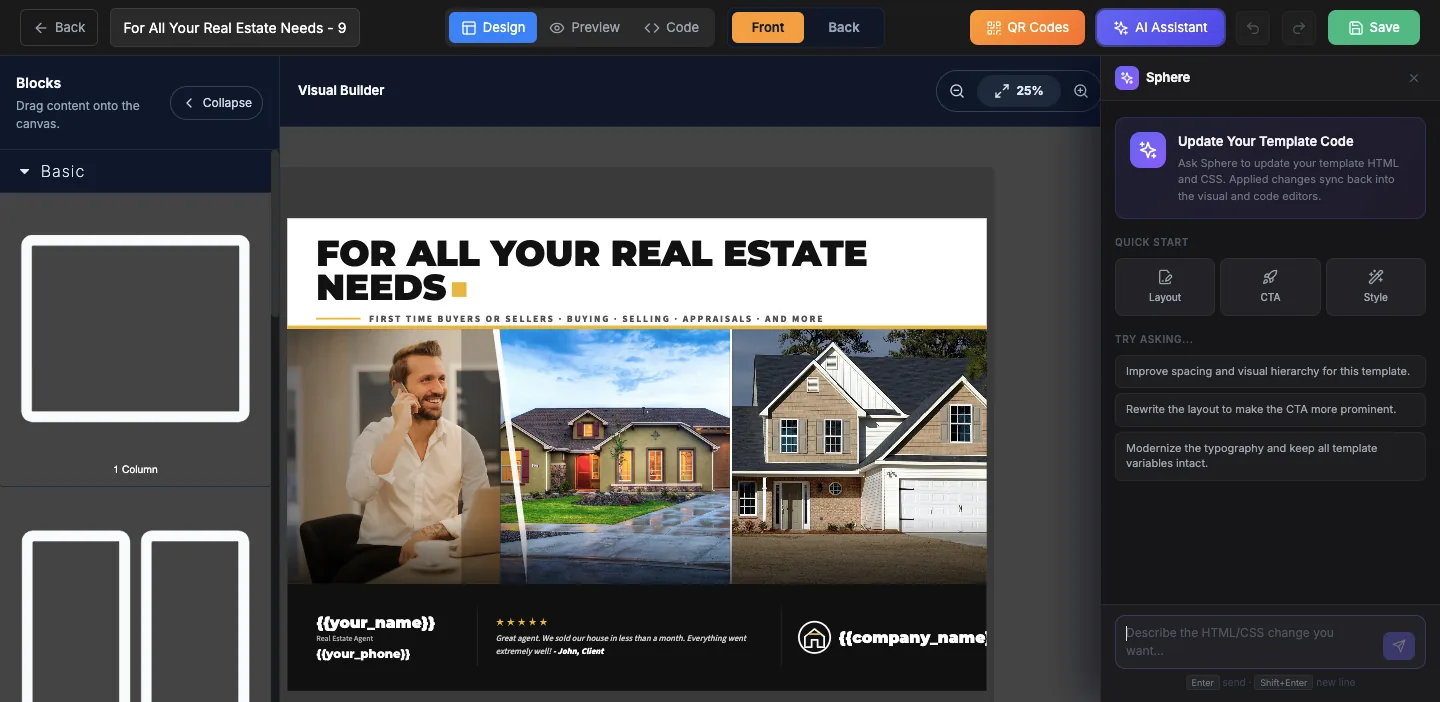
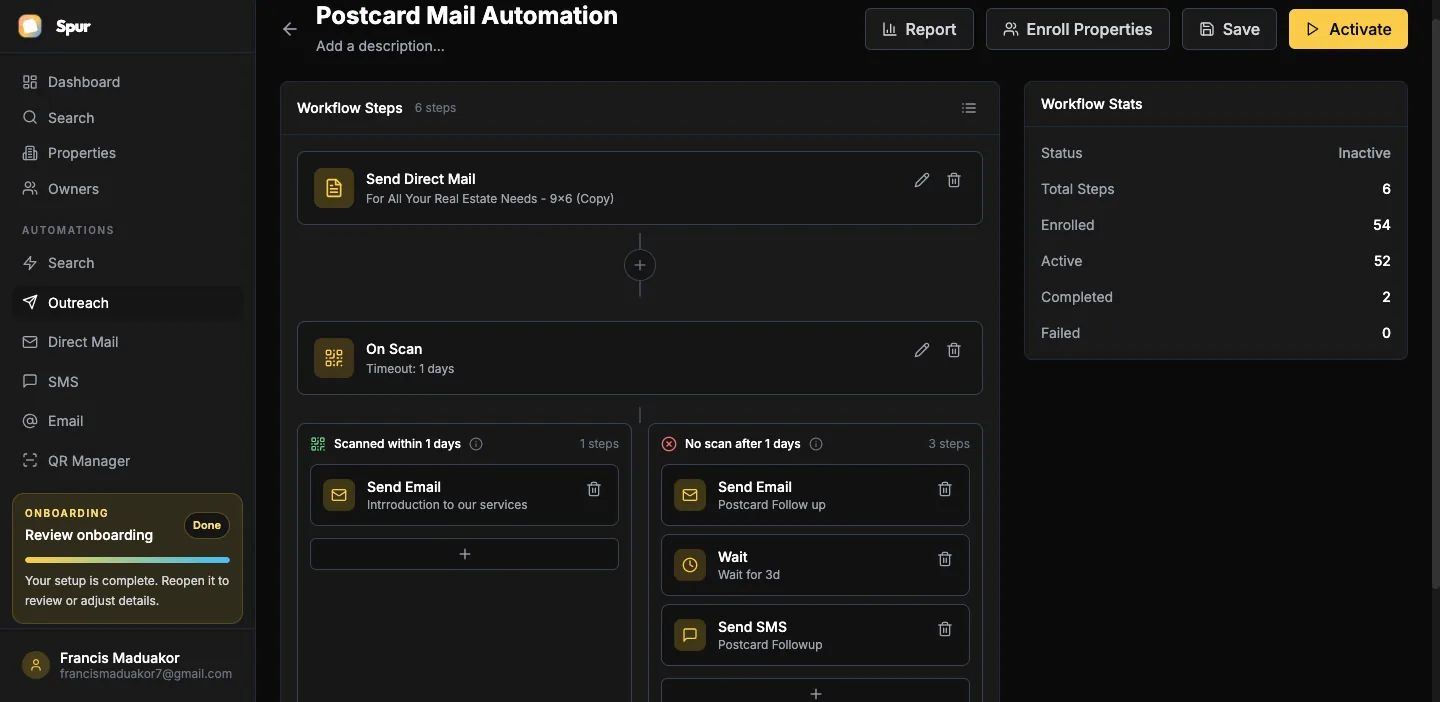
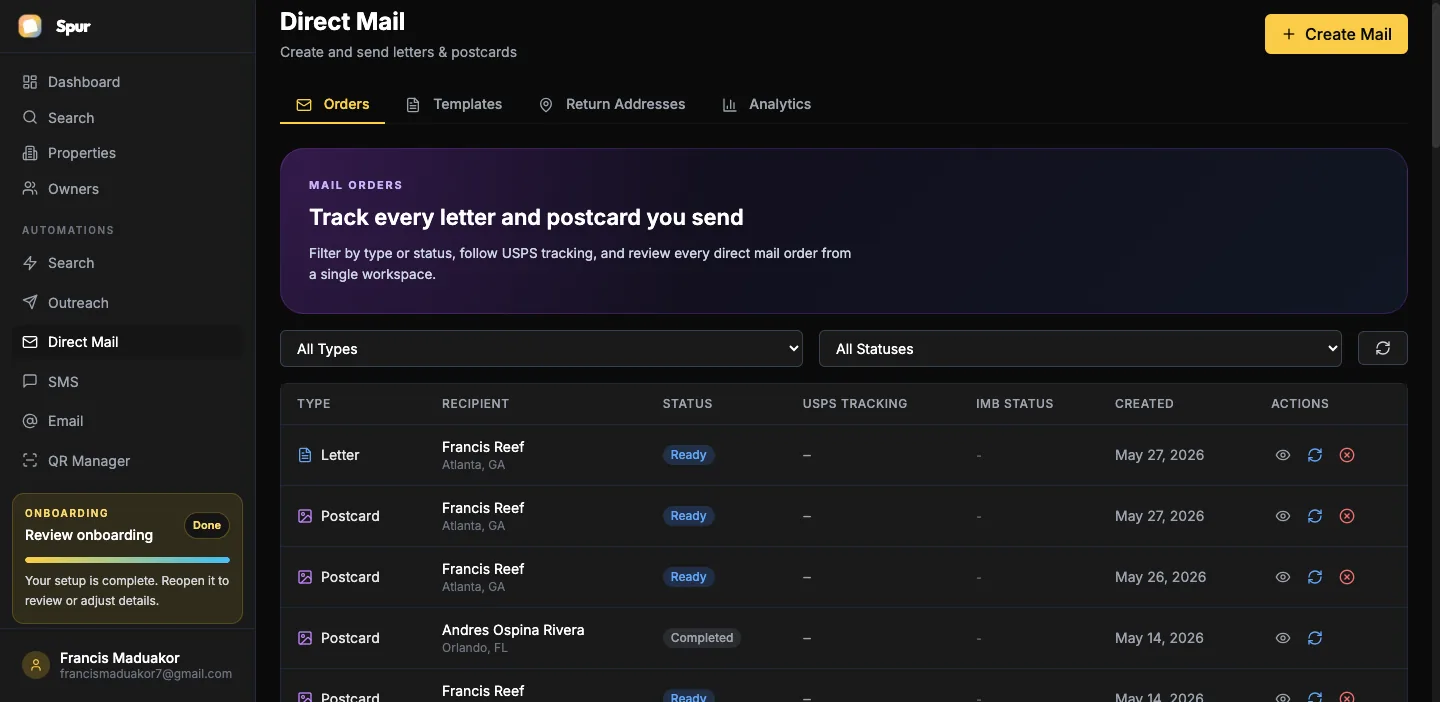
See it in Spur
A pre-thaw list in Spur
Sample Buffalo-area homes built 1930–1980 with full basements, pulled for the late-winter wave. Names are partly masked.
Zips 14221 + 14226Built 1930–1980Owner-occupiedFull basementMail date: Feb 15
- Greg T.20560 Lake RdBuilt 1961 · full basementScanned last fall
- Nora & Frank D.134 Maple RdBuilt 1954 · full basementOwned 28 yrs
- Pat S.88 Harlem RdBuilt 1947 · full basementOwner 72
- Kim & Josh L.412 Sheridan DrBuilt 1968 · full basementOwned 9 yrs
- Alicia R.27 Eggert RdBuilt 1975 · full basementOwned 15 yrs
AI draft for Greg T. · 20560 Lake Rd
Hi Greg,
You scanned one of our cards last fall, so I wanted to reach out before the thaw. A lot of snow is sitting around houses on Lake Road right now, and basements built in the early sixties usually show their problems in the first wet weeks of March.
A free pre-thaw check takes about 30 minutes. We look at the pump, the floor edge, and the downspouts, and tell you plainly if anything needs attention before the melt.
Scan the code to pick a time.
Tara Mills · Great Lakes Waterproofing · (716) 555-0140
Sample data for illustration. Your results depend on your market and filters.
Playbook
How to time waterproofing marketing to the wet seasons
Basement water follows the calendar and the weather. In the northern half of the country, snowmelt and spring rain raise groundwater and push it against foundation walls. In the Southeast and the Gulf, summer storms drop inches in hours. Fall adds another wave in many markets as saturated ground meets the first heavy storm. The best waterproofing marketing tracks those windows instead of a fixed date.
The pre-spring wave is usually the largest. A card that arrives four to six weeks before the thaw reaches owners who are not yet worried and gives them a reason to schedule a check. Mailing too early feels like advertising, but mailing as the first wet spell begins feels like service. Pair the card with a simple offer, like a free pre-thaw check, and a clear explanation of what you look at.
The post-storm wave is the most urgent. Within days of a major rain event, owners who saw water or smelled damp air are searching for help. A ready-made card to affected zips, mailed within two business days, catches them while the problem is fresh. Have the copy, list, and offer ready in advance so you can approve it the day after the storm.
The fall pump test is the quiet wave. It is cheap to deliver and good at turning scanners into maintenance customers. A flat-rate check of the sump, battery, and discharge line before the wet season produces replacements and backups, and it puts your technician in the house on a calm day.
Automate the follow-up. A scan in one wave is a signal, and a second card or a short email in the next wave often converts it. Set the calendar once, keep the lists current, and use the time you save on the inspections that come in.
Finally, keep a simple record of what each wave produced. Note the mail date, the weather that followed, the scans, the inspections, and the signed installs. After two or three years, your own results will tell you the best week to mail in your market better than any generic calendar, and Spur keeps those numbers in one place so the schedule improves every season.
9×+return on a year of Spur Team from three seasonal campaigns
One well-timed wave can fill a quarter.
- Spur Team: $49/mo billed annually = $588/yr
- 1,500 cards on Team at $0.94 each = $1,410 across three waves
- 3 interior drain systems (~$7,500) + 4 pump replacements (~$1,200) ≈ $27,300
Example math. Prices, response, and close rates vary. Run your own numbers →
One tool, not four
Spur vs. the usual reactive calendar
What you needThe usual waySpur
Cards timed to thaw, storms, and fallOne flyer on a fixed date✓ Built in
Different card for each waveSame message all year✓ Built in
Scanners re-mailed in the next waveLost when the season ends✓ Built in
Mailed automatically every yearRemember to reorder✓ Built in
Results tracked by seasonNo view of what worked✓ Built in
Seasonal Campaigns by the numbers
Why timing matters for basements
24–48 hrs
is how quickly mold can begin to grow on materials left wet
30–50%
indoor relative humidity range recommended to limit mold and dust mites
9×+
return on a year of Spur Team from three seasonal campaigns
FAQ
Seasonal waterproofing marketing questions
When is the best time to market waterproofing?
Four to six weeks before snowmelt or spring rain, within days of a major storm, and in early fall before the wet season. Spur can schedule all three.
Can I launch a card right after a storm?
Yes. Save a post-storm campaign in advance, pick the affected zips, and approve it the day after the rain. Spur mails first-class, usually within two business days.
Should I mail the same owners every season?
Not every card. Mail new prospects in each wave, and re-mail scanners with a gentler follow-up in the next one.
Does this work in dry climates?
The principle is the same, but the waves differ. In dry regions, tie campaigns to monsoon or winter storm seasons and to flood-zone homes.
Keep exploring
Related plays and guides
Start in minutes. No card required.
Mail before the water does.
Set your pre-thaw, post-storm, and fall campaigns once, and Spur mails each on time, every year. Free to start.
Schedule my waterproofing campaigns — freeFree forever plan · No card · 20 property searches a month
Prefer a walkthrough? Book a demo