
A generic mailer reaches newer slab construction that will never have a wet basement, and the budget disappears with it.
Basement waterproofing play · Postcards
Basement waterproofing postcards for the homes that actually have basements.
Spur finds older homes with full basements in your service area, writes a postcard about seepage, damp walls, and sump pumps for each owner, and mails it with a QR code that books a free inspection. You see who scanned within seconds.
Free forever plan · No card · 20 property searches a month
USPSFirst-Class
Susan Reilly27615 Detroit RdWestlake, OH 44145Scan to book your free inspection
Susan R. scanned your basement inspection postcard · 3 min ago
AI-written for this owner · Mailed in 2 days
Pre-1990homes are the likeliest to lack modern drain tile and sump systems
1 cardper household, written around the home's age and wall type
2 daysfrom approval to USPS first-class
The problem
Most waterproofing mail lands on the wrong houses at the wrong time.
National waterproofing franchises advertise every week. A card that names the owner's street and the home's age feels like a neighbor, not a brand.
A plain postcard gives you a phone number and a hope. Without a scan, you can't tell which households are actually worried.
How it works
From list to mailbox in one workflow.
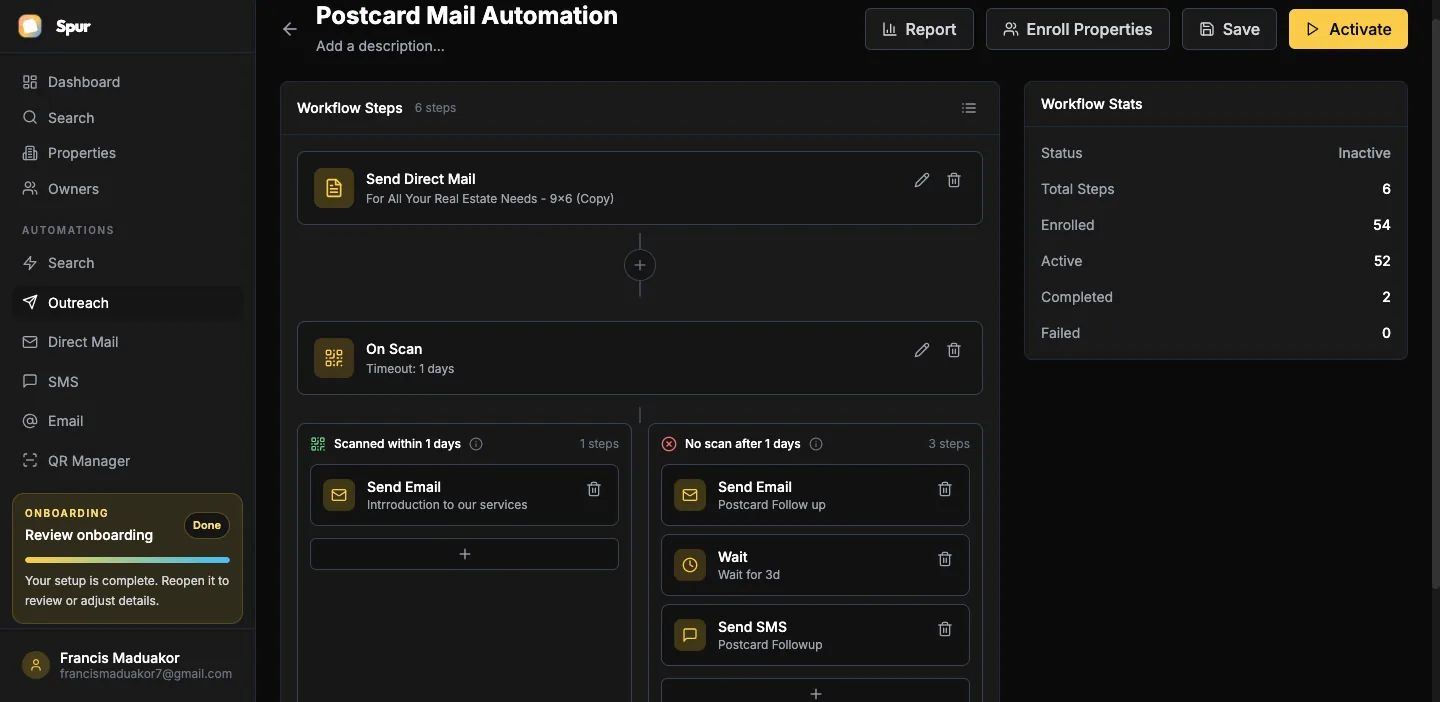
Five steps from a blank postcard to a booked basement inspection.
app.usespur.com
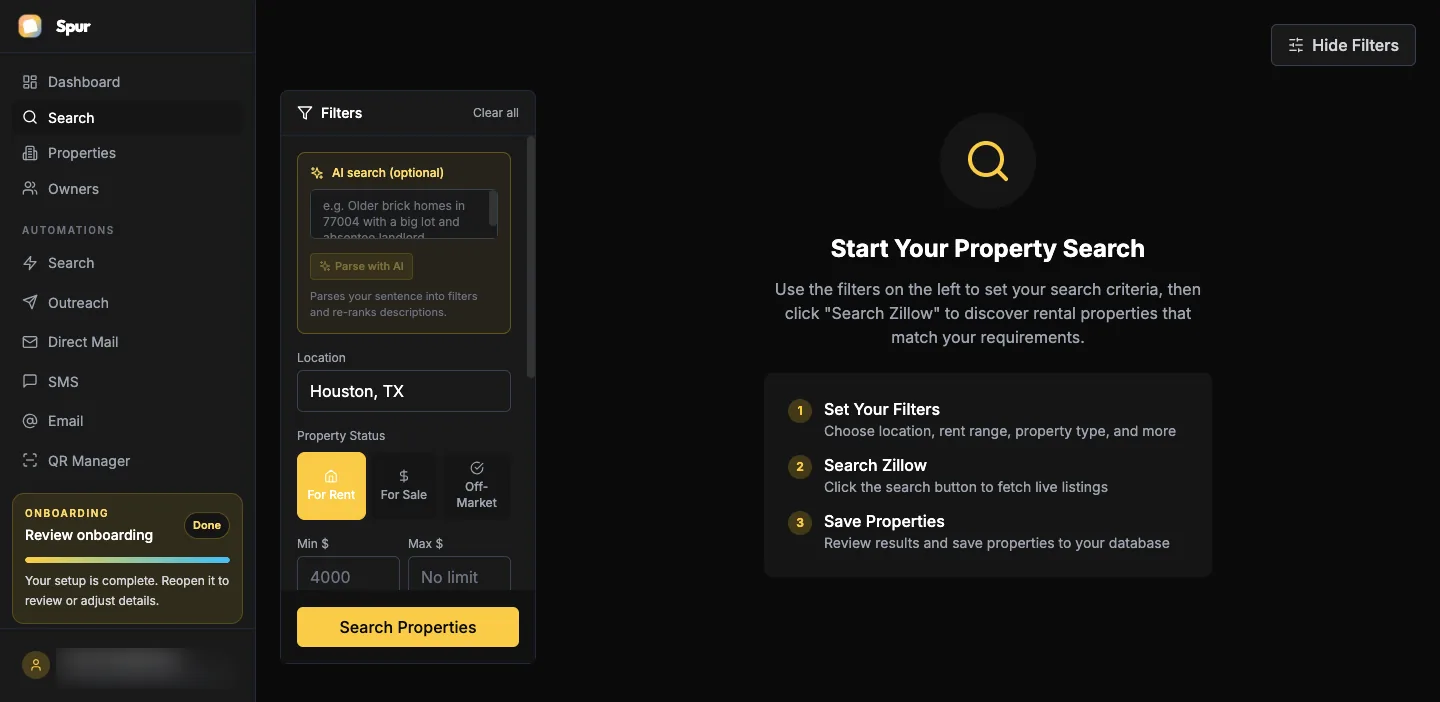
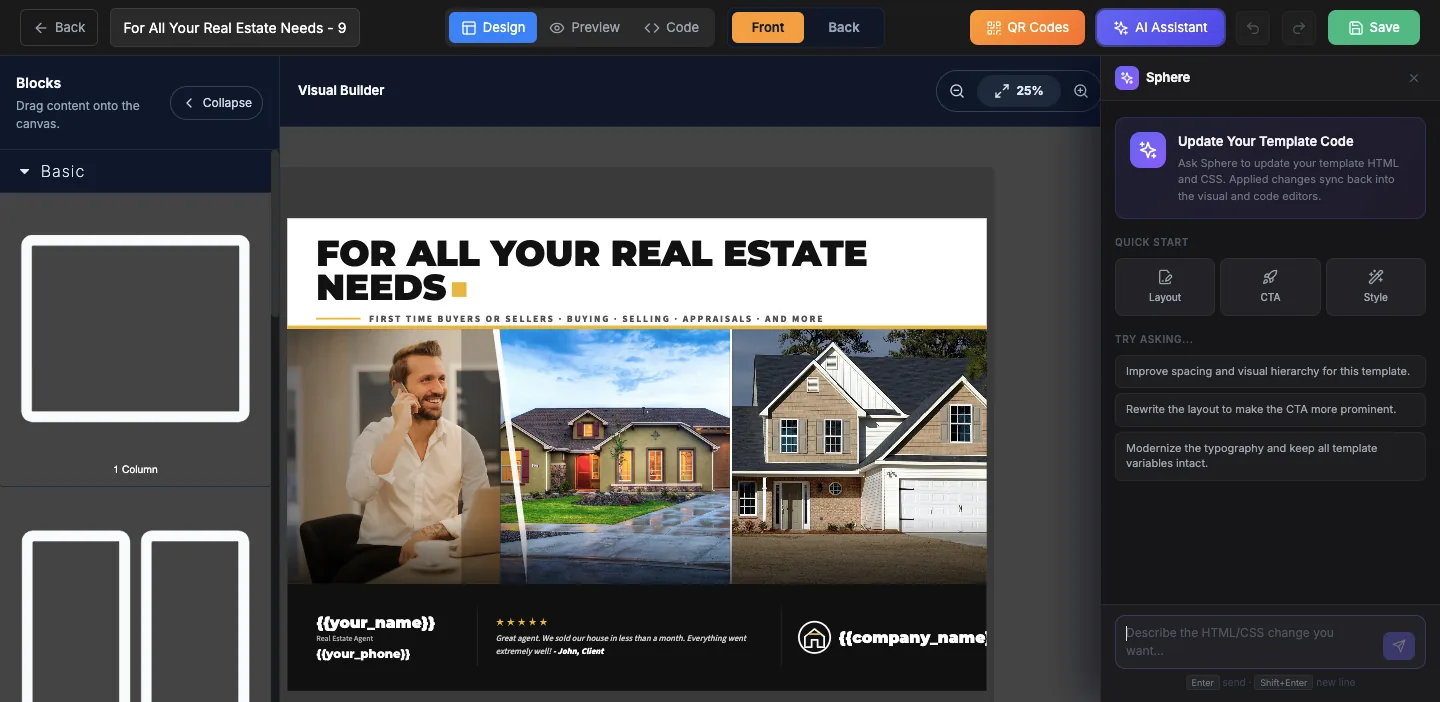
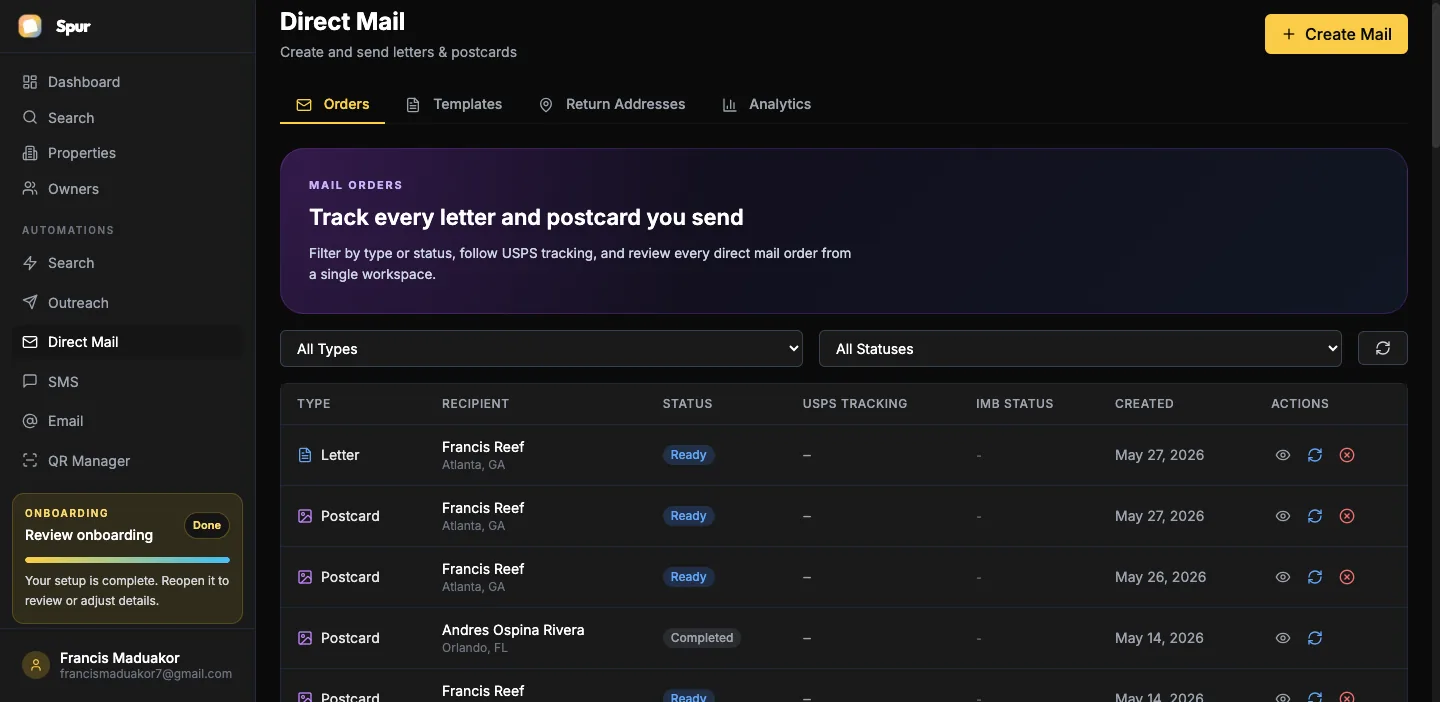
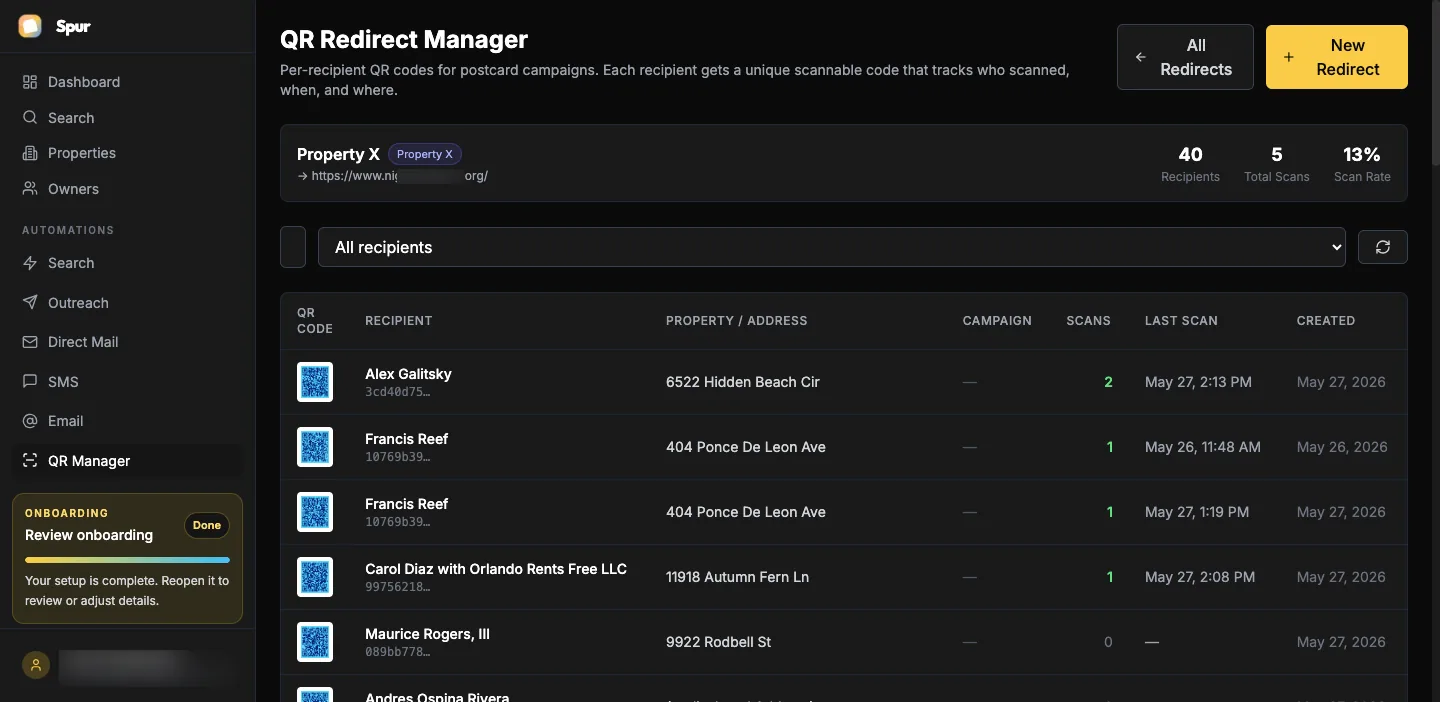
See it in Spur
A waterproofing postcard list in Spur
Sample Westlake, Ohio homes built 1950–1985 with full basements, pulled for a spring postcard run. Names are partly masked.
Zip 44145Owner-occupiedBuilt 1950–1985Single-familyFull basement
- Susan R.27615 Detroit RdBuilt 1962 · full basementOwned 19 yrsBlock walls
- Brian & Kate O.2418 Dover Center RdBuilt 1958 · full basementOwned 11 yrs
- Marilyn G.2290 Columbia RdBuilt 1955 · full basementOwned 31 yrs
- Tom & Nina H.28120 Center Ridge RdBuilt 1971 · full basementOwned 14 yrs
- Ray L.2502 Dover Center RdBuilt 1966 · full basementOwned 9 yrsLow lot
AI draft for Susan R. · 27615 Detroit Rd
Hi Susan,
Homes on Detroit Road were built in the early 1960s, mostly with block foundation walls and clay drain tile that has had sixty years to clog. After a wet spring, that is when we hear about damp corners and sump pumps that run all night.
If you've noticed any of that, we'll come out free, look at the walls, the floor edge, and the pump, and tell you plainly what we see, including what you can fix yourself.
Scan the code on this card to pick a time that works for you.
Pete Hanlon · DryLine Basement Systems · (440) 555-0148
Sample data for illustration. Your results depend on your market and filters.
Playbook
What makes a basement waterproofing postcard work
Basement water is a slow problem that feels sudden. Moisture works through block walls and floor joints for years, and the owner finds out on the one day a storm pushes it over the edge. That makes timing and tone the two things that matter on a postcard: you want to arrive before the next storm, and you want to sound like a helpful neighbor rather than a salesperson selling fear.
Start with the right houses. Full basements are common in homes built before about 1990 in the Northeast, the Midwest, and parts of the Mid-Atlantic. Older block and poured walls, clay drain tile, and original sump pits are the equipment most likely to have reached the end of its life. Filter for owner-occupied single-family homes, because owners decide and pay for this work, and drop slab-on-grade neighborhoods entirely so you stop paying to mail houses with nothing to waterproof.
Then match the message to what the owner can see. The signs people notice first are a musty smell, white powdery deposits on the wall, damp spots along the floor edge, or a sump pump that runs after every rain. A card that lists two or three of those signs helps the owner recognize their own basement, and it lets you be specific without making a claim about a house you haven't seen.
The offer should lower the risk of saying yes. A free inspection with a written explanation is easy to accept, and it lets your inspector earn trust in the basement itself. Mention that some fixes are small, a downspout extension, a regrade, a new pump, because owners are more likely to call a company that admits not every basement needs a full system.
Finally, use the QR code to learn who is paying attention. A postcard phone number only captures people ready to call today. A scan shows you the household that is curious now and may book after the next storm. Follow that owner with a short email or text, and mail them again when heavy rain is forecast.
10×+return on a year of Spur Team from one interior drain and sump system
One waterproofing job outweighs a year of mailing.
- Spur Team: $49/mo billed annually = $588/yr
- 500 postcards on Team at $0.94 each = $470
- One interior drain tile and sump pump install (~$6,000–$10,000) = 10× or more your annual subscription
Example math. Your pricing, response, and close rate will vary. Run your own numbers →
One tool, not four
Spur vs. the usual basement waterproofing marketing
What you needThe usual waySpur
Mailed only to older homes with basementsEvery door in the zip, slab homes included✓ Built in
Copy matched to the home's age and wallsOne generic message✓ Built in
QR scan alerts by householdA phone number and a guess✓ Built in
Follow-up for scanners who didn't bookNo follow-up✓ Built in
Printed and mailed from one dashboardDesigner, print shop, and mailing house✓ Built in
Postcards by the numbers
Why moisture is worth catching early
30–50%
is the indoor relative humidity range the EPA recommends to limit mold and dust mites
24–48 hrs
is how quickly mold can begin to grow on materials left wet
10×+
return on a year of Spur Team from one interior drain and sump system
FAQ
Basement waterproofing postcard questions
How do I find homes likely to have wet basements?
Spur can't see inside a house, so it uses build year, ownership length, and property type. Owner-occupied single-family homes built before 1990 in basement-heavy regions are the core list. Add flood-zone or low-lot filters where you have them.
What should a basement waterproofing postcard say?
Name two or three visible signs, like a musty smell or a sump pump that never rests, mention the home's age, and offer a free inspection. Keep the tone calm and specific.
When should I send waterproofing postcards?
Late winter, ahead of snowmelt and spring rain, is the strongest window. A second wave within days of a major storm also works well. Spur can repeat both every year.
How many postcards do I need to see results?
Start with 500 to your best-fit homes. That is enough to see scan rates and book inspections, and you can mail more as you learn what the best streets are.
Does Spur print and mail the postcards?
Yes. Spur prints and ships first-class, usually within two business days of approval. Postcards are paid per piece when you mail: $0.94 each on Team.
Keep exploring
Related plays and guides
Start in minutes. No card required.
Reach the basements before the next storm does.
Build a list of older homes with full basements and mail your first waterproofing postcard today. Free to start.
Mail my first waterproofing postcard — freeFree forever plan · No card · 20 property searches a month
Prefer a walkthrough? Book a demo