
Small cracks and sticking doors get ignored for years. By the time they call, repairs are bigger and more expensive.
For foundation repair contractors
Foundation repair leads from neighborhoods where the soil moves.
Spur targets homes on expansive clay and older slab and pier-and-beam foundations in your service area, writes a calm, informative postcard about the early signs of movement, and mails it with a QR code to your free inspection. You hear from homeowners while the crack is still small.
Free forever plan · No card · 20 property searches a month
USPSFirst-Class
Charles Morgan1408 Meadowbrook DrArlington, TX 76012Scan to book your inspection
Charles M. scanned your foundation inspection postcard · 3 min ago
AI-written for this owner · Mailed in 2 days
Clay soilsshrink and swell with drought and rain
$5K–$15K+typical residential pier repair
2 daysfrom approval to USPS first-class
The problem
Foundation problems grow quietly, and homeowners don't know who to trust.
Foundation repair is expensive and invisible. Homeowners worry about being oversold, so fear-based ads backfire.
Demand spikes after droughts and heavy rains in specific soil areas. Broad advertising misses the timing and the geography.
How it works
From list to mailbox in one workflow.
The same five steps every time, set up for foundation repair companies.
app.usespur.com
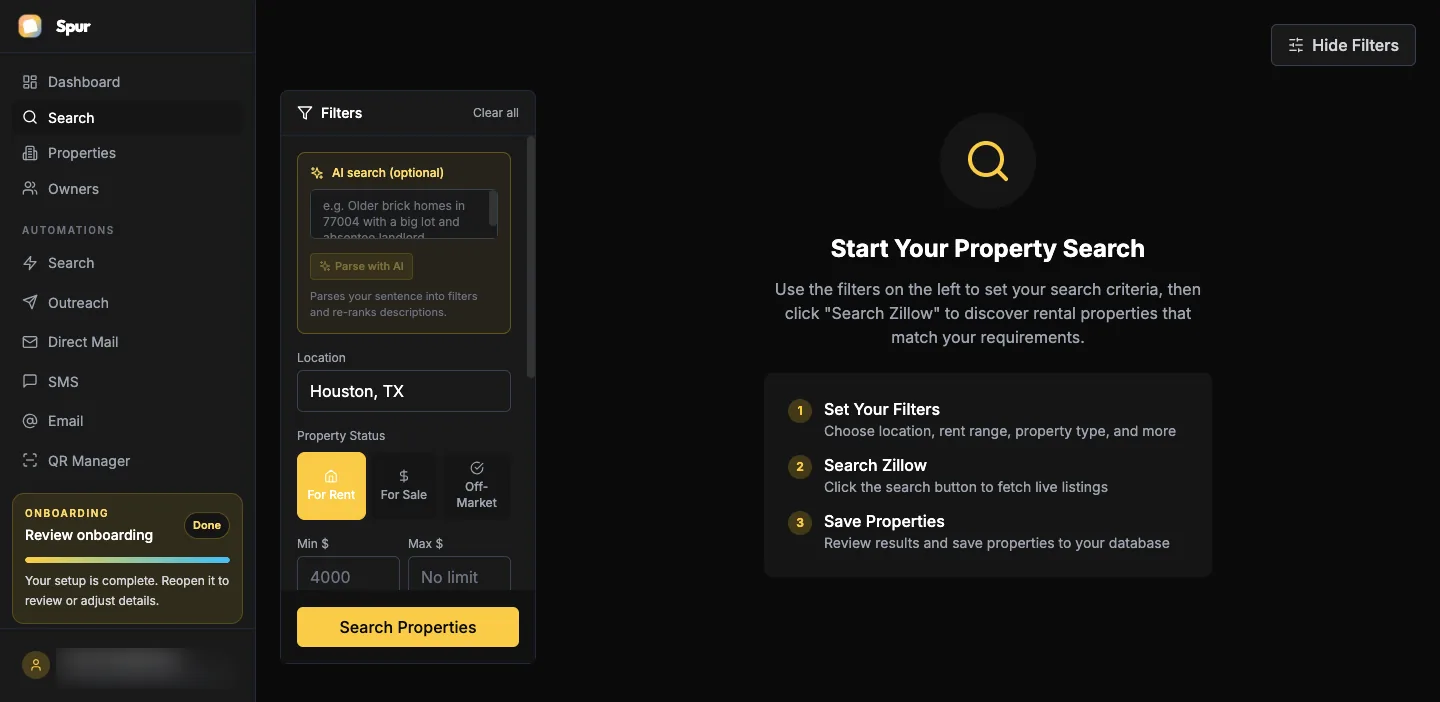
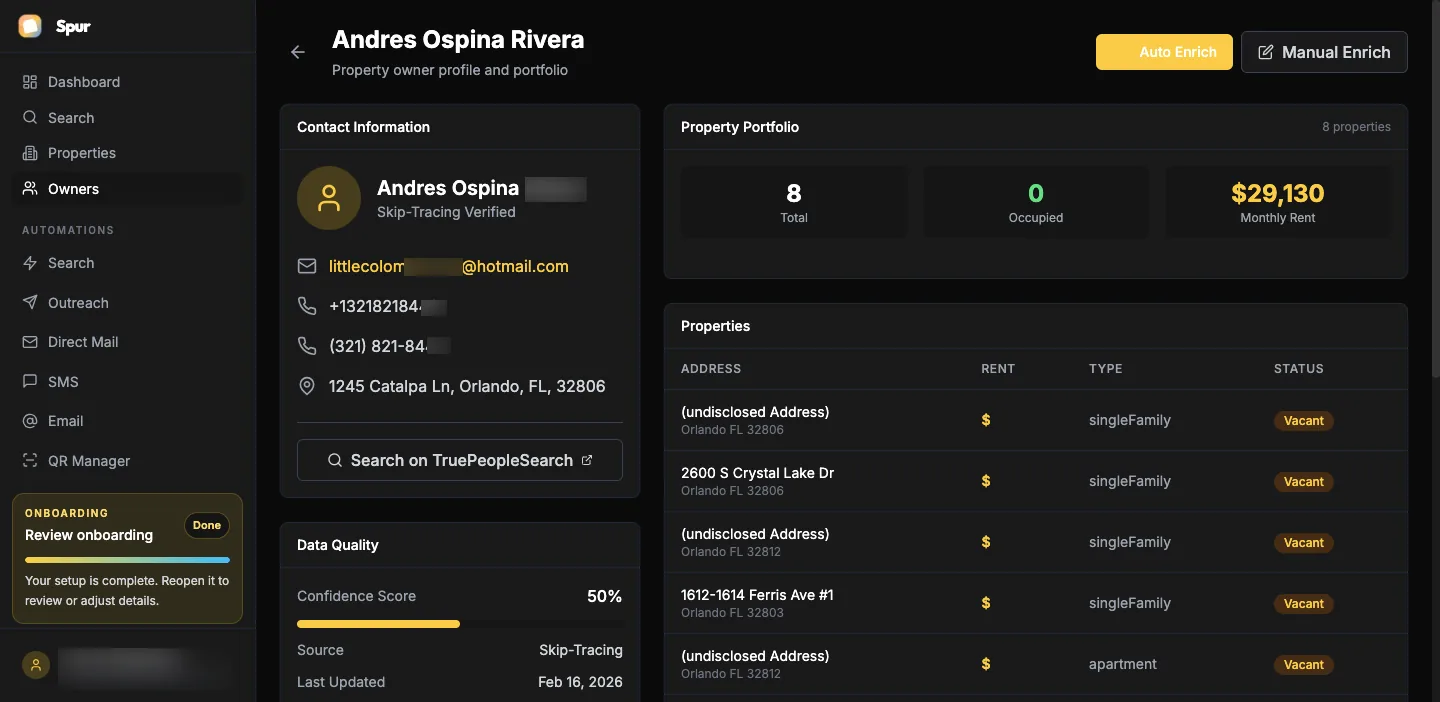
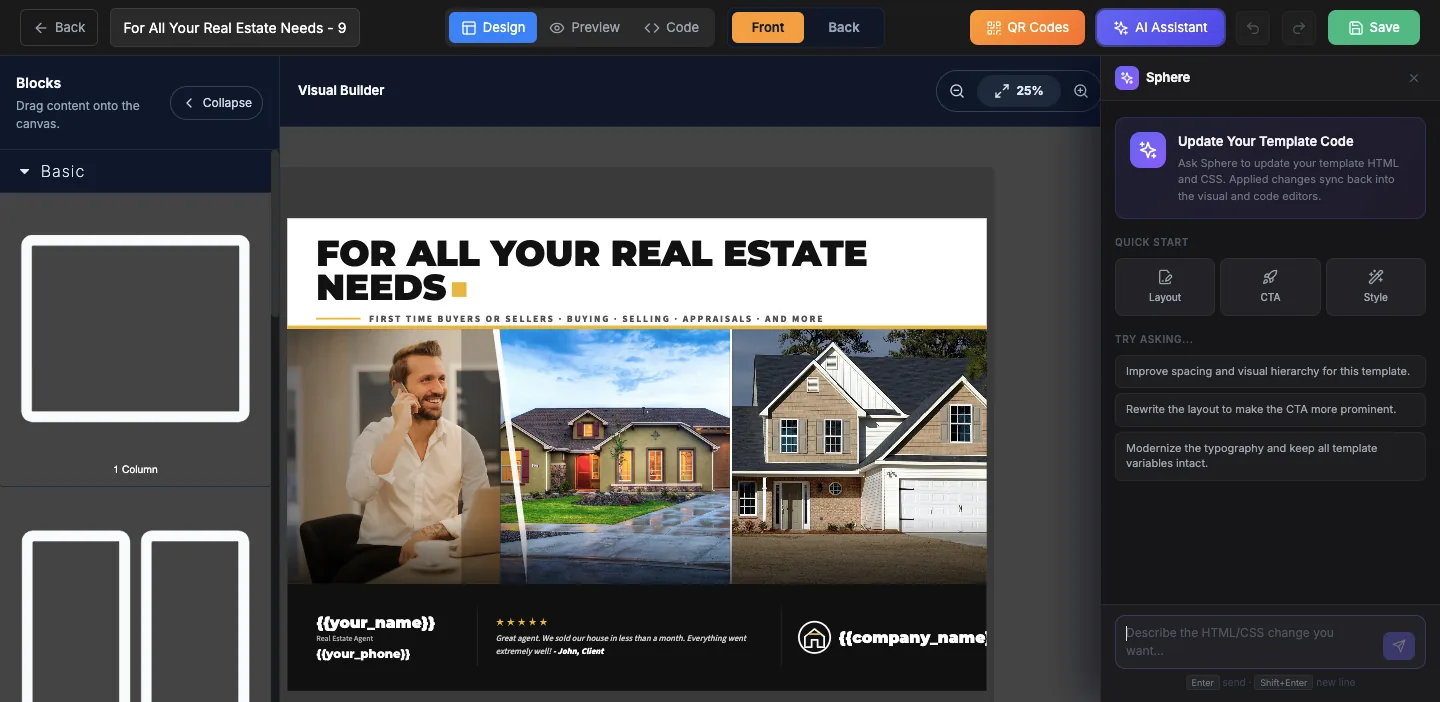
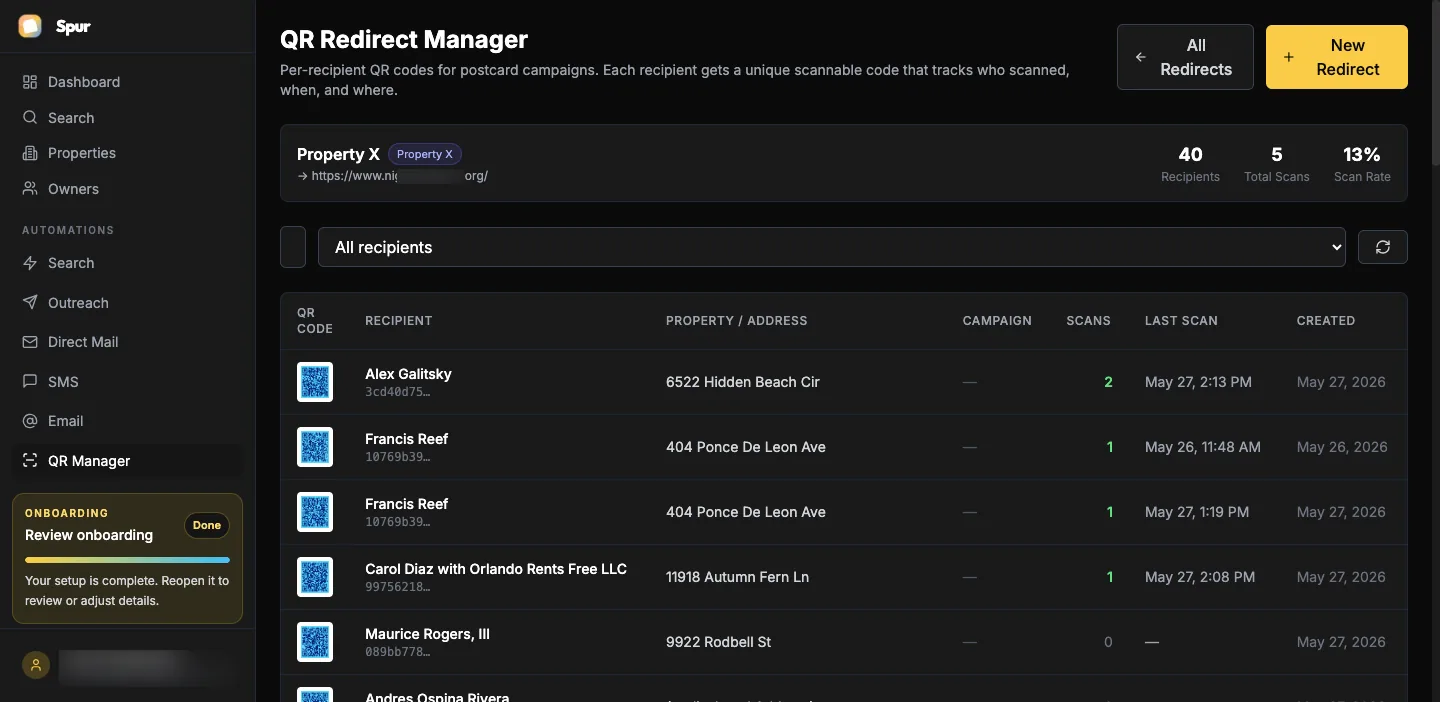
Plays for Foundation Repair
Foundation repair plays you can run in Spur today
Foundation postcards
A calm card that lists the early signs and offers a free check.
Clay-soil zipsBuilt pre-1995
See the full play →Direct mail programSoil zips, older slabs, new buyers, and follow-ups on a schedule.
Auto-scheduleCost per repair
See the full play →New homeownersA free second opinion for buyers of older homes.
Sold last 90 daysBuilt pre-1995
See the full play →Inspection leadsLong-time owners in the soils that move.
Clay zipsOwned 8+ yrs
See the full play →Older slab homesSlabs 30+ years old with an elevation survey offer.
Built pre-1995Owned 10+ yrs
See the full play →Seasonal campaignsMail after drought, heavy rain, and freeze-thaw.
Auto-scheduleClay zips
See the full play →Neighbor marketingMail the street around every repair.
Radius 0.25 miSame builder era
See the full play →Leads without AngiExclusive foundation leads from homes you chose.
ExclusiveQR tracked
See the full play →Past estimatesFollow up on stalled quotes and phase-two work.
Your listQuoted 6+ mo ago
See the full play →Landlord portfoliosRental owners with several older homes.
Absentee owner2+ properties
See the full play →See it in Spur
What a foundation repair list looks like in Spur
A sample list for one Arlington, TX zip: owner-occupied single-family slab homes built 1970–1990 and owned 10+ years. Names are partly masked.
Zip 76012Owner-occupiedBuilt 1970–1990Owned 10+ yrsSingle-family
- Charles M.1408 Meadowbrook DrBuilt 1976 · slabOwned 22 yrsBrick veneer
- Yolanda & Jim F.1512 Meadowbrook DrBuilt 1978 · slabOwned 17 yrsLarge trees
- Paul K.2105 Oak Hill RdBuilt 1972 · slabOwned 28 yrsCorner lot
- Rosa D.2117 Oak Hill RdBuilt 1974 · slabOwned 12 yrsBrick veneer
- Kenneth & Sue W.1601 Westwood DrBuilt 1981 · slabOwned 19 yrsPool
AI draft for Charles M. · 1408 Meadowbrook Dr
Hi Charles,
Arlington sits on expansive clay that shrinks in dry summers and swells when the rain returns. Over decades, that movement can shift a slab foundation, especially on homes from the 1970s with large trees nearby.
The early signs are easy to miss: interior doors that start to stick, small diagonal cracks above doorways, or stair-step cracks in brick. Most of the time it's minor seasonal movement. Sometimes it isn't, and it's much cheaper to catch early.
We offer a free inspection with a written elevation survey. If your foundation is fine, we'll say so and give you a few simple ways to keep it that way. Scan the code on this card to book a time.
Daniel Ruiz · Bedrock Foundation Repair · (817) 555-0148
Sample data for illustration. Your results depend on your market and filters.
Playbook
How to market foundation repair without fear tactics
Foundation repair is one of the most trust-dependent trades in home services. The work is expensive, mostly invisible once it's done, and homeowners can't easily judge whether they need it. Many have heard stories of contractors selling piers that weren't necessary. The companies that win long-term are the ones that educate first and sell second.
Geography is your strongest targeting signal. Expansive clay soils, common across much of Texas, Oklahoma, Colorado, and parts of California and the Southeast, shrink in drought and swell in heavy rain, and that movement is the main driver of residential foundation problems in those regions. You already know which neighborhoods produce the most calls. Spur lets you target them directly, along with build year, foundation type, and ownership.
Build year and foundation type matter too. Older slab homes have had decades of seasonal movement. Pier-and-beam homes from before about 1960 often have sagging floors and deteriorated supports. Large trees close to the house can pull moisture from the soil and make movement worse. Long-time owners are more likely to have noticed changes and to stay long enough for a repair to make sense.
Timing follows the weather. Mail after long droughts, when soil has shrunk and new cracks appear, and after heavy rains, when doors and windows start sticking again. Spur lets you launch a campaign to your soil-risk neighborhoods within days of a weather swing.
Keep the tone calm and specific. Describe the early signs homeowners can check themselves, offer a free inspection with a written report, and say plainly that many homes only need monitoring or drainage fixes. Mentioning engineer involvement where you use it, and transferable warranties, gives cautious homeowners the confidence to call.
Follow every repair with a neighbor campaign. Homes on the same street usually share soil conditions, builder, and age, so movement at one address is a good signal for the next. A card that mentions nearby work without naming the customer, paired with the early-signs checklist, often produces the next inspection.
8×+return on a year of Spur Team from one $5,000 repair
One repair pays for many years of Spur.
- Spur Team: $49/mo billed annually = $588/yr
- 400 postcards on Team at $0.94 each = $376
- One $5,000–$15,000 pier repair = 8–25× your annual subscription
Example math. Your job size and close rate will vary. Run your own numbers →
One tool, not four
Spur vs. the usual foundation repair marketing
What you needThe usual waySpur
Target soil-risk neighborhoodsBroad ads or EDDM✓ Built in
Owner name and mailing addressList broker✓ Built in
Calm, specific copy per homeScare-tactic flyer✓ Built in
Mail after weather swingsNot practical with print shops✓ Built in
Know who's interestedNot available✓ Built in
Pipeline trackingSeparate CRM✓ Built in
Foundation Repair by the numbers
Why foundation work is concentrated by soil
1 in 4
U.S. homes are estimated to have some damage caused by expansive soils
$5K–$15K+
typical range for residential pier repair
8×+
return on a year of Spur Team from one $5,000 repair
FAQ
Questions from foundation repair companies
How do I get foundation repair leads?
Target owner-occupied homes in the neighborhoods you know sit on expansive soils, especially older slab and pier-and-beam homes owned 10+ years. Mail after droughts and heavy rains with a free inspection offer.
Can Spur filter by soil type?
Spur doesn't map soil directly. Most foundation companies already know which zips and subdivisions produce the most calls, and Spur lets you target those areas precisely by zip, radius, build year, and ownership.
When should foundation repair companies send postcards?
After long dry spells, when clay shrinks and cracks appear, and after heavy-rain seasons, when doors and windows start sticking. Spur can launch a campaign within days of a weather swing.
What should foundation repair postcards say?
Describe the early signs homeowners can check (sticking doors, diagonal drywall cracks, stair-step brick cracks) and offer a free inspection with a written report. Calm, specific copy builds more trust than fear.
What does Spur cost for a foundation repair company?
Solo is free forever with no card. You pay per postcard when you mail. Team is $49/mo billed annually with more searches, enrichments, QR codes, and lower postcard pricing.
Keep exploring
Related trades and guides
Start in minutes. No card required.
The cracks are small now. Be the company they call before they grow.
Build a soil-risk neighborhood list and mail your first inspection offer today.
Find homeowners who need foundation work — freeFree forever plan · No card · 20 property searches a month
Prefer a walkthrough? Book a demo