
A dry summer fills the phones, then a wet fall empties them. Marketing that only reacts leaves your crews waiting.
Foundation repair play · Direct mail program
A foundation repair direct mail program that keeps inspections booked all year.
Foundation work swings with the weather, but a program doesn't have to. Spur runs four standing lists, soil-zip homes, older slabs, new buyers, and post-drought follow-ups, mails each on its own schedule, and shows you the cost per signed repair for every list.
Free forever plan · No card · 20 property searches a month
USPSFirst-Class
Greg Hollis4208 Windhaven DrPlano, TX 75023Scan to book a free foundation check
Greg H. scanned your free check card · 4 min ago
AI-written for this owner · Mailed in 2 days
4 listssoil zips, older slabs, new buyers, and post-drought follow-ups
Auto-scheduledeach list mails on its own date every year
Cost per repairtracked for each list, not guessed
The problem
Foundation marketing is feast or famine.
Foundation work is infrequent, so referrals trickle. Relying on them leaves months with nothing booked.
Without tracking by list, you can't tell whether soil zips or older slabs are worth the budget.
How it works
From list to mailbox in one workflow.
Five steps from one-off mailers to a program that runs itself.
app.usespur.com
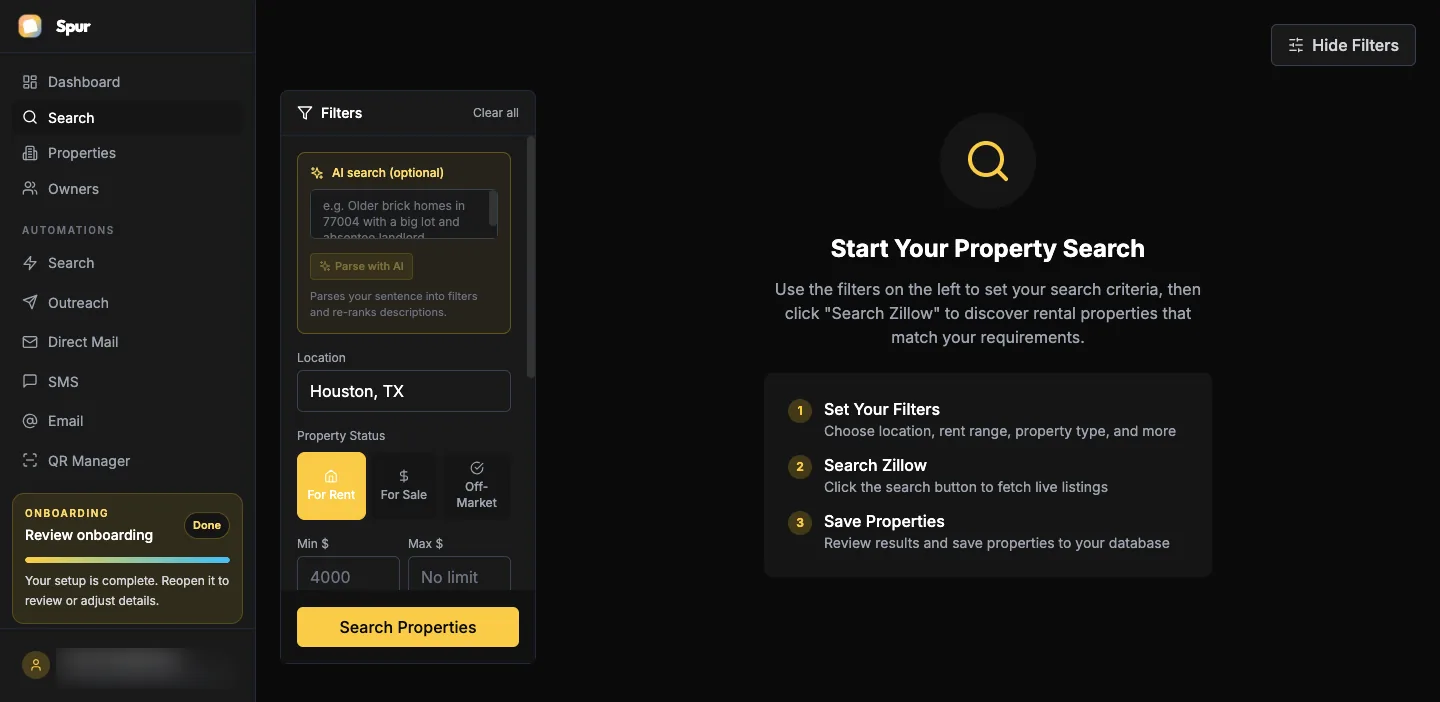
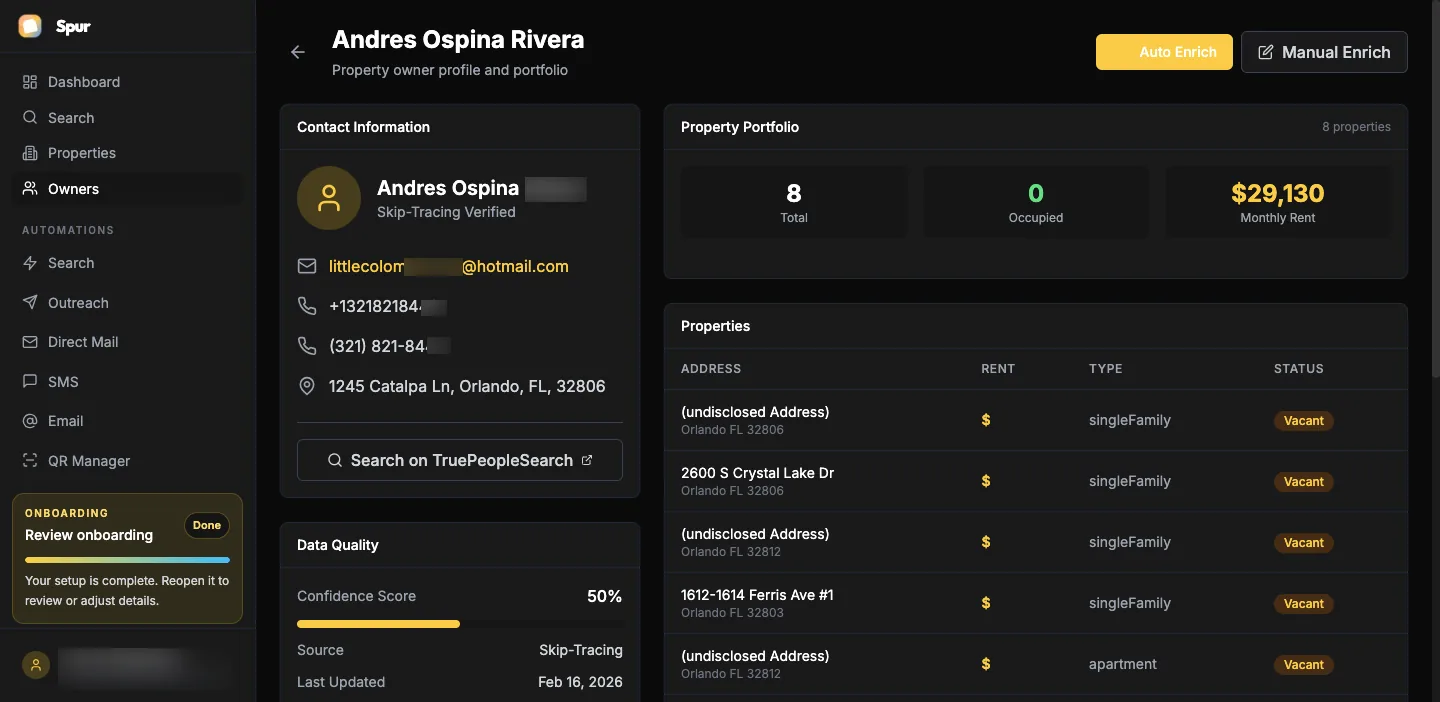
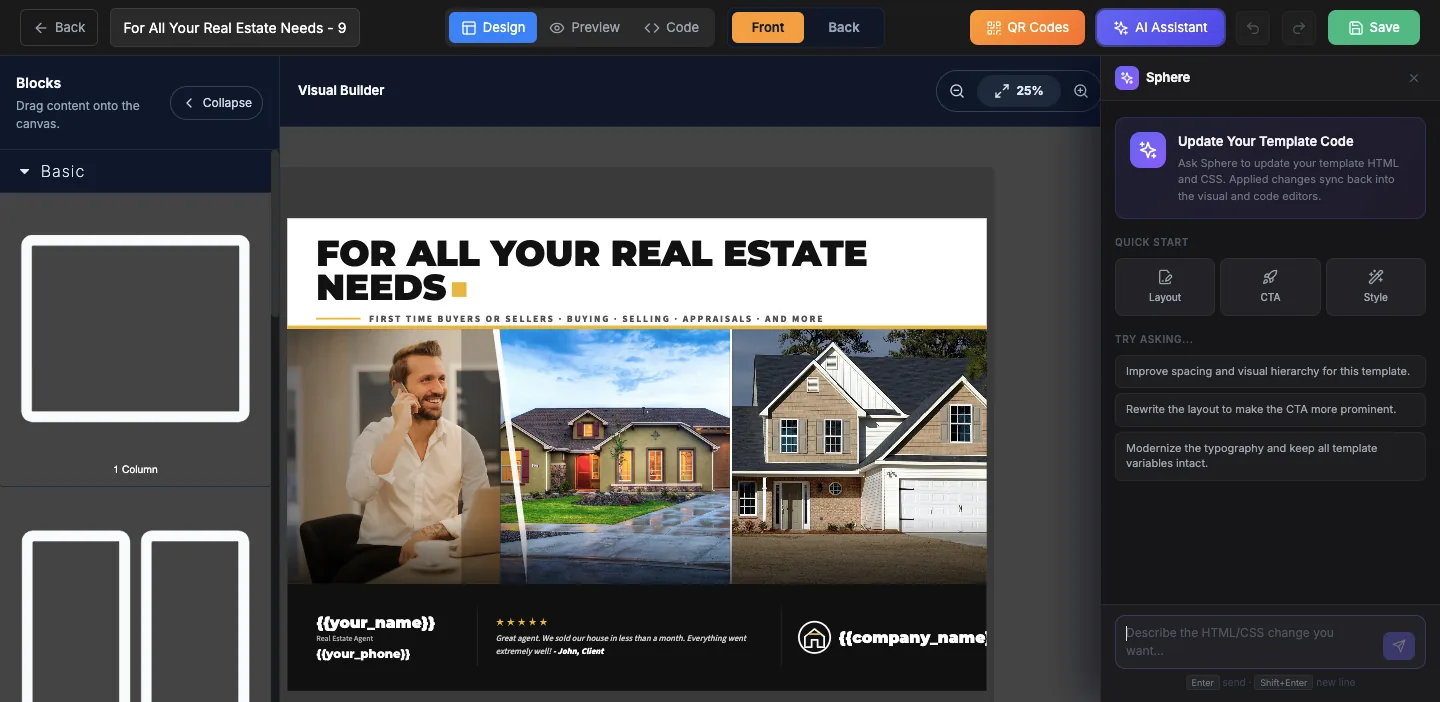
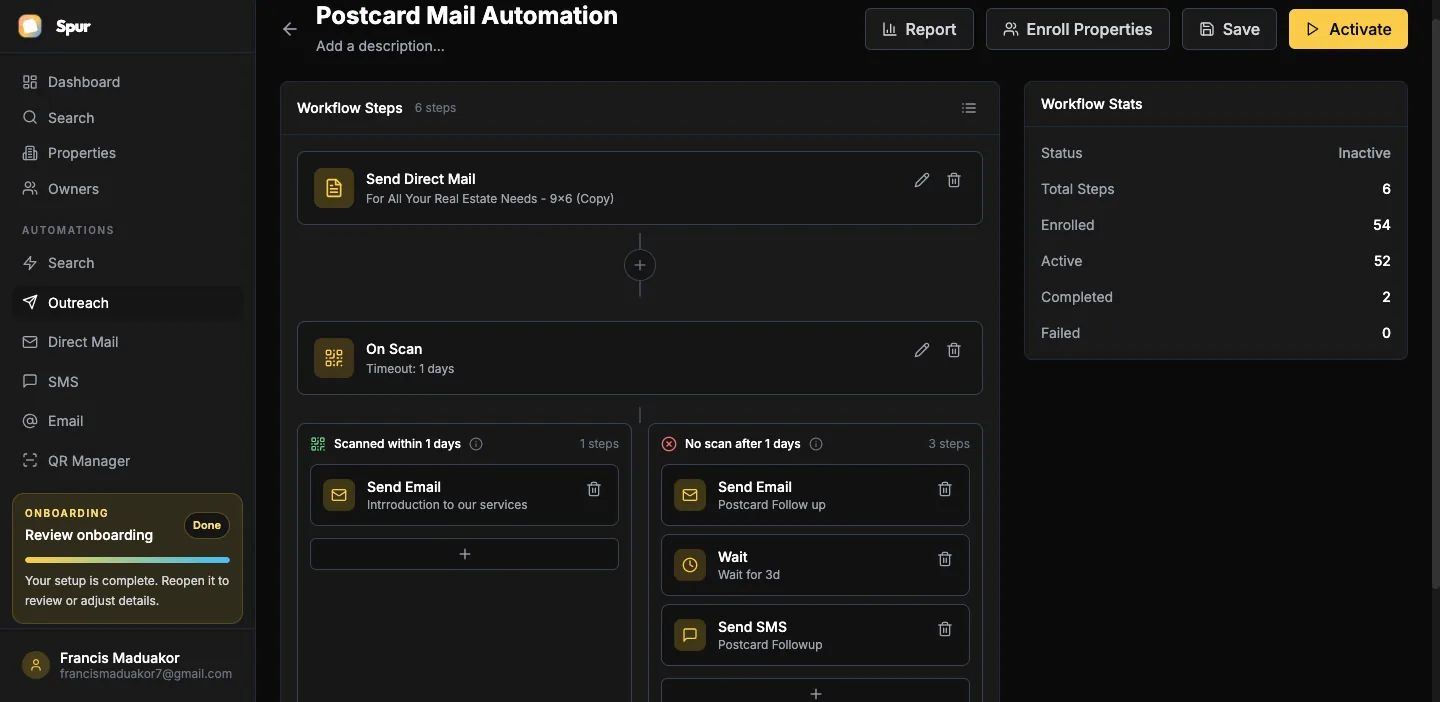
See it in Spur
A four-list program in Spur
Sample Plano homes pulled for the post-drought campaign, with tags showing which list each owner also belongs to.
Zips 75023 + 75093Built 1975–1995Owner-occupiedSlab foundationMail date: Sep 15
- Greg H.4208 Windhaven DrBuilt 1984 · slab · brickSoil-zip listScanned last summer
- Alan & Mei S.4217 Windhaven DrBuilt 1985 · slabSoil-zip list
- Roberta D.3921 Parkhaven DrBuilt 1978 · slabOlder slab listOwner 71
- Kenji & Beth M.2108 Hedgcoxe RdBuilt 1990 · slabNew owner · 2025
- Frank P.4506 Spring Creek RdBuilt 1982 · slabScanned · never booked
AI draft for Greg H. · 4208 Windhaven Dr
Hi Greg,
You scanned one of our cards last summer, so I wanted to follow up now that the drought has been long enough to matter. Homes on Windhaven were built in the mid-1980s on clay that swells and shrinks with the weather, and this is the time of year we see the most movement.
A free inspection takes about an hour. We measure the slab, look at the brick and door frames, and tell you honestly if everything is within normal range. If it is, we'll say so in writing.
Scan the code to pick a time.
Daniel Pruitt · Lone Star Foundation Pros · (972) 555-0146
Sample data for illustration. Your results depend on your market and filters.
Playbook
What a foundation repair direct mail program looks like
A program is more than a mailing. It is a set of lists with their own message, timing, and goal, running on a calendar so the pipeline doesn't depend on a single weather event. For foundation repair, where each job is large and infrequent, that consistency is the difference between steady months and long gaps.
The first list is soil-zip homes: owner-occupied slabs and pier-and-beam homes built before 1995 in the neighborhoods where your soil moves. This is your widest net, and the card on it is educational: here are the signs, here is why they appear in this soil, and here is a free inspection.
The second list is older slab homes. Slabs 30 or more years old have been through decades of soil cycles and were often built to older standards. Long-time owners of these homes have seen cracks come and go, and an honest inspection helps them tell normal settling from something that needs attention.
The third is new buyers, whose inspection reports sometimes note settlement and whose first year of ownership is when they fix what they inherited. The fourth is follow-up: owners who scanned but never booked. These are the warmest leads you have, and a gentle second card after a drought or heavy rain often finishes the sale.
Track cost per signed repair by list. Because foundation jobs vary in size, the numbers can swing, but over a year they show which lists produce inspections and which produce repairs. Shift budget to the lists that sign.
Pair mail with a good landing page and a prompt callback. A scan is only valuable if the owner reaches a clear page that explains the inspection and a person who answers within a day. Companies that measure time-to-first-contact usually find their close rate climbs sharply when callbacks happen the same day, which makes the program more profitable without mailing a single additional card.
8×+return on a year of Spur Team from a four-list program
A steady program beats waiting for the weather.
- Spur Team: $49/mo billed annually = $588/yr
- 2,000 cards on Team at $0.94 each = $1,880 across the year
- 3 pier repairs (~$9,000) + 2 leveling jobs (~$4,500) + 1 drainage fix (~$2,500) ≈ $38,500
Example math. Job size, response, and close rates vary. Run your own numbers →
One tool, not four
Spur vs. the usual seasonal flyer
What you needThe usual waySpur
Four lists on their own schedulesOne flyer when the phone is quiet✓ Built in
Scanners followed up automaticallyInterested owners forgotten✓ Built in
Mailed automatically every seasonRemember to reorder✓ Built in
Cost per signed repair by listCost per mailer, no results✓ Built in
Soil, age, and ownership targetingWhole zip code✓ Built in
Direct Mail Program by the numbers
Why a standing program beats one-off mail
Infrequent, high-value
most owners need foundation work once, so a steady stream of new prospects matters more than repeat business
Every address
USPS delivers to every household, including owners who aren't searching today
8×+
return on a year of Spur Team from a four-list program
FAQ
Foundation repair mail program questions
How many foundation lists should I mail?
Four cover most of the business: soil-zip homes, older slabs, new buyers, and scanners who never booked.
How often should I mail?
Each list mails once or twice a year on its own schedule, and follow-ups go out after drought or heavy rain.
How do I know which list is working?
Each card has its own QR code, so scans, inspections, and signed repairs tie back to the list, the street, and the mail date.
Does Spur include printing and postage?
Yes. Spur prints and mails first-class, with cards on Team at $0.94 each.
Keep exploring
Related plays and guides
Start in minutes. No card required.
Smooth out the feast and the famine.
Set four foundation lists and their dates once, and Spur mails each on time, every year. Free to start.
Build my foundation mail program — freeFree forever plan · No card · 20 property searches a month
Prefer a walkthrough? Book a demo