
Sticking doors and small cracks get ignored for years. By the time they call, the repair is bigger and more expensive.
Foundation repair play · Postcards
Foundation repair postcards that explain the signs, not scare the owner.
Foundation repair is a trust sale. A card that screams about collapse backfires; a card that calmly lists the early signs and offers a free inspection gets scanned. Spur picks homes in the soils and eras that move, writes a respectful card for each owner, and mails it with a QR code to book.
Free forever plan · No card · 20 property searches a month
USPSFirst-Class
Charles Morgan1408 Meadowbrook DrArlington, TX 76012Scan to book your free inspection
Charles M. scanned your inspection postcard · 3 min ago
AI-written for this owner · Mailed in 2 days
Clay soilsshrink and swell with drought and rain
Free inspectiona low-risk first step for a high-trust purchase
2 daysfrom approval to USPS first-class
The problem
Foundation problems grow quietly, and owners don't know who to trust.
Foundation repair has a reputation for hard sells. Cards that exaggerate drive owners away and make the whole trade look worse.
A mailer to every door wastes money on homes on stable soil, in new builds, or with different foundations entirely.
How it works
From list to mailbox in one workflow.
Five steps from a stack of flyers to inspections on the calendar.
app.usespur.com
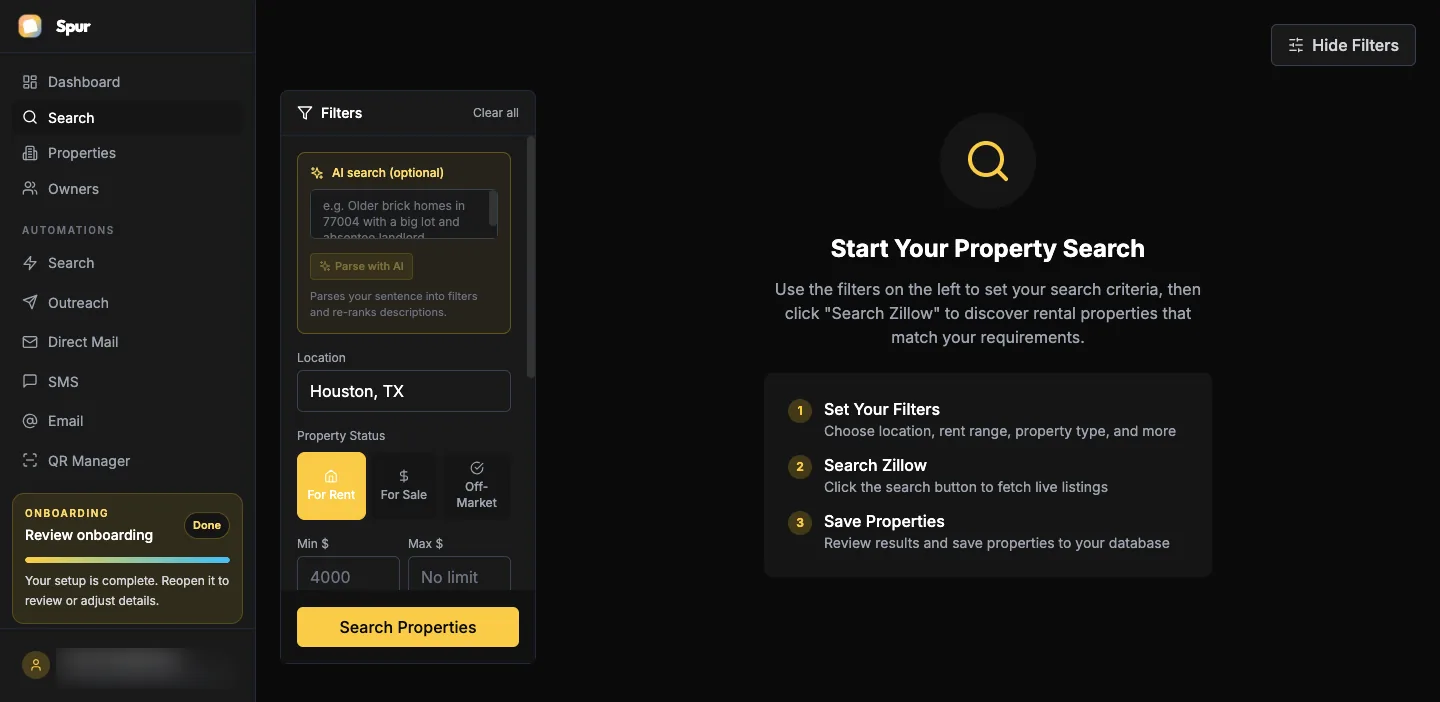
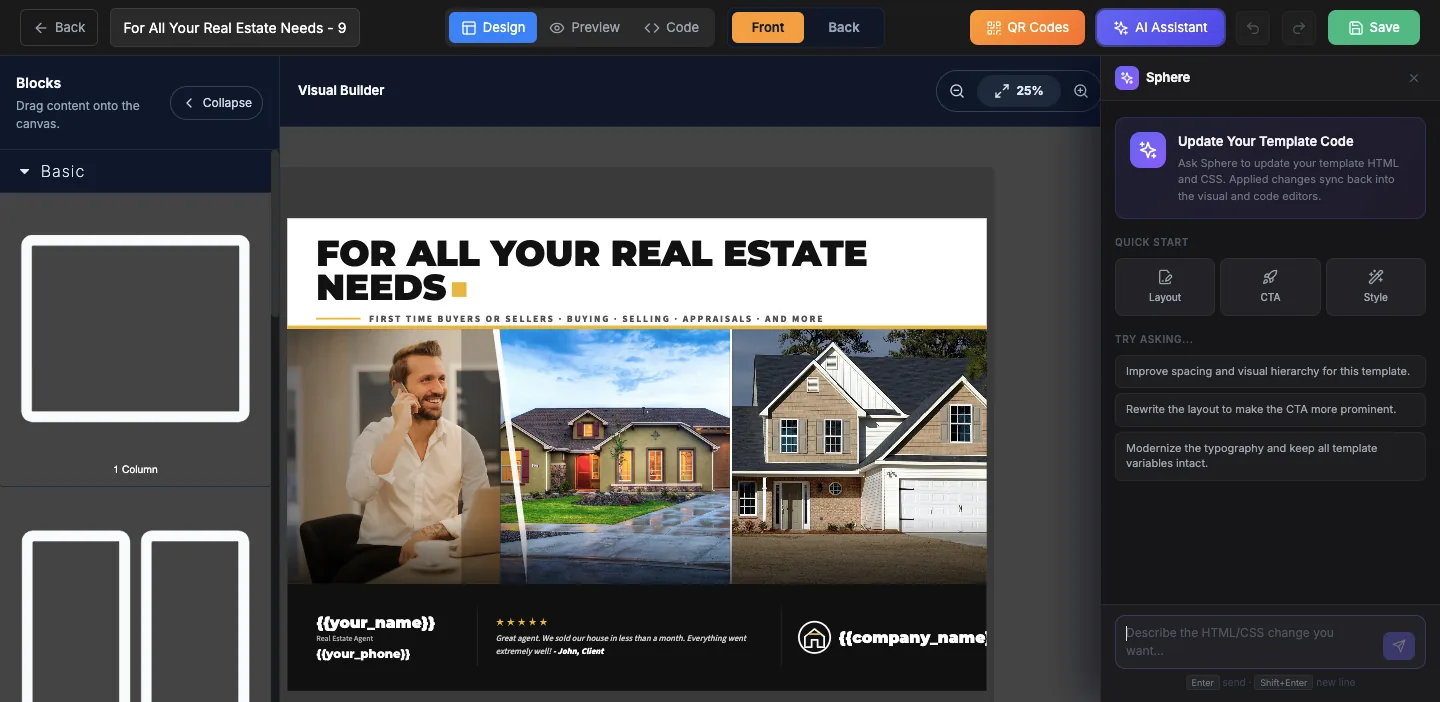
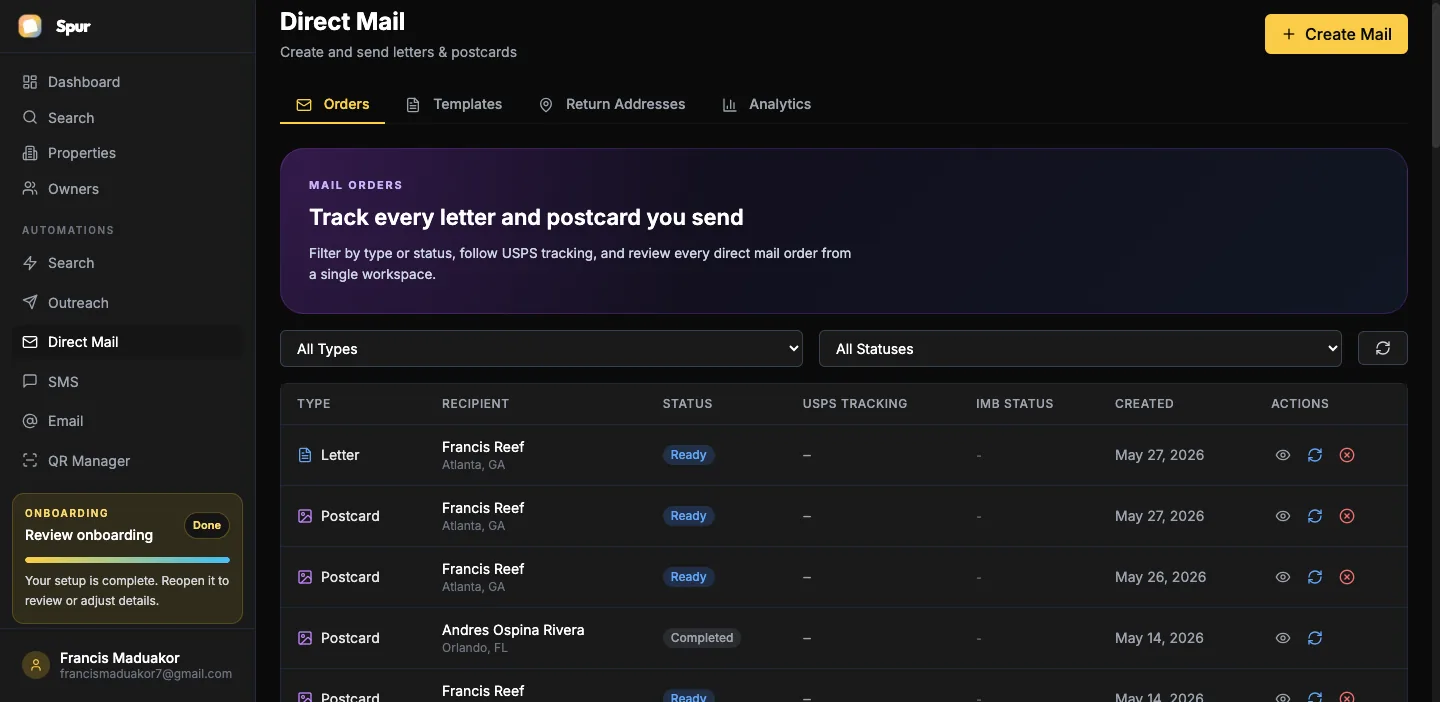
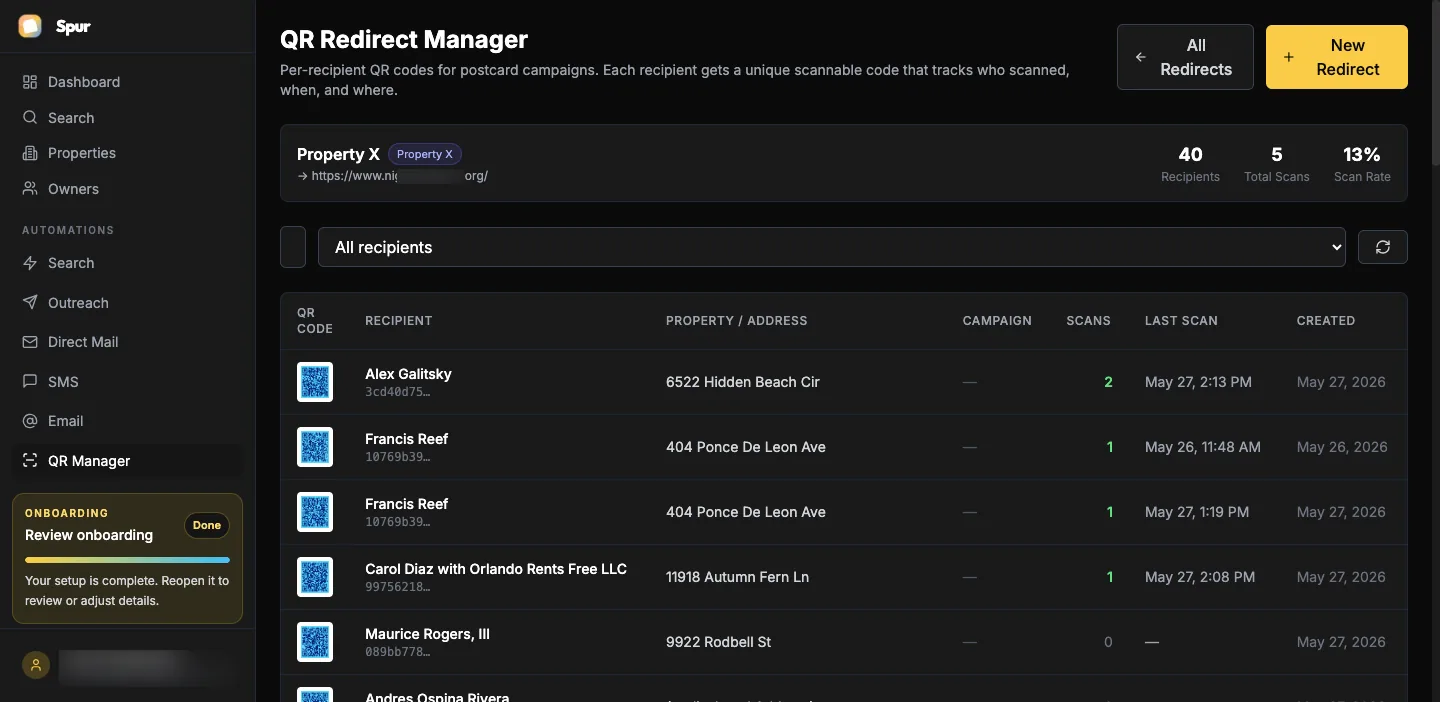
See it in Spur
A foundation inspection list in Spur
Sample Arlington homes built 1965–1995 on a slab in expansive clay, owner-occupied. Names are partly masked.
Zip 76012Built 1965–1995Owner-occupiedSlab foundationOwned 8+ yrs
- Charles M.1408 Meadowbrook DrBuilt 1978 · slab · brickOwned 21 yrs
- Denise & Paul R.1415 Meadowbrook DrBuilt 1979 · slab · brickScanned last summer
- Hector G.2210 Park Row DrBuilt 1969 · slabOwned 28 yrs
- Lynn & Tom A.1721 Barton DrBuilt 1986 · slab · brickOwned 12 yrs
- Joyce W.3305 Pioneer PkwyBuilt 1972 · slabOwner 67
AI draft for Charles M. · 1408 Meadowbrook Dr
Hi Charles,
It's been a dry summer, and homes on Meadowbrook sit on the kind of clay that shrinks when the ground dries out. When that happens, slabs can settle unevenly, and the first signs are usually small: a door that sticks, a crack that follows the mortar lines in brick, or a gap above a window.
Most of the time, these are minor and don't need work. We'll inspect your house for free, measure it, and tell you honestly whether anything needs attention.
Scan the code to book a time. There's no obligation, and no one will pressure you.
Ray Sutter · Bedrock Foundation Repair · (817) 555-0138
Sample data for illustration. Your results depend on your market and filters.
Playbook
How to write a foundation repair postcard owners trust
Foundation repair is among the highest-trust purchases a homeowner makes. The work is invisible, the price can reach five figures, and many owners have heard stories about overselling. That reputation is the first thing your card has to overcome, and the way to do it is with specificity and restraint.
Start with geography. Foundation movement is not random: it follows soil type, drought and rain cycles, and construction era. Expansive clay soils, common across parts of Texas, Oklahoma, Colorado, and the Southeast, swell when wet and shrink when dry, which stresses slab and pier foundations. Target homes in those soils, and the card is relevant before it says a word.
Name the early signs plainly. Doors and windows that stick, stair-step cracks in brick, gaps where walls meet ceilings, and slightly sloped floors are all common indicators, and none alone means a structural problem. Listing them calmly tells the owner you know what you're looking at, and lets them check their own house against the list.
Offer a free, honest inspection. The point of the card is not to sell a repair. It is to start a conversation with someone who has a vague worry and no name to call. A promise to tell them when nothing is needed is a strong differentiator, and it is the thing owners remember.
Time the card to the weather. After a dry stretch or heavy rain, soil moves and owners notice cracks. A card that arrives in those weeks matches what they just saw in their own house, which is the strongest message match you can create.
Show your credentials without bragging. A license number, an engineer's name if you work with one, the length of your warranty, and a local address do more for trust than any claim about being the best. Owners deciding who to let under their house want evidence that you're a real, accountable company, and a short credentials line on the card gives them that before they scan.
7×+return on a year of Spur Team from one pier repair
One repair covers a year of mailing.
- Spur Team: $49/mo billed annually = $588/yr
- 600 postcards on Team at $0.94 each = $564
- 1 pier repair at ~$9,000, plus any leveling or drainage work found at inspection
Example math. Repair size, close rates, and pricing vary. Run your own numbers →
One tool, not four
Spur vs. the usual foundation flyer
What you needThe usual waySpur
Homes chosen by soil, era, and ownershipEvery door in a zip code✓ Built in
Calm list of early signsScary photos and claims✓ Built in
QR code books a free inspectionHope they call a number✓ Built in
Scans tracked by street and campaignNo idea what worked✓ Built in
Mailed after drought or rainWhenever the printer finishes✓ Built in
Foundation Postcards by the numbers
Why foundation work is concentrated by soil
1 in 4
U.S. homes are estimated to have some damage caused by expansive soils
$5K–$15K+
typical range for residential pier repair
7×+
return on a year of Spur Team from one pier repair
FAQ
Foundation repair postcard questions
What should a foundation repair postcard say?
List the early signs calmly, name the soil or season, and offer a free, honest inspection. Avoid scare language, which erodes trust.
Who should I mail?
Owner-occupied homes in your clay-soil zips, built before 1995, especially slab and pier-and-beam homes owned for eight years or more.
When is the best time to mail?
After a dry spell or heavy rain, when soil movement is visible and owners are noticing cracks and sticking doors.
Can I mail the same neighborhood twice?
Yes. Owners often scan before they call. Re-mail scanners with a follow-up and keep others on a light seasonal schedule.
Keep exploring
Related plays and guides
Start in minutes. No card required.
Mail the homes on moving soil.
Pick the zips, let Spur write a calm card and mail it, and watch the inspections book. Free to start.
Find homeowners who need foundation work — freeFree forever plan · No card · 20 property searches a month
Prefer a walkthrough? Book a demo