
Hairline cracks and small gaps are easy to ignore for years, then a door stops closing.
Foundation repair play · Older slab homes
Slabs 30+ years old have a story. Help the owner read it.
A slab poured in 1985 has been through nearly 40 years of drought, flood, tree roots, and plumbing leaks. Spur finds the long-time owners of those homes in active-soil areas, writes a card about what aging slabs do, and mails an honest inspection offer.
Free forever plan · No card · 20 property searches a month
USPSFirst-Class
William Tran7618 Willow Bend DrHouston, TX 77069Scan for a free slab check
Bill T. scanned your slab check card · 6 min ago
AI-written for this owner · Mailed in 2 days
30+ yrsslab age where cumulative movement shows up
Owned 10+ yrsowners who have seen the house change
Freemeasured inspection with a written note
The problem
Older slabs show age slowly, and nobody tells the owner what's normal.
Without measurements, an owner can't tell a cosmetic crack from movement, and they're afraid to ask.
A slab leak or poor drainage can move soil under part of a slab, adding a cause owners rarely think about.
How it works
From list to mailbox in one workflow.
Five steps from a decades-old slab to a booked inspection.
app.usespur.com
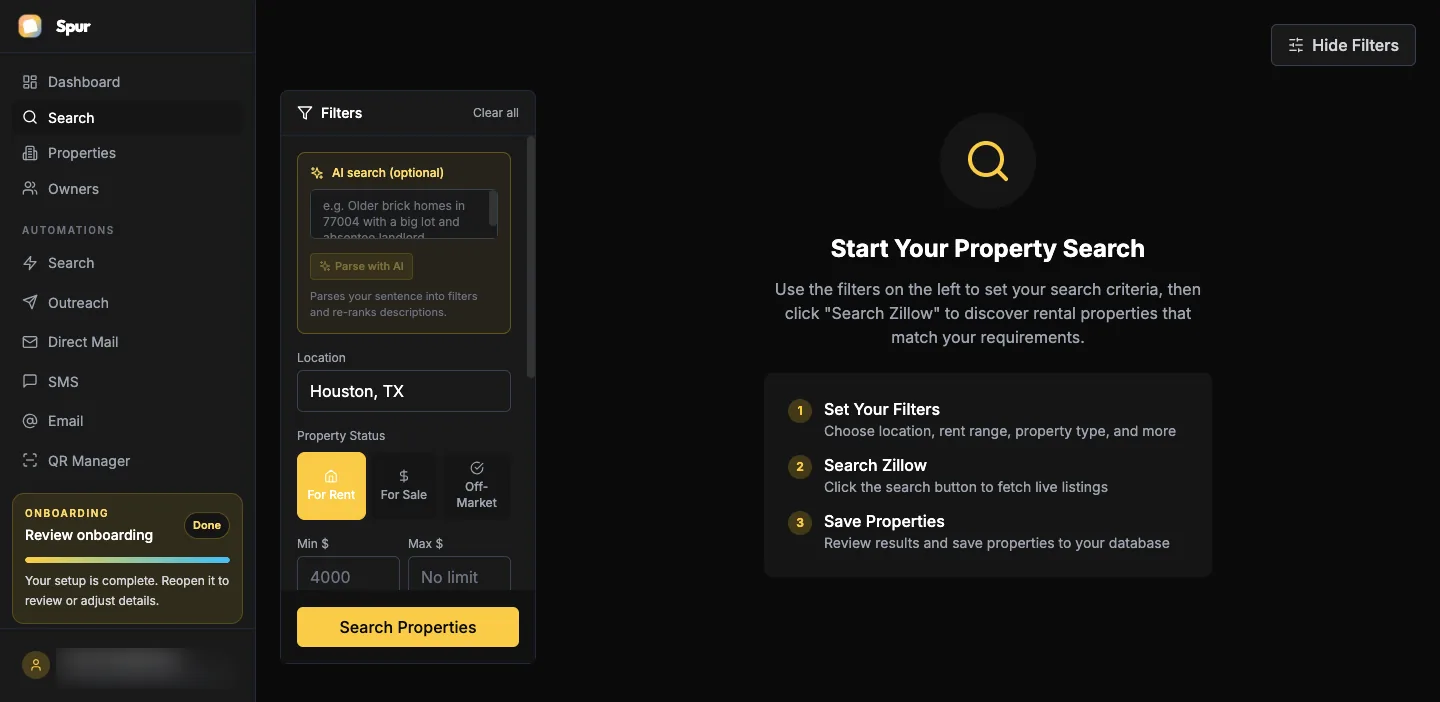
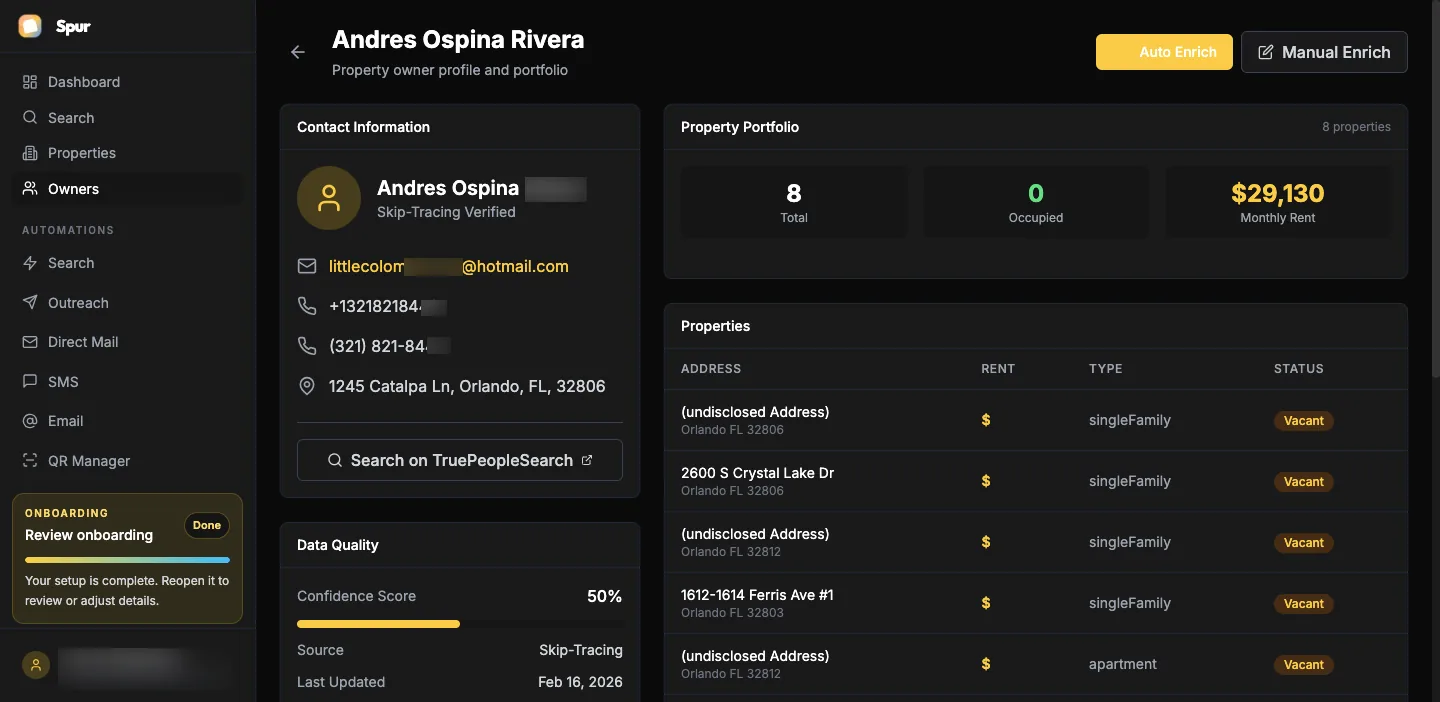


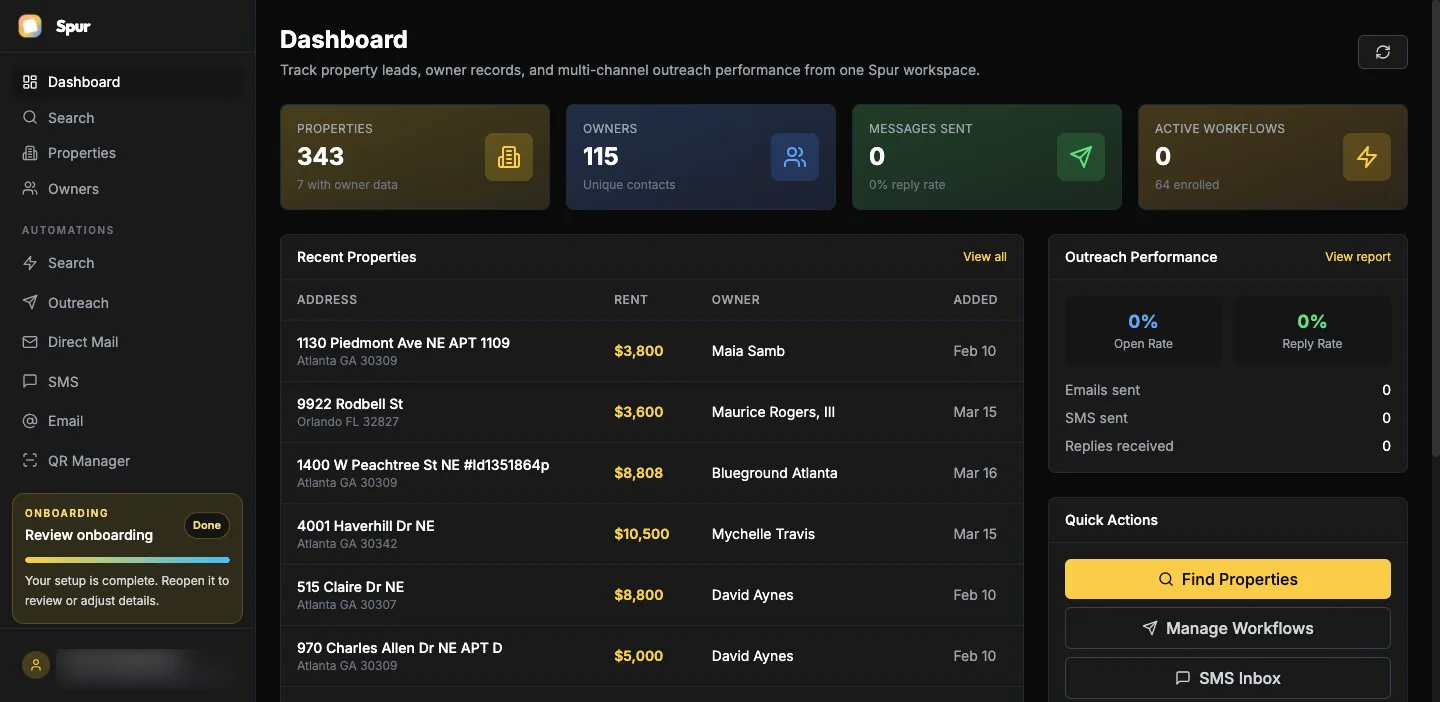
See it in Spur
An older slab list in Spur
Sample Houston homes built 1970–1992 on slab foundations, owned 10+ years. Names are partly masked.
Zips 77069 + 77070Built 1970–1992Slab foundationOwned 10+ yrsOwner-occupied
- Bill T.7618 Willow Bend DrBuilt 1983 · slab · brickOwned 24 yrs
- Carmen & Ray O.7702 Willow Bend DrBuilt 1984 · slabOwned 19 yrs
- Peggy L.6910 Oak Meadow LnBuilt 1975 · slabOwner 72Owned 33 yrs
- Jeff & Dina K.7430 Windswept LnBuilt 1988 · slabOwned 14 yrs
- Alex N.6502 Cypress Point DrBuilt 1979 · slabOwned 27 yrs
AI draft for Bill T. · 7618 Willow Bend Dr
Hi Bill,
Homes on Willow Bend were built in the early 1980s, which means the slab under yours has been through about 40 years of wet and dry cycles. That's a long time for any foundation, and small changes, a hairline crack or a door that has started to drift, are very common at this age.
We offer a free elevation survey. We measure the floor at a grid of points and give you a written map of how level your slab is today. If it's within normal range, you have a baseline to compare against in five years. If it isn't, you'll know exactly where and how much.
Scan the code to schedule. No obligation, and no pressure.
Tony Marchetti · Gulf Coast Slab & Pier · (713) 555-0137
Sample data for illustration. Your results depend on your market and filters.
Playbook
What aging slabs do, and how to talk about it honestly
A concrete slab-on-grade foundation is the most common foundation type in many warm-climate states, and the slabs poured in the 1970s and 1980s are now at an age where cumulative effects are visible. Decades of soil moisture cycles, tree roots drawing water from the ground, small plumbing leaks, and poor drainage all add up, and they rarely produce a single dramatic event. They produce gradual change.
That gradual change is why owners are hesitant. A hairline crack is easy to ignore, and a door that sticks in summer is easy to blame on humidity. Without a baseline, an owner has no way to tell whether the house is settling normally, moving slowly, or fine. The most valuable thing you can offer is a measurement.
An elevation survey, in which a technician measures floor levels at a grid of points, produces a map of how level the slab is today. It makes an invisible condition visible, and it's free of pressure: the owner gets numbers either way. If the slab is within normal tolerances, you've earned trust. If it isn't, you've made the case for the repair without a hard sell.
Explain causes in plain language. Expansive clay is one, but tree roots, plumbing leaks, and drainage that sends water to one side of the house also move soil under a slab. A good card names the likely cause for that neighborhood and tells owners what to look for, without implying that the house is failing.
Be honest about limits. Not every crack needs repair, and a company that says so is more credible when it recommends work. Keep your tone steady, give owners numbers, and let the survey carry the argument.
Consider repeat surveys as a service. An owner who got a baseline map this year can be invited to a follow-up measurement in three to five years, and those comparisons show whether movement is stable or progressing. Offering that schedule turns a one-time inspection into a relationship, and it gives your company a reason to mail the same owner again with a meaningful, specific message.
10×+return on a year of Spur Team from slab leveling jobs
A baseline survey turns worry into signed work.
- Spur Team: $49/mo billed annually = $588/yr
- 600 postcards on Team at $0.94 each = $564
- 2 slab leveling jobs (~$6,500) + 1 pier repair (~$9,000) ≈ $22,000, plus referrals from "you're fine" inspections
Example math. Job size and close rates vary. Run your own numbers →
One tool, not four
Spur vs. the usual foundation lead
What you needThe usual waySpur
Slabs chosen by age and soilWhoever searched today✓ Built in
Free elevation survey as the offer"Free estimate" with no numbers✓ Built in
Long-time owners who know the houseAnyone with a form✓ Built in
Exclusive to your companyShared with competitors✓ Built in
Scans and surveys tracked by eraNo view of what produced the job✓ Built in
Older Slab Homes by the numbers
Why older slabs are worth targeting
1 in 4
U.S. homes are estimated to have some damage caused by expansive soils
Pre-1995
slabs from this era were often designed to older standards with less reinforcement
10×+
return on a year of Spur Team from slab leveling jobs
FAQ
Older slab foundation questions
How old is an older slab?
Slabs 30 or more years old, roughly homes built before 1995, have been through decades of soil cycles and are where most gradual movement shows up.
What is an elevation survey?
A technician measures floor levels at a grid of points and produces a written map of how level the slab is today, giving the owner a baseline.
Do all older slabs need repair?
No. Many show only small, stable changes. An honest survey tells the owner which category they're in.
Can plumbing leaks affect a slab?
Yes. A leak under a slab can move soil and cause local settlement, so inspections should consider plumbing and drainage alongside soil.
Keep exploring
Related plays and guides
Start in minutes. No card required.
Give older slabs a measured answer.
Find long-time owners of aging slabs, mail an honest survey offer, and book more inspections. Free to start.
Find older slab homes — freeFree forever plan · No card · 20 property searches a month
Prefer a walkthrough? Book a demo