
An owner who fills out a form may get calls from four companies in an hour, and each one pitches a different fix.
Foundation repair play · Inspection leads
Foundation inspection leads from the neighborhoods where the soil moves.
The best foundation leads aren't shared form fills from a marketplace. They're long-time owners of older homes in soils that shift, who've noticed a crack or a sticking door and haven't called anyone yet. Spur finds them by soil zip, build year, and ownership, and alerts you when they scan.
Free forever plan · No card · 20 property searches a month
USPSFirst-Class
Guadalupe Reyes2210 Culebra RdSan Antonio, TX 78228Scan to book your free inspection
Lupe R. scanned your inspection card · 9 min ago
AI-written for this owner · Mailed in 2 days
Clay zipsthe soil zones where foundation work concentrates
Built pre-1995slabs with decades of wet-dry cycles
$5K–$15K+typical residential pier repair
The problem
Most foundation leads are late, shared, or untargeted.
A small crack feels like it can wait, so owners don't call until a door won't close or a repair estimate shocks them.
A mailer to every door reaches homes on stable ground, new builds, and owners with different foundations.
How it works
From list to mailbox in one workflow.
Five steps from a map of moving soil to a booked inspection.
app.usespur.com
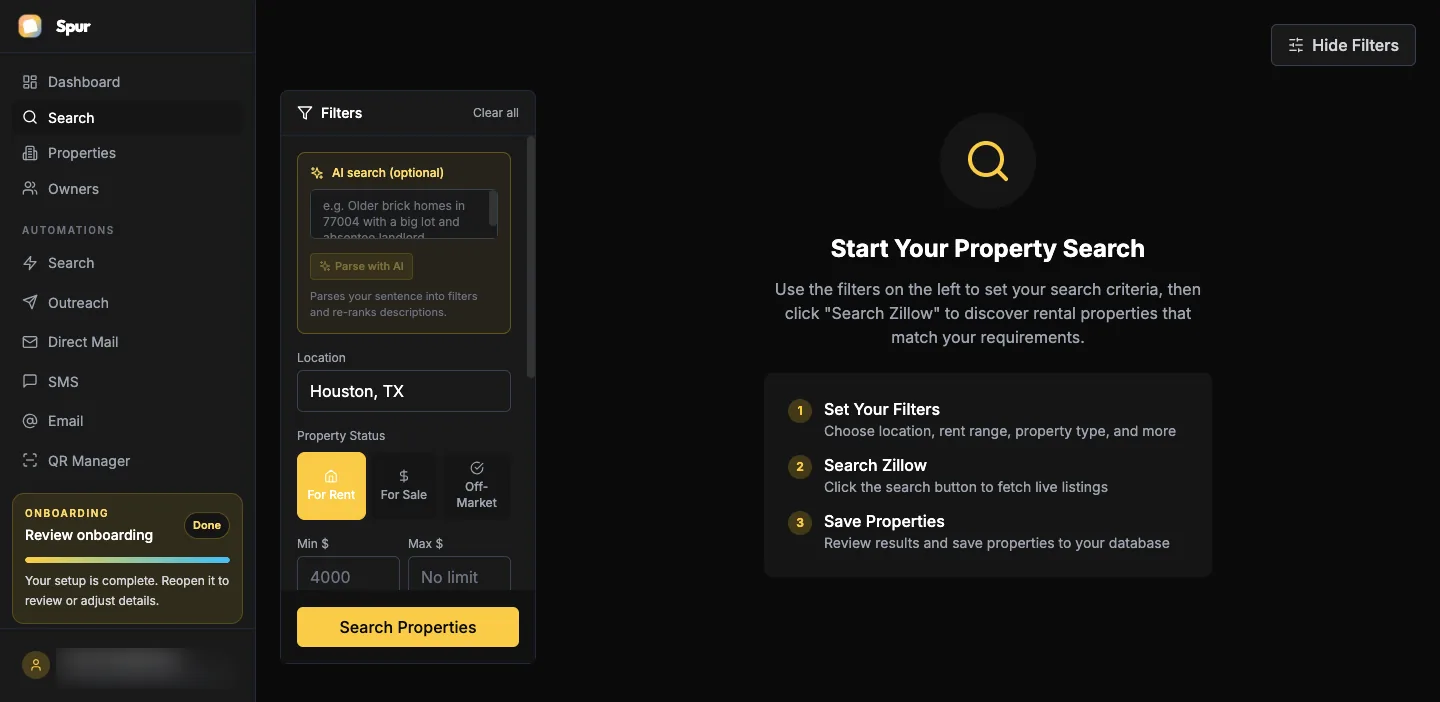
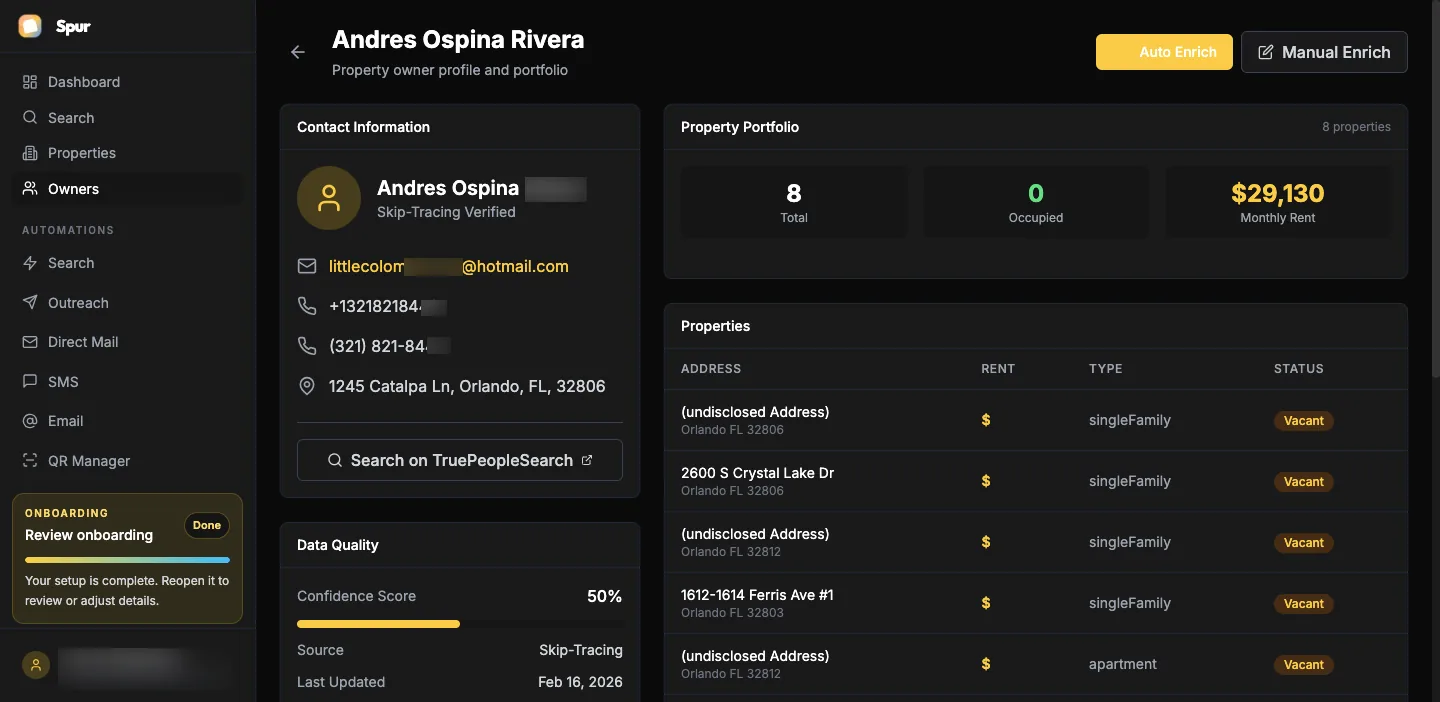
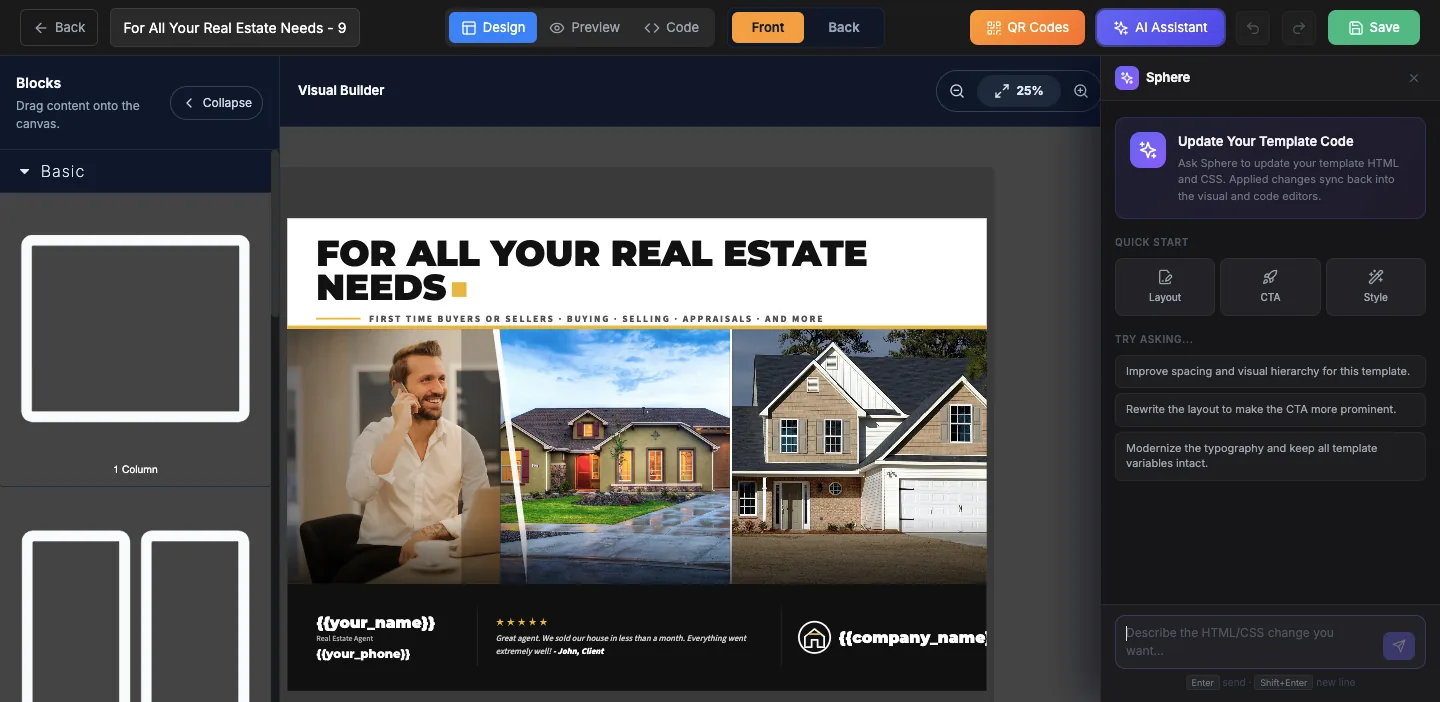
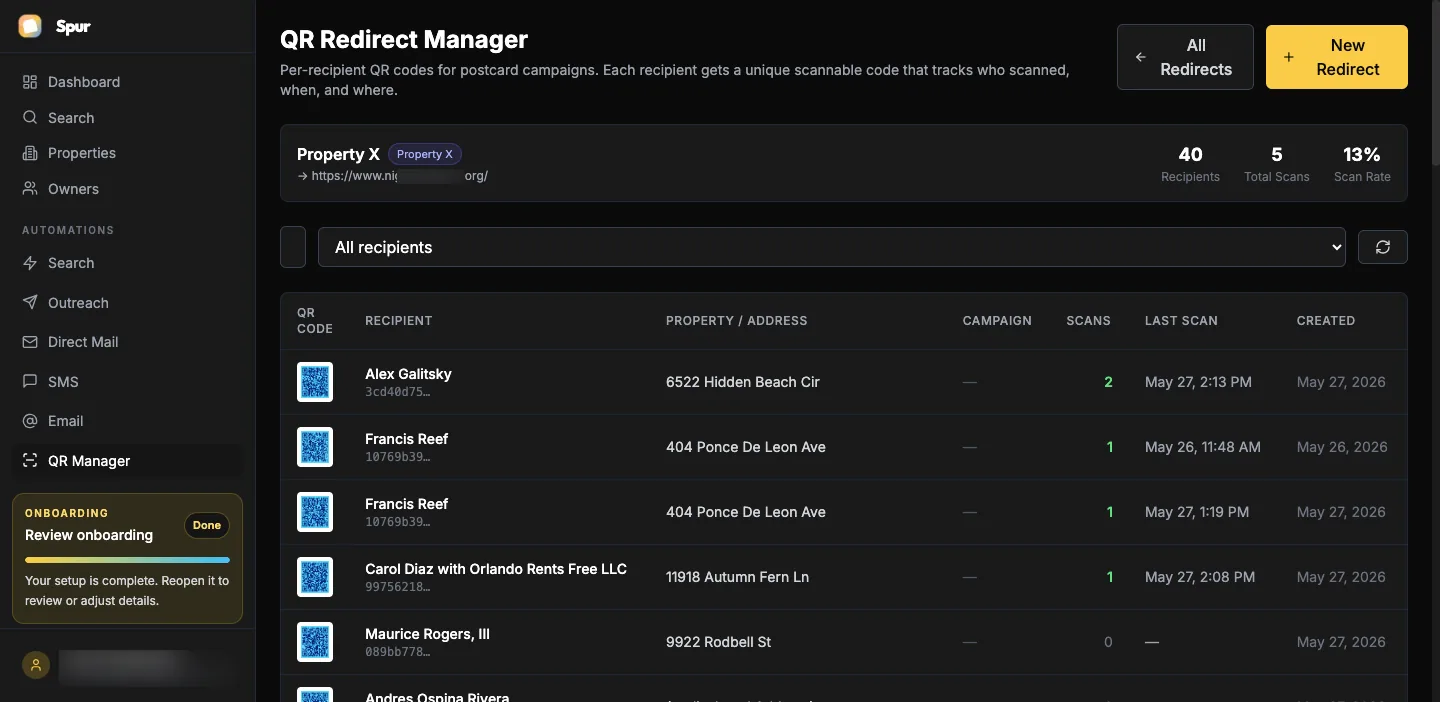
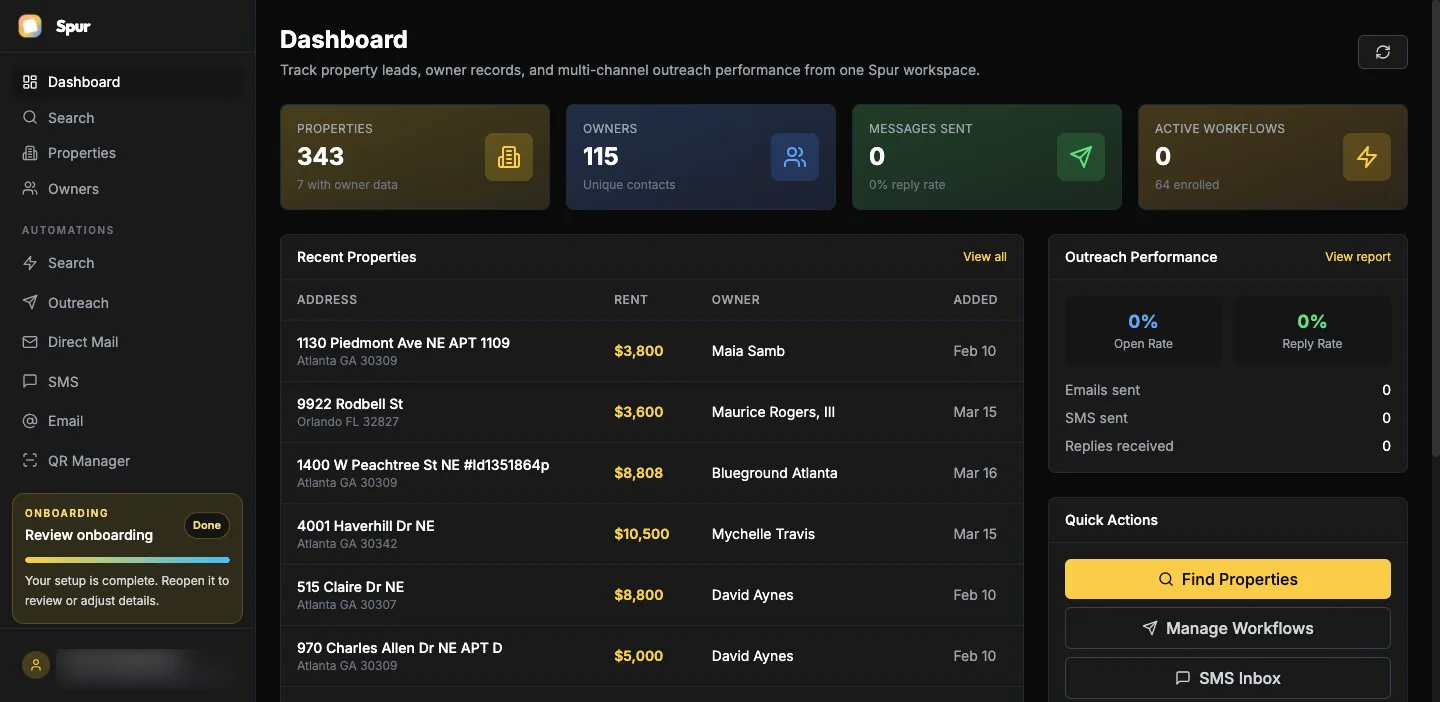
See it in Spur
A foundation inspection list in Spur
Sample San Antonio homes built 1965–1992 on slab foundations in expansive clay. Names are partly masked.
Zips 78228 + 78238Built 1965–1992Owned 8+ yrsSlab foundationOwner-occupied
- Lupe R.2210 Culebra RdBuilt 1974 · slabOwned 29 yrsClay zone
- Ernie & Dot V.2234 Culebra RdBuilt 1975 · slab · brickOwned 22 yrs
- Alma S.3109 Wurzbach RdBuilt 1968 · slabOwner 70Owned 35 yrs
- Ben & Cass T.5614 Blanco RdBuilt 1982 · slabOwned 12 yrs
- Hal M.4220 Fredericksburg RdBuilt 1971 · slabScanned last year
AI draft for Lupe R. · 2210 Culebra Rd
Hi Lupe,
Homes on Culebra were built in the early 1970s, and the soil under them swells and shrinks with the weather. After 50 years of those cycles, small signs of movement are very common: a stair-step crack in brick, a door that sticks in summer, or a gap above a window.
Most of the time these are minor. We'll inspect for free, measure the slab, and give you a written note on whether anything needs attention. If it doesn't, we'll say so and leave you with a clear answer.
Scan the code to pick a time.
Adrian Solis · Alamo Foundation Experts · (210) 555-0172
Sample data for illustration. Your results depend on your market and filters.
Playbook
How to find foundation leads without chasing the weather
Foundation repair is less random than it looks. Movement follows soil type, moisture cycles, and the way a home was built, and all three are visible in property data before an owner calls. Instead of waiting for form fills, you can reach the owners who are most likely to have a problem and haven't acted yet.
Soil comes first. Expansive clay, common across large parts of Texas, Oklahoma, Colorado, and the Southeast, swells when wet and shrinks when dry. Homes in those zones experience seasonal movement every year, and over decades the cumulative effect shows up as cracks and uneven floors. Your service area probably already has a known clay belt, and that is your target map.
Era is second. Slab foundations built before the mid-1990s were often designed to older standards, with less reinforcement and more variation in site preparation. Add owner occupancy and eight or more years of ownership, and you find the owners who have seen the house through several wet-dry cycles and are most likely to have noticed changes.
Make the offer an inspection, not a repair. Owners are wary of foundation sales pitches. A free, measured, written inspection removes risk, and an honest "you're fine" builds more trust than any ad. Many owners who hear that will refer you to neighbors with real problems.
Be patient with scans. A scan from a cold card is rarely a same-week booking. Keep scanners on a light follow-up and re-mail after the next drought or heavy rain, when the cracks they noticed move again.
Document everything at the inspection. Photos, elevation readings, and a plain-language summary left with the owner turn a free visit into a record they can show a spouse, an insurer, or a future buyer. Owners who feel they were given real information, whether or not they hire you, are the ones who recommend you, which feeds the next round of inspection leads.
8×+return on a year of Spur Team from one $9,000 repair
One signed repair pays for years of Spur.
- Spur Team: $49/mo billed annually = $588/yr
- 500 postcards on Team at $0.94 each = $470
- 1 pier repair at ~$9,000 plus leveling, drainage, or a second job found at inspection
Example math. Repair size and close rates vary. Run your own numbers →
One tool, not four
Spur vs. bought leads and mass mail
What you needThe usual waySpur
Exclusive to your companyShared with every competitor✓ Built in
Homes by soil, era, and tenureWhoever filled out a form today✓ Built in
Reach owners before they shopJoin a bidding war✓ Built in
Your name and honest offer on every cardMarketplace listing✓ Built in
Cost per signed repair by listCost per lead, signed or not✓ Built in
Inspection Leads by the numbers
Why foundation leads cluster by soil
1 in 4
U.S. homes are estimated to have some damage caused by expansive soils
$5K–$15K+
typical range for residential pier repair
8×+
return on a year of Spur Team from one $9,000 repair
FAQ
Foundation inspection lead questions
How do I find foundation repair leads without buying them?
Target owner-occupied homes in your clay-soil zips built before 1995, owned for eight or more years, and mail a free inspection offer.
Are Spur's leads exclusive?
Yes. You choose the homes, the card carries your name, and scan alerts go to your company alone.
Does the owner have to have damage to book?
No. Many inspection leads have only a worry. An honest, measured answer is the offer.
How long do foundation leads take to close?
Often weeks to months. Keep scanners on a light follow-up and re-mail after the next drought or heavy rain.
Keep exploring
Related plays and guides
Start in minutes. No card required.
Find the owners before the crack gets bigger.
Target by soil, era, and ownership, mail a calm inspection offer, and book more estimates. Free to start.
Find homes ready for an inspection — freeFree forever plan · No card · 20 property searches a month
Prefer a walkthrough? Book a demo