
A mailer that lands in December misses the owner who noticed a sticking door in August.
Foundation repair play · Seasonal campaigns
Foundation campaigns timed to the drought, the rain, and the first crack.
Soil moves when the weather changes, and owners notice cracks in the weeks that follow. Spur schedules a card for each trigger, late-summer dry spell, post-storm saturation, and winter freeze-thaw, mails it as the weather turns, and alerts you as owners scan.
Free forever plan · No card · 20 property searches a month
USPSFirst-Class
Marcy Dunham5412 NW 58th StOklahoma City, OK 73122Scan for a free post-drought check
Marcy D. scanned your post-drought card · 5 min ago
AI-written for this owner · Mailed in 2 days
3 triggersdry spells, heavy rain, and freeze-thaw cycles
2–4 weeksafter the weather event is when cards land
Auto-scheduledset the triggers once and Spur mails every year
The problem
Owners notice cracks right after the weather, and marketers mail months later.
A single annual mailing can't follow drought, saturation, and freeze-thaw, the three cycles that move soil.
An owner who scanned in summer and didn't book will forget by winter without a follow-up.
How it works
From list to mailbox in one workflow.
Five steps from reacting to the weather to mailing ahead of it.
app.usespur.com
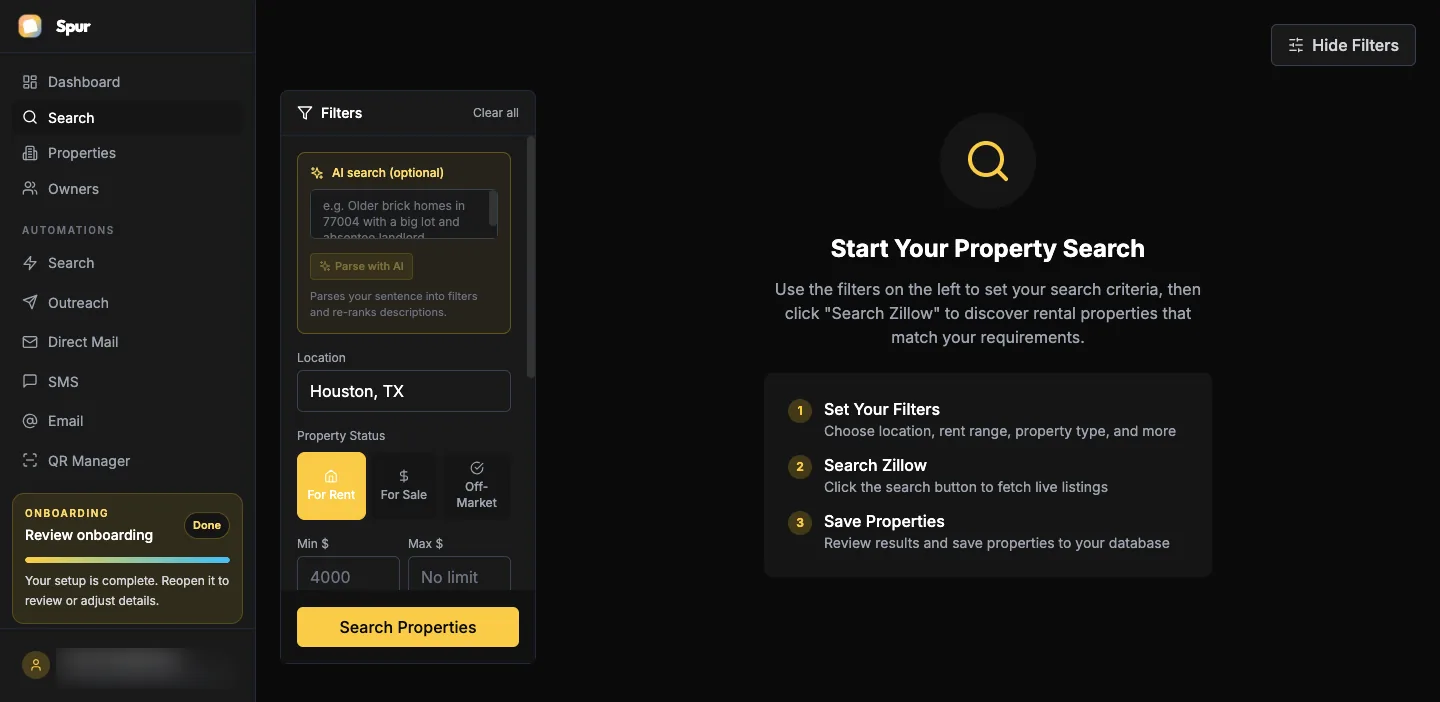
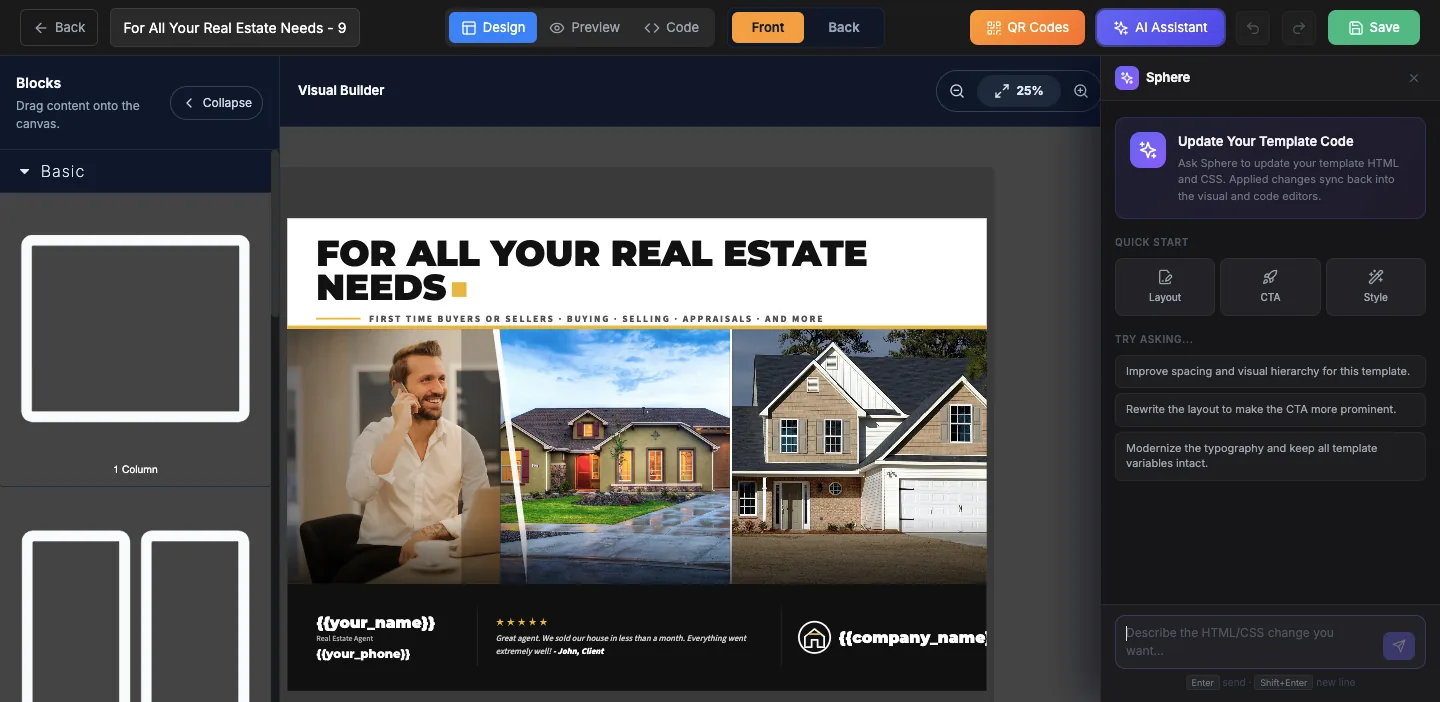
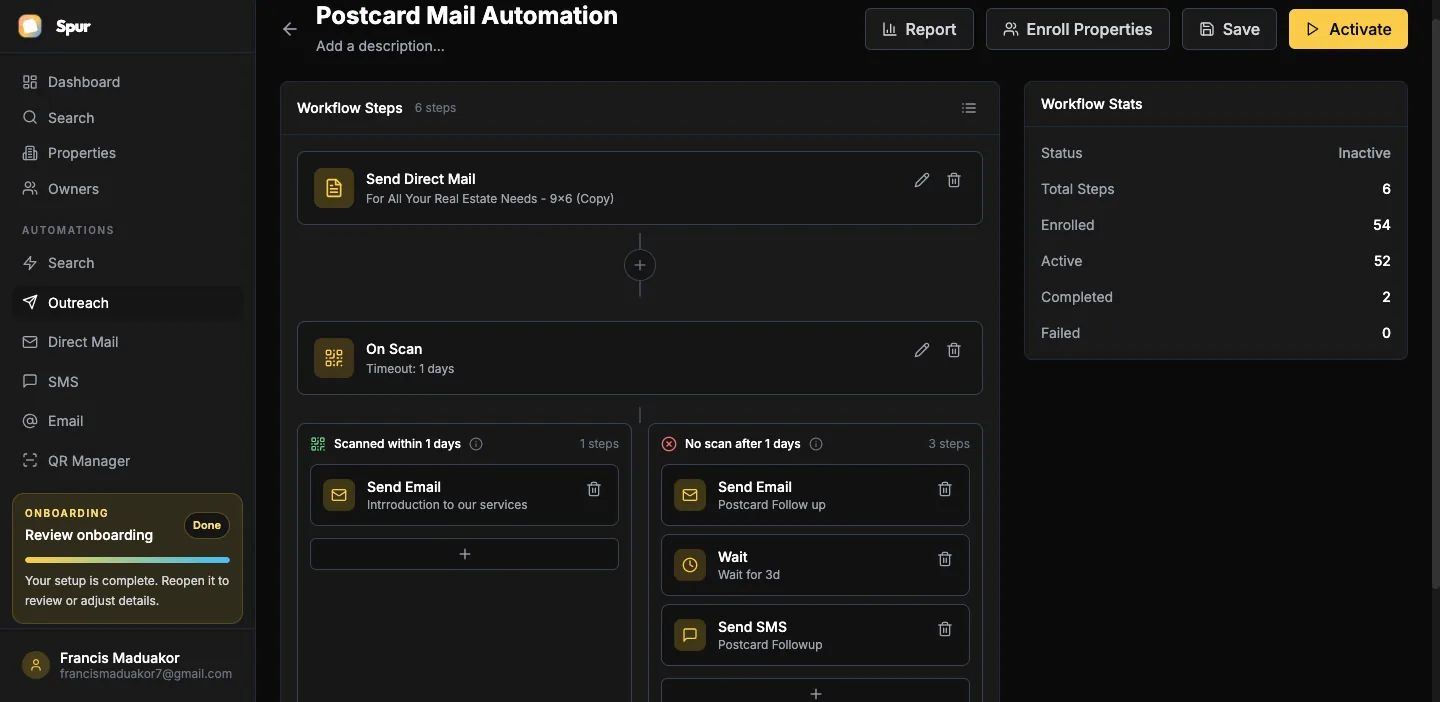
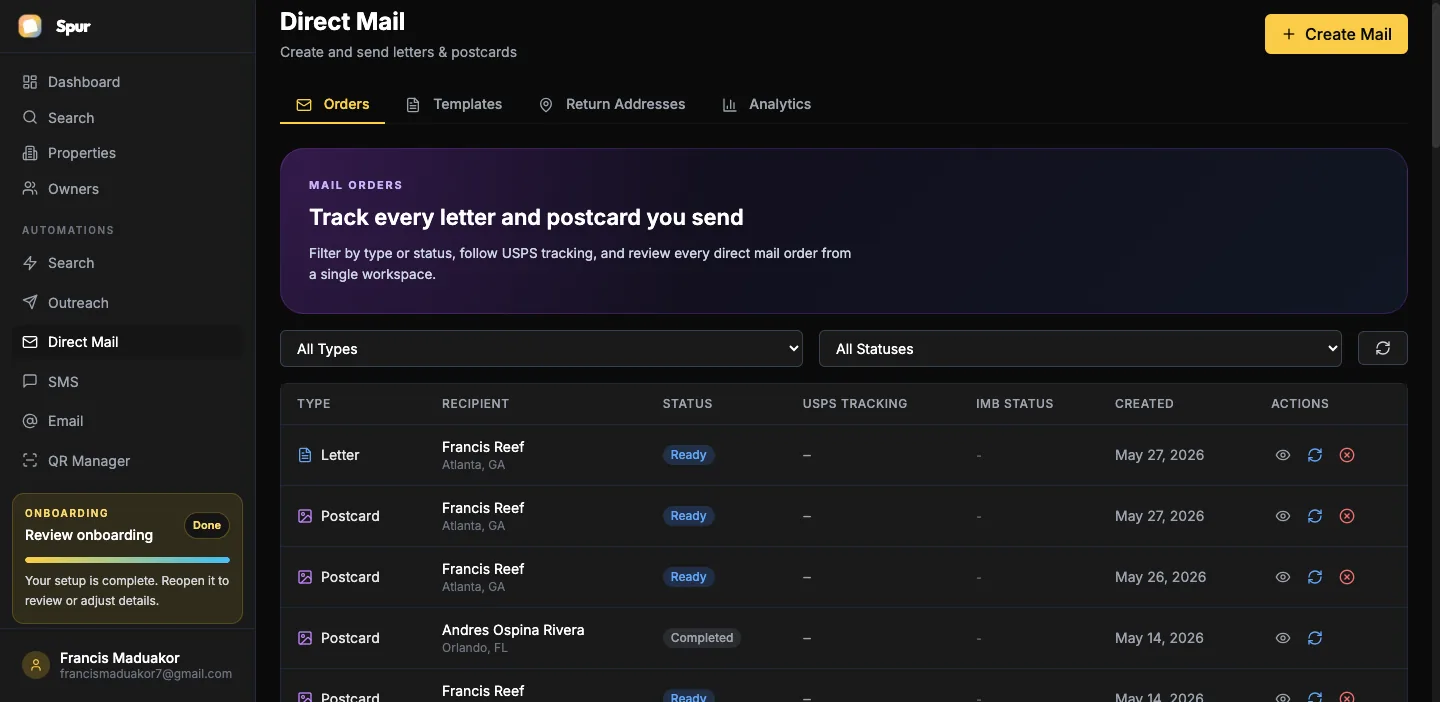
See it in Spur
A post-drought list in Spur
Sample Oklahoma City homes built 1960–1995 on slabs in expansive clay, pulled for the late-summer campaign. Names are partly masked.
Zips 73122 + 73120Built 1960–1995Slab foundationOwner-occupiedMail date: Sep 10
- Marcy D.5412 NW 58th StBuilt 1972 · slabScanned last spring
- Phil & Gail H.5508 NW 58th StBuilt 1973 · slab · brickOwned 26 yrs
- Ron S.6120 N Pennsylvania AveBuilt 1968 · slabOwner 70
- Tia & Jared K.5917 NW 61st StBuilt 1980 · slabOwned 11 yrs
- Lorraine B.6305 Briarwood LnBuilt 1978 · slabOwned 30 yrs
AI draft for Marcy D. · 5412 NW 58th St
Hi Marcy,
You scanned one of our cards earlier this year, so I wanted to follow up now that the summer has been so dry. Clay soil under older homes shrinks as it dries, and after a long stretch like this one, we usually hear about sticking doors and new cracks in brick.
A free inspection takes about an hour. We measure the slab, check the brick and door frames, and tell you honestly if everything is within the normal range.
Scan the code to pick a time, and we'll come out this month.
Jolene Marsh · Sooner State Foundation · (405) 555-0166
Sample data for illustration. Your results depend on your market and filters.
Playbook
How to time foundation marketing to the weather
Foundation movement follows moisture. In expansive clay, soil swells as it absorbs water and shrinks as it dries, and a home's foundation follows. That means the best marketing moments are not on the calendar; they're tied to weather. A long dry spell, a week of heavy rain, or a winter freeze-thaw cycle is when owners notice changes in their own houses.
The post-drought wave is the largest in many markets. After weeks without significant rain, clay shrinks, and the first visible signs are sticking doors, gaps at windows, and stair-step cracks in brick. A card two to four weeks after the dry stretch arrives just as owners start to notice. Mailing too early feels like advertising; mailing at the right moment feels like service.
The post-saturation wave follows heavy rain. Wet clay swells, which can lift parts of a slab, and drainage problems send water toward the foundation. A card that mentions drainage, gutters, and grading is useful and links naturally to the other repairs you offer.
In cold climates, freeze-thaw adds a third wave. Frost can heave soil and stress footings, and late-winter thaws are when many owners first see new cracks. A late-winter card matches that moment.
Automate the follow-up. A scan during one wave is a signal, and a gentle second card in the next wave often turns it into a booking. Set the triggers once, keep the lists current, and let Spur mail on schedule, while you spend your time on the inspections that come in.
Use local weather data to choose your dates. Drought monitors, rainfall totals, and frost records are publicly available, and many foundation companies set their mail schedule by reviewing them each quarter. A card that references the actual conditions in your city, such as the number of dry weeks this summer, feels informed and timely rather than like another generic mailer.
8×+return on a year of Spur Team from three weather-timed campaigns
One well-timed wave can fill a quarter.
- Spur Team: $49/mo billed annually = $588/yr
- 1,500 cards on Team at $0.94 each = $1,410 across three campaigns
- 3 pier repairs (~$9,000) + 2 leveling jobs (~$4,500) + 2 drainage fixes (~$2,500) ≈ $41,000
Example math. Prices, response, and close rates vary. Run your own numbers →
One tool, not four
Spur vs. the usual reactive calendar
What you needThe usual waySpur
Cards timed to drought and rainOne flyer on a fixed date✓ Built in
Different card for each triggerSame message all year✓ Built in
Scanners re-mailed in the next waveLost when the season ends✓ Built in
Mailed automatically every yearRemember to reorder✓ Built in
Results tracked by seasonNo view of what worked✓ Built in
Seasonal Campaigns by the numbers
Why timing matters for foundations
Shrink and swell
expansive clay soils change volume with moisture, moving foundations built on them
1 in 4
U.S. homes are estimated to have some damage caused by expansive soils
8×+
return on a year of Spur Team from three weather-timed campaigns
FAQ
Seasonal foundation marketing questions
When is the best time to market foundation repair?
Two to four weeks after a long dry spell or heavy rain, when soil has moved and owners are noticing cracks and sticking doors.
Can Spur trigger mail from the weather?
You set the dates for each wave and Spur mails automatically. Many companies set them for late summer, spring, and late winter.
Should I mail the same owners every season?
Not every card. Mail new prospects in each wave, and re-mail scanners with a gentler follow-up in the next one.
Does freeze-thaw matter in my area?
In cold climates, yes. Frost can heave soil and stress footings, and late-winter thaws are when many owners first notice new cracks.
Keep exploring
Related plays and guides
Start in minutes. No card required.
Mail when the soil moves.
Set your drought, rain, and freeze-thaw campaigns once, and Spur mails each on time, every year. Free to start.
Schedule my foundation campaigns — freeFree forever plan · No card · 20 property searches a month
Prefer a walkthrough? Book a demo