
A single mailing misses the owner who isn't worried today but will be after the next big storm.
Basement waterproofing play · Direct mail marketing
A basement waterproofing direct mail program that runs on the weather.
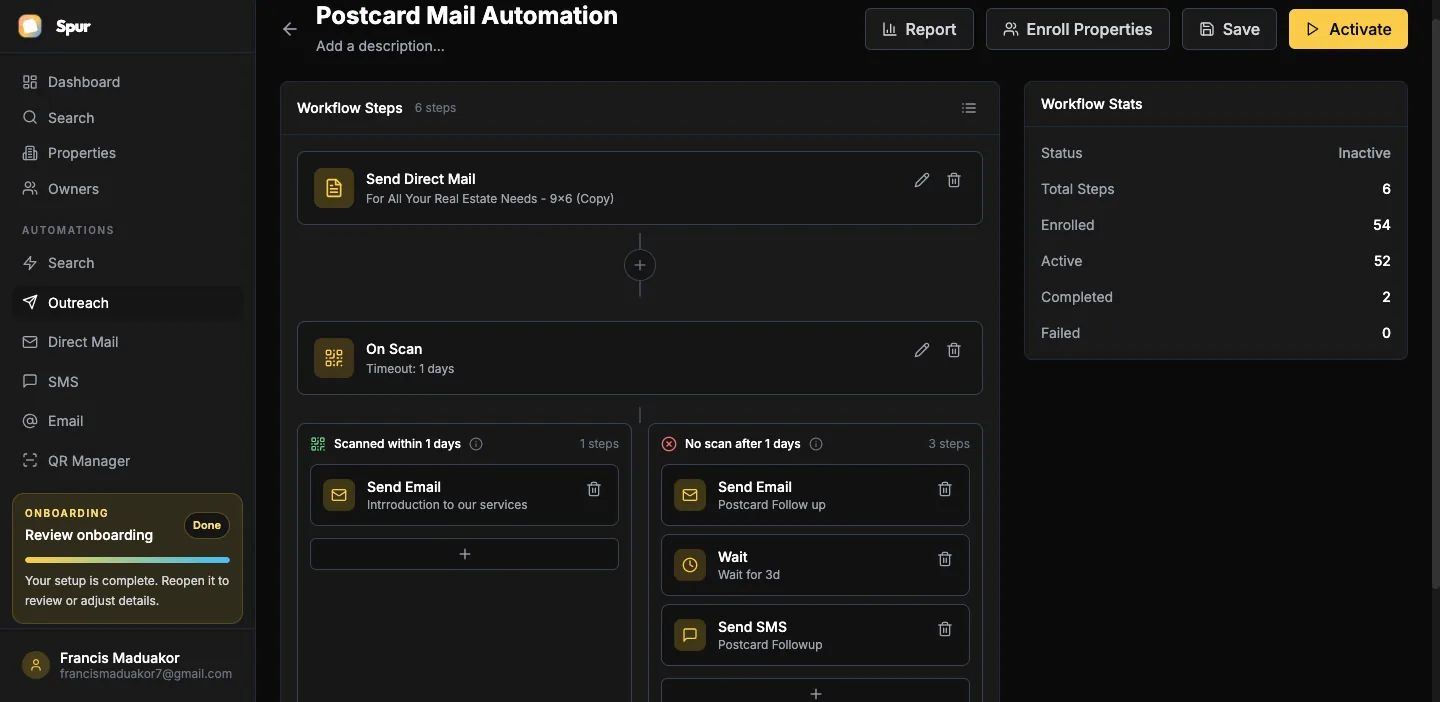
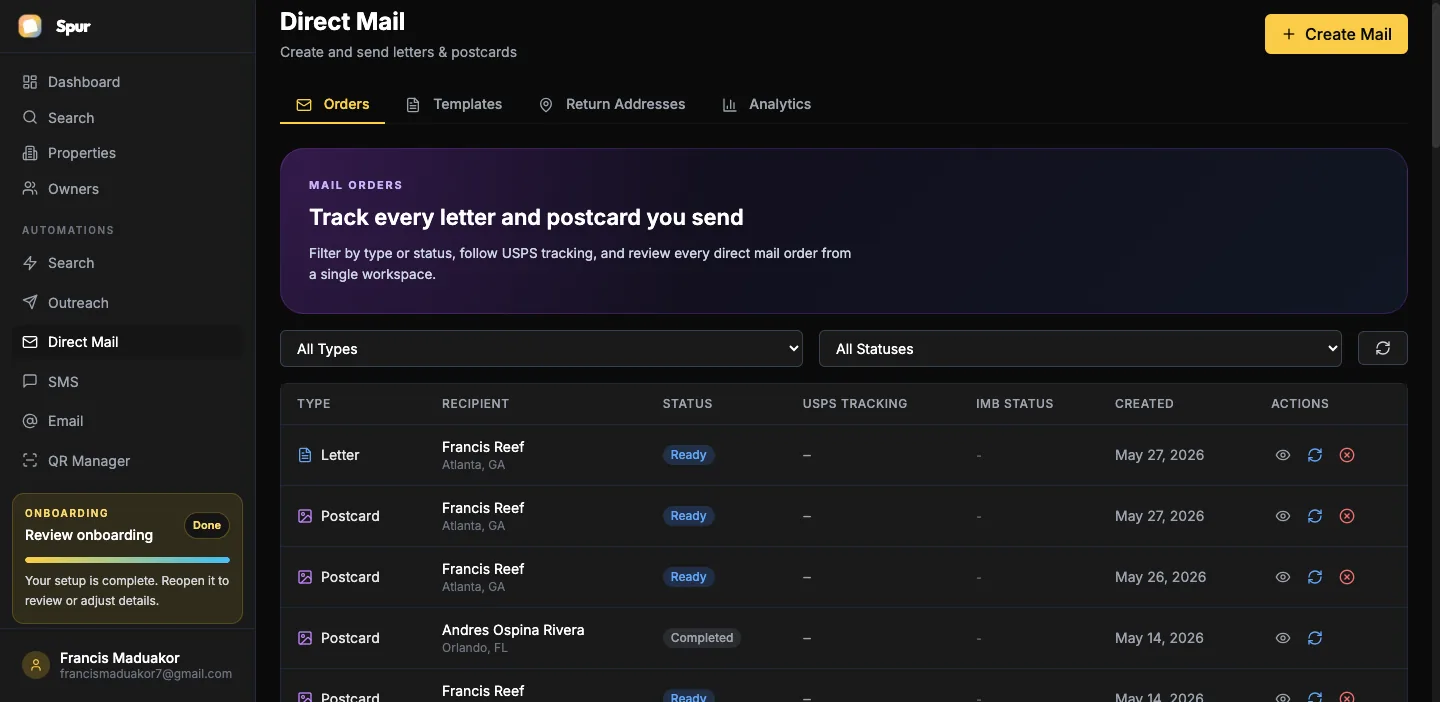
Instead of one-off mailers, Spur gives you a repeating program: the right older homes, a pre-spring wave, a post-storm wave, and a follow-up for scanners, all scheduled once and tracked to the job so you know the cost per waterproofing install.
Free forever plan · No card · 20 property searches a month
USPSFirst-Class
Marilyn Greco2290 Columbia RdWestlake, OH 44145Scan for a pre-spring inspection
Marilyn G. scanned your pre-spring postcard · 6 min ago
AI-written for this owner · Mailed in 2 days
2 wavespre-spring and post-storm cover the two moments owners act
6 weeksbefore snowmelt is when the first wave should land
1 dashboardfor lists, mailings, scans, and booked inspections
The problem
Waterproofing marketing is usually a flyer, not a program.
Flyers go out on a fixed date, not when basements are actually taking on water.
Without scans and job tracking, you can't tell which streets or which offers produced signed installs.
How it works
From list to mailbox in one workflow.
Five steps from scattered mailers to a program you can measure.
app.usespur.com
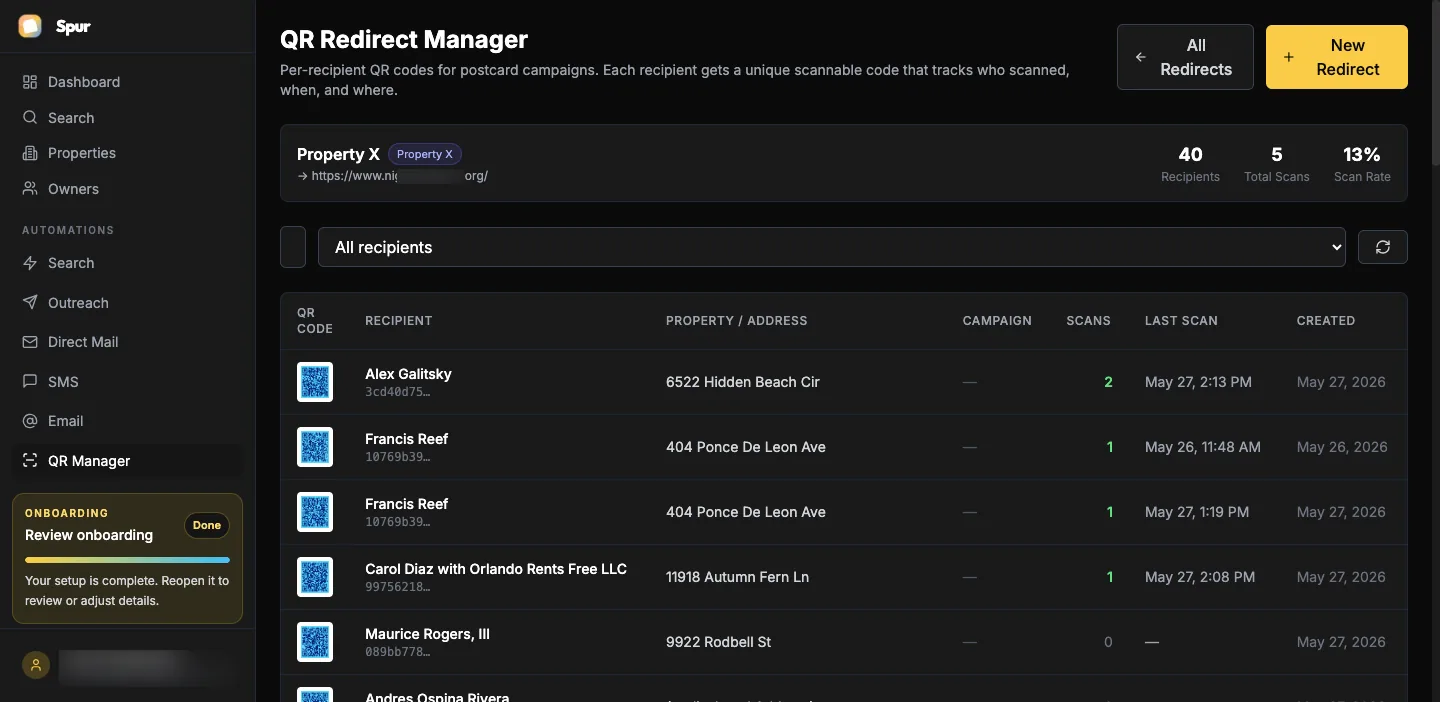
See it in Spur
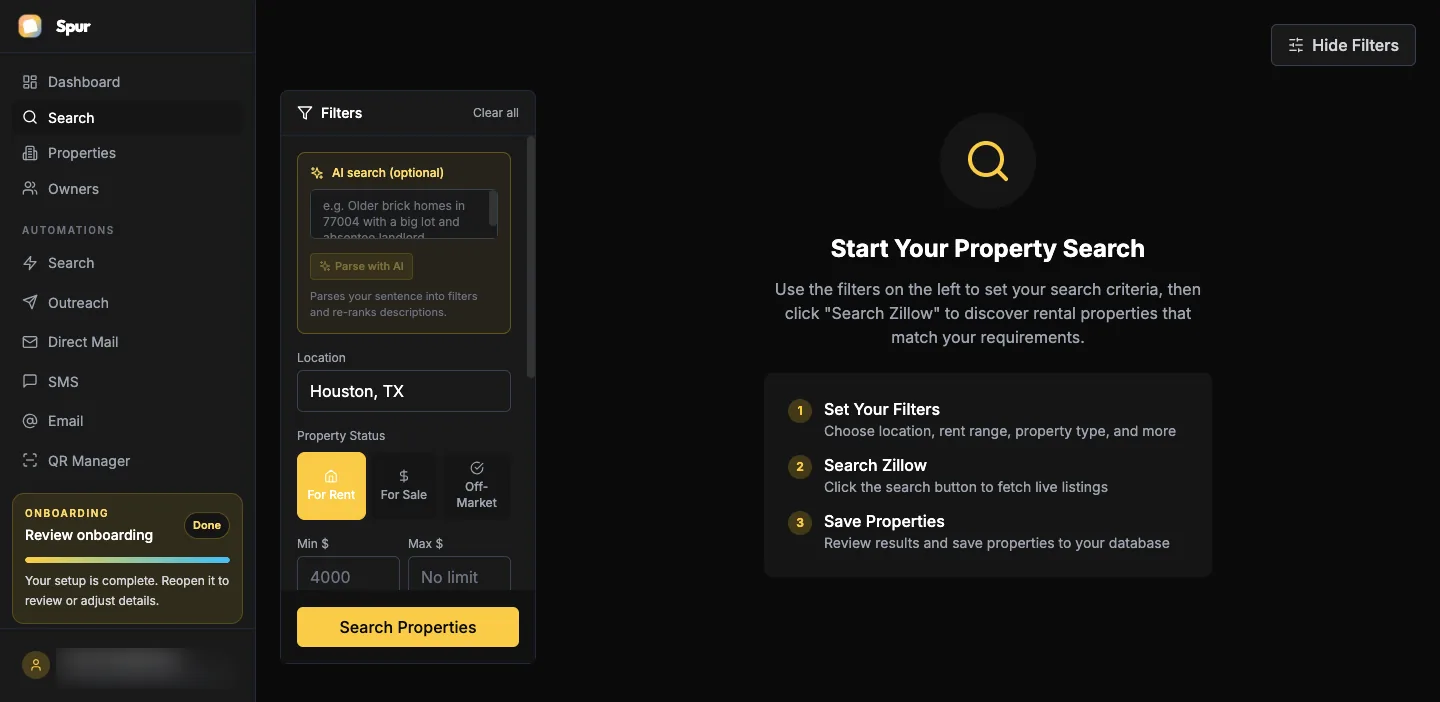
A program list in Spur
Sample Cleveland-area homes built 1945–1985 across three zips, grouped by the wave they will receive. Names are partly masked.
Zips 44145 + 44116 + 44107Built 1945–1985Owner-occupiedFull basementExclude past customers
- Marilyn G.2290 Columbia RdBuilt 1955 · full basementWave 1: pre-spring
- Dale & Joan P.20311 Hilliard BlvdBuilt 1950 · full basementWave 1Owned 27 yrs
- Chris W.19402 Detroit RdBuilt 1948 · full basementWave 2: post-storm
- Anita & Leo F.1820 Wooster RdBuilt 1968 · full basementWave 2Owned 8 yrs
- Greg T.20560 Lake RdBuilt 1961 · full basementWave 1Near creek
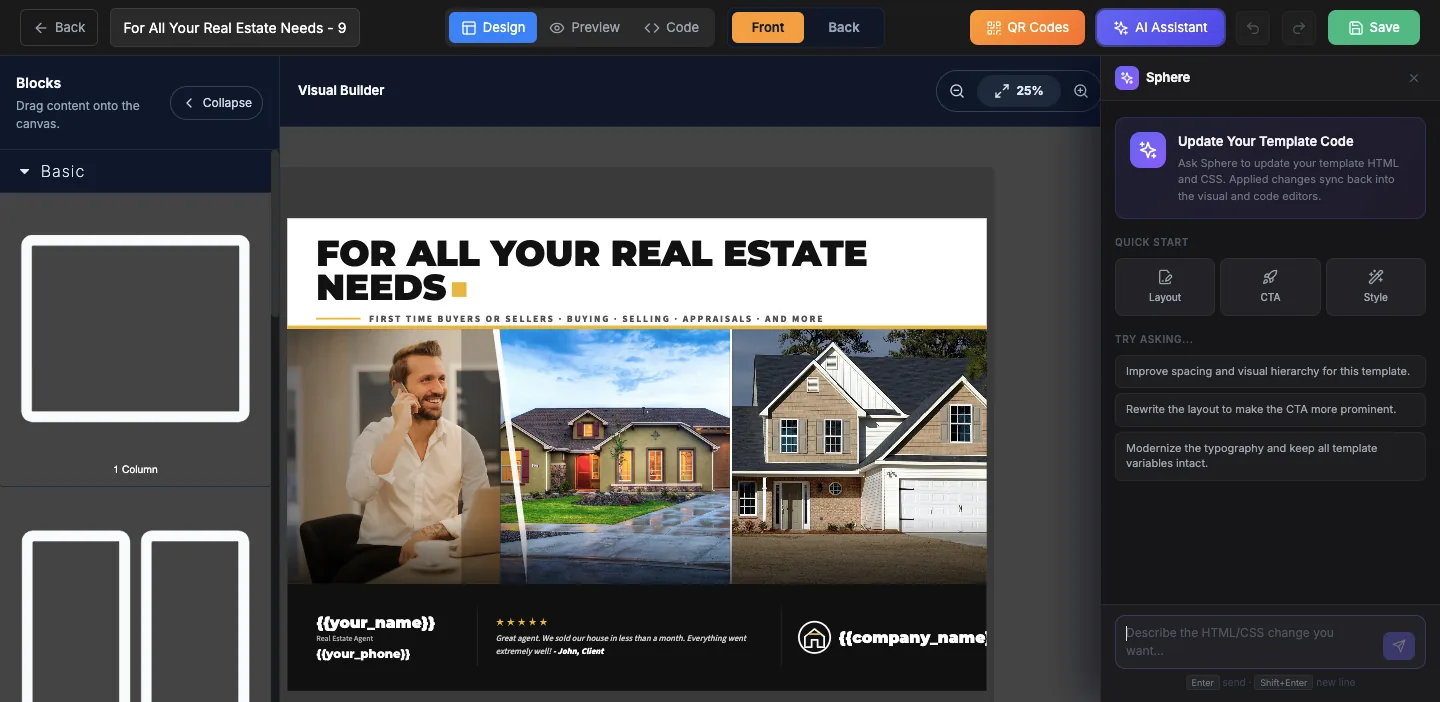
AI draft for Marilyn G. · 2290 Columbia Rd
Hi Marilyn,
We mail a short note to Westlake homeowners every March, before the snow melts, because older block-wall basements usually show their problems in the first wet weeks of spring.
If your basement has ever had damp corners, white deposits on the walls, or a sump pump that ran all night, it is worth a quick look before the thaw. We'll check it free and tell you in writing what we find.
Scan the code on this card to pick a time.
Dana Pruitt · Lakeshore Waterproofing · (216) 555-0173
Sample data for illustration. Your results depend on your market and filters.
Playbook
Why basement waterproofing needs a program, not a flyer
A wet basement is a problem with two clocks. The first is the season: snowmelt and spring rain raise the water table, and summer storms deliver short, heavy rain that overwhelms old drains. The second is the owner's attention, which spikes for a week after water appears and fades quickly once the floor dries. A direct mail program is the way to be in the mailbox on both clocks.
A good program has three layers. The first is a steady base list of older basement homes that you mail on a calendar. The second is a storm layer: when a heavy rain event hits your market, you launch a ready-made card to the affected zips within a few days. The third is follow-up: owners who scanned but didn't book get an email, a text, or a second card that references the first.
List quality matters more than volume. Build year, ownership length, owner occupancy, and property type are the public data points that separate a likely waterproofing customer from a home that will never need you. Over time, your own results sharpen the list: the streets and eras where scans and installs cluster tell you where to mail first and where to stop.
Offer design matters too. A free inspection with a written summary is the lowest-friction first step, and a basement owner who has seen your inspector in the house is far more likely to sign than one who only saw a flyer. Pair that with honest language about small fixes, because owners trust companies that say not every basement needs a full interior system.
Measure what you spend per job. Track cards mailed, scans, inspections, and signed installs. Waterproofing tickets are large enough that even a modest response rate can pay back the whole program, and the numbers show you when to scale a zip up or shut a weak one off.
12×+return on a year of Spur Team from three installs out of two waves
Two waves a year can pay for the whole program.
- Spur Team: $49/mo billed annually = $588/yr
- 1,000 cards across two waves at $0.94 each = $940
- 3 interior drain systems (~$7,500 each) ≈ $22,500
Example math. Prices, response, and close rates vary. Run your own numbers →
One tool, not four
Spur vs. the usual waterproofing marketing mix
What you needThe usual waySpur
Calendar-based waves plus a storm cardOne flyer on a fixed date✓ Built in
List built from home age and basement typeEvery door in the zip✓ Built in
Scans and jobs tracked to the streetNo view of what worked✓ Built in
Scanners followed up automaticallyForgotten after the first piece✓ Built in
One dashboard for the whole programPrint vendor, list vendor, spreadsheet✓ Built in
Direct Mail Marketing by the numbers
Why timing and tracking pay off in waterproofing
30–50%
indoor relative humidity is the range the EPA recommends for homes
24–48 hrs
is how quickly mold can begin to grow on materials left wet
12×+
return on a year of Spur Team from three installs out of two waves
FAQ
Waterproofing direct mail questions
What is a basement waterproofing direct mail program?
A repeating set of mailings to a defined list of older basement homes, usually a pre-spring wave and a post-storm wave, with follow-up for owners who scan. Spur schedules and tracks the whole thing.
How often should I mail the same homes?
Most waterproofing companies mail new prospects once or twice a year and re-mail scanners after a major storm. Spur lets you cap frequency per household.
Can I launch a card right after a storm?
Yes. Save a post-storm campaign in advance, pick the affected zips, and approve it the day after the rain. Spur prints and mails first-class, usually within two business days.
How do I know which neighborhoods work best?
Spur shows scans and booked inspections by street and zip, so you can see where older block-wall homes cluster and shift your next wave toward them.
Does this replace my website or Google ads?
No. Direct mail reaches homeowners before they search, and your site and ads catch the ones who search after a storm. Spur's QR code points scanners to your site or booking page.
Keep exploring
Related plays and guides
Start in minutes. No card required.
Turn two wet seasons into a steady inspection calendar.
Build your base list, schedule the waves, and see which streets turn scans into installs. Free to start.
Start my waterproofing mail program — freeFree forever plan · No card · 20 property searches a month
Prefer a walkthrough? Book a demo