
Clicks for "water damage near me" spike after every storm, and national franchises outbid local companies.
Restoration play · Post-storm direct mail
Post-storm direct mail that reaches flooded streets while it still matters.
After heavy rain, a tropical storm, or a hard freeze, wet drywall and carpet start growing mold in a day or two. Spur pulls the homes on the streets that were hit, writes a calm card with your 24/7 number and what to do first, and hands it to USPS within two business days, so your name is on the counter when the owner starts making calls.
Free forever plan · No card · 20 property searches a month
USPSFirst-Class
Kevin Douglas5417 Belmar TerPhiladelphia, PA 19143Scan to book a free moisture check
Kevin D. scanned your storm response card · 22 min ago
AI-written for this owner · Mailed in 2 days
2 daysfrom storm to cards handed to USPS
24–48 hrsbefore wet materials start to grow mold
Localyour address and certifications on every card
The problem
After a storm, homeowners call whoever they hear from first and trust most.
Storm chasers knock on doors within days. Owners struggle to tell who is local and who will be gone next month.
A damp basement looks fine after the water recedes. By the time it smells, the drywall and subfloor need to come out.
How it works
From list to mailbox in one workflow.
Five steps from a storm report to booked moisture inspections.
app.usespur.com
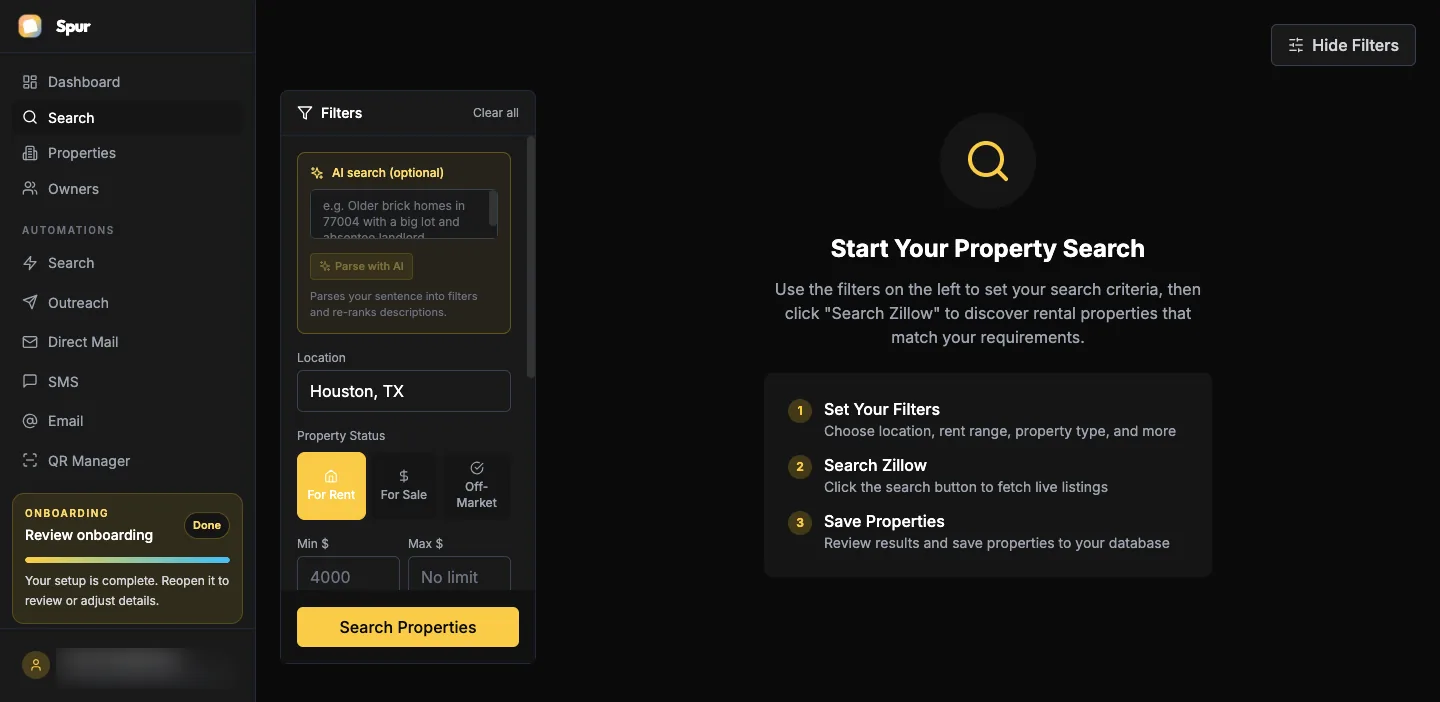
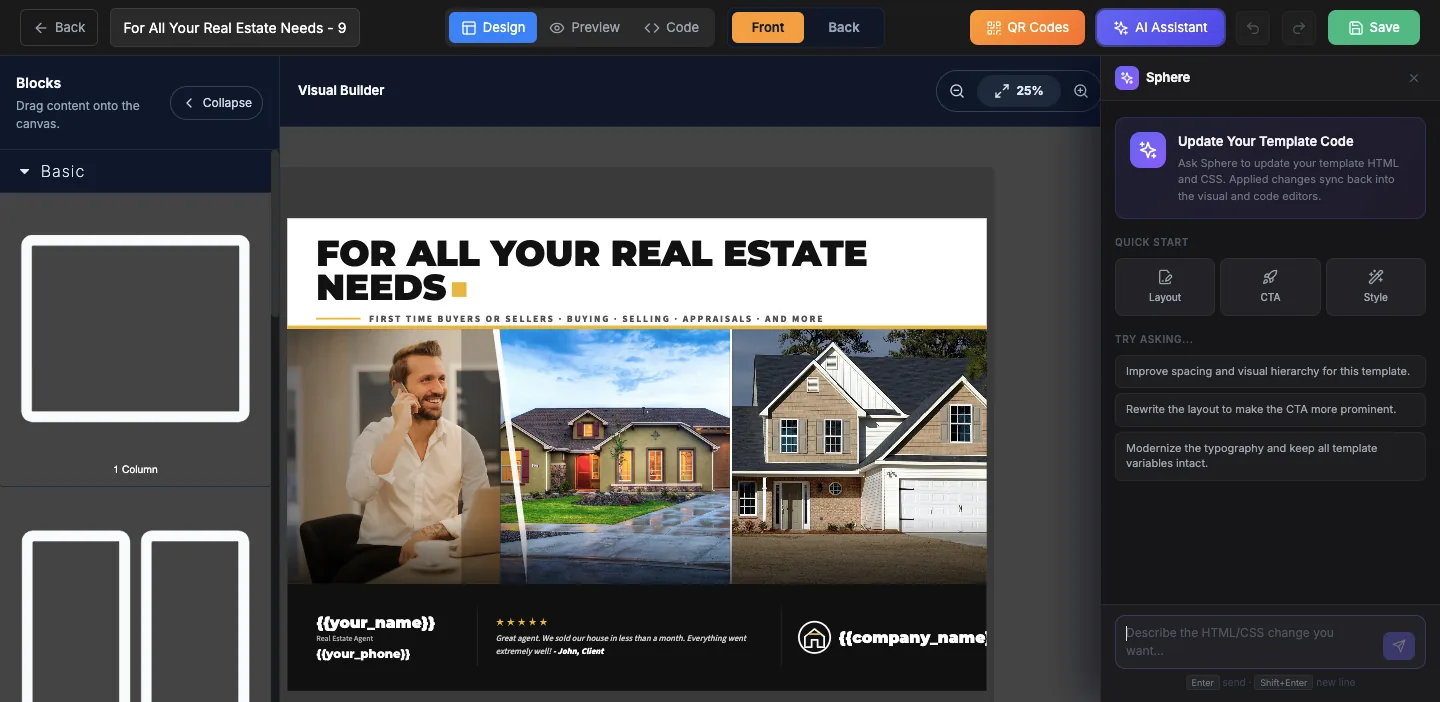
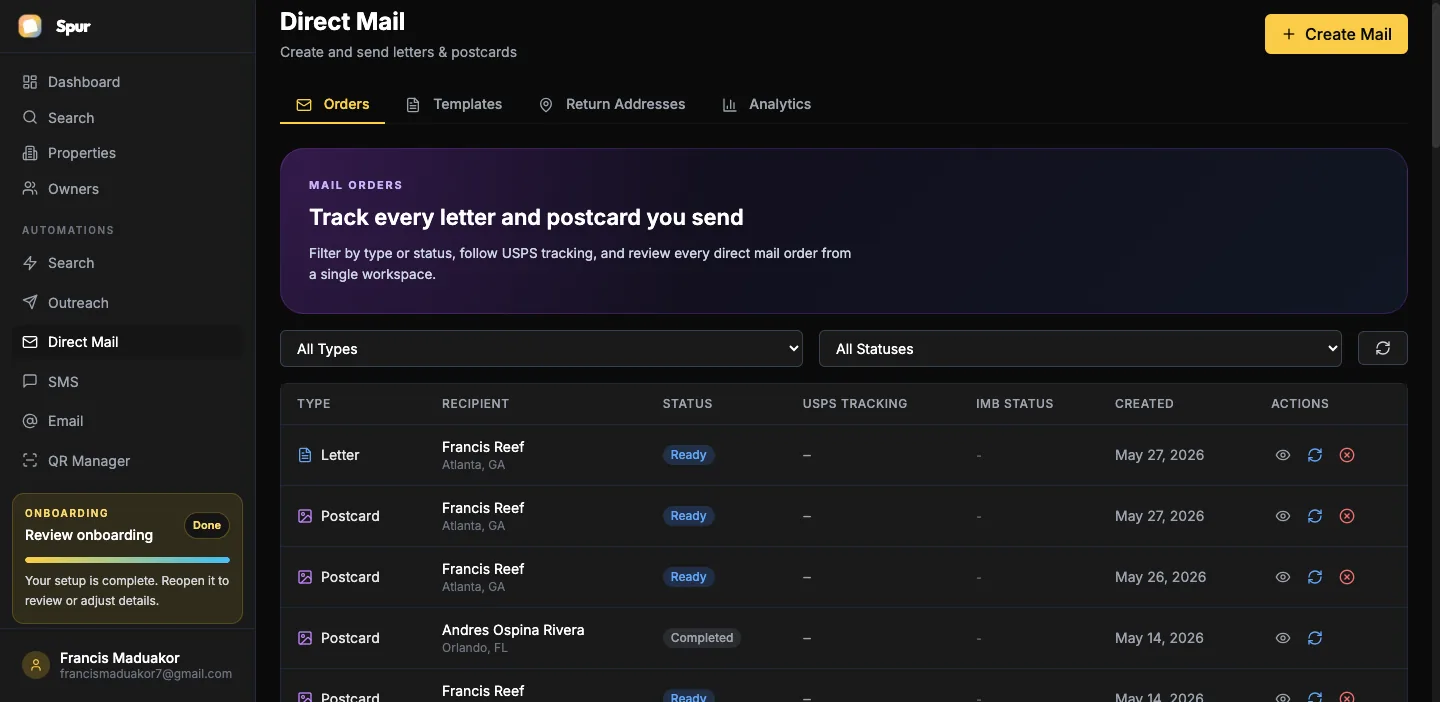
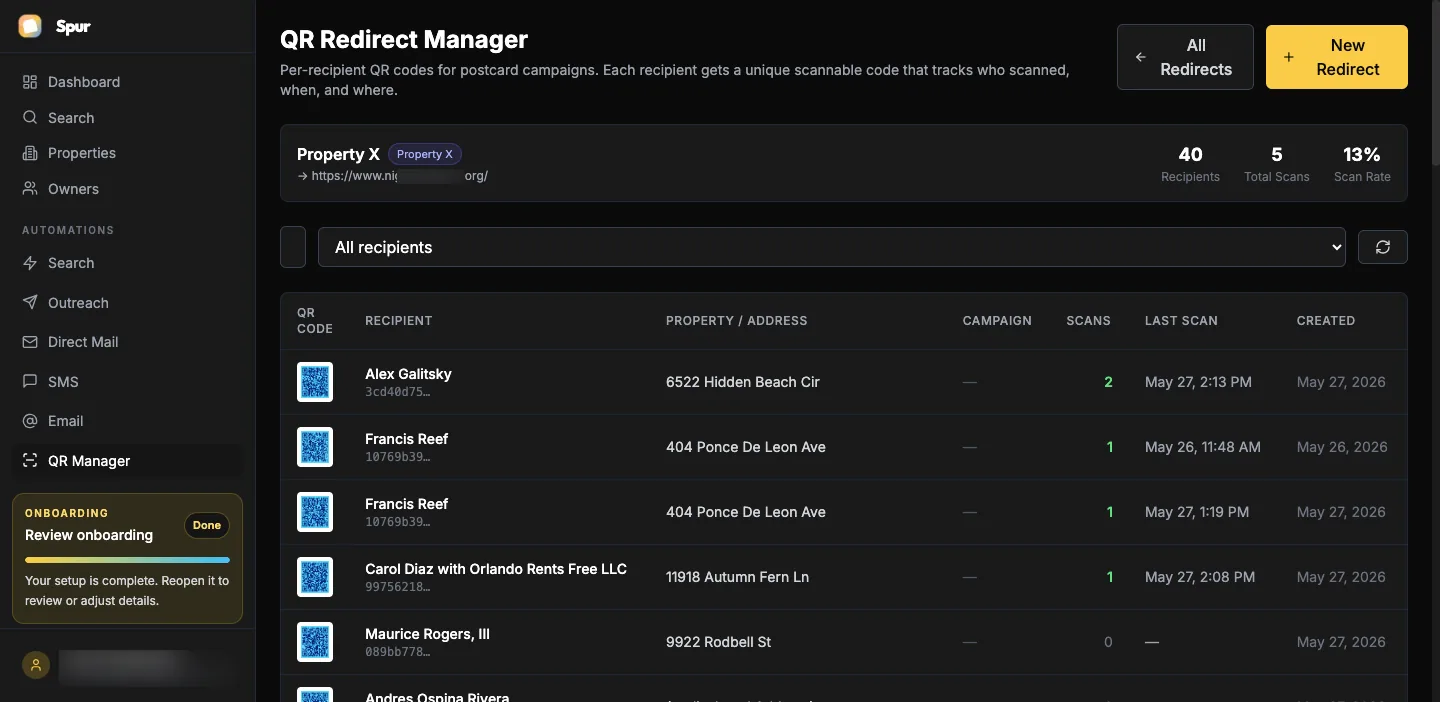
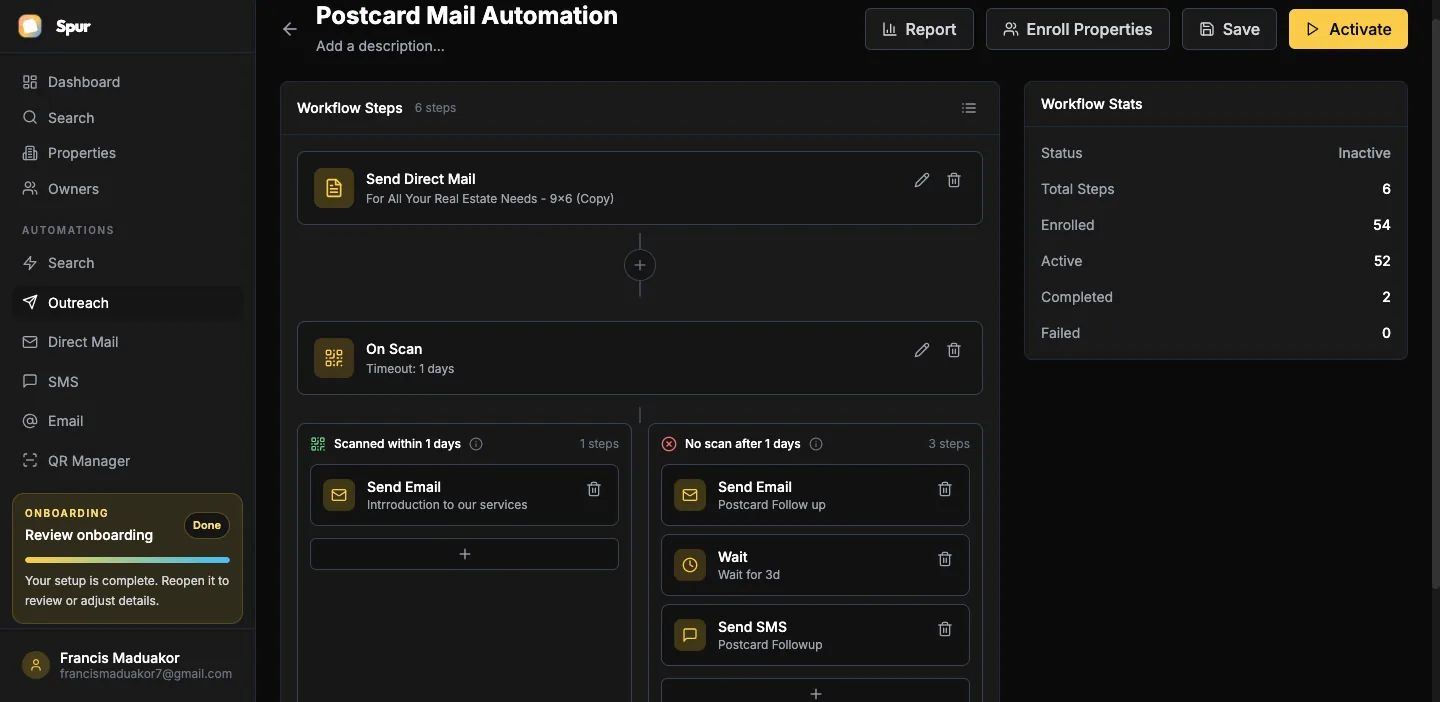
See it in Spur
A post-storm response list in Spur
Sample homes in one Philadelphia neighborhood after a heavy rain event. Names are partly masked.
Zip 19143Storm Sat. Aug 10Owner-occupiedBuilt before 1960Has basement
- Kevin D.5417 Belmar TerRowhome · built 1925BasementOwned 14 yrs
- Angela & Tim W.1215 S 54th StTwin · built 1920BasementOwned 22 yrs
- Ruth M.5302 Chester AveRowhome · built 1915BasementOwned 31 yrs
- Isaac P.5520 Greenway AveTwin · built 1928BasementOwned 6 yrs
- Lorraine B.1309 S Ithan StRowhome · built 1922BasementOwned 18 yrs
AI draft for Kevin D. · 5417 Belmar Ter
WATER IN THE BASEMENT AFTER SATURDAY'S STORM, KEVIN?
Hi Kevin, Saturday's storm dropped about five inches of rain on Southwest Philadelphia, and many basements in Kingsessing took on water. Even if it has drained, drywall, carpet, and subfloors can hold moisture you can't see.
Wet building materials can start to grow mold within 24 to 48 hours. We'll come out for free, measure moisture with meters and thermal imaging, and photograph everything for your records. If it's dry, we'll tell you.
Scan the code or call our 24/7 line. We're a local company on Baltimore Ave and we'll be here after the storm crews leave.
Schuylkill Restoration · IICRC-certified firm · 24/7 (215) 555-0166
Sample data for illustration. Your results depend on your market and filters.
Playbook
How to run a post-storm water damage campaign the right way
Water damage restoration is driven by events: a tropical storm, a stalled thunderstorm, snowmelt, or a hard freeze that bursts pipes. Demand spikes in a few neighborhoods for a few weeks, and homeowners pick a company fast, usually the first one that seems credible and local.
Speed matters because the damage gets worse. The EPA advises drying water-damaged areas and items within 24 to 48 hours to prevent mold growth. A card that explains that window, without exaggeration, is useful information, and it gives homeowners a reason to call now instead of waiting to see if the smell goes away.
Define the area carefully. The National Weather Service and local news report rainfall totals and flooding by area, and your own calls from the first day show which streets were hit hardest. Start with those zips, filter to owner-occupied homes, and prioritize older homes with basements, which are more likely to take on water.
Keep the tone calm and honest. Offer a free moisture check with photos, not a guaranteed insurance payout. Don't imply the homeowner definitely has damage. Many states regulate contractors after disasters. Contractors generally can't act as public adjusters without a license, and some states restrict assignment of benefits (Florida eliminated it for new residential policies starting in 2023). The FTC's Cooling-Off Rule also gives buyers three days to cancel many sales made at their home. Know your state's rules before you mail.
Plan a second touch. Some homeowners deal with standing water right away. Others notice a musty smell or a stain weeks later. A follow-up card two to three weeks after the storm about hidden moisture catches those slower discoveries.
Coordinate with the trades that see water damage first. Plumbers, roofers, and property managers often find the damage before the homeowner calls anyone. A quarterly card to local plumbers and managers, separate from storm mail, keeps your company on their referral list for the calls that come between storms.
6×return on a year of Spur Team and one storm campaign from one $5,200 water mitigation job
One mitigation job pays for the year.
- Spur Team: $49/mo billed annually = $588/yr
- 300 storm cards on Team at $0.94 each = $282
- One $5,200 mitigation and drying job = about 6× software and postage combined
Example math. Job size depends on the category of water, affected area, and rebuild scope. Run your own numbers →
One tool, not four
Spur vs. the usual post-storm marketing
What you needThe usual waySpur
Every owner on the storm-hit streetsBidding on search ads at peak prices✓ Built in
Mailed within two business daysDoor-knocking a few blocks✓ Built in
Calm, storm-specific copy"Water damage? Call now!" flyers✓ Built in
Scan alerts to dispatchWaiting for calls✓ Built in
Follow-up for hidden moistureOne touch✓ Built in
Post-Storm Mail by the numbers
Why timing matters after a storm
24–48 hrs
the window to dry water-damaged materials before mold growth, according to federal guidance
1 inch
of floodwater can cause up to $25,000 in damage to a home
6×
return on a year of Spur Team and one storm campaign from one $5,200 water mitigation job
FAQ
Post-storm restoration mail questions
How do restoration companies get leads after a storm?
Mail the owner-occupied homes in the hardest-hit neighborhoods within a couple of days, with a calm card that names the storm, explains the mold window, and offers a free moisture check.
Is post-storm marketing ethical?
Yes, when it's honest and useful. Explain what to check for, offer a free inspection, and avoid fear language or promises about insurance. Know your state's rules on post-disaster solicitation.
How fast should post-storm mail go out?
Within two business days of the storm if possible. Mold can start within 24 to 48 hours, and homeowners choose a company quickly.
Which homes should I mail after a storm?
Owner-occupied homes in the zips with the most rain or flooding, especially older homes with basements and homes in low-lying areas.
Should I follow up after the first card?
Yes. A second card two to three weeks later about hidden moisture and musty odors reaches owners who didn't notice damage right away.
Keep exploring
Related plays and guides
Start in minutes. No card required.
Be the local company on the counter after the storm.
Pull the homes in the storm area, approve a calm card, and have it in the mail within two business days. Free to start.
Find homes in the storm area — freeFree forever plan · No card · 20 property searches a month
Prefer a walkthrough? Book a demo