
Water wicks into drywall, insulation, and subfloors, and the room looks dry while the wall cavity stays wet.
Mold remediation play · Post-flood inspection leads
Post-flood mold inspection leads, mailed while the water is still a memory.
Mold can start on wet drywall within two days, and owners don't know which damp areas to worry about. Spur finds homes in the flood and storm footprint, writes a respectful, practical card about drying and checking, and mails it with a QR code to book.
Free forever plan · No card · 20 property searches a month
USPSFirst-Class
Andre Pollard7712 Bayou Vista LnHouston, TX 77074Scan for the drying checklist and a free check
Andre P. scanned your post-flood card · 2 min ago
AI-written for this owner · Mailed in 2 days
24–48 hrsfor mold to begin growing on damp drywall and wood
Flood footprintstreets that took on water, not whole zips
Practicalchecklist first, assessment second
The problem
After a flood, owners dry what they see and miss what they can't.
In the weeks after a flood, every restoration firm chases the same owners, and the loudest message wins.
A card that sounds like it's cashing in on a tragedy loses trust, and some states restrict post-disaster solicitation.
How it works
From list to mailbox in one workflow.
Five steps from a flood map to a booked inspection.
app.usespur.com
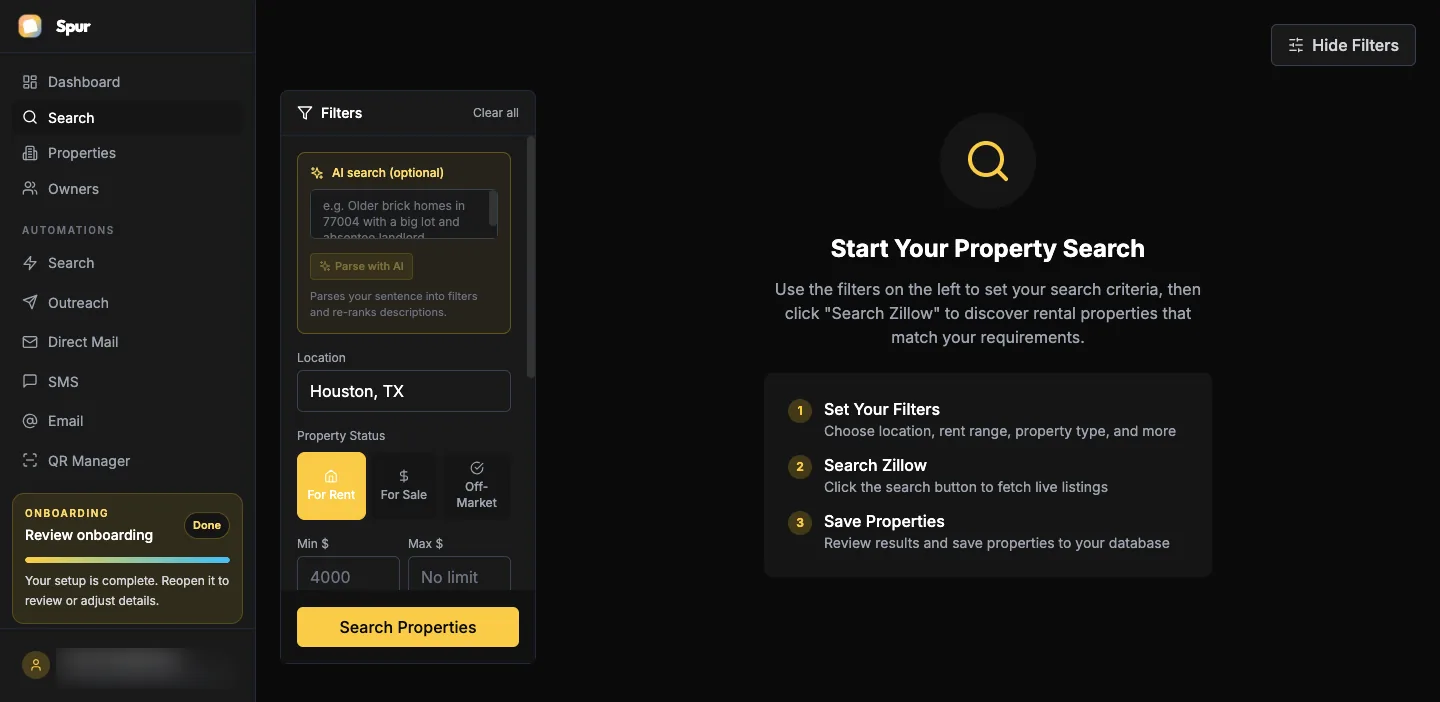
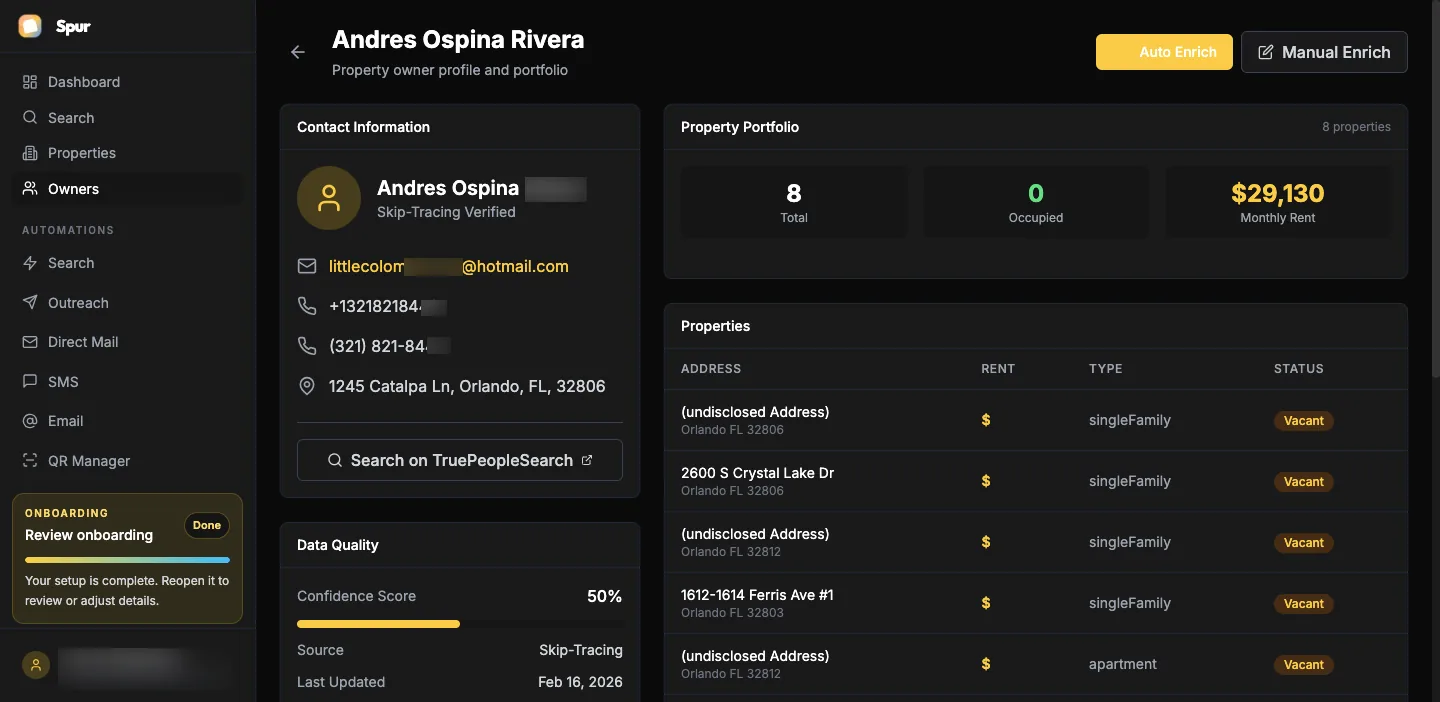
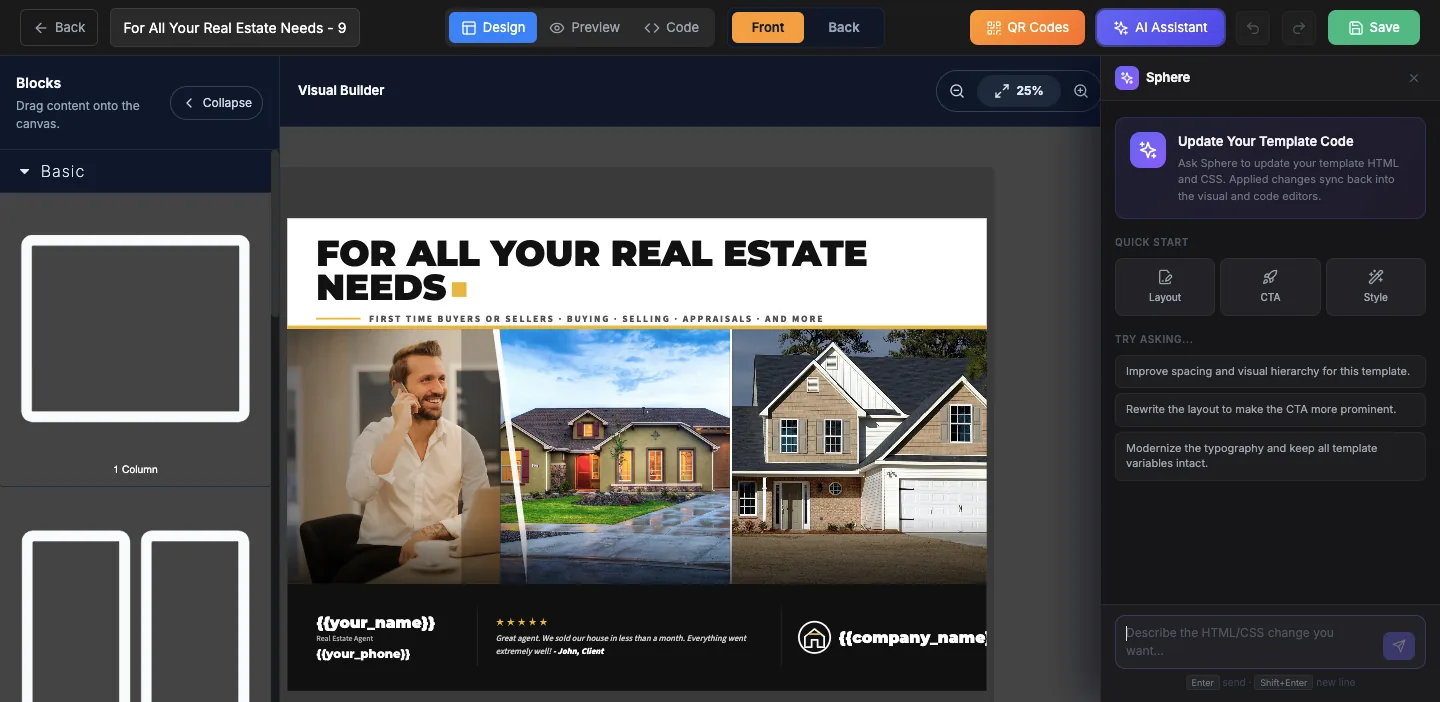
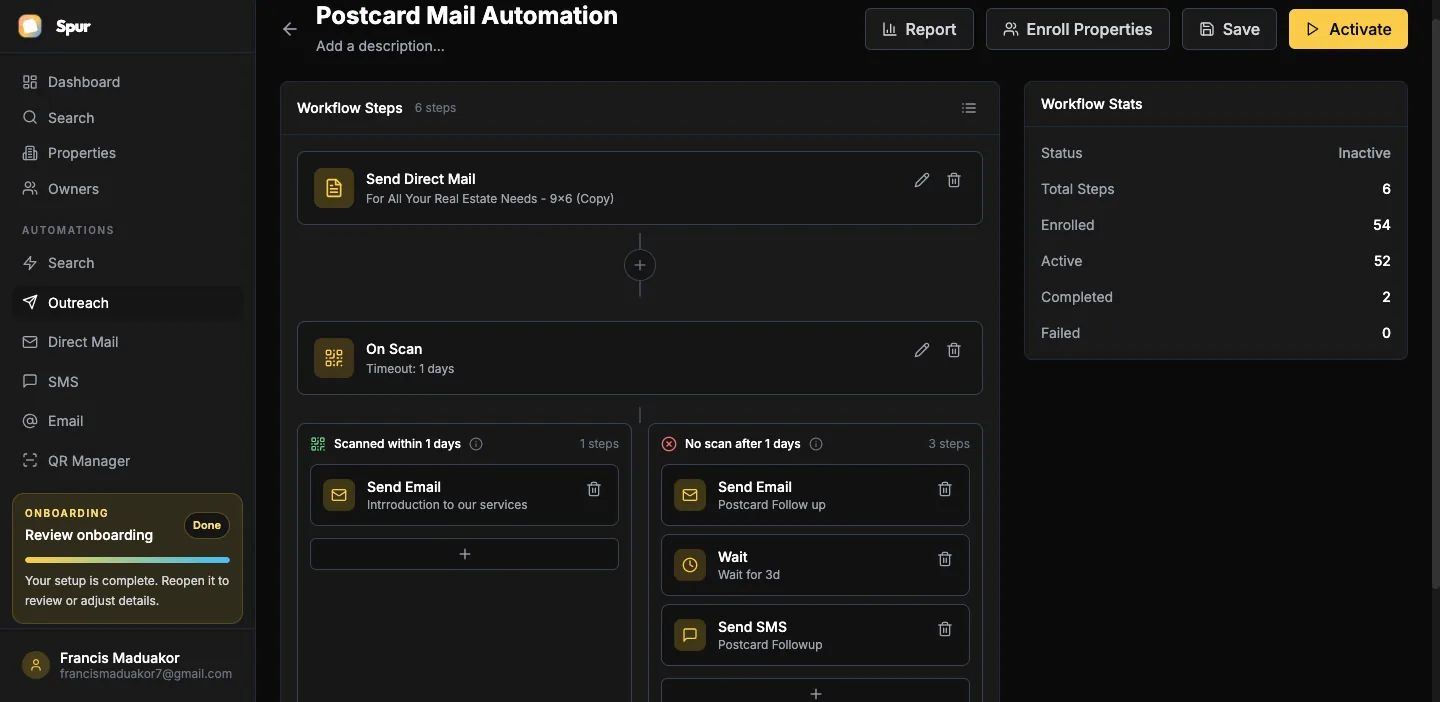
See it in Spur
A post-flood list in Spur
Sample Houston homes inside a recent flood footprint, owner-occupied and built 1965–1995. Names are partly masked.
Zip 77074FEMA flood zone AEBuilt 1965–1995Owner-occupiedMail date: 3 weeks after event
- Andre P.7712 Bayou Vista LnBuilt 1978 · slabFlood zone AEOwned 9 yrs
- Lupe & Rosa G.7804 Bayou Vista LnBuilt 1972 · slabFlood zone AEOwned 24 yrs
- Winston H.7619 Glenmont DrBuilt 1969 · slabOwner 73
- Emily & Raj S.7922 Beechnut StBuilt 1985 · slabOwned 5 yrs
- Charlene B.7601 Rampart StBuilt 1976 · slabOwned 17 yrs
AI draft for Andre P. · 7712 Bayou Vista Ln
Hi Andre,
Homes near Bayou Vista took on water last month. Walls and floors can look dry on the surface while moisture stays inside, which is where mold usually starts.
Our card includes a short drying checklist you can use yourself. If you'd like a second opinion, we'll take moisture readings and tell you what we find, honestly.
Scan the code for the checklist and a free check.
Raul Ortega · Gulf Coast Mold & Moisture · (713) 555-0191
Sample data for illustration. Your results depend on your market and filters.
Playbook
How to approach flood-related mold marketing responsibly
A flood sets a clock. Mold can begin to grow on wet drywall, wood, and insulation within one to two days, and the EPA advises drying wet materials as quickly as possible. That biology is the honest reason to reach out soon. It is also the reason cards must be useful rather than frightening.
Lead with help. A practical drying checklist, covering moving air, removing wet insulation, and checking behind baseboards, makes the card worth keeping even if the owner never calls. The offer of a moisture reading comes second and is framed as a second opinion, not a diagnosis.
Choose addresses precisely. Whole-zip mailings waste money and look careless, since many homes nearby stayed dry. Use flood zone data, a radius around the water source, or a storm swath so the card can honestly say 'homes on your street took on water'.
Know the rules. Several states restrict contractors from soliciting residents in the days or weeks after a declared disaster, and some require specific disclosures or licensing on advertisements. Check your state before scheduling, and keep a log of your mail dates.
Coordinate with the rest of the response. Restoration companies handle the mitigation, adjusters document the claim, and mold specialists handle what moisture leaves behind. A short note to local restoration and plumbing firms about your service makes you a natural referral for the second phase.
10×+return on a year of Spur Team from a flood-footprint mailing
One or two post-flood jobs repay the whole mailing.
- Spur Team: $49/mo billed annually = $588/yr
- 1,200 cards on Team at $0.94 each = $1,128
- 3 remediation jobs (~$4,000 each, often insurance-paid) ≈ $12,000
Example math. Job size, insurance coverage, and close rate vary. Run your own numbers →
One tool, not four
Spur vs. the usual post-flood approach
What you needThe usual waySpur
Mailed only to the flood footprintWhole-zip blasts✓ Built in
Helpful checklist on the cardScare-tactic flyer✓ Built in
Scan alerts, same-day callbackWait for the phone✓ Built in
Mail dates logged for complianceNo record of timing✓ Built in
Cards out in 2 daysWeeks with a print vendor✓ Built in
Post-Flood Leads by the numbers
Why timing and tone matter after a flood
24–48 hrs
is how quickly mold can begin to grow on wet materials
20%+
of flood insurance claims come from outside mapped high-risk flood areas
10×+
return on a year of Spur Team from a flood-footprint mailing
FAQ
Post-flood mold lead questions
How do I find homes that flooded?
Use a flood zone filter, a radius around the water source, or a storm swath in Spur, and mail by street instead of by zip.
When should I mail after a flood?
After any state solicitation window has passed and when owners are in repair mode, often two to four weeks after the event. Check your state's rules.
Should I offer mold testing or just a moisture check?
Start with a moisture check. Testing is useful in specific situations, and some states regulate who can recommend it and who can perform it.
What if insurance is paying?
Mention that you document findings for adjusters, but don't promise coverage. Policies differ and many exclude flood-related mold.
Keep exploring
Related plays and guides
Start in minutes. No card required.
Be the useful voice after the water recedes.
Pick the flood footprint, mail a practical checklist, and book the moisture check. Free to start.
Mail flood-area homes — freeFree forever plan · No card · 20 property searches a month
Prefer a walkthrough? Book a demo