
Every Door Direct Mail reaches every address on a route, including apartments and homes with no particular pest risk. You pay for all of it.
Pest control play · Direct mail program
Pest control direct mail marketing that targets real pest pressure and proves what it signed.
Direct mail works for pest control when it goes to homes with real pest pressure at the start of each season, and you can see which mailings produced plan customers. Spur builds the list, writes postcards and letters per home, mails them on a calendar, and reports scans by campaign.
Free forever plan · No card · 20 property searches a month
USPSFirst-Class
Andrew Kim15206 Willow Bend DrCypress, TX 77429Scan to start a plan
Andrew K. scanned your protection plan card · 9 min ago
AI-written for this owner · Mailed in 2 days
Targetedby home age, lot, and nearby water or woods
Postcards + lettersprinted and mailed from one place
By campaignscans and plan sign-ups you can compare
The problem
Pest control mail gets cut when nobody can say which drop signed which plans.
A list from one place, design from another, a print shop, and a spreadsheet to match calls back to drops. Each campaign takes a week of someone's time.
When the owner asks what last spring's mail produced, the honest answer is "some calls." So mail gets cut in favor of channels that report numbers.
How it works
From list to mailbox in one workflow.
Five steps to a pest control mail program you can measure.
app.usespur.com
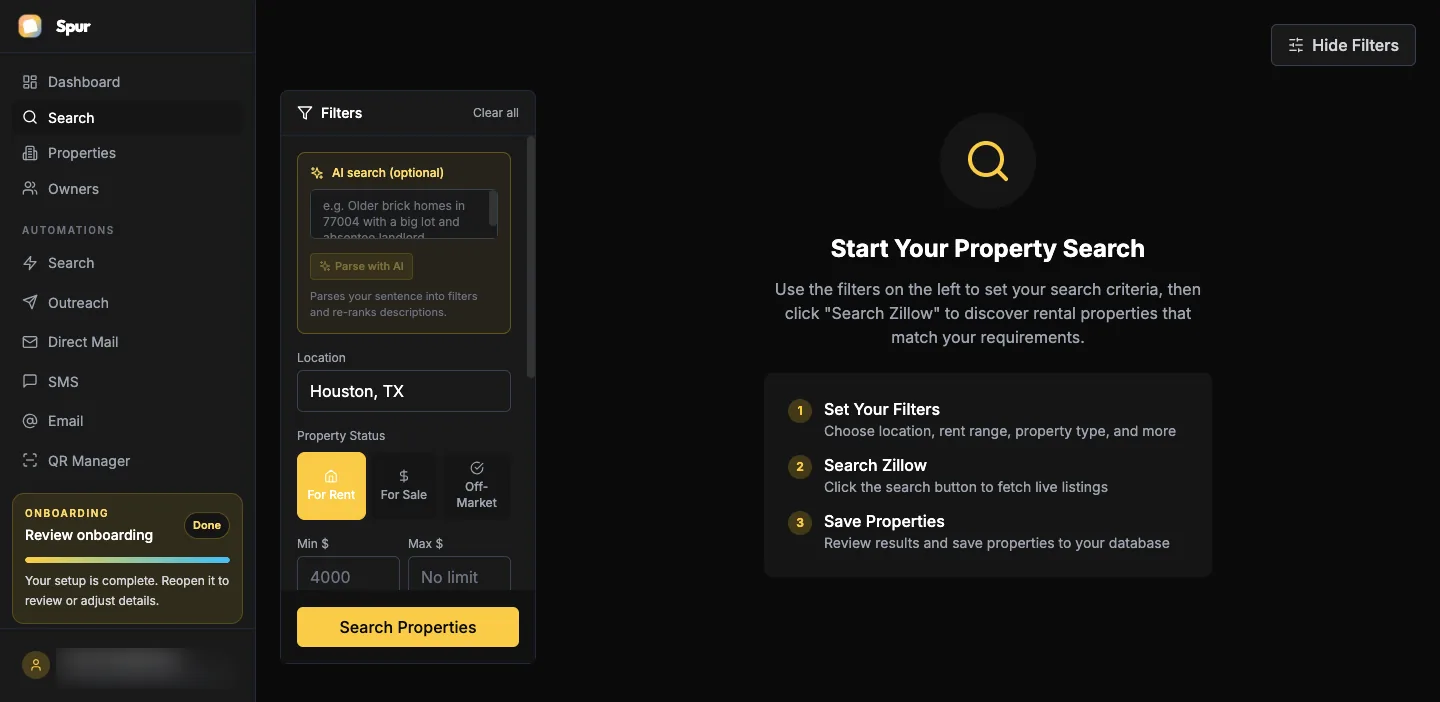

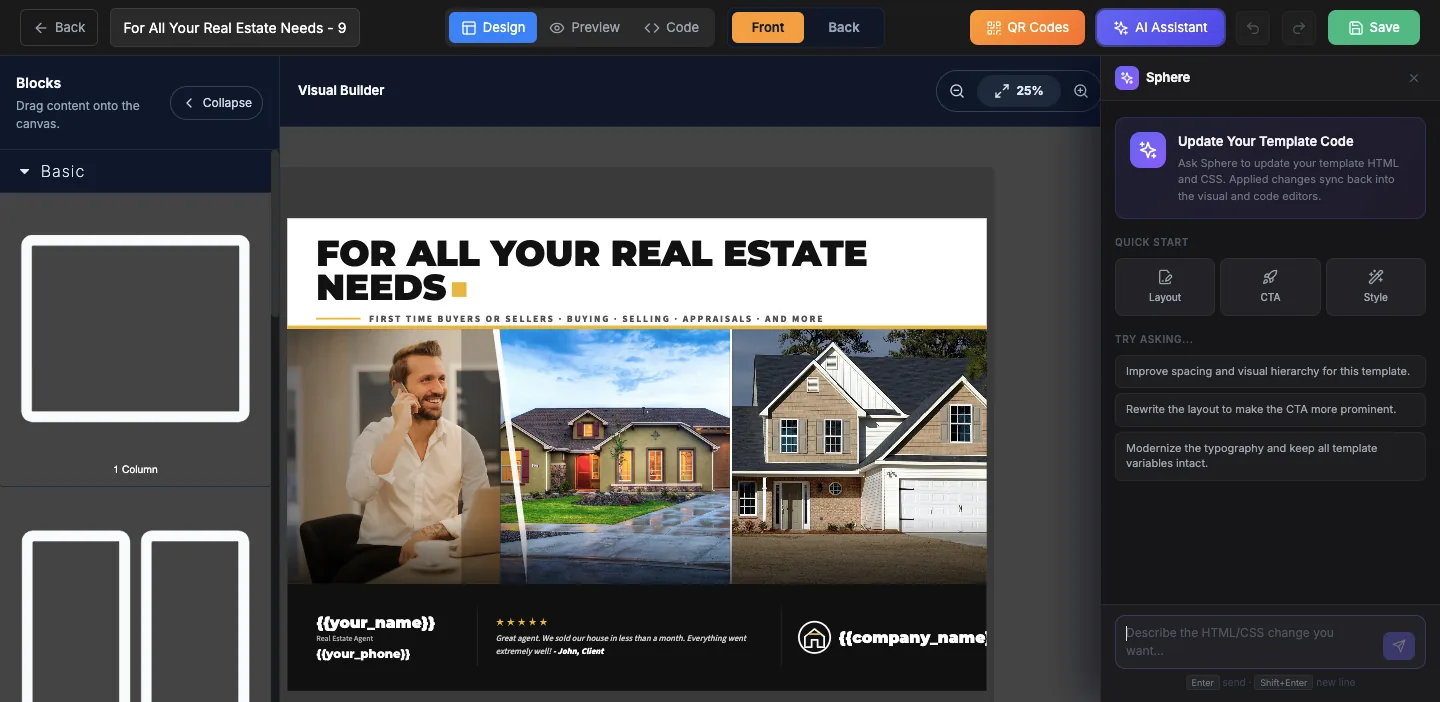
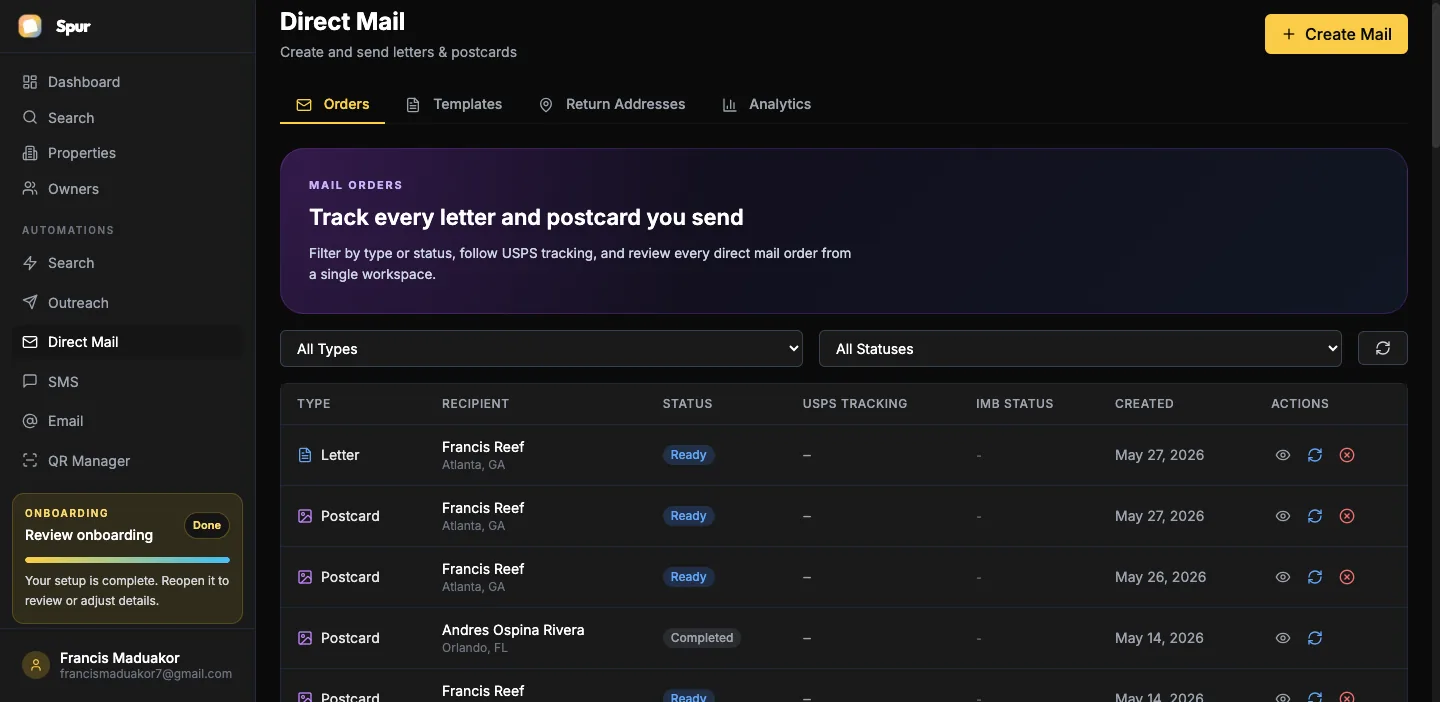
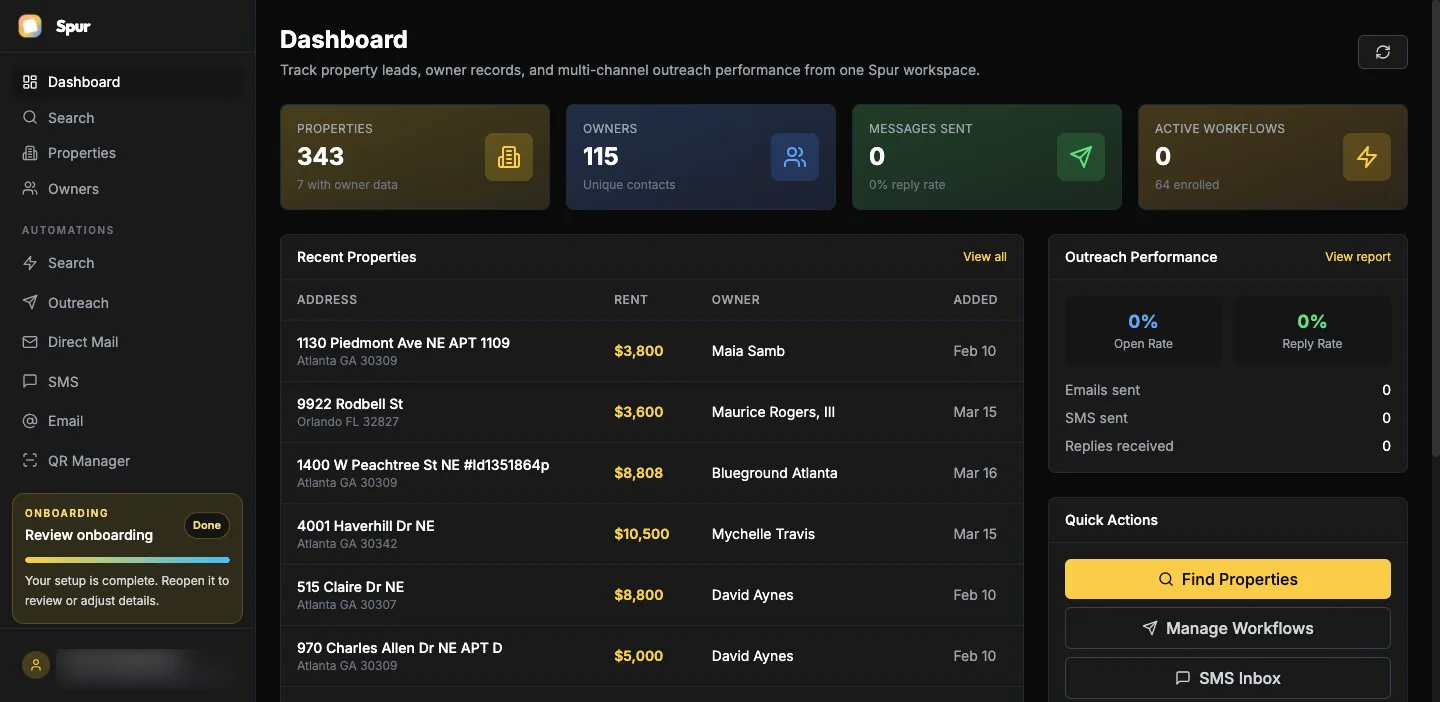
See it in Spur
A pest control mailing list, segmented by offer
Sample homes in one Cypress, TX zip, split into a general pest postcard list and a termite letter list. Names are partly masked.
Zip 77429Single-familyOwner-occupiedWithin 0.25 mi of greenwayExclude customers
- Andrew K.15206 Willow Bend DrBuilt 2004 · backs greenwayGeneral pest cardOwned 9 yrs
- Lisa & Ron P.15318 Willow Bend DrBuilt 1998 · wood fenceTermite letterOwned 19 yrs
- Omar F.12811 Cypress Rose LnBuilt 2011 · creek lotGeneral pest cardOwned 5 yrs
- Beverly J.12907 Cypress Rose LnBuilt 1996 · wood deckTermite letterOwned 23 yrs
- Kurt N.15401 Laurel PathBuilt 2007 · mature oaksGeneral pest cardOwned 11 yrs
AI draft for Lisa & Ron P. · 15318 Willow Bend Dr
Dear Lisa and Ron,
Your home on Willow Bend Drive was built in 1998 and backs onto the Cypress Creek greenway. Moist soil, mature trees, and a wood fence line are exactly the conditions subterranean termites look for, and any soil treatment from construction has long since worn off.
We'd like to inspect your home for free: the slab edge, garage, door frames, fence line, and any wood that touches soil. You'll get a written report with photos either way.
If we find activity, we'll explain your treatment options and costs. If we don't, we'll explain how monitoring works. Scan the code or call to schedule.
Bayou City Pest Control · TPCL #0802217 · (281) 555-0143
Sample data for illustration. Your results depend on your market and filters.
Playbook
How to build a pest control direct mail program that pays for itself
Pest control has a natural advantage in direct mail: the product is a subscription. A quarterly general pest plan is worth hundreds of dollars a year and can stay on the books for many years, so a mail program that signs even a small share of the homes it reaches can pay back many times over. The programs that fail usually fail on list, timing, or measurement.
Build the list around pest pressure. Owner-occupied single-family homes are the base. From there, filter by what drives pests in your market: proximity to creeks, greenbelts, and woods; older homes with more entry points; larger lots with mature trees; wood decks and fences. Upload your customer list to suppress current plan holders.
Match the format to the offer. Postcards suit broad seasonal offers for general pest plans and repeat touches. A sealed letter is better for higher-ticket work like termite treatment or rodent exclusion, where the homeowner wants an explanation and a written inspection report.
Plan a calendar around pest seasons. In most markets that means late winter mail for termites and early ants, late spring for mosquitoes, ticks, and wasps, midsummer for ants and roaches in warmer climates, and late summer to fall for rodents and overwintering pests. Each list should get two touches per campaign, two to three weeks apart.
Measure every drop. Use a household QR code on every piece and tag each new plan with the campaign that produced it. After a full year you'll know your cost per new plan by list and offer, and you can put more budget behind the campaigns that work.
Segment by foundation and construction where you can. Crawl spaces and pier-and-beam homes have different pest risks from slab homes, and older frame houses have different entry points from newer block construction. Using those details in the copy shows you know the local housing stock, and it lets you put higher-ticket offers like termite inspections or rodent exclusion in front of the homes that need them most.
7×return on a full year of mail and software from 40 new plans and 4 termite jobs
A full year of pest control mail, in numbers.
- Spur Team: $588/yr, plus 4 seasonal drops × 800 homes = 3,200 postcards at $0.94 = $3,008
- Total program cost: $3,596 for the year
- 40 quarterly plans at $480/yr + 4 termite treatments at $1,800 = $26,400, about 7× the full spend in year one
Example math. Response and close rates vary by market, list, and offer. Run your own numbers →
One tool, not four
Spur vs. the usual pest control direct mail stack
What you needThe usual waySpur
Targeted list by pest pressureEDDM routes or a list broker✓ Built in
Owner contact detailsSeparate data vendor✓ Built in
Postcard and letter copyAgency or in-house writer✓ Built in
Printing, postage, trackingPrint shop and USPS receipts✓ Built in
Results by campaignSpreadsheet matching calls to drops✓ Built in
Direct Mail by the numbers
Why targeting matters for pest control mail
Every address
on a carrier route receives Every Door Direct Mail, with no filtering by home age, owner, or pest pressure
~$5 billion
in property damage is caused by termites in the U.S. each year
7×
return on a full year of mail and software from 40 new plans and 4 termite jobs
FAQ
Pest control direct mail questions
Does direct mail work for pest control companies?
Yes, especially for recurring plans. Mail reaches homeowners before they search, the lead isn't shared, and a per-household QR code shows who responded. Targeting by pest pressure keeps the cost per plan down.
How much should a pest control company spend on direct mail?
Start with a budget you can keep up through a full year of pest seasons. Many small operators mail 500 to 1,000 pieces a month and scale the lists with the lowest cost per new plan.
Where do I get a pest control mailing list?
In Spur, search your service area and filter by owner occupancy, build year, lot size, and proximity to woods or water. Upload your customer list to exclude current plan holders.
Is EDDM good for pest control marketing?
EDDM is cheap per piece but goes to every address on a route, including renters and current customers. Targeted mail costs more per piece and usually less per signed plan.
How do I track pest control direct mail results?
Give every household its own QR code and tag each new plan with its campaign. Spur reports deliveries and scans by campaign so you can compare cost per plan across lists and offers.
Keep exploring
Related plays and guides
Start in minutes. No card required.
Run pest control mail you can measure.
Build a list by pest pressure, write every piece with AI, and mail your first campaign this week. Free to start.
Find homeowners who need pest control — freeFree forever plan · No card · 20 property searches a month
Prefer a walkthrough? Book a demo