
Many homeowners don't think about a curbless shower or grab bars until a fall, a surgery, or a parent moving in forces the decision, and then it's urgent.
Remodeling play · Aging in place
Aging-in-place remodeling leads, reached with respect before a fall forces the decision.
Most older homeowners want to stay where they are, and many of their homes weren't designed for it. Spur finds long-time owners whose homes have the stairs, tubs, and narrow doorways that make that harder, and mails a respectful letter about the changes that help, in your name.
Free forever plan · No card · 20 property searches a month
USPSFirst-Class
Richard Hale8432 E Cholla StScottsdale, AZ 85260Scan to book a walkthrough
Richard H. booked a free safety walkthrough · 2 hrs ago
AI-written for this owner · Mailed in 2 days
20+ yrsof ownership, the owners most likely to stay put
Letterssealed and respectful, not a flashy flyer
Familyadult children often scan and book too
The problem
Aging-in-place projects usually start after something goes wrong.
Copy about "seniors" and "safety" can read as condescending. Homeowners throw it away, and their adult children roll their eyes.
Age data is sensitive and imperfect. Without the right property filters, you mail young families and people who are about to downsize.
How it works
From list to mailbox in one workflow.
Five steps from a long-tenure list to an in-home assessment.
app.usespur.com
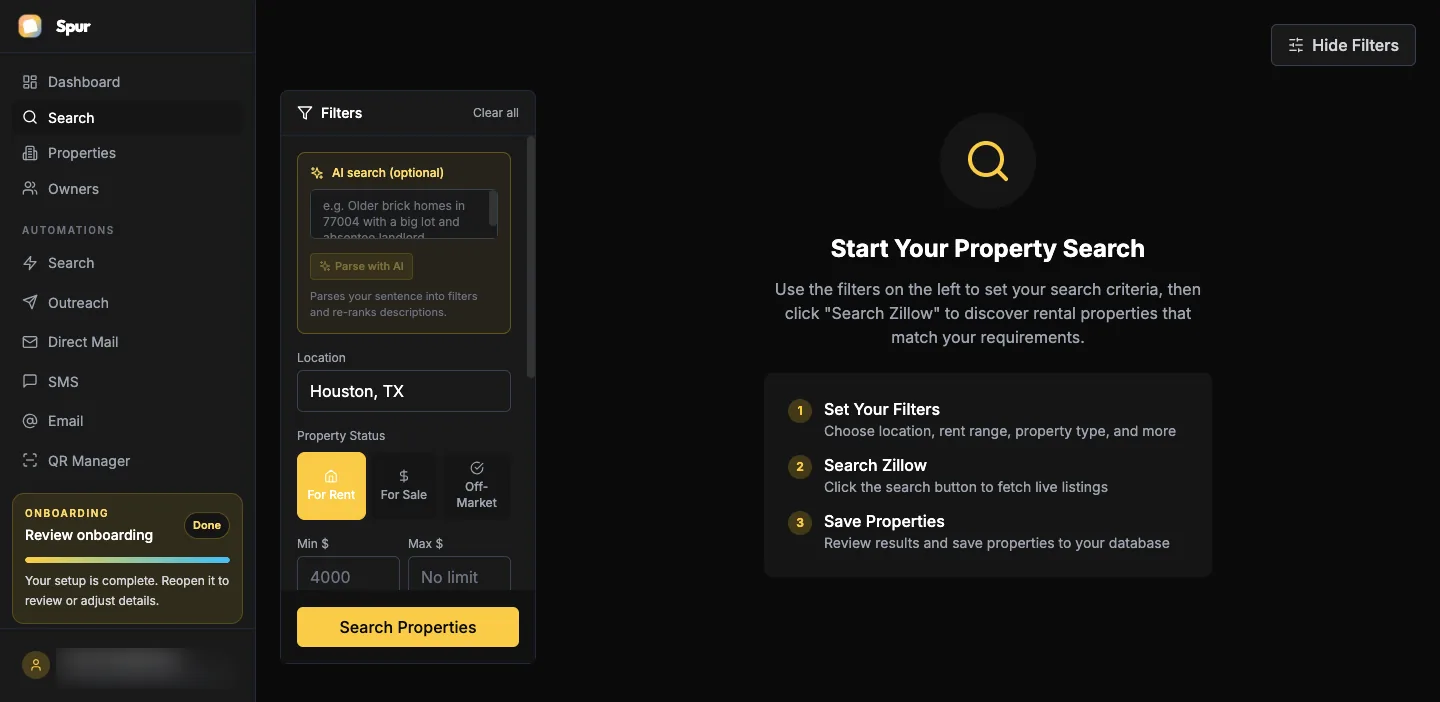
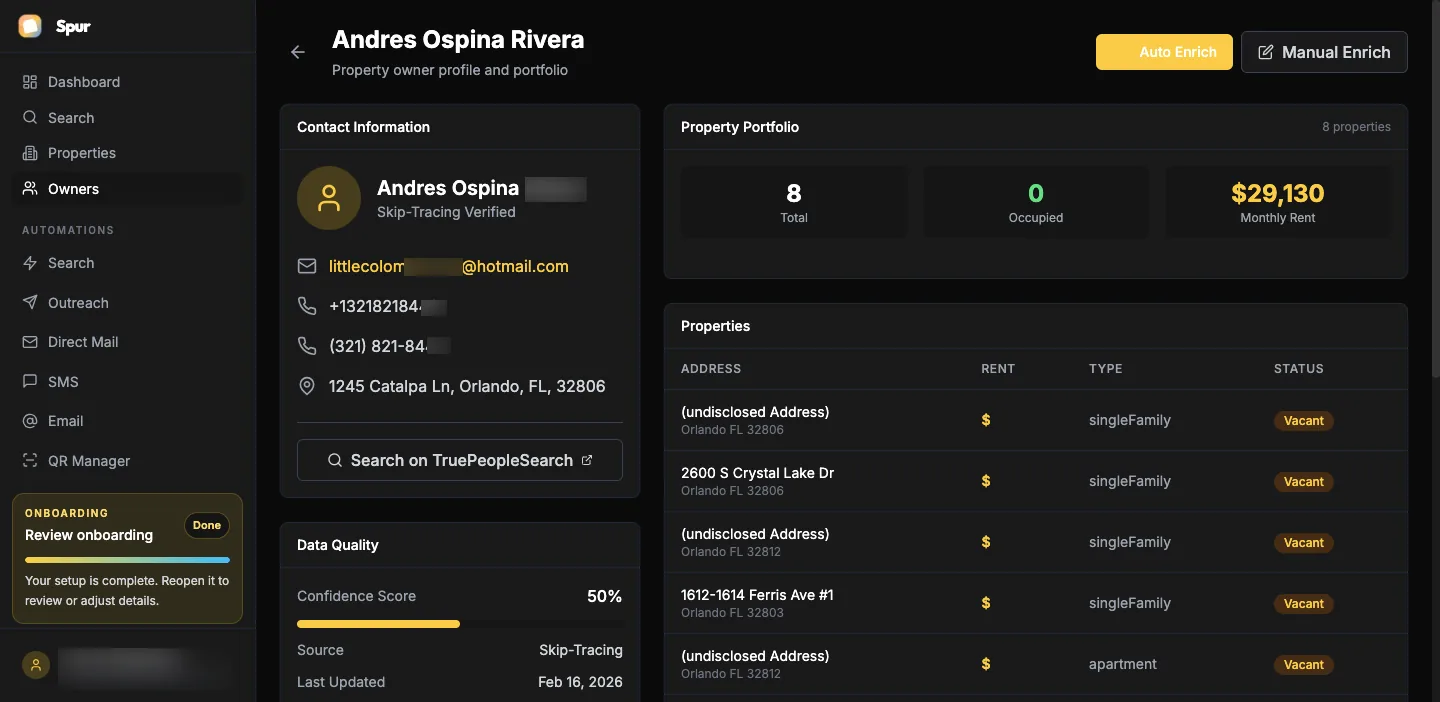
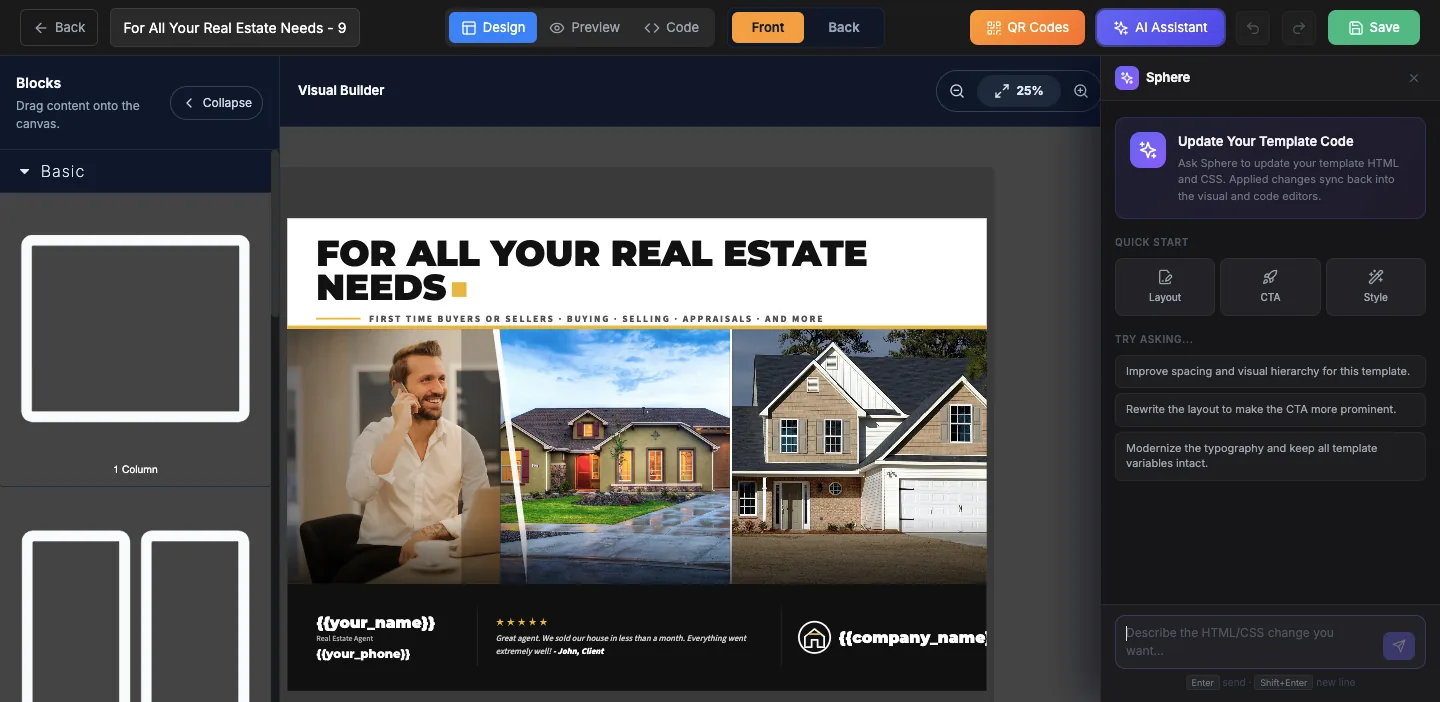


See it in Spur
An aging-in-place list in Spur
Sample homes in one Scottsdale zip: owner-occupied, owned 20+ years, built before 1995. Names are partly masked.
Zip 85260Owner-occupiedOwned 20+ yrsBuilt pre-1995Free and clear or 60%+ equity
- Richard H.8432 E Cholla StSingle-story · built 1986Owned 26 yrsFree and clear
- Barbara & Len G.8117 E Sunnyside DrTwo-story · built 1989Owned 31 yrsBeds upstairs
- Judith M.8905 E Cactus RdSingle-story · built 1983Owned 22 yrsTub-shower
- Walter S.7742 E Gold Dust AveSingle-story · built 1979Owned 35 yrsFree and clear
- Helen & Ray T.8250 E Mescal StTwo-story · built 1992Owned 24 yrsBeds upstairs
AI draft for Richard H. · 8432 E Cholla St
Dear Richard,
You've owned your home on E Cholla Street for about 26 years. If you plan to stay for many more, a few changes can make that easier without making the house feel any different.
The most common ones we do are curbless walk-in showers in place of a tub, grab bars that look like towel bars, comfort-height toilets, wider doorways, and brighter lighting in halls and baths. Most bathroom projects take two to three weeks, and the result looks like a nice new bathroom, not a hospital room.
Our project lead is a Certified Aging-in-Place Specialist. If you'd like, we'll walk through your home for free and suggest what's worth doing now and what can wait. Scan the code or call to book a time. Your family is welcome to join.
Laura Chen, CAPS · Desert Bloom Remodeling · AZ ROC #318274 · (480) 555-0136
Sample data for illustration. Your results depend on your market and filters.
Playbook
How to market aging-in-place remodeling
Aging in place means staying in your own home safely and comfortably as you get older, rather than moving to a smaller home or a care setting. It's what most older Americans say they want. AARP's surveys have consistently found that roughly three in four adults 50 and older want to stay in their current homes for as long as possible. Many of their homes were built for younger bodies, with tub-shower combinations, stairs to every bedroom, narrow doorways, and dim hallways.
That creates steady remodeling demand: curbless showers, grab bars, comfort-height toilets, lever handles, wider doorways, ramps or zero-step entries, stair lifts, better lighting, and first-floor primary suites. The challenge is timing. Many homeowners don't act until a fall or a surgery makes it urgent. The Centers for Disease Control and Prevention reports that more than one in four adults 65 and older falls each year. Reaching homeowners before that moment, while they can plan, is better for them and for your schedule.
Target by tenure and home design, not just age. Owners who have held their home 20+ years, often with the mortgage paid off, are the most likely to stay. Two-story homes with all bedrooms upstairs and homes built before the mid-1990s with tubs and narrow doors have the clearest needs. Single-story homes are good candidates for bathroom conversions and wider doorways.
Tone is everything. Write about staying in the home they love, not about getting old. Avoid words like "elderly," "seniors," or "before it's too late." Show that accessible design can be beautiful: a curbless shower is simply a better shower. If someone on your team is a Certified Aging-in-Place Specialist, a designation from the National Association of Home Builders, say so. It signals training and care.
Remember the family. Adult children often help parents plan these projects, and they may be the ones who scan the code or call. Invite family to the walkthrough. Many remodelers also partner with occupational therapists, who assess needs and recommend changes, which adds credibility.
Mail with restraint. Use a sealed letter, send one follow-up at most, and stop. Respect opt-outs immediately. A respectful approach builds the trust that wins these projects and the referrals that follow from friends and neighbors.
33×return on a year of Spur Team from one $19,500 accessible bathroom
A few accessible bathrooms pay for years of Spur.
- Spur Team: $49/mo billed annually = $588/yr
- 500 long-tenure homes × 2 letters = 1,000 letters at $1.29 = $1,290
- Three $19,500 accessible bathrooms and five $1,200 grab bar packages = $64,500, about 34× the software and postage combined
Example math. Project scope and pricing vary widely by home and market. Run your own numbers →
One tool, not four
Spur vs. the usual aging-in-place marketing
What you needThe usual waySpur
Long-tenure owners likely to stayAds aimed at an age bracket✓ Built in
Homes with stairs, tubs, narrow doorsEvery homeowner in the zip✓ Built in
Respectful sealed letterFlashy flyer about "seniors"✓ Built in
One gentle follow-upRepeated mailings✓ Built in
Family welcome to scan and bookOne contact only✓ Built in
Aging in Place by the numbers
Why aging-in-place demand keeps growing
3 in 4
adults 50 and older want to stay in their current homes for as long as possible
1 in 4+
adults 65 and older fall each year, and many projects start after one
33×
return on a year of Spur Team from one $19,500 accessible bathroom
FAQ
Aging-in-place remodeling questions
What is aging-in-place remodeling?
Changes that let homeowners stay in their homes safely as they age, such as curbless showers, grab bars, comfort-height toilets, wider doorways, zero-step entries, better lighting, and first-floor bedrooms.
How do I find aging-in-place remodeling clients?
Target owner-occupied homes owned 20+ years, especially two-story homes with bedrooms upstairs and older homes with tubs and narrow doorways. Mail a respectful letter about staying in the home and offer a free walkthrough.
What is a CAPS certification?
Certified Aging-in-Place Specialist is a designation from the National Association of Home Builders. It covers the needs of older adults, accessible design, and common remodeling solutions. Mention it on your mail if you have it.
How should I word aging-in-place marketing?
Focus on staying in the home they love and on good design. Avoid words like "elderly" or "seniors" and any fear-based language. Invite family members to be part of the conversation.
Is it appropriate to mail older homeowners?
Yes, with care. Use a sealed letter, keep the tone respectful, send no more than one follow-up, and honor opt-out requests immediately.
Keep exploring
Related plays and guides
Start in minutes. No card required.
Help them stay in the home they love.
Find long-time owners in your area and mail a respectful aging-in-place letter today. Free to start.
Find homeowners planning to stay — freeFree forever plan · No card · 20 property searches a month
Prefer a walkthrough? Book a demo