
Owners who outgrow a home first consider moving. Selling, buying, and a new mortgage often lose out to renovating, but only if someone shows them what's possible.
Remodeling play · High-equity owners
High-equity remodel leads: owners who'd rather renovate than move.
Millions of homeowners have more equity than ever and little reason to sell and buy again. Spur finds owners with 50%+ equity who have lived in their homes for a decade, writes a letter about what their house could become, and sends every QR scan to your portfolio.
Free forever plan · No card · 20 property searches a month
USPSFirst-Class
Andrew Whitfield1824 Hampton AveCharlotte, NC 28207Scan to see the addition
Andrew W. viewed your addition portfolio for 6 min · 40 min ago
AI-written for this owner · Mailed in 2 days
50%+equity, enough to fund a major project
10+ yrsof ownership, rooted in the neighborhood
$75K+typical project size for additions and whole-floor remodels
The problem
Your best-fit clients aren't searching for a remodeler yet.
Most $100K projects go to a contractor a friend recommended. If you don't have that friend, you're not in the conversation.
You can target a zip code or an interest, but not owners with the equity and tenure to fund an addition. Most ad spend reaches people who can't.
How it works
From list to mailbox in one workflow.
Five steps from an equity filter to a whole-home design consult.
app.usespur.com
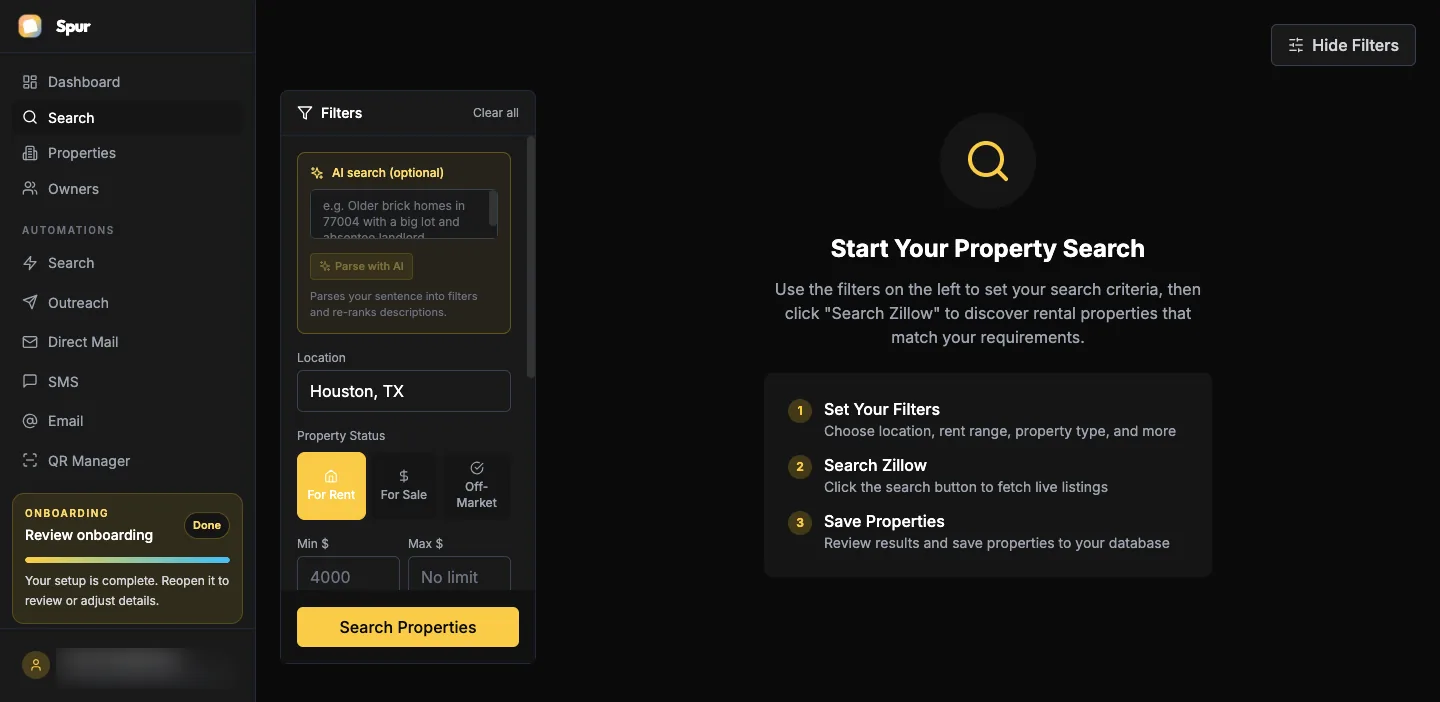
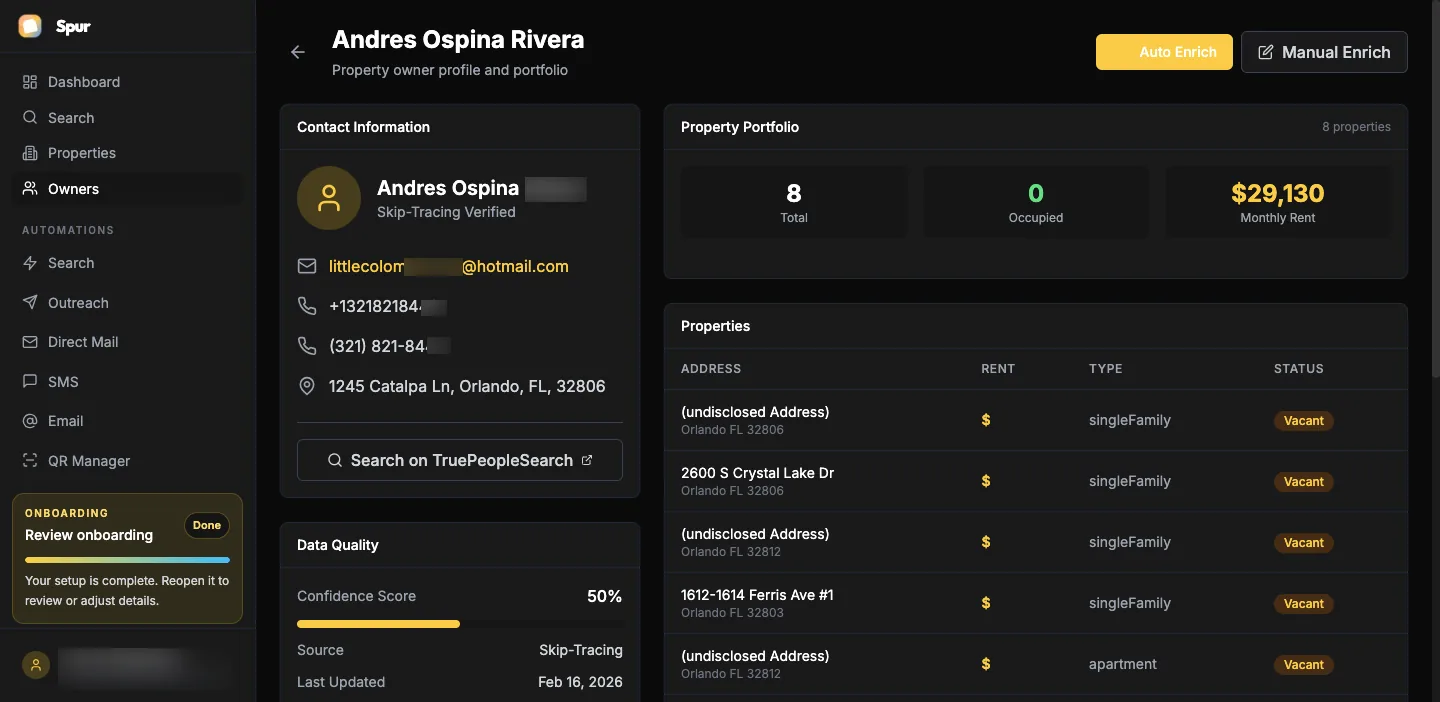
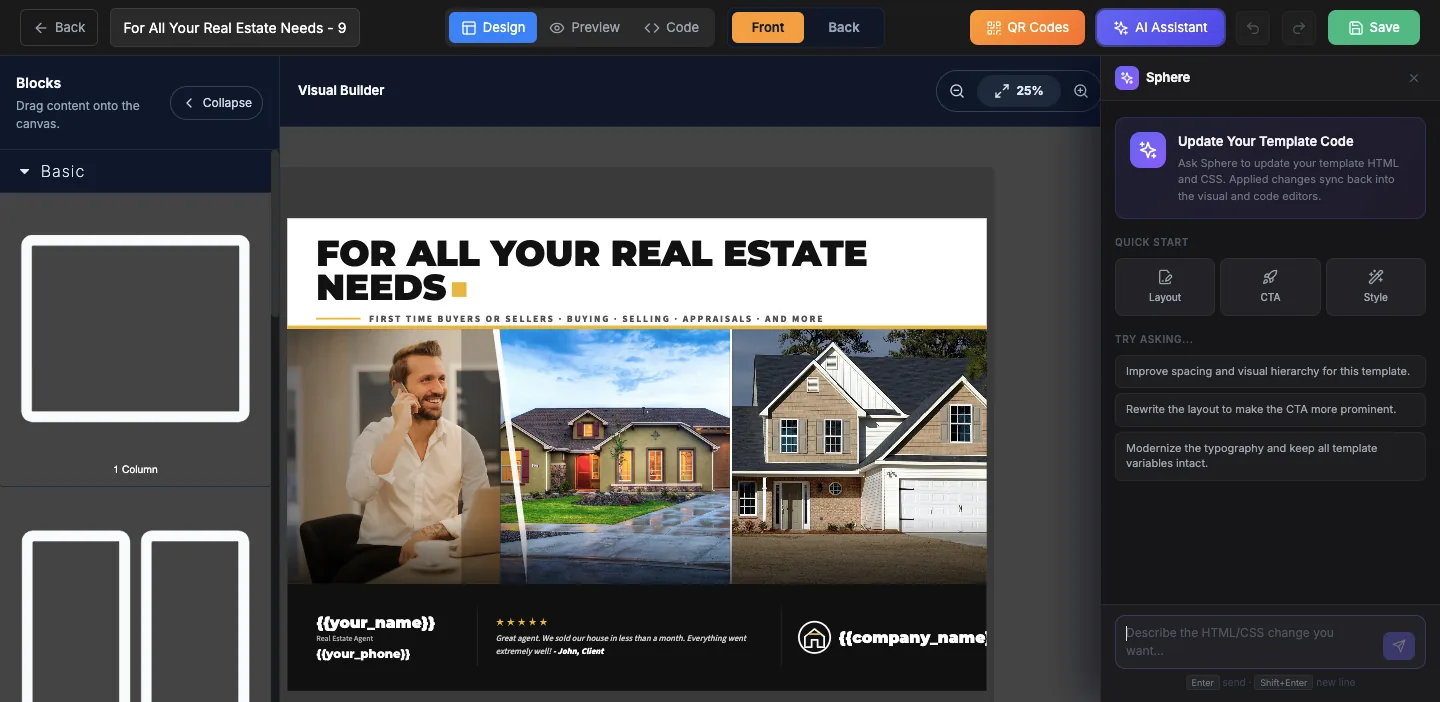
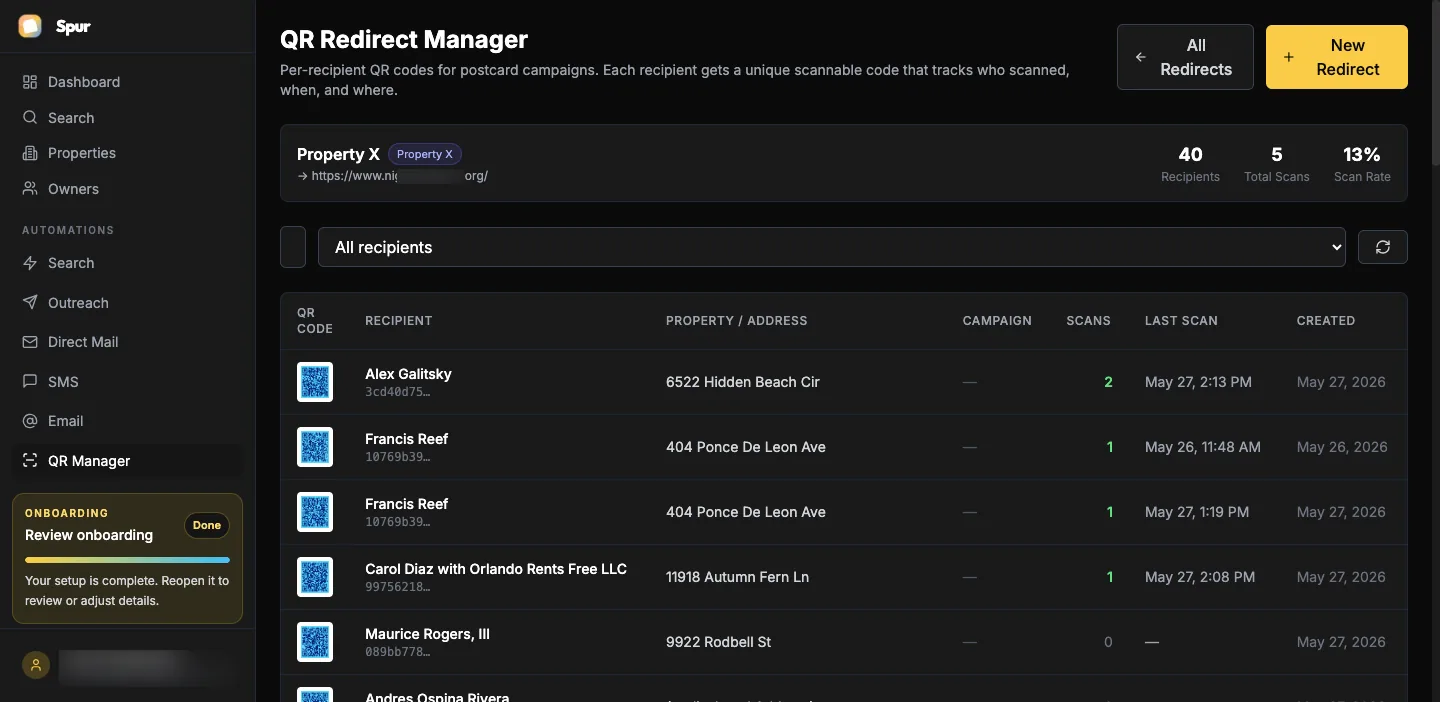
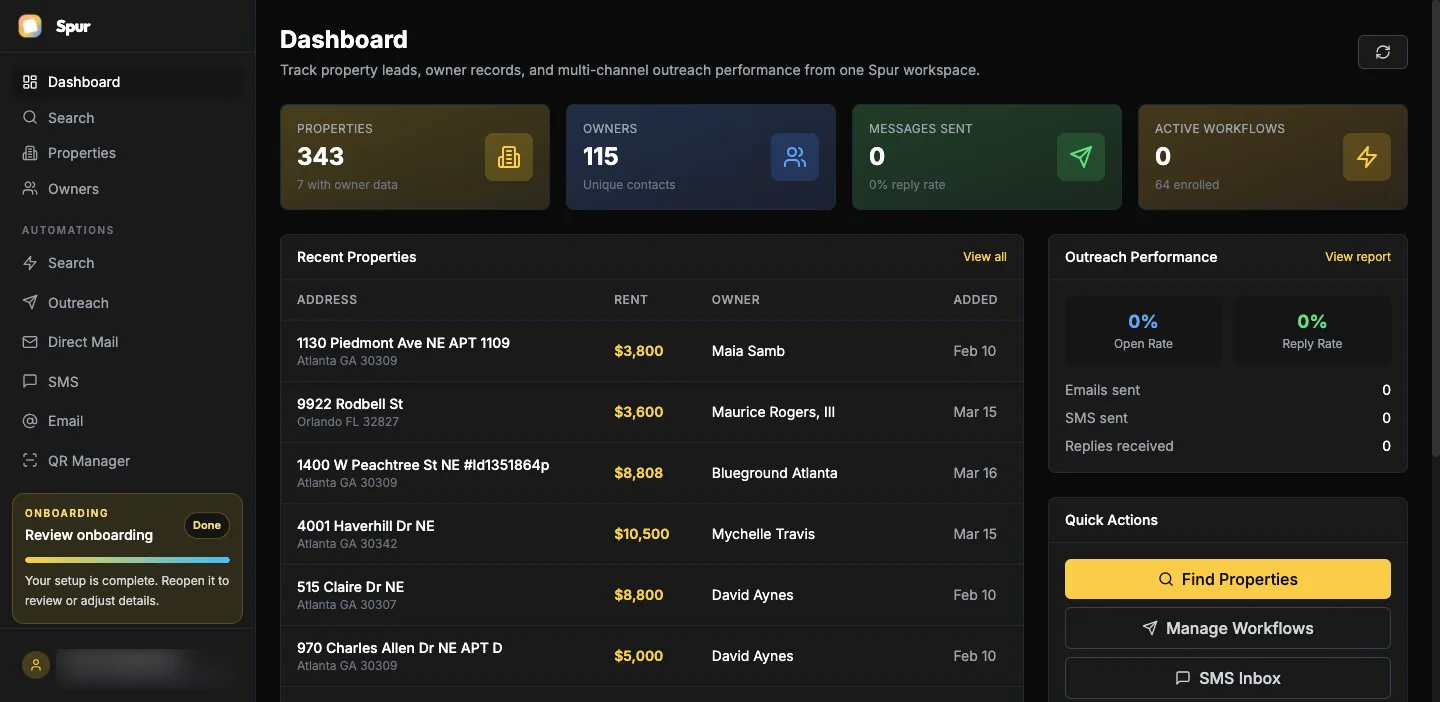
See it in Spur
A high-equity remodel list in Spur
Sample homes in one Charlotte zip: owner-occupied, 50%+ equity, owned 10+ years. Names are partly masked.
Zip 28207Owner-occupiedEquity 50%+Owned 10+ yrsValue $750K+
- Andrew W.1824 Hampton AveBuilt 1938 · 2,650 sq ft64% equityOwned 14 yrs
- Caroline & Ben F.2215 Sherwood AveBuilt 1951 · 2,980 sq ft72% equityOwned 18 yrs
- Nathan R.1407 Queens Rd WBuilt 1929 · 3,400 sq ft58% equityOwned 11 yrs
- Lucy H.2030 Roswell AveBuilt 1946 · 2,320 sq ft81% equityOwned 22 yrs
- David & Kim O.1611 Maryland AveBuilt 1955 · 2,760 sq ft53% equityOwned 12 yrs
AI draft for Andrew W. · 1824 Hampton Ave
Dear Andrew,
You've owned your home on Hampton Avenue for about 14 years. If the house is starting to feel small but you can't imagine leaving Myers Park, you're not alone. Many owners on your street are choosing to renovate instead of selling, buying, and taking on a new mortgage.
This spring we finished a two-story addition three blocks from you on a 1940s home: a primary suite upstairs, a family room below, and a kitchen opened to the yard. It took about five months, and from the street it looks like it was always there. The QR code on this letter opens the photos.
If you'd like to know what your home could become, we offer a free design consult. We'll look at your lot, the zoning, and your plans, and give you a realistic range before any drawings.
Grant Ellison · Queen City Design Build · NC GC Lic. #84712 · (704) 555-0181
Sample data for illustration. Your results depend on your market and filters.
Playbook
How to find homeowners with the equity to remodel
Equity is the single best predictor of whether a homeowner can take on a major remodel. U.S. homeowners hold a record amount of it. Mortgage data firm ICE estimates that mortgage holders have more than $11 trillion in tappable equity, the amount they could borrow while keeping 20% in the home. At the same time, many owners have little reason to move. Selling means transaction costs, a new purchase in a tight market, and often a higher mortgage rate. For many, renovating is the better deal.
That makes high-equity, long-tenure owners the most valuable list a remodeler can build. Filter for owner-occupied homes with 50% or more estimated equity and 10 or more years of ownership. Add a home value range that matches your projects. A $150,000 addition needs a home and an owner who can support it. Older homes in established neighborhoods are especially strong, because the lots, the schools, and the location are exactly why owners don't want to leave.
Write to the decision they're actually making: stay or move. Name the neighborhood and how long they've owned, acknowledge that the house may feel small or dated, and show what owners nearby have done instead of selling. The proof matters more than the pitch. A project a few blocks away, in a home of the same era, tells the homeowner that the result fits the neighborhood and that you know its zoning and permits.
Funding is part of the conversation. Most owners fund large remodels through savings, a home equity line of credit, a home equity loan, or a cash-out refinance. Many remodelers keep a relationship with a local lender who can explain options. Don't give financial advice on your mail, but it's fine to mention that you can connect them with a lender.
Expect fewer, larger projects and a longer cycle. A whole-floor remodel or an addition can take six months or more to plan. Keep owners who scanned on a slow follow-up schedule with project stories and design ideas, and measure campaigns by consults and signed contracts rather than scans.
Finally, protect the relationship. These are neighborhoods where word travels. A respectful letter, a clear consult process, and a well-run job site lead to referrals that are worth more than any campaign.
204×return on a year of Spur Team from one $120,000 addition
One addition pays for many years of Spur.
- Spur Team: $49/mo billed annually = $588/yr
- 900 high-equity homes × 2 letters = 1,800 letters at $1.29 = $2,322
- One $120,000 addition and one $65,000 main-floor remodel = $185,000, about 64× the software and postage combined
Example math. Project size and close rates vary widely by market and scope. Run your own numbers →
One tool, not four
Spur vs. the usual way to find large remodels
What you needThe usual waySpur
Owners with 50%+ equity and 10+ yearsWaiting for referrals✓ Built in
Reach them while deciding to stay or moveReach them at the bid stage✓ Built in
Letter that names their neighborhoodGeneric brochure✓ Built in
QR to a nearby projectLink to your homepage✓ Built in
Tracked by consult and contractNo idea what worked✓ Built in
High-Equity Owners by the numbers
Why high-equity owners are remodeling instead of moving
$11T+
tappable home equity held by U.S. mortgage holders, a record high
$450B+
spent each year by U.S. homeowners on improvements and repairs
204×
return on a year of Spur Team from one $120,000 addition
FAQ
High-equity remodel lead questions
How do I find homeowners with high equity?
Filter property records by estimated equity, which compares the home's estimated value with its recorded mortgage balance. In Spur, set equity to 50%+, add ownership of 10+ years, and narrow by value and neighborhood.
Why target high-equity homeowners for remodeling?
They can fund large projects through savings, a HELOC, or a cash-out refinance, and many prefer renovating over selling, buying, and taking a new mortgage. That makes them the best fit for additions and whole-floor remodels.
What should a remodeling letter to high-equity owners say?
Speak to the stay-or-move decision. Name their neighborhood and tenure, show a nearby project of the same era, and offer a free design consult with a realistic budget range.
Can I mention financing in remodeling mail?
You can mention that you work with lenders who can explain options, but avoid specific financial advice or rate claims. Let the lender handle the details.
How long do high-equity remodel leads take to close?
Additions and whole-floor remodels can take six months or more to plan. Measure campaigns by consults and signed contracts, and keep scanners on a slow follow-up schedule.
Keep exploring
Related plays and guides
Start in minutes. No card required.
Show them what staying could look like.
Pull the high-equity owners in your neighborhoods and mail your first renovate-don't-move letter today. Free to start.
Find high-equity homeowners — freeFree forever plan · No card · 20 property searches a month
Prefer a walkthrough? Book a demo