
A builder sides a whole subdivision with the same product. When one house is re-sided, the rest look older overnight.
Siding play · Neighbor marketing
Re-side one house and the whole street notices. Mail them.
A new exterior is the most visible project a neighborhood ever sees, and the houses around it were built with the same siding at the same time. Spur finds the same-era homes around every job, writes a card that mentions the nearby project without naming your customer, and alerts you when a neighbor scans.
Free forever plan · No card · 20 property searches a month
USPSFirst-Class
Brett Mueller15320 W 147th TerOlathe, KS 66062Scan to see the before and after
Brett M. viewed your nearby project photos · 5 min ago
AI-written for this owner · Mailed in 2 days
Same buildersame siding, same age, same fading on every home
0.25 miradius around each finished job, same build years
Mid-jobcards can go out while the crew is still on site
The problem
Every siding job is a billboard, and most contractors only put up a yard sign.
A sign out front for a couple of weeks reaches whoever drives by. Most of the subdivision never sees it.
They stop by to ask who did the work, then search online months later and call whoever ranks first.
How it works
From list to mailbox in one workflow.
Five steps from one finished house to the next three.
app.usespur.com
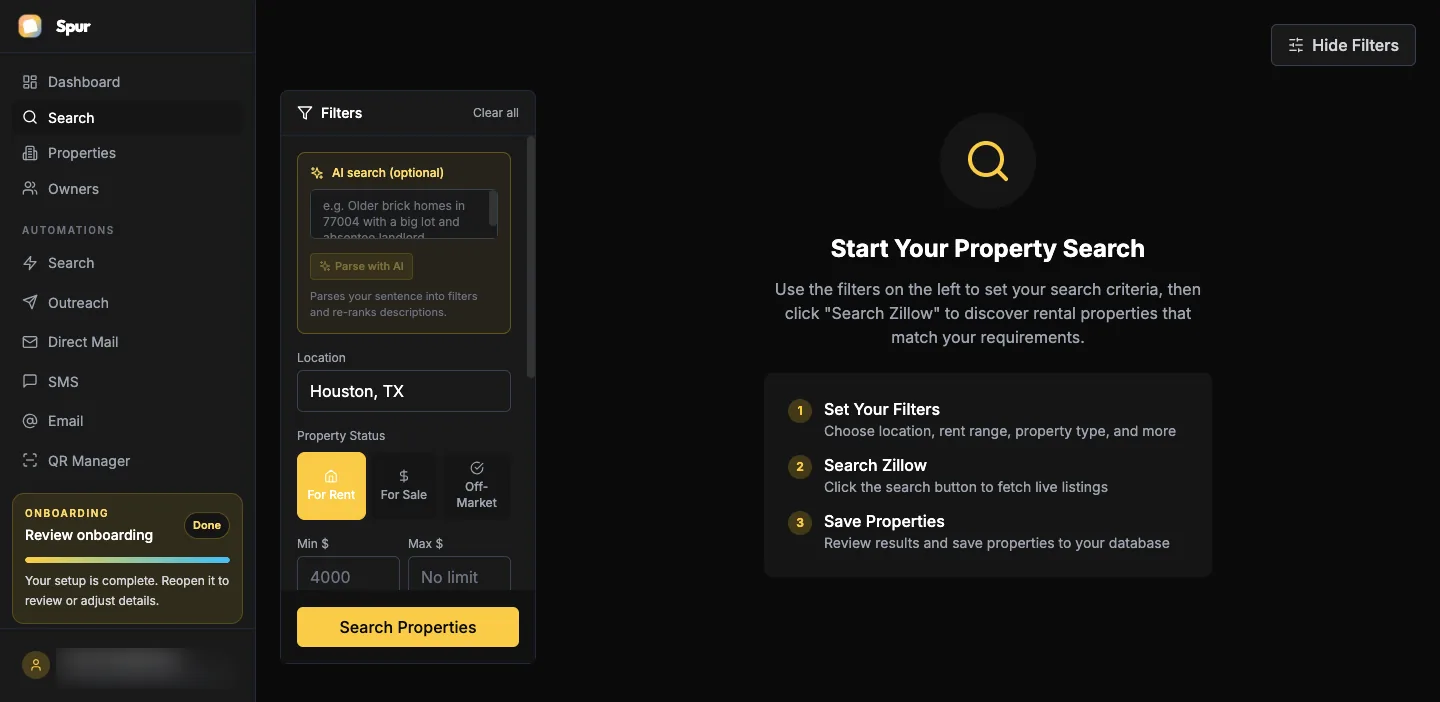
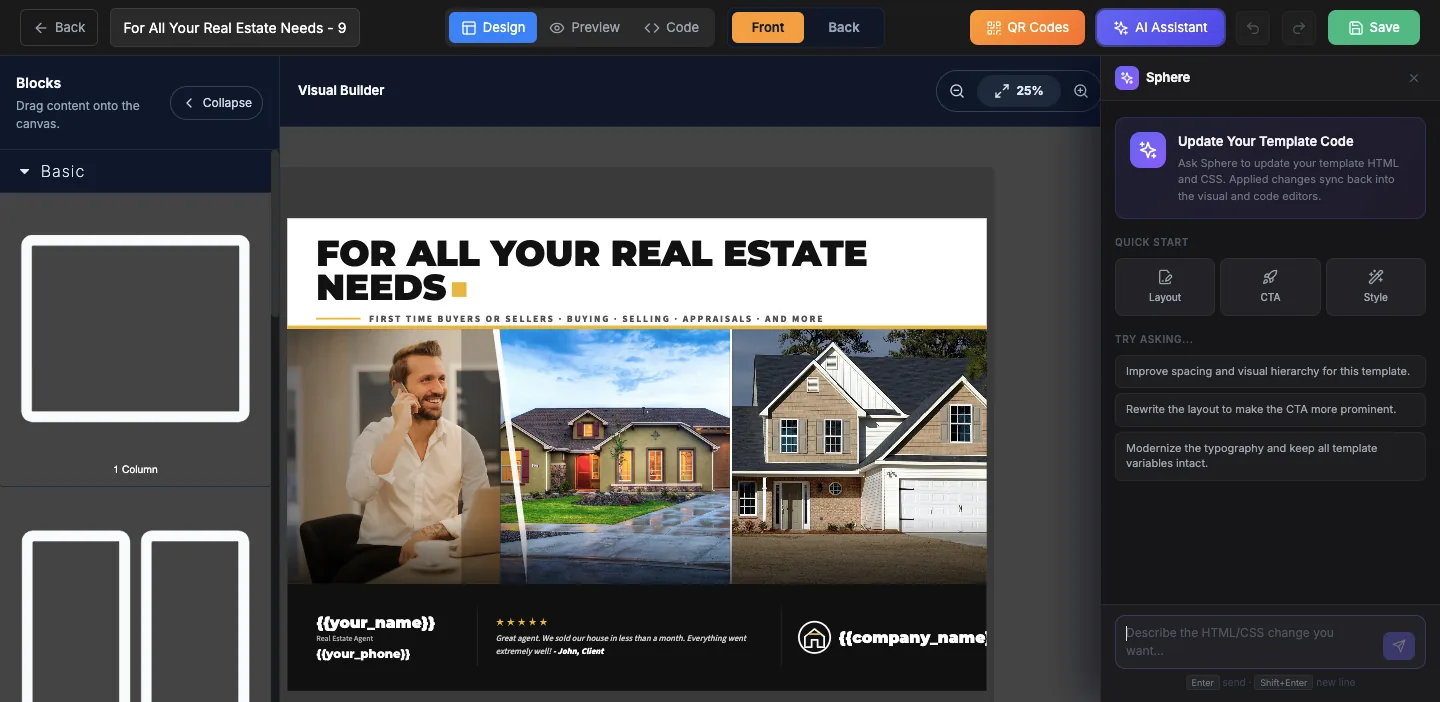
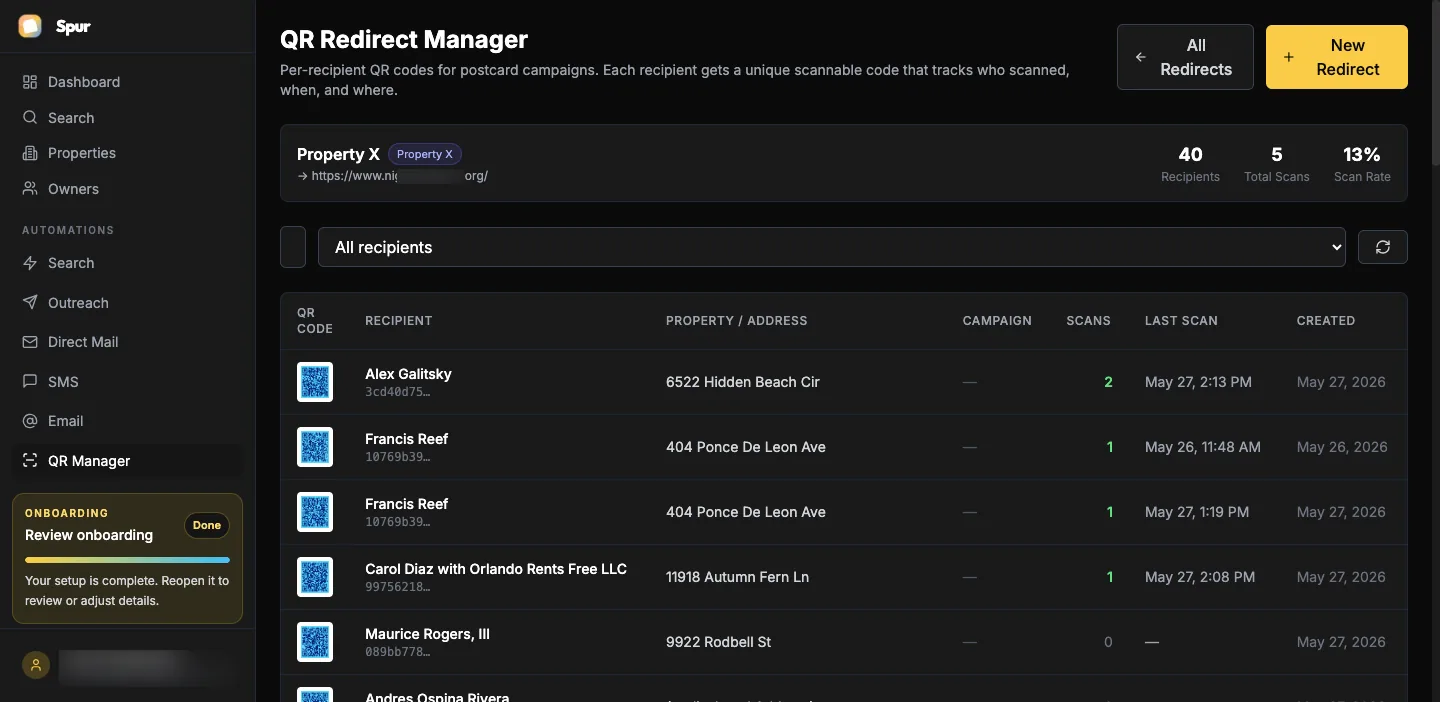
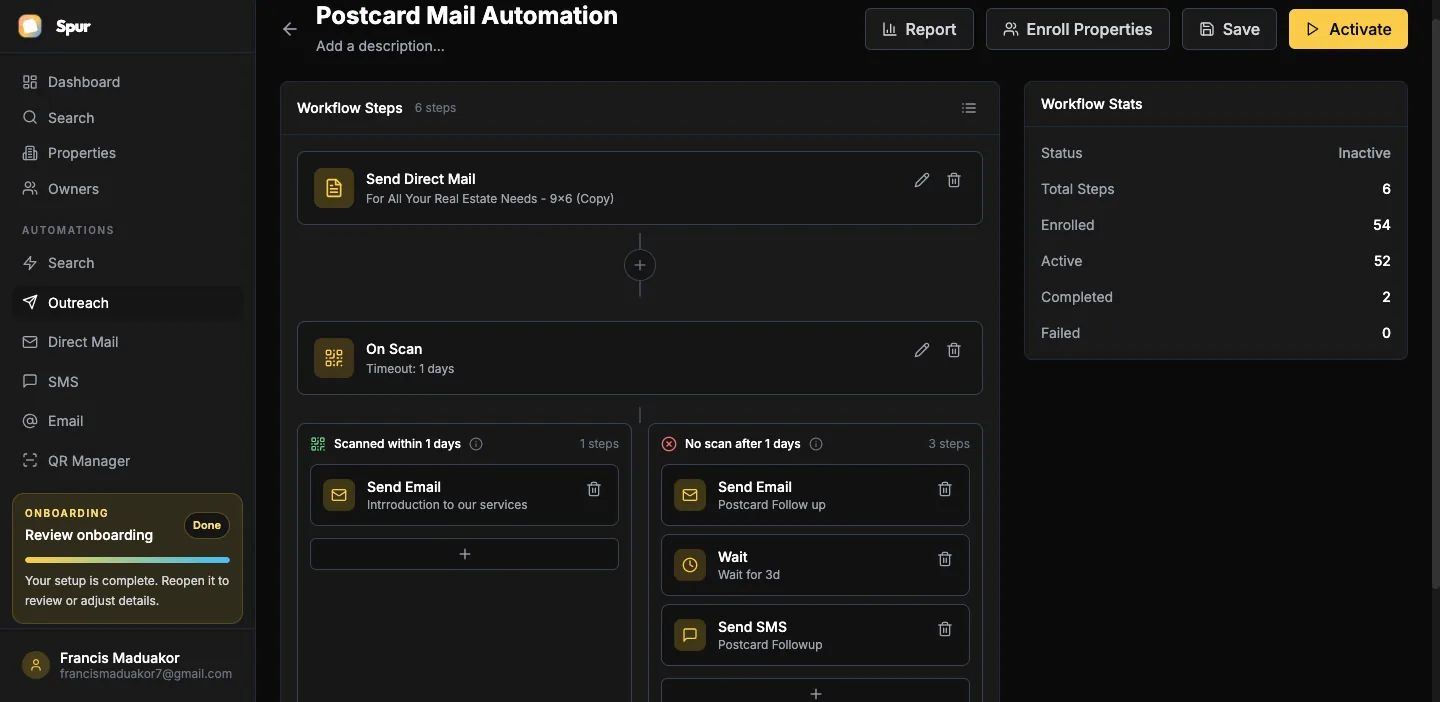
See it in Spur
A neighbor list in Spur
Sample Olathe homes within a quarter mile of a whole-house re-side, built 1999–2003. Names are partly masked.
Radius 0.25 mi of jobBuilt 1999–2003Owner-occupiedOwned 10+ yrsExclude past customers
- Brett M.15320 W 147th TerBuilt 2001 · vinylNext streetOwned 19 yrs
- Kayla & Jon S.14715 S Lindenwood DrBuilt 2001 · vinylSame street
- Omar F.14802 S Lindenwood DrBuilt 2000 · vinylSame streetSouth-facing
- Patty & Lee R.15215 W 148th StBuilt 2002 · vinyl + stoneAround the corner
- Darius W.15408 W 147th TerBuilt 2003 · vinylNext streetHail Apr '26
AI draft for Brett M. · 15320 W 147th Ter
Hi Brett,
You may have seen the house on Lindenwood Drive that just got a new exterior. That was our crew. Homes in your neighborhood were built around 2001 with the same vinyl siding, so they've been fading and cracking in the same places.
Scan the code to see the before and after. Because we're already working on the street, we're offering free exterior assessments to neighbors this month, with a written price and no pressure.
If the vinyl on your house still has years left, we'll tell you so.
Leah Grant · Heartland Siding Co. · (913) 555-0171
Sample data for illustration. Your results depend on your market and filters.
Playbook
Why neighbor marketing works so well for siding
No home project is more visible than new siding. The whole house changes color and texture, and for weeks there's a crew, a dumpster, and stacks of material in the driveway. Neighbors notice, and they compare. A re-sided house makes the original siding next door look older overnight.
Siding also ages together. Production builders typically sided an entire subdivision phase with the same product over a year or two. Those homes face the same sun, the same storms, and the same freeze-thaw cycles, so their siding fades, cracks, and loosens on a similar schedule. When one owner decides it's time, many neighbors are close behind.
That makes every job a targeting signal. Draw a radius of about a quarter mile around the address and filter for owner-occupied homes built within a few years of it. Those owners share the same siding and can see the finished result for themselves. Your card arrives with a true, specific reason.
Mail mid-job and after. A card that arrives while the crew is still working catches neighbors at peak curiosity. A second card after the job, with the finished before-and-after behind the QR code, catches the owners who wanted to see the result first.
Protect your customer. Mention the street and the work, never the customer's name or house number, and crop photos so the address isn't visible. Ask permission before using photos.
Use the color question. The first thing neighbors want to know is what the new siding is and what color it's in. A QR code that opens the product and color name, alongside the before-and-after, answers that directly. In HOA communities, a neighbor's approved color change also tells the rest of the street what the board will accept, which removes one of their biggest hesitations.
Automate it, and watch which subdivisions respond. Most contractors agree neighbor marketing works and still don't do it consistently. Uploading jobs weekly and letting Spur mail the neighbors removes the friction. Over a season, you'll see which neighborhoods produce chain reactions and can mail them in full.
25×+return on a year of Spur Team from neighbor jobs in a season
One neighbor job pays for years of Spur.
- Spur Team: $49/mo billed annually = $588/yr
- 80 cards per job (mid-job + after) × 10 jobs = 800 cards on Team at $0.94 each = $752
- 2 neighbor re-sides (~$30,000) + 1 trim and soffit job (~$4,000) ≈ $34,000
Example math. Your pricing and response will vary. Run your own numbers →
One tool, not four
Spur vs. yard signs and door hangers
What you needThe usual waySpur
Every same-era home within 0.25 miWhoever drives past the sign✓ Built in
Card explains why their siding is the same ageLogo and phone number✓ Built in
Before-and-after behind the QR codeNo proof of the work✓ Built in
Mailed mid-job and afterWhen someone has time to walk the street✓ Built in
Automatic for every jobManual, so it rarely happens✓ Built in
Neighbor Marketing by the numbers
Why neighbors are on the same clock
20–40 yrs
typical vinyl siding life, so homes sided together reach the end of it together
Top tier
siding replacement ranks among the better exterior projects for cost recouped, which neighbors notice
25×+
return on a year of Spur Team from neighbor jobs in a season
FAQ
Siding neighbor marketing questions
How do I market to neighbors after a siding job?
Mail owner-occupied homes within about a quarter mile that were built in the same years. Mention the street and the work, and link a QR code to the before-and-after.
Should I mail neighbors during the job or after?
Both. Mid-job catches curiosity while the crew is there; after the job lets neighbors see the finished result.
Can I use photos of my customer's house?
With their permission, and crop out the house number. Never name the customer on the card.
Can Spur mail neighbors automatically for every job?
Yes. Upload jobs weekly and Spur mails each job's neighbors on its own.
Keep exploring
Related plays and guides
Start in minutes. No card required.
Turn every house you re-side into the next three.
Enter your current job's address and mail the same-era homes around it this week. Free to start.
Mail the neighbors of my last job — freeFree forever plan · No card · 20 property searches a month
Prefer a walkthrough? Book a demo