
Owners seldom enter the crawlspace, so mold, standing water, and torn insulation go unnoticed for years.
Basement waterproofing play · Crawlspace encapsulation
Crawlspace encapsulation leads, found in older homes and mailed with a free inspection.
Damp crawlspaces cause musty smells, sagging floors, and higher energy bills, and owners rarely look at them. Spur finds older homes on crawlspaces, writes a postcard about moisture and air quality for each owner, and mails it with a QR code that books a free crawlspace inspection.
Free forever plan · No card · 20 property searches a month
USPSFirst-Class
Wanda Pruitt3401 Coley DrRaleigh, NC 27610Scan for a free crawlspace look
Wanda P. scanned your crawlspace postcard · 4 min ago
AI-written for this owner · Mailed in 2 days
Pre-1980homes commonly have vented crawlspaces with little moisture control
Humid zipsSoutheast and Mid-Atlantic summers drive the most moisture
1 inspectionwith photos so the owner can see what's down there
The problem
Crawlspace problems are invisible until they reach the living room.
Musty odors, cold floors, and high cooling bills rarely point homeowners toward the crawlspace.
Some crawlspace ads are alarmist. A calm, specific message stands out and builds trust.
How it works
From list to mailbox in one workflow.
Five steps from an unseen crawlspace to a booked inspection.
app.usespur.com
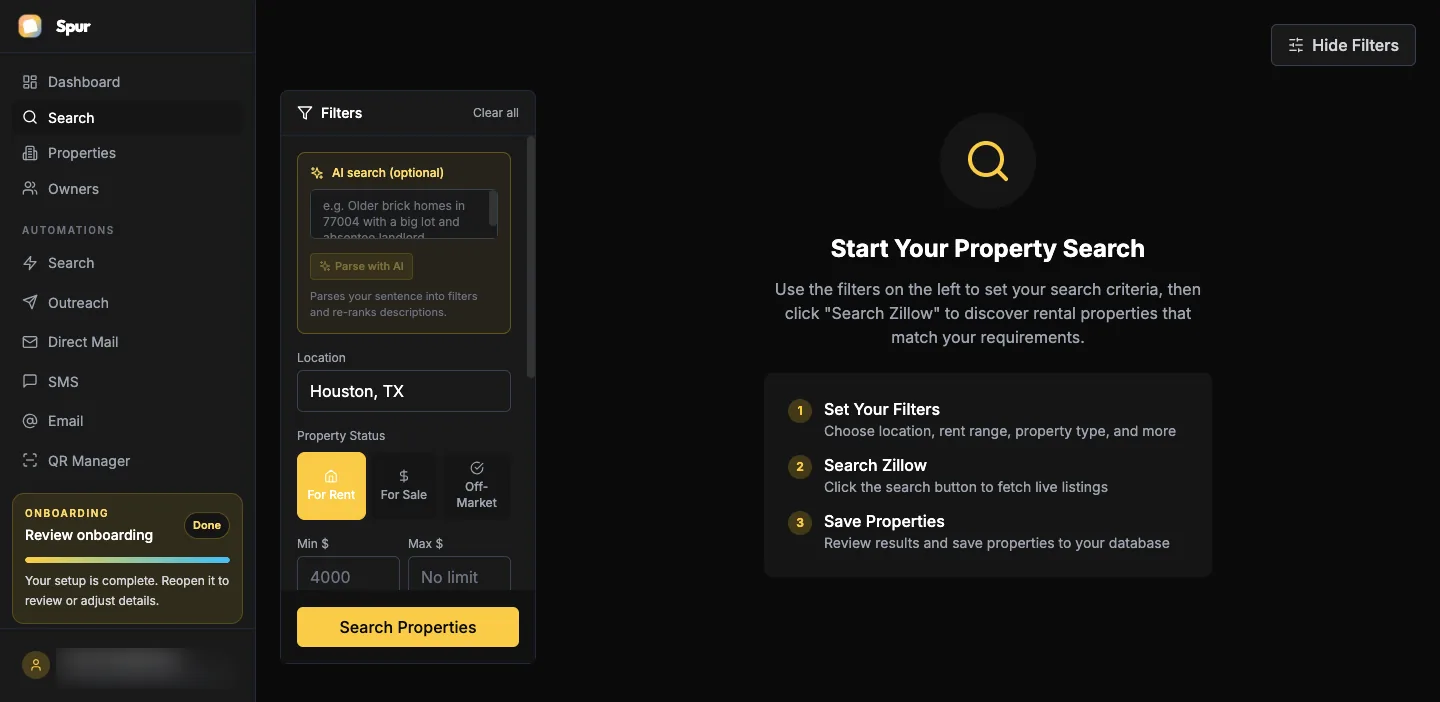
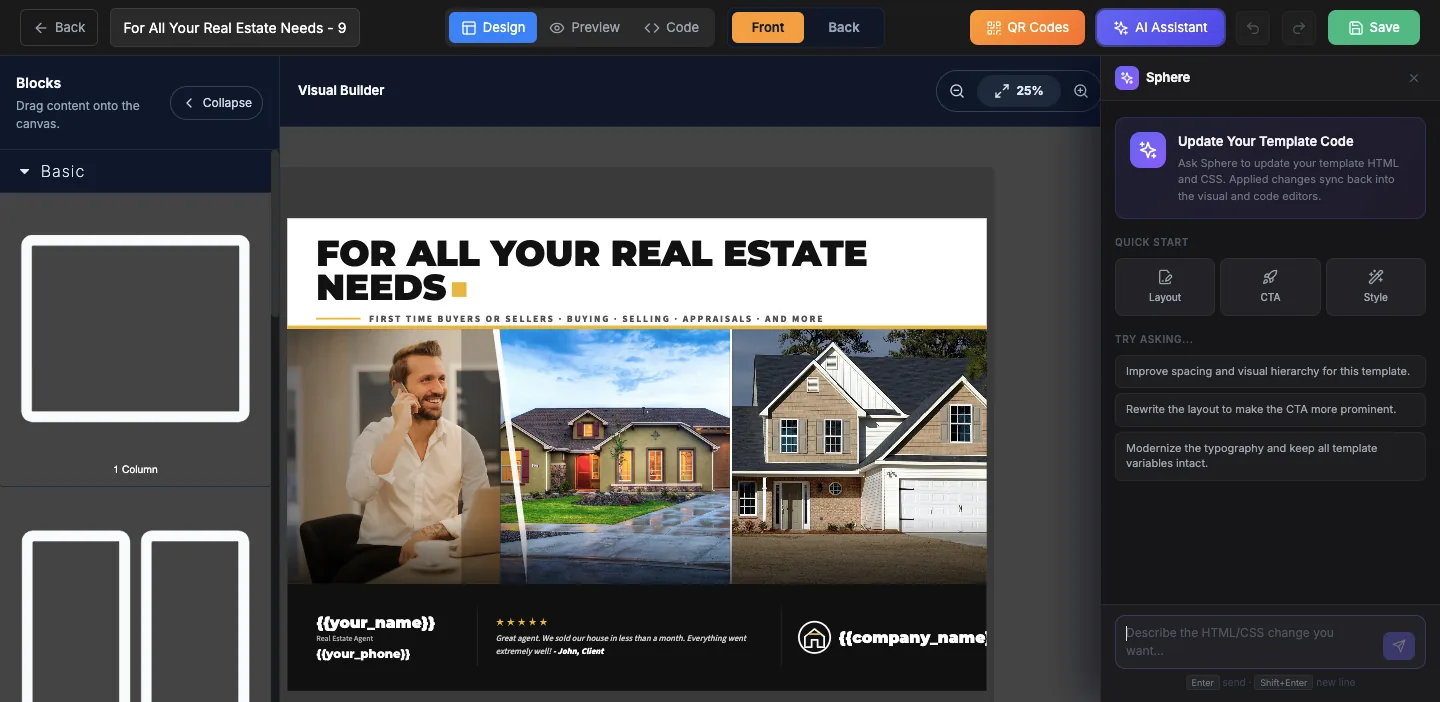
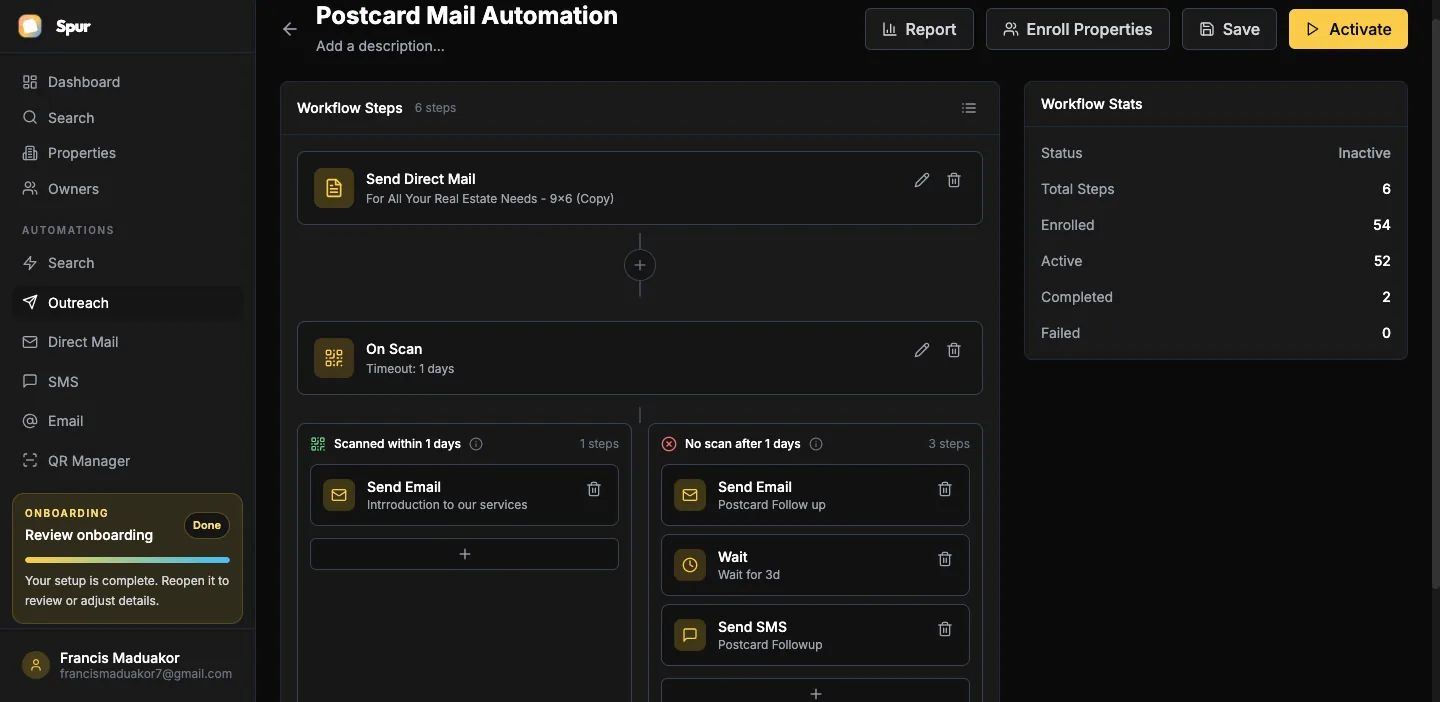
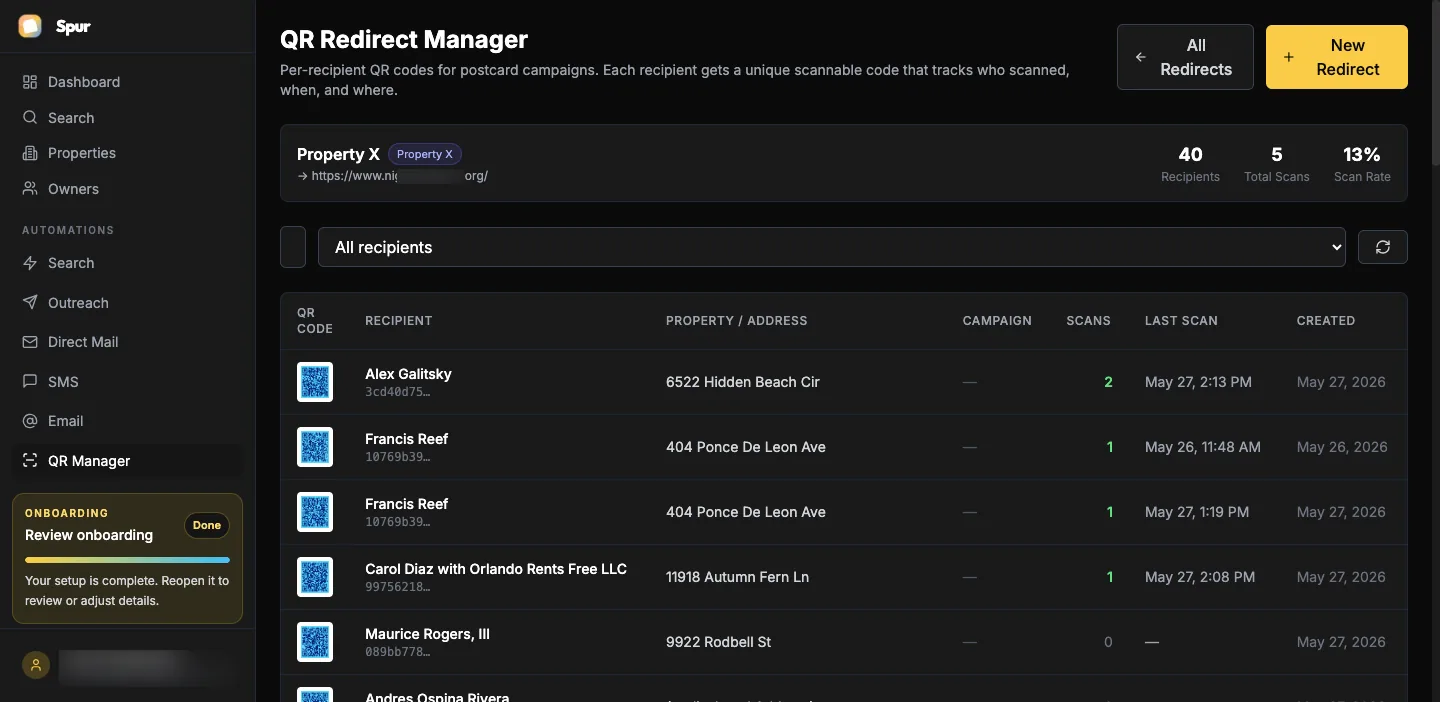
See it in Spur
A crawlspace list in Spur
Sample Raleigh-area homes built 1950–1979 in humid zips, likely on vented crawlspaces. Names are partly masked.
Zip 27610Built 1950–1979Single-familyOwner-occupiedOwned 8+ yrs
- Wanda P.3401 Coley DrBuilt 1964 · ranchOwned 22 yrs
- Gil & Rosa M.902 Sunnybrook RdBuilt 1958 · ranchOwned 17 yrs
- Terry H.5115 Lake RdBuilt 1970 · split-levelOwned 11 yrs
- Beth & Carl N.2208 Ridge RdBuilt 1967 · ranchOwned 9 yrs
- Ollie S.710 Garner RdBuilt 1955 · bungalowOwned 34 yrs
AI draft for Wanda P. · 3401 Coley Dr
Hi Wanda,
Many homes on Coley Drive were built in the 1960s on vented crawlspaces, which let humid summer air in and often leave the floor and insulation damp. Owners usually notice a musty smell, a cold floor in winter, or a higher cooling bill without knowing why.
We'd like to take a look, free. We'll photograph the crawlspace, show you what we see, and tell you honestly whether encapsulation makes sense or whether a smaller fix will do.
Scan the code on this card to pick a time.
Bo Whitaker · Carolina Crawlspace Care · (919) 555-0134
Sample data for illustration. Your results depend on your market and filters.
Playbook
How to market crawlspace encapsulation without scaring people
A crawlspace is the part of the house nobody visits. In many older homes, the vented crawlspace was designed to let air flow through, but in humid climates that air carries moisture that condenses on cool surfaces, wets insulation, and feeds mold. Over time, that damp air moves upward into the living space, and owners notice a musty smell, a cold floor, or an energy bill that is higher than it should be.
Encapsulation addresses this by sealing the crawlspace: a heavy-duty vapor barrier on the floor and walls, sealed vents, and often a dehumidifier or conditioned air. The result is a drier, cleaner space that protects the structure and improves comfort. It is a real service, and an honest explanation of what it does and when it is needed is the best marketing you have.
Target homes by age and region. Houses built before 1980 in the Southeast, Mid-Atlantic, and other humid areas are the most common candidates. Owner-occupied homes held for a long time are likely to have original conditions. Because you cannot see the crawlspace from the street, use build year and foundation type as proxies, and let the free inspection confirm the need.
The inspection is the product. A photo walk-through that shows standing water, mold on joists, or torn insulation turns an abstract warning into something the owner can see. Offer a clear, written recommendation, and be willing to say when a crawlspace is fine. Owners who see you be honest are more likely to hire you and tell neighbors.
Season matters. Mail in late spring, ahead of the humid summer, and again in early fall when owners think about heating costs. A follow-up after the first muggy stretch is a natural moment to re-engage scanners. Pair the crawlspace message with energy savings and air quality, which are benefits owners already care about.
9×+return on a year of Spur Team from one full crawlspace encapsulation
One encapsulation job pays for the whole mailing.
- Spur Team: $49/mo billed annually = $588/yr
- 500 postcards at $0.94 each = $470
- One full encapsulation with a dehumidifier (~$5,500–$10,000) = 9× or more your annual subscription
Example math. Your pricing and close rate will vary. Run your own numbers →
One tool, not four
Spur vs. the usual crawlspace marketing
What you needThe usual waySpur
Homes filtered by age, region, and ownershipEvery door in the zip✓ Built in
Calm copy about odor, floors, and billsAlarmist mold warnings✓ Built in
Photo inspection booked from the scanPhone calls from whoever sees the ad✓ Built in
Seasonal waves scheduled onceRemember to reorder✓ Built in
Scans tracked by householdNo view of what worked✓ Built in
Crawlspace Encapsulation by the numbers
Why crawlspace moisture matters
Below 60%
indoor relative humidity is the EPA's upper limit for avoiding mold growth, with 30–50% preferred
24–48 hrs
is how quickly mold can begin to grow on materials left wet
9×+
return on a year of Spur Team from one full crawlspace encapsulation
FAQ
Crawlspace encapsulation lead questions
How do I find homes with vented crawlspaces?
Spur can't see the foundation, so it uses build year, region, and property type. Single-family homes built before 1980 in humid climates are the core list, and the free inspection confirms the fit.
What does a crawlspace encapsulation postcard say?
It names musty smells, cold floors, and energy bills, offers a free photo inspection, and promises an honest recommendation. Keep it calm and specific.
When should I mail?
Late spring, ahead of the humid season, and early fall. Spur can schedule both every year.
Can I team up with insulation or pest control companies?
Yes. Those companies see crawlspaces often and can refer homeowners. Add them as a partner list and mail a short introduction.
Keep exploring
Related plays and guides
Start in minutes. No card required.
Show owners what's under the floor.
Pull older homes on crawlspaces and mail your first free-inspection card. Free to start.
Find crawlspace encapsulation leads — freeFree forever plan · No card · 20 property searches a month
Prefer a walkthrough? Book a demo