
A builder installs the same door, springs, and opener on every house. When one fails at year ten, the neighbors' are on the same clock.
Garage door play · Neighbor marketing
When one spring breaks on the street, the rest are close behind.
Builders install the same doors, springs, and openers across a whole subdivision, so they wear out together. Spur finds the homes around every job you finish, built in the same years, writes a card that mentions the nearby work without naming your customer, and alerts you when a neighbor scans.
Free forever plan · No card · 20 property searches a month
USPSFirst-Class
Tyler Jensen13892 Harvest Moon DrDraper, UT 84020Scan to book while we're nearby
Tyler J. scanned your neighbor card · 9 min ago
AI-written for this owner · Mailed in 2 days
Same buildersame doors, springs, and openers on every home
0.25 miradius around each finished job, same build years
Next daycards can go out after every job
The problem
Every job you finish tells you who's next, and most companies ignore it.
A sign in the yard for a day reaches whoever drives by. Most of the subdivision never sees it.
When their spring breaks next month, the neighbor searches on their phone, not for the company that was next door.
How it works
From list to mailbox in one workflow.
Five steps from one finished job to the next three.
app.usespur.com
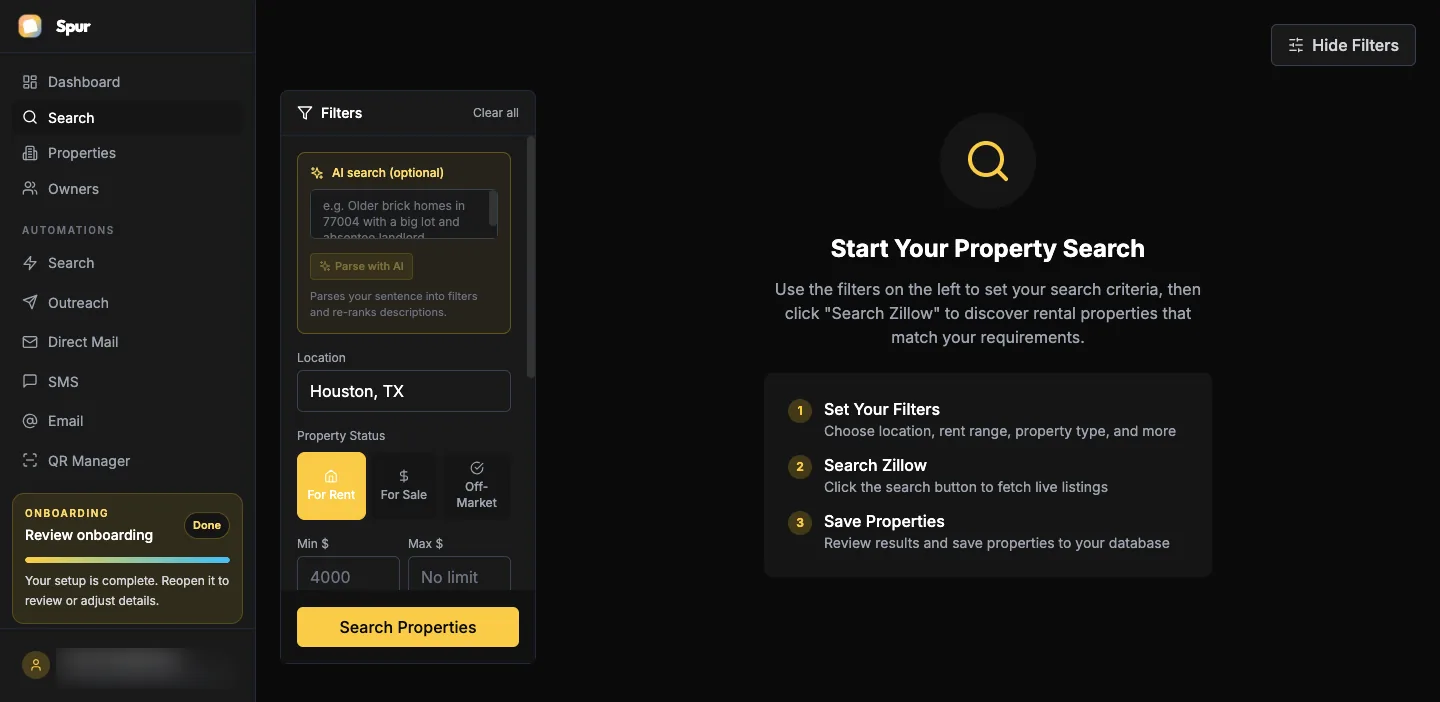
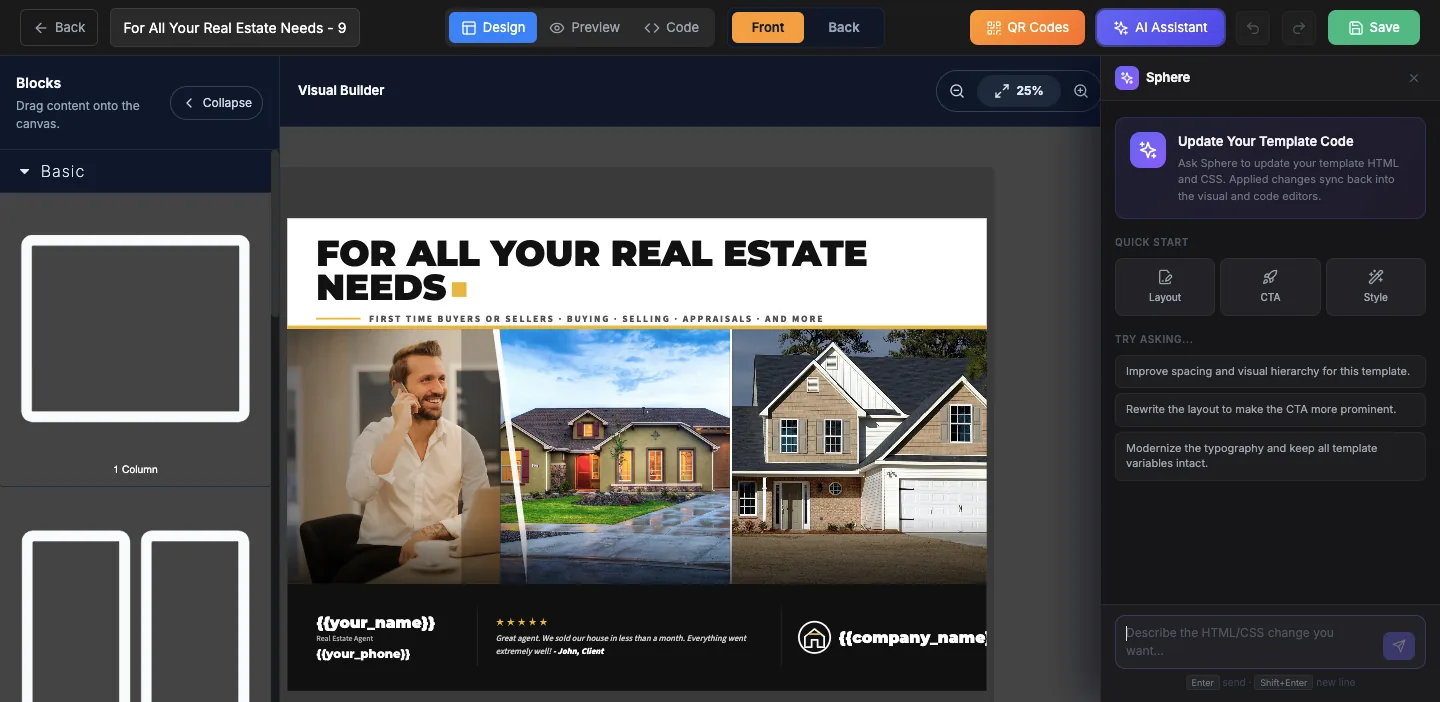
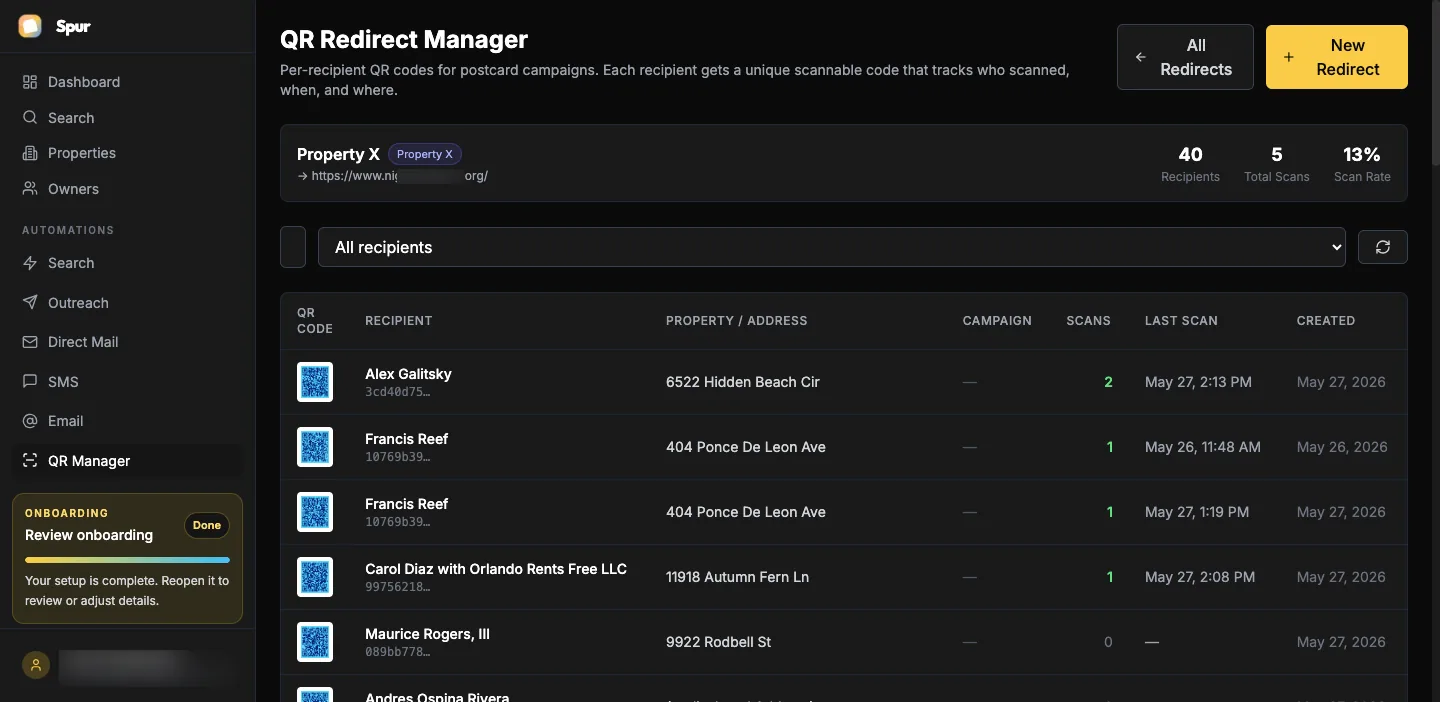
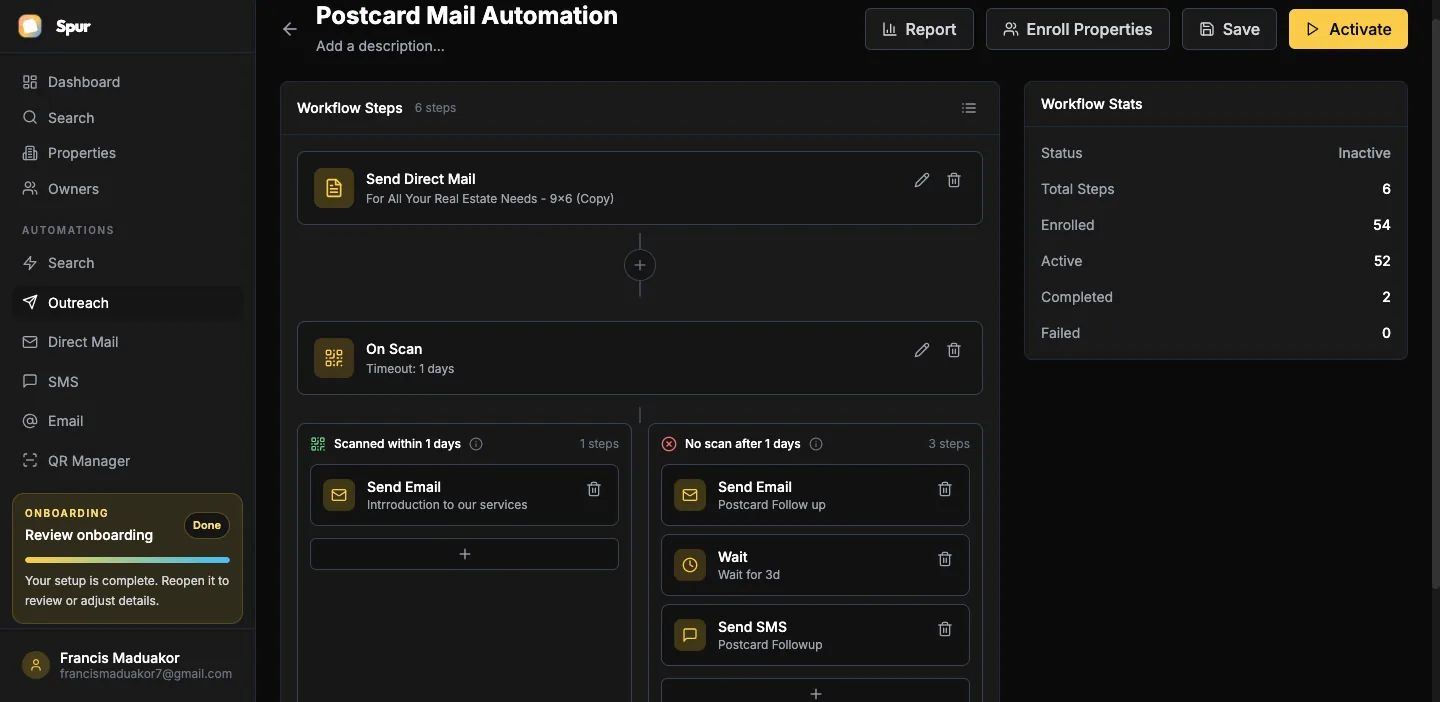
See it in Spur
A neighbor list in Spur
Sample Draper homes within a quarter mile of a spring replacement, built 2012–2015. Names are partly masked.
Radius 0.25 mi of jobBuilt 2012–2015Attached garageOwner-occupiedExclude current customers
- Tyler J.13892 Harvest Moon DrBuilt 2013 · 3-car garageSame streetLikely original springs
- Megan & Rob S.13910 Harvest Moon DrBuilt 2013 · 2-car garageSame street
- Amos K.1342 E Morning Glory LnBuilt 2014 · 2-car garageNext streetOwned 11 yrs
- Leah W.1360 E Morning Glory LnBuilt 2014 · 3-car garageNext streetTwo doors
- Dean & Pam F.13775 Sunrise Ridge DrBuilt 2012 · 2-car garageAround the cornerLikely original opener
AI draft for Tyler J. · 13892 Harvest Moon Dr
Hi Tyler,
We just replaced the garage door springs at a home on Harvest Moon Drive. Homes on your street were built around 2013 with the same doors and the same springs, so they tend to wear out at about the same time.
Since we're already working in the neighborhood this week, we're offering a $69 spring and safety check: spring tension, cables, rollers, lubrication, and an auto-reverse test. If your springs have plenty of life left, we'll tell you.
Scan the code to book while we're nearby.
Cody Larsen · Wasatch Garage Door Co. · (801) 555-0175
Sample data for illustration. Your results depend on your market and filters.
Playbook
Why neighbor marketing works so well for garage doors
Few trades benefit from neighbor marketing as much as garage doors. In most subdivisions, the builder installed the same door, the same springs, and the same opener on every house over a span of a year or two. Those parts then wear on the same schedule. When one homeowner's spring breaks at year ten, many of the neighbors are close to the same point.
That makes every finished job a signal. Draw a small radius around the address, usually a quarter mile, and filter for owner-occupied homes with attached garages built within a few years of the job. That list is the group most likely to need the same work soon, and you have a true, specific reason to contact them.
Write the card around that reason. "We just replaced springs on Harvest Moon Drive. Homes here were built around 2013 with the same doors and springs" is factual and useful. Never name the customer or give their address. Mention the street and the type of work only.
Speed helps. A card that arrives within a few days of the job lines up with the truck the neighbors may have seen. Offering a reduced-price check "while we're in the neighborhood" is honest when your crew is already scheduled nearby, and it lets you cluster jobs to reduce drive time.
Use it for installs too. A new door changes how a house looks, and neighbors notice. A card to the street after an install, with a QR code to the before-and-after photo, often produces the next replacement on the block.
Automate it. Most companies know neighbor marketing works and still don't do it, because it takes time after every job. Uploading finished jobs once a week and letting Spur mail each one's neighbors removes that friction entirely.
Watch the results by subdivision. Some neighborhoods respond to every card because the whole development is hitting the same age at once; others barely respond. After a few months, you'll know which subdivisions to mail in full, not just around each job.
5×+return on a year of Spur Team from neighbor jobs in a single quarter
A few neighbor jobs a month cover a year of Spur.
- Spur Team: $49/mo billed annually = $588/yr
- 50 cards per job × 10 jobs = 500 cards on Team at $0.94 each = $470
- 8 spring jobs (~$2,800) + 1 new door (~$3,500) ≈ $6,300 from one quarter
Example math. Your pricing and response will vary. Run your own numbers →
One tool, not four
Spur vs. yard signs and door hangers
What you needThe usual waySpur
Every same-era home within 0.25 miWhoever drives past the sign✓ Built in
Card explains why their door is on the same clockLogo and phone number✓ Built in
Mailed within days of every jobWhen a tech has time to walk the street✓ Built in
Scan alerts by nameNo response tracking✓ Built in
Automatic for every finished jobManual, so it rarely happens✓ Built in
Neighbor Marketing by the numbers
Why neighbors are on the same clock
~10,000
cycles a standard torsion spring is commonly rated for, so same-year homes wear out together
Top tier
garage door replacement ranks near the top of exterior projects for cost recouped, which neighbors notice
5×+
return on a year of Spur Team from neighbor jobs in a single quarter
FAQ
Garage door neighbor marketing questions
How do I market to neighbors after a garage door job?
Mail owner-occupied homes within about a quarter mile that were built in the same years. Mention the street and the work, explain why same-era homes wear out together, and make one offer.
Can I mention my customer's name or address?
No. Mention the street and the type of work only. It's just as persuasive and respects your customer's privacy.
How soon after a job should I mail the neighbors?
Within a few days. The card lines up with the work neighbors may have seen and lets you cluster follow-up jobs nearby.
Can Spur mail neighbors automatically for every job?
Yes. Upload finished jobs weekly or connect your list, and Spur mails each job's neighbors on its own.
Keep exploring
Related plays and guides
Start in minutes. No card required.
Let every job introduce you to the street.
Enter your last job's address and mail the same-era homes around it this week. Free to start.
Mail the neighbors of my last job — freeFree forever plan · No card · 20 property searches a month
Prefer a walkthrough? Book a demo