
A $50-off spring repair coupon means nothing to a family whose builder installed the door two years ago, and it's mailed to them anyway.
Garage door play · Postcards
Garage door postcards that know how old the door is.
Most garage door mailers are a coupon and a phone number sent to every house, whether it was built last year or in 1985. Spur writes a card for each home that names its build year and what's likely wearing out, prints it, mails it USPS first-class, and tells you the moment someone scans.
Free forever plan · No card · 20 property searches a month
USPSFirst-Class
Erin Sullivan5872 Brand RdDublin, OH 43016Scan to book a check
Erin S. scanned your spring check postcard · 4 min ago
AI-written for this owner · Mailed in 2 days
Build yearon every card, so the offer fits the home
QR per houseso every scan has a name and address
2 daysfrom approval to USPS first-class
The problem
Most garage door mailers say the same thing to every house.
Homeowners don't think about the garage door until it fails. A generic card has no reason to stay on the fridge until then.
A phone number tells you nothing until someone calls. Owners who looked and weren't ready yet are invisible.
How it works
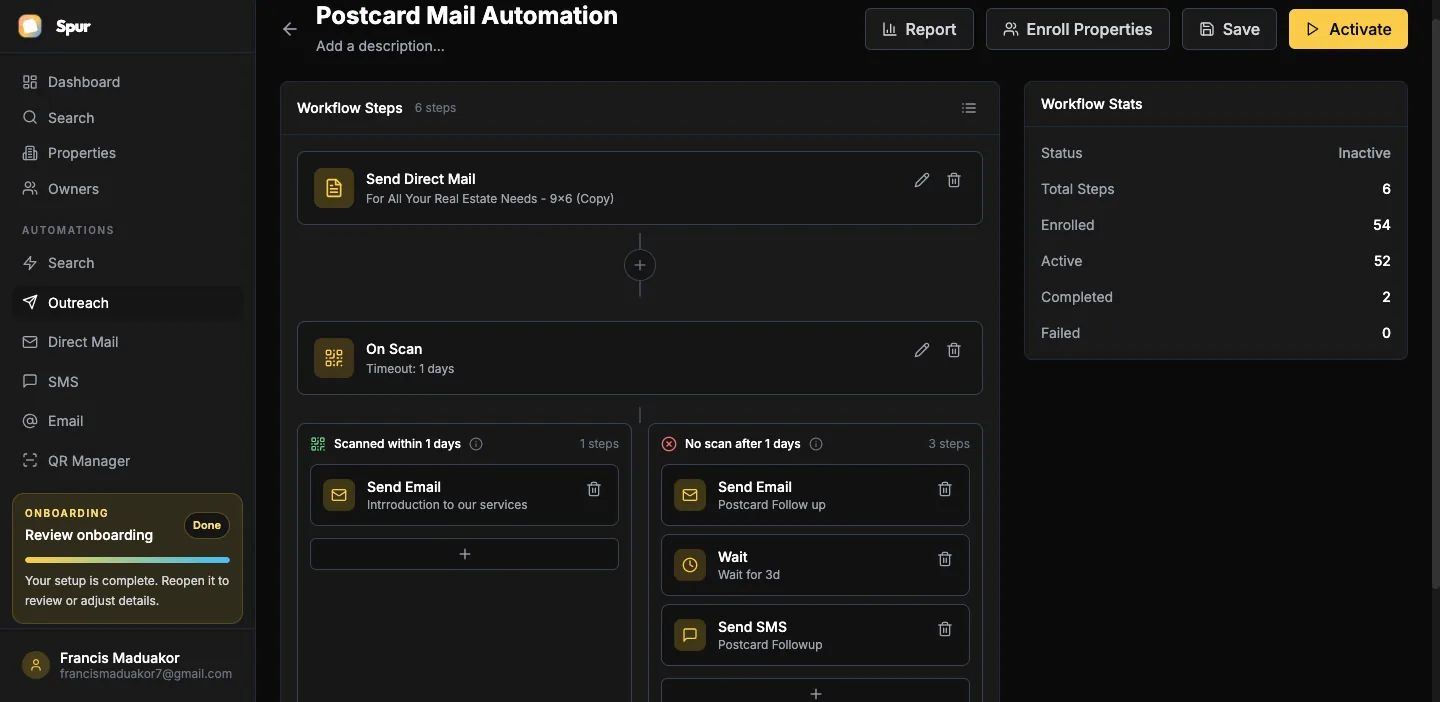
From list to mailbox in one workflow.
Five steps from a blank card to a booked service call.
app.usespur.com
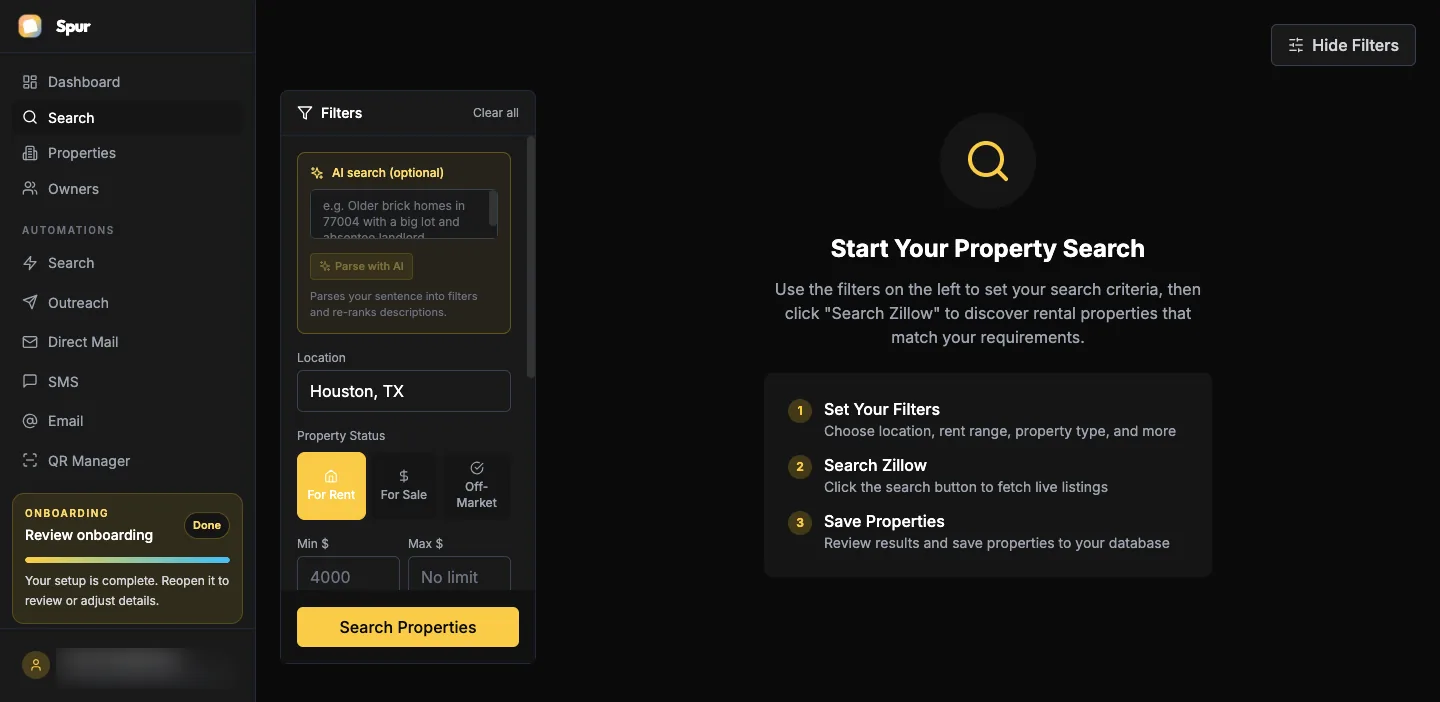
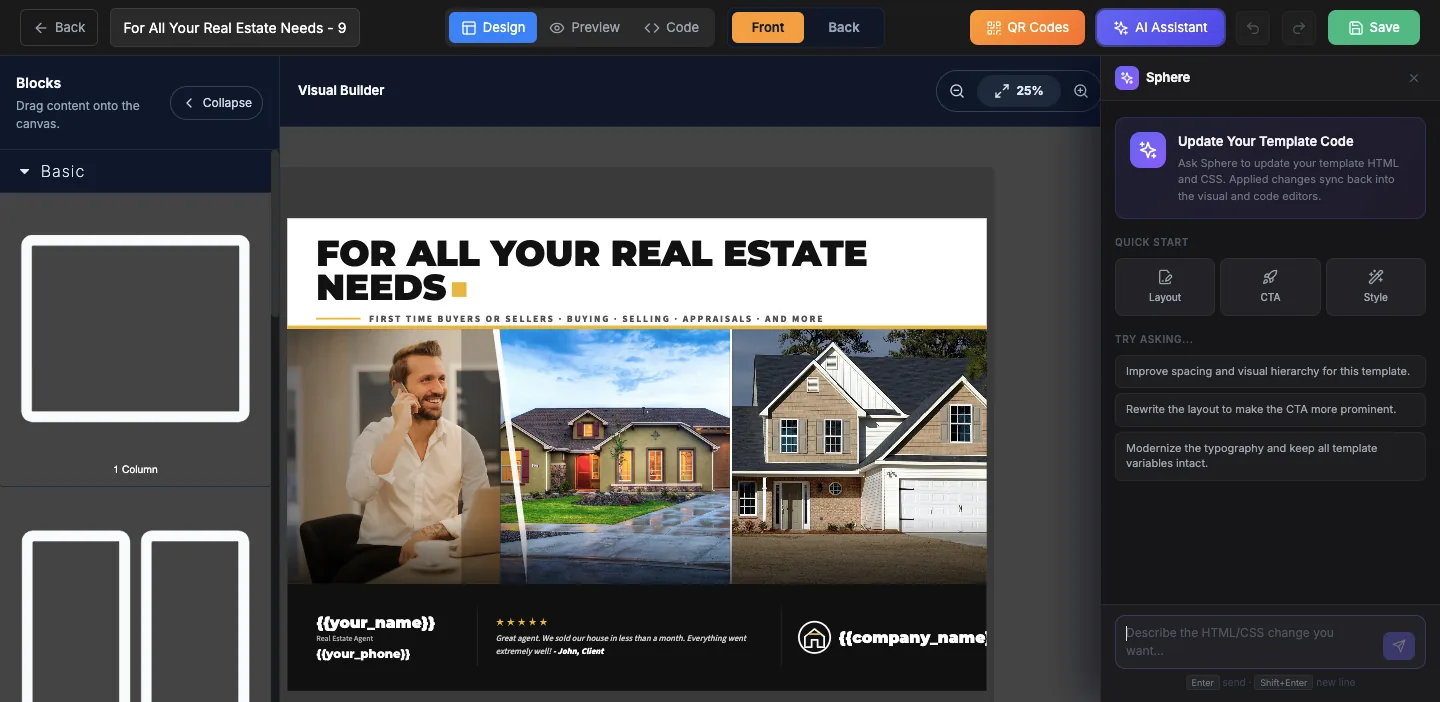
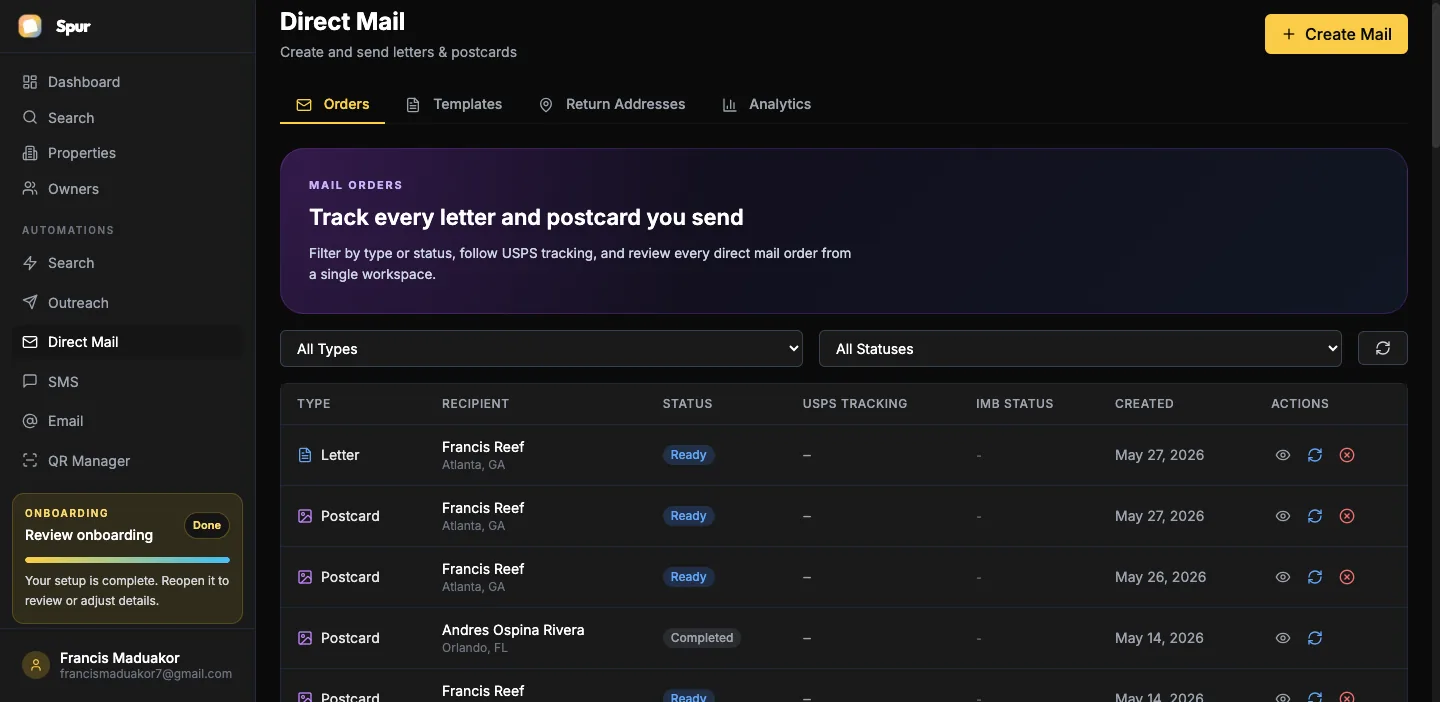
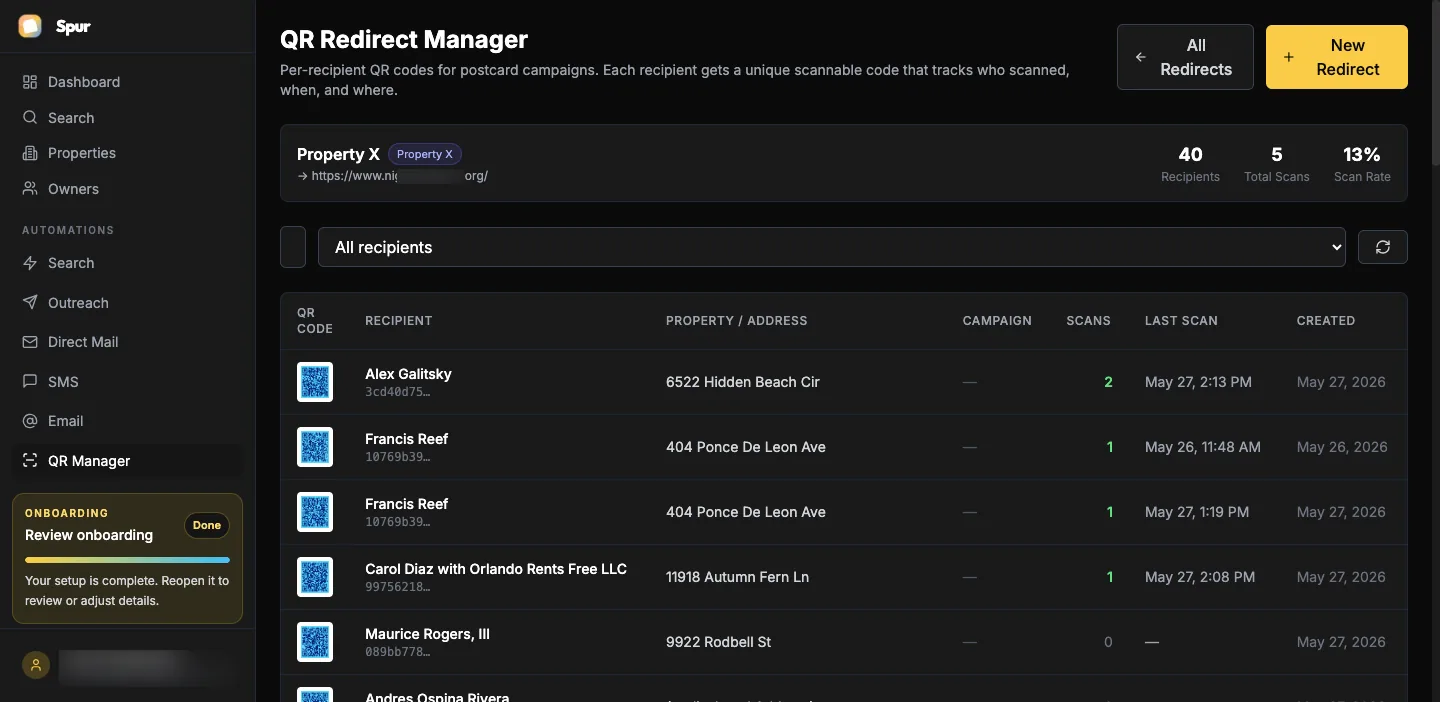
See it in Spur
A garage door postcard list in Spur
Sample Dublin, Ohio homes with attached garages, built 2010–2016. Names are partly masked.
Zip 43016Owner-occupiedAttached garageBuilt 2010–2016Single-family
- Erin S.5872 Brand RdBuilt 2013 · 2-car garageLikely original springs
- Mark & Gina T.5910 Brand RdBuilt 2013 · 3-car garageTwo doorsOwned 12 yrs
- Ravi P.7340 Avery RdBuilt 2011 · 2-car garageLikely original opener
- Holly B.6618 Tara Hill DrBuilt 2015 · 2-car garageOwned 10 yrs
- Ken & Joy W.6702 Tara Hill DrBuilt 2010 · 3-car garageLikely original springsTwo doors
AI draft for Erin S. · 5872 Brand Rd
Hi Erin,
Homes on Brand Road were built around 2013, which means most garage doors on your street have opened and closed well over 10,000 times. Standard torsion springs are commonly rated for about that many cycles.
A worn spring isn't dangerous if you leave the door alone, but it can break without warning and trap a car inside. Our $79 check covers springs, cables, rollers, hinges, and the auto-reverse sensors, and we lubricate everything that moves.
If everything looks fine, we'll tell you so. Scan the code to pick a time.
Tony Russo · Buckeye Overhead Door · (614) 555-0136
Sample data for illustration. Your results depend on your market and filters.
Playbook
How to write and target garage door postcards
Garage door work follows the age of the home more closely than almost any other trade. Builders install the door, the springs, and the opener when the house is built, and those parts then wear on a fairly predictable schedule. A typical household cycles its door several times a day, and standard torsion springs are commonly rated for around 10,000 cycles, which puts most spring failures somewhere between seven and twelve years after installation.
That makes build year the most useful filter on your list. Split it into bands. Homes about 7 to 15 years old are prime for spring replacement, tune-ups, and opener upgrades. Homes 20 or more years old are likely to have original doors and are candidates for full replacement. Each band gets its own card, because a spring check and a new door are different offers for different owners.
Then write the card around the home, not your company. "Homes on Brand Road were built around 2013" tells the owner you know something about their house. A short, plain explanation of spring cycles makes the offer feel useful rather than pushy. Spur's AI writes those details into each card from the parcel record.
Keep safety honest. Federal rules have required automatic reversing on residential openers since 1993, and an offer that includes testing the auto-reverse and photo-eye sensors is genuinely useful. Telling owners their spring is about to explode is not. Calm, specific copy builds the trust that gets the call when something actually breaks.
One offer per card. A flat-price tune-up, a spring replacement price range, or a free quote on a new door. Put it next to the QR code, and include your phone number for the owner who has a car trapped in the garage right now.
Finally, mail more than once. Garage doors fail on their own schedule, not yours. A card twice a year keeps your name in the kitchen drawer for the day the spring snaps, which is when most of these jobs get decided.
3×+return on a year of Spur Team from six spring replacements
A handful of spring jobs pays for a year of Spur.
- Spur Team: $49/mo billed annually = $588/yr
- 400 postcards on Team at $0.94 each = $376
- Six spring replacements at ~$350 ≈ $2,100, before openers and doors
Example math. Your pricing and response rate will vary. Run your own numbers →
One tool, not four
Spur vs. the usual garage door mailer
What you needThe usual waySpur
Homes filtered by build year and garageEvery door on the carrier route✓ Built in
Copy names the home's ageGeneric coupon✓ Built in
A QR code per householdPhone number only✓ Built in
Know who scanned, by nameWait for the phone to ring✓ Built in
Re-mailed twice a year automaticallyReprint when someone remembers✓ Built in
Postcards by the numbers
Why build year is the best garage door signal
~10,000
cycles a standard torsion spring is commonly rated for, about 7–12 years of daily use
1993
federal rules began requiring automatic reversing on residential garage door openers
3×+
return on a year of Spur Team from six spring replacements
FAQ
Garage door postcard questions
What should a garage door postcard say?
Name the street and the home's build year, explain plainly what's likely wearing out, and make one offer such as a flat-price tune-up. Add a QR code and a phone number.
Who should I send garage door postcards to?
Owner-occupied homes with attached garages. Homes 7–15 years old are best for springs and openers; homes 20+ years old are best for full door replacement.
How often should garage door companies mail?
Twice a year to the same list works well. Doors fail on their own schedule, so the goal is to be the number in the drawer when it happens.
Are postcards better than online ads for garage door repair?
They do different jobs. Ads catch emergencies. Postcards reach owners before the emergency and make you the company they already know when it happens.
Keep exploring
Related plays and guides
Start in minutes. No card required.
Be the card in the drawer when the spring snaps.
Build a list of homes by build year and mail your first garage door postcard this week. Free to start.
Find homeowners who need garage door service — freeFree forever plan · No card · 20 property searches a month
Prefer a walkthrough? Book a demo