
A spring repair might be followed by an opener five years later and a door ten years after that. By then, the magnet on the fridge is long gone.
Garage door play · Past customers
Your past spring customers are your next opener and door customers.
You replaced their springs five years ago. The opener is now 15 years old, and the door is starting to show its age. Spur turns your job history into cards timed to what's due next, names the work you already did, and alerts you when a past customer scans.
Free forever plan · No card · 20 property searches a month
USPSFirst-Class
Kelly Dawson25311 Cinco Terrace DrKaty, TX 77494Scan to see opener options
Kelly D. scanned your past customer card · 15 min ago
AI-written for this owner · Mailed in 2 days
Known homesdoor, opener, and job history already in your records
Timedto the next part likely to need work
Lower costper job than finding a new customer
The problem
Garage door customers forget your name between repairs.
Your software knows which door, which opener, and when. Nobody turns that into a reason to reach out.
When the opener dies, the customer searches again and calls whoever is first, even though you already know their garage.
How it works
From list to mailbox in one workflow.
Five steps from an old job list to repeat work.
app.usespur.com
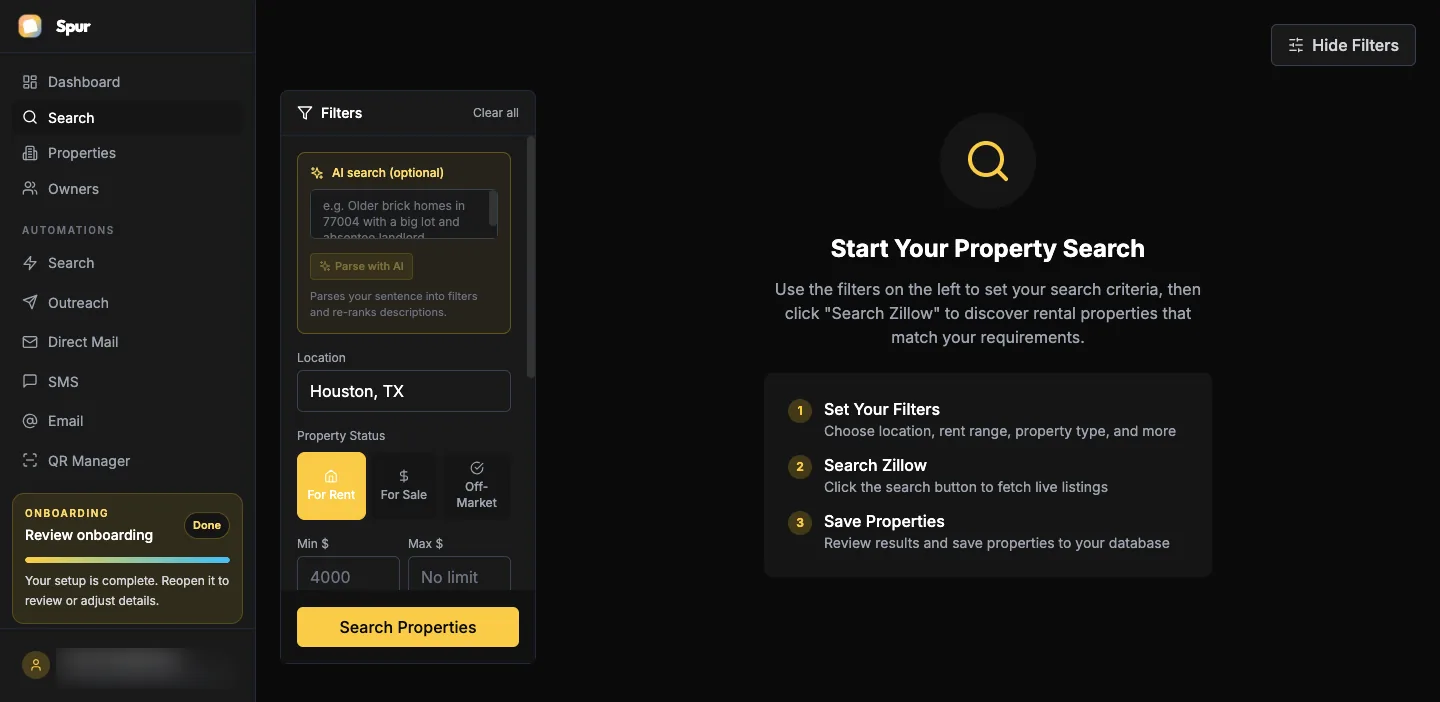
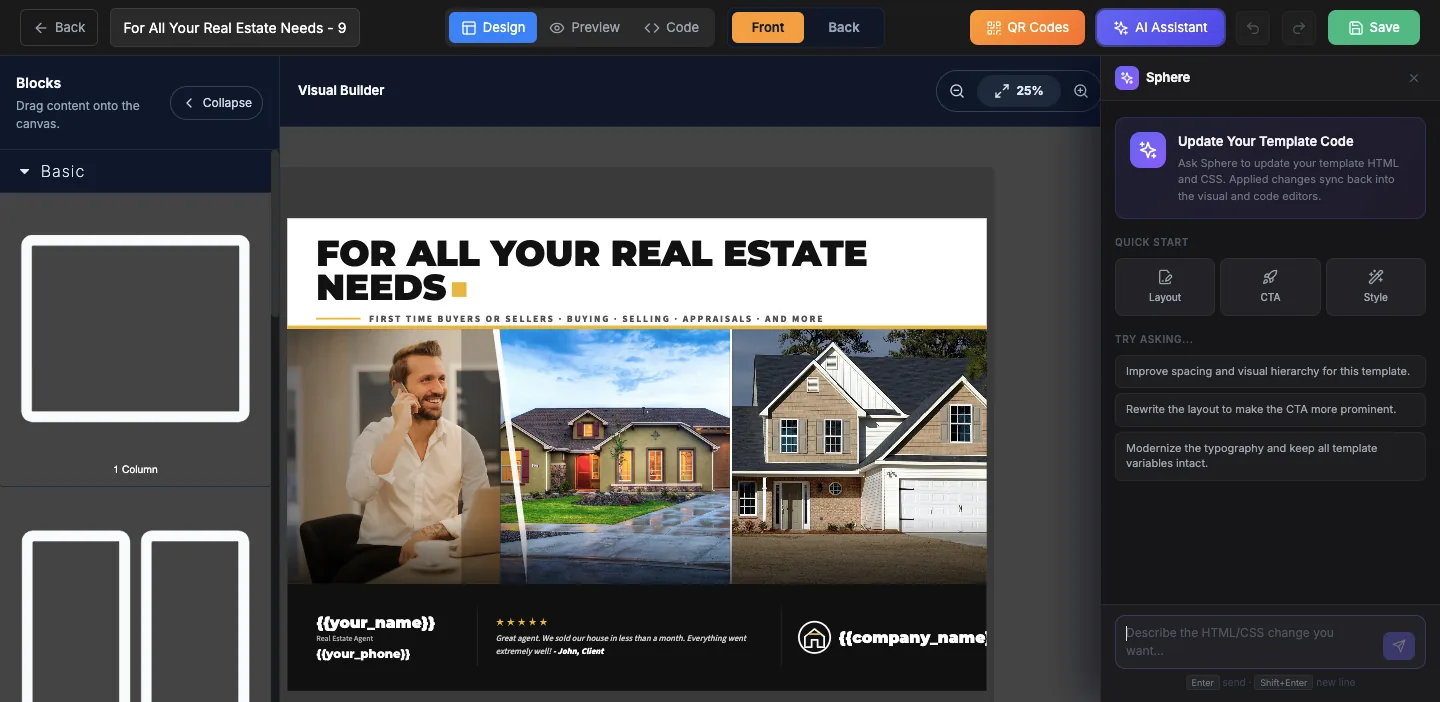
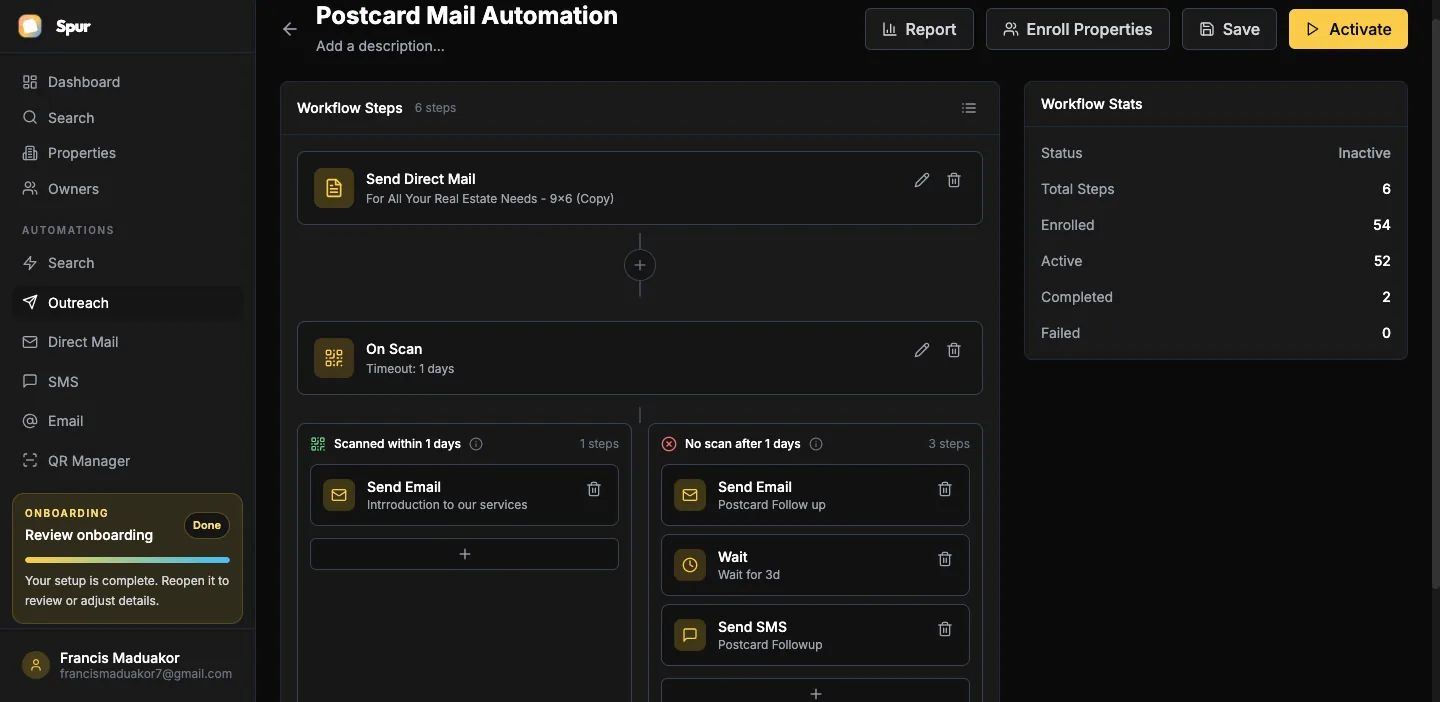
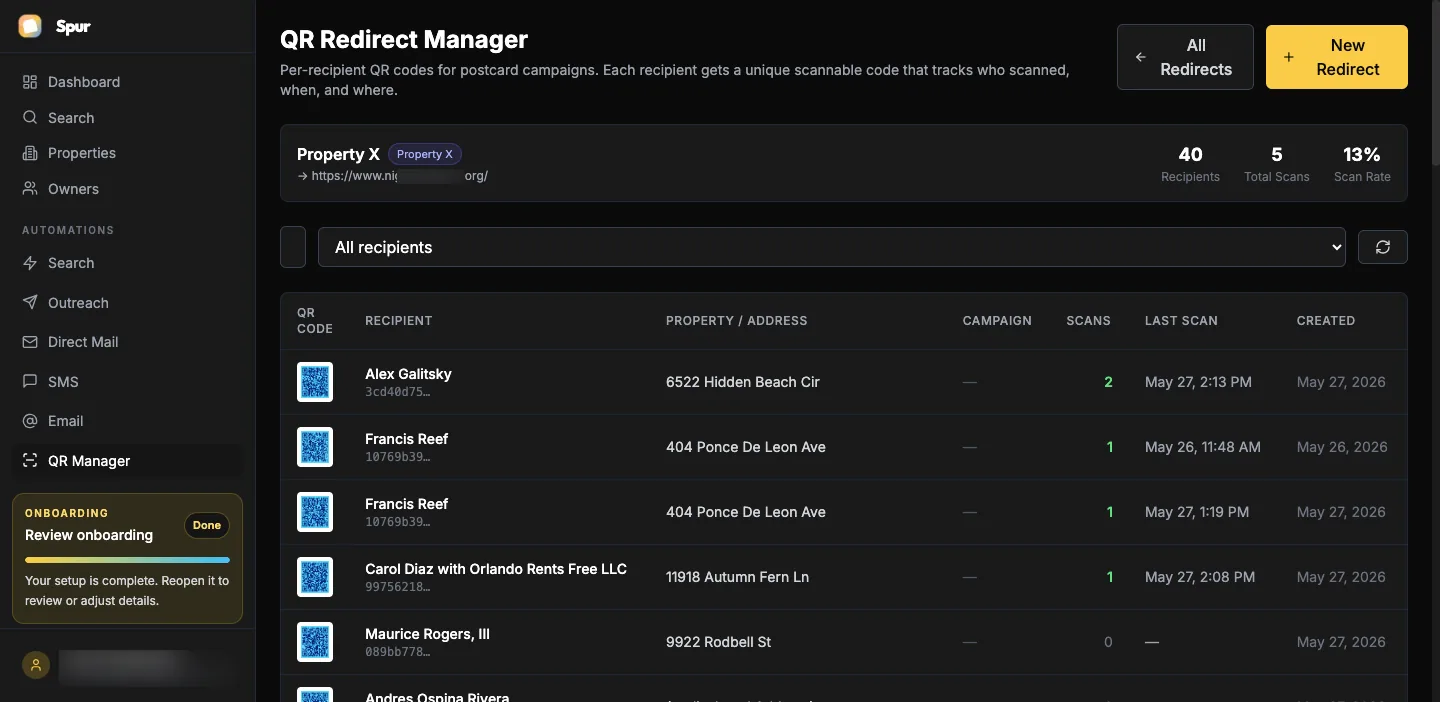
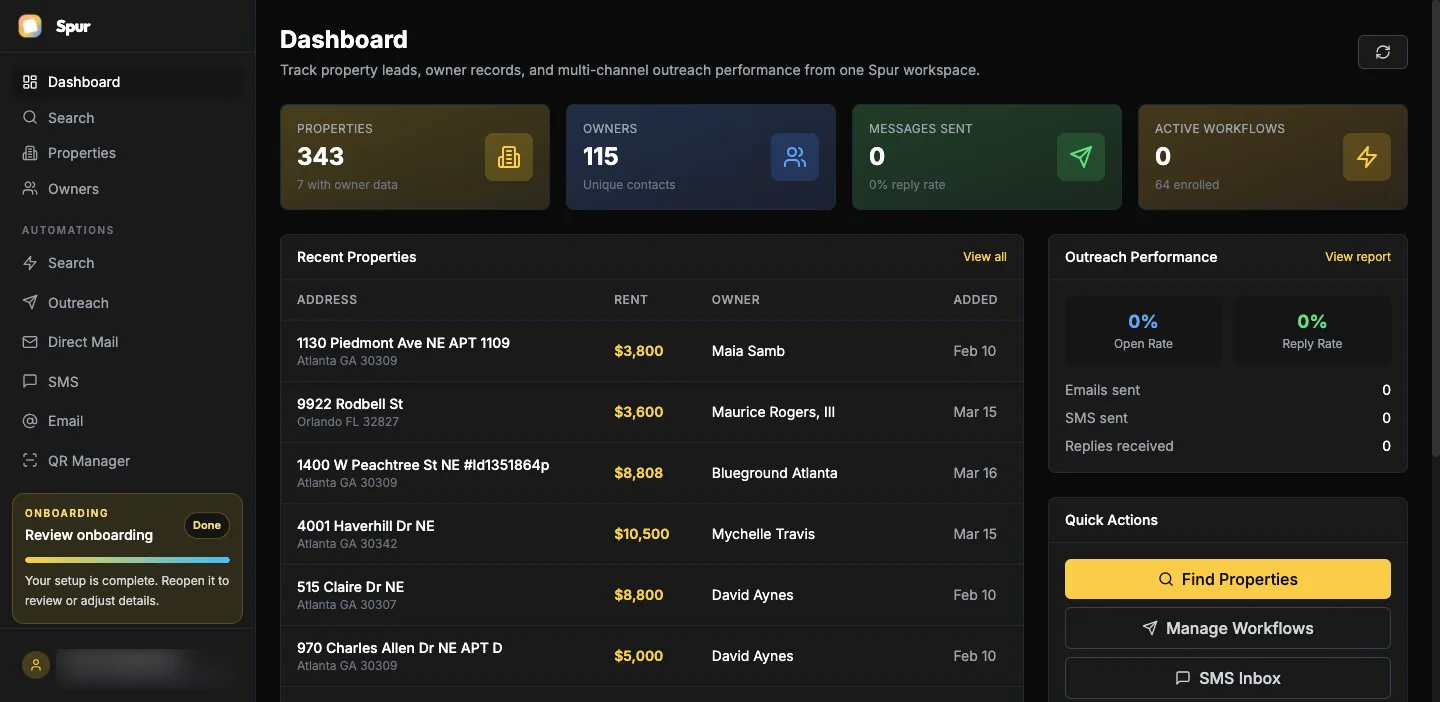
See it in Spur
A past customer list in Spur
Sample Katy past customers grouped by what's likely due next. Names are partly masked.
Your past jobs 2018–2023Still owner-occupiedExclude sold homesGrouped by next jobZip 77494
- Kelly D.25311 Cinco Terrace DrSprings 2020 · opener ~2009Opener due
- Marcus & Joy E.4806 Firethorn Hollow LnOpener 2019Door upgradeOriginal door 2004
- Rosa T.26118 Laurel Point LnCable repair 2021Tune-up due
- Wade H.2910 Pin Oak Point DrSprings 2018Opener dueSprings 7 yrs
- Ana & Luis G.25507 Cinco Terrace DrDoor install 2018Tune-up dueSame street as Kelly D.
AI draft for Kelly D. · 25311 Cinco Terrace Dr
Hi Kelly,
We replaced the springs on your garage door in 2020. At the time, your opener was about 11 years old, which makes it around 16 today, past the age when many openers start to slow down or fail.
If you've been thinking about replacing it, today's belt-drive openers are much quieter, let you open and check the door from your phone, and many include battery backup for power outages. As a past customer, you get 15% off the opener and installation.
Scan the code to compare a couple of options, or call and we'll look up your door's details before we talk.
Hector Ruiz · Katy Garage Door Pros · (281) 555-0152
Sample data for illustration. Your results depend on your market and filters.
Playbook
How to win repeat work from past garage door customers
A garage door is really three systems that wear out on different schedules: springs, the opener, and the door itself. Standard springs are commonly rated for about 10,000 cycles, openers often last 10 to 15 years, and doors commonly last 15 to 30. That means almost every past customer has a next job coming, and your job history tells you roughly when.
Start by grouping customers by what's due next. Spring customers from four or more years ago often have openers that were already old at the time. Opener customers from several years ago may have original doors that are now 20 or more years old. And everyone benefits from a periodic tune-up. Each group gets its own card.
Remove anyone who sold the home. Spur checks recorded sales and drops those addresses from the past-customer list. The new owner at that address is still a good prospect, but they belong on your new-owner list with a code-reset offer, not a card that references work they didn't buy.
Name the job you did. "We replaced your springs in 2020" is specific and reminds the owner that you've been in their garage before. It's also something no competitor can say. Combine it with a plain explanation of what's likely due next and a modest past-customer discount.
Use the moment to offer a plan. Past customers who come back for an opener or a tune-up are the best candidates for a yearly tune-up plan, which keeps them from drifting away again.
Measure repeat jobs by group. Over a year, you'll see which past customers come back and for what, and you can tune the timing and offers for each group.
Don't forget the street. Past customers live in subdivisions where the neighbors have the same doors and openers. When a past customer books an opener upgrade, the same-era homes around them are good candidates for the same card, which turns one repeat job into a small neighborhood campaign.
8×+return on a year of Spur Team from repeat jobs
Repeat jobs cost less to win than new ones.
- Spur Team: $588/yr, plus 400 cards on Team at $0.94 each = $376
- 8 opener upgrades (~$4,400) + 1 door (~$3,500) + 10 tune-ups (~$800) ≈ $8,700
- Year one total cost: $964
Example math. Repeat rates and pricing vary. Run your own numbers →
One tool, not four
Spur vs. the usual past customer follow-up
What you needThe usual waySpur
Cards timed to what's due nextNothing until they call again✓ Built in
Sold homes removed automaticallyMail to people who moved✓ Built in
Card names the job and yearGeneric "thanks for your business"✓ Built in
Grouped by opener, door, and tune-upOne message for everyone✓ Built in
Repeat jobs tracked by groupNo idea who came back✓ Built in
Past Customers by the numbers
Why past customers have a next job coming
July 2019
California began requiring battery backup on new and replacement openers, a reason to upgrade older units
1993
auto-reverse became required on residential openers, so very old units may lack modern safety features
8×+
return on a year of Spur Team from repeat jobs
FAQ
Past customer garage door questions
How do I get repeat business from garage door customers?
Use your job history. Group past customers by what's likely due next, remove homes that sold, and mail a card that names the work you did and offers a past-customer discount.
How long do garage door openers last?
Often 10 to 15 years, depending on use and model. Customers whose springs you replaced several years ago often have openers in that range now.
Can I upload my old jobs from ServiceTitan or Housecall Pro?
Yes. Export past customers with job type and date as a CSV and upload it. Spur removes current customers and homes that have sold.
What should I offer past customers?
A modest past-customer discount on the next likely job, plus a yearly tune-up plan to keep them from drifting away again.
Keep exploring
Related plays and guides
Start in minutes. No card required.
Your next opener job is already in your software.
Upload your past garage door jobs and mail each customer a card timed to what's due next. Free to start.
Mail my past customers — freeFree forever plan · No card · 20 property searches a month
Prefer a walkthrough? Book a demo