
A big hail season fills the board for months. A quiet year leaves crews idle and owners looking for the next storm.
Siding play · Direct mail program
A siding direct mail program that keeps crews busy between storms.
Siding companies that live on storms ride a feast-and-famine cycle. A direct mail program evens it out: four standing lists, each with its own card and schedule, each measured by cost per signed job. Spur builds the lists from property data, writes and mails the cards, and shows you which list fills the schedule.
Free forever plan · No card · 20 property searches a month
USPSFirst-Class
Ken Hoover1820 Millcreek RdLancaster, PA 17602Scan to book a siding check
Ken H. scanned your hardboard siding card · 10 min ago
AI-written for this owner · Mailed in 2 days
4 listsaging vinyl, older cladding, storm zips, and new buyers
Monthlyeach list refreshes and mails only new matches
Per jobcost per signed job, tracked by list
The problem
Most siding companies live on storms and referrals.
Thousands of homes in your area have siding at the end of its life, but nobody's asked those owners about it.
One mailer to a zip can't tell you whether aging vinyl, older homes, or new buyers produced the signed jobs.
How it works
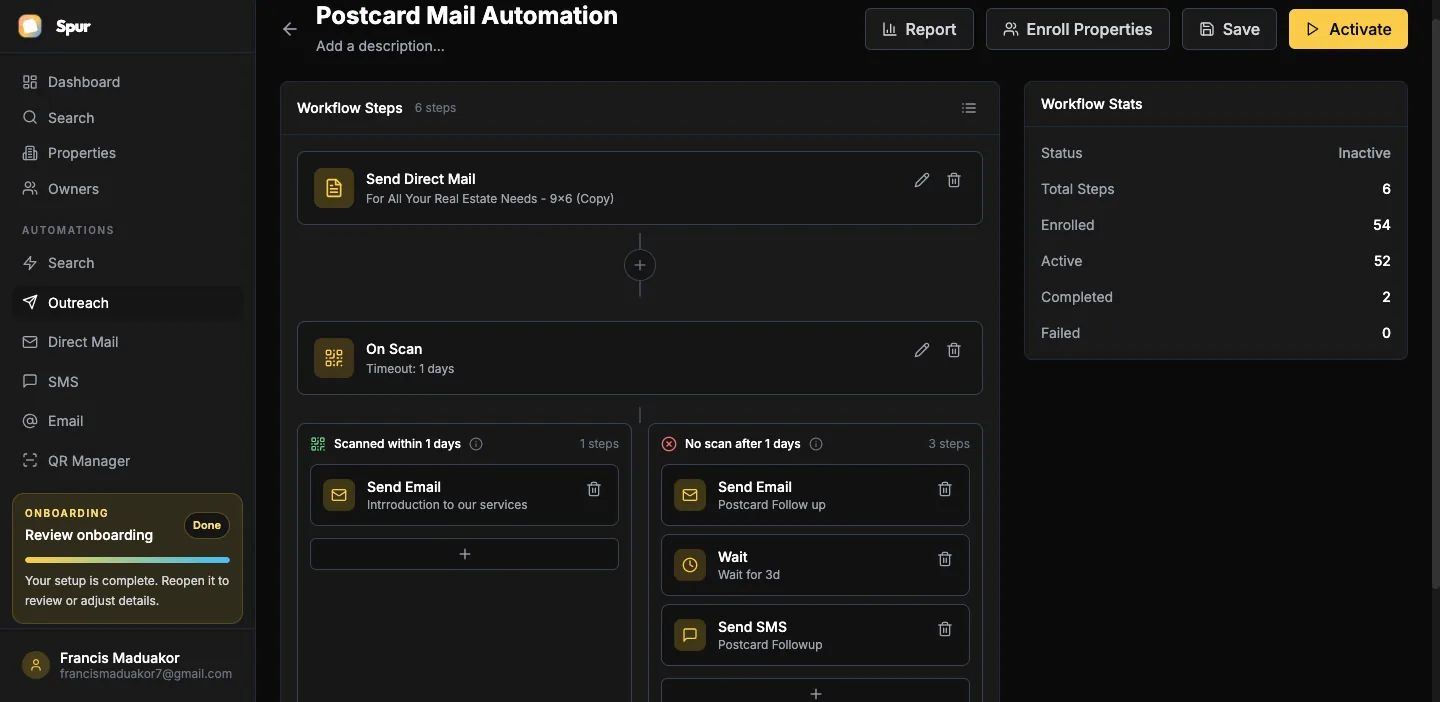
From list to mailbox in one workflow.
Five steps from storm chasing to a steady pipeline.
app.usespur.com
See it in Spur
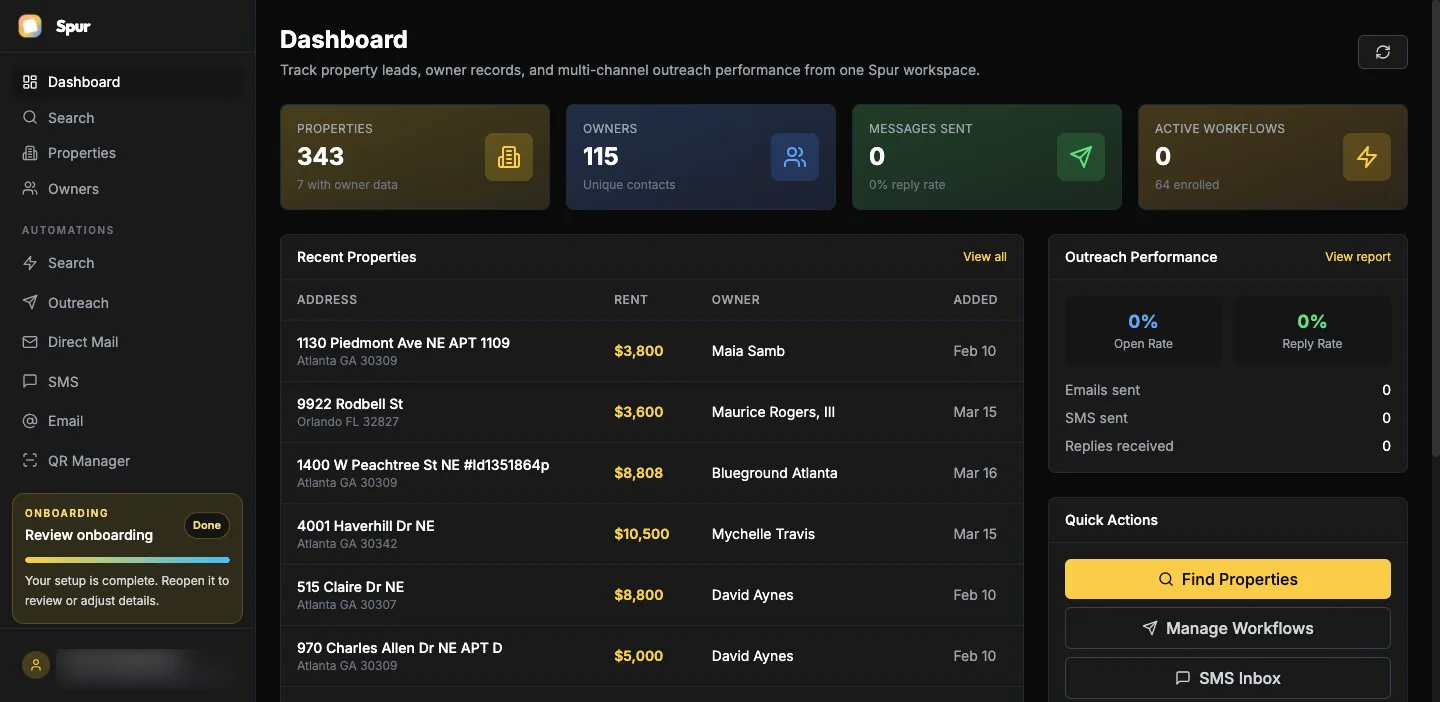
One month of a siding mail program in Spur
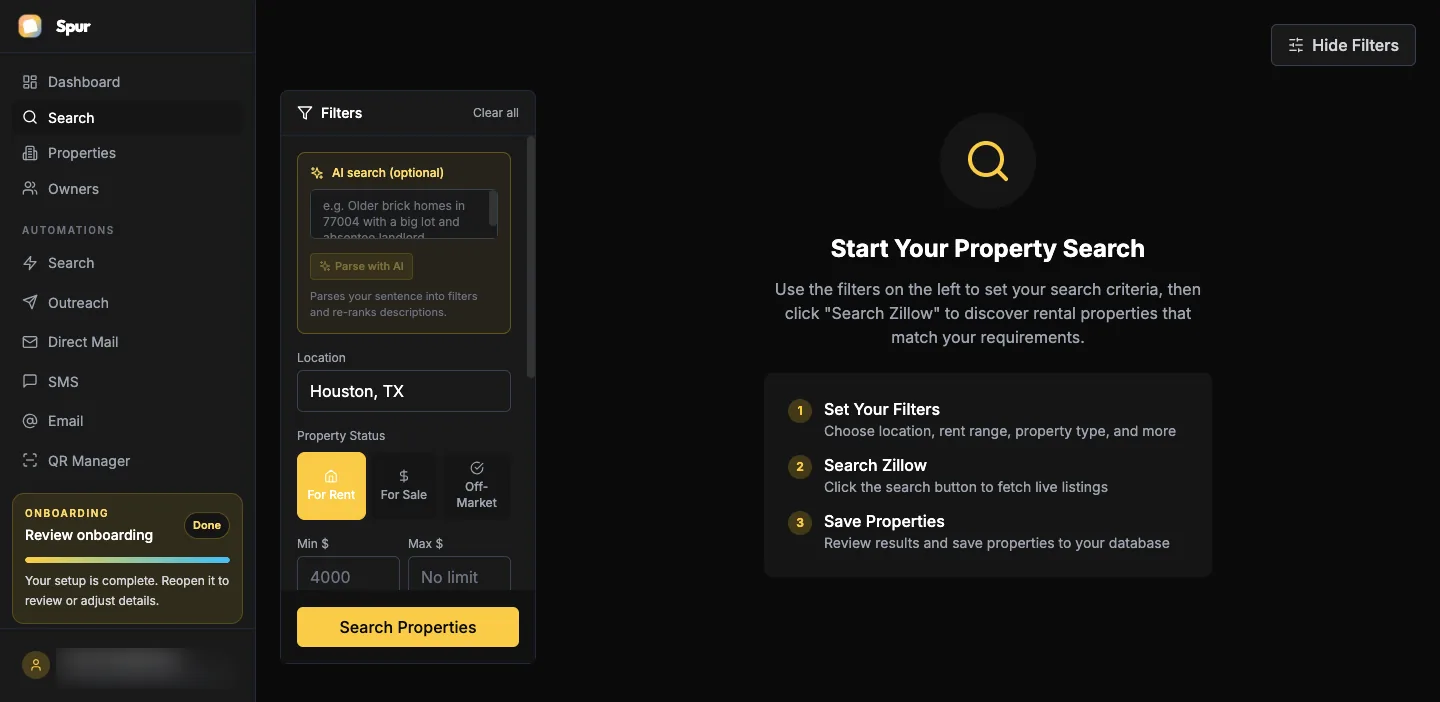
Sample Lancaster-area homes across the four standing lists. Names are partly masked.
Zips 17601 + 17602 + 17603Owner-occupiedExclude past customers4 standing listsSingle-family
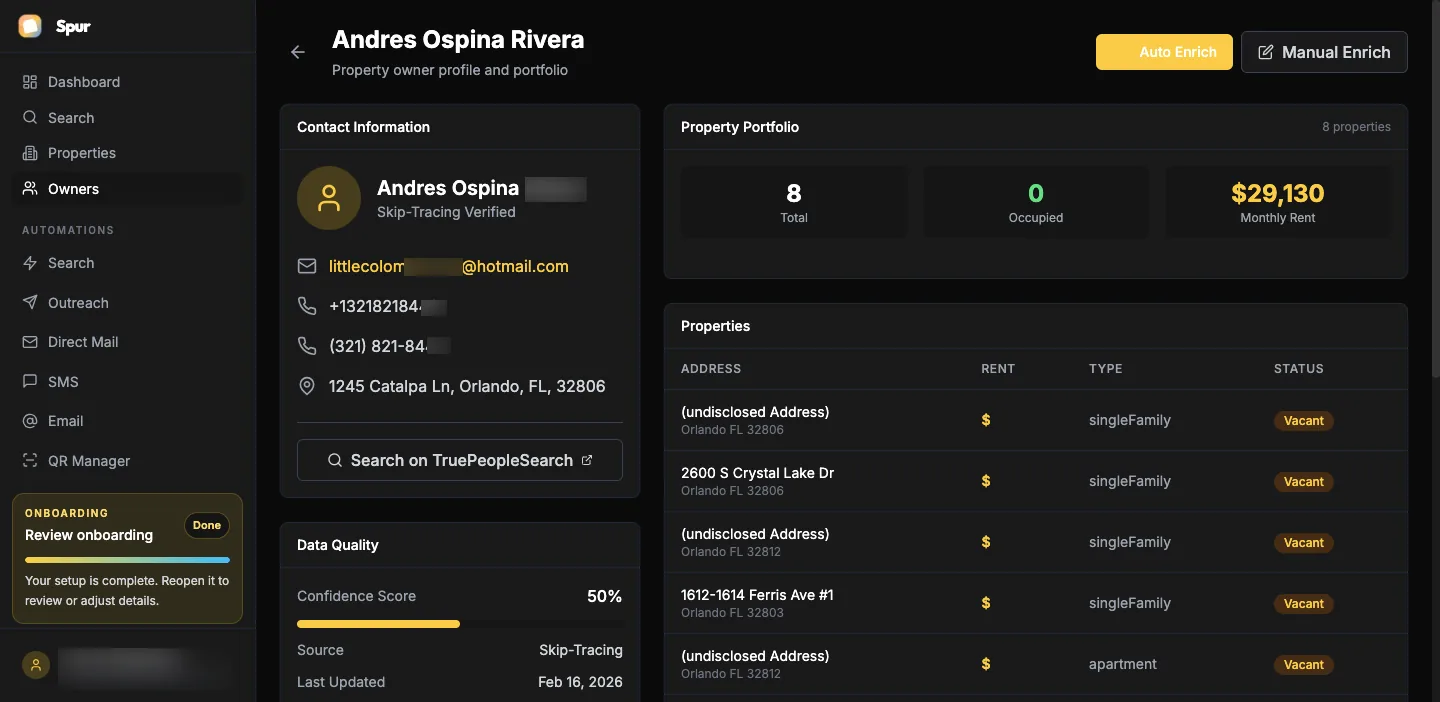
- Ken H.1820 Millcreek RdBuilt 1993 · hardboard sidingAging siding list
- Ellen & Jay R.406 Marietta AveBuilt 1952 · aluminum sidingOlder cladding list
- Brandon S.2215 Lititz PikeBuilt 1998 · vinylStorm listHail Jul '26
- Ana & Carlos D.1123 Columbia AveSold 4 weeks ago · built 1974New buyer listPre-1978
- Rich M.934 Fruitville PikeBuilt 2001 · vinylAging siding listOwned 22 yrs
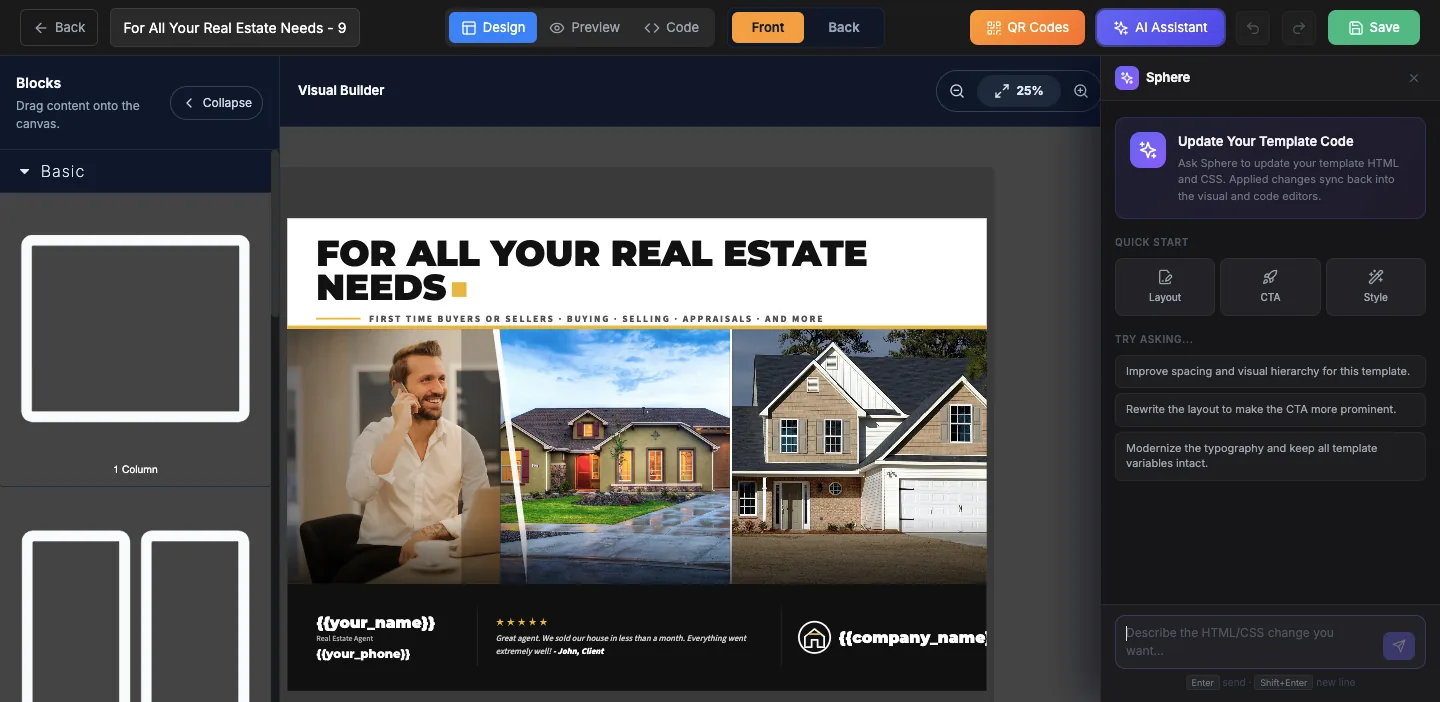
AI draft for Ken H. · 1820 Millcreek Rd
Hi Ken,
Homes on Millcreek Road were built in the early 1990s, and many were sided with pressed hardboard. It looks like wood and holds paint well at first, but where the paint fails, water gets in, and the boards swell, soften, and eventually rot. The bottom courses and the area around the garage door are usually the first to go.
We'll check your siding for free and tell you honestly whether you're looking at a few boards and some paint, or a full replacement. If it's the latter, we'll show you options that won't need repainting every few years.
Scan the code to book a time.
Amy Weaver · Keystone Siding Co. · (717) 555-0193
Sample data for illustration. Your results depend on your market and filters.
Playbook
How to build a siding direct mail program
Siding demand comes from two sources: storms that damage siding suddenly, and age that wears it out slowly. Most companies build their business around the first and treat the second as an afterthought. A direct mail program makes age-based work a steady engine, so the schedule doesn't depend on the weather.
Most siding contractors need four lists. Aging siding: owner-occupied homes built roughly 1985 to 2005, where builder-grade vinyl is fading and cracking and hardboard is swelling. Older cladding: pre-1980 homes with wood, aluminum, or shingle siding that owners are tired of painting or patching. Storm zips: homes in the path of recent hail or wind, mailed within days. New buyers: recent purchases of older homes, whose owners plan exterior work in the first year or two.
Give each list its own card. Aging-siding cards name the era and what the product does by now. Older-home cards talk about ending the painting cycle, and handle asbestos and lead questions with care. Storm cards name the date and offer a documented inspection, without promising insurance results. New-buyer cards offer an exterior plan. One flyer can't carry all four.
Set a rhythm. Run the age-based lists monthly from early spring through fall, when installs are easiest and owners spend the most time outside. Keep the storm list ready to trigger within 48 hours of a hail or wind event. Spur refreshes each list automatically and mails only new matches.
Measure by cost per signed job. A storm list may produce faster responses, but an aging-siding list may produce bigger, cleaner jobs with no insurance back-and-forth. Every card has its own QR code, so you can see scans, assessments, and signed jobs by list.
Over time, the program changes how you're found. Owners who've seen your card two or three times call you directly when they're ready, instead of searching and calling whoever's at the top.
$75Kin signed jobs from a year of four standing lists
A year of mail costs less than one siding job's materials.
- Spur Team: $588/yr, plus 2,400 cards on Team at $0.94 each = $2,256
- 4 whole-house jobs (~$60,000) + 3 partial and trim jobs (~$15,000) ≈ $75,000
- Year one total cost: $2,844
Example math. Job size and close rates vary by market. Run your own numbers →
One tool, not four
Spur vs. storm chasing and referrals
What you needThe usual waySpur
Four lists, mailed every monthWait for the next storm✓ Built in
Homes filtered by siding eraEvery door in the zip✓ Built in
Storm cards out within 48 hoursDoor knocking for weeks✓ Built in
Cost per signed job by listNo idea what worked✓ Built in
One login for data, copy, print, and mailList broker, designer, and print shop✓ Built in
Direct Mail Program by the numbers
Why a steady program beats storm chasing
Top tier
siding replacement consistently ranks among the better exterior projects for cost recouped at resale
1 inch
hail is the National Weather Service threshold for a severe thunderstorm, a useful trigger for storm lists
$75K
in signed jobs from a year of four standing lists
FAQ
Siding direct mail questions
How should a siding contractor use direct mail?
Run four standing lists, aging siding, older cladding, storm zips, and new buyers, each with its own card, refreshed and mailed on a schedule.
How much should I spend on siding direct mail?
Work back from cost per signed job. Whole-house siding jobs often run five figures, so a modest close rate supports a steady monthly budget.
When is the best time to mail siding offers?
Age-based lists from early spring through fall, and storm lists within 48 hours of a hail or wind event.
Can Spur exclude homes I've already sided?
Yes. Upload a customer CSV and Spur removes those addresses. Past customers can get their own card for trim, gutters, and windows.
Keep exploring
Related plays and guides
Start in minutes. No card required.
Fill the schedule between storms.
Set up four standing siding lists, approve the cards once, and let them mail every month. Free to start.
Build my siding mail program — freeFree forever plan · No card · 20 property searches a month
Prefer a walkthrough? Book a demo