
Cards addressed to the building, not the unit, end up in the lobby bin or returned to sender.
Agent play · Condo farming
Condo farming: become the agent for the building, unit by unit.
Condo owners only care about one market: their building. Spur pulls every unit with the right unit number, separates owner-occupants from investor owners, and mails building-specific updates that make you the obvious agent when someone's ready to sell.
Free forever plan · No card · 20 property searches a month
USPSFirst-Class
Lauren Bennett500 5th Ave N #612Nashville, TN 37219Scan for your unit's value
Lauren B. checked her unit's value · 5 hrs ago
AI-written for this owner · Mailed in 2 days
Unit-leveladdresses so every card reaches the right door
Investorowners mailed at home, not the unit
Buildingsales and HOA updates owners actually read
The problem
Neighborhood farming doesn't fit a condo building.
Many condos are investor-owned. Mail to the unit reaches a tenant, and the owner never sees it.
A condo owner doesn't care about median single-family prices. They want to know what sold in their building.
How it works
From list to mailbox in one workflow.
Five steps from one building to being its go-to agent.
app.usespur.com
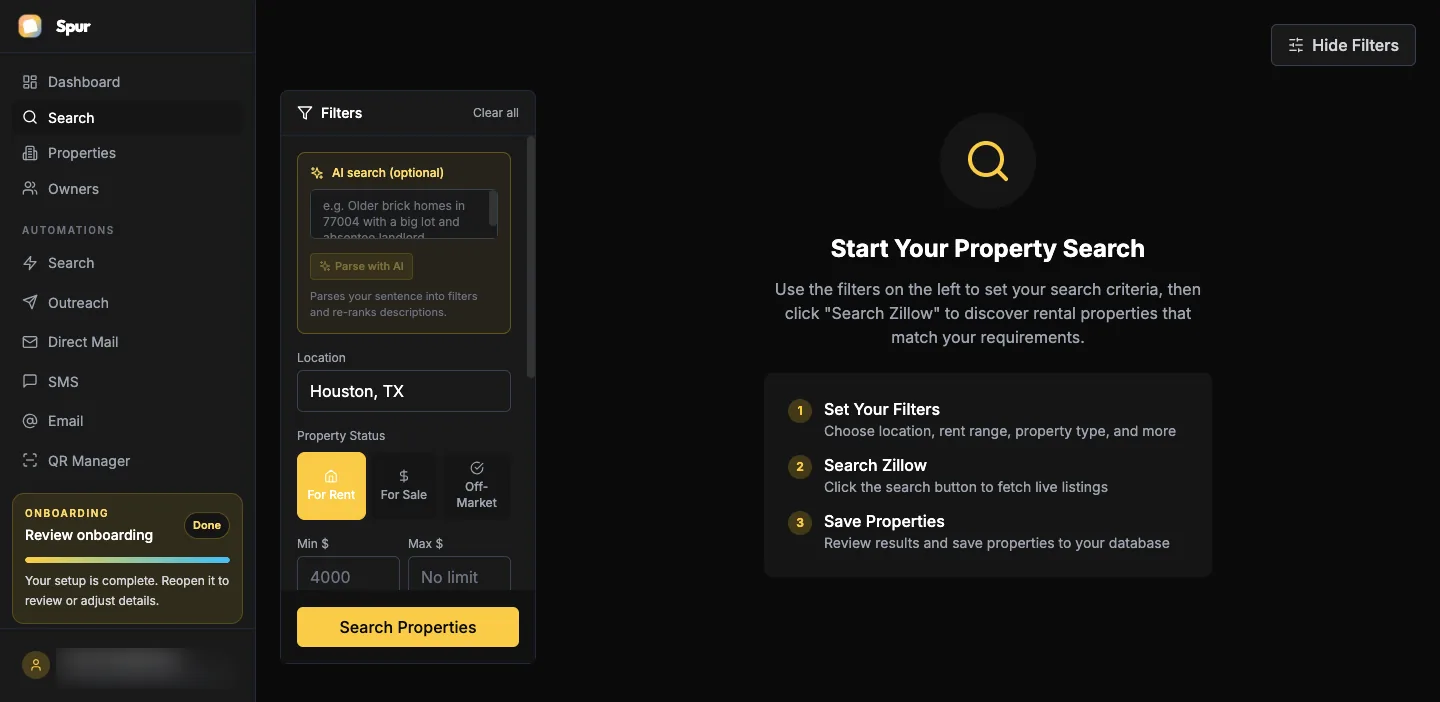
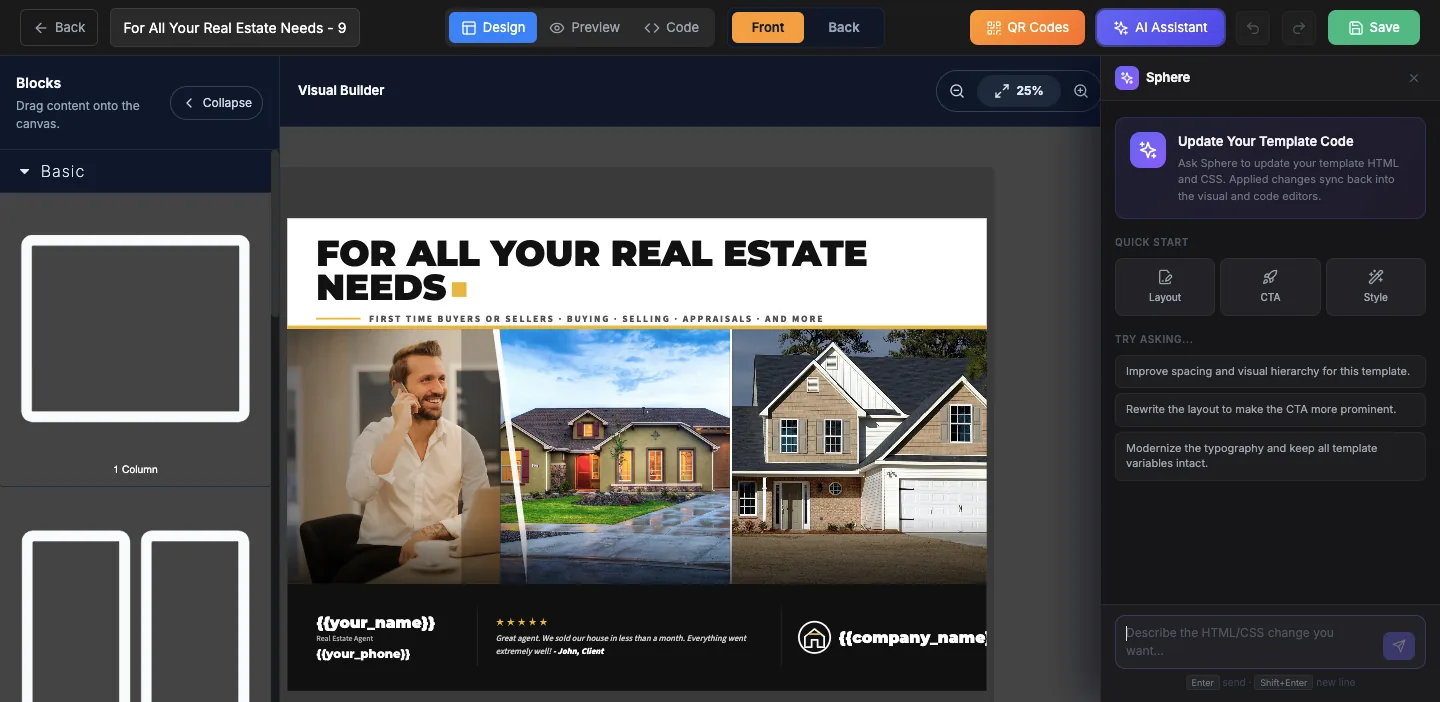
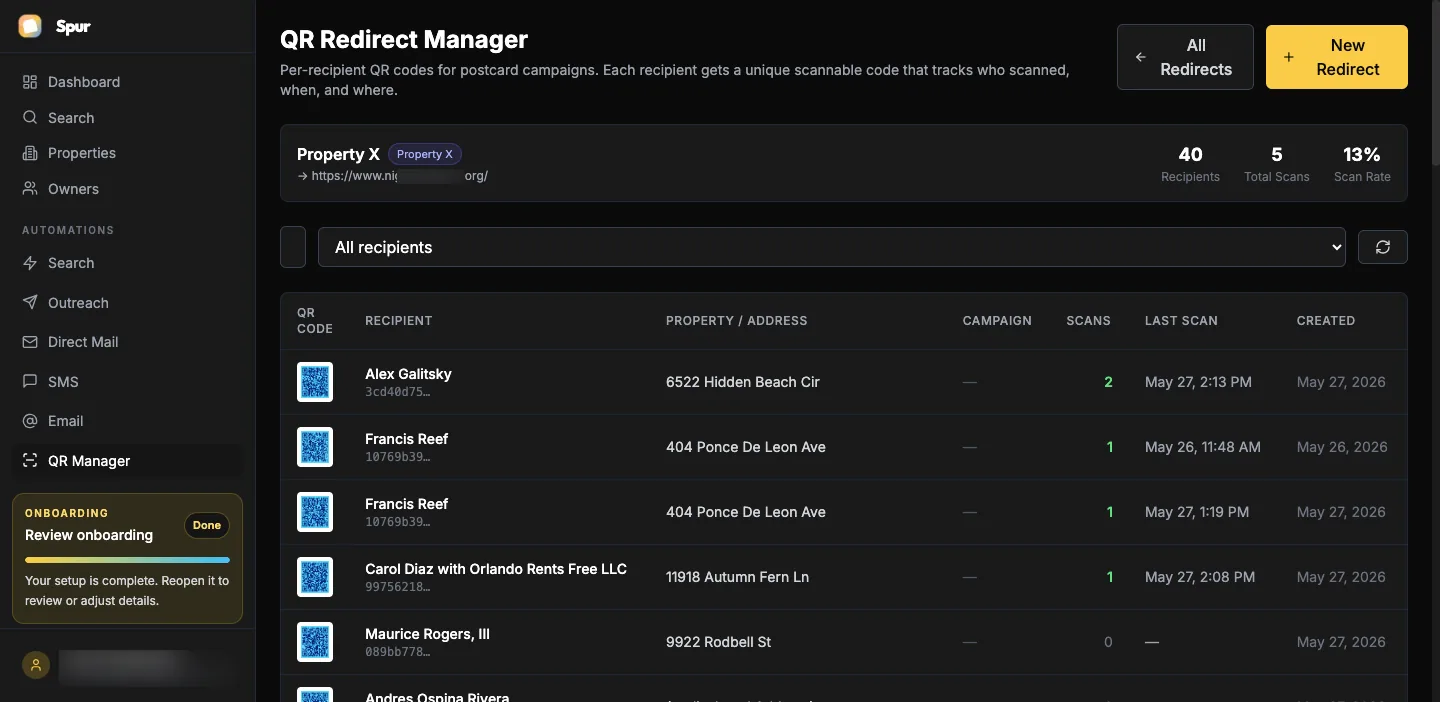
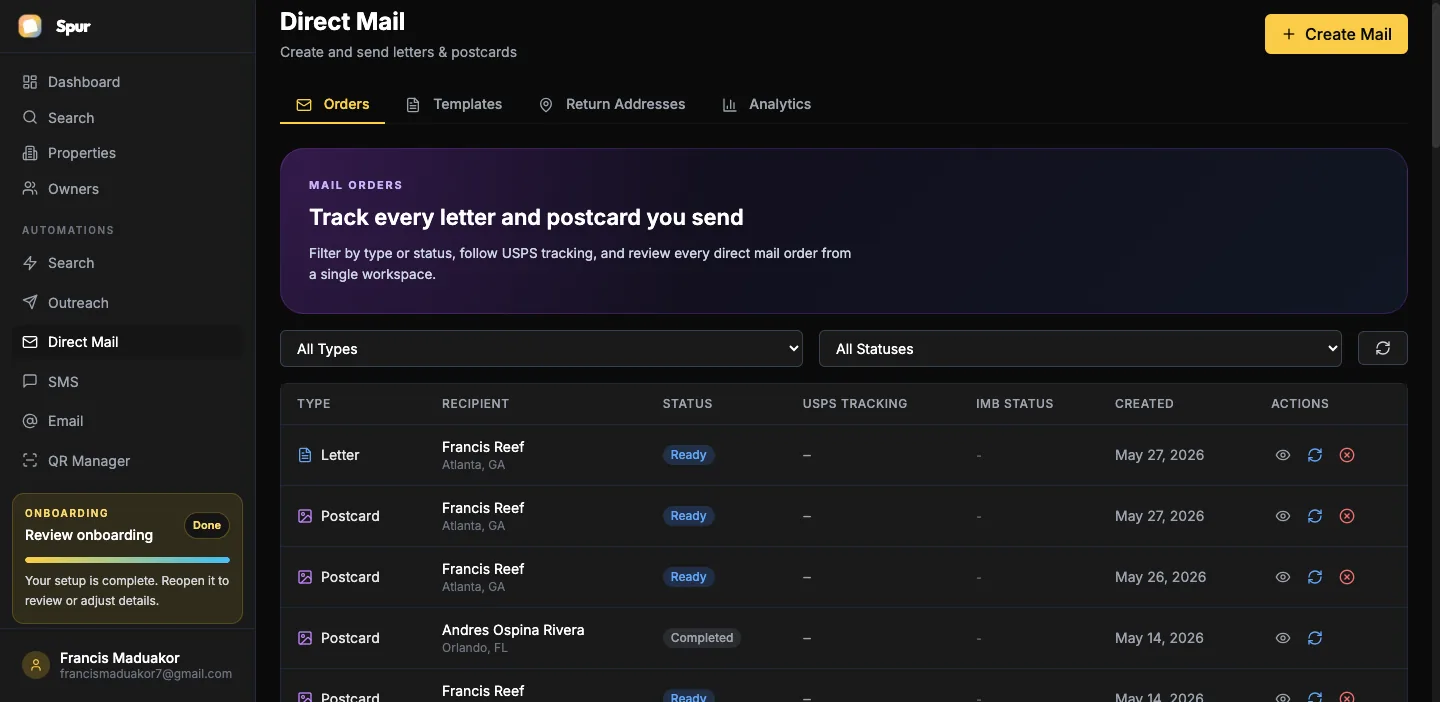
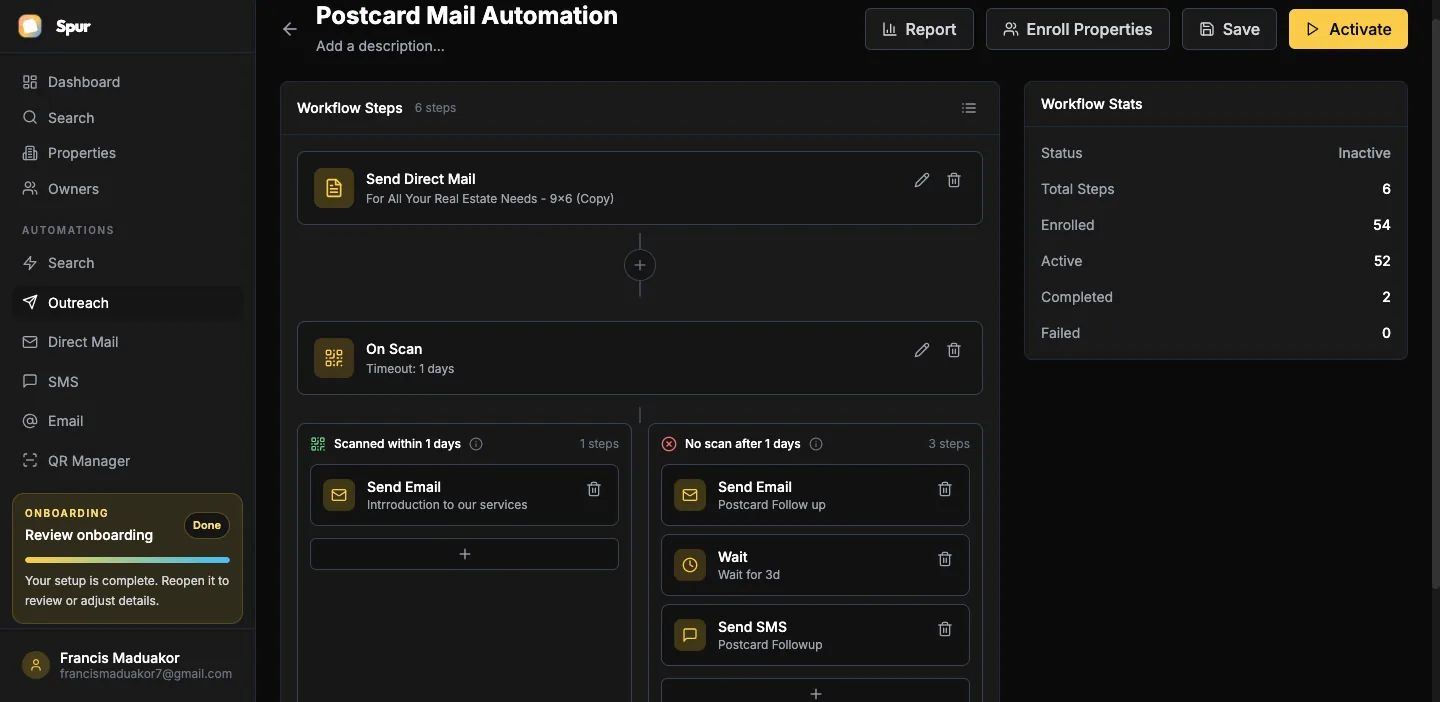
See it in Spur
A condo farm in Spur
Sample units in one Nashville building, split between owner-occupants and investor owners. Names are partly masked.
500 5th Ave NCondoAll unitsOwner-occupied + investor
- Lauren B.#612Owner-occupant2 bedOwned 7 yrs
- Kyle M.#304Owner in Chicago, ILInvestorRented
- Sharon & Phil D.#1102Owner-occupantPenthouseOwned 11 yrs
- Music Row Holdings LLC#508Manager in FranklinLLCShort-term rental
- Vivian T.#215Owner-occupant1 bedOwned 9 yrs
AI draft for Lauren B. · #612
Hi Ms. Bennett,
I'm Alicia, and I specialize in The Lofts at 5th. Two units in our building sold this quarter, both above asking: #804, which has the same two-bedroom floor plan as yours, closed at $412,000.
I also know the board approved the lobby renovation, and buyers have been asking how that assessment will be handled at sale. If you've wondered what #612 could sell for, or how the assessment might affect a sale, I'm happy to walk you through both.
Scan the code for a free estimate of your unit's value based on sales in our building.
Alicia Brooks · (615) 555-0192
Sample data for illustration. Your results depend on your market and filters.
Playbook
How to farm a condo building
Condo farming means choosing one building or complex and becoming the agent its owners think of first. It's one of the most efficient farms there is: owners share the same amenities, HOA, and floor plans, so a single sale gives you something relevant to say to everyone. A building of 150 to 400 units can produce several listings a year, and one sale often leads to the next.
Accuracy matters more than in a neighborhood farm. Every piece of mail needs the correct unit number, or it ends up in the lobby or comes back undeliverable. Many buildings also have a high share of investor owners. Mail to the unit reaches their tenant, so send investor owners mail at their own address with a message about rents, rental rules, and the value of selling with or without a tenant in place.
Condo owners want building-specific information. Share recent sales in the building, especially units with the same floor plan, along with days on market and price per square foot. Add HOA news when it's public, such as dues changes, special assessments, rental caps, and major repairs, because these affect value and owners often don't know how buyers see them.
Know the condo-specific issues buyers will raise: whether the building is FHA- or VA-approved, the strength of the reserve fund, litigation, insurance costs, and short-term rental rules. Being the agent who understands these issues is a strong reason for owners to call you instead of a general agent.
Mail on a steady rhythm. A quarterly building report keeps you top of mind, and a card each time a unit lists or sells adds urgency. Some buildings restrict flyers in common areas, so mail is often the only way to reach every owner. Follow your state's advertising rules and avoid using the building's name or logo in a way that suggests you represent the HOA.
13×return on a year of Spur Team from one $7,500 commission
One building can feed your business for years.
- Spur Team: $588/yr billed annually
- 250 units × 6 cards a year = 1,500 at $1.09 = $1,635
- One condo listing at a $7,500 commission = 13× your subscription
Example math. Condo prices and commissions vary widely by building and market. Run your own numbers →
One tool, not four
Spur vs. the usual condo farming workflow
What you needThe usual waySpur
Every unit with its unit numberTax records and manual cleanup✓ Built in
Investor owners' home addressesSeparate skip tracing✓ Built in
Building-specific cards per unitGeneric neighborhood postcard✓ Built in
Unit value scan alertsWaiting for a call✓ Built in
Quarterly and event-based mailingsManual reorders✓ Built in
FAQ
Condo farming questions
How do I farm a condo building?
Pull every unit with its unit number, split owner-occupants from investor owners, and mail building-specific sales and HOA updates on a quarterly rhythm, plus a card whenever a unit lists or sells.
How many units should a condo farm have?
Many agents start with one building or complex of 150 to 400 units. Check the building's turnover rate first; you want several sales a year.
How do I reach condo owners who don't live in the unit?
Mail them at their own address, not the unit. Spur shows investor owners and their mailing addresses so you can send a landlord-specific message.
What should I put on condo farming postcards?
Recent sales in the building, especially the same floor plan, price per square foot, days on market, and public HOA news like assessments or rule changes.
Can I use the building's name in my marketing?
Usually, as a description of where the units are. Don't use the HOA's logo or imply you represent the association, and follow your state's advertising rules.
Keep exploring
Related plays and guides
Start in minutes. No card required.
Own one building. Then the next.
Pull every unit in your target building, let AI write a building-specific update, and mail it today.
Build my condo farm — freeFree forever plan · No card · 20 property searches a month
Prefer a walkthrough? Book a demo